Author: Meghan Brown

  • Career Profile: Aerospace Engineer

    Career Profile: Aerospace Engineer

    Do you dream of building rockets and spaceships that will explore outer space? Or are you more interested in things a little closer to Earth, such as airplanes and helicopters?  Canada has a long history of excellence in both aeronautics (air flight) and astronautics (space flight), and working as an aerospace engineer will let you follow these passions, and can provide a strong and exciting career.

    Aerospace engineers are responsible for designing and building airplanes, unmanned aerial vehicles and drones, satellites, rocketry, missiles, communication systems, and other machines and equipment intended for aircraft and spacecraft.  They also research and develop the software, hardware and other systems that are used to operate these aerospace vehicles.  Since building physical prototypes is both expensive and time consuming, aerospace engineers are also experts in using computers, software and mathematical modeling to create digital simulations of equipment, vehicles or systems in order to test and perfect their design.

    Not all aerospace engineering is building things in a lab, however.  Many jobs in aerospace engineering involve supervising or coordinating the manufacturing, assembly, and repair of aerospace equipment or vehicles, or being in charge of testing equipment and coordinating test flights.  When there are failures, such as a plane crash or failed rocket launch, aerospace engineers are also the ones who will work to determine what went wrong, and how that type of failure can be avoided in the future.

    Most Canadian aerospace engineers work inside Canada for the Canadian Space Agency (CSA), the government, or military and defense contractors. Many also work at one of the many Canadian companies that design and manufacture components for the aerospace industry.  Others will pursue research careers at Canadian universities and research laboratories.  There are also many international collaborations and organizations, especially in space exploration, where you would have the opportunity to work in another country with scientists, engineers, and researchers from around the world.

    In terms of education, a career as an aerospace engineer needs a minimum of a university bachelor’s degree in aerospace engineering or a similar engineering field such as mechanical engineering or engineering physics, as well as some practical experience from internships and other work placements.  Many jobs only require a bachelor’s, though moving into management, research, or consulting-level positions can require a master’s degree or Ph.D.  Engineering in Canada is a licensed profession, which means that after graduating engineers are required to complete supervised work hours and a licensing exam in order to get their Professional Engineer designation, which is required to approve engineering drawings and reports.

    Salaries for aerospace engineers in Canada range from around $40,000 at the entry-level, up to $100,000 for experienced positions in high-level companies.  The average salary comes in around $76,000 per year.

    Sources:

    https://www.jobbank.gc.ca/report-eng.do?area=9219&lang=eng&noc=2146&action=final&ln=n&regionKeyword=Toronto%2COntario&s=3&source=0&titleKeyword=aerospace+engineer#report_tabs_container2

    https://www.payscale.com/research/CA/Job=Aeronautical_Engineer/Salary

    https://en.wikipedia.org/wiki/Aerospace_engineering

    http://www.canadianbusiness.com/lists-and-rankings/best-jobs/2016-aerospace-engineer/
  • Career Profile: Anthropologist/Archaeologist

    Career Profile: Anthropologist/Archaeologist

    When you look around your house, or walk through your city, do you ever wonder about the people who lived there before you? Are you fascinated with how humans lived hundreds or thousands of years ago? Do you want to learn the ancient history of human civilization?

    It’s possible to find the answers to these questions if you become and archaeologist or anthropologist. These are the people whose job is to research and search for the ancient remnants of both nature and humanity, or study current human civilization and interaction.

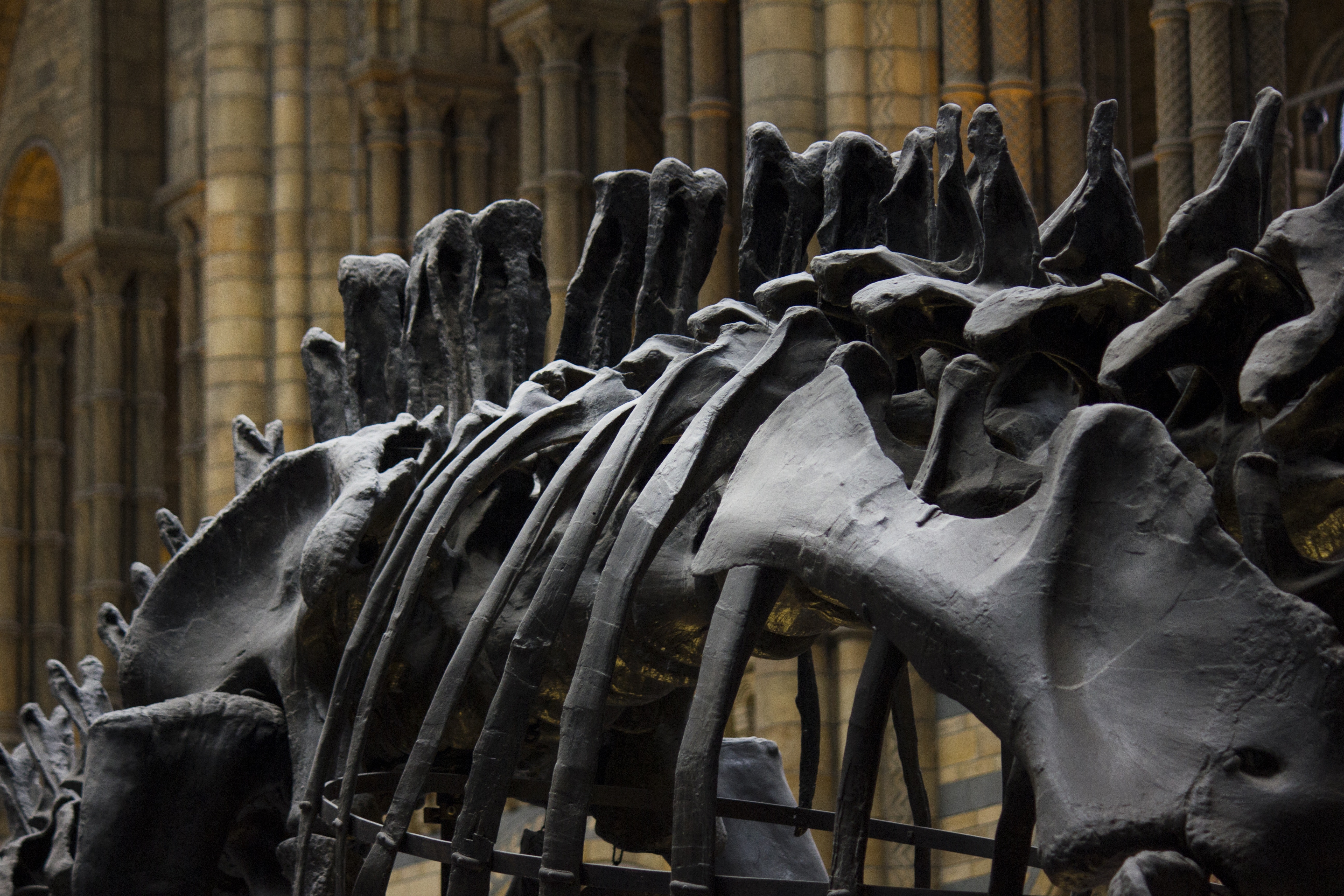
    Archaeologists study historical artifacts in order to learn how people lived in the past, such as their economy, social structures, politics, and intellectual experiences.  These artifacts include things as small as a shard of pottery, coins, ancient jewelry, or old papers, and as large as human skeletal remains, statues or buildings.  Archaeologists are also responsible for surveying sites of historic interest, oversee excavation projects, and fundraise to support their research projects.  Many archaeologists also learn ancient languages, in order to read and interpret writing and symbols found on ancient artifacts.

    Anthropologists study living people in order to learn about recent and current human civilization.  They aim to discover the origins, development, customs, and religions of cultures and societies.  They also examine human evolution and how human characteristics, both physical and intellectual, have changed over the course of history.  Anthropologists will often also learn to read and speak multiple languages, and will study both long-term modern societies and newly discovered or isolated human groups.  Certain branches of anthropology can include studying primates as well as humans, to examine similarities and differences in behaviour and evolution.

    Both anthropology and archaeology are fields which offer exciting opportunities for travel to locations around the globe, where you could participate in excavation of ancient sites, live in unique cultures, studying isolated human societies, and collaborate with other researchers in the social science, history, and scientific fields.  There are many areas of specialization possible in both anthropology and archaeology, such as specific time periods or geographic regions, linguistics, medicine, religion, warfare or funeral practices, to name only a few options.

    Working entry-level jobs in either of these fields requires a minimum of a 4-year college or university bachelor’s degree in anthropology, archaeology or a related social science, such as history.  These positions include jobs such as research assistant or lab technician.  However, to move up to more experienced positions, and depending on the requirements of your employer, you are likely to need a Master’s degree in either archaeology or anthropology.  If you wish to be a professor or researcher at a university, a Ph.D. will be required.

    In terms of salary, it is important to note that much of the work in archeology and anthropology is project-based, with these projects depending on being funded. This can mean earnings are not always regular, and when a project finishes, goes on seasonal hiatus, or fails to receive funding will affect when and how much you are paid.  Most professionals in this field earn around $20 per hour for entry-level and low-funded projects, while experienced workers and those attached to a university or college faculty can earn up to around $50 per hour on average.

    Sources:

    https://www.jobbank.gc.ca/report-eng.do?area=9219&lang=eng&noc=4169&action=final&ln=n&regionKeyword=Toronto%2COntario&s=1&source=2&titleKeyword=anthropologist#report_tabs_container2

    https://www.academicinvest.com/arts-careers/anthropology-careers/how-to-become-an-archaeologist

    https://www.academicinvest.com/arts-careers/anthropology-careers/how-to-become-an-anthropologist

  • Career Profile: Fire Investigator

    Career Profile: Fire Investigator

    When there is a fire at a home or business, it is important to learn the cause.  Fire investigators are professionals who are specially trained to examine the site of a fire and be able to determine what happened.  If you like to do detective work, are scientifically minded, and enjoy solving puzzles, then a career as a fire investigator could be right for you.

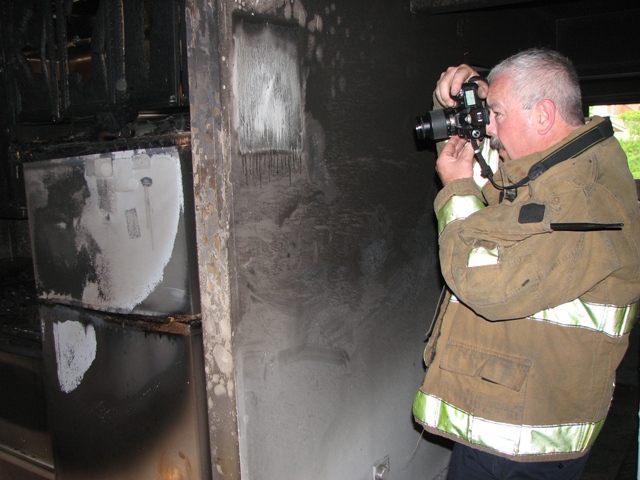
    Fire investigators are related to law enforcement, and are responsible for examining fire damage, determining the cause, and documenting information about the origin, behaviour, and whether a fire was accidental or deliberately set.  They will make this information available to police and fire department officials, lawyers and judges, city or regional government, and will offer recommendations on safety or criminal responsibility.

    This work requires a strong knowledge of building materials and structures, the effects of fire on these materials, the effects of fire suppression methods, and an understanding of burn patterns and fire behaviour. Many fire investigators are involved in preventative inspections, as well, to ensure buildings are up to code for fire safety.  Fire investigators will also often participate in public outreach in their community, to advise on safety and fire prevention strategies for homes, schools, and businesses.

    Fire investigators work closely with other members of fire departments and police departments and can come into a fire investigator role from either of these backgrounds.  While they can start as police officers, firefighters, most fire investigators will need additional education specific to the job.  You will need to complete a college degree in firefighting, fire science, fire protection technology, or a related field.  A background in civil, mechanical or chemical engineering, chemistry or another scientific field can be beneficial, especially for future career advancement.  It is also a good idea to become a member of industry associations, such as the Canadian Association of Fire Investigators, which will give you access to training, mentorship, and career networking opportunities.

    Most fire investigators work for municipal entities, such as local police and fire departments, government offices.  They can also work for the private sector, such as for insurance companies, engineering and construction firms, or forensics and accident investigation firms.  Because fire investigation is part of law enforcement, investigators will be subject to detailed credit and criminal background checks, psychological evaluations, and other personality or behavioural assessments.

    Salary ranges from around $35,000 per year for entry-level and early career positions, up to as much as $100,000 per year for experienced investigators who are highly specialized.  However, the average salary for a fire investigator in Canada is around $78,000 per year.

    Sources:

    https://www.glassdoor.ca/Salaries/canada-fire-investigator-salary-SRCH_IL.0,6_IN3_KO7,24.htm

    https://www.cafi.ca/content/mission

    https://neuvoo.ca/salary/fire-investigator/

    http://www.interfire.org/features/become_fire_investigator.asp

    https://www.thebalancecareers.com/fire-and-arson-investigator-career-profile-974830

  • Financial Aid Available for Post-Secondary Students with Disabilities in British Columbia

    Financial Aid Available for Post-Secondary Students with Disabilities in British Columbia

    Part of a series of articles on financial aid available for post-secondary students with disabilities, this article will feature what assistance is available specifically to British Columbia students. Information on eligibility and how to apply will be included for each financial aid program. Note that the provincial student financial assistance office is called Student Aid BC and that the following funding is available in addition to the federal Canada Student Grant for Students with Permanent Disabilities and Canada Student Grant for Services and Equipment for Students with Permanent Disabilities.

    1. Learning Disability Assessment Bursary

    The programs in this article are not in any particular order, but this bursary comes first for one crucial reason: in order to qualify for financial assistance available to students with disabilities, you must have a recent learning disability assessment. Without an assessment, you will be not eligible for any of these programs. Up to $1,800 is available to eligible students, who must be enrolled in part-time or full-time studies in public post-secondary institutions. To apply, speak to the disability services office at your school.

    1. BC Access Grant for Full-Time Students with Permanent Disabilities

    Note that this program, unlike the ones above, is available only to full-time students with permanent disabilities. Full-time program attendance is defined as greater than 40% course load. The BC Access Grant will replace $1,000 in BC student loan funding with a grant, so part of the loan will not need to be repaid.

    There is no separate application for this grant. You apply for Student Aid BC funding as usual, and you should be automatically considered for the BC Access Grant if you hit all the eligibility criteria. One requirement is submitting to Student Aid BC documentation of your permanent disability, and this will be a separate form.

    1. BC Supplemental Bursary for Students with a Permanent Disability

    Once you have qualified for the Canada Student Grant for Students with Permanent Disabilities, you now qualify for the BC Supplemental Bursary. The amount available varies depending on your course load. If you are a full-time student (in other words, your course load is 40% or higher), your bursary is $800. If you are a part-time student (your course load is between 20% and 39%), your bursary is $400.

    Like the BC Access Grant, there is no separate application. The disability documentation you submitted to Student Aid BC as part of applying for the BC Access Grant is sufficient for the BC Supplementary Bursary. Once Student Aid BC knows of your disability, you will be automatically considered for this bursary.

    1. BC Access Grant for Deaf Students

    The BC Access Grant for Deaf Students supports students with hearing disabilities in attending either Gallaudet University in Washington, D. C. or the National Technical Institute for the Deaf in Rochester, New York. These post-secondary institutions deliver their curricula in American Sign Language. Enrollment as a full-time student in one of these two schools is part of the eligibility criteria, which also include documentation of financial need and that you are deaf or hard of hearing.

    The application process for this grant has additional requirements. On top of the verification of permanent disability, students are required to submit an audiogram to Student Aid BC for assessment.

    Student Aid BC is the office responsible for administrating financial aid for British Columbia students. The first to qualifying for any of the above programs is to first submit verified documentation of your disability to Student Aid BC, which will automatically qualify you for the general grants.

    References:

    1. https://studentaidbc.ca/sites/all/files/school-officials/disability_services_framework.pdf
    2. https://studentaidbc.ca/explore/grants-scholarships/assistance-program-students-permanent-disabilities
    3. https://studentaidbc.ca/explore/grants-scholarships/canada-student-grant-services-and-equipment-students-permanent
    4. https://studentaidbc.ca/explore/grants-scholarships/learning-disability-assessment-bursary
    5. https://studentaidbc.ca/explore/grants-scholarships/bc-access-grant-students-permanent-disabilities
    6. https://studentaidbc.ca/explore/grants-scholarships/bc-access-grant-deaf-students
  • Federal Financial Aid Available for Post-Secondary Students with Disabilities

    Federal Financial Aid Available for Post-Secondary Students with Disabilities

    There is no question that paying for post-secondary education is difficult. For students with disabilities, this financial barrier can be exacerbated by costs associated with their own individual needs. This is not right. Equitable access to education is everyone’s right in Canada, and so there are financial assistance programs intended to support students with disabilities on their path to post-secondary education and the associated benefits it brings to later life and career.

    This first article in a series will feature financial assistance available to students across Canada. All of these programs are accessible to any eligible student because they are provided by the federal government. Information on eligibility and how to apply will be included for each financial aid program.

    1. Canada Student Grant for Students with Permanent Disabilities

    The Canada Student Grant for Students with Permanent Disabilities provides up to $2,000 per year to qualifying students in both undergraduate and graduate programs. One broad restriction is that students with disabilities from the Northwest Territories, Nunavut, and Quebec are not eligible. (The reason is that these places have their separate financial aid arrangement.) If you are not a resident of these province and territories, you are eligible as long as you qualify for student financial assistance, are registered for full-time or part-time studies, and have documentation verifying you have a permanent disability.

    The application process depends on your province or territory’s student financial assistance office. For a complete list of offices and their contact information, go to https://www.canada.ca/en/employment-social-development/services/education/provincial-offices.html.

    1. Canada Student Grant for Services and Equipment for Students with Permanent Disabilities

    Available to both full-time and part-time post-secondary students with permanent disabilities, this grant ensures students can access education by being able to purchase education-related services and equipment. Examples include note-takers, tutors, interpreters, and technical aid. Tuition and textbooks are also expenses that are covered. A maximum of $8,000 is available per year to eligible students of both undergraduate and graduate levels. Up to $1,200 of the grant may be used to partially pay for a Learning Disability Assessment.

    Eligibility requirements are the same as the Canada Student Grant for Students with Permanent Disabilities, in addition to requiring students to provide two pieces of written documentation. The first must indicate what services and/or equipment is needed and must be from a person who is certified to determine this (for example, a counsellor in the disability services office of your school). The second is a statement of how much the services and/or equipment will cost. To apply for this grant, students are advised to contact the disability advisor at their school to first be assessed for what will be required to allow equitable access to education. He or she can then help you complete the application form found here: https://www.canada.ca/en/employment-social-development/services/education/grants/disabilities.html.

    In general, the federal government provides grants partially covering education costs, including tuition fees, textbooks, and services and equipment customized for the needs of a student with disabilities. Totaling up to $10,000, these grants are the opposite of loans, so you do not have to repay them. These grants are also available per school year for both undergraduate and graduate levels of education, ensuring students with disabilities are supported throughout their post-secondary journey.

    References:

    1. https://www.canada.ca/en/employment-social-development/services/education/grants/disabilities.html
    2. https://www.canada.ca/en/employment-social-development/services/education/grants/disabilities-service-equipment.html
    3. https://www.canada.ca/en/services/benefits/disability/education.html
    4. https://studentaidbc.ca/explore/grants-scholarships/canada-student-grant-services-and-equipment-students-permanent
  • The Art of Talking: A Profile of Radio and Television Announcers

    The Art of Talking: A Profile of Radio and Television Announcers

    Some people would love to make a living by talking. Being a radio and television announcer might sound exactly like that, but it is much more challenging than simple chit chat. You have to work irregular hours in a very competitive industry. You must practice reading and presenting materials to make sure you speak confidently and clearly. It is a career with lots of variety and a way to be involved in the exciting world of media.

    Announcers present many different forms of media, including, news, sports, music, and much more. You will have to interact with other announcers and guests. It is often your job to research topics for discussion, and someone like a news anchor will often write the words they say themselves. Your work environment will likely be at a radio or television station. As there are different shows and broadcasts throughout the day and night, you may have to work very irregular hours. You will often have to perform live, and need to be able to think on your feet.

    Wages for radio and television announcers can be very different depending on what production you are a part of. Announcers make anywhere from minimum wage to over $40 per hour. The median wage is about $19.75. There is expected to be more competition in the field in the coming years compared to before. From 2015 to 2024, there will be about 2,200 positions and 2,900 people looking for jobs.

    A college degree in radio or television arts is not a requirement, but it can help you rise above the competition. These colleges often have in-house stations that let you practice and create a demo tape. That tape of your performances will act as your resume and can be sent to many different employers. Some employers may need you to be a part of a union. You will likely have to pass an audition to get a job.

    You will probably start in a small market with low pay. As there are not many people working in these stations, getting promoted to bigger roles is difficult. Instead, you can advance your career by gaining experience and then moving to a station in a larger market. As you build your resume and reputation, you can have greater choice in the positions you want and more employers will be interested in hiring you. This can lead to more pay, more responsibilities, and an even more rewarding career.

    The world of media is one of celebrities, big news, and larger than life personalities. If you feel you have an engaging and confident way of speaking, then being a television or radio announcer might be the career for you. Modern technology allows you to gain experience and practice right away by starting a podcast or series of YouTube videos. You can eventually take a related program in college. It can be a challenging career with many ups and downs. It may take years to reach the position you really want. But that dream can happen with a lot of practice, effort, and trial and error. Now stop reading and start talking!

    Sources:

    CollegeGrad. “Announcers.” https://collegegrad.com/careers/announcers

    Job Bank. “Announcers and Other Broadcasters.” https://www.jobbank.gc.ca/report-eng.do?area=9219&lang=eng&noc=5231&ln=n&s=3#report_tabs_container2


  • Three Ways to Travel with the Trades

    Three Ways to Travel with the Trades

    When people consider trades jobs, they think of tiny minutiae, such as the intricacies of wiring and plumbing that keep buildings and homes running effectively. These are important and rewarding careers, but sometimes can feel small in scope. Some tradespeople work in a single area where they live. However, there are many growing opportunities to work in the trades in such a way that you get to see the world. It makes an already rewarding career path even more gratifying.

    One way to travel while working is to do it literally. Cruise ships venture around the world to many exciting locales. While they are filled with tourists and people on vacation, they also have many employees and workers ensuring a great experience for those travelers. Carpenters and electricians are regularly hired to be stationed aboard these ships, either in senior or assistant roles, for regular maintenance. Carpenters ensure furniture and accommodations in theatres, lounges, and more are in proper shape, and electricians guarantee all electrical systems are functioning so that the cruise’s activities go on unhindered. You can help many happy travelers while being one yourself.

    Another option is to take your skills to where they are needed. As technologically advances, people around the world are turning to more environmentally-friendly power sources. Wind technology is becoming an increasingly popular choice. The wind turbines that make this possible are often in remote locations, and the technicians and repairers for these devices are required to travel frequently in order to reach and service the hundreds of thousands of turbines around the world. Due to the vast size and intricacies of certain wind farms, it may be necessary to have portions of the land managed by different organizations. This can require tradespeople to travel between different sites to work on various turbines. You can venture to many locales while making the world a better place.

    Finally, you can also take your skills with you on the road. Many musicians and music bands depend on national and international tours in order to make a living. As they travel from city to city, or country to country, they depend on a talented crew to ensure their show is pulled off seamlessly at all venues. Sound technicians are critical to guarantee pristine acoustics for the crowd. Musical acts also depend on proper lighting for the stage, and perhaps special effects as well. Lighting technicians work hard to make sure this component of the performance is properly in place. You will get to journey with the musical act to see many cities and create great memories for countless audience members.

    There are numerous ways to equip yourself with trades skills that will allow you to travel. As technology evolves in a world of increasing globalization, there will be more and more opportunities to do so. If this is of interest to you, seek out job opportunities along the lines of cruise ships and musical tours, as well as growing industries that sprawl many locales, such as wind energy. Not only can you do work that you are passionate about, but you can do it with the added bonus of seeing the many wonderful sights the world has to offer.

    Sources:

    Gomez, Monica. “Skilled Trades That Allow You to Travel.” ISpeak CTE. https://mnlearningthatworks.org/2014/11/19/skilled-trades-that-allow-you-to-travel/

    O’Carroll. Etain. “The best careers for travelling the world.” Lonely Planet. https://www.lonelyplanet.com/travel-tips-and-articles/the-best-careers-for-travelling-the-world/40625c8c-8a11-5710-a052-1479d2766b79

  • Between the Lights and Action: A Profile of Camera Operators

    Between the Lights and Action: A Profile of Camera Operators

    The television shows, movies, and videos we watch come to life thanks to a team effort. One of the parts of that team is the camera operator. These are the people who have their eyes glued to the camera to make sure they record what is happening on set. You might not see them, but they oversee everything you watch. It is a challenging and exciting career that allows you to bring something to life that people will view and enjoy for years to come.

    Working with a digital or film camera, operators must record television shows, movies, documentaries, and live events. Before filming starts, they have to set up the equipment that will be used, and then take it apart and put it away after shooting is finished. The three types of camera operators are studio operators, cinematographers, and videographers.

    A studio operator works on a set and in broadcasting. Cinematographers might be working in a variety of locations depending on where the movie takes place. Videographers film special events such as weddings or documentaries for big companies. This work requires long hours and carrying heavy equipment. It can be very stressful and demanding. It also offers great variety and the reward of being part of a team putting together a big production that will be seen by many people.

    Camera operators can expect to start out making a salary of about $31,000 per year. This can go up to over $97,000, with the median amount being $48,821. The hourly wage can range from $15.75 to over $37 depending on location and experience. A lot of competition for job positions is expected in the coming years. From 2015 to 2024, there will be about 5,900 job openings and 8,900 people looking for positions. Luckily, there are a lot of different projects that a camera operator can do.

    Operators are expected to complete a college program in film or broadcasting, and may need experience as an assistant camera operator before finding a job as a camera operator. As you gain experience, you can build a portfolio and experience to help you find more jobs. Operators often start out working for private companies filming projects such as commercials. They can eventually find work in television, where they will have more regular hours. The movie industry is another option, which can involve working in studios, outdoors, and lots of travel. Some jobs are more stable, while others are short-term projects. You will have to find another project when the one you are working on comes to an end.

    The world of television, movies, special events, and more are filled with excitement and wonder. Being a camera operator lets you meet numerous types of people and work on many different types of projects. It is the perfect line of work for someone who loves cinema and shows, and wants a flexible job with the freedom to do different projects. If this sounds like the perfect career for you, start practicing with the camera in your pocket by pulling out your phone. From there, keep finding all the opportunities you can to be behind a camera. You love watching shows, movies, and videos. Start making them yourself!

    Sources:

    Job Bank. “Film and Video Camera Operators.” https://www.jobbank.gc.ca/report-eng.do?area=9219&lang=eng&noc=5222&action=final&ln=n&s=3#report_tabs_container2

    PayScale. “Camera Operator, Television, Video, or Motion Picture Salary.” https://www.payscale.com/research/US/Job=Camera_Operator%2C_Television%2C_Video%2C_or_Motion_Picture/Salary

  • April 2018: Spring Up Again!

    April 2018: Spring Up Again!

    It is officially Spring! Though the weather here in Canada tends to teeter back and forth, there is no doubt that we have felt some of Spring’s warming effects already. You may find yourself outside more now, playing sports, meeting up with friends, going to the coffee shop instead of curling up inside away from the cold. Spring is all about renewal and rebirth, and we all reap the benefits with our changing moods and spirits.

    At JPD, we want you to dig into some new Career Profiles that will help you in your Career classes this month and beyond. Some featured career profiles this month are associated with the field of law: paralegal, legal secretary and lawyer. We also have some great article pieces on financial literacy, financial analyst, and financial advisor. 

    Looking for ways to get money for school? Check out our April 2018 list of scholarships in the Financial Aid section.

    Be sure to check out each of our site categories- there are over 33 new articles to browse through! Also, remember that with each Career Profile you see on the site, there is a corresponding job video to match!

    Happy Reading and Exploring,

    Erin Bouman

    Content Editor

  • Career Profile: Paralegal and Legal Assistants

    Career Profile: Paralegal and Legal Assistants

    Paralegals and legal assistants are two very different careers depending on the firm’s need for them. Paralegals can make up to $25/hr. Legal assistants are at the same pay level as paralegals, showing that there are similarities between the two jobs. For one, the biggest difference is the educational level required. As compared to a lawyer, becoming a paralegal requires a higher standard of education by going for an undergraduate degree in university first as it is a graduate degree. Paralegals are also required to take the admissions test for the Law Society of Ontario to practice and can take on the same opportunities while working for a wider legal field as a lawyer can, but with different responsibilities. Paralegals do the research and the legal requirements in order to file the case with the courts that are needed in accordance to the restraints demanded of paralegals.

    Paralegals can work within several areas of the law, not limited to  family, criminal, housing employment, immigration, human rights.  New emerging legal fields that new paralegals can consider include cyber-related law, immigration law (especially with more refugees and others seeking citizenship), and entertainment / copyright law. There are a wide variety of areas of law, I’ve only just included a couple of the more well-known fields, so you can see the wide range of possibilities.

    Important information, answers to common questions and the path towards the paralegal career path can be found on the Law Society of Ontario (formerly known as Law Society of Upper Canada) paralegal website: https://www.lsuc.on.ca/licensingprocessparalegal/. They also have a Frequently Asked Questions page in order to help you decide if you want to become a paralegal and what college program you want to consider applying to. The page is as seen here: https://www.lsuc.on.ca/with.aspx?id=2147503988.  This document is the best guide to tell you what you can and cannot do: http://www.lsuc.on.ca/with.aspx?id=1072.

    On the other hand, legal assistants, have a different set of skills. Also known as legal office assistants, they have to know the same areas of law as a paralegal or a lawyer, but unlike the other two careers, the legal assistant does not take the Paralegal Licensing test and does not deal with the public. Instead, they support the legal team by dealing with various tasks: legal research, archiving and retrieving files, and most importantly, time management – deadlines are an essential part of this career. For these reasons, a legal assistant is often described as a legal clerk (the job responsibilities overlap quite a bit). The role is similar to an office administration position. Even so, it is important to know the difference between a legal assistant and a paralegal.

    Computer skills are a necessity for these two career positions. Becoming a paralegal and a legal assistant are not easy, and require a lot of legal, records management and research knowledge and a lot of work time and education, but can be a very rewarding career.

    “Job Vacancy and Wage Survey, Second Quarter 2017.” Government of Canada. Government of Canada, 7 Dec. 2011. https://www.jobbank.gc.ca/LMI_bulletin.do. Accessed 06 Jan 2018.