Author: Mariann Roberts

  • I think I have a learning disability; what do I do?

    I think I have a learning disability; what do I do?

    Finding the proper resources when you have a learning disability varies, depending on each individual disability. Before being able to efficiently find the specific resources, it is important to identify both the type of learning disability you may have, as well as the severity of the disability. This ensures you are receiving the correct information specific to your needs, so the proper programs and tools may be put into place for you.

    Learning disabilities can range in severity, anywhere from mild to severe. There is also a broad spectrum of areas in which learning disabilities may apply. Learning disabilities may affect one’s development or skills in the areas of speaking, writing, reading, math, and listening. Due to the diverse nature of learning disabilities, it can something be challenging to recognize a learning disability right away, however here are some key indicators to be on the lookout for: (please note, this list does not include all the possible indicators of a learning disability.)

    • Has a hard time paying attention.
    • Difficulty remembering things.
    • Problems with reading/writing.
    • Problems with math.
    • Difficulty staying on task
    • Finds it challenging understanding new words/concepts.
    • Difficulty finding the proper way to express themselves.
    • Inappropriate responses in social settings.

    If you believe you have a learning disability, speak with your teacher, parents and doctor. To properly identify your learning disability, seek the professional opinion of a doctor. As the needs for each learning disability varies, the right program for you is subject to your individual needs.

    While it may sometimes feel challenging to find the proper resources to help you, understand that you are not alone. 1 in 10 Canadians have a learning disability, and sometimes the proper resources may be the key tool in order to reach your academic success.

    So, what resources can you use to locate the proper programs?

    • One of the most efficient ways to help your learning within school is to speak with your teacher and school principle. Discuss possible extended resources that may be offered within school care, such as a special education program, a designated student aid, or various other forms of specialized help. The type of help offered will vary by each individual school.
    • Speak with your Doctor about your struggles.
    • Visit the Learning Disabilities Association of Canada’s website. Here you may find individual information provided for the nearest LDA that supports your area.          http://ldac-acta.ca
    • Out of school programs such as Kumon, Oxford Learning, and Sylvan Learning Centres provide specific help for children and teens struggling with an academic subject.

    http://www.kumon.com/ca-en/

    https://www.oxfordlearning.com

    http://www.sylvanlearning.com

    • Visit the National Centre for Learning Disabilities website to find reports and studies, as well as useful programs you as a parent can use to help your child.

    http://www.ncld.org

    • Speak to your community leaders about programs offered for children and teens with learning disabilities in your area.
    • Visit the CHEO website for program information and special information on a variety of different learning disabilities.

    http://www.cheo.on.ca

    Remember, it’s never too late to get the right help and never be shy about what you will need to succeed in the academic/ working world- taking the right steps to diagnose and help you reach your goals is always worth it.


  • When Should I Start Applying for Scholarships?

    When Should I Start Applying for Scholarships?

    Scholarships are a fantastic way to gain financial support during post-secondary. With all of the different kinds of scholarships available, how are you supposed to know when is the right time to start applying? Well, when it comes to scholarships the short answer is; as soon as possible. Quite often, scholarships have strict deadlines for applications, and if you miss the deadline you may miss out on that scholarship opportunity entirely. When applying for any scholarship, be sure to pay careful attention to the application opening date and deadline.

    “I’m not in post-secondary yet, so I don’t need to look into scholarships just yet, right?”

    A common misconception is that you only need to begin applying for post-secondary scholarships once you have actually started post-secondary. However, this is not always the case. There are some scholarships that recognize your high school accomplishments, such as the Alexander Rutherford Scholarship for Alberta students. With these types of scholarships, you can actually begin to submit your scholarship application once you have been accepted to your post-secondary institution. If you are unsure if you are able to apply for your scholarship before you begin post-secondary, ask your academic advisor at school, search in the scholarship section of your province’s learning information website, or search under the scholarship section of your post-secondary institution’s website.

    There are often also scholarships that are offered for recognizing your academic achievements once you have initially entered your first year of post-secondary. These are often called “Entrance Awards,” which are typically offered to outstanding students entering their specific faculty. These awards typically have a very early cut-off date once the school year begins. Be sure to check to see if a student application is required. (Please note that some entrance awards do not require a student’s formal application, as the post-secondary institution will apply on your behalf). If a student application is required, be sure to apply as soon as possible, as entrance awards are typically only awarded for a short period of time once the school year has begun. Be sure to always carefully check the application deadline for any scholarship application, and make sure you are giving yourself enough time to properly apply.

    For other scholarships that you may gain throughout the course of your post-secondary journey, the timeframe for when to apply may vary. Be sure to check your post-secondary institution’s website on a regular basis for scholarships that you may be eligible for. When applying for a scholarship, it is important to remember that the application process may take longer for some applications than others, depending on its requirements. It is best to begin the application process for any scholarship as soon as you are permitted to do so (each individual scholarship will note both the application opening and the application deadline). By applying as soon as the scholarship application becomes available, you prevent potentially missing the deadline, and allow yourself as much time as possible to complete all necessary application tasks. It is important to allow yourself as much time as possible, especially if the application requires something that may be time consuming, such as essay. This will ensure you are submitting your best work, giving you the best possible opportunity to receive the scholarship. So always remember, when applying for any scholarship, don’t delay! Check when the application date becomes open, and when the deadline is. Once acceptance for applications becomes available, begin the application process immediately!

  • Spiral Garden: A Space for All Children

    Spiral Garden: A Space for All Children

    It can be difficult for anyone to fit in. Children and youth with disabilities can find it especially difficult to find a place where they feel comfortable to express themselves and engage with others. The city of Toronto’s Holland Bloorview Kids Rehabilitation Hospital has offered a very unique space for this exact purpose since 1984. Spiral Garden is described by the hospital as “an integrated outdoor art, garden and play program.” Children aged eight to sixteen are allowed to attend this program coordinated by professional artists. Children with and without disabilities are welcome to join.

    The activities at the garden include a rich variety of activities. Children can do everything from create puppets, practice woodworking, and of course, hone their gardening skills. Participants have the freedom to spend as much or as little time as they wish with each activity. The volunteers ensure that everyone is able to find the things they truly enjoy and their own unique way to express themselves.

    Isabelle Feldman, a young girl with multiple medical issues that include congenital heart disease, experienced an increase in confidence and independence by attending Spiral Garden. She discovered a love for art and a passion for pottery and finger painting that she never knew she had. Engaging with the other children and her burgeoning confidence inspired her to use her walker less to move around. Zach Rayment, a boy with Cerebral Palsy, discovered his love of music at Spiral Garden. He was able to break free of the seclusion he previously experienced and has eagerly explored the many artistic pursuits the site has to offer. These are just two stories of many from Spiral Garden’s long history.

    Volunteers and artists have the chance to profoundly affect the lives of many children dealing with a myriad of circumstances. Lynn Simmons, a musician who has taught music at Spiral Garden for at least 25 years, noted that “when it comes down to it, we all need help.” By playing and learning together, these children learn that they each have their own strengths and weaknesses, and most importantly, that every single one of them needs help at one point or another. Kids with disabilities are often accompanied by their able-bodied siblings, and they quickly learn that they have just as much to offer when it comes to artistic expression. The program can accommodate 60 children, with up to 30 of them afflicted with a disability. This is crucial to Spiral Garden’s success by helping all of the participants find their value and feel equal, no matter what circumstances they may find themselves in.

    Sessions at Spiral Garden are for two weeks, and run from 9:00 a.m. to 4:00 p.m. each day. There are four sessions that run throughout the summer months. If this sounds like the ideal program for your child or a child you know, the website will offer a registration form for 2017 as the summer months approach.

    Sources:

    Ferenc, Leslie. Camper blossoms at Spiral Garden summer camp. Toronto Star. https://www.thestar.com/initiatives/fresh_air_fund/2014/06/20/camper_blossoms_at_spiral_garden_summer_camp.html

    Holland Bloorview. Spiral Garden. http://hollandbloorview.ca/programsandservices/programsservicesaz/spiralgarden

    Sunshine, Fannie. Kids with and without disabilities both enjoy Holland Bloorview Kids Rehabilitation Hospital’s Spiral Garden summer program. InsideToronto.com. http://www.insidetoronto.com/news-story/6773923-kids-with-and-without-disabilities-both-enjoy-holland-bloorview-kids-rehabilitation-hospital-s-spira/


  • Podcasts on Campus Life

    Podcasts on Campus Life

    Podcasts are a truly glorious thing. Truly. The amount of knowledge readily available to any person with various particular interests, hobbies, goals and concerns are at times even overwhelming. For those delving into the bottomless world of podcasts there are the incomparable ones like You Must Remember This, This American Life and Death, Sex and Money. Many of these offer snippets of university life information, but they by no means offer a lot. Here are a few podcasts that are perfect for the post-secondary immersed student:

    Campus with Albert Leung – CBC

    CBC’s first original podcast series, Campus provides first-person tales on college and university students. Only a year old, this podcast is a study on the concept of change and time in relation to the young post-secondary demographic. What are the moments that make you who you are? Campus gives you a glimpse into them, and is driven by first-person stories about pressures around university. Pressures to succeed, the threat of failures and all things surrounding growing up build this podcast.

    Cited – UBC

    The only podcast with a bibliography, the University of British Columbia-spawned venture focuses on the fusion of news with original storytelling and strong academic research. Released weekly, Cited is the first of its kind and will inspire research oriented thinking and questioning. Unlike other Canadian university podcasts, Cited is not specifically geared to student of its mother university. It speaks to the learner and student in general. Get your news from a unique source for once: your peers.

    The Life Game – CBC

    Not strictly campus life, but definitely often centred on it, The Life Game tell people’s stories as told by improv actors in interviews. These are stories about love, expectations, bad and good choices, and the realities of goals. With stories that feature life lessons experienced by Canadians, CBC provides listeners with a specifically northern and at the same time universally true themed series of comedic tales. Students will be comforted to hear stories familiar to their own trials and tribulations.

  • Fighting Back Against Student Debt

    Fighting Back Against Student Debt

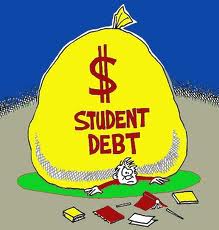
    Education is a crucial stepping stone towards your future aspirations. Yet what should be of great help to individuals instead has become a burden on many. Due to the importance parents, employers, and students themselves have placed on post-secondary schooling, it is a necessity that people often struggle to obtain. This is far from an isolated problem. In 2015, the amount of total outstanding student loan debt in the United States reached $1.2 trillion amongst 40 million students, meaning each graduate carried an average debt of $29,000.

    Stepping out from college or university with this enormous weight on one’s head has led to setbacks and postponements. Although research shows that graduates typically fare much better economically than those who do not attend college or university, those who are still paying off their debt delay major purchases such as a car or home. They often take longer to have children due to the financial strain. This places a young, aspiring graduate in a disadvantageous situation at the very early stages of their career. Promotions will not come for years, and in turn the aforementioned life milestones happen later than one may expect and desire. People are also less likely to pursue entrepreneurial efforts, and fewer small businesses can damage the entire economy.

    Given all these negative consequences, you will want to mitigate the burden and find ways to eliminate that debt altogether. Working while in school can allow for additional income, and part-time or online jobs may be very helpful in chipping away at your debt. Watching your spending is also important. Restrict yourself to eating out only a certain number of times per month, be willing to rent a smaller place to live than you might have intended, and keep track of all your expenses via a spreadsheet each month. All of this might not be enough to overcome your debt, and further action may be required.

    It is important to know which type of loan you have, whether it be national, provincial, or private. This will allow you to contact the right organization for assistance. In Ontario, those who owe a debt through the Ontario Student Assistance Program can apply for financial relief. You will not have to pay until your income reaches a certain level. The National Student Loans Service Centre has programs to help struggling individuals. Options include term revision and a two-stage repayment assistance plan that can ease the burden. These choices, coupled with wise spending and saving, can lead to freedom from debt.

    Gaining an education should not be seen as a negative. That credential, and the knowledge and skills it has bestowed upon you, should be a stepping stone to bigger and better things. By knowing how to tackle your student debt, you can ensure that you utilize your schooling to live the life you deserve.

    Sources:

    Gorman, Ryan. How student-loan debt is dragging down the economy. Business Insider. http://www.businessinsider.com/3-charts-explain-the-effect-of-student-loans-on-the-economy-2015-5

    Holland, Kelley. The high economic and social cost of student loan debt. CNBC. http://www.cnbc.com/2015/06/15/the-high-economic-and-social-costs-of-student-loan-debt.html

    myMoneyCoach. Student Loan Repayment Assistance & Forgiveness Options in Canada. http://www.mymoneycoach.ca/budgeting/student-budgeting/national-student-loan-repayment-assistance

  • Exploring the World of the Trades in High School

    Exploring the World of the Trades in High School

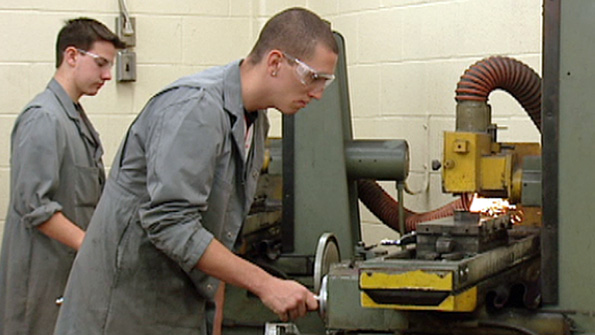
    High schoolers can explore a myriad of subjects and ideas before taking the next steps into adulthood. With so much focus placed on core academic subjects such as math, science, and English, other paths can fall by the wayside. For those looking to pursue the trades industry, there are multiple options to investigate. It is important to start early to ensure you expose yourself to as many opportunities as possible. In doing so, you can find the experiences, networking connections, and organizations that form the foundation of a successful career.

    For example, those in British Columbia may want to take a look at the many training partners within the province. Kwantlen Polytechnic University in Surrey offers the ACE-IT Transition Program. High school students have the opportunity to commence training in the trades before graduating from secondary school and beginning their post-secondary studies. In north-eastern British Columbia, students can turn to the Northern Opportunities organization for apprenticeships. These opportunities include work in the oil and gas fields, industrial instrumentation mechanics, automotive services, carpentry, and more. The South Island Partnership and Tru Start offer similar programs, and these types of organizations can be found elsewhere.

    Over in Orillia, Ontario, students can head to Patrick Fogarty Catholic Secondary School for a very unique trade show. “Explore the Trades” fills the gymnasium with displays by local manufacturers. Young people have the chance to talk to professionals and learn about the different career paths in the industry. The Ontario Youth Apprenticeship Program in Simcoe takes on approximately 150 students annually for apprenticeship programs, providing them hands-on experience before they even enter the workforce. Opportunities like these are open to students in different provinces, and although the industry is represented by men at a staggering 97%, opportunities abound for women as well.

    Co-Op & OYAP, the Ontario Youth Apprenticeship Program, helps girls in Niagara, Ontario find chances to succeed in the industry. These experiences includes the Skills Work for Women Networking Dinner with tradeswomen that also provides hands-on activities. There are also grants, such as one that offers free registration to the Southern Ontario VEX Robotics Championship. As youth become more knowledgeable and resourceful with technology and research, as well as less defined by outdated gender norms, that 3% of women in the trades is sure to grow. The District School Board of Niagara is just one organization looking to help young people find their way in the trades industry.

    If the industry intrigues you, then the best thing you can do is start researching. You may be surprised at all of the grants, apprenticeships, shows, and networking opportunities that exist near you. As you continue to pursue your high school diploma, you can combine that education with invaluable experience that will ensure you have a bright path forward in the trades industry.

    Sources:

    Bleasby, John. Explore the Trades event promotes our industry to high schoolers in Orillia, ON. http://www.canadiancontractor.ca/canadian-contractor/orillias-explore-trades-brings-business-education-communities-one-roof/1003278431/

    Co-Op & OYAP. Women in Trades. http://oyap.dsbn.org/skilled-trades/women-in-trades

    Discover Skills BC. Trades Training in High School. http://discoverskillsbc.ca/training/trades-training-in-high-school/

  • Building Your Research Skills in University

    Building Your Research Skills in University

    For many students research can seem like a chore. In truth, it is less of a chore and even at times a joy when mastered. The best way to make things easier is to become as familiar with your resources as possible; this means sifting through university library and in-class resources while seeking out your own as well. So let’s break it down!

    University Resources

    Each university and college has a library website that gives students access to databases and journals for essay and exam research. Here are the top ones for easy access and widespread research:

    Academic Search Premier – A multidisciplinary database with over 4,600 entire-text journals, it’s hard not to find what you need for any paper whether its Political Science, History, Sciences or Literature. Some PDF files go further back than 1975 and there are plenty of searchable cite references. Some titles are peer-reviewed and Academic Search makes citing in papers fairly easy and thorough.

    JSTOR – While this database covers all manners of topics it is really best for the humanities. Think Anthropology, African-American studies and History. Coverage spans from the nearly the beginning of a particular volume to the most current issue. But this database isn’t just for articles, but rather also for graphs, photographs and other images. Think of this database as a more creative version of Academic Search.


    Good Old Fashioned Library Books – Most papers require you to have at least one cited book source rather than strictly all online sources. So get to that massive quiet building on campus and crack a book. Numerous dictionaries, thesauruses and encyclopaedias can be found there and the atmosphere helps a lot with putting students in the research frame of mind. Also, seeing a book visually up-close can really help with concentration. Screens can dull the process.
    Personal Resources

    Google Scholar – This one is free so you don’t need your university’s power for this one. Google Scholar is not the best, but it’s quick and easily accessible. Find a small group of books, preprints, peer-reviewed papers and technical reports for some quick research. This one is best used as a clue to where to find bigger research sources. It is also handy for annotated bibliography assignments. Google Scholar is not the ultimate tool, but it’s great in a pinch.

    Your Class Notes – This may seem like a university research source, but actually its attributes are dependant on your own skills. Take good notes and the resource is going to be most profitable for you. Find ways to make note taking easy and productive for your particular mind; highlight and add personal thoughts when they come to you. Your essay writing will be that much more alive, in-depth and well thought out.

  • Best Books to Read Before University

    Best Books to Read Before University

    Here is a little heads up about university: you will have to read A LOT. More than that, you will have to write a lot. There will be essays expected in nearly every subject and some previous literary knowledge can really come in handy. It not only helps make you sound more experienced and knowledgeable in your essay writing, but will help with in-class discussions and group work. There are plenty of different books to not only take advantage of but truly enjoy. Here are a few to start you off on the path to being the smartest and most well read freshman in the room:

    A Room of One’s Own – Virginia Woolf

    Ms. Woolf really knew how to say the things that lie deep in one’s mind. A Room of One’s Own is an insightful and eloquently written long essay that explores feminist themes on literal and figural space for women writers within a largely male dominated arena. It is based on a series of university lectures Woolf gave, and is perfect for getting the mind thinking about feminist issues and autonomy. Especially consider tackling this one if you are heading into Women’s Studies, English, Philosophy, Psychology or Political Science.

    The Bell Jar – Sylvia Plath

    Plath’s brain is a fascinating place and she has penned some truly great work. The Bell Jar is arguably Plath at the height of her brilliance. A look at mental illness, anxiety and depression, its attributes for students lie in the complex themes often mulled over by Plath and truly many people every day. It is very dark, yes, but professors in university will be impressed at your knowledge and its many psychological themes and strong English will make its way into your paper writing when school begins.

    The Armies of the Night – Norman Mailer

    You want to talk about great thinkers and writers? Look up Norman Mailer. The amazing (although at times not the most politically correct and socially acceptable) writer was at the forefront of the New Journalism movement and knew how to combine non-fictional reporting with creative-form writing. The Armies of the Night is a work of art about the 1967 March on the Pentagon. Perfect for those interested in either politics, 1960s culture or historical figures, this book is for both the creative and the scientific. Chock full of deep thoughts and great one-liners, Mailer is a quotable entity if there ever was one and not a single professor is unaware of his credentials. Read this one.

    Just Kids – Patti Smith

    There are many different kinds of brilliance, and artistic brilliance is a heavy-hitter. For inspiration and a truly stunning example of impeccable poetry read rocker Patti Smith’s Just Kids. A memoir about her and former lover and life-long friend photographer Robert Mapplethorpe, Just Kids is not only a love letter to a soul mate but a love letter to muses, different art forms and the process and hard times of the artist. It’s not enough to want to learn in order to achieve a career, you should also want to have passion for that learning. Smith is all about passion and it’s infectious.

  • B.C. Scholarships for University Students

    B.C. Scholarships for University Students

    British Columbia 4-H Scholarships

    Valued at $1,000 and available to fourteen lucky but well-deserving students, this scholarship really is applicable to many B.C.-born ones. With vast countryside and agriculturally minded neighbourhoods, 4-H is a huge part of many people’s lives. Why not use 4-H connections to their fullest extent? This is extremely easy to apply for and is only for those going into post-secondary education.

    http://www.bcscholarships.ca/register.php

    University of Victoria Entrance Scholarships, Thompson Rivers University Scholarships

    There are ten of these available and they are all valued at $1,000. Every student that applies for university should immediately apply for the proper entry scholarships right after. These particular scholarships are applicable to Canadians coming from Canadian secondary schools. If Canadian citizens finishing secondary school outside of the country want to apply for these entrance scholarships they must apply as Out of Province applicants.

    http://www.bcscholarships.ca/register.php

    B.C. Access Grant for Students with Permanent Disabilities

    Aiming to help full-time students with permanent disabilities, this grant replaces around $1,000 in B.C. loan funding. You are probably eligible if you already qualify for a federal student loan, are enrolled full-time and have a Canada Student Loan program certified permanent disability.

    https://studentaidbc.ca/explore/grants-scholarships/bc-access-grant-students-permanent-disabilities

    B.C. Completion Grant

    This grant is geared towards full-time students who have successfully completed each year of their university studies; it means having a portion of their B.C./Canada integrated student loan debt reduced by the B.C. government. Based on your assessed need and the amount of your B.C. student loan, StudentAid BC will automatically consider you for this one. Applicants must have no dependants and be in their first four academic years of loans.

    https://studentaidbc.ca/repay/repayment-help/bc-completion-grant

  • Why We Need Tradespersons

    Why We Need Tradespersons

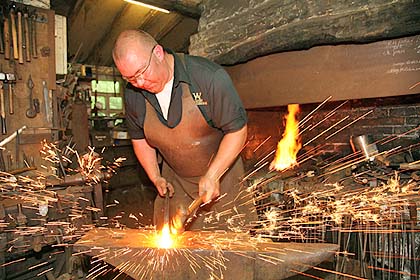
    Can you imagine a world without tradespersons? Without electricians, there would be no electricity to light our homes at night and we would use candles like back in the Stonehenge days. Without plumbers, there would be no running water in our homes and we would bathe in rivers or lakes. Without HVAC people, we would have no heating, and for us who live in cold climates, I can’t imagine how uncomfortable that would be. Without tradespersons, the world would be a very different place.

    Opportunities are increasing in the trades. By 2020, we’ll be short of one million tradespersons, with the residential housing industry alone needing nearly 100,000 more by 2023. The average age of welders is 57, and many trade workers across all categories are also in their 50s. So, if you prepare yourself for a trades career with the proper schooling and training plus you’re willing to relocate, you would find a job more easily than people in non-trade occupations.

    Tradespersons will always be needed. How many times have you heard complaints from family or friends about not being able to find a reliable renovator, plumber or roofer? As a tradesperson, you’ll have less worry about boom-and-bust cycles, offshoring or automation. Not only homeowners need reliable trade workers, but you’ll also be needed in schools, offices, plants, factories and more.

    Increased freedom and mobility is another perk of being a trades worker. You can either work fulltime in a unionized or non-unionized environment or be your own boss. Although self-employment varies by trade, it has increased steadily and at a higher rate in the trades than in other occupations. In 1987, only 9% of tradespersons were self-employed compared with 15% in 2007. Today, it’s probably higher.

    For some trades, wages have increased steadily especially for those in unionized positions such as electricians, crane operators and plumbers. For employees in unionized trades, salaries averaged $22.36 per hour, 6% higher than the $21.02 in other occupations.

    A career in the trades is not just about being a carpenter, plumber or electrician. Service careers like hair stylists, chefs and painters also classify as skilled trades; and a lot of them make good money and enjoy a high standard of living. A hair stylist can make as much as $49K per year or $16.29 per hour, and even more if they have their own salon. A kitchen chef earns, on average, $14.97 per hour or $49K per year, and salaries increase if they move up the ladder to executive chef or head chef. And, if you have a bit of a flair for art and colour, as a painter you can make even more: $19.85 per hour or $61K per year, depending on your location.

    Like other careers, you need to be willing to work hard and do what it takes to succeed. If you want an interesting career where you can help build a better world and increase quality of life, a trades career may be the right path for you.

    ____________

    Giselle Mazurat received her designation as a Certified Resume Strategist from the Career Professionals of Canada. She also writes technical and business content for government and private companies. You can reach her at giselle@experttechnicalwriter.com.

    Bibliography:

    Apprenticeship competition aims to draw attention to looming shortage of skilled trades workers in Canada
    http://news.nationalpost.com/toronto/apprenticeship-competition-aims-to-draw-attention-to-looming-shortage-of-skilled-trades-workers-in-canada

    Five basics you need to join the skilled trades
    http://www.vancouversun.com/business/2035/Five+basics+need+join+skilled+trades/8452245/story.html

    PayScale – Hair Stylist
    http://www.payscale.com/research/CA/Job=Hair_Stylist/Hourly_Rate

    PayScale – Kitchen Chef
    http://www.payscale.com/research/CA/Job=Kitchen_Chef/Hourly_Rate

    PayScale – Painter
    http://www.payscale.com/research/CA/Job=Painter/Hourly_Rate

    Statistics Canada – Skilled Trades Employment
    http://www.statcan.gc.ca/pub/75-001-x/2008110/article/10710-eng.htm#a7

    The 5 Best Skilled Trades Jobs in Canada
    http://nacc.ca/the-5-best-skilled-trades-jobs-in-canada/