Author: Laura Sciarpelletti

  • Careers in Travel

    Careers in Travel

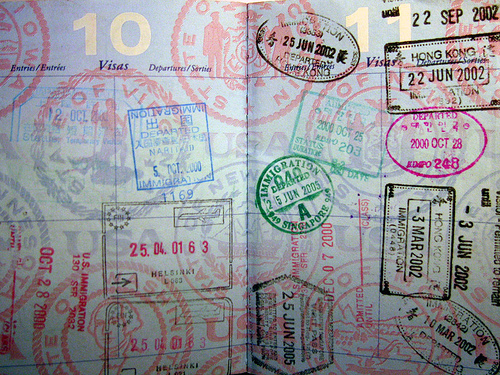
    Are you itching to hop on a plane and end up somewhere completely different? Do you long to learn about other cultures but need a consistent paycheck while you are doing it? There are many jobs that involve travel—such as archaeology, geology and consulting, but we have narrowed down some job ideas for the travel-hungry that are a little more specific.

    English Teacher

    This is one of the best ways to start paying off student loans while getting to travel at the same time. Typically acquired by those who are fresh out of university, teaching English as a second language in different countries around the world typically requires a Bachelor’s degree, strong language and leadership skills, and a commitment of at least one year. This is a fantastic way to ease yourself into the work force while gaining life experience. Many of these teaching jobs take place specifically in China, Korea and Japan.

    Truck Driver

    Truck drivers are absolutely essential to our economy—they transport raw materials and finished goods over land on a deadline. If you decide to follow this route, you will be expected to inspect your vehicle consistently for safety and mechanical issues, and will often also be responsible for sales and customer service if you decide to operate your own business. This constant road-trip job can be lonely, but those who enjoy solitary work thrive and can earn a lot of money.

    Flight Attendant

    Of course the best way to see the world is to always be on a plane! Flight attendants are in charge of the safety and comfort of passengers on flights. While making sure the flight goes safely is their number one priority, they also functions as servers. It is now normal for airlines to employ both women and men, and multilingual flight attendants are in high demand—particularly in Canada, it is quite an asset to speak French. The more wide your range, the more interesting places you will get to go to and higher class flights you will be on!

    Au Pair

    The most glamorous kind of babysitter, au pairs are domestic assistants who travel to other countries to live with a host family. They are responsible for childcare, housework and receive allowances for personal use. This is a great way to travel and see other countries in a financially sound way…rent and living-expenses free.

    Travel Tour Guide

    Often where you get travel tour guide work will depend on your language abilities, although English is a very important one and sometimes all you need depending on the kinds of tourists you deal with. These workers provide information on cultural, historical and contemporary knowledge to tourists while also assisting them. This may involve large groups or private small groups. Typically these jobs will take place at museums or other educational establishments, religious sites or sites of historical importance.

    International Aid Worker (Red Cross)

    Often a very physically and emotionally demanding job, being an international aid worker requires first aid experience. Being emergency response means that you will be on-call and away from home for long periods of time. You must work well as part of a team, work for continuous long periods of time, and thrive in multi-cultural environments. While this is very difficult work, many people believe it to be extremely rewarding. You must be able to integrate well with others’ heritages and beliefs and always respect the country you are in.


  • Things to Know Before You Go to High School

    Things to Know Before You Go to High School

    No matter what generation you are from, it is a universal truth that the media makes high school seem scary. Decade after decade, movies depicting high school life make it seem so different and scary from elementary and middle schools. Different it most certainly is…scary it is not. At least it does not have to be. A lot of times your early perceptions of high school is solely based on films or word of mouth from older people in your life like siblings and their friends. From John Hughes movies like The Breakfast Club and Sixteen Candles, to the 90s classics Clueless and Jawbreaker to 2000s modern classics Mean Girls and Easy A, high school is depicted as a politic heavy bully central. It is actually so, so much calmer in reality.

    Here are a few things to keep in mind before you walk through those doors on your freshman day:

    1. People in high school are not as tall as they first appear. You are a regular sized human.
    2. Do not follow the stereotype guidelines of movies, that is, how you miss out on great experiences. Do not let your personality be judged by others and based on where you choose to spend your time in high school.
    3. Grades are increasingly more important as you progress through high school. Keep tabs on that, even if you believe university is not in your future. Open possibilities will give you an innate sense of freedom.
    4. Every one in high school is just a kid. You are all growing up, even if some seem more mature than others. Grow up at your own pace.
    5. This is one tiny portion of your life. Who you are in high school will not define who you eventually become.
    6. Choose friends that make you happy and respect you. Do not hang with anyone for status because their power will be meaningless in the future, but some true friendships last a lifetime.
    7. Use your school’s extra resources like AP courses and tutoring; your university self will thank you. Of course do not overfill your plate, but instead allow yourself small extra challenges each semester.

  • Surviving Depression

    Surviving Depression

    I was three months into university when it happened. At some godforsaken hour of the night, staring into the bathroom mirror, my body heaved into a fit of tears. That may sound like melodrama, but depression will do that to you. After all, the condition is inherently absurd – my grades were high, my family as wonderful as always, and my future bright. Being unable to pinpoint a reason for my sadness merely amplified it.

    I withdrew from family. My social anxiety made it impossible to make friends. I grew stagnant, unwilling to seek help. It was not until after university, when my emotional pain threshold was hit, that I sought a doctor. Even then, I jumped from one medication to another, job to job, all while enduring one sleepless night after another. With fewer opportunities and greater dependence on alcohol, I reached my lowest point. Some people begin to improve before that. Then again, others never improve at all.

    I remember sitting in the tiny doctor’s office while he thoroughly examined by personal and family history. It was a whirlwind. He made it clear that it was an illness, and not one that simple goes away overnight. It is something I have to be diligent about for the rest of my life.

    Depression is a mental condition. To be even more direct, it is an illness, no different from any other. A physical malady unlike the rest, as it is one that is shrouded in cognitive dissonance. We struggle to see the brain and the body as one cohesive unit. This divide between the physical and the mental makes it hard to see depression for what it is. It is an illness. It can be treated. It can be cured.

    Getting help took many steps, and those are steps I am still taking. They are a mix of therapy, medication, socializing, eating well, exercising, and more. A potpourri of positive behaviour that was a far better concoction any mix of drugs and drinks could muster up. What has been important to remember is that they all work in tandem – not one of those aides would help me on their own.

    Every sufferer has a different story to tell. Your struggles with mental illness may be better or worse than mine. Regardless, it is important to share your story. Not everyone will understand, nor do they have to. Yet it is vital for people to know they are not alone, and that it can get better.

    If I could only offer one piece of advice, it would be this: There are many steps you can take to tackle depression, but the most important thing of all is to take steps. Even if you have no clue whatsoever what you are doing, just make a doctor’s appointment, call a friend, start exercising. Stagnancy is depression’s breeding ground. Any positive action is a step in the right direction.

  • Success in the Trades : A Glimpse of the Top Jobs

    Success in the Trades : A Glimpse of the Top Jobs

    These days, some highly qualified and well-educated people are finding it tough to land a job in their respective fields. It is not because their education and qualifications have become extinct, but rather it is simply that there are no job vacancies. Just like economics—employment also follows the law of supply and demand rule. Jobs in the trades industries are currently in high demand.

    According to a Globe and Mail article, the country will be in shortage of one million tradespeople by 2020. As such, if you are considering joining the work force in a few years, consider studying in these trades as recommended by Canadian Living.

    1. Construction workers

    Since infrastructure is continuously being improved upon in most parts of Canada, construction workers are in high demand. Add to this the rise of commercial and residential buildings, mostly high rise. It is said that about 7 percent of the Canadian workforce is composed of construction workers according to the Canadian Construction Association.

    2. Vehicle repair

    What are two permanent things in the world? Death and taxes, as they always say. However, you can also add cars to this list. There will always be a good number of people who will be in need of vehicle repair. Are your tires worn out by winter weather? Call auto mechanics. Preparing for a summer road trip? Call auto mechanics. It’s said that the postings for mechanic trades rose to 94 percent according to 2013 figures.

    3. Maintenance worker

    What would the country be if it weren’t for the hard work of maintenance workers? While maintenance work involves a wide range of specialties, they essentially mean the same thing—keeping things in order. Such jobs include maintenance technician, maintenance mechanic, maintenance specialist and, of course, maintenance worker.

    4. Electricians

    Along with the growth in construction projects, there is equal high demand for licensed electricians. These professionals do a combination of complicated tasks–from laying out, assembling, installing, testing, troubleshooting, and repairing electrical wiring, fixtures, control devices and related equipment in buildings and other structures.

    5. Heavy machinery operators (such as a backhoe, bulldozer)

    Whenever there is an ongoing construction project, you can trust that heavy machinery operators are close by as well. These professionals work heavy machinery with expert skills like backhoes, bulldozers, graders, and other construction-related vehicles. While heavy equipment operators have been mostly males before, that is now starting to change.

    Are you ready to join the skilled trades industry? According to news sources, workers in this field have a potential of earning $100,000 per year…

    Sources:

    http://www.canadianbusiness.com/lists-and-rankings/best-jobs/2014-skilled-trades-jobs-top-10/

    http://www.theglobeandmail.com/life/looking-for-a-job-why-you-should-consider-a-trade/article9117896/

    http://www.canadianliving.com/life/work/the_5_best_skilled_trades_jobs_in_canada.php

    http://www.albertacanada.com/opportunity/working/occupations-regulated-trades.aspx

    http://ottawacitizen.com/business/local-business/canadas-employment-numbers-include-some-surprises

    http://www.cbc.ca/news/canada/newfoundland-labrador/women-trades-happy-valley-goose-bay-1.3443393

  • Optimize Your Studying with a Whiteboard: College and University Study Tips

    Optimize Your Studying with a Whiteboard: College and University Study Tips

    Have you noticed that study rooms often include a whiteboard? I have studied at many university libraries and all the study rooms I have used included a whiteboard. (Whether working markers and an eraser were available—that’s a different story.) My old method of studying involved writing and rewriting notes, but one day, I ran out of paper. I grudgingly resorted to writing on the whiteboard…

    And I have never looked back. The whiteboard has become an indispensable studying tool and here I discuss how I have optimized my studying by incorporating a whiteboard.

    1. I have space for diagrams and charts.
    Whenever I drew a diagram on a regular-sized piece of paper, I either had to write really small to fit all the information in or write in readable font size- but leave out some information. The same goes for charts. With a whiteboard, I have so much space!

    Recently, I was memorizing the different classes of antibiotics and their mechanisms of action. I drew a giant bacterial cell on the whiteboard and was able to write the antibiotic names where they acted in the cell. For example, if the antibiotic attacks the cell wall, I would write its name just outside the oval cell. The bonus here is that you can take a picture of this diagram and study on the go!

    2. I can test my memory.
    When you are finished studying a lecture, stand in front of a blank whiteboard and write down a summary of the lecture. Start by writing down the different sections of the lecture and then methodically, write down the important points section by section.

    The point of this exercise is to see how much you have remembered: did you forget a section? If you did, you now know that you need to devote more time to. Did you write down everything? Then you are good to go on to the next lecture. It’s true that you can also try this with a piece of paper—but I argue that given the length of university-level lectures, you simply cannot fit all that information onto one piece of paper. The whiteboard gives you much more space.

    3. I have a reason to get up.
    Sitting in one spot for a prolonged period of time can have negative consequences for your health. I used to think that I had no choice but to risk my long-term health in favour of my grades. Now, by using a whiteboard, I can stand up and pace while studying. This is the kind of multi-tasking that I love.

    Studying is a constant struggle for many people. I am always in search of The One: that one strategy that will help me achieve greater productivity, more efficient studying, and better time management skills. What I have found is that a strategy that works for your friend may not work for you—and there is nothing wrong with that! So my disclaimer is that I cannot guarantee this will work for you, but I encourage you to give it a shot.

  • Making Career out of Weird

    Making Career out of Weird

    Samantha Hess wakes up every morning and prepares for her day just like everyone else. She gets dressed and heads to work as you do to get to school. She meets her client, takes them in her arms, and proceeds to cuddle… and that is where your path might diverge from hers. Samantha is a professional cuddler located in Portland, Oregon. Your knee-jerk reaction might be to take that as a joke, but she makes up to $80 per providing cuddle-based services.

    Normal 9-to-5 careers are the ones we are most familiar with, but they are far from the only option. Since humans evolved and developed civilization, they have been offering services to each other in order to create a community and survive. Any career is ultimately in existence because it services other people and provides them with something they want. With this mental framework, it is easy to see how many potential unconventional careers there are out there.

    This approach creates seemingly endless opportunities for entrepreneurs. Jen Glantz co-founded her own company called Bridesmaid for Hire. She offers exactly the service you are imagining: bridesmaids and personal assistants for a bride’s big day. The company makes up to $2 000 per wedding, making the endeavour more than just a fun little diversion. Once again, as silly as it sounds, these jobs are fulfilling needs. Cuddling has a positive mental and physical effect for people who are lonely or ill. A bride may not have as many bridesmaids as she would like or need, and the extra help can turn a disastrous wedding into one that will be remembered for decades to come.

    Take the Mueller family, who live in a beautiful and luxurious home. That is, until they are forced out. The Muellers are paid to take up residence in luxury homes that are up for sale. Upon being sold, they are sent to another home to live in that is also being sold. Their nomadic lifestyle means they have to be prepared to move with very short notice, but it also provides them with high-quality living quarters. Families are hired to temporarily reside in homes on the market because studies have shown that houses sell better when they appear lived in. As strange as it sounds, these families make it easier for real estate agents to do their job, and help homeowners make the most out of the stressful selling and buying experience.

    These are just a few examples of many. In a world of ever-changing technology and increasing complexity, it can be harder and harder to find traditional employment. By stepping back and looking at careers for what they are and how they originated, you can focus on services instead. What skills do you have to offer that ultimately fulfill the needs and wants of other people? Embracing the weird may be what it takes to build a successful and satisfying career.

    Sources:
    Benna, Steven. 12 weird jobs you’ll be surprised to know exist. http://www.businessinsider.com/weird-jobs-youll-be-surprised-to-know-exist-2015-7
    Murano, Grace. 11 Odd Jobs. http://www.oddee.com/item_99026.aspx

  • How to Handle No

    How to Handle No

    No.

    Nowhere else in the English language can two letters have such an impact. Your parents want you to stay home and not see your friends. That one university you wanted to attend does not feel you are a strong enough candidate. The attractive classmate from across the room does not want a date. Rejection manifests itself in many ways, yet the emotional result is always similar.

    From the big to the small, rejections happen to everybody. It is of utmost importance to remember you are not alone. You may not know anyone being told “no” in the same situation, but everyone you know is hearing “no” from somewhere.

    Rejection has always been a part of the human experience. In the late 1930s, Ted from Massachusetts struggled to get his first book published. It took rejections from over twenty different publishers before he finally got a yes. That is more than twenty no’s, more than twenty individual instances of a dream being crushed. At the end of the day, that one yes that got the book published was what mattered. After that one acceptance, all the prior rejections became irrelevant. Had he let those stop him, he never would have published And to Think I Saw It On Mulberry Street, along with all the other books he published under his more recognizable name, Dr. Seuss.

    The first thing to remember is persistence. We are not all Dr. Seuss, but we all have dreams and goals that we pursue. Those goals are not doomed after one, two, or even twenty rejections. In many cases, there is much to learn from the “no” we hear. The work you submitted can be tweaked using the feedback given. Every application and interview process helps to prepare you for future applications in the field.

    Secondly, do not lose your perspective. If you place all your focus on one goal to be accomplished one specific way, then it is no surprise that rejection will lead to devastation. Give yourself multiple goals to reach and multiple avenues to pursue each goal. Writers and artistic creators can find success in television, film, literature, games, and more. Post-secondary education offers many schools offering numerous programs in your field of interest. There is always a path to take.

    Finally, maintain your distance from each rejection. It is your work, a potential date, or a job that did not come to fruition. You as a person are not being rejected. Everyone is told “no” at one point or another, and often receive a “yes” for that same application or creative work when going elsewhere.
    Persistence, perspective, and distance are vital. There is only one vacancy for that job, only one significant other for that attractive classmate, only a limited quota of books that publisher can publish. You are one of many people pursuing those spots. Rejection is not the end of the world. It is a necessary part of it.

    Sources:
    Neuman, Frederic. How to Cope with Rejection. https://www.psychologytoday.com/blog/fighting-fear/201308/how-cope-rejection
    Teenshealth. Big or Small, Rejection Affects Us All. http://kidshealth.org/teen/school_jobs/jobs/rejection.htmlWikipedia. https://en.m.wikipedia.org/wiki/And_to_Think_That_I_Saw_It_on_Mulberry_Street

  • How to Compete in the Work Force with No Financial Support

    How to Compete in the Work Force with No Financial Support

    We’ve all heard that getting a creative degree is economic suicide, and it certainly can be crippling especially if one is without financial support. The truth of the matter is that post-grad is when you really find out how badly you want that career. Those who have financial support sometimes will not have to try as hard, but if you talk yourself into believing that not having the resources they do hinders your chance at success…you will never move past that. The reality of what occurs after you acquire your Bachelors degree is a battle between ambition and financial security, and deciding if you do actually have a novel in you rather than only the lust of one.

    That ugly thing called debt.

    Debt can be an invisible demon throughout university, where you are telling yourself that it is simply a reality of our day and age and you are using it to better yourself for future employment. All that reassuring makes debt seem ghost-like; that notion is torn down with the very first call from Student Loan Services inquiring about direct deposit options. So you get yourself a job unrelated to your degree while trying to generate revenue and inspiration from freelancing or commissioning gigs—all of this on very little living money. In reality, the more obstacles placed in front of a goal that is truly desired, the more driven to achieve it you are likely to become. Having no money will either completely derail you, or fuel you.

    Keep producing.

    You must CONSTANTLY be submitting work in your field, whether it’s for galleries, magazines, newspapers, anthologies, zines….anything. even if there is no financial outcome, you are keeping yourself busy and that discipline will help you grow as well as prove to future employers that you are self-motivated. Maybe being on your own means that your networking opportunities are limited, but the reality is that if one sends thirty emails one will get at least a single reply. This persistence must be backed by a sufficient body of work, so never stop contributing to events and publications even if they are amateur-based.

    Urgency and momentum.

    One of the biggest fears artistic post-graduates face is losing creative momentum. This is something that cannot be avoided if the former student is in a race against bill deadlines, madly depositing the tips from their weekend job until they’re able to tap the payment button on their online banking app. Many writers wrap themselves in their accomplishments, but feel so far away from them at the same time. It’s a strange wonder how accomplishments are so quickly forgotten, until they eventually become lost. It’s the momentum of accomplishments that give outsiders the impression that you are successful. For artists and writers, the concept of becoming a ‘has-been’ is a daily fear. But if you are self-financed you are henceforth self-made, and that provides an innate urgency. While it may sound corny to hear “You make your own luck”, and “you can do it”, the reality is that if you have put yourself through university and are reading an article like this to figure out how to succeed…. you are extremely serious about this career.

    Go to events.

    Readings, gallery openings, concerts…put yourself inside the same four walls as people who make a living off of what you want to do. And talk to them! Even if it feels like you might be annoying, they were once exactly in your spot and will understand. Artists help other artists.

    There is always a kind of romanticism surrounding art—something that drives us to it throughout our adolescence. University makes it clearer, and either wipes it out or fuels it. Post-graduation strips it of the romanticism to its bare bones and allows a clear view of what exactly you are committing to.

  • Extra-Curricular Activities: Going Beyond

    Extra-Curricular Activities: Going Beyond

    Attending classes in the morning and afternoon is tiring enough. That does not even include the homework that comes with it. So the notion of tacking on extra-curricular activities to your already busy day can sound unreasonable.
    Regardless of the activity, participation in extra-curricular events comes with multiple benefits. Balancing a busier schedule helps to build effective time management skills. As you get older, life only increases in its current hectic nature. Those skills will ensure you are able to take on the challenge. It is important to remember that your classes are structured, and structured by someone else. The school designated 8:30 as the start of the first period. Lunch is at 12:30. The day ends at 3. While it is a challenge to attend and succeed day after day, the schedule is quite simple to remember.

    Extra-curricular activities may not fall under such a simplistic pattern. They can happen on different days, perhaps early in the afternoon or later. The times might be irregular and not set in stone. You could be looking at a different schedule week after week, and this somewhat more chaotic setup better prepares you for the structured chaos of adulthood.

    You also want to think ahead to the post-secondary world. As you fret over your final grades, universities and colleges are looking at far more than just those numbers. Many applicants will submit glowing transcripts. It can take more than that to set you apart. Along with volunteer and work experience, extra-curricular activities customize your application. By diversifying your free time, only you will have that specific combination of activities, work, and grades in order to stand out from the pack.

    A study conducted of over 60 university admissions teams concluded, that more and more of them are placing significant importance on extra-curricular activities. Grades are just one piece of the puzzle! By displaying a variety of interests and talents, you highlight your skills and hard work. You are showing your desire to learn and grow as a human being, and this is the ideal candidate that learning institutions and workplaces are looking for.

    Ultimately, think of how extra-curricular activities can help you in the now. What do you currently do after school? Lazy evenings are fun, but grow increasingly empty in repetition. Join a sports team. Take on a new skill. Meet new people. Sure, you are building skills for your future. But you are also improving your physical and mental well-being.

    If the vast array of options for extra-curricular activities leaves you discombobulated, pick ones on a whim. Drop the ones you hate, and cling to the ones you enjoy. Make friends, improve your health, feel better about yourself, and perhaps even do better in school. Revel in the delightful irony that making yourself busier can actually make your day less challenging.

    Sources:

    Grove, Jack. Extra-curricular activities now ‘more important’ to university applications. https://www.timeshighereducation.com/news/extra-curricular-activities-now-more-important-to-university-applications/2017980.article

    I Have a Plan Iowa. The Importance of Extra-Curricular Activities for Teens. https://www.ihaveaplaniowa.gov/Home/Article.aspx?articleId=IGeYH2kUApurN7JfmoFVeQXAP3DPAXXAP3DPAX&level=3XAP2FPAX6J7I3kztATGuYyXAP2BPAXDahIQXAP3DPAXXAP3DPAX

  • The Most Important Skills to have as an Executive Assistant

    The Most Important Skills to have as an Executive Assistant

    In modern offices, you will be hard-pressed to not find an executive assistant. These individuals play a crucial role in organizations big and small. Ostensibly, an executive assistant supports just one person—but in practice, an exceptional executive assistant adds an extra dose of efficiency and productivity to the entire office.

    The job description for the executive assistant to a vice-president of finance will differ from the job description for the executive assistant to the CEO of a non-profit organization. However, certain skill-sets will always be in demand for this position.

    The most important skills to have or acquire:

    1. Time Management

    An executive assistant manages the day-to-day schedule for the person he or she supports. Therefore, you should be familiar with scheduling software, such as Microsoft Outlook, Google Calendar and PeopleSoft. These programs will also help with forward planning: you will be responsible for keeping an eye on what’s coming up, especially deadlines. Time management also involves being able to prioritize tasks. Your to-do list will no doubt be long; the key to making your list manageable is knowing which tasks are urgent and which ones can be safely put off to another day.

    2. Communication

    You will have contact with many people both inside and outside the organization. It goes without saying that your communications need to be professional. Not only are you representing your boss and your organization, but you need to maintain good working relationships. Another way to maintain professional rapport is to communicate and set appropriate expectations. Know when you need to say, “I’m sorry, event X has to take priority this week. Can I get back to you about event Y next week?” And when you promise to follow up; make sure you do!

    3. Flexibility

    Executive assistants need to be flexible. You may have put together the perfect schedule for your boss—but an emergency happens and now you’re busy coordinating with other busy people to reschedule meetings. Is this a headache? Yes. But if you react with a negative attitude, you are acting unprofessionally. Learning to roll with the punches is a necessary skill-set for executive assistants because life is not always going to follow your schedule.

    Now that you have a better idea of the core competencies of an executive assistant, you can investigate what skills and knowledge you need specific to your boss and your organization. For example, if you are applying to work for a vice-president of finance, you will stand out from the other applicants by having some experience in an accounting or finance environment. Becoming an executive assistant is a challenging and demanding position, but an incredibly rewarding one.