Author: Susan Huebert

  • What’s a Living Statue?

    What’s a Living Statue?

    Suppose that you could make a good living just by standing still. If you are physically fit, have good self-discipline, and enjoy acting, you could become a special kind of performer called a living statue. Ever since circus performers first started acting as living statues, this form of mime has become extremely popular, especially in Europe. People like Petronella Carter of London, England have made the art of being a living statue into a career.

    The name “living statue” describes what the job involves. Basically, living statues pretend to be real statues of various people, such as famous authors, painters, or characters from books or movies. They might join with other living statues to create a scene from history or everyday life or they might work alone.

    Every year, living statues in Europe hold competitions in the Netherlands to see who is best in various categories. Children, amateurs and professionals compete to see who has the best costume, best act, and most interesting entertainment. Each person portrays a certain character, such as a girl selling flowers or a man carrying luggage. These competitions bring a large audience to watch both the stillness and the movements of living statues.

    Being a living statue involves working on many different aspects of character, costume, and movement, according to Petronella Carter. She has been working as a living statue since the 1990s. During these years, she has learned a lot about the art and her own skills in portraying various characters.

    Many living statues work at street festivals and other outdoor events, but Petronella works mainly indoors, where she has a greater range of costumes and characters to use. Sometimes, she has to spend an hour and a half putting makeup all over any part of her body that is not covered by clothes. This makeup helps her to look like a statue made of bronze or other metals.

    Through her work, Petronella has developed ways of dealing with the challenges of being a living statue. She limits the amount of time she stands in one spot and has learned to control her breathing. Petronella can ease the pain of sore limbs with small, slow movements that no one is likely to notice. However, she also knows that standing still is not enough.

    Movement is what makes the difference between a living statue and a stone or metal one. Most living statues make an occasional small movement or even a large action. They might wink an eye or give out flowers to people going by to show that they are alive.

    Becoming a living statue does not require any special education, but it involves a lot of self-discipline and training. If you want to join this profession, you could start by learning to be a mime and by slowly increasing your ability to stand motionless.


  • Career Profile: Economist

    Career Profile: Economist

    You might sometimes wonder why you have to study mathematics at school. What’s the use of all of those percentages and averages that you have to calculate? These concepts might not be useful in many jobs, but they are essential for economists. Every day, economists use complex mathematical skills to help governments and businesses plan for the future.

    In 2011, Canada had about 15,000 economists working in a variety of places, including government offices, businesses, and other organizations. In some ways, economists do the same kinds of work as accountants often do. They work with budgets, prices, and how to make money. However, economists tend to work on bigger issues than these.

    For economists, the issue that people face is not just how much money to charge for a product or service but also how that fee might affect other aspects of the economy. For example, an economist might analyze how an increase in fuel prices can affect the cost of transporting food from farms to the cities and how that might affect food bank usage and other parts of society.

    Economists work with the trends that influence how people spend money and what affects factors such as prices and resource use. They use statistics to analyze trends in society and to predict what might happen in the future. They also have to know how laws might change various aspects of the economy. Economists might study public transit usage before and after a price increase or analyze how salaries in certain jobs affect house purchases. Economists need to understand numbers, but they also have to be able to see the larger trends.

    Becoming an economist involves knowing a lot about mathematics but also about how people and the economy work together. Most economists have at least a bachelor’s degree in their field, but most have a master’s or Ph.D. Even after they graduate, economists have to keep on learning. They read magazines and other publications related to their work and they find out what other economist think. Reading statistics on how Canadians live is an important part of their work, since that gives them the information they need to make accurate predictions about the future. This can sometimes be a challenge, especially when the information is difficult to find or is unavailable.

    Many economists work for the government, but they also work for large businesses to help the owners plan for the future. The average salary for an economist in Canada is $80,000 to $100,000, but most jobs start at a lower level and some can rise to a higher level. Experience is very important in this field, since it can be very important to learn about how different factors work together. Job prospects in this profession are limited, but there will likely be some openings in the next few years.

    If you love numbers but you also enjoy seeing how everything works together, you might want to consider becoming an economist. Your work might affect Canadians for years to come.

  • Career Profile: Software Developer

    Career Profile: Software Developer

    Every time you use a computer, you use software. Each game and program for writing or doing budgets has software that allows the computer to work and to respond to what people tell it to do. If you like to work with small details and to see how your work translates into something that everyone can use, becoming a software developer might be a good choice.

    Working as a software developer might sound like a very exciting job. You could imagine that you could spend the day playing games and learning new things, and it might include some of those kinds of activities. However, working as a software developer is mostly about working at the coding behind what people see. It takes creativity but also the ability to focus on small details and to see how different elements fit together.

    You might know a bit about the mechanics behind computer programs. Have you ever done any programming yourself? The end result can be very interesting, but getting to that point usually takes a lot of work that can sometimes be somewhat dull and time-consuming. Many software developers have degrees in computer science, but formal training is not always necessary. If you have talent as a software developer, you have a good chance of getting work in this area even if you have only a high school education.

    Software developers use many of the same skills as computer programmers. The know how to use the coding behind the programs to produce certain effects on the computer, such as a special sound or colour. If you want to be a software developer, you can already start to learn the technology behind what you see. Learn the codes that tell the computer what to do and become familiar with what happens when there are mistakes in the coding.

    Software developers have to know all of the technical aspects of how computers work, including computer languages. However, they also need to be creative. Most computer programs, such as word processing software, are designed to solve a problem or to fill a need, even if the need is only for entertainment. Some of the main areas where people in this field work are new technologies, healthcare, and security. However, software developers can work in almost any place where computers are important.

    Research is an important part of being a software developer. People in this field might spend a lot of time reading about what other people have done and thinking about how they can improve on old technology. Learning from other people and from books, magazines, and other sources of information can help to keep a software developer’s skills current.

    Depending on where they work, software developers can earn between $44,000 and $81,000, but the average is about $59,000. Experience can sometimes help people to earn the higher salaries, but most software developers move into other fields within about twenty years.

    Do you love computers and enjoy finding out how they work? You might want to consider becoming a software developer.

  • University Mythbusters

    University Mythbusters

    We get the majority of our information about universities from family and friends, the media, and (if you’re in upper years in high school) even the universities themselves. These sources can provide a lot of useful information, but take them with a grain of salt: you won’t know what it’s like until you actually get there.

    If you’re curious about what university might actually be like, take the following information into account. Here are some common university myths, debunked by an undergraduate student at the University of Toronto.

    University is a non-stop party.

    We’ve all seen college movies with ridiculous frat parties, campus-wide parades, and non-stop (and underage) drinking. Don’t be fooled by that image (or the image many schools try to solidify during orientation week). It’s important to have fun, but you shouldn’t do so at the expense of your education. Plus, chances are, by mid-semester you’re going to be faced with too steep a workload to be going out every night.

    If you did well in high school, you’ll do well in university.

    For most students, university classes are much more difficult than their high school counterparts. The expectations are higher, the assignments are more difficult, and sometimes even the marking can throw you off. That being said, high school students that do become successful university students likely adjust well because of the skills they picked up along the way—time management, independence, resourcefulness, etc. Focus on developing those skills before you get here.

    It’s impossible (or at least mind-blowingly difficult) to do well.

    It’s true that expectations in university are high, and to be fair, some programs are more difficult or demanding than others. However, if you develop a solid routine (frequent study sessions, a good sleep schedule, planning in advance for due dates), and pay attention to what’s asked of you, your grades are bound to go up. It may be more difficult to handle than what you’re used to, but work hard at developing good habits and you’ll be set for the whole year.

    You have to have a concrete plan for your future.

    It’s good to keep some long-term goals in mind, but you shouldn’t go into your first year of university with a rigid conception of what life is going to be like after you graduate. A lot of students end up changing their majors or pursuing other studies after they finish their degrees. This isn’t a bad thing at all: university is a place for you to discover your strengths and weaknesses, as well as what you’re really passionate about. Don’t be discouraged if it takes you a little bit longer to come to those conclusions.

    Remember that regardless of what you hear, university is what you make it. Don’t feel the need to fit the image of the stereotypical student (whatever that may look like to you). Come to university with an open mind, and be prepared to work hard: you’ll find your place in no time.

  • Self-Advocacy for Students with Learning Disabilities

    Self-Advocacy for Students with Learning Disabilities

    There may be times when you’ll need extra assistance or special adaptations in high school, college, or at a job. When you were young, your parents or care-giver likely worked with teachers and other school personnel to develop a plan for your success. However, as an adult you will have learn to be your own advocate. It is important, therefore, to learn self-advocacy early on. Let’s get started!

    The following are steps you can take to help get ready for the transition into adulthood:

    1) Get to know your LD.
    Learn about your diagnosis. Ask yourself: How does my LD impact my learning? Are there specific things my teacher or parents have done that work best for me (did visual cues or having a note taker or even taping classes help with my learning)? Understanding your own LD and what accommodations have worked for you in the past will help you in college and in the workplace and will ultimately help you be successful.

    2) Think about your (big and small) goals for the future.
    What do you want to accomplish in your life? Do you want to go to college or are you planning to go directly to work? Do you know what career you would like to pursue? Write down your goals, and make sure to break it down into the smaller steps that will help you reach your bigger goals.

    3) If you are having problems, meet with your teachers.
    Becoming an advocate for yourself means you will need take initiative to solve problems. If you find yourself having problems keeping up or your grades are slipping, ask your teacher to meet with you after class to discuss your concerns and help you find solutions.

    4) Get to know your strengths and weaknesses.
    Understanding your strengths will help you work on your goals and may even help in determining your career choice. The point of understanding your weaknesses is not to highlight all of your faults (and we all have them), but is instead meant to understand which areas of your life need more attention or where you may need more assistance.

  • Leaping Into Spring

    March is here, meaning the arrival of spring is not far off. While spring certainly means that the snow will be melting (thankfully) and the grass will be growing, it’s also a very important time in the life of students. Students in college and university are preparing final projects and getting ready for exams, while high school students will begin planning in earnest their next moves after graduation.

    This month, we are delving deeper into the world of STEM (Science, Technology, Engineering and Math), a rapidly growing sector that will soon have some of the highest demand for new graduates. We’re also taking a look at how you can get yourself organized while you ready yourself for finals and, of course, we have sourced some of the latest scholarships and bursaries to fund your academic ambitions.

    Not sure what you want to study in post-secondary? Don’t fret – browse through our archives and our videos for thousands of different career options. Something is bound to spark your interest!

    From all of us at JobsPeopleDo.com, have a great March and enjoy the warmer weather of springtime!

    Jasmin Bollman

    Content Editor

    Follow us on Twitter at https://twitter.com/JobsPeopleDo and Like us on Facebook at https://www.facebook.com/jobspeopledo

  • Scholarships and Bursaries for Students with Disabilities

    Scholarships and Bursaries for Students with Disabilities

    You’ve got big academic dreams – they’ve got the funds!

    Scholarships are “free money” given to a student for their college education—unlike loans, this money does not have to be paid back. Many private scholarships are available that grant money to students based on their particular strengths, interests, disabilities and other characteristics or qualities. Finding this money can be the hard part, but we’re here to help. The following is a select list of scholarships particularly for students with learning disabilities.

    The Marion Huber Learning Through Listening Award

    Three $6,000 and three $2,000 awards available to high school seniors with LD who demonstrate leadership skills, scholarship and a high level of service to others; must be a member of Recording for the Blind and Dyslexic (RFB&D).

    Incight Go Getter Scholarship

    A renewable $750 award available to high school students with physical, learning, cognitive, hearing, or vision disabilities.

    LD Resources Foundation

    Awards of assistive technology tools (ex. Kurzweil products, Dragon Naturally Speaking and MacSpeech Dictate, Franklin Dictionary) are available to college students diagnosed with LD and/or ADHD. Students must be enrolled at a college/university with the intention of pursuing an undergraduate degree.

  • Job Profile: Book Publisher

    Job Profile: Book Publisher

    Books are amazing things. You can pick one up and travel to a world of elves, fairies, and exciting adventures. Or you can pick up another one to find out about the history of ancient Rome or about how beavers live and what part they play in the natural world. You can read a long novel or a short magazine article. Most of the time, the stories and information you read have gone through a publisher before they came to you.

    What actually happens when an author wants to get a book published? Sometimes they publish the books themselves, but often they want the skills and knowledge of a publisher to help them with the process. Most publishing companies have different people who each focus on one part of the process. In smaller companies, one or two people might do all of the different steps.

    The first step is usually deciding which books to publish. Sometimes, this means that an acquisitions editor will spend a lot of time reading books that people have sent in to the publisher.  The next step is editing for any problems with the book. These problems could be about the book’s contents, such as incorrect information or a confusing story line. The problems could also be much simpler issues of proofreading, such as writing “pan” instead of “pane” in a story.

    Once the editing is done, the book will go to the design department where people will decide what picture to have on the cover, the size of the type font, and anything else that affects the appearance or design of the book. Even electronic (online) books need this kind of work before they are ready for sale.

    Publishers are good at taking care of the many small jobs that are part of getting books ready for sale. One of these jobs is getting the ISBN (International Standard Book Number) and the Cataloguing in Publication information, which helps librarians to organize the books they buy. Another task is deciding what the price should be.

    After all of these small jobs are done, the book is ready to be printed and marketed.  Marketing is what happens when a publisher lets people know about a new book or magazine. They might put up posters, pay for advertisements, or go on tours to talk about what they have to sell. They might set up tables at special events and have some of the books and magazines for sale.

    How do people become publishers? Sometimes all it takes is knowledge of how to sell books and the money to set up a small company. At other times, it might mean getting a low-level job at a publishing company and then learning enough to get a higher-level job. Sometimes an education in business or literature is helpful. People can work in small, local companies or in big, international ones. If you love books and you also love to organize events and keep schedules, work as a publisher might be the right thing for you.

  • Workspace “Feng-Shui”

    Workspace “Feng-Shui”

    Ever wonder why you can’t get any work done? It’s possible that your environment is contributing to your lack of productivity. Everyone has different preferences for their ideal study space. If you’ve got a big test or paper coming up, it’s best if you adjust your surroundings to help your brain function at its optimal level.

    Here are some things to consider if you’re looking to “feng-shui” your workspace.

    Space yourself.

    A lot of projects require a large amount of space. Plus, sometimes it helps to have your work laid out all around you (like when you’re doing research). To prepare for this, make sure to keep your desk clear and clutter-free. If you constantly find yourself buried in piles of books and random papers—all of which have nothing to do with your work—you’re going to find it harder to focus. If you live in a small area or can’t spare the space, relocate to the library or a café with large tables when you need to spread out.

    Sound (or silence) it out.

    Some people need absolute silence to focus, while others thrive in the midst of noise. You can save appropriate soundscapes on your computer or phone to help you focus. Create a study playlist of “working songs” (depending on the person, that could feature hard rock, dubstep, classical piano sonatas, etc.). If music isn’t your thing, check out ambient or white noise generators, which create background noise to fit your preferences (like rainfall or “coffeeshop” sounds). And if you really like your silence… A pair of earplugs is your best friend!

    Eliminate distractions.

    Next time you’re finding it hard to concentrate, try and figure out what exactly is stopping you from getting your work done—and get rid of it. If Facebook updates or texts are constantly distracting you, disable those features on your devices (or put them away altogether). If you’re in a spot where people won’t stop talking, pack up your things and grab an individual study room. If you’re working near a window and can’t stop people-watching, close the curtains. It’s for your own good!

    Make it your own.

    The image of a cramped gray cubicle in a dimly lit office strikes panic in many of our hearts. Your workspace doesn’t have to be synonymous with a jail cell. You can actually form positive associations with your work if you personalize your environment a little. This can take on many forms: an inspiring desktop background, a mug of your favourite tea, a scented candle, a cat on your lap, etc. When work gets stressful, having familiar and comforting objects around can help you calm down.

  • Real Jobs: Hot Dog Vendor

    Real Jobs: Hot Dog Vendor

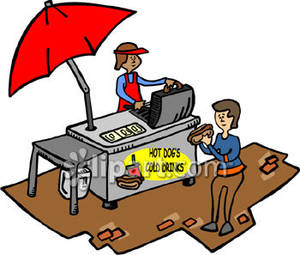
    Some jobs seem like they can’t be real – just think of being a hot dog vendor.  Everyone loves hot dogs, and it seems like a dream that you could even work with them. Work in this field can be very good for independent people who enjoy being with people and dealing with food.

    You and your family might sometimes eat food from street vendors. You go to a food cart and ask the person for a hot dog with mustard or ketchup, and then the vendor puts the food together and gives it to you. Hot dog vendors spend much of their time selling food to people on the street or in office buildings.

    The first step in becoming a hot dog vendor is to learn about how to handle the food. Wieners are easy to cook, but they have to be stored properly. Buns also have to be fresh, and the condiments (like ketchup and mustard) also require care. Before they start to work, hot dog vendors need to know about handling food safely and about cooking meat properly.

    Some hot dog vendors learn all that they need to know by working with others on the job. Others, however, might decide to take classes at a college or cooking school. A small percentage of hot dog vendors might even get a degree in a subject related to food or even something completely different. Education has little effect on a hot dog vendor’s salary, but it can help to provide background information that can be useful for the work.

    Besides learning about how to handle food, hot dog vendors need to learn about their equipment. They have to use fuel tanks, cooking utensils, and anything else that they need to run the business.

    Do you love food and being with people? Why not consider working as a hot dog vendor?