Author: Teodora Pasca

  • How to Take Good Notes

    How to Take Good Notes

    Whether you’re in high school, college or university, note-taking is a valuable skill. As a student, it’s your responsibility to record and understand what the instructor is saying, especially in a lecture setting, where handouts or PowerPoint slides may not be provided at all. Good note-taking can make the difference between simply memorizing material and truly understanding what you’re learning, which is why it’s likely your grades will get a boost out of it, too.

    When you’re trying to keep up with a lecture, only jot down key points. You can typically tell which parts of the class are important for you to remember and which parts are just side notes or bonus material. Don’t get hung up on writing down every single point the instructor makes. Not only is doing so not that valuable, but you’ll never be able to get it all! Pay attention to key names, dates and concepts, and focus on summarizing the important information you learn in class.

    If you’re still having trouble getting the information down, use shortcuts. As long as you can understand what you’re writing, there’s no need to capitalize everything or use proper punctuation. Using short forms of words (e.g. instead of for example, bc instead of because, etc.) is a great strategy. If you miss something, keep going, but mark that section so you know to refer back to it and fill in the blanks later. (Some instructors also allow students to record their lectures as a bonus aid—but ask first.)

    When you’re in class, it’s useful to make references between the lesson and the relevant textbook passages or provided material. You’ll be able to form a more cohesive link between what the instructor is saying and your homework or readings, and therefore you’ll understand the material better. Jotting down things like “see page A” or “refer to diagram on slide B” will help you make sense of what you wrote down when you’re studying later.

    That being said, don’t copy. If a lecturer provides a handout, constantly references the textbook or publishes PowerPoint slides online, there’s no use in jotting down that information word for word: you already have the source to refer to later. If you focus only on registering what’s already in your books, you might miss points that are not provided for you, but that the instructor still expects you to know.

    Finally, review and summarize—at the end of the week (or, if you can bear it, after each class), go back over your notes. Highlight key ideas and look up things you didn’t understand the first time around. As well, consider making a summary of each note (3-5 sentences at most) to help you grasp the main points of that particular class. You can refer to those summaries when you’re studying for tests or exams.


  • Transition Programs for Students with Disabilities

    Transition Programs for Students with Disabilities

    One of the best ways students can get a sense of what to expect when beginning a post-secondary program is to talk with people who have first-hand experience in such programs. These people may be instructors or administrators at the college or university you plan to attend, or they could be other students who have already made the transition to postsecondary school.

    Transition programs are available in many parts of the country, and offer students the opportunity to gather information on the post-secondary experience. There are also initiatives that assist in the transition from school to work, providing valuable opportunities in a workplace environment. Most of these programs are led by students, professors and others from colleges and universities, and some even give participants the chance to spend time living in campus dormitories. Transition programs other than the ones listed here may be available. Contact your local postsecondary institutions to ask if they offer such opportunities.

  • Study Help: The Best Websites for English Literature

    Study Help: The Best Websites for English Literature

    Studying English literature might seem like a very easy thing, with nothing complicated about it. You just pick up a book and read it, right? Reading is a large part of the work, but it can often be more complicated than it seems. Students often need help with understanding what the texts really mean and sometimes even with just finding the texts. A library is always a good source of information in this area, but sometimes students want the convenience of looking online. But how do you find the best and most helpful websites?

    When you study English literature, the first thing to do is to read the texts. You might read modern books by authors like Margaret Atwood or you might read ancient texts by authors like the Greek writer Sophocles. Most of the modern books are easy to find in bookstores and libraries, but the older ones might be a bit more difficult to find. You also might not want to spend a lot of money on buying books that you expect to read only for your classes. In many cases, you can solve this problem by finding the books online. If the book was written over seventy-five years ago, you can likely find the full text on websites like Project Gutenberg (http://www.gutenberg.org/), the Literature Network (http://www.literature.org/) or Adelaide e-books (http://ebooks.adelaide.edu.au/meta/titles/A.html).

    Why are only older books available on websites like these ones? It’s because as long as the authors are alive, they or their relatives own the copyright to the work. No one is allowed to reprint it without the author’s or publisher’s permission for at least fifty or seventy-five years after the author’s death. After that, however, the literary works are normally in the public domain, which means that they can be freely republished anywhere, including on the Internet.

    Finding places to read literature is the first step, but students sometimes need a bit more help. The Literature Network (http://www.online-literature.com) gives the full texts of many books and poems, but it also includes biographical and historical information. Do you need to know what Renaissance or Victorian literature was like? You can find out about these eras on the Literature Network. The site also includes quotations and many different kinds of information that can help people understand how literature reflects the history and culture of each time period.

    Understanding the background to literature is essential to understanding what it is about, but sometimes readers need an even more basic level of help. Writers from previous centuries often used a vocabulary and writing style that modern readers might find difficult to understand. Sometimes, the meanings of words change from one century to another. At other times, writers from different eras wrote very complicated works with advanced vocabulary. However, there is help for people reading difficult texts. The Visual Thesaurus VocabGrabber (http://www.visualthesaurus.com/vocabgrabber) can help translate sections of text into something more manageable for modern readers.

    If studying English literature is difficult for you, you might want to check some of these websites for information that can help you.

  • High School Exam Prep

    High School Exam Prep

    Are you ready for your exams? High school exam periods can vary, but they typically occur either at the end of the year (for non-semestered schools), or at the end of both January and June (for semestered schools; winter and spring exams, respectively).

    Whether your evaluations have just passed, are coming up soon, or aren’t for a while, it’s always important to know how to prepare. An exam not only has a significant impact on your final grade, but it can also be a way to measure how much you’ve learned throughout the course. You should take every exam seriously, and make sure you allot enough time to get ready. It never hurts to do well!

    Here are three tips for high school exam preparation:

    Know the structure. Aside from obviously just studying the material, preparing for the format of the exam can be very valuable. Teachers usually release information related to the structure well in advance. As well, many exams are combined-format, so you might need different study strategies for each section. Let’s say an exam has 50 multiple-choice questions and an essay. You can create flashcards of key terms, concepts and definitions, as well as brainstorm potential questions and arguments.

    Play your strengths and weaknesses. If you know a certain part of the curriculum inside out, there’s no point in reviewing it in great detail. When you’re studying, focus on what you don’t know so well and make sure you understand it before moving on. This way, you’ll at least have general knowledge of all the material, instead of only studying what you’re good at. If you focus only on what you’re good at, there’s always the chance that those topics may not even appear on the exam anyway!

    Choose wisely. Sometimes exams offer students a choice (between short answer topics, for example), and this can be a great way to showcase your strengths. That being said, if you have to choose, pick the option that is easiest for you. Students sometimes try to write about what they think the teacher prefer, even if they don’t know what that specific topic is about. Take advantage of the opportunity and write about what you know. You’ll be able to provide more accurate information and concrete examples instead of “speculating” about something you don’t fully understand.

    Following the above guidelines will help you out, but ultimately you still have to put in the work. Make sure you make time to study properly before the exam (and preferably not the night before the exam). And remember, there’s no reason exam preparation can’t be fun—as long as you’re still being productive, studying with friends or classmates can actually be a great way to prepare. Good luck!

  • Everything in Moderation: The Balanced Approach to Healthy Eating

    Everything in Moderation: The Balanced Approach to Healthy Eating

    Healthy eating is important for reasons I’m sure you already know about: to keep your energy levels high and to allow your body to function at its peak. But eating well is just as important psychologically as it is physically and, from a mental health standpoint, it’s important to practice a balanced rather than an all-or-nothing approach.

    To me, “eating well” means focusing on whole foods, minimizing processed foods and consuming lots of fruit and vegetables. “Eating well” means choosing whole grains instead of white starch, and brown rather than white rice and pastas. It means eating a healthy and balanced breakfast, eating every 4 hours or so and staying well hydrated.

    What “eating well” does not mean is dieting, or staying away from anything containing sugar. “Eating well” doesn’t mean never eating dessert, and it definitely doesn’t mean not enjoying what you eat and using food as punishment. Thinking that you need to eat a perfectly clean diet with no treats whatsoever is dangerous, and can lead to disordered eating.

    Enjoying and indulging in treats once in awhile will not make a dent in an otherwise healthy diet. Rather, it will keep you balanced psychologically, and it will result in a healthier attitude toward food. Denying yourself the piece of cake you really want does not always mean that you’re disciplined; instead, it means that you’ll probably binge on it later and “start again tomorrow.” This can result in a vicious cycle; rather, be friends with desserts. If you really want to be healthy, have a little; if you’re still thinking about it and want to have some more, have some. Don’t get trapped into believing that having dessert means you aren’t eating well.

    You can also make healthy, unprocessed treats and desserts for yourself using natural sweeteners like honey and agave nectar. There are lots of websites with ideas for delicious and chemical-free desserts that will fuel your mind and body with clean energy. Just remember that, as important as it is to provide your body with the fuel it needs to work well, it’s equally important to enjoy the food you eat in order to keep your mind calm and balanced.

  • Dream Job: Ice Cream Taster

    Dream Job: Ice Cream Taster

    Imagine a job where you could get paid to eat your favourite food all day. Could anything like that be real? Working as an ice cream taster, for example, sounds like an imaginary job, but it really does exist. A man named John Harrison samples many different flavours of ice cream every day as part of his job for Edy’s Grand Ice Cream. Becoming an ice cream taster like John Harrison involves education, constant learning and daily care of the taste buds.

    People who want to work as ice cream tasters might start by getting a job in an ice cream shop and learning about different flavours, as well as finding out what people like to eat. Knowing how to preserve ice cream and to make it look and feel right is also very important. After high school, the next step is normally to get a university degree in an area such as food sciences.

    A food sciences education will help the ice cream taster learn more about different flavours and how they interact with each other. Courses in this program are also helpful for learning about proper food handling procedures and other things that ice cream tasters need to know. Working as an apprentice in an ice cream manufacturing company is another way of learning the skills necessary for the job.

    For John Harrison and other ice cream tasters, taking care of the taste buds is very important. Do you know how your taste buds stop working properly when you burn your tongue with a hot drink? Anything that affects the taste buds can influence an ice cream taster’s work. Before John Harrison goes to work, all he has for breakfast is some oatmeal with tea to drink. He has about sixty types of ice cream to try every day, and he has to make sure that his breakfast has no effect on his taste buds.

    Ice cream tasters have to develop methods of having only one taste in their mouths at a time. Normally, they roll the ice cream around in their mouths and then spit it out. John Harrison starts his day with lighter flavours like vanilla and then works up to stronger flavours like chocolate. Between flavours, he eats a plain cracker to get rid of the previous taste. Sometimes, he has to sample flavours that he does not like, but he has to think about what others might enjoy.

    Do you love to try new ice cream flavours? Do you have very sensitive taste buds? If so, you might want to consider becoming an ice cream taster.

  • Working with Nature: Park Rangers

    Working with Nature: Park Rangers

    Every year, people across Canada go to visit national or provincial parks. They go hiking or camping, and they spend time walking in the forests or swimming in the lakes. Have you ever thought of the people who help keep those parks going? Someday, you might be able to look after the animals and people in these places if you decide to become a park ranger – also called a warden.

    Park rangers or wardens are people who help to keep parks running smoothly, helping both the animals that live there and the people who come to visit. If you love the outdoors and want to help preserve it for the future, working as a park ranger might be the job for you.

    Many different activities can be part of a park ranger’s job. Rangers have to know how to deal with both large and small animals and to be able to work with them safely. They have to know about the different types of animals in the area and to be able to help them when they are sick or injured. This work can often be dangerous. Moving animals from one place to another spot inside or outside the park is also a dangerous but important part of the job.

    Knowing about the plants in the area is also important for park rangers. If they know the locations of poison ivy, for example, they can tell people what areas to avoid and where they need to be careful. They can take people on nature tours to teach them all about the animals and plants they might see.

    Learning all about the plants and animals in the park takes a mixture of education and experience. Normally, park rangers have four-year degrees in areas such as wildlife biology or botany (the study of plants). Having a general knowledge is important, but park rangers can also become specialists in one or two areas, like bears or insects.

    In some cases, the work of park rangers is close to law enforcement, especially when they work with people who come to visit the park. Park rangers help to enforce the rules, such as the regulations about when people can build fires or what they can do in campgrounds. They might also have to search for people who are lost or help anyone who has been injured or is feeling sick. Park rangers have to know basic first aid and to be able to deal with whatever happens.

    If you decide to become a park ranger, you should be prepared to live in a small community instead of a city so that you can be close to your work. You should be comfortable with working alone but also be able to work with people and to talk with the public. If this kind of job sounds good to you, maybe you should consider becoming a park ranger.

  • Career Profile: Robotics Engineer

    Career Profile: Robotics Engineer

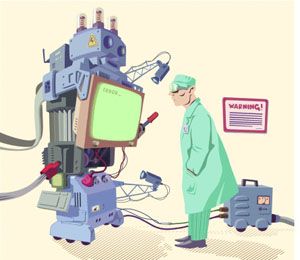
    Have you ever flown a remote-controlled airplane or used a robot to complete some kind of task? If you have, did you spend a lot of time trying to discover exactly how the machine worked? The expanding field of robotic engineering might be right for you.

    If you’ve ever taken a robot apart, you know how complicated they can be. Engineers working in this field have to know about mathematics and science, and they should also be able to take machines apart and put them back together. One of the main areas where robotics engineers work is in manufacturing, where robots work with everything from car assembly to lifting heavy objects. Recently, the use of robotics has also been expanding to other fields, such as agriculture and mining.

    Much of what robotics engineers do every day is to work with computers and other machines, but they also need some practical experience. For example, if they are designing new crop harvesters for farmers, they need to understand the different needs of each type of farm, such as a wheat field or an apple orchard. The skills they need for developing toy robots will be somewhat different from the techniques they need for designing machines for a nuclear power plant. Gaining experience in working with robots will help you decide what branch of robotic engineering you want to pursue.

    You might already be able to design simple robots, but becoming a robotics engineer involves getting a formal education. Most people in this field have at least a Bachelor of Science or Bachelor of Engineering degree with courses in engineering, mathematics or the physical sciences.

    In high school, you can already start to study some of these subjects, as well as high-level mathematics and advanced science. Getting into a robotics program in a university can be difficult, but keeping your grades high will help. Generally, students who do well in high school will find it easier to get into university than students who have struggled to pass their courses.

    Once you get into the robotics program, your studies will include many different aspects of the work, including theory, design and development. Most programs allow students to specialize in mechanical, electrical or industrial engineering. You can start to focus on one of these branches if you already know what interests you, but it is also good to learn as much as possible about all types of engineering if you can.

    Most degree programs are four years, and you can also continue on to a Master’s degree if you want to advance in the field. If you want to teach, you will most likely need to continue on to a PhD. level. Career prospects are limited since most robotics engineers stay in their jobs for many years.

    The average annual salary for robotics engineers working in manufacturing and related fields is almost $68,500. For people who enjoy designing machines and working out difficult problems, the job of robotics engineer can be a good choice.

  • Career Profile: Horticulturist

    Career Profile: Horticulturist

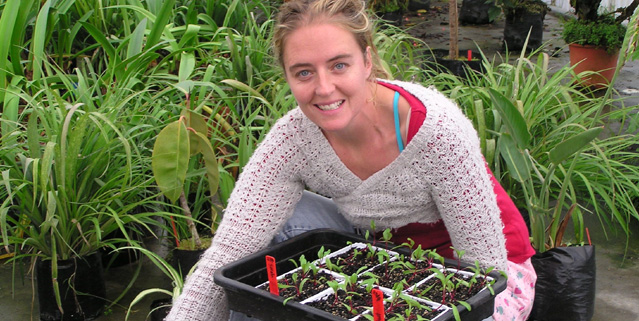
    Many people like to grow flowers and vegetables in their houses and yards. They take care of the grass on their lawns, water their plants in dry weather, and pull weeds from among the plants. Sometimes, they put special fertilizer on the plants to help them grow better. When they take care of plants in this way, they do some of the work of a horticulturalist.

    The work of a horticulturalist can take many different forms. Some horticulturalists do very basic labour, such as digging up the soil in gardens to prepare them for planting or mowing and trimming lawns. They also prune trees by cutting off extra branches and prune smaller plants by removing dead leaves and flowers.

    These horticulturalists need only a basic education, such as a high school diploma. They do all of the basic jobs that keep the plants healthy and growing. Horticulturalists at this level are normally not paid very well, and usually they work only in the growing season from late spring until early fall. However, this kind of job can be good for students or for people who prefer not to spend years studying.

    Some horticultural work requires much more knowledge than a basic labourer needs. People working at this level often have degrees in agriculture, botany, or related fields. They research new plant species for different climates or try to find ways of making plants stronger and easier to care for. Some horticulturalists at this level also help design gardens or advise people on the best methods of plant care. Others become crop inspectors for large farms or work with small, local groups. Still others become professors and teachers in colleges and universities. These horticulturalists are generally fairly well paid, although the salary can vary according to what kind of work is available.

    Either of the two levels of horticultural work could be good choices for anyone who enjoys working with plants. They can work in edible horticulture, growing plants for food. Employment in this area is generally quite secure since people always need food. However, the low pay and seasonal work for some horticultural workers are disadvantages, as well as exposure to dangerous chemicals. Some of the work, such as digging up flower beds, can also be physically difficult. Another option is to work in ornamental horticulture, growing plants like flowers or shrubs for show rather than for food. Work in this area is often less physically difficult, although dealing with chemicals is still a problem.

    Do you love to work with plants and to see them grow? If so, maybe a career as a horticulturalist is right for you.

  • Facts on Apprenticeships

    Facts on Apprenticeships

    Are you young and still in high school? Maybe you’re finished school and are looking for a new direction? Or, you are already working and looking for a career that suits you better?

    If any of this applies to you, an apprenticeship could be what you’ve been looking for. Thousands of people like you register as apprentices every year. Why? It’s simple. An apprenticeship is your ticket to a challenging and rewarding career in skilled trades.

    RESPECT
    Skilled trades play an important role in Canada’s knowledge-based economy. Think about it. They touch almost every aspect of our lives from the homes we live in, to the cars we drive, to the food we eat.

    OPPORTUNITY
    With over 200 careers to choose from, there is a skilled trade for everyone. The demand is high, you get to travel, and you could become your own boss!

    GOOD PAY
    Tradespeople are rewarded with great pay – often better than average!

    The BARE FACTS on Apprenticeship Training
    Apprenticeship is a form of post-secondary education like university or college. But there’s a big difference. Apprentices not only learn skills in
    a classroom, but receive paid on-the-job training with an employer.

    • Depending on the trade, an apprenticeship can take two to five years to complete.
    • Apprentices usually spend 40 to 44 weeks a year on the job and go to school for six to eight weeks.
    • Apprentices must find an employer and may need to pay tuition fees for in-school training.
    • Apprentices earn a salary on the job from their first day.
    • Apprentices receive a Certificate of Qualification in a designated trade.

    Did You Know?
    Pre-apprenticeship training is available in some regions. These work placements allow students who are still in high school to get a running start on their careers in skilled trades – not to mention earn school credits at the same time!

    Work Anywhere in Canada!
    Depending on their trade, apprentices who have obtained their certificate can write an inter-provincial exam to obtain a Red Seal endorsement and practice their trade across the country.

    • The “Red Seal” allows qualified tradespersons to practice the trade in any province or territory in Canada where the trade is designated without having to write further examinations.
    • To date, there are forty-five trades included in the Red Seal Program on a national basis.