Author: Susan Huebert

  • Emploi de rêve : comédien de doublage

    Il y a un groupe d’individus caché qui fait un grand impact sur notre société. Les comédiens de doublage peuvent sembler invisibles, mais ils sont partout. Avez-vous déjà regardez une émission de télévision éducative? Regardez-vous des dessins animés ou jouez à des jeux vidéo? Si oui, vous connaissez le travail d’un comédien de doublage. Tout comme les acteurs traditionnels que nous voyons à la télé ou dans les films, les comédiens de doublage jouent plusieurs rôles différents. Au lieu d’apparaître sur l’écran, ils utilisent leur voix pour fournir le dialogue dans de nombreux  films, émissions de télé, publicités et encore plus.

    Les membres du grand public ne savent peut-être pas à quoi ressemblent les comédiens de doublage ou ne reconnaissent même pas leurs noms. Par contre, les comédiens de doublage jouent un rôle important dans toutes sortes de productions médiatiques. Ils fournissent les voix des personnages de dessins animés et font la narration des émissions portant sur toutes sortes de sujets. Avez-vous déjà écouté une émission sur un scientifique célèbre ou peut-être sur les déserts ou les animaux sauvages? Si oui, vous avez probablement entendu parler la voix d’un comédien de doublage. Les publicités à la télévision et à la radio utilisent également des comédiens de doublage pour parler d’un produit ou d’un service, donnant des informations sur les choix qui sont disponibles aux consommateurs.

    Les jeux vidéo, les systèmes de messagerie téléphonique et les vidéos de formation utilisent tous des comédiens de doublage. Les livres audio, où les gens font des enregistrements de romans ou d’autres livres lus à la voix haute, sont aussi les produits du travail d’un comédien de doublage. Ces livres sont utiles pour les personnes aveugles, mais également pour ceux qui veulent écouter un livre lorsque qu’ils sont dans l’auto ou qui éprouvent de la difficulté à tenir in livre dans les mains pour une raison quelconque. Les comédiens de doublage peuvent lire des histoires courtes, des romans au complet, des biographies, des livres d’histoires et encore plus.

    Tout comme les acteurs à la télé ou dans les films, les comédiens de doublage apprennent leurs compétences en étudiant à une école d’art dramatique. Un grand nombre d’universités et de collèges offrent des cours dans les arts du spectacle. Les cours en théâtre des lecteurs sont particulièrement bons pour apprendre comment mettre différentes émotions et idées dans la voix. Jouer des rôles dans des productions théâtrales communautaires peut aussi être une pratique très utile.

    La plupart des acteurs typiques travaillent en groupes, avec un ou plusieurs comédiens et plusieurs personnes sur une équipe de tournage. Le travail des comédiens de doublage, par contre, consiste souvent d’une personne, seule dans un studio accompagné d’un ingénieur du son qui écoute attentivement. Les mauvaises conditions météorologiques ou les problèmes de coiffures ou les problèmes de costumes ne sont pas des problèmes pour les comédiens de doublage. Par contre, la santé est un facteur important. Personne ne peut toujours réussir à éviter un rhume ou une grippe. Toutefois, être capable de parler clairement est très important pour les comédiens de doublage. Ces comédiens doivent essayer de rester en bonne santé et de se protéger contre les maladies, autant que possible.

  • L’importance de la santé mentale chez les étudiants

    L’école est un environnement difficile: il est compréhensible que jongler avec les études, les activités parascolaires et les problèmes personnels peut devenir écrasant. Cela étant dit, il est important de vous maintenir en bonne santé et de ne pas laisser le stress de la vie étudiante engloutir votre tête. Ceci vous aidera non seulement à mieux réussir dans vos études scolaires, ça contribuera à votre bonheur en général.

    Considérez deux étudiants qui écrivent le même examen. L’un, ayant étudié, se sent confiant et préparé; dans l’ensemble, il est calme et composé, prêt à travailler. L’autre a également étudié — mais il n’a pas eu de sommeil  en raison de son stress et est extrêmement angoissé par ce qui lui attend, arrivant à peine à rester assis tranquille dans son siège. Le premier étudiant sera capable de se concentrer, d’écrire l’examen avec confiance, et de quitter la salle d’examen avec une attitude positive. Le deuxième, même s’il a consacré autant de temps à se préparer, est susceptible de faire considérablement pire, et après l’examen sera extrêmement déçu de lui-même.

    Si vous vous identifiez plus avec le deuxième étudiant—et sentez angoissé et stressé sur une base quotidienne—vous devez considérer prendre mieux soin de vous-même. Ceci inclut dormir suffisamment, adopter un régime alimentaire équilibré et faire de l’exercice autant que vous le pouvez. Par contre, la santé s’agit de beaucoup plus que cela. Il est important de prêter attention à comment vous vous sentez, et si vous traitez vous-même avec le respect et la compassion que vous méritez

    Un facteur important qui peut complètement détériorer la santé mentale est le stress, mais il est souvent difficile à éviter dans un environnement scolaire. La solution est de parvenir à trouver un équilibre entre le travail fort et la relaxation — bien sûr, vos résultats scolaires vont souffrir si vous ne faites rien que regarder la télé (même si cela est relaxant!), par contre, vous trouverez également que c’est plus difficile de se concentrer si vous vous obsédez sur over vos études pendant des heures ou des jours sans fin. Prenez des pauses lorsque vous étudiez et soyez gentil envers vous-même. Vous ne pouvez que faire de votre mieux.

    Utiliser votre stress comme un outil de motivation est une bonne stratégie afin d’assurer que vous réussirez bien sans craquer sous la pression. Par exemple, si vous êtes assigné un projet énorme, essayez de ne pas paniquer à cause de l’ampleur du travail que vous avez à faire et concentrez-vous plutôt sur les aspects positifs. À travers vos recherches, vous pourriez tomber sur des choses très intéressantes. Transformez votre stress face à la date de remise qui approche en votre intérêt pour le sujet et non seulement sentirez-vous mieux, vous allez probablement mieux réussir sur le projet dans son ensemble.

    Finalement, tout le monde fait des erreurs. Mais vous en vouloir en raison d’une mauvaise note ou d’une erreur d’inattention est non seulement mauvais pour votre état mentale (cela affaiblit la confiance en soi), c’est n’est plus pas très constructif non plus. Au lieu de constamment vous dénigrer vous-même, examinez vos erreurs d’un œil critique et en tirer des leçons: pensez à comment vous pouvez faire mieux la prochaine fois. Et, n’oubliez pas de vous récompenser pour vos réussites, aussi!

    Pour plus d’informations sur la santé mentale des étudiants, consultez votre conseiller en orientation.

  • Les bourses pour étudiants en situation de handicap

    Suis-je admissible?
    Tu es admissible si tu :
    – a présenté une demande de prêt canadien aux étudiants et que tu as été jugé admissible;
    – es inscrit dans un programme à temps plein ou à temps partiel (minimum de 32 semaines) d’un établissement d’enseignement secondaire agréée;
    – réponds aux critères qui s’appliquent aux étudiants ayant une invalidité permanente et que tu présentes avec votre demande de prêt une preuve que tu es handicapé : cela peut être un certificat médical, une évaluation psychopédagogique ou un document prouvant que tu reçois une allocation fédérale ou provinciale pour personnes handicapées.

    Qu’est-ce qui est offert ?
    Deux mille dollars par année universitaire (du 1er août au 31 juillet).

    Cette bourse est offerte pour chaque année de tes études postsecondaires (y compris tes études au-delà du premier cycle), à condition que tu continues à répondre aux critères d’admissibilité. L’argent provient de la province ou du territoire de ta résidence permanente au début et au milieu de l’année scolaire.

    Puisque le montant de la bourse est fixe, le montant que tu reçois peur excéder l’estimation de tes besoins. Par exemple, si tu es admissible à cette bourse et tu estimes tes besoins à 1 400 $, tu recevras 2 000 $ de bourse. Dans ce cas, la bourse couvrirait tes besoins tels qu’estimés, ce qui veut dire que tu n’aurais pas besoin d’un prêt étudiant.

    Comment faire ta demande ?
    Le processus d’application à cette bourse diffère dans chaque juridiction. Pour t’assurer que tu remplis les conditions d’admissibilité, contacte le bureau d’aide financière aux étudiants de ta province ou de ton territoire.

  • The Importance of Student Mental Health

    The Importance of Student Mental Health

    School is a trying environment: it’s understandable that juggling academics, extra-curriculars and personal issues can be overwhelming. That being said, it’s important to keep yourself healthy and not let the stress of student life get to your head. This will not only help you do better academically, it will contribute to your overall happiness.

    Consider two students writing the same exam. One, having studied, feels confident and prepared; overall, he is calm and collected, ready to work. The other student has also studied—but he hasn’t gotten any sleep because of the stress and is extremely anxious about what lies ahead, barely being able to sit still. The first student will be able to focus, complete the test with confidence, and walk out of the exam room with a positive attitude. The other, even though he’s spent just as much time preparing, is likely to do much worse, and after the test will be extremely disappointed with himself.

    If you identify more with the second student—and feel worried and stressed on a daily basis—you must consider taking better care of yourself. This includes getting enough sleep, eating a balanced diet and exercising as often as you can. But health is more than that. It’s important to pay attention to how you’re feeling and whether you’re treating yourself with the respect and compassion you deserve.

    A big factor that can completely deteriorate mental health is stress, but it is often difficult to avoid it in a school environment. The key is to achieve a balance between working hard and relaxation—of course, your grades will suffer if you do nothing but watch TV (even if that is relaxing!), but you’ll also find it more difficult to concentrate if you’re obsessing over your studies hours or days on end. Take breaks when you’re studying and be kind to yourself. In many cases, there is only so much you can do.

    Using stress as a motivator is a good strategy to ensure you’re doing well without cracking under the pressure. For example, if you’re assigned a huge project, try not to freak out over the sheer magnitude of work you have to do and instead focus on the positives. Through your research, you could stumble upon some really interesting things. Channel that stress over the upcoming deadline into your interest in the topic and not only will you feel better, you’ll likely do better on the project overall.

    Finally, everyone makes mistakes. But beating yourself up over a low grade or a silly mistake is not only bad for your mental state (it weakens your self-confidence), it’s also not very constructive. Instead of constantly being self-deprecating, look critically at what went wrong, and learn from it: see if you can do better next time. And don’t forget to reward yourself for what you did right, too!

    For more information on student mental health, see your guidance counselor.

  • Dream Job: Voice Actor

    Dream Job: Voice Actor

    A hidden group of people is making a big impact on our society. Voice actors might seem invisible, but they are everywhere. Have you ever watched an educational television program? Do you watch cartoons or play video games? If you have, you know the work of a voice actor. Just like regular actors on television or in movies, voice actors play many different roles. Instead of appearing on the screen, they use their voices to provide the words in many different movies, televisions, commercials, and more.

    The general public might not know what voice actors look like or even recognize their names. However, voice actors have an important role in all kinds of media productions. They provide the voices of cartoon characters and read the narration on programs about all kinds of topics. Have you ever watched a program about a famous scientist or maybe about deserts or wild animals? If so, you most likely heard a voice actor speaking. Commercials on television or radio also often have voice actors talking about the product or service, giving information on the choices that are available.

    Video games, telephone messaging systems, and training videos all use voice actors. Audiobooks, where people make recordings of novels or other books, are also the work of voice actors. These books are useful for people who are blind, but also for people who want to listen to a book in the car or who have trouble holding books for any reason. Voice actors might read short stories, complete novels, biographies, history books, and more.

    Like the people who act on television or in movies, voice actors learn their skills by going to acting school. Many universities and colleges offer courses in the performing arts. Courses in readers’ theatre are especially good for learning how to put different emotions and ideas into the voice. Taking roles in community productions can also be very useful practice.

    Most regular acting happens in groups, with one or more actors and several people on the film crew. Voice acting, however, often happens with one person alone in a studio with a sound engineer listening nearby. Bad weather or problems with messy hair or the wrong clothes are not issues for voice actors. However, health is an important factor. No one can avoid ever getting a cold or the flu. However, being able to speak clearly is very important for voice actors. Voice actors need to try to keep themselves healthy and to prevent illness if possible.


  • Staying Organized with Technology

    Staying Organized with Technology

    How can you make the most of your technology? While electronics can certainly be frustrating distractions at times, they can serve as incredible organizational tools as well. Whether you’re working on a big project or are constantly misplacing your grocery list, chances are there’s an app out there for you.

    Here are a few ways you can use your devices to make your life more efficient.

    How many times have you missed one of your errands? A virtual to-do list is a great solution. Beyond just jotting down reminders (which you could easily do in a notebook), electronic lists allow you to set alarms, plan out short-term and long-term goals, and organize your tasks based on type and priority. Apps are available for most smartphones and computers, and in many cases, all you need is an Internet connection to keep your to-do list synchronized between devices and ready to go.

    Recommended (and free) to-do list apps: Todoist, Wunderlist, Any.Do, Remember the Milk

    If you’re balancing extra-curriculars or are struggling to keep track of your plans with friends, a calendar app is the best way to go.  Organize your events by type (work schedule, date night, final exams) and input them into a virtual calendar so you know exactly what’s coming up and how to prepare for it. Most calendars allow you to view your upcoming events by day, week, or month. For maximum efficiency, keep your to-do list and your calendar synchronized. You’ll never miss a deadline again!

    Recommended (and free) calendar apps: Cal, Sunrise, Google Calendar (Android-only), Timeful (iOS-only)

    Save some paper in your classroom and try using notation software instead. Digital notes allow you to easily modify what you’ve written, search for key terms in previous lectures, and even add links to online articles and videos to enhance your learning experience. If you prefer writing by hand or your classes don’t allow the use of computers, you can still use notation software to codify your lecture notes or create summaries for your tests and exams.

    Recommended (and free) notation software: Evernote, Microsoft OneNote, Google Docs, SimpleNote (iOS)

    Finally, here are some miscellaneous apps you should consider incorporating into your daily routine:

    • It can be hard to stay focused if you’re studying for hours on end. Set a timer with an alarm to keep you working for regulated lengths of time and allow for breaks in-between.
    • Distracted by the Internet? Self-regulation apps can help. For example, Self-Control for Mac (or its PC equivalent, Freedom) allows you to create a “blacklist” of your distracting sites and set a timer for your work period—then it blocks you from accessing those sites until the time’s up.
    • Reinforce your good habits (drinking enough water, not biting your nails, not going on Facebook at work). Habit trackers allow you to note the ups and downs of your daily routine over time. Check out Lift, Fail Log, and HabitBull.
  • What Graduates Earn Over Their Lifetime

    What Graduates Earn Over Their Lifetime

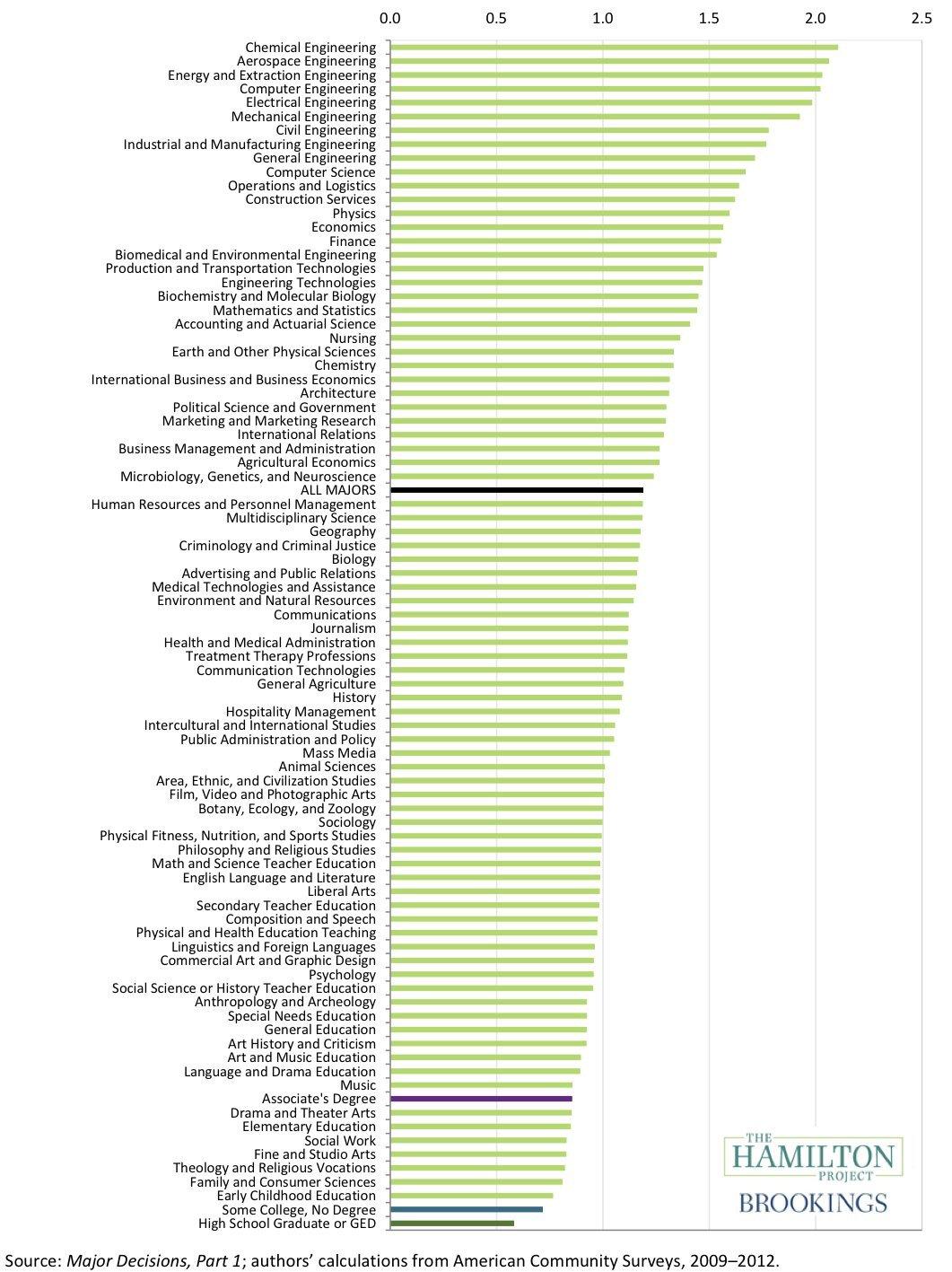
    A study released by the Hamilton Project in September of this year shows just how important a degree when it comes to earning money. A bachelor’s degree in ANY field has proven to unleash your earning potential exponentially. As the study’s authors noted, median earnings of bachelor’s degree graduates are higher than median earnings of high school graduates for all 80 majors studied. This is true at career entry, mid-career, and end of career.

    You can read the entire interesting study on the Hamilton Project website (link above). In the meantime, take a look at this chart that details which degrees earn you the most over your lifetime – and which earns you the least.

    Note: Unfortunately, this study is currently not available in French.

    HamiltonProject


  • Job Profile: Data Entry Clerk

    Job Profile: Data Entry Clerk

    Most people are very familiar with the keyboards of computers and other electronic devices.  They might be able to send a message to their friends or post a comment on social media sites within seconds.  Are you like that? You might be able to send texts to your friends and family, but can you type information into a computer for hours at a time? If so, you might have a future in data entry.

    Everyone who uses a computer is a data entry clerk in a sense. Whenever you send a message to your friends to arrange an activity, the information you send is a form of data. Most of the people who work in data entry, however, deal with a different type of material. They might type out tax information or send out requests for payment. They might work in a university, keeping track of the courses that people are taking and how many students are studying. Almost any kind of information can be part of a data entry clerk’s job.

    Other types of work might also be part of careers in data entry. Besides entering information into the computer, data entry clerks might file papers or organize the offices where they work. They might answer telephones or deal with customers’ questions. They might need to write down what happens during meetings and send the notes to others in the office. Almost any office job can be part of a career in data entry.

    Working in data entry varies from one place to another. Some data entry clerks have full-time jobs in offices, but others work in many different places on short-term projects. For data entry clerks with full-time jobs, salaries range from about $22,000 to $41,000. Experience is an important factor in moving up in salary.

    Becoming a data entry clerk is also closely related to experience. Most data entry jobs require a high school diploma but no other formal education. However, knowledge of various computer programs, including word processing, is helpful. People with certificates in a variety of computer programs are more likely to find work than those who have completed only their high school studies.

    The main skill that data entry clerks need is a rapid typing speed. Most jobs require a speed of at least forty words per minute or more, using both the main part of the keyboard and the numbers on the right side. Being able to type even faster than that will help data entry clerks do their work more quickly and efficiently. A typing speed of eighty words a minute or more is common among data entry clerks. Speed is not as important as accuracy, however. Everyone makes mistakes, but data entry clerks need to be as accurate as possible.

    Practice can help data entry clerks become good at their jobs. If the job appeals to you, you should start practicing your typing and office skills whenever you have the chance.

  • Career Profile: Blacksmith

    Career Profile: Blacksmith

    Some jobs never go out of style. Doctors, for example, are always necessary because people continue to get sick. Teaching methods might change a lot over the years, but students will always need people to help them gain the knowledge and skills they need for life. Other jobs seem to disappear over time, but they might still be important, even if they change a lot. For example, blacksmiths used to be essential in the days before factories produced all kinds of metal and plastic goods, but their work is almost unknown now. However, blacksmiths still have an important role in society.

    In the past, blacksmiths worked mainly in small shops, using hot fires in forges to soften metal enough so that they could pound it into horseshoes, fence posts and much more. These days, very few people ride horses, and the discovery of steel has made metals like iron much less popular than they once were. However, blacksmiths still work in making all kinds of things, such as ornamental metal railings and plastic parts for larger objects. Many blacksmiths work in factories rather than in their own shops, but many of the basic techniques are similar to what they used to do.

    Basically, blacksmith work involves shaping metal and other materials into different shapes. Often, the material has to be heated up before the blacksmith can work with it. When metal is hot enough, the blacksmith can pound it with hammers or bend it using strong tools until it becomes something new. In factories where machines do much of the work of shaping and molding objects, blacksmiths might spend much of their time setting up and maintaining the machines to make sure that they are working properly. In small businesses, like those that produce souvenirs for tourists or ornamental metalwork, the job might resemble the traditional blacksmith’s role.

    No special education is necessary for becoming a blacksmith, but a high school diploma is helpful. Good mathematical skills are important for being able to calculate amounts, weights and prices. For ornamental blacksmiths, an education or training in the fine arts is helpful, but not always necessary. The most important training for blacksmiths is learning from others in their field. Official apprenticeships are good options, but informal training can also help. If you are interested in blacksmith work, you can already try to find mentors who can guide you through the process of learning what you need to know.

    If you want to become a blacksmith, you can already talk with people who are working at the kind of job that you want to do. You might even be able to work at a small blacksmith shop on Saturdays or help out in the summer. Depending on where you end up working, you might make the standard blacksmith’s salary of about $29,000 per year or you might have an irregular wage, depending on tourism and other factors.  Does a career as a blacksmith sound good to you? Why not start to prepare for your career now?

  • University Exam Prep

    University Exam Prep

    Before you can escape the stress of school and enjoy the winter break, you have to pass finals! You’re not alone. University students all over the country are cracking under the pressure of their exams. While this is an undeniably difficult and often exhausting time of year, it’s important to stay focused and motivated. You wouldn’t want all the hard work you’ve done over the course of the semester to go to waste over one bad test.

    When your exams are held depends on the university’s examination period. However, typically half-year courses taken in first semester have their exams in early- to mid- December. That being said, many full-year courses also have mid-term tests around this time of year, and while these may not be worth as much as final exams, it is nevertheless important to make sure you’re prepared for them.

    Here are some tips on how to get ready for a university exam.

    Summarize. Go through all your lectures and create a set of condensed exam notes. Write down all the important stuff, and paraphrase as much as possible in order to make the material more manageable. If you do this properly, eventually all you’ll need to do is glance at the key words and you’ll be able to explain the related material in detail.

    Draw connections. A subject can seem pointless if you don’t make the effort to connect it to your own life—instead of blindly memorizing, see if you can explain things through examples or anecdotes. Take a political theory and see if it’s manifested anywhere in world news, or do some more research on an experiment you found particularly interesting in biology. Get away from the word-for-word method of studying and think of ways to make what you’re studying relatable (and thus, memorable).

    Safety in numbers. Studying in groups is extremely valuable because you get to interact with the material instead of just reading alone in your room. Get together with a study group a few times before the exam. You should continue to study independently as well, but discussing concepts, quizzing, or even explaining things to someone else within a group will improve your knowledge and your memory.

    Get help. Don’t be intimidated by your professor or TA: they are really just there to help. If you have any questions about the course material, it is crucial that you clarify them before the end of the semester rolls around. Chances are, if you mention you’re stressing out about the exam, the prof or TA would be happy to give you some help on how to prepare.

    Take care of yourself. Get a good night’s sleep the day before the exam and make sure you’re keeping yourself healthy. Study hard, but make sure you keep well—otherwise, it could actually interfere with your focus. You wouldn’t want to compromise all of your hard work with one all-nighter or sick day, right when it matters the most.