Author: Anthony Teles

  • Helping Others by Crunching Numbers: A Profile of Tax Preparers

    Helping Others by Crunching Numbers: A Profile of Tax Preparers

    Most people dread income tax time. It means a bevy of paperwork, organization, and possibly money owed to the government. Tax preparers ease that burden by handling the many documents, forms, and calculations required to complete an income tax return. It is a highly rewarding career that allows you to help countless people complete a very complicated process and even save money.

    Tax preparers often work with individuals but can also assist companies or organizations. They are tasked with completing income tax returns that are required to be submitted to the government. Tax preparers ensure these returns are finalized with the utmost accuracy. In addition, they strive to reduce the amount their client owes by utilizing deductions, claims, or exemptions as per Canadian law. This can mean the difference between a customer owing hundreds of dollars to actually receiving a refund from the government.

    In Canada, tax preparers can expect to earn an average hourly wage of $18.17. Salaries can start at minimum wage and increase to over $31 per hour. The work is heavily seasonal as tax preparation occurs in the months leading up to the April 30 deadline to submit returns. Preparers can expect to work long days in the final weeks prior to that date. Being able to handle stressful periods of many hours of work is essential, as is handling large amounts of data. You must pay attention to a plethora of details. You are rewarded with being able to work with a great variety of clients and helping make a big difference for those who seek out your help.

    There was a 2.0% growth in the tax preparation industry from 2012 to 2017. This is expected to continue and even accelerate as economic conditions improve and lead to greater employment overall. As more people work and earn salaries, more tax returns will have to be filled out. The greatest competition you will face is from the growing number of free, online tax preparation services. Tax preparers can stand out by offering a human touch, one-on-one consultation with clients, and handling more complex returns.

    The educational requirements for tax preparation vary greatly. A minimum of completion of high school is required. If you are working on tax returns for businesses or corporations, you will likely need post-secondary education and registration as a Chartered Professional Accountant. As tax preparers work seasonally, many will simultaneously work other jobs or attend school. This provides great flexibility and ample opportunity to pursue other interests or progress to higher-paying positions such as Accountant and Bookkeeper.

    Tax preparers have a daunting challenge put before them. Tax returns are long, complex, and allow no room for errors. For those up to the challenge, it is a very rewarding career with a great amount of freedom for other work or schooling. If this sounds like your ideal job, ensure you are filling out your tax return annually and offer to do the same for family. From there, you can complete the needed schooling and gain experience to find employment. In doing so, you can find fulfillment in something that many others dread.

    Sources:

    IBISWorld. “Tax Preparation Services – Canada Market Research Report.” https://www.ibisworld.ca/industry-trends/market-research-reports/professional-scientific-technical-services/tax-preparation-services.html

    PayScale. “Tax Preparer Salary.” https://www.payscale.com/research/CA/Job=Tax_Preparer/Hourly_Rate


  • Sher Vancouver: Vancouver’s LGBTQ+ South Asian Non-Profit

    Sher Vancouver: Vancouver’s LGBTQ+ South Asian Non-Profit

    Sher Vancouver LGBTQ Friends Society, or “Sher Vancouver” for short,” is an LGBTQ+ registered charity that provides for the B.C. South Asian community.

    “Sher” is a Persian word meaning “lion.” All Sikh men adopt the middle name Singh which means “lion”, and all Sikh women adopt the middle name Kaur, which means “lioness or princess” in Punjabi, respectively.

    Originally established in April 2008 by Alex Sangha, Sher Vancouver evolved from an online Yahoo group to a registered charity in nearly 15 years.

    Services Offered

    Courage Fund

    In partnership with No Fear Counselling, Sher Vancouver’s Courage Fund provides 100 sessions (the equivalent of $14,000) of counselling to the organization’s members in crisis.

    They help refer people to counselling sessions available in multiple languages and multiple locations throughout Metro Vancouver.

    Peer Support Groups

    Sher Vancouver offers three support groups:  Pyar is Pyar, The Dosti Monthly Meet Ups, and Women’s Group.

    Sher Feline and Sher Jupiter also launched in 2017, utilizing Facebook to connect LGBTQ+ South Asian women, men, and other gender-marginalized groups.

    Pyar is Pyar is the newest group, which launched on January 8, 2023. It’s an in-person weekly peer support group for individuals 19-30. “Pyar is Pyar” means “love is love” in Hindi.

    Films

    My Name Was January

    In 2018, Sher Films, the organization’s film division, released its first documentary, My Name Was January. It highlights the life of January Marie Lapuz, a trans woman of colour who served as Sher Vancouver’s social coordinator. Lapuz was murdered in 2012, and the film is a memorial and eulogy for her.

    The film celebrates her life and discusses discrimination and violence towards trans women.  Sher Vancouver further honours her memory with its Youth Leadership Award in her name, given annually to youth aged 16-30 involved and committed to the LGBTQ+ community.

    Emergence: Out of the Shadows

    In 2022, Sher Films produced its first feature film, Emergence: Out of the Shadows. The film focuses on three main individuals, Amar “Alex” Sangha (the founder of Sher Vancouver), Jag Nagra, and Kayden Bhangu, as they document their experiences of queer South Asian identity.

    The film’s main point is that “for a gay or lesbian kid growing up in a patriarchal culture,” it isn’t guaranteed that a family bond will remain the same after coming out.

    My Name was January and Emergence: Out of the Shadows can be viewed on YouTube for free.

    Other Endeavors

    Aside from the services listed above, Sher Vancouver also manages:

    • A podcast
    • The Out and Proud project, which profiles the stories of LGBTQ+ South Asians worldwide
    • Outreach workshops and film screenings
    • Community LGBTQ+ resources
    • A student practicum and mentorship program

    Upcoming Projects

    Sher Vancouver has launched the The Sundar Prize Film Festival, celebrating impactful films with stellar storytelling.

    Alex Sangha and Emergence: Out of the Shadows director Vinay Giridhar encouraged filmmakers to submit their creations delving into topics such as:

    • Human rights
    • Marginalized people, including people of colour and LGBTQ+ individuals
    • Environmentalism and climate change

    Films released after December 25, 2020, are eligible to win up to $5,000 in cash prizes.

    The award officially opened on December 25, 2022, and closed on January 1, 2024. The event will be held on April 11 to 13, 2025.


    As Sher Vancouver approaches its 15th anniversary this year, the organization can celebrate its many efforts toward the LGBTQ+ South Asian community. From counselling, support groups, films, podcasts, and other resources, Sher Vancouver continues to widen its reach as a registered charity.

  • The Importance of Utilizing Mental Health Services on Campus: Post-Secondary and the Archetype of the Depressed College Student

    The Importance of Utilizing Mental Health Services on Campus: Post-Secondary and the Archetype of the Depressed College Student

    As the leaves begin to wilt into shades of amber and brown, we’ve found ourselves at the start of another school year. For some of us, this will be a nerve-wracking (but exciting) year of change as we enter a new school environment, be it high school or a post-secondary institution. For others, it’s just another school year. However, since beginning university, I have noticed that there is a significant difference in preparing yourself to head back to post-secondary than there is for high school. For one, there are so many stereotypes surrounding post-secondary students; in the eyes of society, we’re either party animals or surviving off an hour’s sleep with nothing but coffee and instant ramen in our system to keep us afloat. In any case, neither of those is very healthy. University has been normalized as an incredibly strenuous time in your life. You’re faced with an incredibly heavy workload and a ton of new responsibilities. On top of that, it can be difficult to make friends in such a large environment. You go from seeing your friends every day in high school to once a week in your classes (and that’s if you’re lucky).

    The point is that post-secondary is no walk in the park; it’s designed to be difficult. This can have a highly negative impact on one’s mental health. Now, this isn’t exactly anything new.

    Mental health challenges have always been a large cause for concern amongst post-secondary institutions. However, there has been a surge since the COVID-19 pandemic. In a nationwide survey of Canadian post-secondary students who had begun utilizing mental health services on campus, “95% reported feeling overwhelmed, 83.7% reported experiencing severe anxiety, and 81% reported feeling isolated and lonely” (Ogrodniczuk et. al qtd. in Moghimi et. al). With the growing mental health crisis on campuses, mental health resources have become a much

    larger priority for many campuses across Canada. Many campuses are now complete with wellness centers, support groups, counseling, accommodation services, student life programs, and so much more.

    So…There’s Help Available. What Now?

    Even if there are many resources available on campus, I can see why some students may be skeptical or resistant to reach out for help. What if people aren’t empathetic about your situation? It’s a campus; how effective can the mental health services actually be? Do I even have time to reach out for help? All of these questions can make it easy to turn a blind eye to the anxious skin-picking or lingering feeling of emptiness in the back of your mind. I know because I did it for a long time. I go to the University of Toronto Scarborough, where we have all the mental health resources you can imagine. Mental health and wellness are constantly promoted at the school, there’s a wellness center, mental health groups. But it wasn’t until the end of second year that I finally decided to get some help, even though I had been struggling with my mental health since I was about 14.

    Reaching out for help (especially on campus) can be intimidating. I was worried that I wouldn’t be able to function as a normal student anymore. What if they wanted to give me medication I didn’t want? What if nothing was wrong with me and I was just being dramatic? The worry started to invade my brain again. And if that’s happening to you, I need you to remember one thing. No one can do anything to you without your consent. Any mental health services available to you are up to you to take. Your body, your mind, your choice. You are the one in control. In my case, I began with some light counseling, and then I met with one of the family doctors at my campus for a mental health assessment for a diagnosis so that I could figure out how to get the proper treatment. It also helps that because everything was under the mental health services at my school, so everything was in one place. Not all campuses are the same. But my biggest piece of advice is to make use of what’s available to you. Your campus is essentially your home for the next few years, and you may as well try to make it as enjoyable as you can.

    Even if you don’t feel your mental health is struggling, sometimes it’s just nice to go to counselling to talk to someone about something that may be stressing you: an essay, group project, maybe even something unrelated to school like your job. Remember that being open and talking about your mental health with the right person never does more harm than good. It may take you a few tries to find the councilor you connect with or find the kind of therapy that feels right, but never give up. Keep trying; someone out there understands you.


    Works Cited

    Moghimi, Elnaz, et al. “Mental health challenges, treatment experiences, and care needs of post-secondary students: a cross-sectional mixed-methods study.” BMC Public Health, vol. 23, no.1, April 2023, https://doi.org/10.1186/s12889-023-15452-x.

    Ogrodniczuk, John S, et.al. “Who is coming through the door? A national survey of self-reported problems among post-secondary school students who have attended campus mental health services in Canada.” Counseling & Psychotherapy Research, vol. 21, no. 4, July 2021, https://doi.org/10.1002/capr.12439.

  • Fostering Allyship to Indigenous Communities: Driving Change

    Fostering Allyship to Indigenous Communities: Driving Change

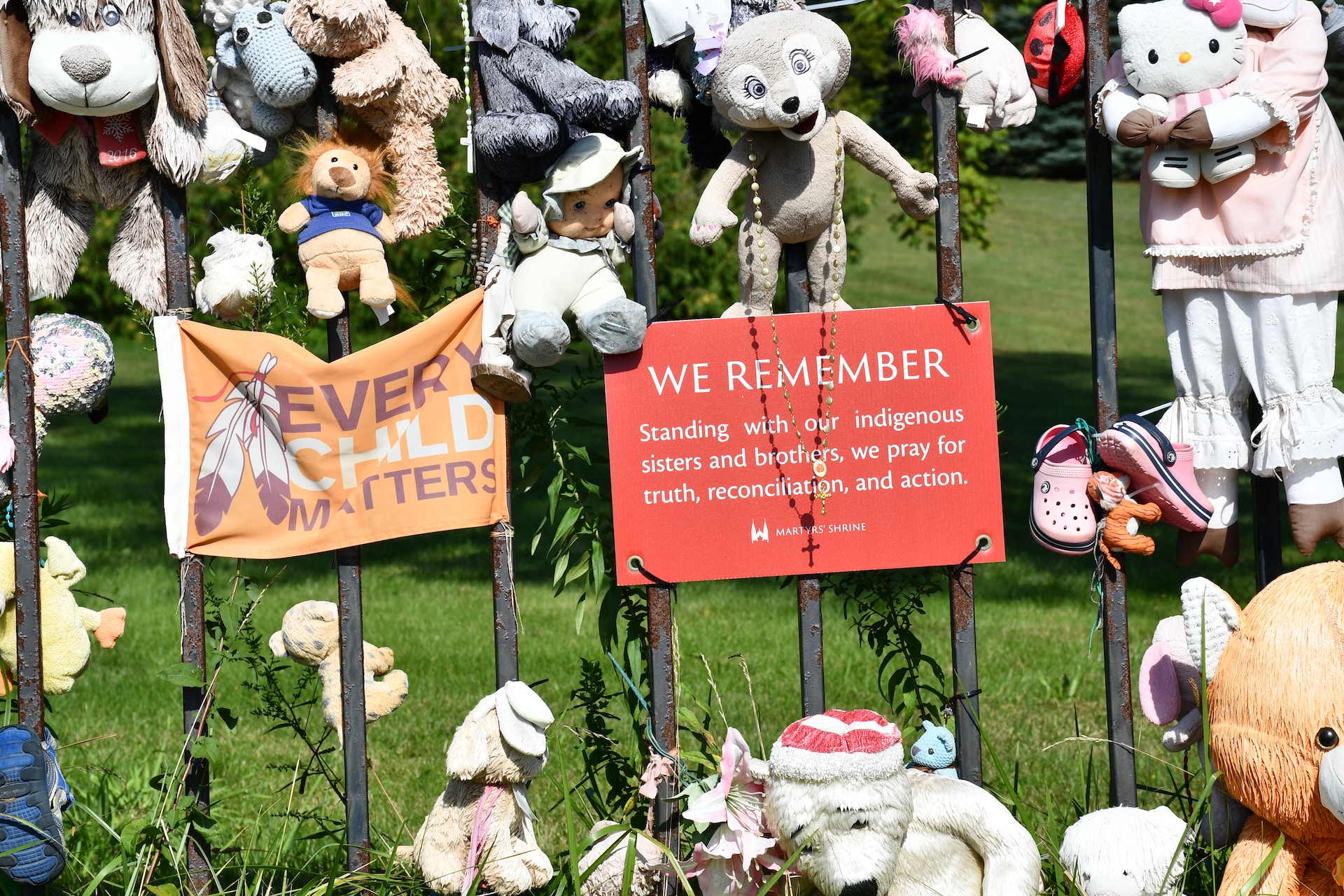
    In recent years, the tragic history regarding the horrors behind the systematic discrimination of Canada’s Indigenous communities has come to light in mainstream media. In 2021, the devastating news of over 200 remains of children in unmarked graves being discovered at Kamloops Residential School shocked the world (Dickson & Watson, 2021). And even more residential school sites are being investigated today, with 66 more potential graves found at St. Joseph’s Mission School in British Columbia (CBC News). The harrowing discoveries sparked candle vigils around Canada and even a visit from Pope Francis himself. Most notably, it also spawned Truth and Reconciliation Day (also known as Orange Shirt Day).

    Taking place every year on September 30th, the holiday is meant to acknowledge the mass devastation that has been inflicted upon Indigenous communities. It is a day in which all Canadians commit themselves to act against the discrimination that Indigenous people continue to face daily. However, this should not be limited to just one day. We should all strive to be allies to Indigenous people all around the world every day. Establishing Truth and Reconciliation Day has indeed brought more awareness towards educating people about the residential school system and the government’s role in their operation of them. That said, it has yet to bring more attention to many of the other obstacles Indigenous people are dealing with.

    For instance, the mental health and housing crises on reserves. According to Statistics Canada, the suicide rate for First Nations people in Saskatchewan is four times higher than the national average (Stefanovich, 2021). There is also the fact that despite Canada being a first-world country, most reservations do not have access to clean water. This has subjected many communities to health concerns like skin problems such as sores, rashes and eczema, birth defects, and gastrointestinal illnesses (Goldfinger, 2021).

    These are just a few of the systemic barriers they continue to grapple with every day. This is why your allyship is so important. When it comes to issues like these, they can feel far away; we can feel like nothing we do makes a difference. But this is not true; being an ally to Indigenous communities is what can raise awareness and educate people. With education and awareness comes a change for a better future.

    So, what can you do? Read below for tips!

    Learn Your History

    To be an ally to Indigenous communities, you must know what you are fighting for. Therefore, I would recommend doing some reading about the history of Indigenous people in Canada. While it is important to make sure that you read about all the systematic discrimination they have faced ever since the settlers came to Canada, don’t just read about the tragic side of things. Take some time to research the history of Indigenous culture and traditions. What were they like before the settlers came to Canada? How did everyone play a role in the community? It is important to remember that their history is not just one of tragedy; it is also one of great beauty and diversity.

    Learn about the Indigenous Communities Where You Live

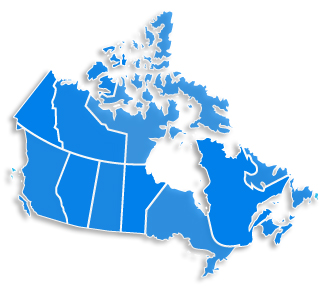
    I am sure you’ve noticed the Land Acknowledgements at the beginning of morning announcements and meetings at your school. But have you ever taken the time to learn about those communities? It is important to know whose land you’re living on. There are so many different communities to learn about: the Haudenosaunee Confederacy, Moose Cree First Nation, the Attawapiskat First Nation. There is so much to learn about! I have linked a website where you can learn more about Indigenous communities and where they live in Canada.

    Diversify Your Media Intake

    The media that you consume is an avid teacher in your life. We can learn a lot from the characters and people that we watch on TV because they show us so many different perspectives. As such, what you choose to entertain yourself with can teach you a great deal. A personal recommendation of mine is Sterlin Harjo’s Reservation Dogs. The show is dominated by Indigenous actors and producers, and it addresses the mental health crisis faced by Indigenous youth.

    I also know many of us spend way too much time on our phones. Hence, I would also recommend supporting Indigenous content creators on platforms such as Instagram. There are so many out there, such as James Jones (@notoriouscree), Michelle Chubb (indigenous_baddie) and Tia Wood (tiamischik). A lot of these content creators are dedicated not only to educating people about the obstacles facing Indigenous communities but also to Indigenous culture and its traditions. I recommend supporting Indigenous music groups. A personal favorite is Young Spirit, a Cree drum group.


    Map of First Nations on Government of Canada Website:

    Map of Canada


    Follow Indigenous Content Creators:

    @notoriouscree @indigenous_baddie @tiamiscihk


    Works Cited

    CBC News. “66 more potential burial sites discovered at former B.C. residential school.” CBC News, 25 January 2023, https://www.cbc.ca/news/canada/british-columbia/williams-lake-st-josephs-residential-school-1.6724370 Accessed 25 November 2023.

    Dickson, C., & Bridgette Watson. “Remains of 215 children found buried at former B.C. residential school, First Nation says.” CBC News, 28 May 2021, https://www.cbc.ca/news/canada/british-columbia/tk-eml%C3%BAps-te-secw%C3%A9pemc-215-children-former-kamloops-indian-residential-school-1.6043778. Accessed 25 November 2023.

    Goldfinger, Daina. “‘An ongoing symbol of colonization’: How bad water affects First Nations’ health.” Global News, 30 September 2021, https://globalnews.ca/news/8199988/first-nations-water-crisis-health-effects/.  Accessed 25 November 2023.

    Myer, K., & Kaitlin Grable. “Honor With Action: 10 Ways to be an Ally to Indigenous Peoples.” GreenPeace, 8 October 2021, https://www.greenpeace.org/usa/10-ways-to-be-ally-indigenous-peoples/. Accessed 25 November 2023.

    Stefanovich, Olivia. “‘We don’t want any more tears’: First Nations urge Ottawa to boost mental health spending.” CBC News, 17 April 2021, https://www.cbc.ca/news/politics/indigenous-mental-health-resources-federal-budget-2021-1.5989070. Accessed 25 November 2023.

  • Marking the World Day for Safety and Health at Work on April 28: Why It’s All the More Important Post-Pandemic

    Marking the World Day for Safety and Health at Work on April 28: Why It’s All the More Important Post-Pandemic

    As the world gradually adjusts to the new normal post-COVD and a large number of employees are being called back to the office, there have been constant discussions on how this would influence the policies regarding workplace safety.

    Safety and health at the workplace have long been major global issues. So much so that, since 2003, the International Labour Organization (ILO) has recognized the World Day for Safety and Health at Work every April 28th. The goal has to be to advocate for accident and sickness prevention in the workplace. This issue has become even more prominent with the pandemic.

    In the beginning stages of the pandemic, offices all over the world were quick to respond and implement measures to mitigate the spread of the virus. And now that the cases have been contained, does this mean workplaces can go back to pre-COVID-19 times?

    In keeping true to the mission of the ILO to minimize the prevention of accidents and diseases at work, occupational safety and health experts suggest that efforts to have adequate safety and health measures at work still should be prioritized to contain the spread of not just COVID-19 but of any disease – and collaboration is key.

    Most employers, like the provincial governments, have signed up workplace design and safety engineers to ensure a healthy return to the office while maintaining productivity levels.

    Continuous safety measures

    An action implemented to make sure physical distancing is still observed when needed, along with capacity limits, is to do bookings of a desk, office, a meeting room in advance.

    Companies that offer shared offices aim to charge for the spaces, such as $45 to rent a boardroom for an hour.

    On the other hand, other experts suggest that workplaces should aim to improve the quality at their sites. This would prove challenging, however, for the companies situated in office buildings that have older ventilation systems, as it will most likely require an overhaul that could cost up to millions.

    More flexibility

    Companies should look into providing their staff with more flexible options with regard to the workplace, including adding more communal areas.

    Having a central hub helps in promoting social connections as well as improving productivity.

    If it’s broke, fix it.

    Some experts say that maintenance should still remain a top priority for companies. Before employees are recalled back to work, employers should call on property managers to address maintenance issues, from something minor as light bulbs not working, to something major as a malfunctioning elevator.

    Frequent cleaning measures should remain in place, as well as efforts to improve air quality. Hand sanitation stations should also be strategically placed in work environments.

    The World Day for Safety and Health at Work is just one way to advocate for these major issues. It may not be a quick road to normalcy for workplaces post-pandemic, but employers should look at the bigger picture and work on what they can do to provide a healthy and safe environment for the staff.


    Sources

    Brend, Yvette. “Design experts rethink the workspace as pandemic restrictions ease across Canada.” CBC. https://www.cbc.ca/radio/thecurrent/the-current-for-feb-25-2022-1.6364228/design-experts-rethink-the-workspace-as-pandemic-restrictions-ease-across-canada-1.6373245

    Ontario.ca. “COVID-19 and workplace health and safety.” https://www.ontario.ca/page/covid-19-workplace-health-safety?_ga=2.49343206.1327791763.1647208630-246573711.1647208630

    United Nations. “World Day for Safety and Health at Work.” https://www.un.org/en/observances/work-safety-day

  • Spring Ahead!

    Spring Ahead!

    March is here, and after months of winter’s grip, we’re finally starting to see a light at the end of the tunnel! Sure, there might still be some lingering snow and chilly mornings, but the promise of spring is in the air. With March Break around the corner and Daylight Savings Time kicking in next week (yes, we lose an hour, but hey, more daylight!), it’s the perfect time to refresh your mindset and make the most of the rest of the school year.

    This month, we’ve got plenty of articles to help you stay motivated and on track. Thinking about starting your own business? We break down the pros and cons of sole-proprietorship. Looking for smart ways to save money as a student? We’ve got advice on handling expenses after graduation. Curious about unique careers? From wooden boat rebuilding to geographic information specialists, we’re spotlighting all kinds of interesting paths you might not have considered.

    Spring is all about new beginnings, so why not try something different? Whether it’s spending more time outdoors, exploring March Break activities, or even starting a spring tradition, there are plenty of ways to shake off the winter blues. And if you’re feeling like the school year is dragging, we have tips on making the most of the months ahead – because before you know it, summer will be here!

    For even more unique insights, check out our interviews with industry pros for firsthand career advice and inspiration.

    Enjoy the month, and happy almost-spring!

    Warm regards,
    Anthony Teles
    Vice-President, Content

  • Indigenous Student Scholarships for March 2025

    Indigenous Student Scholarships for March 2025

    ii’taa’poh’to’p Indigenous Student Access Program Award
    Scholarship Value: $2,000
    Awards Available: 20
    Award Deadline: March 20, 2025

    First Nations, Métis, Inuit, Women’s Scholarship – Women’s Program (Elementary Teachers’ Federation of Ontario)
    Scholarship Value: $1,250
    Awards Available: 4
    Award Deadline: April 30, 2025

    First Nations, Métis, Inuit, Women’s Scholarship – Women’s Program
    Scholarship Value: $12,500
    Awards Available: 2
    Award Deadline: April 30, 2025

    Kenneth R. Good Family First Nations Student Award
    Scholarship Value: $7,000
    Awards Available: 1
    Award Deadline: May 1, 2025

    Calgary Foundation First Nations, Métis (Metis) and Inuit Graduate Bursary
    Scholarship Value: $3,000
    Awards Available: 2
    Award Deadline: May 15, 2025

    First Nations, Métis and Inuit Undergraduate Bursary
    Scholarship Value: $3,000
    Awards Available: 6
    Award Deadline: May 15, 2025

    Yukon First Nations Heritage
    Scholarship Value: N/A
    Awards Available: 1
    Award Deadline: May 31, 2025

    Innovation Place Scholarships for Indigenous Students in the Sciences
    Scholarship Value: $5,000
    Awards Available: 1
    Award Deadline: June 1, 2025

    Petro-Canada Award for Indigenous High School Students
    Scholarship Value: $750
    Awards Available: 8
    Award Deadline: July 1, 2025

    Dr. & Mrs. G.B. Gowd Bursary for First Nations Women
    Scholarship Value: $1,000
    Awards Available: 1
    Award Deadline: October 15, 2025

    Western Continuing Admission Scholarship of Excellence for Indigenous Students
    Scholarship Value: $6,000
    Awards Available: 30
    Award Deadline: Ongoing

  • March 2025 Scholarships – Apply now!

    March 2025 Scholarships – Apply now!

    Kocchar & Co. Scholarship
    Scholarship Value: $1,000
    Awards Available: 1
    Award Deadline: March 31, 2025

    Jean Chretien Scholarship
    Scholarship Value: $5,000
    Awards Available: 5
    Award Deadline: March 31, 2025

    Horatio Alger Association of Canada National Entrepreneurial Scholarships
    Scholarship Value: $25,000
    Awards Available: 10
    Award Deadline: March 31, 2025

    Kezian Science Scholarship
    Scholarship Value: $1,200
    Awards Available: 1
    Award Deadline: March 31, 2025

    Optimist International Essay Contest
    Scholarship Value: $2,500
    Awards Available: 45
    Award Deadline: April 15, 2025

    Devine Family Scholarships
    Scholarship Value: $50,000
    Awards Available: 2
    Award Deadline: April 15, 2025

    Fred Hindle Bursary
    Scholarship Value: $5,000
    Awards Available: 2
    Award Deadline: April 15, 2025

    Gary Knechtel Memorial Scholarship
    Scholarship Value: $10,000
    Awards Available: 1
    Award Deadline: April 15, 2025

    Lift Parts Express Scholarship
    Scholarship Value: $500
    Awards Available: 1
    Award Deadline: April 30, 2025

    Emmett and Loretta Regan Memorial Award
    Scholarship Value: $4,500
    Awards Available: 2
    Award Deadline: April 30, 2025

    Pet Food Association of Canada Martha ‘Marty’ Wilder Honorary Scholarship
    Scholarship Value: $5,000
    Awards Available: 1
    Award Deadline: June 1, 2025

    Algonquin College Tuition Contest
    Scholarship Value: $5,000
    Awards Available: 1
    Award Deadline: June 30, 2025

    Western Continuing Admission Scholarship of Excellence for Black Students
    Scholarship Value: $6,000
    Awards Available: 30
    Award Deadline: Ongoing

    Western Continuing Admission Scholarship of Excellence for Indigenous Students
    Scholarship Value: $6,000
    Awards Available: 30
    Award Deadline: Ongoing

  • Career Profile: Geographic Information Specialists

    Career Profile: Geographic Information Specialists

    If you go on a trip with your parents or grandparents, you might see them pull out a paper map to look at when they need help with directions. Some people prefer to get directions on paper, but others prefer to look at an online map or to get directions from a computer. Either way, someone needs to know what to put on the map. Geographic information specialists gather the kind of information that goes into these documents. If you are precise and able to work with large amounts of data, this could be the right job for you.

    Making a map or chart is a complicated process. It requires exact information about the location of streets, rivers, lakes, bridges, and other features of an area. Much of this information could come from satellite or drone images, but sometimes people need to go out in person to find out about the landscape. For example, a picture cannot show whether a piece of land has soft, swampy soil or firm ground. Someone must go out to the area to find out.

    Geographic information specialists normally have at least a high school education, but most also have a diploma from a career college or a higher level of education. Many employers require an associate’s or bachelor’s degree in a field such as geomatics, environmental science, or geography. Some people get a master’s degree. Normally, a bachelor’s degree takes at least three years to complete, and a master’s degree takes another year or two.

    High school students can already start preparing for a career as a geographic information specialist. English courses help one be able to read complicated information, and mathematics courses are important for making calculations and measurements. Courses in geography can help with understanding the influence of various factors on the landscape. For example, a stream or river could wear away part of its banks and change its course, requiring geographic information specialists to make a new map.

    Jobs for geographic information specialists are available in many different areas, including universities, governments, and even construction companies or tourism companies. Agriculture is also a good source for finding jobs as a geographic information specialist. Some people might also be able to specialize in an area of the field that allows them to work as consultants for several organizations. Salaries generally start at about $51,000 and can rise to $82,000 with experience.

    Usually, people in this field need to be able to work with others, but they should also be able to work on their own, especially when they are designing maps. Accuracy and attention to detail are very important in this job, and the ability to concentrate for long periods can be helpful. The job is not normally physically difficult, but it may occasionally require going out in bad weather to check the features of a location. In most cases, people can stay in this job until either they reach retirement age, or their eyes become too weak to deal with the kind of details that maps require.

    Working as a geographic information specialist can be a good choice for detail-oriented people who enjoy gathering information and sharing it with others. If you enjoy maps and charts, this job might be right for you.


    Bibliography

    Job Bank. “Geographic Information Systems Technician in Canada.” https://www.nl.jobbank.gc.ca/marketreport/outlook-occupation/3493/ca

    Ontario Colleges. “”Geographic Information Systems (GIS).” https://www.ontariocolleges.ca/en/programs/energy-environmental-and-natural-resources/geographic-information-systems-gis.

    Payscale Canada. “Geographic Information Systems (GIS) Specialist: Salary in Canada.” https://www.payscale.com/research/CA/Job=Geographic_Information_Systems_(GIS)_Specialist/Salary.

  • Career Profile: Wooden Boat Rebuilder

    Career Profile: Wooden Boat Rebuilder

    Suppose that you wanted to ride a boat on a lake or stream. You might choose a boat made of aluminum or steel, but you could choose a boat made of wood. Like anything else, wooden boots can break down and need rebuilding. Although opportunities can be limited in some areas of Canada, a career as a wooden boat rebuilder can be a good choice.

    Many tasks are part of being a wooden boat rebuilder. The work can include sketching the boat that is being rebuilt and making design choices, normally with the help of a computer-aided design (CAD) system. The next step is to choose the kind of wood or veneer for rebuilding the boat, and then making fastenings and other parts of the boat that need rebuilding. Following that, they use special equipment to cut pieces of wood into the right size and shape for what the project requires.

    Normally, people in this trade complete an apprenticeship that includes eight thousand hours of on-the-job training, ending with a Certificate of Apprenticeship. This process usually takes about five years. Another option is to work at least eight thousand hours in a related area and then apply for a Trade Equivalency Assessment. A successful applicant can then be certified as a journeyperson in the trade. A high school diploma is also normally necessary. Courses in English, mathematics, and drafting can be useful.

    After completing the training requirements, people can start to work as wooden boat rebuilders. Being able to read blueprints is usually necessary, as well as using hand or power tools and measuring instruments. Salaries in this trade usually begin at about $47,000 and can rise to $77,300 with experience. Doing physical work on the boats can become difficult as people age, but the task of designing boats can continue late into people’s careers.

    Like in many trades, wooden boat rebuilders need to have many skills. They might work on the restoration of historic boats for museums or universities, or they might work for a large company with clients all over the world. Some people in this trade might have their own business and work directly with customers, but others might get their work from supervisors and never meet the people whose boats they are rebuilding. Being able to follow instructions but also to think a problem through and come up with a solution is important in this trade.

    Being near water is essential for this trade. Although some people might be able to find enough work rebuilding recreational boats in the middle of the country, most work in this field is likely to be available on the east or west coast. However, becoming a specialist in historic boats could help a wooden boat rebuilder find work even in places with no lakes or oceans nearby.

    Much of the work of wooden boat rebuilders can be indoors if a large enough space is available. However, working outside is often necessary, and people need to be able to withstand the weather. The hours can be long when a project needs to be finished or when there is an emergency, but otherwise, people in this trade can generally work regular hours.

    Because wooden boats are not as common as they once were, finding enough work in this trade can be difficult. However, becoming a wooden boat rebuilder can still be a good choice for those who are interested.


    Bibliography:

    Economic Research Institute. Boat Builder Wood Salary in Canada. https://www.erieri.com/salary/job/boat-builder-wood/canada.

    Ontario Youth Apprenticeship Program. “Wooden Boat Rebuilder.” https://oyap.ca/trades/?fuseaction=Profile&appnum=118.

    Payscale Canada. “Salary for Industry: Boat Building.” https://www.payscale.com/research/CA/Industry=Boat_Building/Salary.