Author: Teodora Pasca

  • Don’t Distress – De-Stress!

    Don’t Distress – De-Stress!

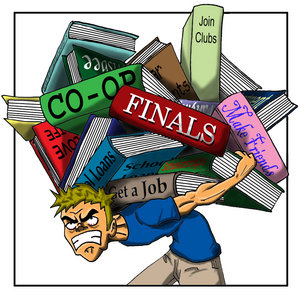
    Are you feeling the pressure? Whether you’re saving up for college or studying, no doubt stress can take a toll. A little bit of pressure can actually be a good thing; often, it pushes you to do the best you can and you consequently achieve even greater results. But if you constantly feel anxious and panicked about what’s going on around you, you may have a problem managing stress. You’ve probably got a lot on your plate to worry about already—a nervous breakdown is the last thing you need.

    Stress can manifest itself in many forms and, as a result, it has the potential to negatively impact all aspects of your life. Stress can have physical effects, including insomnia, nervous tics and vulnerability to illness (like catching a cold). Unfortunately, these effects make stress even harder to handle, wearing down your stamina as well as your motivation. Even more concerning is the damper stress can put on your psychological well-being: constant pressure to do well  is often detrimental to your self-esteem. If you’re plagued by stress, it may alarm you to notice that it starts to affect your enjoyment of life as a whole.

    The crucial thing is to not let it get that far. Stress is a slippery slope, but there are a couple of things you can do to make sure it doesn’t drag you down with it. Here are some ideas to kick your anxiety to the curb and embrace a positive, healthy lifestyle:

    1. Get organized. Projects can be daunting when you try to take them on all at once. Set up a schedule and section off your massive to-do list into more manageable chunks. A little work each day is much easier to handle than an all-nighter; as difficult as it is, try not to procrastinate as this can only accumulate more anxiety.

    2. Take breaks. It may be difficult for you to stop in media res (especially if you’ve got a deadline coming up), but working endlessly compromises both your efforts and your health. After each hour of work, grab a snack, chat with your family or take a quick stroll outside. You’ll be able to concentrate much more easily once you get back to work.

    3. Be realistic. Sometimes, you just can’t have it all: if the pressure’s really bugging you, reconsider your priorities. Do what’s necessary first and leave the small stuff for later. It’s not possible to do everything absolutely perfectly, so focus on the things that matter the most.

    4. Appreciate yourself. Instead of focusing on every little thing you’re doing wrong, redirect your energy to your achievements. You can set up a rewards system to recognize your hard work—for instance, if you ace that exam, celebrate by having a fun night out with your friends. It’s important to maintain a positive mindset, even when things get tough.

  • Credit Cards: The Good, The Bad and The Ugly

    Credit Cards: The Good, The Bad and The Ugly

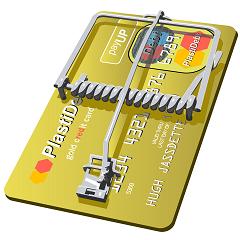
    “Charge it!”  It may feel great to just swipe a plastic card and that brand new shiny Michael Kors purse is now yours to enjoy.  But by the time you are at the next party  showing off your purse, the credit card bill is in the mail and soon you will have to pay for the purse.  You have following options; to pay your bill in full, make a partial payment or  pay the “minimum” payment.  But beware – once you start paying only a portion of your credit card bill, you will be charged interest the next month and this is where financial hardships can begin! The word “debt” is one that many students are familiar with because often they are already dealing with student loans due to high tuition costs.  Once students get into a habit of “charging” their purchases, they can easily fall into the debt trap and this is one of the risks associated with carrying a credit card.

    Risks:
    -may damage your credit score if your payments are late or you don’t pay the balance owing.
    -high interest rates.
    -you may carry an on-going debt that you find difficult to pay off.

    However, there are many benefits of credit card usage if the card is used for the right reasons and in a responsible manner!

    Benefits:
    -lets you borrow money instantly to make purchases.
    -allows you to carry less cash.
    -helps you establish a good credit history and earn a good credit score.
    -provides a free form of credit if you pay the balance in full and on time.
    -the card may provide a rewards program which can be used towards free travel or other items.

    In summary, it is beneficial to get a student credit card only if you plan to use it responsibly by not letting the risks outweigh the benefits. Try to find a card in which you obtain points on every purchase made.  This may lead you to a free trip of your choice! Think of being on the sunny beach forgetting about the books, all thanks to redeeming the points on your credit card. But remember that you won’t be able to enjoy that beach trip if your debt load and interest charges are accruing. Credit cards are the ultimate test in your new adult responsibilities.

  • Can High School Dropouts Still Go to College or University?

    Can High School Dropouts Still Go to College or University?

    Most people receive a lot of advice over their lifetimes. Can you think of some of the things that others have told you? One bit of advice that you might have heard from your parents and teachers is that you should stay in school and continue on to graduation. That way, you will be able to go to university or college and get a good job in the future. However, not everyone manages to finish high school, whether by choice or through problems in their lives. How can they ever continue their education? The process might be difficult, but high school dropouts can still go to university or college if they want.

    Students might have many different reasons for dropping out of school, such as a crisis in their lives, a change in family circumstances or a move to a remote area of the country where high school is unavailable. Some students might have finished the work to graduate but not have a Canadian diploma because they were homeschooled or because they finished their education overseas. In most cases, the process for getting into a Canadian university or college is similar for all of these people.

    One of the most common ways to get into higher education is to write an entrance exam set by the university or college. Foreign students whose first language is not English often have to pass these exams before they can get into Canadian universities and colleges, and people who have dropped out of high school can do the same to show that they have the skills and knowledge they need. Most universities and colleges also accept people who are at least twenty-one years old as “mature students” without requiring them to meet any specific academic standards.

    Being accepted into a college or university is a good first step, but students also need to be able to do the work or they will not be able to graduate. Students in many post-secondary institutions need to be able to organize their own work, write long papers and complete complicated projects, often with very little help from their instructors. Taking courses through Continuing Education programs or through online universities can help people develop the skills they need to be able to complete their coursework. Some universities, such as Oxford University in England and Stanford University in the United States, even offer free online courses in various subjects. Students might not be able to receive degrees through these programs, but they offer a good chance to learn and to practice the skills they need for their studies.

    Have you dropped out of high school and are you thinking of going to university or college? Many people have done that, and they have been successful in achieving their goals. If you left school but still enjoy learning, you can return to your studies and maybe gain a new career or help yourself become better at your current job. It’s never too late to improve your mind and your skills with a post-secondary education.

  • Career Profile: Printing Press Operator

    Career Profile: Printing Press Operator

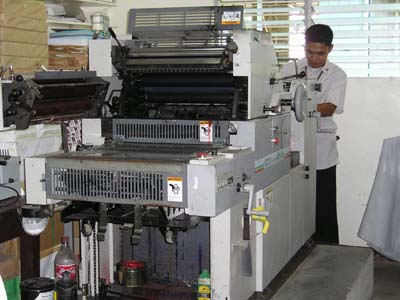
    Printed words are everywhere in our world. We see them on posters, street signs and all kinds of other places. Many of the materials that people read have gone through a printing press. If you look at a book, you can find out the name of the author, the editor and the publisher. One person who is never mentioned is the printing press operator. However, printing press operators have very important jobs. Without them, many of the books, magazines and newspapers that we read would not exist.

    In the last few years, computers have changed the way people read. Printed books, magazines and newspapers have become less popular as many people have changed over to electronic devices instead of paper. This shift has also affected job prospects for printing press operators, reducing their chances for employment. However, their work is still valuable. Universities, libraries, governments and others still use printed documents every day. Whether the documents are textbooks or novels, they are still important for helping people find the information they need or for giving them a chance to relax and enjoy an interesting story. Printing press operators help people have access to these books.

    The work that printing press operators do can vary a lot. Some people work only with machines that print paper documents, but others work with plastic, metal and other materials. They might work with illustrations and designs or mainly with written text. Printing is normally the last stage of the publication process. When the printing press operator receives a book or magazine to print, it normally has everything in order and all of the different sections in place. For a book, this means that the cover and title page come first and that the book is set up the way the author and publisher want it to look. The printing press operator then sets up the machine to print the pages according to the instructions.

    The training required to become a printing press operator varies, depending on the employer. Many printing press operators work for small businesses, although some work for larger companies. They might need only a high school diploma to get a job, although official training in printing techniques is helpful. Vocational schools that offer programs in printing, photofinishing and related fields can help train printing press operators for the kinds of work they will do. Basic computer skills are also very useful, and knowledge of book publishing can also help printing press operators get good jobs.

    Finding a good job often depends on a printing press operator’s flexibility. Some people work in paper manufacturing and other areas related to publishing and books. Any extra skills that printing press operators learn can help them to earn more and to get jobs more easily. Wages start at about $13 per hour and go up to almost $35 per hour. Experienced printing press operators earn over $40,000 per year in some parts of Canada.

  • Career Profile: Airport Baggage Handler

    Career Profile: Airport Baggage Handler

    When people go on trips by airplane, they might not think much about everything that goes on to get them and their luggage to their destination. One exception to that is when something goes wrong, such as when their luggage goes to the wrong place. Passengers might not know much about how the process works, but airport staff know that the work of baggage handlers is essential. Without baggage handlers, air travel would be very difficult and often uncomfortable.

    What makes airport baggage handlers so important? Most people, except on very short trips, need to take clothes, toothbrushes and other items with them. They might have books, snack food, gifts and even computers or medical supplies with them. Some of those items can fit in the storage areas under or above the passengers’ seats, but not all of them. When companies send products like rugs or furniture by airplane, these items also need somewhere to go. A lot of mail also travels by air. Most airplanes have a special luggage area below the passengers for anything that is too large to fit into the main part of the plane. Getting all of the luggage, mail and other shipments in and out of the plane can be a big job.

    Airport baggage handlers are the people who put the luggage in at the beginning of each flight and take it out at the end. They use equipment such as fork lifts and conveyor belts to move luggage from one place to another. They tie the luggage down inside the plane to make sure that it stays in place throughout the flight. A certain level of physical strength is necessary for baggage handlers in case their equipment fails or they have to lift luggage onto trucks or conveyor belts. The need for strength might be even greater in small airports, where limited resources mean that much of the work has to be done by hand. Baggage handlers also need to be able to work quickly and efficiently to make sure that they cause as few delays as possible. Some of their work happens outside and they need to be prepared for bad weather.

    If you want to become a baggage handler, the most important education you can have is a high school diploma. Some airlines might also want applicants for the job to have some post-high school academic or vocational education. The best way to learn about educational requirements is to find an airline where you would like to work and then to find out what specific training is necessary. Next, you can apply for a job with that airline. Job prospects vary from one area to another, but they will probably improve when older workers start to retire. Salaries for baggage handlers start at about $20,000 per year, but experienced baggage handlers can make $60,000.

    Do you enjoy helping other people get to where they need to go? Are you physically strong and able to carry heavy loads? You might want to consider a career as a baggage handler.

  • Grants for Students with Disabilities

    Grants for Students with Disabilities

    Am I eligible?
    You are eligible if you:
    – apply and qualify for a Canada Student Loan;
    – are enrolled in a full-time or part-time program (minimum 32 weeks) at a designated post-secondary institution;
    – meet the criteria for students with permanent disabilities; and
    – include one of the following with your loan application as proof of your disability: a medical certificate, a psycho-educational assessment, or documentation proving receipt of federal or provincial disability assistance.

    What’s available?
    $2,000 per academic year (August 1 to July 31).
    This grant is available for each year of post-secondary studies, provided you continue to meet the eligibility criteria. This includes post-secondary studies beyond the undergraduate level. Grant money is issued by your province or territory of permanent residence at the beginning and in the middle of the school year.

    Since grant amounts are fixed, the amount you receive may exceed your assessed need.
    Example: If you qualify for the grant and you have an assessed need of $1,400, you will receive a $2,000 grant. In this case, the grant would cover your assessed need, so you would not need a student loan.

    How do I apply?
    The application process for this grant differs in each jurisdiction. To make sure you meet all the application requirements, contact your province or territory’s student financial assistance office.

  • The Long Dog Days of Summer

    The Long Dog Days of Summer

    By now you are fully ensconced in your summer routine. Whether you’re working your first summer job or taking these two months off to hang out with your family, you’re probably not even thinking about heading back to school in September. Or, more accurately, you’re trying to not think about having to go back in four short weeks. While the prospect of summer ending can be daunting, think of the start of school as a chance for a fresh start. You can refresh your outlook and set the tone for the entire year. Create a list of goals that you would like to accomplish this year, whether that be getting higher grades or joining more extracurricular activities.

    If you’re making the transition from high school to post-secondary this year, you might be wondering just what exactly you should be expecting. Here at JobsPeopleDo.com, we have plenty of info on what you should be preparing for as you start this next phase of your life. This includes what to take with you to the dorm, how you can manage your new schedule (and freedom) and, of course, how to manage your money. We’re always on the look out for new scholarships for you – take a look through our archives and on our Scholarships page to find all the information you need to get the best possible start at college and university.

    While the summer is always a little quieter around these parts, we are working on some great new additions to the site for you come September. Keep checking this space for more updates!

    Enjoy the rest of your summer and we’ll see you back here on September 1 to help get you through the first day jitters.

    Jasmin Bollman
    Content Editor

  • Tips for Scoring a Scholarship

    Tips for Scoring a Scholarship

    Let’s get real. Post-secondary education is expensive and very few people have thousands of dollars casually lying around the house. Most of us are in search of cash — the type that you don’t have to pay back. In other words, we’re all searching for those illustrious scholarships. If you’re new at this whole “applying-for-scholarships-because-I-need-money-to-pay-for-school-which-suddenly-isn’t-free-anymore” thing, then you’ve come to the right place.

    Here are seven helpful tips that could help you score some extra cash!

    1. You do not get scholarships for simply existing. Almost every scholarship application that you come across is going to inquire about your extracurricular activities and community involvement. You need to do something, be a part of something, or participate in something. You don’t necessarily need to be the three-time reigning champion of every competition you compete in, or the newly-elected President for every fancy club that you’re a part of. You simply need to get out there and participate.

    2. One of the hardest parts of getting free money is finding free money. Luckily, there are people who dedicate themselves to doing it for you! Make sure to check out websites like Scholarship Canada. They have information on hundreds of scholarships— both large and small. Also, take a glance at your school’s website. The majority of Guidance Councillors will actually post a list of scholarships that they’ve come across. But don’t stop there. Go the extra mile and go digging through the websites of other schools. You’re guaranteed to come across a fresh new list filled with new opportunities.

    3. Keep your eye out for obscure scholarships offered by smaller organizations. This may require an advanced Google search and some serious digging but this very well might be the key to your first scholarship. Most students set their targets on big scholarships offered by well-known companies. There’s no harm in applying for those, but your chances quickly diminish when you’re facing so much competition. However, with the lesser-known scholarships that might be sitting on page 17 of a Google search, your chances of standing out in the significantly smaller crowd are far higher.

    4. Your best bet to scoring a scholarship is to apply to as many as possible. This may sound frighteningly obvious but you would be surprised by how many people lay all of their eggs in one basket. Yes, it’s time-consuming and painstakingly tedious but you need to apply, apply, and apply some more!

    5. If a scholarship application sounds too long, too boring, or too overwhelming, there’s a pretty good chance that other students are going to think the same thing and avoid it all together. This, of course, means that you should go ahead and do it! The more tedious the application is, the less competition you’re going to have. So suck it up and get writing!

    6. Never lie. Don’t lie about your qualifications, achievements, activities, awards, or anything of the sort. Just don’t! If you get caught, you’ll suffer from third-degree embarrassment and, even worse, you may sever some really important connections.

    7. Most organizations will release profiles of the previous year’s winner. Take a look at those to find out what kind of people they’re looking for. This might give you some ideas on what to include in your own application.

  • Don’t Forget to Have Fun!

    Don’t Forget to Have Fun!

    Starting off in high school can be scary, especially if your list of things to do and your goals are weighing down on you. As important as it is to have goals and to be prepared to work hard, it very important to also be able to manage your stress by letting go and having some fun.

    Everybody has fun in different ways, whether by playing a sport, playing a game, hanging out with friends, doing art, writing or spending time with family and friends. Playing a sport is a great way to focus your energy on something other than whatever is worrying you. Playing a game is a great way to learn some new things, whether it is through a video game or a board game, like Scrabble. Hanging out with friends will help you to connect with others who are facing similar problems and help you to cope with any stress that you are experiencing. Laughing with friends is a great way to release the ever important “happy brain chemicals”, your ally when it comes to facing stress in your life. Doing art can help you to explre any feelings that may be “stuck” or that need to be addressed. Writing can help to mobilize any thoughts or emotions you might have that are lying unconscious, under your level of awareness, ready to be discovered through creative writing.  Spending time with  family is a great way to connect with meaningful people in your life and share any stresses that you may be facing. Also, just relaxing and hanging out with people who you care about will help you to feel good and have fun.

    The important thing is to avoid getting bogged down by your worries and seek an outlet for the playful part of yourself that can get pushed down in times of stress. By relieving stress and having a good time, you release feel good chemicals in your brain which will allow you to better survive and adapt in your everyday life.  Basically, in order to preserve our natural instincts, we must be able to let go and have fun every once and while. This will help us to be stronger and better adapted to our present day life.

  • Embrace Your Weirdness

    Embrace Your Weirdness

    A lot of people spend time trying to fit in. They don’t want to stand out or be considered different, weird, awkward or strange. Having the same clothes, interests and ideas seems like the most important thing in the world. Everyone just wants to fit in.

    But who established what is normal ?  And what exactly is considered weird? For most people, normal is what they are used to and weird is what they are not used to.

    The word weird is defined by www.dictionary.com in three ways, one of which is fantastic and bizarre. Interesting, isn’t it, how we took a word meaning fantastic and bizarre and created a label for people with an unflattering connotation? When you look at it like that, being “weird” really doesn’t seem that bad. In fact, some of the most successful people in the world were considered strange, different or weird growing up.

    Take Justin Timberlake, for example. He was once quoted as saying, “I grew up in Tennessee, and if you didn’t play football, you were a sissy. I got slurs all the time because I was in music and art.” He also suffers from Attention Deficit Disorder (ADD) and Obsessive Compulsive Disorder (OCD), both of which haven’t stopped him from succeeding.

    Prince Harry was ridiculed and bullied for being a redhead. He was quoted as saying he was teased “for being ginger.” However, not everyone made fun of him. His fellow soldiers in the British Army all wore red wigs to make him stand out less in combat.

    Michael Phelps is one of the most successful Olympians of all time, but as a kid his long limbs, large ears, and lisp caused him to be bullied and teased by his classmates. He also has ADD, and was told he’d “never be able to focus on anything.” Yet he didn’t let that stop him. He used all of his feelings, both good and bad, as motivation to win and as a result became the most decorated Olympian of all-time (winning 22 medals, 18 gold, 2 silver and 2 bronze).

    Chris Colfer, who plays Kurt on Glee, was called a “freak” growing up. He said, “I was teased daily, mainly because of my voice. They said I sounded like a chipmunk! Now everyone likes to remind me how they used to be my best friend, but I have a very good memory- that wasn’t always the case.”

    Lady Gaga has said she didn’t have the best high school experience. She said she didn’t fit in as a teen. “I wanted to be like Boy George and I felt like a freak. So I like to create this atmosphere for my fans where they feel like they have a freak in me to hang out with, and they don’t feel alone.”

    The list of differences goes on and on…

    Albert Einstein, whose name is pretty much synonymous with genius, was a theoretical physicist, and one of the most renowned scientists of all time. However, he didn’t talk until he was four and he didn’t learn to read until he was seven. It is now believed he had Asperger’s Syndrome, which is a form of Autism. Sir Isaac Newton is also believed to have had Asperger’s, and he too was a mathematical and scientific genius.

    Jay Leno, Orlando Bloom, Vince Vaughan, Alexander Graham Bell, John Lennon and Muhammad Ali all had dyslexia.

    Christopher Columbus, Karina Smirnoff, Eleanor Roosevelt, JFK, Walt Disney, Will Smith, Jim Carey and Ernest Hemingway and Bill Gates had ADD.

    Mozart, Daryl Hannah, Tim Burton, Andy Warhol and Susan Boyle all had or have forms of Autism.

    All of these people were considered weird for how they behaved, what they felt and what made them different. They all experienced obstacles they needed to overcome, and they did so by embracing their weirdness. They didn’t let others define who they were and what their limits would be.  They used their uniqueness to their advantage and succeeded. So don’t be afraid to embrace your weirdness too. As Lady Gaga has said, “let your teenage freak flag fly.”