
Author: Susan Huebert

  • I Want to Be Like Lady Gaga!

    I Want to Be Like Lady Gaga!

    Imagine what it would be like to be a famous musical star, walking up onto stages around the world to sing to your cheering fans. You could be like Lady Gaga, recording music and giving live concerts for a living. You might become famous all over the world for the songs that you compose and sing. If you love music and have the talent to develop your own musical style, a career as a singer and songwriter might be right for you.

    Many careers in entertainment require talent. This is especially true of singing. The person later called Lady Gaga discovered her talent early in life. She was born as Stefani Joanne Angelina Germanotta in New York City in 1986. She was already learning to play the piano by the time she was four years old. Over the next years, she practiced a lot and learned more about her craft. By the time Stefani was eleven years old, she was good enough to be accepted as a student at a famous music school called Julliard. However, she decided to study at a private Catholic school instead. Three years later, she was ready for her first performance.

    When Stefani was twenty years old, she went to study at the Tisch Scool of the Arts at New York University. She ended her studies before she graduated to develop her own style. In 2005, she began working with Def Jam Records. Two years later, she began recording songs with Interscope Records, where many other famous singers record their music. In 2008, she received awards for her album, The Fame. One of the songs from this album, “Poker Face,” made the singer even better known. By this time, she called herself Lady Gaga.

    Being a singer like Lady Gaga involves much more than just singing songs. After writing their songs, singers perform at concerts in parks, concert halls, and other places. Often, they go on tours of different cities to give concerts for their fans there and to promote their recordings. They record songs and make music videos. They visit music stores and attend award shows and parties. The talk to fans and sign autographs. While they are doing all of these things, they still need to keep on composing songs and practicing their skills.

    If this kind of job appeals to you, the first step is to decide what kind of music you like to sing. Some singers perform many different types of music, but most of them find a style that suits them and then stay with it. What kind of music do you like? Every type of music has a different way of using the notes that make up songs. Some use pianos and others use drums and guitars. Learning the rules of music theory is an important step in becoming a singer and songwriter.

    If you enjoy composing music and performing your songs in front of other people, a career as a singer and songwriter might be right for you.

  • Youth Apprenticeship Programs Across Canada

    Youth Apprenticeship Programs Across Canada

    Youth apprenticeship programs are available in most provinces and territories. Check out the programs available in your area.

    Alberta
    The Registered Apprenticeship Program (RAP) allows high school students to participate in an apprenticeship program while they are still attending school. RAP apprentices earn income as well as hours of on-the-job training and work experience as credit towards their apprenticeship program, and their high school diploma. Scholarships are also available for RAP students.

    British Columbia
    The Secondary School Apprenticeship (SSA) is a career program that provides students with the opportunity to begin an apprenticeship while still in high school, and to earn high school credits for doing so. It provides a smoother road from school to work, and a head start to an apprenticeship.

    ACE IT is an industry training program for high school students, with trade classes offered at colleges and sometimes at a high school. ACE IT programs involve a partnership of schools, employers and industry and provides funding for the first level of schooling. Local employers get involved in the development of ACE IT programs, leading to a higher employment rate following completion of the program.

    Manitoba
    The High School Apprenticeship Program (HSAP) combines regular high school instruction with paid, part-time, on-the-job training. Students can earn up to 8 supplemental academic credits for graduation based on 110 working/practical hours per credit.

    Youth Build is a job training and pre-apprenticeship program whereby young people are working under the supervision of a journeyperson to renovate homes and develop building skills. Young people can attend the Youth Build Program full time, as an alternative to school. In Manitoba, there is a 30 hour per week paid vocational component and a 10 hour per week unpaid academic component.

    New Brunswick
    The Career Connections Program (CCP) offers students experience, hands-on paid work experience, and expands their essential employability skills.

    Newfoundland and Labrador
    Youth apprenticeship courses are available for high school students through Skilled Trades Jump Start Your Life.

    Northwest Territories
    The Schools North Apprenticeship Program (SNAP) is an opportunity for high school students to earn credit and pursue a career in the trades.

    Nova Scotia
    The Workit Youth Apprenticeship Initiative is open to youth between the ages of 16 and 19.

    Options and Opportunities (O2) offers students more hands-on learning experiences with a career focus. It’s designed to prepare students for successful transitions from high school to work, a career path, or a post-secondary program.

    Ontario
    The Ontario Youth Apprenticeship Program (OYAP) is a School to Work program that opens the door for students to explore and work in apprenticeship occupations starting in Grade 11 or Grade 12 through the Cooperative Education program.

    Prince Edward Island
    Youth Apprenticeship or Accelerated Secondary Youth Apprenticeship Program (ASAP)Youth Apprenticeship is for students wanting to explore their trade career options and gain a head-start on the post-secondary apprenticeship training program while working toward their Grade 12 diploma.

    Québec
    Québec offers vocational and technical education programs under the apprenticeship system, which are run jointly by Emploi-Québec and the Ministère de l’Éducation, du Loisir et du Sport .

    Saskatchewan
    Saskatchewan Youth Apprenticeship (SYA) raises awareness of apprenticeship in Saskatchewan schools by helping young people discover what rewards come with being a Youth Apprentice and working in the skilled trades.

    Yukon
    The Yukon Secondary School Apprenticeship Training program is open to Yukon secondary school students who would like to explore a skilled trade and complete high school at the same time.

  • Career Profile: Landscaping Technician

    Career Profile: Landscaping Technician

    Type of Work
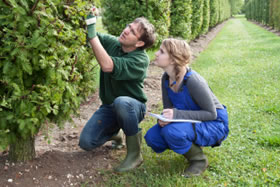
    This unit group includes those who survey and assess landscapes; draw sketches and build models of landscape designs; construct and maintain gardens, parks, golf courses and other landscaped environments; advise clients on issues related to horticulture; breed, cultivate and study plants; and treat injured and diseased trees and plants.

    Outlook
    Over the past few years, the number of landscape and horticultural technicians and specialists increased sharply. This increase is mainly attributable to the growth in demand for landscaping and horticultural products and services. Trends are very positive in landscaping and more mixed in horticulture. Since the landscaping industry accounts for the largest number of workers in this occupational group by far, it is expected that the number of landscape and horticultural technicians and specialists will rise sharply over the next few years.

    Demand for Landscaping (non-construction)
    Landscape technicians and specialists work on projects involving public spaces such as urban and regional parks, public squares, highways, recreation areas, parking lots and nature conservation sites, private and public gardens, recreational and sports areas, pedestrian zones and bicycle paths, golf courses, cemeteries, residential, institutional, commercial and industrial sites, and so forth. The good outlook for tourism infrastructure development and increased public pressure for the creation of green spaces in urban environments should provide jobs for landscape technicians and specialists over the next few years. In fact, niches are developing and moving away from projects related directly to construction. Although the protection of cultural heritage sites and environmental conservation will continue to exert a positive influence on jobs in this occupation, landscape development will be added to this trend in a context of increasing competition in the tourism sector, and as a major element in municipal strategies to retain and attract citizens and companies to the area. Added to this are the needs to redevelop contaminated industrial sites and to preserve and restore cultural and historic sites.

    Requirements
    To work in this occupation, candidates must have relevant landscape or horticulture experience, and enjoy working outdoors. They also need to be in good physical condition and have good manual dexterity. Team spirit, autonomy, initiative, attention to detail and reliability are other qualifications sought by employers.

    Education and Training
    Depending on the position, specific training is not necessarily required to enter this occupation. Although a number of employers require that candidates hold a high school diploma (DES), extensive experience in landscaping or horticulture is sufficient in many cases. That being said, more and more employers primarily recruit graduates of the many training programs leading to this occupation. Whether required or not, landscaping and horticulture diplomas are always assets for those seeking to work in this occupation.

    These are the main programs leading to this occupation:
    – Diploma of Vocational Studies (DEP) inArboriculture-élagage ([arboriculture and pruning] offered in French), Ornamental Horticulture or Landscaping Operations.
    – Attestation of Vocational Specialty (ASP) inSpécialités en horticulture ([horticulture specialties] offered in French).
    – Diploma of Collegial Studies (DEC) in Horticulture and Environmental Technology and Paysage or Ornamental Horticulture Landscaping and Marketing.

    Other programs also lead to this occupation, including Attestations of Collegial Studies (AECs) in landscaping and ornamental horticulture. Community organizations also offer school-to-work transition programs in these fields.

  • Your Non-Red Seal Trade Options

    Your Non-Red Seal Trade Options

    There is more to the trades than you think – here are other jobs that are part of the trade industry. See if one feels right for you! Click through to see more information on select trades from Service Canada, and check back each month as we feature profiles of some of these exciting careers right here on Jobs People Do.

    Construction Sector
    –Cement (concrete) Finisher
    -Concrete Pump Operator
    –Construction Millwright
    –Electrician (Domestic and Rural)
    -Exterior Insulated Finishing Systems Mechanic
    -Hazardous Materials Worker
    –Heat and Frost Insulator
    – Heavy Equipment Operator
    – Dozer Operator
    – Excavator Operator
    – Tractor Loader, Backhoe Operator
    -Native Residential Construction Worker
    –Painter and Decorator: Industrial
    -Precast Concrete Erector
    –Precast Concrete Finisher
    –Refractory Mason
    –Residential Air Conditioning Systems Mechanic
    –Residential (low rise) Sheet Metal Installer
    -Restoration Mason

    Industrial Sector
    -Bearings Mechanic
    –Blacksmith
    -CNC Programmer
    -Composite Structures Technician
    –Die Designer
    –Draftsperson (Mechanical, Plastic Mould Design, Tool and Die Design)
    -Electrical Control (Machine) Builder
    -Electrician – Signal Maintenance (TTC)
    -Elevating Devices Mechanic
    -Entertainment Industry Power Technician
    -Facilities Mechanic
    -Facilities Technician
    –Fitter-Assembler(Motor Assembly)
    –Gas Technician
    -Hydraulic/Pneumatic Mechanic
    -Light Rail Overhead Contact System Lineperson (TTC)
    -Locksmith
    -Machine Tool Builder and Integrator
    -Mould Designer
    -Mould Or Die Finisher
    -Mould Maker
    -Optics Technician (Lens and Prism Maker)
    –Packaging Machine Mechanic
    –Pattern Maker
    -Precision Metal Fabricator
    -Pressure Systems Welder
    -Process Operator (Food Manufacturing; Power; Refinery, Chemical and Liquid Process; Wood Products)
    -Pump Systems Installer/Mechanic
    –Railway Car Technician
    -Relay and Instrumentation Technician
    -Roll Grinder/Turner
    -Saw Filer/Fitter
    -Ski Lift Mechanic
    –Surface Blaster
    –Surface Mount Assembler
    -Thin Film Technician
    –Tool And Cutter Grinder
    -Tool And Gauge Inspector
    –Tool/Tooling Maker
    –Tractor Trailer Commercial Driver
    –Water Well Driller

    Motive Power Sector
    –Alignment and Brakes Technician
    –Auto Body Repairer – Br.2
    -Automotive Electronic Accessory Technician
    –Automotive Glass Technician
    –Marine Engine Mechanic
    -Motive Power Machinist
    -Powered Lift Truck Technician
    –Small Engine Technician
    -Tire, Wheel and Rim Mechanic
    –Transmission Technician
    -Turf Equipment Technician

    Service Sector
    -Aboriginal Child Development Practitioner
    –Agriculture – Dairy Herdsperson
    –Agriculture – Fruit Grower
    –Agriculture – Swine Herdsperson
    –Arborist
    –Baker
    -Bicycle Mechanic
    –Chef
    –Child and Youth Worker
    -Child Development Practitioner
    –Cook – Assistant Br. 1
    –Developmental Services Worker
    –Educational Assistant
    –Electronic Service Technician
    -Gem Setter/Goldsmith
    -Hardware, Lumber and Building Materials Retailer
    –Service Sector Horse Groomer
    -Horse Harness Maker
    –Information Technology (Hardware Technician,  Network Technician)
    –Institutional Cook
    -IT Contact Centre (Customer Care Agent, Sales Agent, Technical Support Agent)
    -Micro-Electronics Manufacturer
    -Native Clothing and Crafts Artisan
    -Network Cabling Specialist
    –Pool and Hot Tub/Spa Installer
    –Pool and Hot Tub/Spa Service Technician
    –Retail Meat Cutter
    -Saddlery
    –Special Events Coordinator
    -Utility Arborist
    -Wooden Boat Rebuilder/Repairer

  • Getting Your 40 Volunteer Hours with Volunteer Centres

    Getting Your 40 Volunteer Hours with Volunteer Centres

    As you know, all high school students need to have 40 hours of community service in order to graduate. Use this information to discover where your 40 hours can best be used.

    Volunteer Centres work in local communities to strengthen volunteering and citizen engagement. With more than 200 in Canada, each volunteer centre’s name, size, structure and services reflect the unique characteristics of their community.

    To find a volunteer centre in your area, click here.

    Many volunteer centres are independent non-profit organizations, while others are part of a United Way, Social Planning Council, Community Information and Referral Centre or municipal services. Though diverse in many ways, they share the following common functions:

    – Promote volunteering

    – Build the capacity of organizations to engage volunteers

    – Facilitate connections between people with volunteer opportunities

    – Provide leadership on issues related to volunteering and citizen engagement

    If you want to volunteer, your local volunteer centre is there to connect you to opportunities in your community. It may have a database of volunteer opportunities or can connect you directly to opportunities within its member organizations.

  • Scholarships for Aboriginal Students

    Scholarships for Aboriginal Students

    Bursaries and Scholarships
    The Aboriginal Financial Officers Association of Canada is dedicated to helping Aboriginals reach the highest standard of excellence in finance and management. AFOA’s initiatives in the development of Awards and Scholarships are examples of that commitment.

    See link below for scholarships and bursaries.
    http://www.metisnation.org/programs/education–training/education/bursaries–scholarships

  • Métiers – Il est plus que rencontre l’oeil!

    Il ya plus à des métiers que vous pensez – voici d’autres emplois qui font partie de l’industrie du commerce. Voir si on se sent bon pour vous! Cliquez sur le lien pour voir plus d’informations sur certains métiers de Service Canada, et vérifier chaque mois, nous vous proposons des profils de certains de ces carrières passionnantes ici JobsPeopleDo.com.

    Secteur de la construction
    -Finisseur ou finisseuse de béton
    -Opérateur ou Opératrice de Pompe à béton
    –Électricien ou électricienne (secteurs domestique et rural)
    -Technicien ou technicienne de parements extérieurs isolants
    -Travailleur ou travailleuse en décontamination
    –Poseur ou poseuse de matériaux isolants
    –Conducteur ou conductrice d’équipement lourd : bouteur
    –Conducteur ou conductrice d’équipement lourd : excavatrice
    –Conducteur ou conductrice d’équipement lourd : tracto-pelle rétrocaveuse
    –Ouvrier ou ouvrière de construction
    –Peintre – décorateur ou peintre – décoratrice (secteur industriel)
    -Monteur ou monteuse de béton préfabriqué
    –Finisseur ou finisseuse de béton préfabriqué
    –Maçon ou maçonne d’ouvrages en briques réfractaires
    –Mécanicien ou mécanicienne en systèmes de climatisation résidentiels
    -Poseur ou poseuse de tôles pour systèmes résidentiels (petits immeubles)
    –Maçon ou maçonne en restauration

    Secteur industriel
    –Mécanicien ou mécanicienne de roulements
    –Forgeron ou forgeronne
    -Programmeur ou programmeuse en commande numérique (CNC)
    -Technicien ou technicienne en structures composites
    -Concepteur ou conceptrice de matrices
    –Dessinateur ou dessinatrice – conception mécanique
    -Dessinateur ou dessinatrice – conception de moules en plastique
    -Dessinateur ou dessinatrice – conception d’outils et de matrices
    -Préparateur ou préparatrice de commandes électriques (machines)
    -Électricien ou électricienne en entretien des signaux (TTC)
    -Mécanicien ou mécanicienne d’appareils de levage
    -Technicien ou technicienne en électricité pour l’industrie du spectacle
    -Mécanicien ou mécanicienne d’entretien de bâtiment
    -Technicien ou technicienne en systèmes de bâtiment
    -Ajusteur-assembleur ou ajusteuse-assembleuse (ensemble moteur)
    -Mécanicien ou mécanicienne en hydraulique/pneumatique
    -Monteur ou monteuse de systèmes de lignes aériennes de contact pour le transport léger sur rail
    -Serrurier ou serrurière
    -Constructeur et intégrateur ou constructrice et intégratrice de machines-outils
    –Concepteur ou conceptrice de moules
    –Finisseur ou finisseuse de moules et de matrices
    -Confectionneur ou confectionneuse de moules
    -Fabricant ou fabricante de prismes et de lentilles de précision
    -Mécanicien ou mécanicienne de machines à emballer
    –Modeleur ou modeleuse
    –Tôlier ou tôlière de précision
    –Soudeur ou soudeuse sur appareils sous pression
    –Opérateur ou opératrice de procédés industriels (secteur de la transformation des aliments)
    -Opérateur ou opératrice de procédés industriels (secteur de l’énergie)
    -Opérateur ou opératrice de procédés industriels (raffinerie, procédés chimiques et liquides)
    -Opérateur de procédés industriels (produits du bois)
    -Installateur ou installatrice de systèmes de pompage
    -Technicien ou technicienne de wagons de chemin de fer
    -Technicien ou technicienne de l’instrumentation et des relais
    -Affûteur/tourneur ou affûteuse/tourneuse de cylindres
    -Affûteur/ajusteur ou affûteuse/ajusteuse de scies
    -Mécanicien ou mécanicienne de remontées mécaniques
    –Dynamiteur ou dynamiteuse –exploitation à ciel ouvert
    -Assembleur ou assembleuse d’éléments de surface
    -Technicien ou technicienne de pellicules minces
    -Affûteur ou affûteuse d’outils
    -Inspecteur ou inspectrice d’outils et d’appareils de contrôle
    -Confectionneur ou confectionneuse d’outillage
    –Conducteur ou conductrice de semi-remorques commerciales
    –Foreur ou foreuse de puits d’eau

    Secteur Power Motive
    -Technicien ou technicienne spécialiste des freins et du réglage de la géométrie des roues
    –Réparateur ou réparatrice de carrosseries automobiles
    -Technicien ou technicienne d’accessoires électroniques d’automobile
    -Technicien ou technicienne de glaces de véhicule automobile
    -Technicien ou technicienne de moteurs marins
    -Usineur ou usineuse de pièces (véhicule moteur)
    -Technicien ou technicienne de chariots élévateurs
    -Technicien ou technicienne de petits moteurs
    -Mécanicien ou mécanicienne de pneus, de roues et de jantes
    –Technicien ou technicienne de boîtes de vitesses
    –Technicien ou technicienne d’équipement de gazon

    Secteur des services
    -Praticienne ou praticien du développement de l’enfant autochtone
    -Agriculture – soigneur ou soigneuse de troupeaux laitiers
    -Agriculture – fructiculteur ou fructicultrice
    –Agriculture – porcher ou porchère
    -Arboriste
    –Boulanger ou boulangère
    –Chef
    –Assistant social ou assistante sociale auprès des jeunes
    -Praticienne ou praticien du développement de l’enfant
    –Cuisinier ou cuisinière
    -Intervenant ou intervenante en services à l’intégration
    –Aide-enseignant ou aide-enseignante
    –Technicien ou technicienne d’entretien d’appareils électroniques
    –Sertisseur/orfèvre ou sertisseuse/orfèvre
    -Vendeur ou vendeuse au détail de quincaillerie, de bois d’œuvre et de matériaux de construction
    -Palefrenier ou palefrenière -Sellier-harnacheur ou sellière-harnacheuse
    -Technicien ou technicienne en technologie de l’information – matériel
    -Technicien ou technicienne en technologie de l’information – réseau
    –Cuisinier ou cuisinière d’établissement
    -Agent ou agente du service à la clientèle – centre de contact en technologie de l’information
    -Agent ou agente des ventes – centre de contact en technologie de l’information
    -Agent ou agente du soutien technique – centre de contact en technologie de l’information
    -Fabricant ou fabricante en micro-électronique
    -Artisan ou artisane autochtone
    -Spécialiste de câblage de réseaux
    -Technicien ou technicienne d’installation de piscines et de bains à remous
    -Technicien ou technicienne d’entretien de piscines et de bains à remous
    –Découpeur ou découpeuse de viande au détail
    -Sellerie
    –Coordonnateur ou coordonnatrice d’événements spéciaux
    -Arboriste de services publics

  • Les centres d’action bénévole au Canada – Obtiens tes heures de bénévolat !

    Comme tu le sais, tous les étudiants du secondaire ont besoin de 40 heures de service communautaire afin de graduer. Sers-toi de l’information ci-dessous pour découvrir comment mettre à profit tes 40 heures de la meilleure des manières.

    Pour trouver un centre d’action bénévole près de chez vous, cliquez ici.

    Beaucoup de centres d’action bénévole sont des OSBL indépendants, mais d’autres font partie de Centraide, d’un Centre d’information et de référence ou des services municipaux. Malgré quelques variantes, tous ont en commun ces quatre objectifs :

    – Promouvoir le bénévolat

    – Renforcer la capacité des organismes à mobiliser les bénévoles

    – Faire le lien entre des personnes et des occasions de bénévolat

    – Fournir de l’orientation sur les enjeux liés au bénévolat et à la participation citoyenne

    Si vous désirez devenir bénévole, votre centre d’action bénévole local est là pour vous suggérer les possibilités. Il dispose peut-être d’une base de données sur les ouvertures qui s’offrent ou il peut vous recommander directement à l’un de ses organismes affiliés.

    Si vous êtes un organisme, votre centre d’action bénévole peut vous proposer des ateliers sur la participation bénévole, afficher vos demandes dans sa base de données ou vous aider à échanger avec d’autres organismes de bénévoles.

    Les centres d’action bénévole participent à beaucoup d’autres activités, par exemple, pour n’en nommer que quelques-unes : gestion de projet pour les bénévoles soutenus par l’entreprise, diverses initiatives d’apprentissage dans la communauté, gestion de ressources bénévoles pour programmes et projets variés, recherche, programmes communautaires de leadership et dialogues sur les politiques publiques.

    Bénévoles Canada travaille en partenarial avec le Réseau canadien de centres d’action bénévole, qui comprend des centres de bénévoles locaux et des associations provinciales de centres d’action bénévole soucieux de renforcer le bénévolat et la participation citoyenne.


  • Bourses d’études pour les Autochtones du Canada

    L’Association des agents financiers autochtones du Canada (AFOA) a pour vocation d’aider les Autochtones à atteindre les normes d’excellence les plus élevées en matière de gestion des finances. Les initiatives de l’association qui visent à développer des prix et des bourses d’études sont un exemple de cet engagement.

    Voir le lien ci-dessous pour se renseigner sur les bourses d’études :
    http://www.metisnation.org/programs/education–training/education/bursaries–scholarships

  • Boulangers-pâtissiers

    Nature du Travail
    Les boulangers-pâtissiers font des pains, des petits pains, des muffins, des tartes, des pâtisseries, des gâteaux et des biscuits dans des pâtisseries qui font le commerce de gros et de détail ainsi que dans des restaurants. Les boulangers-pâtissiers qui occupent des postes de surveillants sont inclus dans ce groupe de base.

    Source des Débouchés
    Les débouchés proviendront en premier lieu des besoins de remplacement des boulangers-pâtissiers qui prendront leur retraite. D’autres débouchés s’ajouteront en raison des besoins de remplacement de ceux qui quitteront la profession pour accéder à des emplois dans d’autres professions reliées à l’alimentation comme cuisiniers ou dans d’autres domaines, pour obtenir une promotion à des postes de chefs ou de gestion dans le commerce d’aliments, la fabrication d’aliments ou la restauration, ou enfin pour s’établir à leur compte en ouvrant leur propre boulangerie ou pâtisserie.

    Une partie de ce cheminement de carrière peut se faire à l’intérieur même de cette profession, par exemple de boulanger ou pâtissier à chef boulanger ou chef pâtissier, ou à surveillant en boulangerie-pâtisserie. Notons que le roulement est assez fort dans cette profession, comme le montre le taux relativement élevé de jeunes âgés de 15 à 24 ans (26 % par rapport à 14 % pour l’ensemble des professions) et le taux au contraire faible de personnes âgées de 55 ans et plus (10 % par rapport à 15 % pour l’ensemble des professions). Ces données proviennent du recensement de 2006.

    Bassin de main-d’œuvre
    Les débouchés seront accessibles à un vaste bassin de candidats. Premièrement, les étudiants qui recherchent des emplois à temps partiel, le soir ou les week-ends, représentent un bassin important pour une partie des débouchés, surtout pour ceux provenant des magasins d’alimentation. Des jeunes peu scolarisés peuvent également accéder à des débouchés dans cette profession, en apprenant le métier auprès d’un boulanger ou d’un pâtissier d’expérience ou en suivant une formation en cours d’emploi. Ensuite, une autre partie des débouchés peuvent être pourvus par des boulangers-pâtissiers expérimentés qui sont assez nombreux en chômage. Puis, la relève est aussi composée d’immigrants, comme le montre leur présence significative dans cette profession : 23 % des postes en 2006, tandis qu’ils en occupaient environ 12 % dans les autres professions, selon les données du recensement.

    Industries
    Selon les données du recensement, environ 40 % des boulangers-pâtissiers travaillaient en 2006 dans les magasins d’alimentation, surtout dans les épiceries (27 %), mais aussi dans les boulangeries-pâtisseries (13 %), et presque la même proportion (38 %) dans les boulangeries, industrie qui comprend les boulangeries commerciales et les boulangeries de détail qui fabriquent elles-mêmes les produits de boulangerie qu’elles vendent aux consommateurs. On en retrouvait aussi en nombre significatif dans la restauration (11 %).

    Caractéristiques des emplois
    Selon les données des recensements, les femmes occupaient environ 53 % des postes dans cette profession en 2006, proportion en hausse notable depuis 1991 (45 %). La donnée sur le revenu annuel d’emploi (24 256 $) présentée dans la section «Caractéristiques» des «Statistiques» ne concerne que les 48 % des membres de cette profession qui travaillaient à temps plein et à l’année en 2005. Le revenu moyen d’emploi de ceux qui ne travaillaient pas à temps plein et à l’année, entre autres des étudiants, s’élevait plutôt à 11 230 $. Le travail les week-ends, le soir ou les jours fériés est fréquent. Cette profession exige une bonne forme physique, car les boulangers-pâtissiers peuvent travailler de longues heures debout et porter des charges assez lourdes. On observe un certain chômage saisonnier de janvier à avril.

    Études et formation
    Il est possible de devenir boulanger ou pâtissier sans formation spécifique. Selon les données du recensement, environ 57 % des membres de cette profession ne possédaient en 2006 aucune formation postsecondaire et seulement 16 % d’entre eux étaient titulaires d’un diplôme d’études postsecondaires dans le domaine des services personnels et culinaires. L’apprentissage auprès d’un boulanger ou pâtissier reconnu et la formation en cours d’emploi représentent un mode d’accès à cette profession assez répandu. Toutefois, différents programmes de formation permettent de faciliter l’accès à cette profession et représentent donc un atout important.

    Les programmes qui permettent de faciliter l’accès à cette profession sont les diplômes d’études professionnelles (DEP) en boulangerie et en pâtisserie, et l’attestation de spécialisation professionnelle (ASP) en pâtisserie de restaurant.

    Il est possible d’obtenir un certificat de qualification professionnelle en boulangerie. Ce certificat est parfois exigé et représente de toute façon un atout.

    Les boulangers-pâtissiers titulaires du Sceau rouge peuvent exercer leur profession partout au Canada.