Author: Amanda Desouza

  • Vous êtes votre propre majorette

    Vous sentez-vous parfois débordé et stressé par les choses qui se passent à l’école ou même à la maison? Tout le monde a de mauvaises journées, de temps à autres. La vie peut donner des coups auxquels on ne s’attend jamais. Peut-être que vous ne vous entendez pas bien avec vos amis ou peut-être n’avez vous pas réussi à faire partie de l’équipe de sport que vous vouliez vraiment. Ce genre de problèmes peut vous faire sentir triste et en colère. C’est complètement normal : chaque jour ne sera pas parfait. Nous passons tous par là, ne vous sentez donc pas seul.

    Ce qui est le plus important lorsque l’on passe par des moments difficiles est la façon dont nous les gérons. Vous pouvez choisir de parler aux autres de vos sentiments. Que ce soit un professeur, un parent ou un ami, ce sont tous des gens qui s’en font pour vous et qui vont écouter vos problèmes. Ils veulent aussi que vous réussissiez. Quand vous ne pouvez pas compter sur eux, vous pouvez toujours compter sur vous-même – ne vous laissez pas de côté.

    Vous êtes votre meilleure majorette à la fin de la journée. Par majorette, je ne veux pas dire quelqu’un qui tient des pompons. Par majorette, je veux dire que vous avez la possibilité de vous motiver à faire des choses difficiles et à vous sentir mieux avec vous-même. Tout le monde a sa propre façon de faire cela. Peut-être que votre façon d’être une majorette est de vous récompenser après avoir accompli votre but ou de vous encourager mentalement. C’Est parfaitement ok de se donner une tape dans le dos à soi-même de temps en temps. En fait, c’est sain!

    Parfois, la peur peut être notre pire ennemi. Vous avez peut-être peur d’essayer de nouvelles choses ou n’avez pas l’impression que vous êtes capable de réussir dans une nouvelle situation. Savoir que vous allez réussir est la meilleure façon d’accomplir vos buts. Au lieu de vous décourager, essayez de vous encourager et de penser de façon positive. Essayez de remplacer chaque sentiment négatif par des sentiments positifs. Quelque chose d’aussi minime qu’un changement d’attitude peut accomplir des merveilles quant à votre estime.

    Vous savez que ce n’est pas parce que vous n’avez pas réussi à faire partie de l’équipe de sport que vous n’êtes pas bon dans ce sport. Vous pouvez peut-être vous pratiquer davantage pour réessayer l’année prochaine. Vous savez aussi que ce n’est pas parce que les choses ne vont pas si bien à la maison que c’est de votre faute; parfois, d’autres facteurs jouent un rôle dans les situations difficiles. Avoir un regard positif sur les choses et vous encourager améliorera votre confiance. Si vous commencez à croire que vous pouvez accomplir tout ce que vous voulez, vous aurez des résultats. Commencez donc à penser comme si vous étiez votre propre majorette!


  • July Scholarships of the Month – Apply Now!

    July Scholarships of the Month – Apply Now!

    Heading to college or university in the fall? It’s not too late to apply for scholarships! Help fund your way through post-secondary education and take your mind off of financial matters so you can focus on more important things – like studying (or sleep). Here’s what we found for scholarships this month:

    1. Christian Farmers Federation of Ontario Fund – awarded to qualifying applicants whose parents or grand-parents are CFFO members & supporters; the applicant needs to live in the same district and be a registered full-time student in an agriculture related program. Amount: $500. Deadline: July 31, 2014.

    2. Kelman Scholarship – Provincial/National – Awarded to one student that is interested in the protection of water quality and is planning on attending a post secondary institution in a related field of study. Applicants must write a 500 word essay. Amount: $500. Deadline: October 31, 2014.

    3. Alberta Arborists Scholarship – Open to students pursuing higher education with an emphasis in natural or applied sciences. Amount: $1000. Deadline: July 30, 2014.

    4. Justice Centre for Constitutional Freedoms Essay Contest – Open to students commencing studies (full-time or part-time) at a Canadian college or university this September 2014 who submit a 2500 word essay. Amount: $1000. Deadline: September 15, 2014.

    5. Joseph W. Atkinson Scholarship for Excellence in Teacher Education – Open to students enrolled in a teacher’s college in Ontario. Amount: $2000. Deadline: July 21, 2014.

    6. Jeremy Dias Scholarship – Open to students enrolled in high school or CEGEP and entering an accredited post-secondary institution, or students currently enrolled in a post-secondary institution. Amount: Varies. Deadline: August 15, 2014.

    7. 2014-2015 African Nova Scotian Scholarship Program – Qualifications vary; consult website for further information. Amount: $1000 – $4500. Deadline: July 31, 2014.

  • You Are Your Best Cheerleader

    You Are Your Best Cheerleader

    Do you ever feel overwhelmed or stressed out by things happening at school or even at home? Everybody has bad days sometimes. Life can throw curve balls at you that you never expect. Maybe you’re not getting along with your friend or maybe you didn’t make the sports team you really wanted to make. These types of problems can make you feel down and upset. This is completely normal; not every day is going to be perfect. We all go through this, so don’t feel like you’re alone.

    What is most important about going through tough times is how you deal with them. You can choose to talk to other people about how you’re feeling. Whether it’s a teacher, a parent or a friend, these are all people who care about you and will listen to your problems. They want you to succeed as well. When you can’t turn to them you can always turn to yourself – don’t count yourself out.

    You are your best cheerleader at the end of the day. By cheerleader I don’t mean someone  holding pom-poms. By cheerleader I mean that you have the ability to motivate yourself to do difficult things and feel better about yourself. Everybody has their own way of doing this. Maybe your way of being a cheerleader is that you like to reward yourself after accomplishing your goal or you like to mentally encourage yourself.  It’s perfectly okay to give yourself a pat on the back every once in a while. In fact, it’s healthy!

    Sometimes fear can be your own worst enemy. You may be scared to try something new or don’t feel like you are capable of succeeding in a new situation. Having the confidence within yourself that you can succeed is the best way to accomplish your goals. Instead of putting yourself down, try encouraging yourself and thinking positively about a situation. Try replacing any negative feelings with positive ones. Don’t be so hard on yourself! Something as little as a change in attitude can do wonders for your self-esteem.

    You know that just because you didn’t make the sports team doesn’t mean you’re not good at that sport. Maybe you can practice more and prepare yourself for tryouts next year. You also know that just because things at home haven’t been great lately that it is not your fault; sometimes other factors play a role in hard situations. Having a positive outlook on things and cheering yourself on will improve your confidence. If you start believing that you can do anything you set your mind to, you will see results. So start thinking like your own personal cheerleader!

  • How and Why Do Apprenticeships Work?

    How and Why Do Apprenticeships Work?

    An apprenticeship is a period of study under a journeyman or master tradesperson in which the apprentice assists the master in their job. In return the master or journeyman will teach and pay the apprentice, readying them for a job in the in-demand field of trades.

    An apprenticeship can last anywhere from a few months to five years, depending on the type of trade you’ve chosen to learn and the availability of work in that field. All tradespeople, with the exception of welders, currently have to pass a Red Seal test before they are approved as a journeyman tradesperson and can begin working independently. Laws are changing, however, and it will soon be necessary to have a Red Seal to practice within any trade in Canada, including welding.

    There is a great deal of variety between trades, apprenticeships and tradespeople. There are plumbers, electricians, pipe fitters, auto mechanics and a large number of other careers. The trades, and tradespeople, are becoming more and more in demand, thus taking a job in the trades can be very financially lucrative. The average entry-level tradesperson makes about $16-$18 an hour in their first year as an apprentice. Master tradespeople easily make salaries that go into the six-digit range.

    Currently, there is a lack of skilled tradespeople in the Canadian economy, making someone who is Red Seal-certified as skilled in their trade of choice greatly in demand. This applies to nearly every trade; going into an apprenticeship can be a very wise choice if you’re interested in making a lot of money.

    The trades are very varied and it takes a separate set of skills to master each one, which is why so much hands-on and on the job experience is key to the success of an aspiring tradesperson. They all involve a degree of math and a lot of work with your hands. They can be dangerous, but also lucrative, and if you’re looking for a stable career tradespeople are almost always in demand.

  • The Importance of Finding Peace Within

    The Importance of Finding Peace Within

    In a world filled with obligations and seemingly never ending stress, finding inner peace can seem like the stuff of fairytales. The reality is that the majority of us are feeling the pressure of our daily lives in a big way. Poor quality food (yes chips, I am talking about you), poor sleeping habits (five hours a day truly isn’t enough) and mismanaged time can leave a person feeling perpetually like a ping pong ball darting back and forth on the table of life.

    As busy as our lives might be, it is important to find the time to look inwards to find a sense of peace in order to have some semblance of balance. Not only does finding inner peace feel good, it is essential. Inner peace means different things to different people, but the core of the definition remains the same; feeling internal harmony with an absence of internal strife. As previously mentioned, inner peace is essential; our three states of being (physical, spiritual and mental) rely upon it. Without it, anxiety, stress, depression, fear and restlessness – all bi-products of an absence of inner peace – are given leeway to take over our lives.

    As cliché as this may sound, inner peace helps to make the world go round. Let’s take that statement and apply it to a hypothetical situation. If there was a doctor who was manic depressive and due to his depression was unable to focus for long periods of time, developed chronic memory loss or became unreliable in his or her attendance at the office, said doctor could wind up causing some serious damage to or even killing one or more of his or her patients. The wrong medication could be prescribed, a client could be misdiagnosed or a hopeful patient would have traveled to the doctor’s office in vain looking for an absent doctor. Medical and legal chaos would ensue. As extreme as this example may seem, the absence of inner peace can cause such a large amount of discord in our lives through blindsided snowball effects that it can alter it and those around us.

    In an effort to find inner peace many of us turn to spirituality or religion. As the Dalai Lama so wisely stated, “We can never obtain peace in the outer world until we make peace with ourselves.” His words mirror the teachings of so many religions today. In some way, shape or form, every religion functions on the act of mastering internal peace and then applying it externally. This transference of peace dictates the way that we live and communicate. Aside from religion, other methods of obtaining inner peace are through meditation, listening or creating music or engaging in a relaxing activity. Regardless of what you choose to do, remember that a peaceful person is a happy person and so are the people around them.

  • Books and Bills: Financing your Post-Secondary Studies

    Books and Bills: Financing your Post-Secondary Studies

    An education is a worthwhile investment—but if you’re making the decision to go to college or university, you may find yourself questioning the amount of money going into your studies. Tuition fees can pile up, and can range anywhere from five to eight thousand dollars per year. Specific programs, like business or engineering, are even more expensive at many institutions. When examining the costs of it all, post-secondary education seems more and more daunting, but (though it might take a little work) there are ways to get the learning you’re entitled to without breaking the bank.

    When you’re looking at a post-secondary program, finances should be one of your points of consideration. Depending on the university or college, tuition rates can vary, and if you know your program is offered in equal quality at a cheaper school, this could be a logical deciding factor. The thing is, post-secondary finances are comprised of much more than tuition payments: in all programs there are auxiliary costs, like textbooks, that you have to consider. Furthermore, there is the issue of residence; you may choose to live at home in order to save some money, since residence can cost you up to ten thousand dollars every year. But if you’re looking at an institution that’s a little further from home, living expenses are mandatory costs as well.

    Overall, going to college or university can be a financial ordeal if you don’t have the funding. That being said, don’t feel you have to miss out on educational opportunities due to financial problems. Scholarships that are awarded based on academic merit are often included upon your admittance to a post-secondary program, provided you fall into a certain grade category (typically, very large schools tend to have more stringent academic requirements for entrance scholarships). There are also scholarships you can apply for, whether based on grades, extra-curriculars, or community involvement, and these scholarships can be offered by the school itself or available through external sources. You just have to do your research.

    Financial assistance can be available to you even if you don’t qualify for scholarships—bursaries, which are based solely on financial need, are also offered by many universities. These require an application, but are definitely a worthwhile investment. Bursaries are grants, not loans, so they don’t need to be paid back! If scholarships and bursaries don’t work out, consider applying for a student loan (basically, borrowing money from the government). Programs like OSAP in Ontario are in place specifically to help people get through school, even if they don’t have the funding for it. They also allow some time after you graduate to get yourself organized until you are able to pay the money back.

    Post-secondary can be a financial burden, but don’t let yourself miss out on the opportunity to get an education. With scholarships, bursaries and loans in place, there are always ways to get the help you need.

  • Career Profile:  Farmer

    Career Profile: Farmer

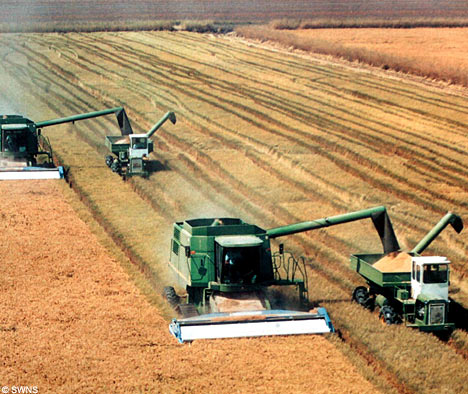
    Every day, people cook and eat food that has come from farms. Bread comes from grain that grows on farms, and fruits and vegetables also often come from there. Milk, cheese and eggs come from animals that live on farms, and also much of the meat that people eat. Farmers grow the food and take care of the animals so that people in the cities and around the country can eat. Working as a farmer can be a difficult and dangerous job, but it is an essential part of every society.

    Farming is a very old occupation which is found in almost every part of the world. People living in North America have grown crops like corn and beans for hundreds of years. However, when settlers came from Europe they brought many other crops with them. Farmers found that British Columbia, with its warm winters and wet climate, is good for growing many types of fruit like peaches and apricots. They discovered that they could grow grains like wheat and barley in places like Manitoba and Saskatchewan, with long, cold winters and short, hot summers.

    Flexibility is an important part of being a farmer. In the past and even now in many countries, farms were small and farmers would be involved in many different types of work. Besides growing grain, vegetables and fruit, they might raise chickens for eggs and for meat, keep bees for honey and possibly even raise fish or other animals. However, in countries like Canada, many farmers concentrate on growing one type of food, such as grain or fruit. They learn how to prepare the soil, fertilize the plants and care for everything the plants need to grow and thrive. Farmers who work mainly with animals learn how to deal with medications, diseases and injuries and to help the animals with finding food and other needs.

    Farming can be a tough job. Grain, fruit and vegetable farming tend to be very busy in spring, when farmers plant their fields, and in fall when they harvest the crops. Animals require a lot of care throughout the year, and many farmers wake up early every morning to milk the cows or to take the animals from the barn to the fields. When diseases hit the crops or animals, farmers can lose a lot of their earnings. Their income depends on the weather, the soil, the health of their animals and many other factors. Farming can also be a very dangerous occupation with all of the accidents that can happen.

    Despite the difficulties of farm life, many people enjoy it. Sometimes, people who grow up on farms decide to take over when their parents retire, but others start out on their own. A degree in agriculture is helpful but is not necessary, since farmers learn a lot from other people and from experience. Farming can be a very good life for people who love to work with their hands and to be outdoors. You might want to consider this ancient occupation.

  • What is an Internship?

    What is an Internship?

    An internship is a generally unpaid position with a company or other organization in which the student, or intern, learns the skills they need for their chosen profession while working hands-on in a real work environment related to their field.

    For example, if you’re becoming a journalist, educator or doctor, your program will most likely include an internship during or near the end of your time of study. In some cases an internship position will be provided for you, but in other programs you may need to go out and find an internship yourself. It really varies depending on what you intend to study, but internships are generally for high school, university or college students, whereas those in the trades would be finding apprenticeships.

    Intern work involves hands-on, on the job experience that is invaluable in your future career. For example, a medical intern would spend time at a hospital working with real doctors, nurses and patients in an actual hospital environment. A journalism intern would have to find a paper, magazine or website to intern for. This could involve whatever your company needs of you, from fact checking or setting up equipment, to going to events with professional journalists. It all depends on what you’re studying and where you get an internship.

    Try not to worry about how to get your internship – most companies are overjoyed to have students working for them and your faculty members will be able to help you out. The internet also has plenty of resources to help you find the right internship for you in your field of study. Don’t be stressed; an internship period is an excellent time to work for and learn from professionals to see what the job is like before deciding whether or not it is for you. An internship is a time to make mistakes and learn from them. Think of it as almost like a fitting room for your career; it lets you check it out and see what the job is really like.

    As well as providing valuable hands-on experience, internships look very good on resumes and are often part of the requirements to graduate from many college and university programs. Sometimes, if you impress your temporary ‘employer’ enough, an internship could very easily turn into a career. Companies are always looking for bright and driven young students to add to their staff.

    Hopefully this has given you some insight as to what an internship is and how to get one. They aren’t a part of every program, but internships are a valuable learning experience and are a perfect opportunity to get some real, hands-on experience in our field.

  • Career Profile:  Archaeologist

    Career Profile: Archaeologist

    When you go to museums, you learn a lot about the past. Some museums have information about the relatively recent past, but others give information about people who lived many centuries ago in countries around the world. How do people in the twenty-first century know about the ancient Romans or even the settlers who came to North America two hundred years ago? Much of what people know about the past comes through the work of archaeologists who try to understand other cultures and people through what they left behind.

    Suppose that you wanted to find out about your great-grandmother’s life. You might ask your parents and grandparents for information, and you might also look at old diaries and maybe some of the things she owned. Archaeology is a lot like that kind of search. The main difference is that archaeologists are usually searching for information on whole communities and cultures instead of just one person. They often work far away from home, trying to learn about ancient people and to understand how they lived.

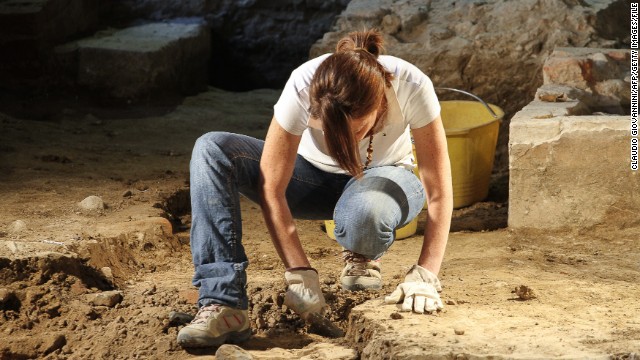
    Part of what archaeologists do is to look for objects that show what life was like in the era they are studying. Some objects might be made of gold or silver, but archaeologists can still learn a lot from even the tiniest beads or other things that the people used. Archaeologists also look for whatever written records they can find, whether they are written on paper, stone, or anything else. Digging for ancient objects, or artifacts, can be slow and difficult work, but it can be very rewarding.

    Before archaeologists get to the point of digging for artifacts, they need to study and learn about what other archaeologists have discovered. They need to learn about ancient civilizations and practice the skills they need for recognizing and preserving artifacts. This process usually involves getting at least a Master’s degree and sometimes a Ph.D. in archaeology at a university. Through this type of program, students learn about fossils, ancient art, museums, and many other topics. They might learn to read Latin and other ancient languages like Egyptian hieroglyphics and find out what people in the past used for medicine and what they ate. A wide range of knowledge can help archaeologists know how to look for artifacts.

    Being able to analyze and interpret what they find is also important for archaeologists. Only a part of their work is digging for artifacts. They also have to analyze and organize what they find, research the history and the objects, and then write about what they discover. For all of this work, they might receive between $55,000 and $60,000 per year, working for a private company, a university, or possibly the government. Working hours can be long when they are out digging, but otherwise, archaeologists usually keep regular office hours. Jobs in the area are limited, but flexibility and a wide range of knowledge can help.

    Do you love history and learning about the past? Why not consider working as an archaeologist?

  • Entering High School: Why You Should Join Extracurriculars

    Entering High School: Why You Should Join Extracurriculars

    If you’re worried about trying to find the place you belong in the confusing high-school landscape, joining extracurricular groups is a great thing to do. These groups can range from sports teams, cultural clubs, interest clubs, and beyond.

    Joining these groups allows you to meet new people who share the same interests that you do. They also provide you with the opportunity to make new friends and become closer with the teachers who lead the groups. Developing relationships with teachers is important because they make awesome academic references for job applications as well as university applications down the road. Together, with your peers and teachers, you can explore these interests and satisfy your curiosities.

    Participating in extracurricular groups also looks fantastic on your resume and university/college applications. Employers and post-secondary institutions like to see that you are participating in groups outside of the classroom. Joining these extracurricular groups makes students seem well-rounded. It shows that you have interests that go beyond academics and make you stand-out. In a job interview, leveraging similar interests as the person interviewing you or showing passion for an interest outside of academics makes you a more memorable candidate.

    Through participating in extracurricular groups you can gain valuable skills. These include teamwork skills which you develop through working co-operatively with other members of the group. You may also develop leadership skills by leading a group project or inspiring and motivating others in the group. Both of these skills are very valuable in the work environment and the post-secondary school environment.

    Joining one of these groups will give you a sense of belonging. They can also be an outlet for stress from your academic life. You may even try out a new activity and discover that you really enjoy it. If you don’t end up enjoying it, no harm done – you now know more about yourself. There are definitely many more positive outcomes than negative outcomes from getting involved in extracurricular groups. They can make your overall high-school experience more enjoyable!