Author: Jasmin Bollman

  • Stop Bullying!

    Stop Bullying!

    BULLYING – THE CHANGE IS WITHIN YOU

    The issue of bullying has been talked about a lot over the past year in the media and in schools. In particular, the bullying of LGBT youth has led to many unfortunate cases where suicide felt like the only way out. Are you or someone you know being bullied? Are you a bully? Ask yourself these important questions and you can make a difference in by taking steps to change your behaviour or helping those who you see being bullied by others.

    If you have bullied others, think of the reasons why you did it. Did you want to look cool in front of your friends? How did it make you feel after you bullied the person? One of the best ways to stop this behaviour is to put yourself in the shoes of the person being bullied. If you were called those names, reflect on how you would feel. Often, realizing the power of your words is the best medicine to stop such actions.

    Don’t put yourself into a box – just because you may have bullied people before, it does not mean you still have to do it now. The power to change is within all of us! By changing your behaviour, you will positively impact everyone around you. Be the person in your school who sets an example and says no to being a bully. Change starts with one person and grows larger from there.

    If you have been bullied, or are currently being bullied, reach out to someone you care about. If you feel like they would not understand, or you don’t feel comfortable talking to them, there are many anonymous and free services where people are ready to help you at any time of the day. Kids Help Phone is a great example. Even though it may seem futile, talking with someone and having a human connection with someone who wants to listen to you and help you is extremely beneficial to your mental health. Someone who is “outside” of your situation can give you advice that you may not hear from someone that is close to you. The anonymity of a service like Kids Help Phone allows you to be completely honest about your thoughts and feelings without the fear of being judged.

    You can also volunteer to help with programs that raise awareness about the effects of bullying, or create your own campaign in your school. Awareness of the issue will give others the confidence to speak up when they see someone being bullied.

    If you need help, please do not hesitate to reach out to someone. There is strength in numbers, and you will get through this.


  • Where, When, and Which Class?: A Course Scheduling Guide

    Where, When, and Which Class?: A Course Scheduling Guide

    If you are like many first year students, you have a vague idea of what courses you want to take in college or university. If you liked biology in high school, chances are “Biology 1000” will catch your eye as you browse through the course calendar. Of course, the first thing that should guide your decisions is your interests. For example, if the thought of reading War and Peace is taxing to you, steer clear of Advanced English Lit. But besides what you do and don’t like, how do you decide what courses should fill your schedule?

    The first thing to look at when creating your schedule is your program requirements. The faculty will dictate which courses you must take in first year to be eligible to continue in your program. For some programs, you may only have one mandatory course, or you may have five. To find out what you need to take for your program, look at the academic calendar for your school, usually available both in print and online. Or, go to the faculty page on your school’s website and select your program. Failing that, you can always call in to student services, where a representative will put you in contact with someone from your faculty.

    Once you’re aware of your program requirements, you can decide what to do with your electives. These classes can be anything, and should be guided by your interests and your skills. If the number of choices seems overwhelming, or you’re just plain good at everything, try choosing electives based on their time slots. After scheduling your mandatory classes, you’ll have some space left over. You can then see what electives would fit into the time slots you have, which will help narrow down your selection.

    When it comes to scheduling, lock down your mandatory classes first. Since all the students in your program have to take them, there will likely be some variety in times and professors. Then, put electives where you see fit. If they conflict, take a mandatory class over an elective; you can take an elective any time during your schooling career, but mandatory courses are often prerequisites for upper year classes. If a course you need, or just really want, to take is eluding you, remember that you can take some classes in the summer (sometimes at a different university) or online.

    You won’t always have a say in the timing of your courses, but when you can make decisions, be honest with yourself. If you can’t wake up before noon in the summer, you will have trouble with an 8:30 AM class. With all the freedom that post-secondary classes offer, you’ll be more likely to sleep in and miss class.

    When faced with the daunting task of scheduling your own classes, its easy to lose sight of what an awesome opportunity it is. For the first time, you have complete control over your schedule. When, where, and what courses you take are entirely up to you! Keep that in mind while you choose your classes, and you’ll be sure to come out with a great semester.

  • Bringing Bedtime Back

    Bringing Bedtime Back

    In adapting to a fast-paced lifestyle, students have forgotten a basic necessity: sleep! With demanding class schedules, study cramming, and endless party opportunities, the level of sleep deprived Canadian college students is measured at 20 percent and climbing, according to the National Sleep Foundation. But is this a passing trend or organic inevitability? There are some biological reasons that sleep deprivation and college lifestyles exist hand in hand, but it’s still very possible to keep sleep under control. Building healthy sleeping habits even before hitting post-secondary schedules can help decrease your chances of falling into that insomniac bracket, and increase your chances of academic success.
    High school senior Andy Scarfone feels defeated in his efforts to conquer his body clock. “It’s awful trying to get up for school in the morning,” he claims. “My body just refuses to function that early! I’m definitely no stranger to falling asleep in class.”

    Andy doesn’t face this problem alone, and his personal activities may not be to blame. The National Sleep Foundation claims that teen circadian rhythms are naturally different from those of younger children or adults, thus having school hours initially set by adult workers means it’s often difficult for teen bodies to match the schedules laid out for them. No earlier than 11 p. m., adolescent bodies begin producing the hormone melatonin, a powerful sleep-inducer. By 8 a. m., melatonin still hasn’t stopped pumping through their systems. When student sleep patterns are forced to adjust to suit class schedules that vary day-to-day, midnight study sessions, and the occasional party marathon, the instability causes narcoleptic symptoms to arise, hijacking alertness and contributing to failure and dropout rates.

    Sleep-deprived students typically have poorer grades and higher frequencies of health problems than their cozy counterparts. Researchers discovered that activity occurs in the same area of the brain during sleep as it does during learning information; sleep being a crucial step in organizing and strengthening memories. Without these hours of unconscious convalescence, sleep deprived students are prone to falling behind. Sleep deprivation contributes to skin problems like acne, and instigates aggression and depression. Stressed and tired teens reach for fried and sugary foods to boost energy, garnering higher chances of unhealthy weight gain (often the dreaded “freshman fifteen” can be attributed to such behaviour). Lack of sleep also deepens the effects of alcohol, dangerous for college students whose bodies are at an age where consumption is barely legal in the first place.

    So how can we melatonin over-producing, unstable schedule-fighting students find sleep peace? It’s all about making conscious efforts towards being unconscious on a consistent basis. Teens need an average of eight to nine hours of sleep every night! A National Sleep Foundation survey found that college/university-aged students get an average of only 6.8 hours. Freshman students faced the highest amounts of sleep loss due to the stressful transition period between high school and post-secondary lifestyles. Keep that ideal average (eight to nine hours) in mind when watching late-night TV or browsing Facebook for hours on end.

    It is also important to relax your mind when preparing for a full night’s sleep, reducing stress and loosening up after demanding academics and extra-curriculars. That means no 24, Flashpoint, or Call of Duty before bed. Take it easy and read a book or a magazine – this helps your mind unwind and lets you get to sleep more quickly.

    Another way to keep a steady circadian rhythm is resisting the urge to nap. Sleeping for more than 30 minutes during the day can throw off your sleep schedule and do more harm than good, so save up those tired feelings to ensure a full night’s sleep instead.

    As for all-nighters, it is best to avoid them. That exam will be kinder to you if you have a good night’s sleep under your belt than if you stay up all night cramming information into your tired head. Your test will be less stressful and less drool-stained. Once a healthy sleep pattern is achieved, you may be able to absorb the information better in class in the first place.

    When it comes to sleep, every minute counts. By taking small steps, acknowledging your need for sleep, and making the conscious decision to maintain healthy and consistent sleep schedules, you will always be waking up ready to fulfill your potential.

  • First Year University Woes

    First Year University Woes

    With August now here and September right around the corner, those of you in your first year of University may be feeling a little nervous. I do not blame you! I was in the same position a few years ago. After taking time off to figure out what I wanted to study I was ready to hit the books again… or so I thought!

    I registered with zeal and could not wait to re enter the world of notebooks, pencils, pens and knowledge! I bought all my books right away, stocked up on school supplies and RSVP’d for Orientation. Yes—I was ready!

    Finally September came and I entered the classroom with dozens of other nervous first years. It was hot, very hot. Maybe it was just my nerves. For the first time I doubted myself. Maybe I was not ready for this yet! What if it was too soon? I had only just begun tasting the world and all it had to offer. Was I ready to give it up for a desk and a textbook? Was I ready to learn rather than explore?

    As it turns out, I was not ready. In fact, I lasted about two weeks in University before I called it quits for the year. I felt like a failure. My friends did not understand. I did not understand! How did this go so wrong?

    I do not write this to scare you. In fact, I am now in my fourth year of University and I love it! I also am not writing this to convince you to leave University- quite the opposite. I wanted to write about how to survive your first year because I had such a tough time with it, and clearly did not make it. But my second pass at “first” year went much better. I’m writing this with the hope that you will learn from my experience and be more aware of what is ahead of you.

    In retrospect, here are a few things I wish I knew:

    1. Do not buy all your books before you start classes! Often, you will change your mind and realize another class may be a better fit. You don’t want the book you purchased to become a paperweight. If you go to the first one or two and think you will stick with it, then go purchase that textbook. Or even better, purchase an e-book if possible! If you do end up with an unnecessary book though, do not panic. Try selling it at the used bookstore and recouping some of your money. Or if you need to feel prepared, just check your bookstore’s return policy. Often if the book is unused they will refund you within an allotted amount of time! Just be prepared to lineup!

    2. You are not a failure if you have to drop a course, or two. It seemed like the end of the world when I dropped my first course. The reality is, it is not! In fact it is more important that you take on what you can handle in your first year of University. You can always make up courses in spring or summer sessions at school. Don’t sweat a few credits. The extra time you have to focus on your other classes will serve you more in the long run.

    3. Be on time. I know that they do not take attendance in several university classes, but out of respect to your professor and classmates, arrive on time. It is quite distracting when you arrive late, especially in the winter months when you have a large coat, and a backpack. That coat seems even puffier and the zipper seems more obnoxious when you are late. However, we all run a bit late sometimes, just try not to make it a habit.

    4. If you are one of the first few people on the waitlist, go to the first class! I did not do this my first year, and because of that am a year behind in my major. I was on the waitlist but thought that meant I was out. What I learned is that the first class they usually ask who is on the waitlist and they will talk to you after class. If they have enough spots for people in the classroom, sometimes they will expand their class list to let you in. I say sometimes because they do not have to. One of my classes this past year, the waitlist students took attendance every class and after about two weeks, those who had come every class were admitted in. It never hurts to try.

    5. If you decide that University is not for you this year that is ok too. I’ve already admitted to leaving University my first attempt at it. You may feel the same way- all the excitement may fizzle and you might realize that this is not what you thought it would be. Do not quit right away though. Look at the rest of your life. Are you working towards your career aspirations and it is harder than you thought? Do you just dislike homework? Are you missing your friends? Then I would suggest that you persevere. It does get easier as you get used to it. The homework becomes more manageable as you acquire time management skills and you will make friends as time passes.

    However, if you really feel lost, or your friends and family notice a change in you (and not for the better) consider if University is the correct next step. Talk to the guidance counselors they have at school or to your family and friends. In my circumstance all it took was a second year off to focus my career path. I needed to know what I was trying to achieve so that I was motivated to work hard. Once I figured that out, school has been so much easier. Sometimes working can really highlight what we love and which careers we may be best suited to. Or it can show us that perhaps we don’t want to work in that area. But that is another article…

    Whichever path you choose, I hope that this coming year is full of adventure, excitement and new memories. These first few years out of high school are amazing. Enjoy them!

  • Career Profile: Baker

    Career Profile: Baker

    We’ve all been unsure about where we want to go in life, and some of us don’t figure it out for years. The trick is that you can’t sit around, and expect it to come to you. You have to get out there and give things a try, explore all of your options. Let me help you, and introduce you to the world of culinary arts, where you can really Bake Your Cake and Eat it Too.

    The culinary industry is really something different, designed for special individuals with various talents. If you’re saying to yourself “Oh, I know how to cook, I can do this,” that’s simply not enough. However, on the other side of this you don’t have to know how to cook, or bake to be successful. I find that the real keys to be successful in the culinary arts are to have passion, and creativity. The industry is always growing and taking in new restaurant and bakery owners, but there is a trick to becoming successful at it.

    I find that the culinary industry is taking a turn in a new direction. Sure you can run a successful restaurant serving the same old basic dishes that another restaurant has up the street from you, but why not try to achieve something different? If you’re into science, let that combine with the culinary arts- you’ll be whipping up dishes that will be the talk of the town. Or if you’re more into baking, science is already a key role in making successful recipes.

    Most of you have seen movies like Willy Wonka and The Chocolate Factory, and I’m sure some of you have dreamed of having your own chocolate wonderland. Well guess what, if you put forth passion, dedication, and outstanding creativity- you can! The culinary industry leads to extraordinary career paths and dreams. You can take a simple concept of a cake, and create a whole new culinary business that will have people travelling for miles, just for your creations.

    No one wants a job that they don’t enjoy. Working is soon going to be one of the most important aspects of your life. Why not do something you’re going to love, and get paid for it! Let the joy of creativity flow with the feel of accomplishment and pride when you serve customers your delightful creations. The look of amazement on people’s faces when they check out your products is something that will keep you motivated, positive, and ready for more.

    The culinary arts have such a rewarding career path- you can do anything you dream of. Become a food scientist, a food taster, or a famous TV Chef. Design your own bakery or restaurant that becomes internationally famous. Or let’s live the dream here, and create a candy workshop or chocolate wonderland where you get paid to design, make, experiment with and eat candy! Let your ultimate dreams guide you to be wherever you want, and become whatever you want. With a step into the career path of culinary arts, there are no limitations- just your imagination.

  • How to Prepare for the Dorm

    How to Prepare for the Dorm

    1. Write a list of the stuff you know you need. A good start can be found below

    * Bedding (sheets, comforter, pillows, mattress pad. A lot of colleges use Twin Extra Long mattresses which are a few inches longer than a regular twin. Do not skip the mattress pad; dorm room mattresses by themselves are not comfortable)

    * Toiletries (shower tote, towels, soap, shampoo, toothbrush, toothpaste, shower sandals, bathrobe)

    * Storage (under-bed plastic tubs, laundry hamper, drawers. Organizing your closet with a shoe rack or sweater organizer is always a good idea.)

    * Personal touches (posters, lamps, Christmas lights, knick-knacks)

    * Clothes (typically bring enough to last you three weeks without having to do laundry; you’re not going to want to do laundry every weekend. A wide variety is good as well so you’re covered no matter what the weather is doing. Remember to bring nice clothes you’d wear to a job interview because you never know if you’ll need to look snazzy.
    * Necessary miscellaneous (fan, alarm clock, refrigerator (optional), bedside lamp, clip-on shelf for your bed frame, laptop, laundry detergent, umbrella)
    2. Take this list to a trusted college graduate who can help you decide what you can do without.
    3. Start thinking about what necessities you need. Those necessities are; a couple pairs of shoes, clothes that are of a wide range (bring summer and winter stuff), shower and bathroom stuff, entertainment stuff.

    Tips

    * Wait until you have moved into your dorm before you begin buying a lot of things. You may find after you get there that that really cool organizer bin will not fit in the room, or the doors are not set up for organizers to be hung from them.

  • Scholarships & Bursaries for Aboriginal Canadians

    Scholarships & Bursaries for Aboriginal Canadians

    Bursaries and Scholarships
    The Aboriginal Financial Officers Association of Canada is dedicated to helping Aboriginals reach the highest standard of excellence in finance and management. AFOA’s initiatives in the development of Awards and Scholarships are examples of that commitment.

    See link below for scholarships and bursaries.
    http://www.metisnation.org/programs/education–training/education/bursaries–scholarships

  • Volunteer Centres in Canada

    Volunteer Centres in Canada

    As you know, all high school students need to have 40 hours of community service in order to graduate. Use this information to discover where your 40 hours can best be used.

    Volunteering and Community Hours

    What is a Volunteer Centre?

    Volunteer Centres are non-profit organizations or groups dedicated to fostering and developing volunteerism in the community as a whole. While other organizations contribute to sustaining our national heritage of volunteering through their programs and outreach, Volunteer Centres serve the broadest membership. Volunteer Centres reach across the non-profit and public sectors to include organizations working in human and social services, health care, education, the arts and recreation – regardless of their source of funding.

    What if my community does not have a Volunteer Centre?

    Volunteer Centres reflect the needs of the community they serve. Volunteer Centres exist primarily to foster and develop volunteerism in the community as a whole. They engage in four general kinds of services and activities:

    1. Promoting volunteerism and raising awareness of the power of service
    2. Building capacity for effective local volunteering through management consulting on volunteer programs and training of managers of volunteer resources
    3. Providing leadership and advocacy on issues relating to volunteerism and volunteer programs
    4. Connecting people with opportunities to serve through recruitment and referral of volunteers to community agencies

    Four Main Reasons to Volunteer

    1. Make a contribution to society.
    2. Share your skills.
    3. Support a cause.
    4. Do something meaningful with your friends and colleagues.

    One of these reasons probably makes sense for you. You may already be working as a volunteer or are thinking about what you might want to do next. Whatever your reason, there are many different opportunities out there – and organizations that need your help.

  • A Bad Deal for the American Eel

    A Bad Deal for the American Eel

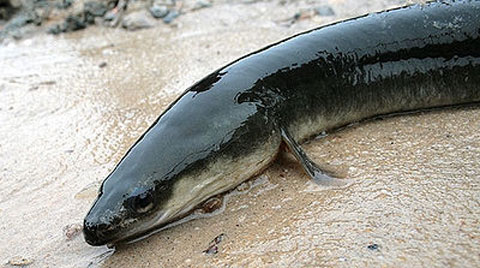
    Once extremely abundant throughout all tributaries to Lake Ontario and the St. Lawrence River, the American eel has seen a dramatic population decline. In 2006, the presence of eels in these waters decreased by almost 90 per cent. As of 2007, this species has been listed as Endangered under the Ontario Endangered Species Act.

    This dramatic population decline can be attributed to several factors, including the creation of hydroelectric dams, reduced access to habitat imposed by manmade barriers to upstream migration, general habitat destruction and alteration and commercial harvesting. The construction of dams threaten the American eel species in two ways: they result in habitat fragmentation and loss as they make it much more difficult for adult eels to migrate back to the ocean to spawn, and hydroelectric turbines contribute to higher injury and mortality rates of juvenile eels swimming downstream (depending on the size of the eels and the design of the turbines).

    The Canadian Wildlife Federation, in collaboration with the Ontario Ministry of Natural Resources, the Algonquins of Ontario and the Arnprior Fish and Game Club, have been tracking and tagging American eels in the Ottawa River since 2007. Previous work has been successful not only in determining which methods and locations are best for capturing eels, but also in documenting movement patterns and collecting data on habitat preferences and downstream migration timing. Currently the project aims to build on the knowledge gained in the first studies of eel movement and use this information to develop strategies for American eel recovery in the Ottawa River.

    On a section of the Ottawa River from Chats Falls dam to Chenaux dam, researchers are busily working to tag and track eels to monitor downstream migration patterns, determining if and when eels move past the Chats Falls dam. They are also monitoring upstream migration by installing temporary eel ladders at three barriers on tributaries to the Lac des Chats section of the Ottawa River. These ladders will be fitted with a trap at the upstream end, and eels that migrate up them and are trapped will be tagged and re-released downstream. If the eels are captured often enough, this will confirm to researchers that eels are indeed attempting migration through these routes and can provide important information about the barriers that may prevent later out-migration.

    Another important aspect of this project is the public awareness campaign that aims to educate people on the American eel and its importance in the ecology of the Ottawa River. This part of the project will be carried out through activities that increase local knowledge of the American eel, encourage the public to report eel sightings and discourage anglers from killing eels caught accidentally. Members of the public will also be invited to observe eel capture and tagging activities.

    The long-term goal is to re-establish a safe migration route for American eels in collaboration with local communities and hydroelectric producers. The ultimate goal is to see a future where the eel population is once again increasing in the Lac des Chats and adjacent sections of the Ottawa River.

  • Rail and Pipeline Disasters are Symptoms of Fossil Fuel Addiction

    Rail and Pipeline Disasters are Symptoms of Fossil Fuel Addiction

    Like smokers who put off quitting until their health starts to suffer, we’re learning what happens when bad habits catch up with us. We’re witnessing the terrible effects of fossil fuel addiction every day: frequent, intense storms and floods, extended droughts, rapidly melting Arctic ice, disappearing glaciers, deadly smog and pollution, contaminated waterways and destroyed habitats. Transport accidents are also increasing as governments and industry scramble to get fuels out of the ground and to market as quickly as possible.

    Throughout it all, we’re asking the wrong questions. Take the recent horrific disaster in Lac-Mégantic, Quebec. A train carrying fracked crude oil from North Dakota to a refinery in Saint John, New Brunswick, derailed, caught fire and caused explosions that destroyed much of the town and killed dozens of people, sending millions of litres of oil into the ground, air, sewers and Chaudière River. It’s a senseless tragedy that has everyone in Canada and beyond grieving for the community’s citizens and their families.

    Governments and the railway company must answer numerous questions about safety regulations and practices, to prevent a similar catastrophe from ever occurring. The larger questions, though, are about the dramatic increases in fossil fuel use and transport. Sadly, industry proponents quickly exploited the situation to argue for expanding pipelines.
    As growing human populations and increasing industrialization drive up the worldwide demand for fossil fuels, and as oil, gas and coal companies rush to extract, sell and burn as much as possible while markets remain strong, we’re seeing ever-increasing exploitation from difficult sources — fracking, oil sands, deepsea drilling and more.

    The Canadian Association of Petroleum Producers expects oil production in Western Canada to double from three-million barrels a day to more than six-million by 2030. This means a huge increase in the amount of fuels transported around the country and the world in pipelines, rail cars, trucks and ocean tankers. According to the Railway Association of Canada, rail shipment of oil has already increased dramatically in Canada, from 500 carloads in 2009 to 140,000 this year.

    It’s true that rail accidents can be more devastating to human life than pipeline accidents — although when it comes to oil, pipeline breaks usually spill greater quantities and cause more environmental damage than train derailments. But shipping massive volumes of oil and gas is unsafe by either method. As we transport ever-increasing volumes of fossil fuels over greater distances to broader networks, we can expect more spills and accidents. Wastefully and rapidly burning them is also driving climate change, which experts say may even affect rail safety, as extreme heat and sudden temperature shifts can cause rails to buckle, increasing the potential for derailments.

    Massive pipeline spills and devastating rail accidents are among the immediate and frightening consequences of our growing appetite for fossil fuels, but our bad habits are really starting to hit back with climate change. The homes and lives lost around the world, numerous plant and animal species facing extinction, rising health-care costs from pollution-related illness and massive clean-up efforts after flooding show that failing to address climate change is far more costly than doing something about it. Much of what we’re seeing now — from increased intense rainfall and flooding in some parts of the world to extended droughts in others — is what climate scientists have been predicting for decades.

    We’re not going to stop using oil overnight, and we will continue to transport it, so we must improve standards and regulations for pipelines, rail, trucks and tankers. This should include safer rail cars for moving dangerous goods. Also, many environmental groups are calling for “a comprehensive, independent safety review of all hydrocarbon transportation — pipelines, rail, tanker and truck.” But in the long run, we have to find ways to slow down. By conserving energy and switching to cleaner sources, we can start to move away from fossil fuels — and to use remaining reserves less wastefully.

    That’s the discussion we need to have, rather then getting mired in debates about transport methods. As energy writer Russ Blinch noted in a Huffington Post article, “Looking at pipelines versus rail tankers is really like asking, ‘Should I drive the car with bad brakes or the one with bad tires?’”

    We need to look at the big picture.