Author: Daniela Smith

  • Resume Writing Tips

    Resume Writing Tips

    Include a Summary
    Everyone wants to make a good first impression. Carefully read the job application summary, highlight keywords and phrases, then think of how you meet or exceed the job expectations and required skills. Tailor your summary for each job you apply for. Don’t make your resume “one size fits all.” You might think it’s more efficient and less time consuming, but employers might think you’re lazy and not ambitious enough to address each position you apply for individually. Also, employers will think you went the extra mile — it will demonstrate initiative and that you really do want this job.

    Choose a Template
    Don’t reinvent the wheel. Browse hundreds of free template options online and choose one that catches your eye. If you can’t find a free template that suits your fancy, you can also purchase several options from various websites. Choose a template that you find attractive and that suits your personality, but don’t try to be too unique or stand out from the crowd too much because — while your resume will surely get noticed — you might get the “wrong” kind of attention. The trick is to express your personality in a subtle way; it’s all about balance.

    Use the Active Voice
    Show power, confidence, and that you mean what you say. Speak like you know what you’re talking about to grab your potential employers’ attention and maintain their interest. The passive voice, while appropriate in many cases, often conveys a sense of hesitancy and is much less powerful.

    Get to the point and don’t beat around the bush. Also, don’t try to sound too smart or sophisticated by using long, complex words. Employers are more interested in your skills, experience, and what you can offer them rather than your extensive vocabulary and sophisticated understanding of the English language.

    Avoid the First Person Pronoun
    Yes, this is about you—but what it’s really about is getting you a job, so avoid using “I” and “me” in your resume. The third person conveys a sense of professionalism, while the first person is too personal and informal for resume writing.

    Less is More
    Make your words and sentences pack a punch. Also, make your resume easy-to-read for the often impatient and overworked person viewing your resume. Avoid flowery language like the plague and don’t embellish your words. Although it might be counter-intuitive, you’ll actually be more convincing if you use less dramatic and descriptive language. Your point can get lost if it’s surrounded by too many adjectives and long, ornate words.

    Look Attractive
    Don’t use fancy font. A sans serif-style font is most appropriate and attractive looking for resumes — examples include Calibri, Arial, and Lucida Sans. Lucinda Calligraphy might be calling your name with her ornate, fancy beauty, but the font will be too difficult to read.

    Add a bit of colour. Use only one colour and choose the tone carefully. Use this colour sparingly. For example, make your name your favourite shade of pink for an added punch that will get you noticed, but wont make your resume look “gaudy” or too flashy.

    Be Conscious of Length
    One to two pages will suffice. Any more than two pages and your employers probably won’t read the whole thing or they will just scan the last part.

  • Auditing a Course

    Auditing a Course

    What is Auditing?
    At most colleges and universities interested students are offered the option of “auditing” a course, but what does that really mean? In short, auditing involves attending the lectures of a course without having to submit assignments or complete any of the coursework for grading.

    Why Audit?
    In most countries, going to college is the beginning of paid education. Grading and money are the primary factors in choosing to audit a course. Schools that offer auditing will have adjusted tuition rates at a fraction of the cost of full tuition. Put simply, you are paying for admission to the class only. It allows students to reap the benefits of learning from a qualified instructor without having the added pressure of earning a good grade distracting them. This approach is favoured by students who wish to sample a course before deciding if they feel comfortable enough to be graded on the material.

    How to Audit a Course?
    The first step is to contact the instructor or prof teaching the course. Most universities will require signed permission from the instructor and the department head before allowing a student to audit a course. Next, tuition will have to be paid off. Again, this amount will usually be less than full tuition. Those who choose to forgo buying the textbooks and other course materials can save even more, but might have a harder time grasping the concepts taught.

    Who can Audit a Course?
    Almost all colleges and universities require individuals interested in auditing a course to enroll as a student. However, there are some rare instances where senior high school students and graduated adults may be permitted to audit a course without officially becoming a student.

  • What Happens After a Forest Fire?

    What Happens After a Forest Fire?

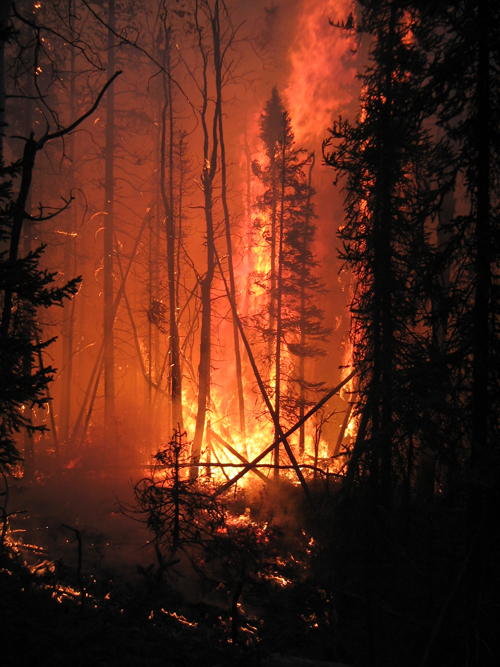
    Imagine what it would be like to watch a forest fire. Would you feel sad as you watched the trees and bushes burn and gradually turn to ash? Would you feel glad at the thought of all of the new life forest fires bring? It might seem strange to be happy at the thought of so much destruction, but forest fires can be a good and necessary part of the natural cycle of life. Without them, forests might never be the rich, green places they are – homes for animals and places where people can enjoy the outdoors.

    Every spring is the beginning of forest fire season in Canada, when about 10,000 fires will burn over the next few months. Some of those fires come from natural events, such as lightning striking a tree. More than half of them start because of human activity, such as when people forget to put out their campfires properly. By the time the snow and cold weather come at the end of the fire season, about 25,000 square kilometres of forest will be gone. Fires also pollute the air with carbon dioxide, which can make it difficult for people and animals to breathe. The animals that survived the fire will have to find new places to live, and plants will have to grow in place of the ones that were destroyed.

    Despite all of the destruction they cause, fires can also be good for the forests. They clear out all kinds of dead wood and thick grass that can choke new plants. With the extra space to grow, the plants can thrive. Trees like the Douglas fir and white spruce grow best on ground that has had a recent fire. Jack pines are especially dependent on fire. Their seeds come in thick cones which open up only with intense heat from a fire. Without an occasional fire to open up the cones, jack pines would eventually disappear. Many plants like these have ways of surviving even the worst forest fires.
    Despite opening up the ground for new growth, forest fires can damage the soil on the ground. With no plant roots to hold it down, the earth can blow away in the wind or wash away in heavy rains. Fire can also change the kinds of nutrients, such as nitrogen, that are available to feed the plants. The temperature of the ground can also rise, making it hard for certain types of plants to grow again, especially if the fire also affects the amount of moisture in the soil. Very intense fires can also affect small animals living in the ground, such as earthworms. Because these animals help to keep the soil healthy and full of nutrients, their loss can destroy the ground for years after a forest fire.

    So are forest fires good or bad? It depends on where they are, how big they become, and many other factors. However, fires are part of the natural cycle of life, bringing renewal and new growth to the world’s wooded areas.

  • Career Profile: Lawyer

    Career Profile: Lawyer

    Lawyers are often the most important people for maintaining justice and making sure that the rules of society are followed. These rules that determine how business is conducted between individuals and organizations are the walls and the structure that ensure people are safe, happy, and able to lead fulfilling lives. Lawyers are the people that defend justice and they help to advance society in a logical and well reasoned fashion.

    Becoming a lawyer involves a lot of hard work, and being a lawyer involves a lot more hard work. To become a lawyer, one must complete high school with good enough grades to get into an undergraduate degree in university. When choosing an undergraduate degree, one may want to select something that is of interest such as science, arts or engineering, or one may wish to select something very particular to law like history, politics, environmental studies, ethics or law. The most important thing is to get grades that will allow you to enter law school – once you pass the LSAT exam. You will want to be in the high 70’s and up in order to get into a school. For the more competitive schools, you will want to score in the high 80’s and up. It is also important to be aware of what the requirements are for the particular school you are aiming for.

    The LSAT is an exam composed of tests evaluating reading comprehension and logical and verbal reasoning proficiencies. The average score on an LSAT is 150, with a low of 120 and a high of 180. It costs around $160 US dollars to undertake. Different schools accept different scores, and, once again, knowing what score is expected from the school you want to get into is the best way to determine how prepared you need to be. Once you gain acceptance into law school, you have four years of rigorous studying of laws and many tests to pass to ensure your successful completion of your program. It is also important to always be prepared for class, as you will often be called upon to answer questions.

    As a lawyer, there are many benefits and perks in addition to the hard work that you will have to do. The benefits include having a highly respected social status – being a lawyer puts you in a position of responsibility where others will look at you as an authority on the law. As a lawyer you will be working independently as well as on a team. You will be working on a team made up of judges who ultimately determine what is right and what is wrong, as well as officers of the law, more commonly known as police officers – the people who act on the ground to ensure that the law is put in effect. Finally, you will also enjoy being well paid, making $90,000 to start and then moving into the upwards range of $200,000 (source: ivyglobal.ca).

  • Great Public Transit Makes for Great Cities

    Great Public Transit Makes for Great Cities

    What makes a city great? Among other things, great cities are tolerant communities that welcome and celebrate ethnic diversity. They support and foster local arts, have access to venture capital to spur entrepreneurship and innovation, and benefit from healthy local environments with clean air, clean water and access to nutritious, locally grown food.

    New York City is world class, not just because it’s a driver of global finance and a hotbed of cultural innovation; it’s also known for its green spaces, like Central Park and the award-winning High Line.

    San Francisco is celebrated for its narrow streets, compact lots and historic buildings. These contribute to the city’s old-world charm, but they’re also the building blocks of a more sustainable urban form. They facilitate densification and decrease the cost of energy and transportation for businesses while improving walkability.

    When it comes to urban sustainability, cities in the U.S. and Canada are employing innovative programs and policies to improve the health and well-being of residents and their local environments, like reducing waste and improving recycling (Los Angeles), containing urban sprawl (Portland), conserving water (Calgary) and passing policies to combat climate change (Toronto).

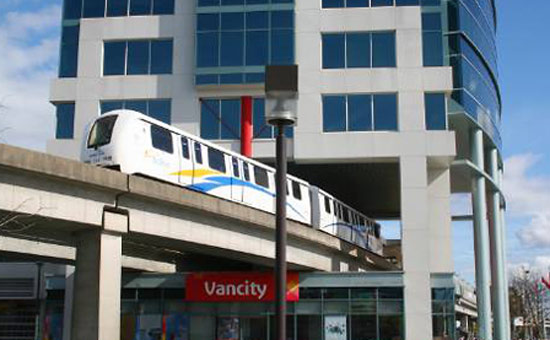
    But most cities in Canada and the U.S. are lacking in infrastructure to move millions of people safely and affordably. With some notable exceptions, such as Vancouver and Calgary, no successful rapid transit infrastructure projects have been built in Canadian cities for decades.

    A recent survey of urban experts and other “city-builders” across Canada — planners, municipal politicians, academics, nongovernmental organizations, developers and architects — concluded the abysmal state of public transit is the Achilles’ heel of urban sustainability and is holding many cities back from achieving greatness.

    Toronto residents spend more time battling congestion to get to and from work than in any other city in North America. This shouldn’t be a surprise, as successive governments have failed to sustain and expand transit systems, even though the region has grown by about a 100,000 new residents a year. Toronto now scores 15th of 21 on per capita investment in public transit among large global cities — well behind sixth-placed New York City, which spends twice as much.

    This failure to address transit infrastructure is serious. The Toronto Board of Trade estimates congestion costs the economy $6 billion a year in lost productivity.

    Furthermore, air pollution from traffic congestion is a major threat to public health, especially for our most vulnerable citizens, like children and the elderly. According to the Toronto Board of Health, pollution-related ailments result in 440 premature deaths, 1,700 hospitalizations, 1,200 acute bronchitis episodes and about 68,000 asthma-symptom days a year.

    Fortunately, politicians are starting to respond. Ontario’s government plans to spend billions to expand its regional transit system in the Greater Toronto and Hamilton Area, under a plan called the Big Move. It’s also looking at new financing tools to ensure funding levels are adequate and continue into the future. But before we spend enormous amounts on improvements, we need to ensure projects contribute to a region-wide rapid transit network using the latest technology and adhering to the highest sustainability standards. They should also move the most people in the most cost-effective way.

    That’s why a proposal to use diesel trains for the Air-Rail-Link plan to connect downtown Toronto with its international airport in Mississauga is concerning. A rapid transit link with the airport is long overdue, but heavy diesel trains emit particulates and other contaminants, including known carcinogens. The proposed rail line would be close to dozens of schools and daycare centres, several long-term care facilities and a chronic respiratory care hospital.

    Numerous experts, including Toronto’s Medical Health Officer, have urged the Ontario government to abandon its diesel plan in favour of electric trains that could be better integrated into a region-wide rapid transit network.

    Vancouver, San Francisco, Portland, Seattle and New York City have consistently ranked among the most livable cities on the continent, in part because they take the environment into account for planning decisions. They all have world-class public transit systems that move residents in a safe, affordable and sustainable way. It’s time for Toronto and its suburbs to do the same. Effective transit and transportation solutions can spur economic productivity, protect the environment and improve quality of life.

  • The Hayes River in Manitoba

    The Hayes River in Manitoba

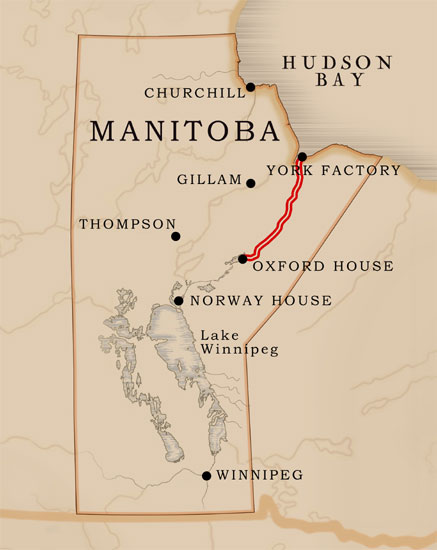
    If you live in Manitoba you might be aware that the Hayes River is the longest naturally flowing river in the province. It’s also one of the few remaining North American rivers that remains relatively unchanged – in fact it really hasn’t changed in 300 years! The Hayes River is considered to be one of Canada’s most scenic, natural and historic waterways.

    Hayes River begins at the north end of Lake Winnipeg, flowing northeast to Hudson Bay. It flows through a variety of landscapes including boreal forests, muskeg, dense spruce forests, an area of stunted black spruce/tamarack and bogs, even treeless tundra. And I can’t forget to mention the whitewater, lakes, gorges, deep valleys, a glacial outwash complex and Robison Falls – five sets of beautiful falls that plunge through granite formations.

    If you want to canoe or kayak on this river make sure you have lots of experience with whitewater navigation. With its challenging rapids, remoteness, intense weather and water conditions, it is best left for those with a high degree of competence in white water canoeing/kayaking and outdoor living skills.

    Keep an eye out for beluga whales and polar bears – just two of the many species that can be found in and around Hayes River.

  • Five Places to Look for Summer Employment

    Five Places to Look for Summer Employment

    1. Golf Courses. Golf courses are everywhere and have a huge need for seasonal employment. Caddying, landscaping and working in the gift shop or restaurant are some opportunities available to teens.

    2. Offices. Whether it’s helping to answer phones, filing or doing paperwork, there is always a lot going on in an office for a smart and responsible teen to do. Working in an office also provides teens with the chance to learn about being in a professional workplace.

    3. Museums and Other Cultural Institutions. Summer is the time for big shows and large crowds. Museums are always looking for energetic, enthusiastic and affordable help. Teens provide the perfect fit for these unique opportunities.

    4. Restaurants. Because of high turnover, the restaurant industry is always hiring. Working in a restaurant setting provides teens with a skill set that can be transferable to other jobs as well as provide valuable life lessons.

    5. Volunteer. Although volunteering does not provide a salary, it offers a great way to make an impact on the community. Volunteering enables teenagers to develop skills, network, and strengthen their resumes so they can have a more fulfilling job search the next summer.

  • Enjoy Your Summer!

    Enjoy Your Summer!

    You’ve made it – it’s officially summer vacation!

    Whether you’re spending your summer working a part-time job, volunteering or preparing to enter university or college in the fall, JobsPeopleDo.com has got you covered. We’ve got lots of great editorial pieces to help you figure out what you’d like to do with your time over the next few months, as well as our usual round-up of scholarships that you can apply for. Don’t forget to check out our Resources and Profiles pages – both will connect you to a treasure-trove of information about careers. Want to know how much education you’ll need to be an architect? How about finding out how much a lawyer gets paid? You can find anything you need about any career under the sun right here on JobsPeopleDo.com!

    If there are any job profiles you want to see featured on the site or if you have any suggestions about the type of editorial pieces you’d like to read, we want to hear from you! Contact us at info@jobspeopledo.com. We are here to help you on your path to success!

    Wishing you a happy and productive summer!

    Jasmin Bollman, Assistant Editor
    Don’t forget – be a mentor, someone needs you!

  • First Jobs That Don’t Come With Fries

    First Jobs That Don’t Come With Fries

    One of the first milestones you’ll hit after puberty and before graduation will be your first job. Nothing says adulthood like going to work (even if it’s part-time). Noreen Rasbach, writing for The Globe and Mail, found that 65 per cent of high school students have a part time job.

    Think you’re ready for the leap? Hesitate about a job that requires you to ask, “do you want fries with that?” Gotajob.com puts it nicely: “It is a common misconception among teens that the only jobs available to them are in fast food restaurants or grocery stores. Those types of positions are often most visible, and they are great jobs, but they are not the only options.” Here are some other places to apply.

    1. Lifeguard/ Swimming Instructor

    Typically thought of as a summer job, you can still do this year round at community centres and branches at the YMCA. If you’re a strong swimmer and have completed the necessary courses as well as your First Aid/CPR, you could be teaching the doggie paddle to toddlers in no time.

    2. Tour Guide

    If you’re bilingual, consider a job where you take members of the public around a gallery, museum or part of your city. This is the perfect job for a detailed oriented person with a knack for remembering factoids.

    3. Tutor

    Did you ace biology last year? Have you been taking piano since 3? Advertise yourself as a private tutor. Private tutoring companies will charge parents an arm and a leg for their own certified tutors. Prove your stuff to interested parents (show them report cards, ask a teacher for reference, play Mozart’s Sonatas).

    4. Pet-Sitter

    Know of a family going on holidays or just taking off for the weekend? Offer to walk Fido and feed Fluffy while they’re away.

    5. Retail

    It may be a bit harder to get a retail job with no experience, but try and aim for a seasonal position either in the summer or during Christmas. I’ve worked for 5 years at a toy store from lowly sales clerk all the way up to assistant manager. Every year I’ve seen the staff double from July-August and again from November-December.

    Whatever job you land, make sure you make time for the most important thing: school. In a 2007 Statistics Canada report, working teens are averaging 7.1 hours a week. Ask yourself if you could realistically juggle a part time job on top of school, homework and extracurricular activities. Simona Siad from The Star interviewed 16 year old Tulin Akdemir, who warns, “You have to have a part-time job to make money, then you have to keep your grades up and then all your extra things. It’s really hard.”

    Any of the jobs mentioned above are temporary and short-termed. Ease yourself into the working world with a few of these so you can get a sample of what you really like and what you would like to avoid. Even if you disagree; there’s no rush to growing up!

  • Student Loans: The OSAP Process

    Student Loans: The OSAP Process

    It is a question that student advisors are intimately familiar with and search engines encounter all the time. What is OSAP? If you are financially unable to attend post-secondary schooling, OSAP can help you with that. OSAP is run by the Ontario Ministry of Training and is funded by the province. Their services entail an individualized program specific to your needs. Potential applicants must prove their financial need to attain registered status.

    The criteria is particularly focused on demographics, income and loan history, according to campusaccess.com.

    “You must have either resided in Ontario all of your life or Ontario is the last province where you resided for 12 consecutive months without attending a post-secondary institution,” the site advises.

    There are two ways to apply for OSAP: The online application and the written application. Living in a digital age, online applications seem to be the more popular medium. The majority of applicants choose this because it is quicker, requires no fees, and the system provides online estimates of the funding you may receive. With this option, there is no waiting around and you are able to track the status of your application online.

    University graduate Sabrina Sagl is attending college and still using OSAP to fund her education.

    “I first got OSAP five years ago and was incredibly grateful , because of OSAP, I was able to afford to go to university,” said Sagl. Despite her ability to attend her school of choice, she was met with harrowing realizations about the negative sides of the service. “You get a certain amount of money per year, in two large lump sums, and it is incredibly easy to spend the money negligently.”

    The harsh realities are instilled after a few years of accumulated debt. Once students have completed their educational studies, they are given a six-month grace period to repay their student loans interest free. Some students are forced into trying to maintain a balancing act.

    “It was very difficult having to work, especially shift-work during the school year,” said Sagl. “I had to decrease my course load and take summer courses in order to obtain my degree.”
    If you are applying for OSAP, you need submit your application as early as you can. While OSAP provides a helping hand to students struggling with educational fees, it is far from a one-stop solution. The service often leaves students in a difficult spot financially. Students are advised to focus on their own fiscal prudence in addition to relying on the program for support.