
Author: Jasmin Bollman

  • The Part-Time Job Experience

    The Part-Time Job Experience

    When looking for a part-time job, you don’t have to settle for just anything. There are many jobs that are tailored specifically for students that will also help you to reach your long-term career goals or just get you the experience you need to move up the corporate ladder. With the spring season fast approaching, many retailers are looking for part-time help immediately to assist them with the rush of customers.

    Retail is the most common type of part-time job for students. This includes clothing stores, convenience stores, grocery stores and most other jobs where you are required to work hands-on with the public. With so many different types of retail opportunities to choose from, you can select something in an area that is of interest to you. Like fashion? Apply clothing stores in the local mall, who generally require more people on evenings and weekends when you are likely to have some free time. If you like beauty, you can apply to work at a make-up counter in a department store. If you like sports, you can apply at many fitness-related retailers or even to be an usher at a local sports arena.

    If you enjoy being outdoors, a plethora of part-time jobs are available to you. You can deliver newspapers/flyers a few mornings a week or be a dog-walker. You can also shovel walkways or clear driveways during the wintertime. Many people are too busy to do this during the Christmas holidays, or they will be out of town on vacations. You can advertise your services in this regard on free community message boards such as Kijiji and Craigslist.

    Another important option to not overlook is the food industry. This includes restaurants and cafes as well as fast food. Most restaurant workers will need to obtain their “Food Safe” or “Smart Serve” certificates to prove they can handle food and kitchen tools in a sanitary manner. This course is generally only one day in length and will give you access to many different jobs that others without the certificate would not be able to get. Another advantage of working in the food industry is that your wage is often supplemented by tips.

    Retail jobs, while they may seem boring, will provide you with a solid foundation in the business world. You will learn how to use cash registers (many companies have their own computerized systems), handle cash and credit card transactions, do paperwork and bank deposits and practice loss prevention strategies. Most importantly, they will give you hands-on experience in customer service – this is perhaps one of the first things you will be asked about in subsequent jobs interviews. Being able to work with the public in a friendly and helpful manner will get you far in your chosen career.

  • Great Changes for the Great Lakes

    Great Changes for the Great Lakes

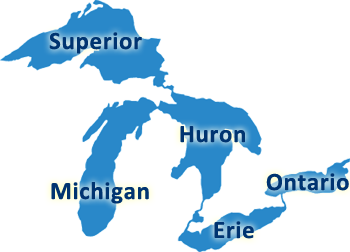
    Across the world, North America is known for many things; the culture, the people and the great outdoors. Part of that great outdoors is the Great Lakes. The Great Lakes are an integral part of our North American identity; and to preserve that identity in 2005 the premiers of Ontario and Quebec and the leaders of eight American states that border the lakes came together and signed the Great Lakes Water Pact.

    The Great Lakes Water Pact is a pact that has introduced strict regulations in regards to the usage of the Great Lakes and it has sunk the tentative thoughts of shipping water to thirsty regions in the United States and Middle East. It was signed by the Canadian provinces and the American states that surround the Great Lakes; Ontario, Quebec, Ohio, New York, Pennsylvania, Michigan, Indiana, Illinois, Wisconsin and Minnesota. The agreement includes rules that make it difficult for communities surrounding the Great Lakes watershed to use the water and also aims to prohibit the commercial export of the lake water by restricting withdrawals of water to five gallon (twenty litres) containers.

    The affects this pact has on future generations are great. The Great Lakes are a natural resource that are depleting and are not renewing as fast or as much that is necessary. More than thirty five million people rely on the lakes for drinking water, and the lakes are only able to replace one percent of that per year.

    The Great Lakes Pact is important for North America’s future generation because it ensures that not all the lakes will be used up and it will be saved from disappearing. This works in the favour of future generations because it guarantees that the lakes will be there for their own usage as well just as it was there for the past generations usage. Not only does it assure fresh and natural drinking water for generations to come but it also promises that the amount of surface water in the world stays intact. The Great Lakes contains twenty percent of the world’s surface water and this pact will make sure that the surface water will remain for years to come. Without that surface water the world may dry up which in turn will not only affect people directly but also indirectly via the drying up of crops and vegetation.

    The Great Lakes Water Pact was signed in the year 2005 but its positive effects will last the world for years to come, both directly to people close to them and indirectly to people around the world. Directly through the fact that the Great Lakes are a source of fresh drinking water for people that surround them and indirectly because of the Great Lakes being a source of surface water that helps hydrate crops and vegetation, and without the lakes those crops and vegetation’s would dry up and therefore not feed communities around the world.

  • Getting Your Volunteer Hours the Old-Fashioned Way

    Getting Your Volunteer Hours the Old-Fashioned Way

    In order to graduate high school, students must complete 40 hours of volunteer work. Rather than dragging it out over the course of an entire high school career, why not get them all done at once? And for that matter, even learn something while you are at it? If you’re interested thus far, you should look into volunteering with your local history museum.

    You will often find that any city’s museum would welcome student volunteers, especially those who have a vested interest in history or plans to continue historical studies into university.

    Maja Bannerman, Public Programmer for the Niagara Falls History Museum said that the museum accepts volunteers aged 10 to 80. Bannerman commented that their graveyard tour program in specific attracts many student volunteers, “a lot of the high school students are doing their hours and getting beyond what they need,” she added.

    The graveyard tour has students dress up in period clothing and imitate those buried in the Lundy’s Lane Battle of 1814 graveyard. These students put on three shows per night, every Friday and Saturday for the last three weeks in October. Beyond the official shows, there are numerous dress rehearsals and technical rehearsals throughout September in preparation for the show. Though it is a large time commitment, you could easily complete your volunteer hours by the end of October, and you’d have some great stories to tell from the experience.

    Though the Graveyard Tour is only one program at one museum, it is a fine example of an unconventional way to complete your volunteer hours quickly. Beyond getting your required volunteering done, there is enormous opportunity to learn something new about the place you live.

    However, your involvement does not have to stop there. By volunteering to the best of your abilities, you can show yourself to be a very useful asset to the museum. If you are particularly talented, it is possible to turn your volunteer position into a future job or career.

    “There have been students in the past who have attained paid positions here,” Bannerman said. Making such connections through volunteering can lead to a job, a career, or even just an excellent reference for your resume. It is very important to begin making connections like this while you are still in high school, as they will carry you through your college or university years and into the real world.

  • The Cost of Education

    The Cost of Education

    Don’t let college and university be a costly mistake.

    Avoid the lure of a big paycheck for a diploma or degree that you really don’t love.

    It’s hard to make a decision at the tender ages of 16 and 17 regarding the career you’ll have for the next 30 years. Yet this is what parents, teachers and guidance counselors are hoping you would do when it’s time to apply for post-secondary. A Gallup and Sallie Mae survey titled How America Pays for College, found that more than half of high school seniors spent more time planning for the prom than thinking about university.

    CBC reports that the average cost for tuition in Ontario rose 207% from 1990 to 2007. It would now cost Ontario students $5,160 a year. It’s cheapest in Newfoundland and Labrador at only $2,606 and the most expensive tuition fee goes to Nova Scotia, where students fork over $6,571.

    With tuition fees on a meteoric rise, pressure is placed on the students often for the wrong reasons. Parents who are weathering the recession and stock market crisis will warn their son or daughter of choosing professions that offers stability and a large paycheck. Accountant? Programmer? Nurse? Sure, they all sound interesting…why not give it a try?

    Valentina (not her real name) started off going to university to pursue a Bachelor in Public Administration. It became evident that this really wasn’t for her. She then tried switching into Pharmaceutical Studies, only to finally graduate in Sociology. A year after receiving that degree she enrolled in college for Event Management. Still unhappy, she is now halfway through an Optician program. She feels confident that she has found her true career and even landed a student optician position during her studies.

    College and university can be very expensive, if you’re still unsure of what you would like to do. Not everyone can afford to switch around majors like Valentina did. Worse still if you stay in a program that you know you’re not suited for. Erica Cervini’s recent article for The Age found that, “If students don’t feel they belong to their university, the odds are high that they will drop out”. The greatest price to pay for education is an incomplete one.

    It’s okay to take your time and not rush into university or college when you’re not sure of what you would like to do. Volunteer during high school, talk to other adults, explore sites like Jobspeopledo.com or even consider taking a gap year to think about what would you be happy to do. Treat your future career like finding your soul mate. If you meet a big shot executive who makes loads of cash, would you be with him/her if your heart just isn’t into it?

  • Ambulance Attendants and Paramedics

    Ambulance Attendants and Paramedics

    On the front line

    Ambulance attendants include emergency medical technicians, paramedics, and first aid attendants. They are on the front lines of Canada’s emergency health care system. They work with police officers, fire fighters, and hospital emergency department personnel. They’re the first medical personnel on the scene when there’s an accident or other medical emergency. They provide life support care to the sick and injured at the scene of the accident and transport them to hospitals or other medical facilities.

    Ambulance attendants work mainly for hospitals and ambulance services. Many industrial, construction and mining companies employ first aid attendants or paramedics to care for workers who are injured or become ill on the job.

    This job is physically, mentally and psychologically demanding. Shift work is a normal part of the job. Frequently, you perform your duties under crisis conditions, often in extreme situations, where there is little room for error. In such circumstances, you are making critical life-saving decisions and have to do so quickly and accurately.

    Do you have what it takes?

    You use the latest medical technology to assess the extent of an injury or illness and to manage or treat the patient’s condition on their way to the hospital. You are also responsible for taking control of accident scenes in order to protect the patient and to alert other rescue personnel and public bystanders. It is essential that you communicate clearly and accurately with your co- workers, the public and the patient’s families, some of whom may be very upset.

    Along with the many challenges are the rewards. Ambulance attendants are well respected in the health care system, and you have the satisfaction that comes from knowing that the medical help you provide can make a difference in saving lives.

    Potential employers will be impressed with you if you are reliable and cool in a crisis. You should take pride in your work and deal well with other people, especially in conditions of extreme stress. Perhaps most importantly, you need an ability to react quickly and accurately in emergency situations. And you must have a great deal of compassion for the sick and the injured.

  • Apprenticeships!

    Apprenticeships!

    Apprenticeship is an agreement between a person who wants to learn a skill, (an apprentice), and an employer who needs a skilled worker. Apprenticeship is a proven industry-based training system that combines on-the-job experience with technical training to produce a certified journey person. Upon completion of the specified training period and successful writing of an examination, apprentices receive a Certificate of Qualification. On average, 85% of the apprentice’s two to five years is spent in the workplace, the rest is spent at a training institution. Apprenticeship training begins when a student first registers at a training institution, or signs a Contract of Apprenticeship with an employer, and continues until such time as the apprentice has completed all of the required technical training and has received the required industry experiences necessary to write an interprovincial examination.

    What is the Interprovincial Standards “Red Seal” Program?

    The Red Seal program was established to provide greater mobility across Canada for skilled workers. Through the program, apprentices who have completed their training and certified journey persons, are able to obtain a “Red Seal” endorsement on their Certificate of Qualification by successfully completing an Interprovincial Standards Examination. The program encourages standardization of provincial and territorial apprenticeship training and certification programs. The “Red Seal” allows qualified persons to practice the occupation in any province or territory in Canada where it is designated, without having to write further examinations.

    To date, there are forty-five occupations included in the Red Seal program on a national basis. Because legislation permits each province and territory to designate apprenticeship programs for their own requirements, there are in excess of 150 apprenticeship programs available across Canada. Human Resources Development Canada, in collaboration and consultation with the provinces and territories, produces an Ellis Chart which is a comparative chart of these apprenticeship training programs across Canada.

    What are the entrance requirements for apprenticeship?

    To gain entry into the occupation as an apprentice, you are required to:
    – complete the designated first year courses specific to the occupation; or indenture into the occupation by an employer, who agrees to provide the appropriate training and work experiences as outlined in this plan of training.
    – be enrolled in a program of study that includes all entry and advanced level skills and required work experiences, as approved by the Provincial Apprenticeship Board.

    Each candidate must have successfully completed a high school program or equivalent and in addition may be required to have completed certain academic subjects as specified in particular plans of training. Mature students, at the discretion of the Director of Institutional and Industrial Education, may be registered. A mature student is defined as one who has reached the age of 19 and who can demonstrate the ability and the interest to complete the requirements for certification.

  • Choosing A Trade

    Choosing A Trade

    With more than 200 trades across Canada to choose from, finding the right one can seem challenging. Here are some tips to help you identify what would be a perfect career choice for you.

    Consider a wide range of trades

    Do you like working in the garden, or fixing your car? Do you enjoy home maintenance projects or styling hair? Get familiar with the many trade choices first, and think about what work you like to accomplish.

    The Government of Canada also offers a comprehensive, searchable catalogue of trades you may want to check out.

    Narrow your choices down to 5 or fewer trades

    Keep it manageable by narrowing down your choices. Get as familiar as you can with the work, to see if you’d like it.

    Observe a trade or participate in a youth apprenticeship or pre-apprenticeship program

    Some school boards offer Observe a Trade days, which will give you the opportunity to see what’s involved in your favourite trades. For something more comprehensive, you can also participate in a pre-apprenticeship program, which gives you practical, on-the-job training with hours that are often transferable to your full apprenticeship. Check out our list of youth apprenticeship programs.

    Talk to people who work in the trade

    See if you can get in touch with a journeyperson who works in the trade you’ve targeted, to see what advice they can give you. This is a great way to learn some tips from those who have already been there.

  • Career Profile: Hairstylist

    Career Profile: Hairstylist

    Every day, you brush your teeth and wash your face. You eat your meals, go to school, maybe play some sports or go to a music lesson. Maybe you even have a routine of activities that you do each month or every two months. If you’re like most people, at least every month or two, you go to visit a tradesperson. That tradesperson is not an electrician or a plumber or any of the jobs that people think of when they talk about the trades. This is the person who cuts and styles your hair – most often known as a barber, hairdresser, or hairstylist.

    Training as a hairstylist is similar to other trades training. In Canada, people who want to become hairstylists have to complete high school or have an upgrading certificate like a GED. After that, they can either go to a college where they learn the techniques they need to know or go through a two- or three-year apprenticeship where they learn on the job. Once they finish this training, or if they have enough experience without it, they can apply for a license to practice their trade.

    Once they have their training and licences, hair stylists can begin to work. People working in this field go by many different names. They can be called barbers, hairdressers, or hairstylists if they spend most of their time dealing with hair. Cosmetologists deal with hair, skin and nails, although they often specialize in a particular area (such as keeping fingernails and toenails healthy and looking good). Believe it or not, someone who helps prepare the bodies of people who have died might be called a mortuary beautician. As you can see, there is a wide range of careers within this field!

    Like any other type of work, a job as a hairstylist has both good and bad points. The career is good for anyone who likes to be with people, since it involves dealing with customers all day. It usually involves a lot of standing, which can be tiring, and the workload can vary a lot from day to day. Many hairstylists also answer phones, book appointments, and keep track of payments. Unless they join an already established shop, they need to find a place to work and then to buy the tools of the trade: scissors, chairs, shampoos, lotions, and anything else they normally use. With advertising and a few good customers, becoming successful is possible.

    Generally, hairstylists can do fairly well once they become established. In 2010, the average salary was about $25,000 a year, although people in management positions made more. If you love to help people look their best and enjoy one-on-one customer service, becoming a hairstylist might be the right career for you!

  • Train to Be a Wind or Solar Technician

    Train to Be a Wind or Solar Technician

    One of the fastest-growing segments of today’s job market are “green careers,” such as wind and solar technicians. These careers are perfect transitions for those with previous construction experience who are seeking a career with potentially unlimited job growth. As more businesses and homeowners become more concerned about protecting natural resources and using alternative energy sources, these careers will be in high demand.
    People who are interested in becoming solar technicians can begin by researching online green energy courses. One of the best available resources is Solar Energy International, or SEI. This online training resource lets those who have previous construction experience or have completed an apprenticeship program gain access to training resources prior to beginning their studies.

    Solar Installation Careers
    There are many areas of interest that solar technicians can choose to specialize in such as:
    – Photovoltaic installation (PV)
    – Solar thermal installation
    – Sustainable building

    Photovoltaic installation, also known as PV, involves the placement and repair of solar panels. Solar thermal installation involves installing solar water heating equipment, mostly for homeowners. Sustainable building involves designing and implementing long-term solar energy systems for residential and commercial properties.

    Selecting a Training Program
    The key to beginning a career in solar energy is selecting a training program that is properly certified and offers a combination of coursework and hands-on training. When searching for online green energy courses, it’s a good idea to select programs that work with the North American Board of Certified Energy Practitioners. Technicians who become certified usually have more work opportunities available to them, so it’s important to make sure the training program selected meets the desired certification standards. Most introductory training programs last six weeks, with one of those weeks designated for hands-on training at a solar energy facility.

    What Skills Do I Learn?
    Once a person is registered for a solar technician training program, it’s time to start learning the specific skills needed for the job. Since most technicians have previous construction experience, they are already skilled in blueprint reading, basic math and safety procedures associated with construction. Most solar technicians begin by taking classes in Solar Electric Fundamentals and Grid-Direct Design, introducing them to the basics of solar energy installation and repair. These courses provide information on renewable energy resources and how to measure solar electrical efficiency and load analysis. After learning the basics, students move on to learning basic PV system applications, system components and site and safety analysis.

    Hands-on Training
    Many community colleges are leaders in solar energy training, offering combinations of online and hands-on training. Students should sign up quickly for classes, because they can fill up fast. Solar energy programs are popular with military veterans who have been discharged and are seeking civilian jobs.

  • A Career as an Electrician

    A Career as an Electrician

    A career as an electrician provides a fair amount of job security whether you are self-employed or hired within a company. Electricians are required across the board, from domestic to commercial settings. Due to the dangerous nature of the work involved, electricians must be highly qualified and trained. If a career as an electrician appeals to you, read on to find out what steps you will need to take to become qualified as an electrician.

    Education
    In order to become an electrician you first need to get qualified, which requires you to enroll in an apprentice program. In order to apply for an apprenticeship program you will most likely be expected to possess a high school diploma or equivalent. Apprenticeship programs will provide classroom instruction as well as on-the-job training. Expect the apprenticeship to last a duration of 4 years, with approximately 144 hours of classroom based instruction and 2,000 hours of on-the-job training. Classroom instruction will consist of learning about electrical theory, mathematics, electrical code requirements, blueprint reading, and safety practices. Some specialized training may be received, such as working with elevators and fire alarm systems. As for on-the-job training, expect to be work under the supervision of an experienced electrician who will set your tasks and guide you until you can master the tasks given on your own.

    Graduating
    Once you have graduated there are a variety of routes you can go down. Many electricians choose to work for construction firms, service companies or utility companies. Most graduates will be involved in some kind of maintenance work, where they will be expected to primarily maintain and upgrade existing electrical systems. If you enter into the construction field, you will be part of a team responsible for installing new wiring systems within new buildings. Alternatively you can go down the self-employed route, but that would require a lot of self-promoting and an understanding of registering your self-employed status for tax purposes. You would also need to pass a licensing exam in order to obtain a trading license. Check with your local authority about what is required to set yourself up, if you are interested in becoming a self-employed electrician.

    Earning potential
    Electricians are expected to command very good base wages. However, much of this depends on the company you work for and the perks they offer. If you are self-employed you will set your own hourly rate or job rate, but keep in mind that you will need to factor in promotional costs, transport costs and parts costs.

    Advancement
    Once experienced, electricians can advance to positions such as a supervisory roles. Within the construction field they can become employed as construction superintendents or project managers.

    If this sounds like a career that would suit you, check online via your local job center or career center in order to inquire about local apprenticeship programs. Find out what apprenticeship opportunities there are with local electrical contractors and local electricians. In order to become qualified you will need to study in the apprentice role for 4 years, so make sure you this is the right career choice for you before becoming committing.