Author: Jasmin Bollman

  • May Scholarships of the Month – Part Two!

    May Scholarships of the Month – Part Two!

    It’s the time of the year where many students are preparing their post-secondary applications, and with that comes scholarship applications, too. With that in mind, we wanted to give you an extra dose of scholarships this month. Here are ten more that you can apply for! Check the due date, as some of them need to be in this weekend. Go out and get that free money!

    1. KSA K-W Rangers Scholarship – for girls entering their first year of study at any school. Amount: $2000. Deadline: May 21, 2013.

    2. Helena Marie Saunders Memorial Award – For students in the Administrative Assistant and Secretarial Science program at Grant MacEwan University in Alberta. Amount: $500. Deadline: May 18, 2013.

    3. J. Michael Waldram Memorial Model Forest Fellowship – For students enrolled in a Natural Resources and Conservation program at any school. Amount: $1000. Deadline: May 18, 2013.

    4. Estevan Public Service Local 1120 Scholarship – For students from Saskatchewan studying at any school. Amount: $250. Deadline: May 23, 2013.

    5. Orville Erickson Memorial Scholarship Fund – For students from Yukon Territory studying in a Natural Resources/Conservation program. Amount: $4000. Deadline: May 25, 2013.

    6. A Campus Saint-Jean Award – For students entering their first year of study at the University of Alberta. Amount: $1000. Deadline: May 30, 2013.

    7. Aboriginal Education Partnership Program – For Aboriginal students from Alberta. Amount: Based on need. Deadline: May 30, 2013.

    8. Adrienne Goudie Memorial Bursary – For students that went to a Western Canada high school. Amount: $400. Deadline: May 30, 2013.

    9. Arrata Family Award for New Canadians – For new Canadians that attending high school in Calgary. Amount: $2100. Deadline: May 30, 2013.

    10. Bowness Historical Society Student Award – For students that attended Bowness High School in Alberta. Amount: $500. Deadline: May 30, 2013.


  • Aboriginal Bursaries and Scholarships!

    Aboriginal Bursaries and Scholarships!

    Bursaries and Scholarships
    The Aboriginal Financial Officers Association of Canada is dedicated to helping Aboriginals reach the highest standard of excellence in finance and management. AFOA’s initiatives in the development of Awards and Scholarships are examples of that commitment.

    See link below for scholarships and bursaries.
    http://www.metisnation.org/programs/education–training/education/bursaries–scholarships

  • May Scholarships of the Month – Apply Now!

    May Scholarships of the Month – Apply Now!

    It’s difficult to believe, but May is already upon us. Chances are you’ve already applied to – or are about to apply to – your post-secondary schools of choice. But what about your finances? Don’t put off thinking about them! Student loans certainly are not your only options when it comes to paying for your education. Scholarships and bursaries can be found in droves – you just need to go out there and apply for them! Check out some of the great scholarships we were able to find for this month!

    1. 2013 ECO Canada Scholarship – For students entering any field of study at any school across Canada. Amount: $2000. Deadline: May 21, 2013.

    2. The Kitchener Sports Association Scholarships (KSA) – For students living in Ontario entering any field of study in any school across Canada. Amount: $2000. Deadline: May 21, 2013.

    3. Education Awards for Brain Tumour Survivors – For students across Canada entering any field of study in any school, who are survivors of a pediatric brain tumour (diagnosed with a brain tumour before the age of 18). Amount: $5000. Deadline: May 17, 2013.

    4. MyUnited Student Award – For students living in Ontario entering any field of study in any school across Canada. Amount: $3000. Deadline: May 17, 2013.

    5. ACLS Foundation Geomatics Scholarship – For students across Canada entering a Geosciences/Geological and Earth Sciences program at any school. Amount: $1500. Deadline: May 15, 2013.

    6. Brock University Council of International Schools CIS Scholarship – For international/Visa students entering their first year of study in any program at Brock University. Amount: $3000. Deadline: May 15, 2013.

    7. Credit Valley Horticultural Society Scholarship – For students in any field of study at the University of Guelph. Amount: $1000. Deadline: May 15, 2013.

    8. The Dr. John M. and Regina Riffel Entrance Bursary – For students in any field attending Campion College in Regina. Amount: $750. Deadline: May 15, 2013.

    9. The Epilepsy Association of N.S. Memorial Scholarship/Bursary – For students from Nova Scotia, Prince Edward Island and New Brunswick who have been diagnosed with epilepsy. Amount: $500. Deadline: May 15, 2013.

    10. Lupus Canada Scholarship – For students across Canada entering any field of study at any school who have been diagnosed with Lupus. Amount: $1000. Deadline: May 15, 2013.

  • Career Profile: Dental Hygienist

    Career Profile: Dental Hygienist

    Do you…
    • Enjoy working with your hands?
    • Enjoy working with people one-on-one?
    • Want to learn more about teeth and oral health?
    If you answered “yes” to any of the questions above, then a career as a Dental Hygienist may be right for you!

    What Is A Dental Hygienist?
    A Dental Hygienist is a registered dental professional who specializes in preventative oral care and proper oral hygiene. Dental Hygienists typically offer three types of general services:
    1. Preventative Services – to promote and maintain good oral health
    2. Educational Services – teaching patients about the importance of maintaining good oral health and showing them ways to maintain their oral health
    3. Therapeutic services – treatments to help stop diseases in the mouth

    Specific job duties performed under these three services include:
    • Assessment, Diagnostics, Planning, Implementing and Evaluating the individual needs of the patient (ADPIE)
    • Scaling and root planning (cleaning)
    • Polishing stains off teeth
    • Fluoride treatments
    • Taking and exposing x-rays
    • Conducting oral cancer screening
    • Making whitening trays and sport guards for patients
    • Placing pit and fissure sealants on the grooves of the teeth
    • Irrigating the tissues (gums) with therapeutic agents to help stop/prevent disease
    • Educating patients about proper brushing, flossing, mouth rinse etc.
    • Explaining oral health conditions with patients (such as gingivitis, periodontitis) as well as how to prevent such conditions

    Where Does A Dental Hygienist Work?
    A Dental Hygienist may work in a variety of settings:
    • Private dental offices (general and specialized dentistry)
    • Self-initiated Dental Hygienists can open their own dental hygiene practice in certain provinces such as Ontario, Alberta and British Columbia
    • Hospitals
    • Public health offices

    Some Dental Hygienists may also prefer to work:
    • As teachers and administrators in Dental Hygiene Colleges and Universities
    • In dental sales and dental research

    What Is A Typical Day For A Dental Hygienist Like?
    A typical day for a Dental Hygienist in a general dentistry dental office is to:
    • Set up their work space for the day (stock up, place barriers, set up dental trays etc.)
    • Review charts of patients coming in for appointments
    • Take in patient – review their medical history, ask if they have any concerns with their oral health. Take any prescribed x-rays (optional)
    • Follow ADPIE with patient
    • Complete an assessment of their oral health – assess teeth, gums and surrounding tissues
    • Diagnose problems or concerns and decide on a course of action for the appointment
    • Implement action plan: begin to scale (clean) teeth, polish stains, administer fluoride or therapeutic agents (if required)
    • Educate the patient on their oral health and on proper brushing and flossing techniques and other dental aids specific to their mouth
    • Ask the dentist to perform an oral examination on the patient
    • Record notes from the appointment in the patient’s chart. Dismiss patient.
    • Disinfect the operatory between patients (place dental instruments in sterilizer) and set up operatory for next patient

    How Do You Become A Dental Hygienist?
    1. Attend a college or university (Western Canada) that offers a Dental Hygiene training program (preferably an accredited program).
    2. Complete the Dental Hygiene program successfully.
    3. Write the Dental Hygienist certification exam put out by the National Dental Hygiene Certification Board (NDHCB).
    4. Pass the exam and register with the College of Dental Hygienists of Ontario (or province of work) and then become a registered Dental Hygienist or RDH.

  • What is “Red Seal”? Why is it Important?

    What is “Red Seal”? Why is it Important?

    What is the Red Seal Program?
    The Red Seal Program is Canada’s standard of excellence for skilled trades. Obtaining a Red Seal endorsement acknowledges a journeyperson’s competence and quality workmanship, and facilitates recognition of his/her trade certification across Canada. Upon successful completion of a Red Seal examination, the endorsement is affixed to the provincial or territorial trade certificate. To date, there are fifty-five occupations included in the Red Seal Program.

    What are the benefits of the Red Seal?
    The Red Seal provides confidence to both employers and consumers that a tradesperson is skilled and knowledgeable. It is widely recognized and respected by the trades industry across Canada. A Red Seal endorsement is an employment advantage that opens the door to job opportunities, higher wages, sustaining employment, and career advancement.

    How to obtain a Red Seal?
    To obtain a Red Seal endorsement, a candidate must pass the Red Seal examination administered by a provincial/territorial apprenticeship authority. Red Seal examinations are trade-specific and cover the skills and knowledge required in the trade. The examinations are used to determine whether apprentices and tradespersons meet the Canadian standard. To qualify to write a Red Seal examination, a tradesperson must have completed one of the following:
    1. Graduated from a recognized provincial or territorial apprenticeship training program;
    2. Obtained a journeyperson level Certificate of Qualification from a province or territory;
    3. Provided confirmation of the requisite time and experience working in a Red Seal trade.

    What other benefits come from enrolling in a “Red Seal” Trade Apprenticeship?
    You have probably heard the radio commercials from the Government of Canada recently about the Apprenticeship Incentive Grant program. Right now there is a very high demand for tradespeople of all varieties. This is why the Government of Canada created the Incentive Program to attract people to learn a trade.

    That’s right – you can get paid twice to learn a trade, instead of running up high tuition bills while you learn! To learn more about the Apprenticeship Incentive Grant Program, please visit www.red-seal.ca or the HRSDC website.

  • Two Jobs Are Better Than None!

    Two Jobs Are Better Than None!

    My first year of university officially ended on the 21st of April and the time arrived for me to finally think about getting a summer job. As I am an international student with a ears almost as big as my fiscal expenses, I would need to work at least 65 hours per week in order to cover my tuition for the coming school year. That is the equivalent of working one full-time and one part-time job. Now, who would have thought that going to school was the fun part of the year?!

    Luckily, I had already landed one job at a certain casual Canadian restaurant; the second job came soon after at a local convenience store thanks to the efforts of a well-built network of friends. The first thing I was grateful for is that both the jobs I landed required the same base skill set. I worked as a cashier at both the restaurant and the convenience store and my job required me to do the following tasks on a day-to-day basis:
    1) Take customer orders
    2) Manage any and all numerical transactions
    3) Talk to customers and solve their problems
    4) Clean the restaurant/store from time to time
    5) Do not spill anything on the boss’s pants( one of my co-workers had the unfortunate pleasure of doing so)

    Much to my surprise, I had mastered the base skill set in under a week without much difficulty. My first job had me working mostly overnight shifts and, as bad as it may sound, it was actually the ideal situation for me to work. This is because I would work from 11 pm to 7 am every night (or day; honestly working overnight really messes up your perspective of time), go home, have breakfast by 8, take a 2 hour nap and go to my second job (which would start at 11 in the morning and would go on until 3 pm).

    So the days passed and I continued with my daily exploits. I will not lie to you – it was hard. But the work itself was not bad and I enjoyed most of it. I made some great friends and went through some very hilarious experiences.

    So here is my final pieces of advice for anyone who wants to make the most out of working two jobs:
    1) Find two jobs that essentially are similar in nature and require the same basic skill set. Doing so will allow you to improve on those required skills and perfect them.
    2) Find jobs that are close to your house. Doing so will save you a long commute to work and will also save you time that you can utilize to do other things – like sleep!
    3) Make the most out of every situation. As clichéd as this may sound, it does work. Try and make new friends at work. Broadening your horizons will also widen your network of contacts that may help you later in life.
    3) You do not want to physically and mentally over-exert yourself. If you cannot handle two jobs then it is better to just have one. You will avoid making mistakes and potentially being let go from both your jobs this way. Instead, focus your energy on looking for scholarships/bursaries/loans to help pay for school. Also, ask your employer for help as many companies have educational benefit plans for student workers.

    Working two jobs is a strenuous task but it is possible. So if you find yourself in a situation like this sometime in the future then hopefully you shall remember my advice for you!

  • Career Profile: Automotive Service Technician

    Career Profile: Automotive Service Technician

    Do you…
    • Enjoy working with your hands?
    • Enjoy fixing cars, trucks, motorcycles or small engines?
    • Want to learn more about electrical, hydraulics (fluid power), pneumatics (air power) and mechanical components in machines?

    If you answered “yes” to any of the questions above, then a career as an Automotive Service Technician may be right for you!

    What Is An Automotive Service Technician?
    An Automotive Service Technician is a certified and skilled tradesperson who diagnoses and repairs motor vehicles (e.g. cars, minivans, SUV’s, light duty trucks and medium duty trucks).

    An Automotive Service Technician performs various duties that help maintain a vehicle as well as repair it. Some of these job activities include:
    • Engine maintenance and repair
    • Transmission maintenance and repair
    • Exhaust system repair
    • Body repair and adjustments
    • Brake maintenance and repair
    • Steering, suspension and alignment repairs

    Where Does An Automotive Service Technician Work?
    An Automotive Service Technician may work in:
    • Dealerships
    • Independent automotive shops, repair shops and garages (owned by other people or themselves)

    Some Automotive Service Technicians may prefer to work as:
    • Teachers in high school teaching automotive class
    • Teachers in colleges that offer an accredited Automotive Service Training program

    What Does A Typical Day For An Automotive Service Technician Look Like?
    A typical day for an Automotive Service Technician in a dealership or automotive shop usually begins when a customer brings their vehicle to the shop. The customer tells the service advisor what the problems are with their vehicle. The service advisor documents the problems on a work order. The vehicle and corresponding work order is then given to an Automotive Service Technician who begins to work on this particular job.

    An Automotive Service Technician follows a certain procedure when working on a new job. He/she:
    1. Reads the work order written up by the service advisor.
    2. Examines the vehicle to further assess the problems mentioned on the work order.
    3. Provides the service advisor with an estimate on how much it will cost to fix the problems.
    4. Waits for the service advisor to confirm that the customer is OK with the repair costs before fixing the problems.
    5. Fixes the problems once the service advisor gives the go ahead.
    6. Takes the vehicle for a test drive and/or performs operational checks to ensure that the customer’s concerns are resolved.
    7. Informs the service advisor that the customer can pick up their vehicle.

    How Do You Become An Automotive Service Technician?
    1. Attend a college that offers a certified Automotive Service Technician training program.
    2. Complete the Automotive Service Technician program successfully.
    3. Find a suitable employer who will hire and train you as an Automotive Service Technician apprentice. (Complete your apprenticeship booklet/hours/activities at work and get it signed off by your employer).
    4. Write the Automotive Service Technician certification exam put out by the Ministry of Training, Colleges and Universities.
    5. Pass the exam, obtain your 310S license and become a licensed Automotive Service Technician!

  • Astronomers: Observers of Space

    Astronomers: Observers of Space

    It’s easy to imagine an astronomer spending their days (or, rather, their nights) gazing up at the stars observing planetary activity and other celestial bodies. To a certain extent you wouldn’t be too far off from the truth, but the life of an astronomer isn’t anywhere near as romantic as we’d like to think it is. In fact, the majority of the a professional astronomer’s career is spent analyzing pre-recorded data. There are occasions when an astronomer might take a seat at the helm of an optical telescope or use the recorded data from a radio telescope to inspect extraterrestrial space, but these instances will usually take place every few months or even years, depending on the nature of his or her research. Others exclusively use programmed computer simulations to research and simulate recorded findings to learn more about them. An astronomer’s primary focus, however, remains to observe planets, stars, galaxies and the ever changing intergalactic landscape.

    Education you say?
    The academic background of an astronomer can vary. There are universities like York and the University of Toronto that offer degree programs in Astronomy. Typically, a bachelor’s degree in science (usually chemistry or physics) is completed first. Then an aspiring astronomer might set his or her sights on a Master’s of Astrophysics and/or a Doctorate in Astronomy. Needless to say that there are a variety of paths to take, most of which generally stay close to the mathematics, chemistry and physics fields.

    Where can you get a job?
    Generally, astronomers find work with research institutions and universities. Working at a research station will require the astronomer to be fully focused on a branch of research, while a position at a university usually includes a teaching component, instructing courses at the undergraduate level, or supervising those at the master’s and doctorate levels.

    The skills you’ll need
    If you’re thinking of pursuing astronomy in the future, there are a few things you can start on now to help increase your chances of success. In high school it’s a good idea to take a wide range of courses while also taking all of the sciences and mathematics, of course. Geography and geology (if your school offers it) wouldn’t be such a bad idea either, since most celestial objects are composed of the same components as Earth. Lastly, work on developing your research skills, as well as reading and writing. As you enter post-secondary education you won’t have as much time to perfect those skills, so the sooner you feel confident in your ability to think critically and articulate your thoughts, the better.

  • The Benefits of Volunteering in High School

    The Benefits of Volunteering in High School

    High school students, it’s time to get motivated! Volunteering while still in high school provides you with the framework for your future career path, as well as instills in you the importance of giving back to others. It may seem difficult to fit in volunteer hours with such a busy schedule of classes, studying and extracurricular activities, but with a little planning you can achieve your volunteer goals. Many not-for-profit organizations only require a few hours a week of your time. For example, the Ottawa Humane Society has a dog walking program that requires a commitment of 2 hours per week. If you love dogs, that is a very easy commitment to make! Even though you may not be reimbursed financially for your time, volunteering is something that can be put on your resume that will help impress future employers and university admissions officials alike. Below, a list of just some of the benefits that volunteerism can provide you:

    Impress Admissions Officials
    You’ve got the great GPA and amazing standardized test scores. But what makes you stand out from students with similar grades? The answer is what you do in your spare time. Volunteer hours and part-time jobs listed on your application will really make you shine. Volunteerism is a great way to show admissions officials that you not only care about the community, but are able to manage your time well enough to balance a volunteer job with your other commitments. By all means, don’t spend every spare minute working on your volunteer hours – you need to balance volunteerism with your personal life, too. But a sustained commitment to one particular cause over a year or two shows that you are willing to stick to something that you care about. This will be very impressive to admissions officials and work in your favour.

    Get Involved Outside of School
    Volunteering allows you to meet people you may not have had the opportunity to meet otherwise, especially if you are volunteering outside of school. If you have heard the term “networking”, that is essentially what you will be doing! You are forming a network of contacts that can help you get to where you want to be. If you already have a good idea of what you want to study in college or university, you can volunteer your time in that field. For example, if you want to study psychology, why not volunteer your time with the Canadian Mental Health Association? You can find volunteer opportunities for almost anything that interests you, so spread your wings outside of your school and gain immeasurable benefits!

    Earn Academic Credit and Scholarships
    Some high schools require you to put in volunteer hours in order to graduate. Others offer extra credits or scholarship opportunities if you do volunteer your time. Check with your high school’s administration office to see if any of these opportunities are available to you. If they are, take advantage of them! A scholarship will help you to cut down on your student loans when you reach university, and extra credits will look great on your transcript to help you land the university placement of your dreams. Check out studentawards.ca to find all of the different community service scholarships that are available – your volunteerism won’t only impress your university of choice, but also the officials who will be deciding whether or not you obtain your scholarship!

    Above are the curricular advantages to volunteerism. But let’s not forget the personal advantages that come from it, too. Giving back to your community and contributing positive energy to the world will do wonders for your self-esteem and self-worth. Volunteering is the way to go!

  • Tree Planting as a Summer Job

    Tree Planting as a Summer Job

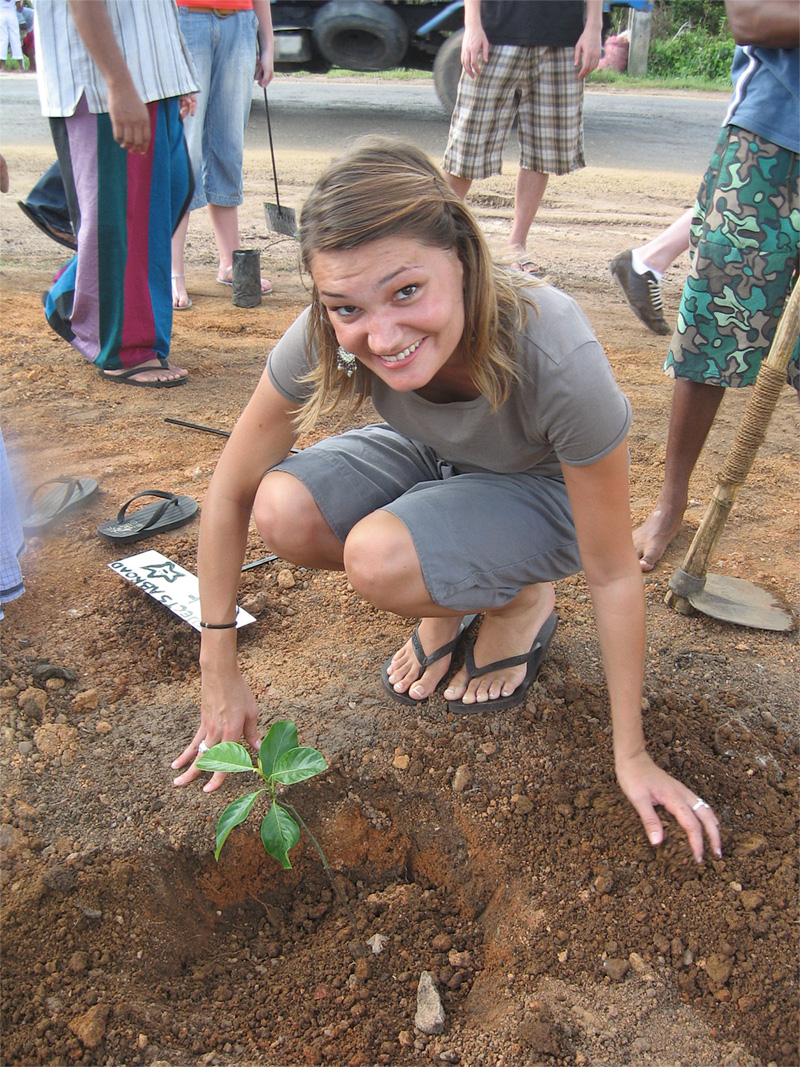
    The most common summer job field for teens is the food service industry followed closely by the retail trade industry, according to the American Bureau of Labour Statistics. That means that most of us spend our summers flipping burgers or folding t-shirts, honest work that feeds and clothes the capitalist masses. But for some, the call of consumer culture falls on deaf ears. 17 year old Sam Krawec has decided to earn his summer income while serving a greater purpose; tree-planting in Northern Ontario.

    Sam is a freshman in St. Francis Xavier University’s Development Studies program. He has always been environmentally conscious, thanks to a family that values sustainable living and global citizenship. “My mom inspired me to care about the world when I was very young,” he explains. “I always felt that it was important to give back.”

    By planting trees, Sam will be helping to filter pollutants from the air, reducing carbon dioxide levels in a community and producing healthy oxygen in a renewable, recyclable, and biodegradable way. Summer tree planting jobs generally coincide with the planting season; between six and eight weeks beginning in early May and ending in late June/early July. The average worker ends up planting upwards of 20,000 trees in that time, making a substantial impact in removing large quantities of the major greenhouse gases involved in global climate change.

    Tree planting is ‘piece work’, wherein you are paid according to the amount of trees you produce. This means that the income you earn is a direct reflection of your productivity. In Ontario, agencies generally pay planters between 8 and 12 cents per tree, with first year planters averaging between $2500 and $5000 in gross pay for the season. This varies depending on several factors, including whether or not your agency is unionized. Unionized agencies typically have better health and safety options, and may pay slightly more. The Ontario Forestry Safe Workplace Association produces written packages to educate planters on their health and safety rights.

    Joanna Gillies of Lakehead University compiled “A Qualitative Pilot Study of the Physical Demands of Tree Planting”, outlining them as specific areas of concern for any wishing to apply to a tree planting program. She claims that, “factors affecting a planter’s performance include flexibility, grip strength, balance and agility, back strength, hand-eye coordination, manual dexterity, strength endurance, mental toughness, aerobic fitness, and body fat percentage.” There are tests online to see if your general health is cohesive to the demands of life as a tree planter. If so, you are ready to start digging and making a difference in your environment.

    For Sam, every little bit he can contribute is worth the physical demands and summer time commitment. “The pay is good, and it’s something tangible that I can do to help the planet. The world is a beautiful place, and I want to have a positive part in maintaining that”.

    If you are interested in working with a tree planting agency, check out http://www.tree-planter.com/, http://www.replant.ca/ or http://hardcoretreeplanters.com/.

    Maybe your summer working in tree planting will encourage you to continue working in this in-demand trade for years to come!