Author: Carly Wignes

  • Social Media: An Employer’s Reference

    Social Media: An Employer’s Reference

    Pretend, for a moment, that you have never actually met yourself. You are an owner of a prosperous dog-sitting company that has a reputation for serving customers with the highest level of professionalism. You market your company with the promise that every dog will be cared for by responsible, respectful employees who will give the dogs the very best of care. Because of that promise, you attract many loyal customers and you try to take extra care when you hire new employees so you find someone you can trust who will be reliable and mature enough to do the job. When you receive a number of applications from students who want to work for your company, you immediately go online to try to learn more about the potential candidates. When you Google your name, what kind of information do you find?

    The term “social media” refers to the ways in which people create, share and exchange information and ideas online and through networks. It’s a form of social interaction that more and more employers are tapping into to get a sense of who the people are that are applying to work for them.

    Now return to your present perspective and think about what you have shared online. Is your name attached to the photos of you dancing on the table at last weekend’s huge spring break party? Is your face recognizable in the video your friend posted of students who are underage and under the influence? Such images might cause an employer to immediately throw out your application. That’s why it’s important to construct your online presence with care and make use of the privacy tools that many social networking sites provide.

    Here is a list of five of the most popular social media websites used by many students and a brief explanation of what they offer:

    Facebook: Allows users to create a personal profile, add other users as friends and exchange private and public messages. Facebook currently has over one billion active users.

    Twitter: A micro-blogging site that enables users to send and read “tweets,” which are little text-like messages that cannot exceed 140 characters. Twitter has over 500 million registered users and generates more than 340 million tweets a day.

    LinkedIn: A social, yet professional networking site for people in professional occupations. LinkedIn has over 200 million registered users.

    Pinterest: A pinboard-style photo sharing website that allows users to create and manage image collections according to a theme of their choosing. Pinterest has about 12 million users and is growing fast.

    Instagram: An online photo-sharing and social networking service that allows users to take pictures and instantly apply digital filters to them. They can then share the finished product with the 90 million other monthly users.

    These are just a handful of hundreds of other sites that share information in similar ways and provide your potential employers with a chance to judge you based on what they see online. It’s time to refine your online presence and ensure you are presenting the best possible picture of yourself to the world.


  • Stress Recognition and Elimination

    Stress Recognition and Elimination

    Dealing with stress can be a struggle between light and dark, between hope and despair, and between what is right and what is wrong. Sometimes we are provoked by an event or a situation that creates an upsetting condition called stress. Stress is when we feel tension or pressure, as if in a dilemma. This condition can be easily remedied, however it does take practice to be able to fully overcome the stress.

    Recognizing stress is the first step, and this skill can be developed over time. Often it can be developed simply by saying out loud, “I am stressed out right now”. Being able to recognize your emotional state allows you to see your condition more objectively and to take a step back so that you may help yourself. There are always solutions to stress, and being able to pull yourself out of it is one key way of ensuring your overall happiness and well being. As we age, this skill of overcoming stress comes more naturally. However, it often does have to come from a devoted effort at recognizing and understanding how simple stress is to overcome.

    In extreme cases, there are conditions of stress that result in a psychiatric diagnosis of anxiety. This is often the result of an imbalanced brain chemistry, severe family tensions or severe anxiety-provoking situations like having been in a war. This condition is impressively frequent, with one in four Canadians having an anxiety disorder over their lifetime (anxietycanada.ca, 2013).

    In most cases, anxiety can easily be relieved by becoming conscious of when one is anxious or stressed and focusing how you can overcome the condition. Some people are soothed and made at ease by familiar things, familiar people, and familiar foods. Other people need to practice certain routines that put them back into a good head space. It is very important for people to identify things that make them feel good and to know that stress can be relieved by simply utilizing those de-stressing things, people, foods or routines. Sometimes, however, people can abuse this formula by resorting to things or foods that, as a by-product of their de-stressing effect, create secondary effects that are undesirable. This situation is commonly found among people who resort to drugs, alcohol or gambling to relieve their stress. This is called maladaptive coping because, instead of creating a relief from stress, it a major secondary effect like addiction or becoming overweight.

    It is important, when creating a stress-relieving formula, to choose a solution to stress that has positive side effects! Positive options for stress relief can include lighting candles and taking a warm bubble bath, exercising, taking a nap, talking to a friend or family member, making a healthy and nutritious meal, relaxing with friends, writing, reading, watching a favorite show or movie, and so much more. There are many ways to positively eliminate stress, so start practicing ways that work for you!

  • Advice on Advice

    Advice on Advice

    Choosing an educational or career path is difficult, especially when you try to do it alone. But asking for advice can sometimes make things more confusing. When asking for opinions, it’s important to know what – and who – to ask. This guide will help you to collect the kind of advice that will help, not hinder, your decision making.

    1. Think about who really knows you best. You might automatically think, “Mom!” or “Grandpa Joe!” – but that may not be the case. Loving someone or being close to them doesn’t automatically mean that they know you best. Does your Grandpa Joe see you the way you are, or the way he would like you to be? He might think you’d make an amazing mathematics professor when, really, you can’t count and love ballet.

    2. Consider why people make the suggestions they make. Does your Aunt Louise want you to be an orchestra musician because she knows that you love to play violin; or is it because she never realized her own dream of playing in a symphony? Make sure that the suggestions you get are tailored to you, and not to the person suggesting them.

    3. Interview people and ask work-related questions. Ask people what they do (or did) and find out what their jobs were like. Ask family members about their jobs – why they chose them, what they like and don’t like, or what a typical day looks like. People are your best resource: don’t be afraid to ask around to get a better idea of what field might most interest you.

    4. Do your homework. If you already have an idea of what you’d like to do, research it before asking opinions on it. If you’d like to work in accounting, you may not want to ask the opinions of your performing arts family members unless you’ve done a bit of background research. People often react to jobs that they think are “boring” or “difficult” without considering whether or not they’d be right for you. Doing research can also help you when asking questions about other peoples’ jobs.

    The right advice can help you to make a career decision that you feel good about. The wrong advice, on the other hand, can do the opposite. The most important thing to remember is that at the end of the day, the only person doing your job is you. Your cousin Fred may love you, but he won’t be coming to work with you every day. Take advice with a grain of salt; use it to inform your decision making, but remember that your decisions are yours to make.

  • Life After High School

    Do you ever think about what you plan to do when you finish high school? Maybe you want to work right away or maybe you want to continue studying. For the first time, you’ll be making decisions that could affect you, your family, and your friends for the rest of your life. You can’t control everything in your life, but you can make a plan that will help you to enjoy whatever you do and to have a fulfilling life.

    You might expect that life after graduation will be completely different from your life in high school. For some of you, this might be true. You might decide to get married or to move to a different country or a different city. Suddenly, you’ll have to make your own decisions about your future, and even if your parents help, you’ll be responsible for your own life. You’ll be an adult.

    For at least the first while, your new freedom might seem very exciting. If you decide to go out and get a job, the freedom of having money might be a lot of fun. You might decide to get a job right away working in the retail or service industries. You might decide to go to university to become a doctor or teacher or go to a vocational school for a career in a trade.

    If you choose to work right after graduation, you might find that your job is a lot like high school. You’ll have to get to work on time and stay for the whole day unless you have a special reason to leave. If you miss work too often without a good excuse, you might lose your job.

    If you choose to continue with your education, you might find that your instructors pay little attention to whether or not you attend classes. You could attend only the first and last classes and still get good marks. However, you’ll still have to take all of the tests and complete all of the assignments if you want to pass the course. The professors likely won’t watch over you the same way teachers do in high school, but they’ll still expect you to get your work done.

    One thing that will likely stay the same after high school is the types of people you meet. Whether at work or in university, you’ll find the same mixture of friendly or unfriendly people, helpful or unhelpful, tense or relaxed. You will probably also remain much the same. Different situations might bring out skills and interests you never knew you had. However, your basic character will probably remain unchanged. That’s why it’s important to begin thinking about not just what you want to do, but what kind of person you want to be.

    Does life after high school sound like the kind of life you already have or like an exciting adventure that is opening up? In the end, both of these possibilities might be true. Use this opportunity to be everything you’ve always wanted to be.

  • “Big Picture” Thinking Needed to Protect Nature

    “Big Picture” Thinking Needed to Protect Nature

    Few places on Earth have been untouched by humans, according to a study in the journal Science. Satellite images taken from hundreds of kilometres above the planet reveal a world that we have irrevocably changed within a remarkably short time.

    Although industrial projects like the proposed Enbridge Northern Gateway pipeline or the recently defeated mega-quarry in Ontario typically grab the headlines and bring out public opposition, it’s often the combined impacts of a range of human activities on the same land base that threaten to drive nature beyond critical tipping points. Once those are passed, rapid ecological changes such as species extinction can occur.

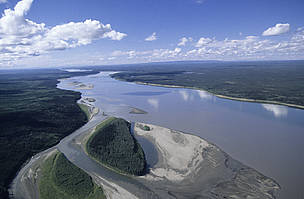
    For example, in British Columbia’s booming Peace Region, forestry, energy and mineral leases and licences are widespread and often multilayered in the same area. As various industries have exploited these “tenures”, a sprawling patchwork of large clearcuts, oil wells, dams and reservoirs, fracking operations and thousands of kilometres of seismic lines, roads and pipelines have come to dominate the landscape.

    Today, more than 65 per cent of the region has felt the impact of industrial development, leaving little intact habitat for sensitive, endangered species such as caribou to feed, breed or roam. Degradation or destruction of habitat has convinced scientists that remaining herds in the region are no longer self-sustaining and are spiralling toward local extinction. First Nations, who have relied upon caribou as their primary source of food for thousands of years, can no longer hunt them. This is a clear violation of treaty rights.

    This dire situation didn’t happen by accident or because of a laissez-faire approach to resource and land management. Numerous industries in the area have been operating legally and according to rules and regulations set by government.

    But legal experts, such as those at the nongovernmental organization West Coast Environmental Law, believe a root cause of the problem lies in laws about land, resource and water management that are “hardwired” to fail communities and the environment. The narrow focus of those laws enables industries to operate in isolation from one another.

    B.C., for example, has developed numerous individual laws, like the Forest and Range Practices Act, Oil and Gas Activities Act and Mines Act, alongside the regulated industries they enable. But the province lacks a legal framework to proactively and comprehensively manage the cumulative impacts of multiple resource industries operating within the same area.

    Because of this, WCEL and its First Nations partners are engaged in a multi-year law reform project that aims to overhaul the way we currently oversee and regulate cumulative impacts, ranging from declining water quality that may arise as a result of multiple industries using a common resource to emerging threats such as climate change.

    A cumulative-impacts approach to governing resource development would upend the current management paradigm. It would focus on the management needs of the land, water, air and wildlife and the communities that depend on them first, rather than the resources to be extracted. In practical terms, this would mean that, rather than focusing on what we should take from nature to create wealth and employment, we should first consider what must be retained in nature to sustain both wildlife and the well-being of local communities — such as clean air, safe drinking water and healthy local food.

    At a recent symposium on managing the cumulative impacts of resource development in B.C., numerous speakers — from First Nations to academics to business leaders — stressed that effectively managing cumulative impacts will require new institutions and governance mechanisms, even new legal tools. More importantly, it will require our leaders to adopt a more proactive and holistic way of thinking about the world — one that recognizes that far from just being a place to extract resources like fossil fuels, timber and minerals, nature is our home. Nature provides our most fundamental needs and dictates limits to growth and so its protection should be our highest priority.

    Managing our massive, growing human footprint on this planet more sustainably will require leadership, much of which is emerging from First Nations peoples who are on the frontlines of the day-to-day realities of cumulative environmental change. We need to look at the big picture rather than individual elements in isolation.

  • Teaching English as a Career

    Teaching English as a Career

    The English language has a lot of short, easy words. Just think of words like “run” — a short, three-letter word that is easy to spell and easy to learn. But are they really that easy? Think of how many meanings words like “run” have. You can run a race or get a home run in baseball. A newspaper has a run, and you can run out of time. How can non-English speakers ever learn such a complicated language? That’s where English as a Second Language (ESL) or English as a Foreign Language (EFL) teachers can help.

    Teaching the English language can be a good career option, especially for anyone who enjoys travel. Over 400 million people around the world use English as their first language, which is the main language that they are most comfortable using. However, over 700 million people use English as a second or third language, and the number is growing all the time.

    English is spoken all over the world and is the standard language used in many businesses, in technical and scientific studies, and for transportation on airplanes and ships. You might even hear a German-speaking airline pilot talking to a German-speaking airport employee, not in German, but in English. Most communication by computers and even traditional mail is in English, and use of the English language is still growing.

    As the need for English skills is increasing, the need for English teachers is growing as well. This kind of teaching goes by several different names which often reflect the needs of the students. Teaching English as a Second Language is often about teaching immigrants how to speak with their neighbours and co-workers. Practical vocabulary and grammar are important parts of each lesson.

    In other countries, English as a Foreign Language or English as an Additional Language (EAL) are often the terms people use. Without the chance to use English every day at home or at work, the students often have to work harder at getting a chance to practice their skills. The kind of help the students need is normally the focus of the classes. Lessons could focus on conversational skills or grammar or both.

    What does it take to work in TESOL (Teaching English as a Second or Other Language)? In North America and many other parts of the world, a Bachelor of Education with an emphasis on teaching language to non-English speakers is probably the best option. In some cases, a TESOL certificate or local training might be enough, especially if the school where you want to work has its own training program.

    Teaching English can be a good option if you love variety and adventure. You can teach in Japan, China, Mexico, or right in your own city. You can work with young children, university students, or retired people. You can teach in a classroom or tutor people at home. Wherever you go, teaching the English language can be a rewarding career for anyone.

  • Getting a Head Start on Your Future Career

    Getting a Head Start on Your Future Career

    The concept of career planning can send some students into nervous fits, rocking in the corner, curled into the fetal position. It isn’t pretty. For others, it means spending countless happy hours on the Internet, excitedly researching every job they’ve ever been interested in. Regardless of which category you fall under, it’s always a good idea to weigh your options early. Getting a head start will not only help you build experience, but it’ll help you make a solid decision when it comes to planning your career.

    1. Make a list of potential career options. Base them on things that you’re already good at and enjoy. Do you like to write? You could consider journalism or creative writing. Are you good at math? You could investigate engineering or maybe finance. Do you love sports? Think about coaching or even teaching physical education. Don’t limit yourself to one “type” of job; keep the ideas flowing and options open.

    2. Investigate your options. Google is your friend; a wealth of information is literally at your fingertips. Research job descriptions to get a general idea of what your career options involve. Do they still appeal to you? Take a look at job postings. Do the lists of responsibilities make you excited or do they make you cringe?

    3. Work on your skills. If writing is your objective, work on it. If math is your goal, work on it. If sports are your aim – you guessed it – work on it. Now is the time to hone your skills so that later you’ll be that much farther ahead in the race for professional positions.

    4. Test the waters. If you still aren’t sure what you’d like to do, try a few different things. Start volunteering or even working part-time. If you volunteer for just one hour each week, you can try several different things without eating up too much of your time. This will help you to decide which options to eliminate and which you should explore further.

    5. Try new things. Don’t limit yourself to one particular career option, especially if you aren’t sure what you’d like to do. Get involved in a few different areas – for example, you could volunteer at an animal shelter, an environmental non-profit organization and a municipal government office at the same time. The best part about volunteering is that you aren’t signed up for life; you’re free to explore and find out what working feels like.

    Don’t feel pressured to pick a career right away; instead, think of high school as an opportunity to explore your options. Without the obligations of a full-time job, you have time to try different “jobs” in a relaxed and fun way.

  • Uncovering Life on Mars with the Curiosity Rover

    Uncovering Life on Mars with the Curiosity Rover

    The Curiosity Rover is a mobile laboratory built by NASA’s Mars Science Laboratory. Launched on November 26, 2011 from Cape Canaveral in Florida, Curiosity’s 23 month journey through outer space finally came to an end on August 6, 2012. On landing day, a live stream of NASA’s JPL (Jet Propulsion Laboratory) team gave the public a small glimpse into the landing process. Upon successfully reaching its destination, Gale Crater, Curiosity began its official mission to determine if that area of the Martian surface was ever able to sustain microbial life.

    Over the course of a two-year mission, Curiosity will deploy its 10 instruments to collect data on its surroundings. Curiosity will analyze samples of rocks, dust and minerals looking for any evidence of favourable conditions for life. In the first three weeks after arriving on Mars, NASA reported the rover had beamed back more data than all of the other rovers previously deployed to Mars.

    As of March 2013, Curiosity has uncovered considerable evidence that suggests ancient life existed on Mars. Samples from what is thought to be an ancient lake bed reveals the remnants of clay and minerals that could have only come into being with the presence of favourable conditions for microbes.

    Mount Sharp: The Key to a Martian History?
    Early on in its documentation of the Red Planet, Curiosity sent back various images of Gale Crater. One image, taken with a wide angle telephoto lens, revealed a “geological unconformity” in the layers of Mount Sharp, the 5km-high peak at the centre of Gale Crater. According to the New York Times, for planetary geologists, the layers of Mount Sharp are an archive of the planet’s history and could bring us closer to discovering if Mars sustained microbial life at one time.

    “Those layers are our ultimate objective,” says Mastcam (Master Camera) principal investigator Michael Malin. “The dark dune field is between us and those layers. In front of the dark sand you see redder sand, with a different composition suggested by its different color. The rocks in the foreground show diversity – some rounded, some angular, with different histories. This is a very rich geological site to look at and eventually to drive through.”

    Curiosity will take the better part of a year to make its journey towards Mount Sharp, making brief stops to take readings and test samples along the way.

  • April Scholarships of the Month – Apply Now!

    April Scholarships of the Month – Apply Now!

    Now that April has arrived, you may have already decided what post-secondary institution you want to attend. You may have even already applied! NOW is the time to apply for your scholarships, too. Many colleges and universities have scholarships that only their students can receive. This month, we highlight some of those scholarships. Having free money to help you plan your budget for school will reduce any stress you may be feeling. So what are you waiting for? Check out some of the scholarships below and get applying!

    1. Ted Rogers School of Management Undergraduate Entrance Awards – For students entering the first year of the Business Management, Hospitality and Tourism Management, Information Technology Management or Retail Management program at Ryerson Unversity. Amount: $10,000. Deadline: April 16, 2013.

    2. Achievement Awards of Excellence – For students in any field entering their first year of study at McMaster University. Amount: $800. Deadline: April 15, 2013.

    3. Agnes L. Green Memorial Bursary – For students entering their first year of study in the field of Education at the University of New Brunswick – Fredericton. Amount: Varies dependent on need. Deadline: April 15, 2013.

    4. Alice Mary Goodfellow Scholarship – For students entering their first year of study in the field of Music at the University of Regina. Amount: $2500. Deadline: April 15, 2013.

    5. Alumni Association of Lakehead University Award – For students entering their first year of study in any program at Lakehead University – Thunder Bay. Amount: $1500. Deadline: April 15, 2013.

    6. Angelo and Frank Agro Undergraduate Scholarship – For students entering their first year of study in any program at the University of Guelph. Amount: $1750. Deadline: April 15, 2013.

    7. Anne Marie Campbell Award for Excellence in Creative Writing – For students entering their first year of study in English Creative Writing at Cape Breton University. Amount: $200. Deadline: April 15, 2013.

    8. B.C. Sugar Achievement Award – For students in any field of study at Simon Fraser University. Amount: $4500. Deadline: April 15, 2013.

    9. Cara/Micheal Syron Scholarship for the encouragement of entrepreneurial excellence (OSOTF) – For students entering their first year of study in the field of Law at the University of Ottawa. Amount: $2000. Deadline: April 15, 2013.

    10. Custody and Caring Scholarship in Forensic Nursing – For students enrolled in the field of Nursing at the University of Saskatchewan. Amount: $1000. Deadline: April 15, 2013.

  • Job Skills: Get Factual

    Have you ever seen someone who has the skills to juggle knives or walk on a tightrope? How about someone who can remember large amounts of information? The first two skills are unlikely to lead to a job, except for perhaps entertainers and circus performers. The third one, however, could lead to a job in many different areas, such as acting, teaching and working as a doctor or nurse. That’s because all of these jobs require a lot of information that people can remember in an instant. Almost any kind of ability can lead to a job, but you need to know how to translate the things you can do into skills that can help you find a job.

    When employment experts talk about job skills, they often talk about hard skills, soft skills and personal branding. Personal branding could include what people do at work or school, but also who they talk to and what they do in their spare time. Volunteer work, writing blogs and other daily activities can help develop both your personal brand and skills that will help you find work in the future.

    Soft skills are a lot like personal branding. These skills include things like an ability to get along well with people or to organize information. If you can easily get a lot of different people to work together to get projects done on time, that is a soft skill you can use in many different jobs. You could eventually manage a store or an office with a skill like this. Often these skills will help you get and keep good jobs.

    Hard skills are practical, measurable skills that people use every day at work. They could be things like an ability to type at one hundred words a minute or to use a welding torch. They could include the ability to speak French or to drive a large truck. These skills relate directly to whatever the job is about. They help people get interviews and to do the work if they get the job.

    Almost every job requires a combination of hard and soft skills. If you want to work as a teacher, you will need soft skills such as an ability to communicate with others and to lead groups. However, you will also have to know the subject matter you are teaching, whether that is English literature or addition and subtraction. When you apply for jobs, hard skills will probably be the ones you should emphasize, but they are not the only ones you should develop.

    Hard skills are important, but your soft skills might be just as necessary. If you can show how soft skills like getting to work on time will help you get the job done well, that might be all you need to land the job. Almost any skill you have can lead to work. They key is to find out what employers want and to match your hard and soft skills to the practical, everyday requirements of the job.