Author: Phillip Holland

  • The Do’s and Don’ts of May Long Weekend

    The Do’s and Don’ts of May Long Weekend

    May long weekend may be a time to kick back and relax but there are a number of important things you can do, not do, and keep in mind during this brief break.

    When a person first thinks of May Long one of their initial impressions will probably be, “party time!” That of course is not wrong – May Long is meant as a time to relax and take it easy, but it is not necessarily correct either. Do relax, do attend a party or two, but try to keep these few things in mind.

    First and foremost, now is a good time to either gets some work done on or complete any assignments or papers you have been given so far. Do your work at your own pace and, with any luck, you will be able to extend your May Long. Imagine the peace of mind you will have as others scramble last minute to finish work you completed over the long weekend.

    Secondly, the long weekend is a good time to consider your future. What courses will you take next year? Course selections for your next year will be soon and, if you act now, you will be ready to pick your courses on day one and not lose out on something you really wanted.

    Another thing to consider is what can you do to make some money this summer. May Long and beyond is the time that employers will begin posting summer job ads, so it is a good time to get a leg up on your peers. If you make the mistake of putting this off until the summer actually begins, you may find all the jobs are gone!

    Speaking of money, now is a time to save it. Sure, have some fun and hang out with your friends, but do you really need to go on a road trip to some far flung place? You can have just as much fun at home all while saving a considerable amount of money. If you do end up going on a road trip, be careful; just because you are far away from home doesn’t mean the same rules don’t apply!

    If you keep these things in mind you can ride out the relaxation of the long weekend straight through to the summer and you will be all the richer for it.

    Have fun and stay safe!

  • “Esperanto” – The Beginning of a New Language

    “Esperanto” – The Beginning of a New Language

    Invented languages can be fun. Have you ever used a language like Pig Latin with your friends and watched as other people struggled to understand you? When you use these kinds of invented languages, your purpose is usually to keep other people, such as your parents, from understanding what you say. However, what if an invented language could actually help strangers from around the world to understand each other? That’s what a man named L. L. Zamenhof hoped when he invented the Esperanto language in the late nineteenth century.

    L. L. Zamenhof was born in the city of Bialystok, Russia (now Poland) in 1859. He later moved with his family to Warsaw, the capital city. When he was growing up he learned several languages, including Russian, Polish, and Latin. He became a doctor but dreamed of inventing a world language that would allow people of all countries to speak with each other. In 1872, he began to invent a language which he called Esperanto or Eo; the name “Esperanto” means “hope”. Zamenhof hoped that Esperanto would eventually overtake all other languages and gave it a third name, “La Lingvo Internacia” or “the international language.”

    In 1887, Dr. Zamenhof published a book outlining the grammar and vocabulary of his new invention. To make his new language easy to learn, L. L. Zamenhof designed it to be as simple as possible. He used many of the words that already existed in languages like German, French, and Spanish but simplified the spelling and pronunciation. He used the same alphabet as these languages (with a few additional letters) but reduced the number of words in the vocabulary.

    Instead of having a different word for everything, Esperanto uses a smaller number of basic words. These words then have extra letters called affixes added to the beginning or end of the word for different meanings. For example, “mi” means “I” and “mia” means “my.” “Mal” means “bad” and is used to change almost any word to its opposite. For example, “granda,” meaning “big,” becomes “small” with the word “mal” at the beginning. The language also has its own rules for how to put sentences together, much like English and other languages. It has fewer rules than most other languages, and the rules are generally easy to learn and follow.

    The idea behind Esperanto was to make sure that everyone has an equal chance to learn and use the language of communication. So far, Esperanto has spread to 115 countries, including Poland, where it first started. Eastern Europe has the largest population of Esperanto speakers, although many parts of Asia and South America also have people who use the language, and some in North America. By 1999, about two million people had learned to understand and speak Esperanto.

    Why would anyone want to learn a language like Esperanto? The language has never reached the kind of acceptance that its inventor hoped it would. However, if more people begin to learn it, who knows what might happen in the future?

  • Career Profile: Psychiatrist

    Career Profile: Psychiatrist

    Psychiatry is a specialization that is chosen after taking medical school. Being a psychiatrist means working in a clinic, a hospital, or a professional organization that caters to the mentally ill. A psychiatrist distinguishes him or herself from a psychologist in a few very important ways, namely being able to prescribe medication and being the primary authority for persons with a brain chemical imbalance. There are many overlaps between psychiatrists and psychologists, particularly in the counselling services that are offered by both of these professional viewpoints.

    In order to become a psychiatrist, one must graduate high school with grades that allow them to get into an undergraduate degree and, particularly, a scientific degree. At the high school level, you might have to take at least one or a few of the following courses: chemistry, biology, physics and calculus. Once at the undergraduate level, you have several options on which major to choose to be best equipped for medical school. You could choose psychological science, pre-medical science, biochemisty or biophsyics. There are options that will allow you to choose what fits with your strengths and weaknesses. In undergrad, you will be required to receive high grades that will open the doors for the next step: medical school.

    There are different requirements for different schools and you will have to become aware of these through visiting the school, visiting the website or making a phone call to the schools you are interested in. Once you’ve selected a school and are aware of the requirements, you will have to go through the MCAT (Medical College Admissions Test) if that is a requirement. Once you’re into medical school, you have four years ahead of you before you get into your specialization. During these four years you will have practical classes that allow for hands on experiences in a hospital or clinic, and you will also have classes that are more theoretical in nature. Both of these types of classes are important for your overall success as a practicing physician.

    Becoming a specialist enters you into the next four year phase of your degree, and you will need to have obtained a relatively high average throughout med school to be able to get into your chosen specialization. The exact requirements will vary per school, and this is something that you will want to look into before starting medical school to ensure that you will be able to achieve the targets set out by each.

    As a psychiatrist, you can look forward to having a very comfortable salary around the $150,000 per year range (according to About.com). You also have the option to choose your work setting, whether that be in your own private clinic, in a hospital or in public organization.

  • Becoming An Architect

    Becoming An Architect

    What is Architecture all about?

    Architecture is the art, the science and the business of building.

    Architects create homes, office towers, schools and churches. They are talented people with a flair for design, an awareness of social trends, keen business sense, solid engineering skills and an understanding of the law. The word “versatile” may have been invented to describe Architects!

    Today’s Architect may practice alone or be part of a small, medium or large firm. Some Architects are self-employed. Others may be on salary, as employees of government, real estate developers or large corporations.

    “Clients” are the people who use the services of Architects. A client may be a family, a school board, a company, a housing authority, a government department or a building contractor.

    Why does Architecture matter?

    There’s no place like home

    The design or re-design of a home is one of the most fascinating and important things an Architect can do. Homes house the daily activities of families and individuals. Sometimes they offer privacy and shelter. On festive occasions, they are places of open hospitality. Rural or urban, row house or apartment, the home may be used year-round or only for vacations. Beyond our homes, the community takes shape.

    Keeping the past alive

    Old buildings add variety to city streets and remind us of our links to the past. Public interest in restoring old buildings is as strong as the economic pressure to re-use them. The result ? Architects are using modern techniques and ideas to renew historic buildings across Canada.

    Inside the home and office

    Respected Architects have designed chairs, tables, cabinets and fabrics–objects that lend comfort and pleasure to people’s homes and work spaces. When the desire to create something “organic” or whole, is strong, Architects design not only a building and the space around a building, they will also shape the space inside the building.

    Mirrors of time

    Great civilizations leave behind great architecture. Think of the pyramids of Egypt, the columns of Greece and Rome, the great Gothic cathedrals. Architecture reflects the religious, political and social values of the day. Today’s buildings express our society’s common purposes and will tell our story long after we are gone.

    Where is Architecture going?

    Big and sleek

    In giant cities, the voices of commerce, finance, business and government call out for giant buildings. Big buildings can cause big problems, such as increased traffic flow. They also create a need for parking, water, sewer and fire-fighting access. Putting large buildings into a city involves balancing the technical, planning and aesthetic problems posed by size. Architects with special design skills are needed to tackle these big jobs.

    Designing the city

    Cities are where the action is. The social and economic character of a city is often expressed in urban design. Many Architects serve on planning boards or help people who live in urban neighbourhoods shape the city around them. Sometimes Architects get involved in restoring parts of a city, developing housing projects or industrial parks, or designing shopping centres.

    What do Architects do?

    It all starts with a commission–or contract–from a client. The commission may involve the design of a single building or a group of buildings and the spaces between them. The client may be a person, a board of directors, a government department or a business.

    Usually, the Architect leads a team of specialists including structural, mechanical and electrical engineers, as well as others. The Architect must also understand and deal with building codes and bylaws set out by municipal, provincial and federal governments.

    The Architect keeps everyone on time and on budget. Technical knowledge, good people skills and no-nonsense business sense are all important to this task.

    What’s the bottom line? Architecture is a business. Being creative and designing something beautiful are only the first steps in making a vision come to life.

    What is a typical day?

    Such a thing may not exist. But on any given day, an Architect may have to:

    • Meet with clients.
    • Win contracts.
    • Solve problems.
    • Estimate costs.
    • Meet with consultants.
    • Produce drawings.
    • Present at public hearings.
    • Draw up specifications.
    • Call tenders (bids).
    • Visit construction sites.

    It can be a real challenge to juggle all the aspects of this demanding job.

    What do Architects do?

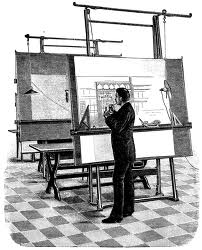
    They Draw

    Simple diagrams show the link between spaces or activities. Detailed working drawings show every last detail. Contractors and sub-contractors estimate the cost of the work based on the working drawings of an Architect. When the time to build comes, these drawings will be the building plan.

    Taking a drawing off the page and onto the computer screen through 3-D computer modeling can bring an Architect’s design to life, in living colour! Scale models or animated videos that help the viewer “see” the project from start to finish are other ways Architects present ideas to the public or clients.

    They Write

    Architects must

    • Write business letters.
    • Document all aspects of a project.
    • Develop charts and tables to analyse the project.
    • Develop specifications which define the building.
    • Prepare articles for professional journals and magazines.

    They Speak

    Being able to think on your feet and communicate clearly is a big part of being an Architect. Explaining, discussing, teaching and persuading are tools of an Architect’s trade.

    Architects are often called upon to:

    • Make presentations to clients.
    • Outline concepts, discuss options and offer creative solutions to problems.
    • Appear before public bodies as an expert.

    They Calculate

    It has to add up! Architects must be able to prepare accurate construction and office budgets. They also have to understand structural analysis, heat loads, electrical distribution and traffic flow.

    They Take Responsibility

    When an Architect “signs-off” on a certificate, it means that part of the job has been completed to the Architect’s satisfaction. Several certificates are signed-off during a contract.

    They Manage

    Architects often manage their own offices and businesses. They must also manage projects from the first spark of an idea to the ribbon cutting at a new building. During the construction phase, Architects manage contract administration, oversee drawings and specifications, handle problems that arise on the job site and monitor work in progress.

    What does it take to be an Architect?

    Ask yourself these questions:

    • Do details matter to me?
    • Do I understand and get along with people?
    • Do I truly value the things I see?
    • Can I analyze what I see?
    • Am I a creative thinker?
    • Do I think in a logical and orderly way?

    Spend some time in an Architect’s office. Ask questions. Read all you can about architecture. (Your local library can help you find books on the subject). Look at professional magazines. Visit the Schools of Architecture.

    How can I become an Architect?

    To be a licensed Architect, you will need

    • Education
    • Experience, and
    • a passing grade on an Examination.

    Education

    The vast majority of Architects complete a bachelor’s or master’s degree in architecture from a university program approved by the Canadian Architectural Certification Board (CACB).

    An alternative way to become an Architect is through the “apprenticeship” offered through the RAIC Syllabus Program.

    Experience

    To get experience, you must complete the Internship in Architecture Program. This program is offered through the associations of architects in each province. If you are accepted into the program, you will require a “Mentor” (a licensed Architect) who will guide your work over a period of time, according to the rules of the Internship in Architecture Program. Usually, interns or intern architects complete the program in about 3 years.

    Examination

    In all provinces, passing a computerized exam is one of the final steps in becoming a licensed Architect. Architects in Canada are licensed at the provincial or territorial level.

    Some provincial or territorial associations may have additional requirements before licensing or registration.

    Why must Architects be licensed?

    Architects are professionals. The public must be sure that people who call themselves Architects are qualified to practice in their field. So, all across Canada, Architects are licensed by provincial or territorial associations of architects. The goals of the associations are:

    • to encourage members to improve their skills and knowledge, and
    • to maintain high standards in the practice of architecture.

    Like other professionals, such as doctors and lawyers, Architects are legally responsible for the decisions they make. In some provinces, all licensed Architects must have professional liability insurance if they wish to practice architecture. This insurance protects both the public and the Architect. As well, each province and territory has an “Architects Act” which regulates the practice of architecture. It is against the law for anyone who is not licensed to use the title “Architect”.

    What courses should I take in high school?

    It’s hard to say which courses are best, because Schools of Architecture vary greatly in what they offer students at the university level. It is a good idea to find out now what is required for admittance to a university you would like to attend.

    Mature students (people who are not recent high school graduates) are also welcomed by most Schools of Architecture.

    As well, there is an important place in architecture for people who do not wish to pursue a university degree. You could take courses at a technical school, community college or university to become:

    • an architectural technologist,
    • an architectural technician, or
    • a draftsperson or CAD (computer assisted drafting) technician.

    What other work is available for Architects?

    Here are some job titles that tell you the kind of work Architects can do :

    • Architectural Critic
    • Graphic Designer
    • Architectural Photographer
    • Heritage Planner
    • Architectural Programmer
    • Illustrator
    • Architectural Renderer
    • Industrial Designer
    • Builder Inspector
    • Interior Designer
    • Building Envelope Scientist
    • Landscape Architect
    • CAD Coordinator
    • Market Researcher
    • Campus Planner
    • Model Maker
    • Carpenter
    • Municipal Architect
    • Cartographer
    • Museum Curator
    • Computer Presentation Designer
    • Printmaker
    • Computer Systems Analyst
    • Professor
    • Conservator
    • Property Assessor
    • Construction Inspector
    • Publisher
    • Construction Manager
    • Real Estate Agent
    • Contractor
    • Real Estate Project Manager
    • Corporate Consultant
    • Researcher
    • Design/Build Team Manager
    • Set Designer
    • Developer
    • Structural Engineer
    • Document Designer
    • Technical Writer
    • Environmental Planner
    • TV/Film Producer
    • Furniture Designer
    • Urban Planner
  • Doing Scholarships the Right Way

    Doing Scholarships the Right Way

    Like getting a ton of free money? Of course you do!

    Those lines might sound like the beginning of an un-reputable online advertisement, but the truth is there are plenty of scholarships aiming to do just that – hand you free money to support your education.

    So how do you score some of this free cash? Start by applying to any and all scholarships that you can. The more you apply to, the higher your odds of receiving an award.

    If you’re not sure of your eligibility for a scholarship, apply anyway. Many scholarships are not given out due to lack of applicants. Even if your eligibility is hazy you may be the lucky winner by default. This was the case when Sandro Rocco, Niagara College Photonics alumni, applied to the Walker Technology Grant.

    “I wasn’t entirely sure if I qualified but I thought – why not give it a shot? A lot of people don’t bother,” he commented.

    “It turned out I was the only person to apply for the scholarship so I won. The award was really helpful and got applied directly to my tuition,” Sandro continued.

    Some students shy away from scholarship applications because they feel their grades aren’t high enough. However, plenty of scholarships are handed out as a result of achievement in other areas, including extracurricular involvement, athletics or charity work. Financial aid and area of interest are also taken into consideration when handing out scholarships.

    Take time out of your schedule to make great applications. Prioritize and spend time on scholarships that are most applicable to your skills and experiences.

    Remember that scholarship application is not limited to your first year of studies. Many students stop applying after their first year thinking that the majority of scholarship funding is reserved for new students. This is not the case, as many awards are reserved for students in their second, third and fourth year of studies.

    Students are sometimes intimidated by the amount of work involved in applying to scholarships, but by using an incremental approach and developing decent time management (yes, it is possible) you will be able to handle the stress and hopefully reap the benefits of scholarship application.

    Many online scholarships allow you to save your work in their own word processors, making it easy to finish one or two parts of the application at a time.

    Having a stock application template done in advance is another easy way to save time and minimize stress while scholarship hunting.

    Have a thorough list of your skills, past experiences, awards and academic achievements on hand as part of your application template. This go-to list will make a world of difference in the quickness of your application process.

    Also, prepare a general and flexible essay that highlights your personal qualifications and that can be tweaked to fit specific scholarship criteria.

    Keep your audience in mind when filling out applications.

    If you are applying to an academic scholarship, be sure to use academic language and keep the tone of your writing as professional as possible.

    In contrast, some scholarship review panels are looking to see a more personal response. For these, don’t be afraid to use a less formal language and be sure to highlight your own opinion, giving judges a better understanding of your personality.

    Just like that summer job, it is never too early to start the search for scholarships! So good luck and happy applying!

  • Dreaming About Summer

    Dreaming About Summer

    Welcome to the May edition of JobsPeopleDo.com!

    You may have noticed a seismic shift in the weather lately. Many of us went from snow to +15C within a few days. With the arrival of warmer temperatures, it’s easy to get into a summer state of mind. It may feel like the REAL summer is still so far away. But not to worry – before you know it, you’ll be basking in the glory of another school year under your belt.

    Before you get there, take some time to focus on your future. What sort of things interest you? What would you like to do with your summer? Maybe you’ll want to volunteer your time at a local charity, or perhaps this is the summer you start a part-time job for the first time. Whatever you decide to do, we have lots of articles packed with advice that will help you get there!

    Don’t forget to tell us more about what you would like to read about. We are always here to answer your questions and love to hear your feedback on our stories and features!

    All of us at JobsPeopleDo.com would like to take this opportunity to wish you a happy and safe May Long Weekend!

    Jasmin Bollman, Assistant Editor

    Don’t forget: Be a mentor – someone needs you!

  • University = Show Me The Money?

    University = Show Me The Money?

    During your first year of post-secondary education, you might feel like you have a chorus of administrators telling you to SHOW ME THE MONEY! This is probably the least awesome part of your university/college experience, but don’t lose hope! You can pay for your education and still have some dough left over if you manage your money.

    There are some great resources for student loans and scholarships that you can check out, but for now I’m going to share the best money-managing tip that’s saved me some moolah over four years of university.

    Some students may want to work during their first year, while some might prefer having more time to focus on their studies and soak up the university/college atmosphere. Either way, you’re going to want to have some extra cash handy to buy food, clothes, video games, hovercrafts, etc. The best way to make sure you’re not broke by October 1st is to…

    MAKE A BUDGET
    …and follow it! You could aim for a monthly budget, a weekly budget, or something in between. The disadvantage of the monthly budget is that you might get to the end of the second week and realize you don’t have enough coffee coins to last until the 31st. However, the monthly budget is advantageous if you KNOW you are responsible with your money and your self-discipline is strong enough to withstand the barrage of media which daily tells us that we need more stuff.

    Since I am personally quite fond of stuff, I went the way of the weekly budget and it worked fairly well. The disadvantage of the weekly budget is that it could be Monday and you’ve spotted a pair of jeans that you simply MUST have, or the new Halo game just came out and you’re not sure you can live without it. In cases like these, you might be tempted to dip into next week’s budget or blow a month of your carefully pinched pennies. Borrowing from one week’s budget to pay the expenses of another week is acceptable as long as it doesn’t happen too often and you’ve got legitimate reasons. Sometimes you might have to talk yourself out of that cute new top (everyone else is going to buy it anyways) or the pair of nunchucks you thought you just HAD to have (what are you ACTUALLY going to use them for?)

    If the personal pep talk doesn’t work and you decide you absolutely have to have something, just remember: you must eat (canned spaghetti for dinner every night does not count) and you must pay bills (interest rates are killer and cell phone companies are not as forgiving as their cute little mascots make them appear.)

    Here are some things to consider when making your budget:

    • The contents of your bank account!
    • Do you have a meal plan or will you be buying groceries?
    • Will you be working throughout the school year and how much will you make?
    • Do you have job plans for the summer?
    • How will you be paying for your next 2/3/4 years of university or college?
    • Are you eligible for or currently receiving financial aid? (Remember, loans must be paid back. Try saving a percentage of your money to put against your loan so that you don’t finish school and fall into a pit a debt.)

    Don’t be too generous with your budget or you’ll run out of money, but don’t be too strict either because you have to live on more than bread and water rations! Keeping the above six things in mind will help you to structure a budget that should work for you AND your bank account.

    Happy saving! (more…)

  • Learning to Cook!

    Learning to Cook!

    When you’re busy with essays, homework and final projects, sometimes you forget that there are great life skills that most schools do not teach. One of them is cooking. Whether it’s to cut down costs, to impress a date or just for your own amusement, cooking is something you’ll always be glad you learned.

    It’s easy to start – just pick a simple meal that you like. It can be anything: soup, spaghetti, mashed potatoes, eggs… You already know how to make a sandwich, but grilling some of the ingredients can make it extra tasty and once you know how to do it, it won’t take very long. If you’re feeling ambitious, pick your favourite meal and see if you can make it. Ask people for help. Someone in your family will probably love to give you a few tips and walk you through some recipes. If not, pick up a cookbook or find a recipe on the internet. It can be hard at first, but it can also be a lot of fun if you’re willing to learn.

    Whether you’re moving out for college this fall or you’ll be at home for another few years, now is a great time to start cooking. When you get to college, it’s expensive to eat out even if it’s just one meal a day. You can stay home and make Kraft Dinner all the time, but that gets old pretty fast. You’ll save so much money and feel a lot better if you learn to make things yourself. Once you know how to make a few meals, you’ll start to pick up some general techniques and you can start to substitute things and add the spices that you like. Before too long, you’ll start to have your own cooking style and specialties.

    If your cooking style involves more than peanut butter sandwiches, it will be a really great tool for impressing people. If you start dating someone who comes over to your house, think how stunned they’ll be with a casserole or a homemade soup or whatever else you want to make. And it doesn’t just work for dates! Every time you have a party, you can buy a bag of tortilla chips and some canned salsa or you can make your own salsa and guacamole. There’s nothing wrong with canned salsa, but it’s a great feeling to have people eating and complimenting something you’ve prepared yourself.

    The best reason of all to learn to cook is that it can be a lot of fun! You might set off the fire alarm once or twice and that’s always stressful, but it will be worth it. It’s easier to get going now when you have the time to learn than to get thrown into an apartment one day with a pan and no idea what to do with it. So just start making something you like. Offer to barbeque for your family or work on perfecting a batch of cookies. Once you start to cook, you can only get better!

  • Education Options for Registered Nurses

    The Canadian Nurses Association believes that the knowledge, skills and personal attributes that today’s health system demands of its RNs can be gained only through broad-based bachelor’s nursing programs.

    With the exception of Quebec, all Canadian provinces/territories require a bachelor’s in nursing (BN or BScN) to enter the profession. In most cases, more career opportunities will be open to nurses with degrees.

    How long is the program?
    Bachelor’s programs can be completed in two to four years. Accelerated, condensed and advanced entry programs are in place in all jurisdictions.A growing proportion of nursing students have already completed a degree in another discipline; many of these students can access two-year bachelor nursing programs. Degree programs are offered in universities and in some university college institutes.

    What will I learn?
    Nursing students will study psychology, child development, sociology, anatomy and physiology. The nursing courses include theory and clinical practice. In addition to learning social and physical sciences, university programs generally offer additional studies in leadership, health teaching, research and other disciplines. You will be supervised and supported in the clinical setting to ensure the safety of clients, as well as your own safety.

    What are the entrance requirements?
    Entrance requirements differ from one school to another. Generally, the admission requirements are high school graduation with senior level English or French, mathematics, chemistry, physics and biology. You can contact your provincial/territorial nurse’s association or individual schools for their specific requirements and information on funding.

    Is there funding?
    Contact your relevant school of nursing for possible contacts regarding funding, student loans, or scholarships. For more information, consult the Canadian Nurses Foundation.

    Are there graduate studies in nursing?
    Canada has 32 master’s programs available all across Canada and a total of 15 doctoral programs are available in British Columbia, Alberta, Saskatchewan, Manitoba, Ontario, Quebec and Nova Scotia. Some schools are offering graduate courses by distance. To learn more, consult Nursing education programs in Canada.

    For more information
    Canadian Association of Schools of Nursing
    Association of Community Colleges of Canada

  • Climate Change and the Loss of Sea Ice in the Arctic

    Climate Change and the Loss of Sea Ice in the Arctic

    Climate change affects every part of the world in a different way, but most experts agree the North will be impacted more than any other region. Sea ice spans most of the Arctic’s coastal and inter-island channels from eight to 12 months of the year and supports a number of species. It’s expected to undergo the most significant transformation.

    The effects of climate change in the North are not new occurrences. Actually, changes have been happening for quite some time. Over the past 25 years, Inuit and scientists have observed a decrease of roughly seven percent in sea ice area, with the largest rate of decrease during the summer months.

    Using highly scientific models of prediction, it has been determined that if warming trends continue at their current rate, by the end of this century the Arctic Ocean will be nearly ice-free during the summer.

    If Arctic sea ice melted away …
    Large sections of the Arctic Archipelago would open up.

    This would create more noise, traffic, pollution and safety issues for both humans and wildlife.
    (more…)