Author: Susan Huebert

  • The Great Pacific Garbage Patch: Filling the Ocean with Plastic

    The Great Pacific Garbage Patch: Filling the Ocean with Plastic

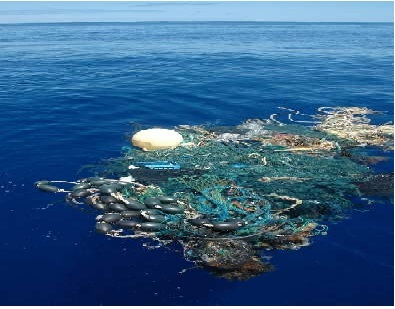
    Have you ever been to a garbage landfill? Have you seen cities where the garbage lies on the street without ever being cleaned up? If you have, you know all about the smell and the general unpleasantness. Did you know that the biggest landfill in the world is actually not on land but in the water? Far out in the Pacific Ocean is an area called the Great Pacific Garbage Patch, where plastic and other litter has been floating around and polluting the water. The patch is a major concern for scientists and other people who want to keep the oceans healthy.

    The world’s biggest garbage dump is made up of two sections in the Pacific Ocean, one between California and Hawaii and the other off the coast of Japan. The two sections are connected by a current called the Subtropical Convergence Zone and together make up the Great Pacific Garbage Patch. The area where the Garbage Patch is located is called the North Pacific Subtropical Gyre, a section of slowly spinning water. The area is often called an oceanic desert since it has very few plants or animals other than tiny plankton.

    Instead of animals, however, the North Pacific Subtropical Gyre has huge amounts of garbage, about 90% of which is plastic. The trouble with plastic is that it never completely disappears but instead photodegrades, breaking into smaller and smaller pieces of plastic called “mermaid tears” or “nurdles.” Garbage can float around in the ocean for years or even decades, but eventually it ends up in one of the garbage patches, often floating just below the surface or sinking down to the ocean floor. Some scientists estimate that the size of the garbage patch could be as big as the state of Texas, although others believe it to be much smaller. However big it is, it’s a cause for concern.

    As the pieces of plastic or other garbage float around in the water, they pick up poisons from fertilizers and other substances that wash into the ocean or they join other kinds of garbage floating in the water. Thousands of birds and marine animals, possibly up to a million every year, die from eating or being caught in the ocean’s garbage. Debris that floats in towards the land pollutes beaches along the coasts of countries like Japan and Canada, sometimes even piling up several feet high in some areas.

    Where does all of this garbage come from? Some of it comes from people dumping trash from ships, but about 80% of it comes from land. It could be garbage carried by the wind from landfills or from city streets, which eventually makes its way to the ocean. It could come from litter that people drop into in the lakes and rivers before it floats down to the oceans. That’s why some towns have banned plastic grocery bags, which make up a large part of the litter. In some towns and cities, volunteers help to clean up beaches and other areas where garbage accumulates.

    Every small change can help to get rid of garbage in the oceans. What will you do to keep the world’s water clean?


  • The Importance of Hobbies

    The Importance of Hobbies

    Between lectures, labs, essays and exams, the importance of constructive hobbies will quickly become evident within a post-secondary environment. Some turn to the arts, some to athletics, some look to develop skills that compliment their degrees and others choose hobbies that are as far from their individual programs as possible.

    Regardless of your hobby of choice, the need and importance of such activities will become clear. Soon you’ll be working hard at your degree, trying to balance your social life with work while trying to maintain some semblance of the evasive “you time”.

    Hobbies facilitate this. By dedicating yourself to a specific pastime you are making a promise to yourself to step back and breathe from the various pressures present in post-secondary education while, hopefully, allowing yourself to grow as an individual. Whether spending an hour on the treadmill, playing a video game, learning an instrument or sitting down to read a book, every hobby encourages the development of a new set of skills, allows you to meet a new network of individuals and, perhaps, allows a welcome escape from the stress of real life.

    A hobby is a good reflection of the ideals, characteristics and interests of an individual and, if you spend enough time on it, it will do so positively. Eventually you may be known as the guitarist of the group, the writer or maybe the athlete. Though such labels can be daunting, they can be positive as well. Soon people will be reaching out to you for music suggestions, writing tips or for advice on their new workout schedule.

    Such questions will only increase your standing within your community while allowing you to develop the skills and interests that will make you stand out as an individual. All the while giving you a welcome, constructive break from the strains of student life.

    The university atmosphere is also a perfect opportunity for the development of such hobbies. As with the academic quality unique to the post-secondary environment, you will find yourself surrounded by a new community of like-minded individuals, all of whom are eager and interested in developing their skills, meeting others with similar interests and sharing their expertise with one another.

    So go learn an instrument! Go join a sports team! Constructive pastimes are extremely beneficial to a healthy, well-rounded lifestyle and will allow you to grow as an individual, meet new people and develop new hidden talents.

  • Why Companies Hire Recent Graduates

    Why Companies Hire Recent Graduates

    There are many reasons to hire a university or college graduate. Employers often seek out recent grads because they are fresh and up-to-date on the most recent information available in a chosen field. Depending on the field of work, this is more or less important. In business and medicine, this is hugely important because business practices are constantly evolving and medical discoveries are always happening. The difference between a well informed employee and a poorly informed employee is enormous. There is no doubt that someone who is educated will serve a company better than someone who is less educated. Someone who is educated will contribute to the company by offering fresh ideas and by being aware of the most recent information. People who have not graduated from college or university may cost the organization in the long run by requiring more training and by making more mistakes.

    People with a university or college degree are also often hard working and determined to succeed. Finishing a university or college degree requires a lot of tenacity and some serious work ethic. This is a huge asset to any organization that is looking for its employees to be able to tolerate stress and be able to produce results. Recent grads are ready and able to learn, they are like sponges and are really keen to gain work experience. If an employer is determining between someone with several years of experience and a recent grad, they will often decide that someone who is fresh and keen to learn would be a huge asset to the team.

    On the other hand, an important thing to consider is that not every company will hire recent grads because they are looking for people with experience. To ensure that you have the best chance of success, you will need to have a great resume and build up your jobs skills and volunteer experience. Remember that you will be competing against people with years of experience, which can sometimes prove to be very tough.

    The best bet is to seek out organizations that are specifically looking to hire recent grads. The government often hires recent grads, and companies that are on the front edge of technology will also be looking for them. If you are in high school, it is not a bad idea to take a look at which companies may be accessible to you after you graduate from your university or college program. Look at what requirements they expect and, if you want to work there, start finding ways to fulfill those requirements; This is especially important if you are undertaking a difficult program for which competition for jobs is fierce. You will put yourself ahead of the game by being informed on what is currently expected of grads. Remember that planning is your best bet, and don’t assume that because you are a grad you will get hired right away. Just be well prepared and willing to learn!

  • Whales of the Bay of Fundy

    Whales of the Bay of Fundy

    The Bay of Fundy is located between New Brunswick and Nova Scotia and is home to the world’s highest tides. The tides range in height from 11 feet to 53 feet depending on location. They change between high and low tide twice a day, carrying with them a hundred billion tons of water.

    The story of the Bay of Fundy, as told in Micmac lore says, “It was a giant whale, who angered the god Glooscap, and created such a splash with his mighty tail that the water sploshes back and forth to this day.” Although this story is entertaining, scientifically speaking the Bay’s tremendous tides are formed by its unique shape, which was created hundreds of millions of years ago.

    In the summer months the Bay of Fundy is the feeding ground for half of the world’s population of endangered North American right whales and 12 other species of whales. They feast on the enormous amounts of krill, plankton, squid and schools of young herring, cod, pollock and mackerel. It is also the preferred location for whales to give birth, mainly because of the vast amounts of food available and due to the protection the bay provides. At any given time the population of whales in the area ranges between three and four hundred.

    The first species to arrive in late spring are the finback and minke whales and harbour porpoises. The endangered right whale usually arrives in mid-July and stays until Fall.

    The most common whales in the Bay of Fundy are:
    The Minke Whale: Can grow up to 30 feet and weigh up to 10 tons. These whales travel in pods of 2 or 3, and can dive for up to 25 minutes without surfacing for air.

    The Humpback Whale: Can grow up to 60 feet and weigh up to 30 to 50 tons. The females of the species are usually larger than the males. These whales enjoy spy hopping, breaching and tail lobbing and usually put on a good show for those who go whale watching.

    The Finback Whale: The second largest whale in the world (next to the blue whale) and generally only frequent the bay during their migration periods, when they are seen following their food sources. The finback can grow up to 82 feet in length, and they usually travel in pods of 2 to 7 whales. They can even live for up to 100 years.

    The North American Right Whale: The most endangered species of whale in the world. There are fewer than 35 left worldwide. These whales migrate to the Bay in the summer months to mate. They can grow up to 50 feet and weigh up to 45 tons.

    The best time to view the many different species of whales found in the Bay of Fundy is August.

  • The Power of the W’s

    The Power of the W’s

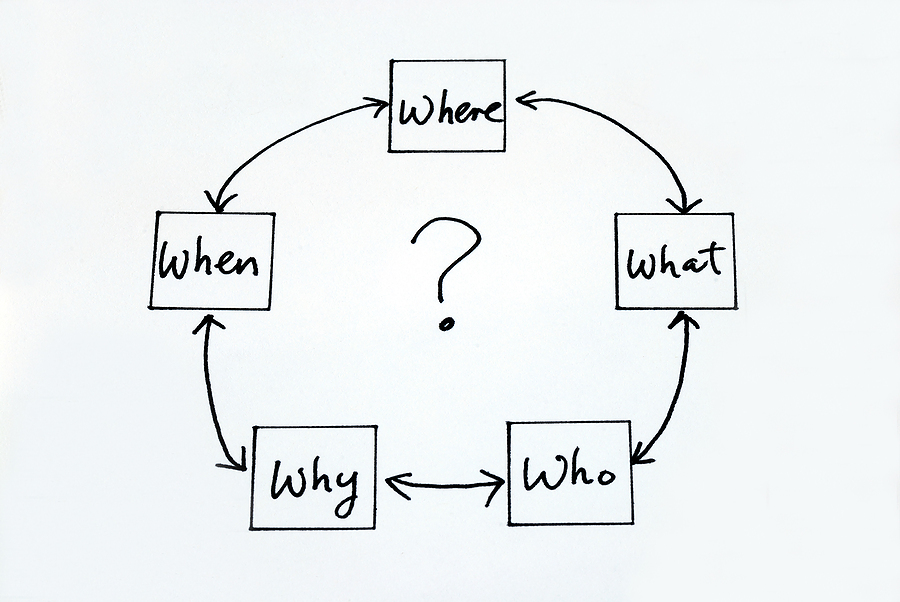
    You’ve probably heard of the five W’s a million times in class. This little family of questions – “Who, what, where, when, why” and their cousin “how” – are memorized by every student who ever has to put together a presentation. But their true power in everyday conversation is never really explained.

    No two people in the world agree on everything. You’re bound to talk to people on a daily basis who think differently than you do. Whether you like it or not, this will be the case for your entire life (unless you want to live alone in a cave in Antarctica!) So you might as well take what you can from these little disagreements.

    If someone tells you that aliens were in the neighbourhood last night, you can say, “You’re crazy” and walk away. Or, instead, you can use those W’s. Ask them “What do you mean?” or “Why do you think that?” or “How did aliens get here?” Your neighbour will tell you about all the evidence they collected. You’ll find out that there’s a thought process behind their opinion. People don’t just come up with wild ideas out of nowhere and fixate on them. They take the evidence around them and put together a case, the same way you or I do. Whether or not you agree, you are learning about your neighbour’s view of the world and giving yourself a broader perspective.

    Maybe you think peanut butter M&Ms are the best candy ever and your friend disagrees. If you just ask why, you might find out he’s allergic to peanuts – which is a great reason not to like peanut butter M&Ms! Or maybe he won’t remember why he thinks that and he’ll give it a second thought.

    So if you’re talking about global warming and someone else tells you it’s a myth, don’t call them an idiot. Ask them, “Why? What’s the point of the myth?” Maybe they’ll have a worthwhile answer or maybe they won’t. But it doesn’t hurt you to ask.

    A conversation is not a chance to prove you’re right. It’s a chance to inform yourself. Two people can sit and fight all day over which hockey player is the best or which prime minister is the best person to lead Canada, but arguing gets you nowhere if you don’t listen to what the other person is saying.

    So just ask questions. It’s easy and it takes you away from an argument and into the world of discussion. Just because all us humans live together, it doesn’t mean we feel the same things.

    Often, after asking these questions, you’ll find that even if you still don’t agree, at least you’ll have a better understanding of the issue as a whole and not just the side you see. Plus, you’ll have more respect for the person you’re talking to, who will be a normal, respectable person you happen to disagree with and not just a lunatic sent here to drive you crazy.

    If you really love asking these questions of other people, it might even lead you down an exciting career path! Journalists, writers, editors and reporters all ask these questions on a daily basis. Even people who work in marketing and advertising ask themselves these questions to determine the wants and needs of their target audience.

  • Sports and Volunteer Hours

    Sports and Volunteer Hours

    With the cold now upon us, many of us are dreaming of next summer. During the summer months, the last thing you want to think about is school and especially about completing those mandatory volunteer hours so you can get your high school diploma. Not to worry, though! You can still have plenty of fun in the sun while completing those volunteer hours.

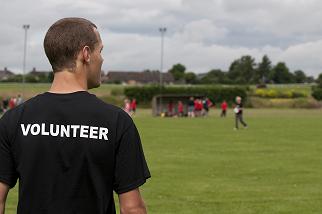
    How do I know that you can do this? Well, I know from personal experience of course. Just like all of you readers, I had to manage my time in the summer so I could complete my volunteer hours. I decided that since I have to do them, I would want to volunteer for something that I would enjoy. In my case, I liked sports, so I phoned some local sport clubs and asked if any were offering volunteer hours for students.

    After some sport searching, I discovered that I could coach for a junior league soccer team. As intimidating as coaching sounded, I was up to the challenge, and it turned out to be one of the best parts of my summer. I signed up, along with my brother, and we coached a soccer team for 8 year-olds soccer  for two months.

    We practiced once a week and played a game every weekend, putting in over 3 hours a week. It was a very small amount of time we had to take out of our normal summer, and it wasnʼt agonizing to do. In fact, I looked forward to seeing my kids learn and develop soccer skills through mine and my brotherʼs coaching. It was very rewarding, especially when we made it all the way to the finals and won the
    championship!

    Jamie Willett, a recent resident at Western University, had a similar experience with her high school volunteer hours. Jamie did her volunteer hours spending her summer assisting a junior gymnastic team. She spent hours every week planning and executing lessons for a group of young gymnasts.

    “It was really thrilling to teach the kids during the summer. Although it brought new challenges everyday, it allowed me to test my skills as a gymnast and as a teacher. It definitely helped me discover what I wanted to do after high school as well!”

    This fall term Jamie will be studying at teacher’s college at Western University for a year so she can teach students at the high school level.

    As you can see, there are plenty of ways to finish up those volunteer hours during your high school years and we have only covered the realm of sports! Be sure to check out the Jobs People Do Volunteer section to check out where you can lend a hand in your community!

    Start thinking about and planning your summer volunteer opportunities now!

  • Prepping For A New Semester

    Prepping For A New Semester

    The beginning of a new semester can be a nerve-racking time for students, particularly those that are entering college or university for the first time. If you are concerned about starting college/university, don’t be! Many of your peers are having the same feeling. This article will provide five steps you can take to get prepared for a new semester of school and help guide you through your first week of school.

    Create a Budget
    Unlike high school, there are many costs associated with going to college/university. Creating your own budget will help you effectively manage your money and take account of the costs associated with your program. Your budget should account for tuition fees, books, food, housing (if you are away from home) and utilities, transportation/travel, cell phone, personal expenses, recreation, clothing and entertainment. A well-planned budget will ensure you have enough money for the year. If you are concerned you will not have enough money for the year, consider looking into getting a part-time job on campus.

    Create a Weekly Schedule
    Time is structured much differently in college/university. Most students have five courses that consist of two to three hour lectures and a tutorial or lab. Class times vary and you may have night classes or days without class. Since most new students struggle managing their time, it is best to create a weekly schedule. Your schedule outlines the time you need to read for each course, complete assignments, study for exams and relax. Most professors suggest that you spend 2 hours for every one hour of class you have per course.

    Set Deadlines
    As soon as you get your course schedule and course outline, take note assignment deadlines and exam dates. Some of these dates may conflict with each other, or you may have deadlines that are very close together. The best solution is to set your own deadlines. Make sure you give yourself a couple of days before assignments are actually due. This allows you to look over your assignment, make changes where necessary, and have extra time if you struggled with anything.

    Meet a ‘buddy’ in each class
    Most people that are starting at a college or university do not know any other students. Make sure you talk to the people sitting beside you during the first few weeks of class. These relationships can be particularly useful for forming study groups or catching up on notes if you had to miss class.

    Make a point of meeting your TA/Professor
    On the first day of class, the course instructor will usually tell you whether you have a teaching assistant (TA). If you do, make a point of introducing yourself to your TA and set up an appointment to discuss the assignments. Your TA will be marking your assignments and exams: ask them questions. If you are writing a term paper, ask your TA to review your thesis, check your preliminary bibliography or look over a one-page outline. TA’s can provide feedback and ensure you are on the right track. If the course does not have a TA, try to establish this type of relationship with the professor.

    Good luck on your new semester!

  • Cardboard Bicycles: Would YOU Ride One?

    Cardboard Bicycles: Would YOU Ride One?

    Every morning, people around the world get up and take their usual transportation to work or school. But what is their usual transportation? In North America it might be the car, but it’s a different story in many other parts of the world. In most countries, the most common form of transportation is the bicycle. According to National Geographic, people around the planet own 800 million bicycles – which is twice as many as the number of cars. New technology in the bicycle world can affect the lives of millions of people worldwide, just as it did almost two hundred years ago.

    People have dreamed of riding on wheels for centuries. In the 1400’s, the inventor Leonardo da Vinci developed the idea of a machine like our modern bicycles but never made one. In 1840, an inventor from Scotland rode more than sixty kilometres on a two-wheeled machine operated by a foot-powered treadle. Twenty years later, a French inventor developed the idea to include cranks and rotating pedals, much like modern bicycles. In 1860, people first started to use the term “bicycle” for the new machine.

    Air-filled (pneumatic) tires were the next development in the bicycle’s story. Next, people developed different bicycles for all kinds of uses: sleek and lightweight racing bikes, heavy but sturdy all-terrain bikes and much more. The basic structure is the same, however: a metal frame with air-filled rubber tires which help to cushion the rider against bumps in the road. These bikes can be expensive to buy and they need frequent maintenance (especially for punctured tires), but who would think of making them any other way?

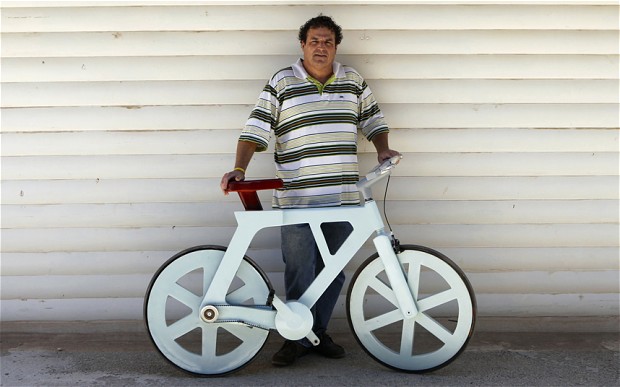
    An Israeli inventor named Izhar Gafni hopes to solve the some of the traditional bicycle’s problems with his new invention: cardboard bicycles with solid rubber tires. The tires, made from recycled rubber car tires, can’t get punctured because they have no air in them. Almost all of the rest of the bicycle is made from recycled cardboard, with a car’s timing belt instead of a chain. The outside of the bicycle is covered with a special coating to make it waterproof and fireproof and is then painted. Each bicycle weighs about nine kilograms instead of the usual fourteen kilograms for metal bicycles.

    The low-cost of the new bicycles could make a huge difference in places like Africa, where people might not be able to afford a traditional bike. Even if the bicycles last only a few years, they could give people the transportation they need to go to school, go to their jobs and maybe even get out of poverty. When these bicycles come into stores, they will likely cost about $20 instead of the hundreds or even thousands of dollars a metal bike can cost.

    If Izhar Gafni’s invention works, it could affect much more than just bicycles. Airplanes or cars made out of cardboard would be much lighter than metal ones and use less fuel, making travel cheaper. It could change the world’s transportation systems forever.

  • An Energy Plan Must Be About More Than Just Energy

    An Energy Plan Must Be About More Than Just Energy

    Feeding our energy appetite is top of mind for many people these days. Some argue we should get coal, oil and gas out of the ground as quickly as possible, build more pipelines and make as much money as we can selling it here and abroad. Their priorities are the economy and meeting short-term energy needs so we can live the lives to which we’ve become accustomed.

    Many others question those priorities. Do we gain comfort and happiness by driving inefficient automobiles, buying and scrapping and then buying more stuff that we must work harder to pay for, and selling resources to enrich the fossil fuel industry and to allow other countries to follow our unsustainable path?

    Some governments and industry favour the short-term view. But it’s a “false economy” — it will cost us more in the long run. What about our children and grandchildren and their children and grandchildren? Do we not want them to live healthy and happy lives? If we pollute the air, water and soil that keep us alive and well, and destroy the biodiversity that allows natural systems to function, no amount of money will save us.

    While rushing to exploit our valuable and diminishing fossil fuels, Canada’s government is simultaneously “streamlining” environmental regulations and review processes, cutting scientific staff and departments and limiting public debate on projects that could irreparably damage our rich natural heritage. Some provinces are attempting to water down hard-won environmental laws, like endangered species legislation, that act as a critical hedge against environmental degradation.

    The federal government is also neglecting its legal obligations to protect species at risk. Ecojustice, on behalf of five conservation groups including the David Suzuki Foundation, recently launched a lawsuit to challenge the government’s multi-year delays in producing recovery strategies for species that would be affected by the proposed Enbridge Northern Gateway project.

    If we don’t slow down and try to look at ways out of the mess, energy issues will continue to increase, like the Hydra of Greek mythology. With pipelines, the main issue is rapid tar sands expansion. But other massive energy projects are also coming down the pipe — from huge dams, like the Site C in northern B.C., to proposed drilling for oil and gas in the Gulf of St. Lawrence and the Arctic. To what end?

    Not only are fossil fuel companies making record profits, they’re being subsidized by Canadian taxpayers to the tune of $1.4 billion a year. Instead of giving them money, shouldn’t we be compelling them to put at least a small portion of their enormous profits into reducing the massive greenhouse gas emissions they cause?

    A large part of the problem is that we are increasing our fossil-fuelled ambitions at breakneck speed in the absence of a national energy strategy. No one seems to know where we’re going, but the end of the road is looming, and it might lead to a steep drop. We’re already harming precious ecosystems and are ready to put even more at risk without having an idea of the often irreplaceable value they represent. With climate change and its impacts, along with deforestation, pollution and increasing urbanization, we’re condemning millions of people to lives of poor health, desperation and even death.

    Still, we’ve also created much that is good. We have political systems that encourage public debate and access to information. There are politicians and industry leaders who have joined countless citizens, First Nations, and environmental, labour and social-justice organizations to question current policies and actions. We have science, medicine and technology that have allowed many of us to live longer. We need to find ways to reconcile our existence with the limits of our finite planet.

    What Canada really needs in the short term is a national energy strategy — one that goes beyond fracking and tar sands and pipelines to take into account these many other factors, including wiser use of fossil fuels. It must help us make the transition from our wasteful addiction to polluting and ever-diminishing fossil fuels to conservation and renewable energy. Globally, we need to shift from the outdated 20th-century notion of measuring progress with gross domestic product to a development paradigm that takes into account well-being and happiness, and that accounts for nature’s valuable services.

  • Kindness – It’s In Our Nature

    Kindness – It’s In Our Nature

    Being kind is an innate characteristic that we all possess. Don’t let peer pressure change you into something you are not! Bullying is not something that comes naturally to any of us. If you see someone being bullied, speak up. Help out. Don’t sit in silence and let it continue. Be the person that you know you can be! This month, we have two articles on bullying that will help you make the right choices.

    In our Scholarships section, we’ve listed 10 new scholarships/bursaries that you can apply for. It’s hard to believe, but this year is almost over! That means it is time to start preparing your applications for 2013 scholarships. Get a head start so you won’t have to scramble later!

    Finally, November is a month of remembrance. Whether you watch the Remembrance Day ceremonies on television or attend one in your city, it is important that we remember all that has been lost and sacrificed for our freedom. Chances are you are related to someone who has gone to war, so learn about their experiences and share them!

    Have a great, productive month!

    Jasmin Bollman – Assistant Editor