Author: 0 Backup WordPress

  • 5 things to know about first year!

    5 things to know about first year!

    1)   Come prepared:

    Remember that leaving for college or university still means that you’ll be in a school environment.  So make sure to come prepared to learn.  But more than just bringing books, pens and a laptop, come into your new environment prepared to face new and exciting challenges. (more…)

  • Who’s in Charge Here?

    Who’s in Charge Here?

    Dealing with Negative Peer Pressure

    It can be as simple as your classmate asking you to copy your homework and as difficult as your friends wanting you to try drugs for the first time. Negative peer pressure takes place when someone tells you to do things that you know or feel is wrong, hurtful, or dangerous.

    Words can hurt. Friends can make you feel so pressured into doing something, you feel you have no choice but to go with the flow. After all, who wants to be called “chicken”? They might tell you, “It’s no big deal.” or “Everyone’s doing it.”

    THE BOTTOM LINE IS: If you do something because of what your friends say, then who’s in control of you? It is during your teen years that you start gaining more personal freedom and are in the position to make more decisions by yourself FOR yourself. so who’s in charge? If you LET them make up your mind, you’re giving up that control.

    If something feels wrong, listen to the person who knows you best: YOURSELF!

    BE IN CONTROL !
    Lots of teens worry about not being liked and unpopular if they don’t go with the flow.
    DON’T LET YOURSELF BE MANIPULATED.

    Life is about making decisions and each decision you make will lead you down a different path.

    Learn to make good decisions:
    Weigh the pros and cons. Understand the negative consequences that can result from a decision YOU make. (By giving into negative peer pressure, you might get grounded, you could lose people you thought were your friends, you could be put in jail.) Trust yourself to make the responsible choice. Be honest with yourself. Are the risks involved worth damaging your own self-respect?

    It takes guts to stand up for yourself. At some point in time, you’ve got to assume responsibility for yourself. Why not start now?

    Say it like you mean it!

    When you tell your friend you won’t do something you don’t feel good about, speak with conviction. Speak with sincerity. You’ll be surprised by asserting yourself honestly and firmly, you might gain respect and admiration from your peers.
    Remember you can always walk away and ignore them.

    Actions sometimes speak louder than words. Do it casually. Do it confidently.
    Remember, not all peer pressure is negative. Friends can lend a lot of positive support for each other too.

  • The Truth About Buying Textbooks

    The Truth About Buying Textbooks

    Can you really put a price on knowledge? College and universities seem to think so.

    Textbook prices in post-secondary institution are climbing everyday. Ironically students learn to think outside of the box and fight injustices such as unnecessarily high textbook costs. While there are viable reasons for Canadian textbook prices to continue to soar, they conflict with current ethic and socio-cultural teachings that encourage students to take a stand against price inflation.

    A Canadian entering post-secondary education can expect to spend between $100 and $1000 on textbooks per year. Typically, math and science students will garner the highest costs, while arts students are paying the least. Regardless of your program, textbook costs are far too high for the quality and quantity of material being provided.

    While students would be better to purchase books online, courses often have required materials that demand textbooks unavailable by any source outside of the school’s bookstore. By disabling students from purchasing online, colleges and universities are holding a monopoly on textbook orders, guaranteeing themselves revenue.

    Maclean’s magazine recently ran an exposé on the Canadian textbook distribution system that reveals why they are so expensive. Unbeknownst to most, a relatively obscure set of provisions to the Copyright Act (1999) known as “book import regulations” is responsible for raising the cost of textbooks by as much as 15 per cent. Maclean’s explains that it gives exclusive rights to Canadian publishers to monopolize textbook sales to Canadian schools, calling it “a form of cultural protection.”

    The Canadian Alliance of Student Associations (CASA) placed the estimated cost of protecting these publishers through the Copyright Act at approximately $30 million a year. $30 million of Canadian students’ money!

    Maclean’s notes that this “private tariff” on books involves no accountability for how publishers use the extra funds. “This money is going to, generally speaking, foreign-owned distributors. They’re collecting it, the author doesn’t get it, the Canadian taxpayer doesn’t get it, and it’s coming out of the pockets of our students.” So there’s the dilemma.

    Is it right to support the Copyright Act in its efforts to preserve and protect Canadian writers and publishers? Is it better to purchase our own books from distributors outside of Canada and be more financially stable? Do we even have a choice?

    CASA is lobbying federal government for a change to the provisions, and until those happen there are a few things you can do to lessen the financial strain of buying textbooks.

    Always look for used books first from a bookstore that’s not officially affiliated with your school, that’s where the best deals can be found. Ask around campus for anyone selling old textbooks and advertise when you’d like to sell yours. If you can read assigned literature right off your computer, do it. Don’t purchase something you can access online option. Be vocal about your textbook price opinions, because awareness on the issues surrounding CASA’s efforts and the Copyright Act may cause the way books are distributed to make as much sense as the priceless material found inside them.

  • Say “Yes” to Internships !

    Say “Yes” to Internships !

    4 Reasons why you should say YES to an unpaid internship

    1. It’s Not Free Labour, It’s Experience Labour

    Many people have dejected concepts regarding unpaid internships, some claiming its absurdity in its free labour, and others label it a waste of time. Some even believe that only the privileged can conquer the greatness of an internship experience, but what many don’t know is that an unpaid internship is the best thing you can do to boost your credibility in your profession of field. The experience you devour from an internship is worth much more in the future than a paid job today. Yes, some circumstances call out for some district measures, but if you can accept an unpaid internship today, you will obtain a headstart in the work industry that will set you apart from the rest. So it’s not really free after-all, is it?

    2. Competition in, Stand out

    With the stumpy job turnouts that have left the market flooding in extensive competition, recent graduates are struggling to stand out and get noticed amongst the 100 applicants which in much exertion struggle to land the position of one job opening. Established companies and business owners look for applicants that stick out in a crowded room; and I’m not talking about your fine tailored ensemble, but rather the experience you encompass that will make any CEO want nothing more than to get you on board as part of the company’s team. An unpaid internship will provide you with that exceptional experience that every executive is looking for; and at the same time, allowing you to get a head start in the employment market when you include “intern” on your resume; saving you the hassle of learning the techniques to manipulating others with empty words.

    3. Play it Smart Today, Secure Tomorrow

    When you devote your efforts to an unpaid internship, you are not only investing your time for the summer break, but you are securing your future for tomorrow. Taking on an internship means you have received proper training in the field you are working in and this tiny little thing called experience will land you a job proposal at the end of your internship commitment. Employers love nothing more than to see potential applicants that have committed their hours to unpaid labour.

    4. Connections, Connections, and more Connections

    Did I forget to mention connections? Not only do you receive experience and recognition from an internship, but it also enables you to build a great network for yourself. You increase your networking opportunities, build relations with potential employers, and gain credible reputation. What more can you possibly ask for? Making stable connections in the work force is a great way to expand your job offers since you get to work with people that are interested in the same field as you are, and with common goals aligned, you might be receive that proposal that you have been waiting for all your life.


  • Only 6-7 weeks left !

    The end of the school year is on the horizon. It’s time to strengthen your plan.

    Try not to let those marks drop now, even tho’ you’ve heard back from your post secondary institute . Yes, they may have already looked at the midterm mark and you’re looking good, but they may also look at the final marks and things could change.

    If you’re preparing to live on campus, be sure to fill out the paperwork for your desired residency.  Get on the waiting list, you can always cancel.  Don’t be left scrambling.

    If you’re considering the trades, which by the way, usually land you with a great paying job and less student loan money to pay back, remember, apprentices can receive up to $4,000 in grants to pay tuition, travel, tools, or other expenses.

    There are many career opportunities in the trades, everything from construction and roofing to cooking and hairstyling. Visit Skills Canada to learn more about careers in the trades.

    If you are considering an apprenticeship, visit Red Seal for information on how to get started and more.


  • Canada’s Natural Resources

    Canada’s Natural Resources

    Imagine walking along a forest path with a stream beside the path and trees all around you. Think about how calm and peaceful that would be. Now imagine the same place with the trees cut down and the stream dried up. For many people, the loss of natural resources like forests and streams would make the world a much less pleasant place. However, Canada’s natural resources don’t only look nice. They help us by providing the water, air, and food we need to live. If we enjoy these resources, we need to show our appreciation by taking care of them.

    If you live in a city, you might not realize how important natural resources are in Canada. Almost half (over 42%) of Canada’s land is covered by forests, including about a quarter of the world’s northern boreal forests of evergreen trees like spruce and fir. Almost 12% of the country’s total area consists of streams, rivers, lakes, and other sources of water. Canada also has about 25% of the world’s wetlands, such as marshes and swamps, where animals like moose and birds live. Water helps preserve many plants and animals that might otherwise disappear.

    Without water, life would be impossible. We use it for drinking, cooking, washing, watering the plants we grow, and many other everyday things. Fish and other animals that live in the water also provide resources to help keep the earth’s inhabitants alive and healthy. Can you imagine a life without water? Even the simplest activities would be difficult or impossible.

    Trees are just as important as water. They provide shade for hot weather and give a place for birds and squirrels to live. However, trees also help to clean the air and make it possible for people and animals to breathe. Our bodies take in oxygen and breathe out carbon dioxide. Trees do the opposite. By taking in the carbon dioxide animals breathe and changing it to oxygen, trees help to clean the air and to make the world more livable.

    Canada has many resources besides water and forests. Fuels like oil, coal, and natural gas help heat or cool houses and other buildings. Minerals like copper and nickel are useful for making all kinds of metal objects. Resources like these help make life easier and provide many of the things we enjoy. Can you imagine a life without metal? There would be no cars or televisions or many of the other things we enjoy.

    Even though natural resources are essential to life, it can be easy to misuse them. Many fuels cause pollution, which destroys the land, air, and water. Overuse of resources decreases the supplies available for the future. For example, the numbers of fish have declined greatly in many parts of the ocean. In other areas of the world, forests and other resources are disappearing quickly.

    Enjoying a walk through the woods or a drink of water is good, but really appreciating our natural resources takes work. How will you help preserve the natural resources we have?

    Bibliography:

    Environment Canada. “Habitat and Wildlife.” http://www.ec.gc.ca/education/default.asp?lang=En&n=9AD97E2E-1.

    The Free Dictionary.com. “Wetland.” http://www.thefreedictionary.com/wetland.

    MacEachern, Alan, Maini, J. S., Carlisle, J. A. The Canadian Encyclopedia. “Conservation.” http://www.thecanadianencyclopedia.com/articles/conservation,


  • The ocean is the cornerstone of our life-support system

    The ocean is the cornerstone of our life-support system

     Two trillion dollars is an astounding amount of money.

    Imagine this: The day Julius Caesar is born you are given $2 trillion. Then, you manage to spend $2 million every single day. After this tiring experience, you’d still have several hundred billion dollars in your pocket. Besides having really big pockets and a long lifespan, you might be one of the few people on the planet who understands the crisis our oceans face.

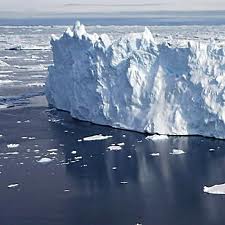
    Two trillion dollars ($2,000,000,000,000) is the amount that the global economy stands to lose by 2100 if we continue our current use and abuse of the ocean environment. That’s the news, according to a 300-page report called “Valuing the Ocean”. Coordinated by the Swedish-based Stockholm Environment Institute, the report concludes that human activities such as oil spills, fertilizer use, carbon emissions and other pollution will have a devastating impact on the economic benefits the ocean provides.

    Most of us think immediately of the value of fish and shellfish stocks. But the costs of degrading the environment include rising sea levels, storms, loss of tourism and the ocean as a carbon sink.

    The executive summary of the report says it best, “The ocean is the cornerstone of our life-support system. It covers over 70 percent of our planet and generates the oxygen in every second breath we take; it has cushioned the blow of climate change by absorbing 25-30 percent of all anthropogenic carbon emissions and 80 percent of the heat added to the global system; it regulates our weather and provides food for billions of people. The ocean is priceless.”

    But that’s not the end of it. Because of these collective impacts, $600 million of services provided by the ocean will be lost every year.

    We humans like to use the ocean, but we don’t seem to be considering the impacts we have, especially taken collectively. Governments and decision-makers are not properly considering the links between human activities and loss of productive ecosystems. Burning fossil fuels is putting carbon in the atmosphere and acidifying our oceans. Industrial fishing practices and lack of management have depleted 90 per cent of the world’s large fish, such as tuna, cod and halibut.

    The co-author of the report, University of British Columbia fisheries economist Rashid Sumaila, hopes that the report will help us make better decisions. “By stressing the links between multiple marine stressors and the huge value of the vital services that the ocean provides to humankind we [the report authors] hope to help kick-start decisive, integrated action to strengthen ocean governance and management across all scales, from local to global.”

    The report states, “the ocean is the victim of a massive market failure.” It really should say, “The market is a victim of a massive market failure.” The ocean doesn’t need any money. It’s the market that is losing the $2 trillion because it has failed to properly account for its own impacts—actively writing the benefits on the ledger sheet while ignoring the deficits.

    This Enron accounting has to stop. We can’t afford to keep trashing our oceans: there’s a whole lot more than $2 trillion at stake

    By Panos Grames, Communications Specialist

  • The Commitment Of One Year Off School

    The Commitment Of One Year Off School

    Taking a year off school between secondary and post secondary school can be a tough decision for any student. If the waiting period is extended past a year there is only a small percentage of people that do go back.

    Taking in a job to pay for school, one can get caught up in the pay and or get comfortable in what job they have (even when it is a dead end or minimum wage position), but it is important to keep track of priorities and not to loose sight of your goals.

    If you loose sight of these you will never know what your potential could of been or can be. A great man once told me that ” You should never get comfortable with the minimum, because if you’re not comfortable with where you are, you’ll always want better” therefore you aim for more.

    Taking time for yourself to regenerate and preparing for the future is very key to build to a stable and prosperous life, but it is just a part… Dedication and hard work are the biggest contributions one can have to get to where they want in life and make their dreams reality.

    The saying you will never know if you don’t try is true. If your dream is more possible with the proper education… Why would you give that chance up?

    To sum up why and what your taking off a year in school for… Work or Relax? If it’s to work you must be financially responsible or you’ll find your self extending and extending the break duration that can lead to no return. When you set your budget save more… It’s always more expensive than you think. Relaxation, play and meditation… Where you build your plan… Are you in the right subject, are you mentally prepared and or are you dedicated to the subject that will be your future? Don’t fall off your routines. Find something you enjoy: sports teams, dance groups, hobbies clubs and writing guilds. It keeps you in routine, so you don’t find it hard to maintain a school routine when you get back into it. finding and keeping focus, dedication and routine helps you grow as the best individual you can become.

    Don’t waste time… Every moment is to cherish.

  • Putting English Literature to Work

    Putting English Literature to Work

    What subject do you like best at school? Which one do you think will be the most useful for your future career? If you want to be an accountant, your mathematics courses will probably help you get into the right training program. For medical professions, your science courses could be the best. How about your English literature courses? Except in a few cases, studies in poetry and fiction don’t lead to any specific job. In that case, why would you study literature in university? There are many reasons why an English degree can be a good career move. The benefits come, not just in the specific topics you study, but in the skills you learn along the way.

    Studies in English literature can help people learn how to read in a new way. When you first learned to read at age five or six, you probably looked just at the most obvious meanings of the words or sentences. Did you ever think of how many meanings words like “run” or “set” can have? What if an entire sentence can mean two or three different things?

    If you study English literature, you’ll learn to see possible hidden meanings behind even the simplest sentences. This skill could be very useful if you become a lawyer or an editor, where the exact meanings of words are important. Understanding words could help you teach English as a second language or to work as an interpreter. You could even become a crossword puzzle maker.

    Besides learning how to read, an English degree will teach you how to write and to speak. Writing a story or an e-mail to a friend can be difficult enough, but how do people learn to tell their ideas to others? If you write a report for your supervisor at work, you’ll need to know how to present your ideas clearly. If you give a presentation about what you’ve done, you’ll need to have practice in organising your ideas and telling others about them.

    Courses in English literature can teach you the power of words. Even if you’re giving a presentation on Shakespeare’s plays or writing a paper on Stephen Leacock’s stories, you’re learning the communication skills that you’ll need later in life. If you learn to express yourself as briefly as possibly, that’s even better. An English degree also teaches students the ability to analyse and compare documents, which could be useful in many different types of work.

    An English degree normally requires reading a variety of stories and poems, from the earliest available writings to the most recent texts. Studying the ancient writings could lead you to a career as a museum curator or librarian. Reading books by authors such as Charles Dickens could teach you about human nature and lead to a career as a social worker or a psychologist. Through literature, you can learn valuable lessons about life.

    An English degree can help in so many ways, no matter what career you choose. Why don’t you consider it when you finish your high school studies?

    Bibliography:

    Korkki, Phyllis. “Graduates’ First Job: Marketing Themselves.” http://www.nytimes.com/2010/05/23/jobs/23search.html?_r=1&scp=1&sq=english%20degree&st=cse

    McGill Career Planning Service. “What can I do with my studies in ENGLISH (English Literature, Cultural Studies, and in Theatre)?” http://www.mcgill.ca/files/caps/english.pdf.

    Slayter, Mary Ellen. An English Degree Can Translate Into Opportunity http://www.washingtonpost.com/wp-dyn/content/article/2005/06/18/AR2005061801428.html.

  • The “Bell Curve”  Is it ringing on the straight and narrow?

    The “Bell Curve” Is it ringing on the straight and narrow?

    It’s a grading system at many Post Secondary facilities.

    Imagine scoring 70% on an exam and still ending up with an “A” – sounds too good to be true, doesn’t it? Now, imagine trying your hardest and feeling like you’re doing really well but somehow never managing to score anything above a “C”. This false sense of achievement or defeat may be the reality for students at post-secondary schools that use the “bell curve” grading system.

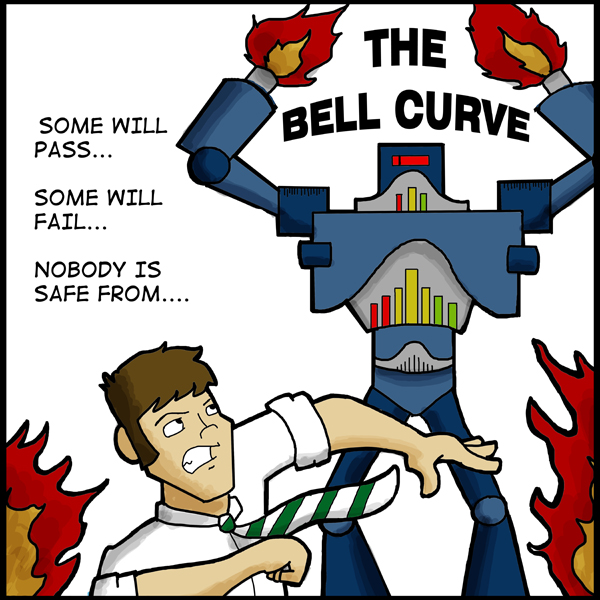
    This form of grading uses statistics – a graph of the normal bell curve distribution – to determine a student’s grade based on where they fall along the curve relative to everyone else. A number of students will end up with A’s or F’s while the majority will get C’s. But is it fair? Students are graded by being compared to one another, regardless of actual learning.

    “I am not in favour of using the bell curve as a matter of policy. It does not help a student’s progress and does not give them an accurate measure of the extent to which they have met learning outcomes for course material” said Debby Cleveland, Program Head of Human Resource Management at the BCIT School of Business.

    “When you have large numbers of students from a representative sample of the population, you would expect grades to fall naturally into a bell shaped curve. The students at BCIT (and at many other post-secondary institutions) are a select group, and therefore not representative of the general population. It is artificial to make their grades ‘fit the curve’ and not in any way fair” noted Cleveland.

    “I like straight grading better because in a sense [it’s] more fair. If bell curving depended on how smart your graduating class [is] then I don’t think it would be that accurate” Annie Gong, U of Waterloo B.Sc. graduate and current BBA student at BCIT, said.

    Although many post-secondary institutions across Canada do not use the bell curve grading system, those that do may not be using the same grade curving algorithms to compare and calculate final grades. Even if an accurate standard is determined, it must be consistent across faculties and programs in order for it to be fair – especially when students are vying for limited spots in grad school.

    When your grade is dependent on the performance of others, it can lead to a false sense of progress and even underachievement. However, in more difficult or advanced courses it may be the only way to measure results while still meeting the quotas determined by the scores across the country.

    “I would have preferred [straight percent-based grading] in courses I did well in but not so much in courses I didn’t – I guess you can’t have the best of both worlds” said Gong.

    Although the alternative would be to banish the bell curve system all together, the consequences could be detrimental to many reputable universities. In other words, students may not be able to meet the expectations set by these policies and over time GPA’s will suffer and bring down the school’s credibility.

    On the other extreme, some instructors think students will be better off without any form of grades. Pinpointing the student’s strengths and weaknesses with a clear course of maintenance and improvement is a proven way to successfully progress through school, regardless of grades and scores.

    “Advancement comes from getting qualitative feedback about what areas you have mastered and what you still need to learn” states Cleveland.

    NOTE :  Bell Curve comic, provided by www. same-shirt.com, created by Mark Tomczak