Author: Kevin Mornay

  • Planning ahead

    Planning ahead

    College will work itself out, right? You’ll get there, get a room and everything will fall into place.

    Well, that may not be the case. Here is some advice from people who have successfully entered the college world.

    Knowing my senior year would be chaotic, I started to plan for college in my junior year. I made the best grades I have ever made to raise my GPA so I could apply to the University of Toronto. It was the best thing I could have ever done.

    Having a good GPA will show colleges or universities how dedicated to your schoolwork you are. Yes, they do like to see community service and other school activities, but those can only go so far. With a good GPA, you show that you are not only a good student, but also a hardworking and dedicated person. That is why the time to start worrying about high school grades is the moment you enter high school. If you start good studying habits then, and get your GPA up as high as you can get it, you will more than likely get into the post secondary institution  of your choice.

    Some study mechanisms or methods used in high school may work after high school, and some may not. I did not truly learn how to study until my junior year of college, and then it was easy. If your old methods fail, try new ones until you find ones that work. The earlier you achieve this, the better.

    I believe that everyone should volunteer, even if it’s as simple as tutoring a friend. Colleges and Universities are looking for well-rounded people to enroll in their institutions.

    Pick your school based on your own needs. Ten years from now, it probably won’t matter what your boyfriend thought or where your friends all went to school. Extract yourself from your current social situation and think about what would be best for you.

    I believe the most important way you can plan and prepare for post secondary  is by researching, visiting and communicating with the college or university that you plan to attend. Once you have been accepted , you must obtain as much knowledge about the school before you decide to attend. After all, wherever you decide will be your home for the next four to five years, and that is a big commitment.

    Get to know professors. This is very important. You might want a recommendation letter later that could help you get a job. Get to know them, and make sure they get to know you.”


     

  • Don’t Stress about what to take in College

    Don’t Stress about what to take in College

    Choosing a college major can be as easy as deciding how you want to spend your weekend. While you have plenty of options to choose from, you should end up picking what you enjoy most.

    The question you have to ask yourself is, what is right for me right now?

    Seems too simple, right? Yet, if you consider that declaring a college major doesn’t have to be the same as selecting a career, the choice becomes a little less intimidating. It then becomes a decision of finding out what interests you most, rather than determining what you’re going to do for the rest of your life.

    If you take a look around and ask professionals what they studied in school, you’ll find many of them are not doing what they  thought they wanted to do when they came out of college or university.

    What you major in as an undergrad leads you to your first job only. if that.

    Students have a common misconception that their major will determine their career. The best advice is to do whatever interests you, because that’s what’s going to get you somewhere.  Doing what you enjoy doing makes work fun. How great it is to go to work each day enjoying the day.  You can major in something you love and still get a great job. Here’s the secret: Know what is right for you by following your interests! Interests are the best predictor of career satisfaction.

    Don’t know your interests? Then explore! Go to the bookstore and pull out books on possible majors, doing this, you’ll  find  what interests you .  You’ll just feel the attraction to the books.  Choose what you’re good at.  Study something you’re excited about, because you’re going to get better grades when you do that.

    Get out of the classroom!

    Take your nose out of the books and get your hands dirty;  it will increase your chances of securing a job. According to a 2010 survey by the National Association of Colleges and Employers, post-graduates with related internship experience are more likely to find a job than those without any. Employers need more than what you learn in school, they look for experience.

    Find a passion project.

    Once you find what you enjoy doing, make a connection in that field and intern or volunteer for free. You may find it your passion.

    Learn what’s out there. Exposure is important, because there are majors you don’t even know exist yet.

    If after reading this you’re still worried about choosing a major, consider that people often change their major about three or four times. There is more than one route you can travel to get you to your destination.

    Undergraduate studies are really just an exploration of the self and your interests,. It’s just a stepping stone, so do whatever you enjoy.


  • Dream

    Dream

    Take this month of August to dream of all the possibilities. Let your mind wonder what it would be like if only..

    Understand that one thing is for certain – if you don’t go after your dream, you’ll not reach it.

    Go through our 600 videos and profiles to explore career ideas, take a quiz and let us match you to careers that fit your personality.  If you have a career in mind and we don’t have the video, let us know and we’ll get one.

    In September we are teaming up with Student Awards to bring you 10 new scholarships each month along with relevant editorial pieces. There are scholarships for everyone.  Free money, be sure to check that out!

    Dream, focus, and go get it…….you’re worth it !


  • Great Food to Fight Depression

    Great Food to Fight Depression

    We’ve all done it, drowned our sorrows in a family size bag of Doritos or a pint of cookie dough ice cream, but does it really help make us feel any better?

    Well recent research suggests food really does alter our body chemistry and as a result influences our moods. Therefore, everything we put into our body affects us in one way or another. Putting food in your body is like putting gas in your car; it makes it operate. Keep in mind people are a little more complex than automobiles. It is normal to feel sad or depressed when a loved one dies, or you go through a tough brake-up, or someone does something to hurt you, unlike cars we have feelings and emotions that can’t be fixed with some type of “magic food.”

    However, if you are feeling down and there doesn’t seem to be any major reason for it, than perhaps a change in body chemistry could help.

    Sleep is one way to deal with depression. So it’s important to avoid foods that may interfere with your sleep. Some people find that caffeine keeps them awake. Others have a hard time sleeping after eating spicy foods. Knowing what affects your sleep habits will make it easier for you to avoid them. Anything, you think may impact your ability to get a good night sleep should not be consumed within four hours of going to bed.

    So, what food should you consume to help alleviate your depression? Well, most experts agree fresh fruit is the best option. It contains natural sugar, and is full of essential vitamins and minerals. Fats from fish oils are also excellent to help cope with depression, as well as omega three fatty acids. Below is a list of some great foods that may help ward off mild depression or alleviate it from becoming too severe.

    – Beets- they’re high in folate, and a lack of folate can lead to depression, mental fatigue and insomnia.

    – nuts such as walnuts, almonds, pecans and brazil nuts

    – fish such as salmon, tuna or herring

    – turkey, which contains folic acid and niacin that can help relieve depression, anxiety and panic attacks

    – dark chocolate

    – brown rice, which not only has vitamins B1, B3 and folic acid, it’s also a low-glycemic food. Low glycemic foods release glucose into the blood stream slowly, preventing sugar lows and mood swings.

    – Whole grain oats also help regulate your blood sugar.

    – Have a glass of naturally sweetened orange or lemon juice, or even better squeeze the juice from a fresh lemon, lime or orange into a glass of water

    – As stated above try to eat as much fresh fruit as possible (at least 5 servings a day) try different varieties such as: papaya, bananas, strawberries, mangos, pineapple, grapefruit, peaches and apples.

    – High Vitamin D foods such as: liver, salmon, whole milk, tuna, sardines and egg yolks

    – And energy boosting foods like: spinach, blueberries, broccoli and oatmeal.

    Although some foods can help us deal with mild depression it is equally important to remember what foods don’t. So, the next time you’re feeling a little down remember this list before you reach for that bag of chips, container of ice cream, caffeinated beverage, microwaved dinner or bottle of alcohol.

    Remember although food can help with mild depression, it is not a magical cure all. If you suffer from severe depression or anxiety you should contact a health care professional a.s.a.p. don’t be scared to ask for help. A lot of people go through times when they can benefit from the help of a trained professional.


  • What Is Homeopathic Medicine ?

    What Is Homeopathic Medicine ?

    Homeopathic Medicine is the coordination of scientific and natural of healing that has been in existence for over 200 years. It treats the whole person by using natural remedies that boost the body’s own ability to heal itself and correct any imbalances.

    The homeopath seeks a substance which, in overdose, would mimic symptoms similar to those experienced by the sick person. When the match is made, that substance is given to the patient in minute, safe doses.

    The man who pioneered homeopathic medicine is Dr Samuel Hahnemann. He was the first to notice that plant, animal and herb substances capable of causing disease in healthy people can be used in diluted form to treat people with similar symptoms.

    Based on this observation, he developed a process of dilution to form homeopathic remedies. A plant substance is diluted with 99 parts distilled water or ethyl alcohol.

    This process of dilution is repeated many times and is accompanied by a shaking procedure that imprints the energy signature of the plant on the water molecules.

    The water retains a memory, or inscription of certain characteristics of the tincture.

    It is this autograph that gets carried through and made more potent. As the plant molecules decrease with continued dilution, the traces of the plant disappear but the autograph gets stronger.

    This makes the homeopathic remedy potent but completely non-toxic. My research has shown me that natural herbal remedies are not always safe, whereas homeopathic remedies are 100% safe. Homeopathic Doctors tell me that although some of the substances used to make homeopathic remedies are toxic in their undiluted state, once they have been diluted they are completely safe and have few side effects when administered correctly. They believe homeopathy can treat most conditions like illnesses such as recurring colds, chest infections, ear infections, tonsillitis, fever, diarrhea and vomiting.

    Homeopathy is growing in awareness and usage around the world that is because conventional medicine should not necessarily be the first thing that one jumps at. There are gentler ways, and homeopathy is one of them.

  • A Soft Spot for the Spiny Softshell Turtle

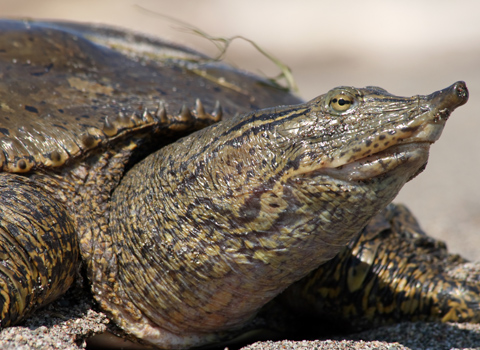
    A Soft Spot for the Spiny Softshell Turtle

    With only two subpopulations in Canada, habitat for the spiny softshell turtle (Apalone spinifera) is crucial to its survival. However, this reptile has a long must-have list before it moves into its habitat and human impacts can leave it homeless. As it stands, the spiny softshell turtle has been listed as threatened by the Committee on the Status of Endangered Wildlife in Canada (COSEWIC) since 1991.

    The Canadian Wildlife Federation’s Endangered Species Program is giving $20,000 to Patrick Paré, a biologist and Director of Education, Research and Environment at the Granby Zoo to locate, monitor and protect the nesting sites of the spiny softshell turtle.

    Prime Real Estate

    While the square footage might seem endless, these turtles have a check-list that their new home must fulfill before they commit to a location. Their home sweet home will have a sand or gravel area for nesting that’s close to the water and free of vegetation, shallow sandy areas to bury in, deep pools (one metre deep at the very least) to hibernate in and areas to bask in the sun. Of course their habitat also needs to be welcoming for their favourite prey—crayfish, tadpoles, minnows and aquatic insects.

    But with a laundry list of must-haves comes a laundry list of roadblocks. Urban and agricultural development along shorelines and bank stabilization can restrict the turtle’s ability to move from basking hotspots to nesting nooks or deep pools to sandy spots. With limited access, turtles would be forced to migrate long distances every day, and eventually the habitat is rendered useless and they’re forced to move.

    Nest Egg

    Since spiny softshell turtles have a hard time locating the perfect spot to create their home and nesting area, they often have to lay their eggs in the same area. Once the locale has been decided upon, usually on sandy beaches, they lay approximately 20 eggs a clutch. However, beaches also happen to be sought after for recreation, and since this turtle can be easily disrupted, this can put a damper on nesting. The eggs have also got other glitches to contend with, including egg infertility, fluctuating water levels, sewage and predators like raccoons, foxes and sarcophagid flies.

    Where Paré’s Research Fits In

    Quebec’s spiny softshell turtle populations are located in two areas: Lake Champlain and Pike River. Patrick Paré of the Granby Zoo is targeting the Pike River population in order to assess and monitor the health of this population. In April, May and June, Paré and his research team will capture two females en route to Pike River in order to install transmitters to track the females as they scout out nesting spots. From June to October, the team will locate the nesting areas and protect them from predators with wire netting. They’ll also visit the sites frequently to check on flooding, predation and vegetation growth in the area. In the fall, researchers will visit the nesting sites again to determine the ratio of hatched to undeveloped eggs.


  • Projects Abroad, Offering Youth Short-Term Volunteer Opportunities Abroad

    Projects Abroad, Offering Youth Short-Term Volunteer Opportunities Abroad

    Projects Abroad is a youth-oriented volunteer trip association that can help you plan a volunteer trip to help shape you career, your education and your life.

    the company offers the opportunity to do two weeks to several months of volunteer trips in many of the destinations where they operate. For volunteers who don’t have the time to commit to a month or more of volunteering abroad, but would still like to contribute to the community or their project of choice, then short-term two-week volunteer placements are a great option. These trips are not available in all situations; they have hand-picked only the countries and projects where it is suitable for both the host community and the volunteer to be there for such a short time. To see where these trips are available, check out their prices page – if there is a price listed, then it is possible to go for two weeks.

    Although you will not be able to make quite the impact that our longer-term volunteers make, in your two weeks you will be working intensely within the local community and building relationships. This will impart a level of cultural insight that is not possible for tourists to achieve.

    These trips operate in the same way that normal four-week or longer projects do, with some small adjustments to help you make the most of your two weeks abroad. For instance, they ask that you arrive on the weekend so that they can give you a formal induction to the area and culture before your first day of work on Monday.

    International Volunteer Work: What you get on 2 Week Trips

    Volunteers on 2 Week Trips are given the same benefits as those who join for longer periods of time. Start dates are flexible – just pick any weekend to arrive – and you’ll begin your project quickly after your arrival to maximize the amount of work you can do in country.

    In-country staff will be available to assist you throughout your two-weeks. You will be a part of an extensive volunteer network and meet people from all around the world. In some circumstances, you may be living with a local host family, which will provide you with the opportunity to get completely immersed in the local culture during your stay. On other projects, you may live with volunteers in a community-housing situation.

    Meaningful Volunteer Work in Two Weeks: 2 Week Trips and 2 Week High School Specials

    Short Term Volunteer Opportunities with Children, whether you’re taking time off from school, work, or just need a small career-break, there is always a way for you to squeeze a two week adventure into your schedule.

    For high school students (ages 16-19), we recommend the “2 Week Specials” program. These are group projects that have a high level of structure and central planning by local staff. You will be in a group of students your own age for the entire project. Local staff are always close at-hand. It’s a great way to travel and volunteer abroad for younger people who have never done this before. Staff members are with these groups.

    For ages 20+, we recommend joining projects for a month or longer. Most volunteers go for about two months. But if you can only squeeze in two weeks,  a “2 Week Trip” is worthwhile and productive as well.

    For more information about studying abroad, contact… http://www.projects-abroad.ca


  • What does a forest ranger do?

    What does a forest ranger do?

    A forest ranger is responsible for the care and conservation of designated wild areas and parks that are held both nationally and locally. A forest ranger oversees various aspects of these wild areas and parks including managing the plants, trees, animals and even the development and use of the lands contained in parks and reserves. This responsibility may include historical sites or campgrounds that are located within the park that are managed by a federal or state government.

    Forest rangers play a large part in the management of fire control within parks or designated wilderness reserves as well as working to educate the public about fire prevention in the outdoors. Many forest rangers also provide educational services to groups touring the areas or they may be involved in research projects that are relevant to the flora or fauna of the particular forest or reserve where they work. Often the forest ranger acts as a guide or information to visitors and tourists about the areas of interest in and around their park.

    Forestry Conservation

    Forest rangers also have a responsibility to enforce local or national laws, regulations and restrictions as they apply to wildlife and wildlife conservation. They may complete safety inspections on campsites, investigate complaints, participate in search and rescue activities as well as responding to accidents or emergencies that happen within the park or wildlife reserve.

    Common work activites include:

    Working in a variety of settings from high in the mountains to deserts and even on water. The forest ranger will provide information and tours in these areas as requested.

    Responding to emergencies calls including missing or lost people, accidents on by boats or other vehicles in the park.

    Presenting information to schools, groups and businesses about the forestry service and the conservation of wildlife and parks. This may include going to the school or agency or having groups travel to the park.

    Enforcing all the laws and regulations within the park from noise violations through to more serious complaints. The forest rangers are assigned to various areas of the park and are responsible for the management of that area.

    Keeping the roads and campgrounds in the area clean and safe for visitors. They may be required to maintain and care for the forestry cabins or lookout towers in the areas that they are assigned to.

    Working almost exclusively outdoors in during all seasons.

    Monitoring and watching for any signs of fires with the park or surrounding areas. They act as first responders to forest fires as well as assist fire services in any capacity required.


  • What are Environmental Engineers?

    What are Environmental Engineers?

    Environmental engineers are the technical professionals who identify and design solutions for environmental problems. Environmental engineers provide safe drinking water, treat and properly dispose of wastes, maintain air quality, control water pollution, and remediate sites contaminated due to spills or improper disposal of hazardous substances. They monitor the quality of the air, water and land. They also develop new and improved means to protect the environment.

    Although many people are concerned about the state of our environment, environmental engineers are the people who do things to protect it from damage and to correct existing problems. Environmental engineers possess the scientific and technical knowledge to identify, design, build, and operate systems that make modern society possible.

    The environmental engineering field and environmental engineering education are multi-disciplinary. They involve traditional engineering components such as mathematics, physics, chemistry, and engineering design. But environmental engineering education and practice also includes a range of other disciplines, such as biology, microbiology, ecology, public health, geology, meteorology, economics, political science, and computer science. To address the spectrum of issues facing the environment, environmental engineers are broadly educated, as well as technically trained.

    Where do Environmental Engineers Work?

    Environmental engineers work in many places.

    • Engineering consulting firms that design and construct water pollution-control systems
    • Industries that need to treat their air or waste-water discharges
    • Private and municipal agencies that supply drinking water
    • Companies that treat and dispose of hazardous chemicals
    • Companies that operate treatment facilities for municipalities or industries
    • Government agencies that monitor and regulate waste discharges
    • Universities that teach and conduct research on environmental control
    • Private and government laboratories that develop the new generations of pollution-control systems
    • International agencies that transfer knowledge and technology to the developing world
    • Public-interest groups that advocate environmental protection

    What do Environmental Engineers Know?

    Like most engineers, environmental engineers must have a strong background in mathematics, physics, and chemistry. They learn engineering problem-solving and how to work in teams to accomplish goals. They develop the ability to apply scientific principles as part of making engineering decisions. Environmental engineers are skilled at analysis and design, and they apply their knowledge to protect the environment and human health.

    The breadth and multi-disciplinary nature of environmental issues requires that environmental engineers expand their skills beyond the range normally associated with any single engineering field. Depending upon their specific career goals, environmental engineers gain knowledge and skills in areas such as chemical technology, geology, water and atmospheric chemistry, microbiology, toxicology, hydrology, soil science, computers, economics, and law.

    What is Required to be Licensed as an Environmental Engineer?

    Engineering licensure is a prestigious step in professional growth and development. Licensure is a way for engineers to demonstrate to their employer and clients their commitment to the profession. Licensure is a four-step process. It requires graduation from an accredited civil engineering program, passing the Fundamentals of Engineering exam, having four years of work experience, and passing the professional engineering examination.

    How do You Become an Environmental Engineer?

    You can pursue environmental engineering as part of a Bachelor’s degree program in civil engineering.

    Graduate education, leading to a Master of Science or to a Doctor of Philosophy degree, is an important part of environmental engineering. Graduate programs are open to students who do not have a Bachelors degree in civil or environmental engineering, as well as to those students who study environmental engineering as undergraduates. This openness to students with a wide range of backgrounds is a hallmark of environmental engineering and continually brings fresh ideas to the environmental engineering field.


  • Volunteer Centres in Canada

    Volunteer Centres in Canada

    As you know all high-school students need to have 40 hours of community service in order to graduate. Use this information to discover where your 40 hours can best be used.

    Volunteering and Community Hours

    What is a Volunteer Centre?

    Volunteer Centres are non-profit organizations or groups dedicated to fostering and developing volunteerism in the community as a whole. While other organizations contribute to sustaining our national heritage of volunteering through their programs and outreach, Volunteer Centres serve the broadest membership: including volunteers and organizations/volunteer-involving organizations. Volunteer Centres reach across the non-profit and public sectors to include organizations working in human and social services, health care, education, the arts and recreation – regardless of their source of funding.

    Jobs People Do | JobsPeopleDo.com

    What if my community does not have a Volunteer Centre?

    Volunteer Centres reflect the needs of the community they serve. Volunteer Centres exist primarily to foster and develop volunteerism in the community as a whole. They engage in four general kinds of services and activities:

    1. Promoting volunteerism and raising awareness of the power of service
    2. Building capacity for effective local volunteering through management consulting on volunteer programs and training of volunteers and managers of volunteer resources
    3. Providing leadership and advocacy on issues relating to volunteerism and volunteer programs
    4. Connecting people with opportunities to serve through recruitment and referral of volunteers to community agencies

    Four Main Reasons to Volunteer

    1. Make a contribution to society.
    2. Share your skills.
    3. Support a cause.
    4. Do something meaningful with your friends and colleagues.

    One of these reasons probably makes sense for you. You may already be working as a volunteer or are thinking about what you might want to do next. Whatever your reason, there are many different opportunities out there-and organizations that need your help.

    Finding the right volunteer opportunity can be like finding the right job fit–and it can change, just like a job can.