Author: Gale Blaylock

  • Moving On Up!

    Moving On Up!

    In just a few weeks, you’ll be finishing up your school year. For some, it means going on to a higher grade, for others it means leaving high school. Be proud of your accomplishments. It’s a big deal.

    For those of you who didn’t make the grades you were hoping for, remember, you learned lots this year too. Look back and think about all the things you’ve said and done, because lessons aren’t always learned in school books.

    In these last few weeks of school, if you can pick up a mark or two, go for it. You’ll be happy  you did.

    For many students, the end of the school year means saying goodbye to friends and teachers. It’s a bitter sweet moment. Savor the moments that are warm, special, fun and giggly.

    Have fun on the school trips and at the graduation parties.

    Most of all, enjoy your summer. Be safe!

    You’re movin’ on up .

  • Canada’s Environmental Changes – How You Can Make A Difference

    Canada’s Environmental Changes – How You Can Make A Difference

    When you hear the words “global warming” or “climate change” you might immediately think of its impact on humans and our habitat. But what about the animals living in Canada – how does climate change affect them?

    Canada is the second largest country in the world and home to many different species of animals, all with unique needs. Some thrive in rainforest temperate , like that found on Vancouver Island in British Columbia. Others need the cold climate of Canada’s vast north, like Iqaluit or Churchill, Manitoba on Hudson’s Bay.

    Climate change affects all of these animals. Perhaps the most well-known issue is with polar bears in Canada’s north. Global warming is changing how long ice is available in the north and this greatly affects the ability of the polar bear to hunt, swim and move about their habitat. Ice has been thinner and melting faster than ever before, causing many polar bears to scavenge for food in nearby towns. Unfortunately, many of these bears then can easily come into contact with humans and will have to be either put down or tranquilized and moved away from the town. However, the problem of not being able to hunt will cause a vicious cycle of the bear then returning to the town to find food again.

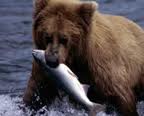
    A similar problem exists in the temperate rainforest of British Columbia (yes, Canada does have a rainforest. How amazing is that?). Grizzly and black bears thrive on hunting salmon in these habitats, but even the salmon spawns have been decreasing in size due to pollution and overfishing. When they cannot hunt, they also enter nearby towns and inadvertently threaten human populations.

    What can we do to help these animals? There are a number of seemingly small steps we can take to help slow down the effects of climate change that will in turn work to restore the natural habitats of these beautiful animals. One of the easiest things we can do is to turn down our thermostats. It may seem like a difficult thing to do in a Canadian winter, but lowering our heat consumption saves energy. Saving energy reduces the amount of fossil fuels our energy-producing plants need to expend. Turn your heat off when you leave the house or when you are sleeping.

    Another easy change is to take public transportation. Even if you only take it once a week, you are reducing the number of harmful emissions and pollutants in the air which threaten the ozone layer (causing the heat to rise). Imagine if we all took public transportation more rather than drove our cars – we would make a huge impact on the amount of pollution in our air!

    Our cell phone chargers, MP3 player chargers and other electronic devices all use up energy when they are plugged into the wall – even if they are not charging anything! Always unplug these chargers from the wall when you are finished using them.

    Finally, an easy way to reduce waste in our environments (which pollute our waters and forests) is to bring a reusable bag with you whenever you buy groceries. Most grocery stores now charge for plastic bags in an effort to convince people to bring their own reusable bags. It’s very easy to do – just pop one in your back pack and leave it there! You will never be without it or run the risk of forgetting it. Plastic bags do not break down for hundreds of years – imagine an entire forest filled with plastic bags, or our rivers and lakes choked with them. Breaking our addiction to these bags because they are convenient is very easy to do and will make a huge difference for our environment and animals.

    It may seem like an impossible feat, but making small changes in our everyday lives will make a big impact on the wonderful environment we get to call home. We are lucky to share this world with beautiful animals like polar bears, and it is our responsibility to help protect them. Implement these small changes listed above, encourage your friends and family to do the same, and we can ensure Canada remains beautiful and diverse.

  • Will an apple a day keep the Doctor away?

    Will an apple a day keep the Doctor away?

    How many people have heard the saying that an apple a day keeps the doctor away? I think just about all of us have heard that. Is it the vitamin C in the apple that keeps the doctor away? I think that just might make sense.

    Let’s look at why is vitamin C important? Vitamin C is so central in many chemical reactions in the body, that without it, life is simply not possible.

    Vitamin C was first isolated in 1928 by Albert Szent Gyorgi. Since that time, the most widely known and acceptable form of Vitamin C has been ascorbic acid. Humans are one of the few in the animal kingdom that do not produce their own Vitamin C and this has left humans at a distinct disadvantage.

    Mr. Jay Patrick, who is known as a vitamin C expert in the U.S., has completed several studies for the Commitee of  World Health with some interesting results. Mr. Patrick’s research proves that most animals who produce their own vitamin C tend to live at least seven times their period of maturity. In other words a dog matures at two years and lives at least seven times his period of maturity or 14 years. Humans mature at 20 to 25 years, so 7 x 20= 140 years, which if his theory is correct and if we could produce vitamin C in our own bodies we should live to be 140 years old.

    The question now is, what is the actual amount of vitamin C do we require on a daily basis? This has been a matter of debate for quite a while. We’ve all heard stories of early sailors whose journeys had to be cut short ecause of scurvy. Time at sea was limited until the British discovered that scurvy could be avoided by carrying citrus fruits onboard.

    Today we are not too worried about scurvy and extremely interested in improving the duration and quality of life. The question is why has the RDA been set so low for humans? The answer is directly related to the form of Vitamin C with which we are most familiar, ascorbic acid.

    Ascorbic acid is known to drop the body’s pH level to a level of 4-4.5, whereas mineral ascorbates which are mineral salts of ascorbic acids and come in the form of sodium ascorbate, calcium ascorbate, magnesium ascorbate, zinc ascorbate, molybdenum ascorbate, chromium ascorbate and manganese ascorbate change the pH very little. Vitamin C, when taken in ascorbate form, has proven much more bioavailable.

    Vitamin C is also required for the production of collegen, that inercellular glue that skin, lungs, arteries, the digestive tractand all organs in tact. It is a potent anti-oxidant protecting against free radicals, pollution, carcinogens, heavy metals and other toxins. It is strongly anti-viral and mildly anti-bacterial. Energy cannot be made in any cell (brain or muscle) without adequate vitamin C. The adrenal glands have a high concentration of vitamin C essential for stress hormone synthesis.

    So, will an apple a day keep the doctor away? Yes and take a 1000 mg of Vitamin C in the for of the ascorbates described above and take care of your health this season!

    the wellnessdiva.net

  • Cost of Education…being sure you go after what you want

    Cost of Education…being sure you go after what you want

    Don’t let college and university be a costly mistake.

    Avoid the lure of a big paycheck for a diploma or degree that you really don’t love.

    It’s hard to make a decision at the tender ages of 16 and 17 regarding the career you’ll have for the next 30 years. Yet this is what parents, teachers and guidance counselors are hoping you would do when it’s time to apply for post-secondary. A Gallup and Sallie Mae survey titled How America Pays for College, found that more than half of high school seniors spent more time planning for the prom than thinking about university.

    CBC reports that the average cost for tuition in Ontario rose 207% from 1990 to 2007. It would now cost Ontario students $5,160 a year. It’s cheapest in Newfoundland and Labrador at only $2,606 and the most expensive tuition fee goes to Nova Scotia, where students fork over $6,571.

    With tuition fees on a meteoric rise, pressure is placed on the students often for the wrong reasons. Parents who are weathering the recession and stock market crisis will warn their son or daughter of choosing professions that offers stability and a large paycheck. Accountant? Programmer? Nurse? Sure, they all sound interesting…why not give it a try?

    Valentina (not her real name) started off going to university to pursue a Bachelor in Public Administration. It became evident that this really wasn’t for her. She then tried switching into Pharmaceutical Studies, only to finally graduate in Sociology. A year after receiving that degree she enrolled in college for Event Management. Still unhappy, she is now halfway through an Optician program. She feels confident that she has found her true career and even landed a student optician position during her studies.

    College and university can be very expensive, if you’re still unsure of what you would like to do. Not everyone can afford to switch around majors like Valentina did. Worse still if you stay in a program that you know you’re not suited for. Erica Cervini’s recent article for The Age found that, “If students don’t feel they belong to their university, the odds are high that they will drop out”. The greatest price to pay for education is an incomplete one.

    It’s okay to take your time and not rush into university or college when you’re not sure of what you would like to do. Volunteer during high school, talk to other adults, explore sites like Jobspeopledo.com or even consider taking a gap year to think about what would you be happy to do. Treat your future career like finding your soul mate. If you meet a big shot executive who makes loads of cash, would you be with him/her if your heart just isn’t into it?


  • Boost Your Brain Power

    Boost Your Brain Power

    Why Fitness is Just as Important for Your Brain as it is for Your Body

    We’ve all been there- feeling tired and worn out after a long day at work, or feeling sluggish after indulging in an extra large burger and fries combo from the local fast food joint. When you can’t find the time to eat healthy and exercise, you can feel it in your entire body. So what do you do to refresh your body and keep it in optimal condition? I’m sure we’ve all heard it umpteen times: eat a balanced diet and exercise, exercise, exercise! But did you know that the same philosophy applies to keeping your brain healthy as well? Like the rest of your body, your brain can get tired and sluggish if you don’t work to keep it in shape, and this causes it to function at a sub-optimal level. If you’re looking to boost your brain power for an upcoming exam, unfortunately there is no magic pill you can take to make you instantly smarter. However, by eating a balanced diet and exercising regularly you can help maintain your brain’s health and thus optimize your brain power

    There is much evidence that nutrition during all stages of life is equally important. Throughout one’s life, nutrition affects various aspects of cognition, such as memory, IQ, attention, and learning ability. Thus, nutrition is directly linked to how well the brain functions. More specifically, a balanced diet as part of a healthy lifestyle can “optimize brain function, prevent dysfunction, and even treat disease.” According to M. J. Dauncey, there are several key factors that exert the most influence on cognitive functioning, including energy balance, fatty acids, and trace elements such as copper, zinc, and iron. In order to incorporate these key elements into your diet, try to include a balance of carbohydrates (such as whole wheat), proteins (such as dairy products and lean red meat), and food that contains fatty acids (such as fish).

    On the other hand, try to stay away from processed foods and foods high in trans and saturated fat. Too much fat or sugar in your diet can make you feel tired and sluggish because it ultimately drains your brain power. However, don’t feel like you can’t indulge every now and then in some of your favorite treats; moderation is also part of a balanced diet. Even sweet treats like chocolate can be good for you in small quantities. Cocoa contains compounds called flavanol that actually increase blood flow to the brain and can make you feel more alert.

    In addition to a healthy diet, physical activity also helps to maintain and improve brain function. The benefits of physical activity (namely aerobic exercise like jogging, which gets your heart rate up) are numerous. For starters, exercise increases blood flow to the brain which in turn increases energy and boosts concentration and awareness. In addition, certain hormones that are released during exercise can actually help repair damaged neurons. Moreover, exercise decreases stress, increases mood, and fosters a more positive outlook on life in general. All of these factors contribute to help the brain perform at its optimal level, which of course varies by individual.

    So even though you can’t take a pill to miraculously increase your IQ, you can ensure that your brain is functioning at the highest level possible simply by eating a healthy, balanced diet, and exercising a few times a week. Who thought boosting your brain power could be so simple?


  • Abroad(er) Perspective

    Abroad(er) Perspective

    International exchange programs can be found at many universities and colleges across Canada and allow students the opportunity to widen their global horizons.

    “Students always tell us [the exchange] was the best experience of their lives” Rebecca Denby, International Exchange Coordinator for Western said.  “It opens doors they never imagined possible, it really expands their realities”, she continued.

    International exchange is a unique educational program; its primary goal is not to enrich a student’s academic portfolio, but rather to enrich their lives.

    Many potential participants are scared off by the costs associated with international exchange. However, the amount of funding available to assist exchange students is staggering. Scholarships, awards and bursaries are available from your post-secondary institution, host universities as well as the Canadian government.

    “Its such a phenomenal program, we really want it to be accessible to everyone” Denby commented.  In the 2009/2010 school year 49% of participating students at the University of Western Ontario received one or more scholarships to support their exchange.

    “In most cases students pay Canadian tuition fees so it’s more affordable than you would think, it’s exactly what they would pay here. The only difference is the cost of flight and living, which can even be cheaper than Canada depending on the country,” Rebecca continued.

    Although there are academic resources available at your post-secondary institution and at host universities, the experience forces participants to become self-reliant. With family far away students become responsible for their own wellbeing.

    “You have to get yourself where you need to be” Tania Batista, third year Engineering student studying at the University of Freiberg, Germany said.  She was stuck in Iceland after the volcanic eruption shut down transportation to the continent.

    “We were scared about what the cloud of ash was going to do. We needed to get back to Germany but hardly anything was flying out and everything else was booked, we could have waited but we’d have missed a week of school and spent a ton of money so we decided to wing it…I was so stressed I almost puked” she said.

    Tania was able to get back to Germany in large part due to the kindness of strangers willing to transport them from one city to another.

    When asked about the dangers of hitchhiking Tania responded, “I wasn’t scared at all, actually one of my favorite moments in Europe was hitchhiking through turkey with a couple of friends.  A garbage truck picked us up; the driver didn’t speak a word of English. We hitchhiked for nearly 300 kilometers!”

    With so much travel and life experience it is easy to slack off on academic responsibilities abroad. Many international exchange offices are taking into consideration the fact that some participant’s grades might suffer as a result of the exchange and are implementing a pass/fail system to cope with this reality.

    “The pass/fail system will be applied to every student going on exchange from 2010 onward, this new system certainly gives students an advantage” Rebecca commented.

    “However, students must to remember that while Canadian universities have pass or fail comments, grad schools and most scholarships will want to see transcripts from host universities which will show a percentage grade” she continued.

    While the educational experience is in itself a fantastic experience, most students agreed the travel was the best part of the program.  “I went on exchange to travel, and it was one of the best experience of my life, I’d definitely recommend it…I know its kind of cliché but I feel this experience has turned me into more of a man” Evan said.   Tania agreed saying, “There was no anxiety at all when I got there but I’m devastated about coming home, this whole thing has just been wonderful from the beginning”.

    When asked the most important thing they’d learned on exchange Krista Burns, third year International Relations student studying at the University of Norwich, England summed it up by quoting author Mark Twain, “Don’t let school get in the way of your education”.

    -Monica Blaylock

  • What’s Your Edge?

    What’s Your Edge?

    Check Your Communication Style

    Practice the Art of Reading Your Own Communication Style

    “ And the day came when the risk it took to remain tight inside the bud was more painful then the it took to blossom.” Anais Nin

    In the famous book, “ The Art of War” Sun Tzu describes the 3 paradigms of being as :

    1. How you see yourself,
    2. How others see you,
    3. The true reality between one and two.

    In today’s fast paced business environment we have lost the ability to understand how we truly show up on stage. This is not because we are lazy or ignorant: the answer lies in the fact that we have never been formally taught how to clearly and intentionally communicate.

    Your true  edge starts with your ability to first understand your communication and style, using it then to impact others.  There are many intelligent and knowledgeable people out there with one major flaw: they are unable to stand out in a crowd and differentiate themselves.  Humans, by nature, are people of adaptation and habit.  For example, if we see a successful business person doing certain things and behaving in a certain way we may think that if we mimic that style or pattern then we too will become successful,  WRONG

    Breathing and communicating have one thing in common:  “ you are doing it all the time even if you never say a thing , you are still communicating.”

    Although we can indeed learn valuable tools from successful individuals, they are just that,- individuals. During a networking event a distressed woman began speaking with the circle of people around her saying “  I just don’t understand it .  I can say the exact same thing, the exact same way as a co-worker of mine does to my boss , and, he always laughs it off when they say it, but takes it seriously from me!”  Our focus in this article is to have you check how good you are at reading your self. ( This is not the same as how you see yourself in the mirror every day.  This view is cluttered with ego and self beliefs. ) . No training will teach you these skills . They come from your own self-awareness and ability to see outside of yourself and your limiting beliefs.

    Breathing and communicating have one thing in common, you are doing it all the time ,even if you never say a thing. You are still communicating . The danger is in being unaware that both are an imperative necessity to you quality of life.

    When you leave a room , what conversation is left behind about you ?  This is an interesting question.  It has been said that people will never remember what you said, but they will always remember how you made them feel. When you enter or exit a room what are people saying about you . Today, it is important to know.  Let’s start with the major component to communication that makes up the fabric of your success.  Body Language and Listening Skills makes up 90% of your communication.  It involves your posture, eye contact, attention span and ability to listen at a level much deeper than surface conversation.  Are we actually listening ?  Or are we waiting for the other person to take a breath so that we can jump in ?

  • What Comes Next?

    What Comes Next?

    Planning for Life After High School

    You’ve waited for years to get to high school. Since elementary school, you’ve been preparing, doing your homework, heeding teachers warnings, and nervously asking older siblings if it’s really like the movies. Hopefully, high school has met (or exceeded) your expectations- so what comes next? There are hundreds of things you could do after graduation, but there are three major options that apply to most high school grads: university, college, or the work force.

    If post-secondary education is not for you, you can get a jumpstart on your career. Without any formal education in the field, the best way to get a leg up is experience. While you can accomplish this through a part-time job, you could also try a co-operative education program (also called work experiences). Generally in grade eleven or twelve, co-op students get placed in their field of interest to sample the career for school credit. This program lets students see if a certain field is right for them, meet higher ups in the profession, and gain some experience for after graduation. Talk to your guidance counsellor to reap the benefits of the co-op placements.

    If your ideal career requires some formal schooling, you’ll have to decide between college and university. College is the best place to go for hands on training, or more practical careers. For example, would-be firefighters, paramedics and veterinary technicians would go to a college, where they will learn practical skills. Programs are usually shorter (they can range from one to four years) and focus on hands-on learning with a specific career in mind. If you think college would be a good fit for you and your career goals, the best classes to take are those that pertain to what you want to study. Hands on classes, like auto mechanics, music, or computer studies are excellent to take when they relate to your interests. Be careful, though, not to neglect core classes like english, science, or math; a good foundation is necessary for any program. If you would prefer, you can take these high school classes at the “applied” or “college” level, which focus less on theory and more on application.

    If the career you have in mind is something that needs a bachelors degree (think doctor, engineer, or teacher) then university is what you should aim for. For this, you will need a wide range of core classes to help meet program requirements. It’s also necessary to take high school courses at the “academic”, or “university” level. When it comes to deciding what you want to study, you have a lot of flexibility. Since universities are more concerned with theory than colleges, there is also more room to change your major. In high school, the best preparation is a wide range of classes. Your choice university’s website will have a list of class requirements for each program, so take a brief look at it before you decide whether or not to take that extra science class!

    If you’re worried about not knowing what to do- don’t be! It’s perfectly normal to change your mind a few times (or ten) about your potential career. As such, the best advice for any high school student is to try everything to see what really is interesting. If your childhood dreams of being a doctor fade once you dissect a fetal pig in biology, try a class, or a co-op program, that you haven’t before. You might find your new ambition, or you might just learn what you don’t like. Either way, high school is the best time to experiment with your interests, and most of all, enjoy yourself.


  • A 56-million-year-old lesson in climate change

    A 56-million-year-old lesson in climate change

    Our planet is an ever-changing sphere of wonder and mystery. By studying sediments, ice-core samples, trees, and fossils, scientists have been able to piece together some of its phenomenal history and evolution. Humans have been here for a relatively short time, our survival and prosperity made possible by the unique conditions that unfolded to create the current balance.

    Throughout human history, we have been subject to forces of nature, but overall, the Earth has been in a period that has allowed us to flourish. We can’t take that for granted. When we look through a scientific lens, we see amazing hydrologic and carbon cycles, processes such as photosynthesis that allow us to breathe and eat, and so much more. We also see droughts, floods, insect infestations, and mass extinctions that can radically alter the balance of life.

    A massive release of carbon into the atmosphere can trigger cataclysmic events. It’s something we’re facing now, as we burn fossil fuels as fast as we can dig and suck them out of the ground to keep our homes and cities warm and lighted, and to propel ourselves in machines weighing more than 10 times as much as the often-solo person they are transporting.

    This is not the first time the Earth has changed in response to carbon overload. Scientists have found that the planet experienced rapid warming about 56 million years ago, long before humans arrived. According to an article in the October issue of National Geographic, a “massive and geologically sudden release of carbon” during the Paleocene-Eocene Thermal Maximum, or PETM, altered the planet’s systems, making it possible for new life forms to appear and thrive, including, eventually, humans.

    Evidence suggests that the carbon released then was equivalent to the amount that would enter the atmosphere if we burned all the Earth’s reserves of coal, oil, and natural gas. The warming effects are believed to have lasted 150,000 years until the carbon was reabsorbed.

    The main difference between now and then is that we are fuelling the current change, whereas 56 million years ago, it was a natural phenomenon — although scientists are still not entirely sure what caused it. The Earth was experiencing massive tectonic upheavals at the time, which would have sparked volcanic activity, but that only accounts for a relatively minor release of carbon and subsequent small increase in global temperatures, even if a comet impact were added to the mix.

    The most likely scenario is that the slight warming from those events, or from fluctuations in the Earth’s orbit, caused methane hydrates to melt, releasing massive amounts of methane into the atmosphere. As the National Geographic article points out: “The hypothesis is alarming. Methane in the atmosphere warms the Earth over 20 times more per molecule than carbon dioxide does, then after a decade or two, it oxidizes to CO2 and keeps on warming for a long time.”

    Methane hydrates are ice-like water molecules that form around a molecule of methane. In cold temperatures and under high pressure, they remain stable. Large deposits lie under the Arctic and the seafloor. Scientists believe the current warming could be enough to release these extremely potent greenhouse gases.

    Swedish geologist Birger Schmitz, who has studied the PETM science, told National Geographic that we can either wait to see what the result of such a large release will be, or we can look at what happened 56 million years ago. And what happened then “was a wholesale rearrangement of life.”

    Why would we undertake such a drastic experiment that threatens the survival of the human species when we have pretty good evidence of what the outcome will be? The main reason is that many of us are not willing to give up our newly acquired luxuries and economic systems regardless of the effects on ourselves, our children, our grandchildren, and all other life on the planet. We don’t seem to be willing to slow down the pace of fossil fuel extraction and use while we shift to cleaner energy sources and more rational ways of living within this finite biosphere.

    We have some tough choices to make. Science increasingly tells us that we must choose wisely and quickly.

  • The Temptation of Student Credit Cards

    The Temptation of Student Credit Cards

    For many young people, the temptation of their first credit card is too much to resist. That is why credit card companies will often set up booths on college and university campuses across Canada to tempt you with free gifts and low interest rates for signing up with them. While credit cards can be an excellent way to build your credit rating, the responsibility that comes with owning one cannot be overlooked.

    When I first entered college, I saw a booth on campus advertising free NHL hockey blankets for signing up. Not only that, but acceptance was virtually guaranteed. For someone fresh out of high school, a credit card makes you feel important and like an adult. Being able to use it whenever you want to buy clothes, electronics, make-up and more is a thrill. The thrill will soon wear off when you realize that you have used up most of your credit limit in only a few months and have no way to pay it off.

    Credit cards should not be taken lightly. While the company may advertise an interest rate of 1.99%, this is often only an introductory offer and the rate will skyrocket to 18% or higher after your first month. This means, on a $100 purchase, you will be paying $18 in interest directly to the credit card company. Over several months of not paying off your balance in full, this quickly adds up. Soon you will owe hundreds of dollars that you didn’t even spend!

    If you do decide to sign up for a credit card, there are several things you can do to reduce the temptation of overspending. The first, and most important, is to make sure you have the funds needed to pay off your balance before you even use your credit card. Paying off your balance in full each month is an excellent way to build a credit rating, as you are showing the bank that you are responsible and have a steady income. The second is to leave your credit card at home and do not carry it with you in your wallet. This tactic helps to eliminate the temptation of overspending and using the card for purchases you do not need.

    Of course, there is always online shopping. Online shopping should only be done when absolutely necessary (for Christmas gifts, for example). It is also advisable to get a credit card with a low credit limit – $1000 should be your absolute maximum. Anything higher and you run the risk of using it frivolously.

    Credit cards can be an excellent tool for building your credit rating and establishing yourself, if used responsibly. If you decide to sign up for a credit card, ensure you take the steps outlined above to reduce overspending and, ultimately, reduce your stress level. After all, who needs extra stress during exams?