Category: Advice

  • Transitioning to University Life

    Transitioning to University Life

    The idea of going off to college or university sends shivers of anxiety down spines and churns stomachs. Don’t worry – this is normal. It’s a big step moving from high school to post-secondary education and its natural to feel a bit nervous.

    There is usually a frosh week for university students or an orientation for those attending college. This can be a great way to meet people around campus or in your program. Post-secondary education is so diverse that making friends is easy, whether it be the person who sits beside you in class, a new roommate or someone you meet on campus.

    Living in residence is another excellent way to make friends and makes the walk to class much easier. Most schools have single rooms as well as doubles so you can be paired with a roommate. The Resident Assistant will help you get integrated into the community with a number of activities in the residence and there is usually a common room with a TV for students to relax in.

    Residence life is not for everyone, though, and there are a number of other options such as off campus housing, driving or commuting via train or bus. There is nothing wrong with choosing to live at home while attending school, either. Living out on your own is exciting but it can get pretty expensive and sometimes its nice to have the comforts of home and your friends and family.

    Post-secondary school is nothing like high school. There is no attendance sheet or principal forcing you to go to class. The professors likely won’t harass you about it so it can be very tempting to skip a class here and there. This can lead to a very slippery slope and you don’t want to find yourself facing an exam sheet without having gone to class. It’s up to you to stay organized and keep on top of your assignments; letting them pile up then dashing them all off the night before is not the best strategy. Most schools use an email and online system so you can use the Internet to keep up to date on assignments, presentations, etc.

    Every college or university has at least a few clubs or teams and activities that provide exercise and entertainment. Most schools will have a free gym for people to lift weights, run on treadmills or play indoor sports. Some schools even have a pool.

    It’s a good idea to learn about your chosen school before beginning in the fall. An excellent way to do this is to check out their websites, do campus tours and speak to anyone you might know that has gone to that school. Ask them about their experiences there.

    Leaving high school marks a major change in life. While post-secondary education certainly has its challenges, they are far outweighed by the lifelong friendships and rewards.


  • “Sine” Me Up: Why Math is Your Friend

    “Sine” Me Up: Why Math is Your Friend

    Mathematics is the pariah of school subjects—dismissed as mind-numbing, tedious and often impossible to grasp, it is frequently looked down upon in schools, in pop culture and among the general public. It’s unfortunate that math has such a miserable reputation, because it may actually end up being one of the most useful things you are ever going to learn. Math has a multitude of practical applications, whether you’re looking to make your day-to-day life a little easier or are considering it for a future career. So if you’re stuck on permutations or about to lose your marbles over that logarithmic function, don’t give up hope just yet. Math might be the thing that saves you.

    A lot of the negative hype behind math is due to the sheer amount of material—the formulae and variables and properties—and it’s increasing difficulty is enough to give anyone a migraine if not taken in stride. Math is one of those things that you just can’t get the hang of without practice. And while it may take a bit of grunt work at first, there is a certain satisfaction in finally getting the right answer. This sense of accomplishment may come as a pleasant surprise. Not only is it rewarding to see the progress of your hard work, but you can actually start to have fun with it once you get into the swing of things.

    If you’re good at math, there are many career paths that may suit your fancy. Aside from strictly “mathematics” jobs (teaching positions, research, etc.), other fascinating fields like medicine, architecture, business and engineering are excellent ways to put your skills to good use. Careers in math-related fields are great for developing problem solving and logical reasoning skills, not to mention they are often both professionally and financially rewarding. If you’re committed to your talents and willing to work, a mathematics career is definitely a valuable option to consider.

    Of course, not everyone is going to be skilled at math and that is perfectly alright. However, just because you don’t work in a math-related field doesn’t mean it isn’t a useful (and necessary) tool to have under your belt. Restaurant bills, mortgage payments, student loans, the lottery—the power of math is woven through everyday life. Oftentimes, it is the glue that holds our society together. No matter what you end up doing in the future, somewhere along the way you’ll undoubtedly need math to get you out of a jam. That’s why it is so important to keep working on your math skills: you never know when they’ll come in handy.

    From multiplication to measures of central tendency, mathematics and its multitude of concepts are true treasures to possess. You may be surprised at the many doors it opens for you in today’s world. In summation, math will contribute to your progress. Keep working on developing those skills—and embrace mathematics as a crucial tool in the smooth functioning of your everyday life.

  • Networking to Land a Career

    Networking to Land a Career

    When people get together to meet and talk, they sometimes learn a lot about each other. At family gatherings, people might find out about what their cousins or aunts and uncles are doing and how their lives are going. At parties, friends might find out more about each other and about the other people they know. What happens when job seekers and businesspeople get together? Through a process called networking, people can connect with each other in ways that can benefit them and lead to success.

    What does the word “network” mean to you? If you work with computers, you probably know that networks in this area are all about connections. The same is true in business and job searching, except that this kind of networking involves people instead of machines. When people need something, they can connect with someone who has what they want. A person who needs a job, for example, can connect with someone who is looking for employees. Someone who has something to sell can connect with someone who wants to buy it. For some people, these kinds of connections can make the difference between success and failure.

    Networking can take many different forms. Sometimes, it can be as simple as just talking to friends and family members about a product or a job need. It could involve talking to people on the street and passing out business cards. Often, however, employment agencies and business centres have more formal networking events when people can get together to meet each other.

    Suppose that you have a business of selling greeting cards. You might take some of your cards to a networking event to show to other people so that they can see exactly what they can but from you. What if you are a high school student and are unsure of what direction to take after you finish your studies? By networking at a job fair, you might be able to find out what career suits you and be able to choose the right educational path for what you want to do. Networking can help you achieve your goals.

    Usually, networking involves meeting people face to face and talking with them, which might be very difficult for some people. How can people network with others if they find it difficult to talk to strangers and to explain themselves? Some of the basic networking techniques can help for people who are not natural talkers. Preparation is very important for anyone who wants to build up a network of contacts. Having a business card to hand out, even if it includes only a name and e-mail address, can be a good way to be remembered.

    Gathering information and forming relationships are important parts of finding a good job. Following up on those contacts is as important as the first meeting, and a large part of networking happens after the actual event. When networking is done well, it can help lead people to success in their chosen fields of work.

  • Club Counselling: How Extracurriculars Can Help You Succeed

    Club Counselling: How Extracurriculars Can Help You Succeed

    I’ve always been someone who is eager to get involved. Academics are extremely important to me, but upon entering high school I started to realize the value in expanding my learning beyond the classroom. Over the years I’ve tried my hand at concert band, orchestra, choir, yearbook, newspaper, model UN, peer tutoring and more. Through this process, I found the things that really worked for me. There are so many ways you can participate in your school community. From my personal experience, taking part in these extra-curricular endeavours will be one of the most rewarding parts of your educational career.

    Extracurriculars are a fun way to connect with people who share your interests. Whether you’re running laps around the quad or bonding over molecular compounds, not only are you learning, expressing yourself and having fun—you’re doing it with like-minded and motivated peers. You might find that it’s quite easy to make friends when you have so much in common with the people around you. Oftentimes you click so well with these people that your friendships continue long after the club comes to a close.

    It is always important to focus on academics, but if you’re looking to get a balanced and entertaining experience out of your education, it is a must to make room for extracurriculars in your schedule. An academic club is a great way to expand your knowledge and learn from the people around you. And even if it’s not directly related to what you’re studying in school, any club serves as an excellent outlet for relieving stress—not to mention it can teach you other invaluable skills, like how to think creatively or be a team player.

    Aside from the skills you acquire along the way, clubs also give you the chance to put yourself out there for the people in charge, whether they are teachers or upper-year students. This is why it’s crucial to get involved in extracurriculars right off the bat: if you stick around long enough, you’ll start to make your way up the ranks. Leadership positions are hard to earn, but totally worth it. If you work at it, the payoff could be more rewarding than you ever imagined, including a wonderful sense of responsibility, the respect of your fellow peers and often an impressive title on your resume. As you can see, a mere dabble in the extra-curricular of your choice could turn into a real-world asset.

    I’m off to university next year, where I definitely plan to make extracurriculars one of my priorities. I know for a fact that the skills I’ve obtained through my involvement will come in handy in the future and working my way up to leadership positions in these fields has given me the confidence I need to succeed. Take initiative: check out what’s going on in your school community and put yourself out there. Get involved in what you’re interested in and I guarantee it will be worth it.


  • Following Your Heart Into the Trades

    Following Your Heart Into the Trades

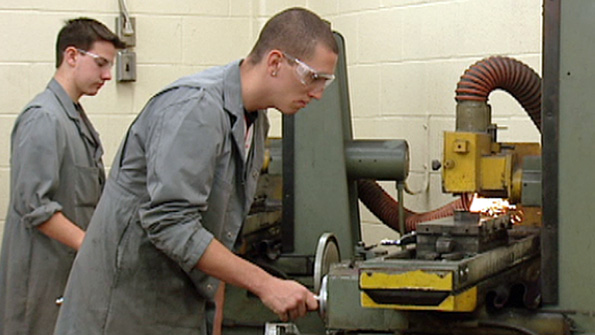
    Sometimes it might feel like you’re pressured to have your entire future planned out already. This is a false misconception, especially with the rapid way education and workforce demands are changing. The idea that you need to pursue one life or career path is an outdated one in today’s fast-paced, technologically driven society.

    Unlike in past decades, in the last few years education and work has shifted. It is now becoming more and more common for students to take several programs before they decide on one that they actually enjoy. It is also becoming more common for older members of the workforce to go back to school to re-train or take on new skills and professions to keep up with the competitive job market.

    It may seem like there is a lot of pressure to get into a good college or university or else you won’t be considered “successful”, but this is simply not the case. Many other fields, especially the trades, are accepting employees right out of high school. Due to the growing demand in Canada for tradespeople such as welders, plumbers, pipe fitters, and electricians. Some trades workers are making $50 or more an hour at the age of only twenty-four.

    Money isn’t everything, however, and the most important part of life is enjoying it, which pretty hard to do when you’re doing something that you hate. Yes, money is necessary for things like rent, food and entertainment, but its much more important to be happier and emotionally stable than depressed from spending every day doing something you do not enjoy.

    The world is a large place, and with the internet at your fingertips there is almost no limit to what you can be and accomplish if you set your mind to it. Just because one thing doesn’t work out it doesn’t mean something else won’t. You may even stumble into something that you really enjoy without thinking about it.

    In today’s constantly evolving job market, it’s not uncommon for people to re-train, re-educate and switch professions many times in their life. There are students who spend years at university for a Master’s program but end up going into the trades.

    So while it seems like there is a lot of pressure to choose an education path now, it is important to remember that money and prestige aren’t necessarily going to bring you any sort of happiness – but finding something that you love to do certainly will.

  • Allow Yourself to Dream

    Allow Yourself to Dream

    Life can be hard. Sometimes things can go so wrong that it seems like they’ll never be right again. It is in those moments that we may lose hope, that we may cease looking at the glass as half full and silently wonder to ourselves how long it will take before it is completely empty. It is in those moments that many of us stop dreaming, we lose momentum and stop looking forward to the things that make life worth living. Losing sight of our hopes and dreams is akin to losing parts of ourselves.

    When we were kids we all wanted to grow up to be something that we thought was great. We dreamed big, did what we wanted and spoke loudly and no one could tell us that our crazy dreams and plans to execute them didn’t make any sense. You know why; because those dreams belonged to us, they defined us, molded us into the kids that we were, the teenagers we became and oftentimes into the young adults that we are now. Whatever dreams we chose to believe in, became our reality. It was the driving force of our existence and nothing could have made us happier, well, except for a lot of chocolate and candy. For most of us, as we became teenagers we lost that carefree dreaming; responsibilities become a thing of reality that imposed itself upon our world – school, siblings, parents, part-time jobs, relationships; for many of us things became overwhelming.

    When our lives starts to spin out of our control that is when our dreams take on a crucial role. The act of dreaming or, as I like to call it, “envisioning a positive change”, becomes a tool for metamorphosis. All great feats in live began with a dream. Professional coaches know a thing or two about the power of dreaming, in fact, many coaches tell their players to envision their win. A player who continuously dreams about success is more likely obtain it. This method of dreaming success into reality can apply to all aspects of our lives. Getting that grade, job, apartment, acceptance into that school are all possible when we allow ourselves to dream and put in the necessary work towards making that dream a reality.

    Aside from being able to accomplish our goals, the act of dreaming can have a positive and immediate effect on a person both physically and mentally. Good dreams can cause the body to relax, oftentimes increasing our ability to think more clearly. Our levels of stress can be reduced resulting in peace of mind. Short term patterns of dreams and success can lead to increased confidence and risk taking which propels long term patterns of dreams and success leading us to happier and oftentimes healthier lives.

    So the next life throws you a curve ball and you feel like your dreams are a waste of time, remember that all great feats began with one.

  • Time to Communicate

    Time to Communicate

    What would the world be like if we couldn’t communicate with each other? That means no talking, no emailing, and dare I say it, no texting! What a different world we would live in. As social beings, communication is one of our most important tools. Whether it is verbal communication, hand gestures or written communication, all of these types of communication are used as forms of expression. These forms of expression can help us share our ideas and feelings and also help us to understand the ideas and feelings of others.

    Throughout school and even beyond, communication skills are very important. When trying to express yourself to your teachers and your peers it is your ability to communicate that will make or break you. There is a lot to be said for people who are able to use their written communication skills to write clear, concise essays and your grades will reflect this. Being able to communicate on a small scale, like discussing ideas with a peer or even publicly by doing a presentation in front of the class, are times when having good communication skills will make you stand out.

    Even in the work force, communication skills are one of the first skills employers look for in candidates. Your interview with them indicates how well you can communicate and what kind of skills you can bring to the table. Employers want to know that you can communicate effectively with co-workers and clients. Whether it’s a presentation in school or a business presentation for your career, developing these skills is very beneficial.

    Here are some tips to help you improve your communication skills:

    1)      Be a good listener – in order to successfully communicate with others you need to really listen to what they are saying so that you can respond effectively.

    2)      Be aware of your body language – sometimes your body is telling people one thing while your mouth is telling them another. Being aware of your body language will send people the right message.

    3)      Be engaging – raise your pitch so that you don’t sound monotone.  In addition to this, enhance your communication by maintaining eye contact. Also, use an appropriate volume so that your audience can hear you.

    4)      Slow down – talking too fast is a tell-tale sign that you’re nervous. Slow down your speech in order to sound more confident in what you are saying.

  • Managing School and Everyday Life

    Managing School and Everyday Life

    If you’re finding it hard to balance school and everyday life, you’re not alone. Many students find it hard to balance the demands of school, extracurricular activities, part-time work, family responsibilities and social demands.

    But it’s an important skill to acquire and one you will use for the rest of your life. Being able to prioritize your education, activities and responsibilities will help you maintain happiness now and into the future. Prioritizing will also help you remember what’s important and what goals you are working towards.

    Here are a few tips to help you on your way to becoming a more well-rounded, balanced individual:

    –          Create a schedule and stick to it. Write down everything you need to do on a calendar or in a day planner. Make note of class assignments and tests, practices, meetings, work hours, or specific tasks your family asked you to complete. For instance, if your mom asked you to mow the lawn on Saturday then book time to do it. This will ensure you have established time to get everything done. It will also help you realize if you have overextended yourself and don’t have enough time to complete all your tasks.

    –          Try and complete your daily home work as soon as you get home from school. You’ll still be in the school mind set and, by getting it done right away, you’ll have the evening free to relax and do something fun.

    –          If you can work while listening to music you should do it. Listening to music (on low) can make you work faster and make whatever it is you have to get done much more enjoyable.

    –          Don’t watch TV, text your friends, check Facebook and Twitter and clean out your email while you’re in the process of doing school assignments, household chore,s etc. If you do, you’ll seriously extend the amount of time it takes to get the job done.

    –          If you take the bus, use the time to read or review for a test. This will cut down on the amount of time you’ll have to spend doing homework. You could also do some during lunch or a free period.

    –          Make sure you are realistic about what you can accomplish in the run of a day. Set goals that are attainable. Successfully completing your “to-do list” each day will increase your confidence and alleviate negative thoughts and anxiety.

    –          Don’t over extend yourself with too many extracurricular activities. One person can’t complete all of their school work, be in a band, play soccer, rugby, basketball and volleyball, be on the student council and debate team, volunteer at the animal shelter, work part time at the grocery store, babysit their kid brother, go to the movies with their best friends and spend three hours a day talking to their boyfriend/girlfriend. Certain things need to be done, like school work and chores. Other things will help you get to where you want to be in the future. The rest of the stuff can wait until you have free time to enjoy them.

    –          Look for apps that can help you,  such as flash cards, organizing and scheduling apps, exercise/nutrition apps, scientific calculator apps, dictionary and thesaurus apps and a really annoying alarm that ensure you wake up on time.

    –          Be prepared. Get all of your stuff ready the night before. Get out your clothes for school. Make your lunch. Pack your uniform if you have an after school practice or if you have to work. Being prepared will make you less overwhelmed and more ready to take on the next day.

    The main thing is to stay organized and have a clear picture of what it is you are working towards. Sure, everyone wants to be able to do whatever they want whenever they want to, but sadly that just isn’t realistic. Try to remember what it really is you want to do, and if you find you’ve spread yourself too thin try talking to a parent or teacher. They may be able to help you review your schedule and see if there are areas you can cut back on or some activities you can cut out until your work load isn’t quite as heavy.

  • How to Pick a School that Works for You

    How to Pick a School that Works for You

    Deciding which post-secondary institution to attend is easily one of the most difficult decisions you may face in your lifetime. If you find yourself scattered and unsure of where to begin, just think of PED: Program, Environment, and Distance. This is a useful technique that can help you organize your thoughts and carefully lay out the important factors.

    Program: The very first thing you should do when picking a school is question whether they have the program that is right for you. A common mistake that students tend to make is to pick a school based on its overall reputation as opposed to the reputation of its programs. A school could be ranked at the top of all the major lists but that doesn’t necessarily mean that they’re the best for whatever program you intend on enrolling in. If you’re the type of person who refers to ranking lists, make sure these lists are program specific. If you can find a way to do so, talk to students who are actually enrolled in the programs you’re considering and discuss any concerns you may have. They’re likely to be very honest with you and you can get some insider-info that you won’t find in the fancy brochures.

    Environment: Believe it or not, your surroundings can have a major impact on how well you do in university or college. I’m the type of person who needs a refreshing walk when I get stressed so it was important for me to choose a school that had a beautiful campus. For some, old-style traditional buildings and scenic walkways will do the trick. For others, modern buildings and high-tech facilities are a must. Keep in mind that many schools have a good balance of both! Also take a look at the environment outside of the school’s campus and ask yourself if you’d prefer to be located in a big city or something with more of a suburban feel. If you plan on living off campus in upper years, this could be a bit of a deal-breaker for you.

    Distance: One of the most difficult things about going away for school is being away from your family and friends. If you’ve got tight-knit relationships, going too far away from your support system may be too much to handle. And that’s ok. You might not even have to leave home if you’d prefer to commute. However, if you’re determined to leave the nest you should always pause to consider how often you intend to visit home (if at all). If you’re making many trips, things can become quite costly if you live hours away from home. The important thing here is to speak to your parents or guardians and figure out a system that works best for everyone. Before you do this, though, have an honest think-session with yourself and decide what’s most important for you. If independence is key, be prepared to negotiate and do quite a bit of reassuring.

    Each school you consider is bound to have its pros and cons. The best you can do is weigh all of your options and choose a school that you’re most comfortable with. Others may input their opinions but the choice is ultimately yours to make!

  • Second Time Around

    Second Time Around

    It can be discouraging to look back at a portion of your life and realize that you were totally lost, not focused or, even worse, focused on things that really didn’t matter. Sometimes we can get down on ourselves because of this, blame ourselves for our failures and generally experience low self esteem because of mistakes made in the past. It is important to realize that your past mistakes are just that – mistakes that you’ve made in the past. If you are able to realize that they are just mistakes, you are on the right track.

    Mistakes are good because they are not regrets, but rather lessons. Mistakes are not the same thing as regrets. Mistakes are meant as a lesson about the right way to do something. For me, my lesson was going through a university undergrad degree without a sense of purpose and a secure sense for the rewards that come from hard work. During my undergraduate degree, I experienced at first a real sense of purpose and determination to do well, but this feeling gradually faded over the course of my five years in university. Whether due to a lack of rewards along the course of my years or a lack of feeling recognized for my efforts, I slowly lost the feeling of satisfaction from working hard and I lost sight of my goals.

    I know now, after having experienced my first mistake, that I can do better and that I can really and truly accomplish what I want to accomplish by setting goals and going about a second degree in a different way than my first degree.

    A good starting place when you are looking to re-do a mistake is to identify the areas of weakness in the past and make solid plans for improving upon those areas for success in the future. For me, I identified three weaknesses from my first undergraduate degree:

    1) Too much at once – My first undergraduate degree was a double major in French immersion, while working for the university, running a committee and trying to stay in great shape by working out every day. This overload created a depression in my mood and in my motivation to achieve my academic goals. I got to the point where I lost focus because I was trying to do too much at once. The second time around, I will be sure to have a manageable load of work and extracurricular activities.

    2) Choice of subject – My first undergraduate degree was a selection based on virtually no career plan. I chose something that I would find interesting and that would have enough substance to keep me interested for the length of the degree. When I chose my subject of study, I didn’t think about what I would do with the degree and there was not much thought about the future. This time around, I will be sure to plan my career and exactly what I will do with the degree.

    3) Clear academic goals – The first time around I lost track of what I wanted to achieve and why. I didn’t really have a career plan and didn’t motivate myself to achieve high grades because I didn’t have an end result in mind. This time around, I am looking to the career I want and educating myself on what it takes to get into that career. I want to get great grades in order to successfully continue my educational journey.

    Overall, it is important not to get down on oneself for having made mistakes in the past. It is important to look at mistakes as guides, teachers and lessons in what you want and how you can do better. Using mistakes in this manner will allow you to realize your dreams in a conscious way that you control.