Category: Advice

  • Don’t Distress – De-Stress!

    Don’t Distress – De-Stress!

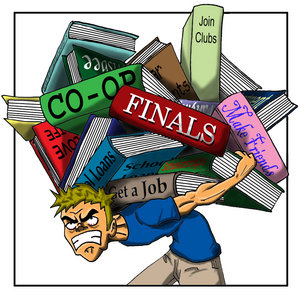
    Are you feeling the pressure? Whether you’re saving up for college or studying, no doubt stress can take a toll. A little bit of pressure can actually be a good thing; often, it pushes you to do the best you can and you consequently achieve even greater results. But if you constantly feel anxious and panicked about what’s going on around you, you may have a problem managing stress. You’ve probably got a lot on your plate to worry about already—a nervous breakdown is the last thing you need.

    Stress can manifest itself in many forms and, as a result, it has the potential to negatively impact all aspects of your life. Stress can have physical effects, including insomnia, nervous tics and vulnerability to illness (like catching a cold). Unfortunately, these effects make stress even harder to handle, wearing down your stamina as well as your motivation. Even more concerning is the damper stress can put on your psychological well-being: constant pressure to do well  is often detrimental to your self-esteem. If you’re plagued by stress, it may alarm you to notice that it starts to affect your enjoyment of life as a whole.

    The crucial thing is to not let it get that far. Stress is a slippery slope, but there are a couple of things you can do to make sure it doesn’t drag you down with it. Here are some ideas to kick your anxiety to the curb and embrace a positive, healthy lifestyle:

    1. Get organized. Projects can be daunting when you try to take them on all at once. Set up a schedule and section off your massive to-do list into more manageable chunks. A little work each day is much easier to handle than an all-nighter; as difficult as it is, try not to procrastinate as this can only accumulate more anxiety.

    2. Take breaks. It may be difficult for you to stop in media res (especially if you’ve got a deadline coming up), but working endlessly compromises both your efforts and your health. After each hour of work, grab a snack, chat with your family or take a quick stroll outside. You’ll be able to concentrate much more easily once you get back to work.

    3. Be realistic. Sometimes, you just can’t have it all: if the pressure’s really bugging you, reconsider your priorities. Do what’s necessary first and leave the small stuff for later. It’s not possible to do everything absolutely perfectly, so focus on the things that matter the most.

    4. Appreciate yourself. Instead of focusing on every little thing you’re doing wrong, redirect your energy to your achievements. You can set up a rewards system to recognize your hard work—for instance, if you ace that exam, celebrate by having a fun night out with your friends. It’s important to maintain a positive mindset, even when things get tough.

  • Can High School Dropouts Still Go to College or University?

    Can High School Dropouts Still Go to College or University?

    Most people receive a lot of advice over their lifetimes. Can you think of some of the things that others have told you? One bit of advice that you might have heard from your parents and teachers is that you should stay in school and continue on to graduation. That way, you will be able to go to university or college and get a good job in the future. However, not everyone manages to finish high school, whether by choice or through problems in their lives. How can they ever continue their education? The process might be difficult, but high school dropouts can still go to university or college if they want.

    Students might have many different reasons for dropping out of school, such as a crisis in their lives, a change in family circumstances or a move to a remote area of the country where high school is unavailable. Some students might have finished the work to graduate but not have a Canadian diploma because they were homeschooled or because they finished their education overseas. In most cases, the process for getting into a Canadian university or college is similar for all of these people.

    One of the most common ways to get into higher education is to write an entrance exam set by the university or college. Foreign students whose first language is not English often have to pass these exams before they can get into Canadian universities and colleges, and people who have dropped out of high school can do the same to show that they have the skills and knowledge they need. Most universities and colleges also accept people who are at least twenty-one years old as “mature students” without requiring them to meet any specific academic standards.

    Being accepted into a college or university is a good first step, but students also need to be able to do the work or they will not be able to graduate. Students in many post-secondary institutions need to be able to organize their own work, write long papers and complete complicated projects, often with very little help from their instructors. Taking courses through Continuing Education programs or through online universities can help people develop the skills they need to be able to complete their coursework. Some universities, such as Oxford University in England and Stanford University in the United States, even offer free online courses in various subjects. Students might not be able to receive degrees through these programs, but they offer a good chance to learn and to practice the skills they need for their studies.

    Have you dropped out of high school and are you thinking of going to university or college? Many people have done that, and they have been successful in achieving their goals. If you left school but still enjoy learning, you can return to your studies and maybe gain a new career or help yourself become better at your current job. It’s never too late to improve your mind and your skills with a post-secondary education.

  • You Are Your Best Cheerleader

    You Are Your Best Cheerleader

    Do you ever feel overwhelmed or stressed out by things happening at school or even at home? Everybody has bad days sometimes. Life can throw curve balls at you that you never expect. Maybe you’re not getting along with your friend or maybe you didn’t make the sports team you really wanted to make. These types of problems can make you feel down and upset. This is completely normal; not every day is going to be perfect. We all go through this, so don’t feel like you’re alone.

    What is most important about going through tough times is how you deal with them. You can choose to talk to other people about how you’re feeling. Whether it’s a teacher, a parent or a friend, these are all people who care about you and will listen to your problems. They want you to succeed as well. When you can’t turn to them you can always turn to yourself – don’t count yourself out.

    You are your best cheerleader at the end of the day. By cheerleader I don’t mean someone  holding pom-poms. By cheerleader I mean that you have the ability to motivate yourself to do difficult things and feel better about yourself. Everybody has their own way of doing this. Maybe your way of being a cheerleader is that you like to reward yourself after accomplishing your goal or you like to mentally encourage yourself.  It’s perfectly okay to give yourself a pat on the back every once in a while. In fact, it’s healthy!

    Sometimes fear can be your own worst enemy. You may be scared to try something new or don’t feel like you are capable of succeeding in a new situation. Having the confidence within yourself that you can succeed is the best way to accomplish your goals. Instead of putting yourself down, try encouraging yourself and thinking positively about a situation. Try replacing any negative feelings with positive ones. Don’t be so hard on yourself! Something as little as a change in attitude can do wonders for your self-esteem.

    You know that just because you didn’t make the sports team doesn’t mean you’re not good at that sport. Maybe you can practice more and prepare yourself for tryouts next year. You also know that just because things at home haven’t been great lately that it is not your fault; sometimes other factors play a role in hard situations. Having a positive outlook on things and cheering yourself on will improve your confidence. If you start believing that you can do anything you set your mind to, you will see results. So start thinking like your own personal cheerleader!

  • The Importance of Finding Peace Within

    The Importance of Finding Peace Within

    In a world filled with obligations and seemingly never ending stress, finding inner peace can seem like the stuff of fairytales. The reality is that the majority of us are feeling the pressure of our daily lives in a big way. Poor quality food (yes chips, I am talking about you), poor sleeping habits (five hours a day truly isn’t enough) and mismanaged time can leave a person feeling perpetually like a ping pong ball darting back and forth on the table of life.

    As busy as our lives might be, it is important to find the time to look inwards to find a sense of peace in order to have some semblance of balance. Not only does finding inner peace feel good, it is essential. Inner peace means different things to different people, but the core of the definition remains the same; feeling internal harmony with an absence of internal strife. As previously mentioned, inner peace is essential; our three states of being (physical, spiritual and mental) rely upon it. Without it, anxiety, stress, depression, fear and restlessness – all bi-products of an absence of inner peace – are given leeway to take over our lives.

    As cliché as this may sound, inner peace helps to make the world go round. Let’s take that statement and apply it to a hypothetical situation. If there was a doctor who was manic depressive and due to his depression was unable to focus for long periods of time, developed chronic memory loss or became unreliable in his or her attendance at the office, said doctor could wind up causing some serious damage to or even killing one or more of his or her patients. The wrong medication could be prescribed, a client could be misdiagnosed or a hopeful patient would have traveled to the doctor’s office in vain looking for an absent doctor. Medical and legal chaos would ensue. As extreme as this example may seem, the absence of inner peace can cause such a large amount of discord in our lives through blindsided snowball effects that it can alter it and those around us.

    In an effort to find inner peace many of us turn to spirituality or religion. As the Dalai Lama so wisely stated, “We can never obtain peace in the outer world until we make peace with ourselves.” His words mirror the teachings of so many religions today. In some way, shape or form, every religion functions on the act of mastering internal peace and then applying it externally. This transference of peace dictates the way that we live and communicate. Aside from religion, other methods of obtaining inner peace are through meditation, listening or creating music or engaging in a relaxing activity. Regardless of what you choose to do, remember that a peaceful person is a happy person and so are the people around them.

  • Keeping a Journal

    At first, keeping a journal doesn’t sound very cool. It conjures up clichéd images of TV journalists or of diaries with scented pages. However, there are actually lots of benefits to keeping a journal, especially during the exciting time after high school when the world is open to be explored.

    Life can get stressful, especially as you take on more responsibilities and challenges as you get older. Sometimes going to school, maintaining a social life or working can clutter up the mind with worries. Keeping a journal is like a kind of private therapy; you can write down your fears, hopes, dreams, frustrations and the troubles of daily life without any fear of judgment. Many people find that writing their thoughts down in a journal helps to clear the mind, reduces overall stress and helps to maintain an ordered lifestyle.

    If you choose to go to college or university, keeping a journal can be really helpful for keeping track of assignments, classes and presentations. In addition to that, this can be the most exciting part of your life and keeping a journal is a great way to preserve your experiences as a young adult for years to come. Furthermore, keeping a regular, up-to-date journal can help keep one’s writing and English skills fresh and ready; a distinct advantage if you find yourself needing to write an essay.

    Keeping a journal can be great for creative reasons, too. If you’re a poet, writer or like to draw, a journal can be an excellent place to exercise your creative muscles and write stories, draw pictures or write poems in addition to writing down important daily events.

    Writing before bed can be very relaxing, and the importance of a good sleep schedule can’t be stressed enough – especially when entering the workforce or university and college. Doing a bit of writing before bed can help to establish a good routine, a solid sleep schedule and can help cause drowsiness for a good night’s sleep. Writing isn’t just for bedtime though; keeping a journal can be therapeutic at any time of day. It can really help you to sort out your feelings, whether they are anger, sadness, love, happiness or frustration. Seeing your thoughts put down on paper (or on a computer, it’s up to you) can help to put things in a different perspective or show things from a different angle which can really help with problem solving.

    Whatever your age, occupation, or education, writing a journal is an awesome way to keep your thoughts in order, deal with personal problems, relax and chronicle the highs and lows of your life.

  • Conquering Your Fears About Success

    Conquering Your Fears About Success

    Life is scary. There is no way around it. Life challenges you to bring what you have to the table. Life challenges you to use all of your resources and to make the best of it! You can face it or avoid it, but life is something you can fight or bow away from. Life offers opportunity and you can take it and run with it or you can turn away from it and let it squash you.

    Time is an essential component of life and it is what determines whether you are ready or not for the challenges that face you. Sometimes you are too young for the challenges you face and that is why you fail. Other times you are old enough for the challenges that face you and you succeed.

    There are various components to any challenge, and your level of expertise in each of the dimensions will help to determine your success or your failure at the task at hand. There is a social dimension, where mastery comes from being adept at fitting in or leading your social environment. There is an emotional component where your mastery would be in the form of being able to manage and use your emotions in constructive ways to help you to adapt and succeed in your environment. There is also a technical aspect to be mastered, that is the skills required to accomplish the task at hand. Whether they are scientific, logic, mathematical, artistic or creative, the skills required to accomplish a task are essential to have in order to achieve success at the goal you are pursuing.

    Life is a series of goals that you are looking to achieve. If you are to be successful, you must either be a master of one dimension or a jack of all trades. Some people are really good at one particular thing, while other people are good at a variety of things that, through balancing each of the dimensions, they see success. A person with a PhD, for example, may be exceptional at science, logic, English or something else, but they may be less adept at other areas of their life. They may, however, be exceptional at one area and equally or at least competent enough in other areas of their life. Some people are only modestly good at a variety of areas of their life.

    What you can bring to the table is essentially all you have and a lot of what you have is genetic and based on what you’ve learned in your upbringing. How you use what you have determines your success. If you are particularly adept at certain things, you can decide how you want to express yourself within those dimensions. Perhaps you want to challenge yourself and pursue something challenging that you aren’t particularly adept at but would like to practice. Perhaps you would  like to capitalize on something that you are extremely good at and know very well, so you can experience self-actualization and feel in sync with the universe and your life’s purpose.

    Conquering fears involves facing what you have to offer and making a decision as to how you want to apply it to the world. When we fight, we are facing our fears or our enemies, and we are putting them in their place. On your path toward your destiny, you are going to need to be able to be aware that some people are wrong, that some people will not be your supporters, that some people will be against you, will ridicule you, will limit you to only what they know. You can remember that you are only as good as the person you are speaking with. I could be speaking with someone who has had a totally different life experience and so they would not reflect to me what I believe. Everyone has different life experiences and different pressures on them, and we are all just trying to survive and succeed.

  • Fashion at Second-Hand Shops

    Fashion at Second-Hand Shops

    When people meet each other on the street or at school, they notice different things about each other. They might notice the other person’s hair or their face, but they often notice the clothes. What people wear can say a lot about who they are, what they value and even how creative they are. Clothes can be expensive, but you can still look good without spending a lot of money. Finding fashion at second-hand shops can be challenging, but it’s possible to look good on a very small budget.

    Most cities have different types of second-hand clothing stores. Consignment shops are places where the previous owners of the clothes or other items get money back for whatever the store staff can sell. If no one buys an item, it eventually goes back to the owner. Much of the time, however, people donate used clothing or other items to organizations that use the money to help some kind of program, such as income support for the poor. Thrift stores that cater to the poor are some of the most common of these types of shops.

    Shopping for second-hand clothes can be rewarding but time-consuming. It can be hard to find nice outfits in the jumble of used clothes, with limited choices of size or colour. However, patience, persistence, and a sense of fashion can help. For people who know how to sew, shopping at second-hand stores can present many options for altering clothing to fit new styles. The final result can often be worth the extra time spent in shopping.

    If shopping at second-hand stores is so time-consuming, why does anyone do it? Money is probably the biggest reason. New clothes can be very expensive, especially for anyone on a low income. Buying used clothes allows them to have a variety of outfits without spending more than they can afford. For some people, shopping for used clothes might also be an exciting challenge that allows them to create their own style. If they choose clothes that fit well with different outfits, they can have a lot of variety without having a closet full of clothes.

    For many second-hand shoppers, buying used clothes is a social or environmental choice. Most of the clothes people buy in North America are made far away in countries like Bangladesh or China, where many workers experience low pay and unsafe conditions. Buying these clothes makes customers feel that they support the exploitation of workers. Another reason for buying second-hand clothing is that transporting the finished clothes from the factories to the North American stores uses a lot of fuel and pollutes the environment. Meanwhile, unwanted clothes often end up in the landfills here in Canada, contributing to the mountains of garbage people produce. Buying second-hand clothes means that people are trying to get the greatest possible use out of the world’s resources.

    For all of these reasons and more, second-hand clothing shopping is growing in North America at shops, flea markets, garage sales. Will you join the trend?

  • Recognizing Your Skills and Talents

    Recognizing Your Skills and Talents

    In every family, school, club, workplace or association there are always those people who excel at something ridiculously hard, leaving you scratching your head wondering, “How are they so good at that?” For those people, it’s as simple as recognizing their talents and using them effectively.

    Most of us are more skilled then we realize, and unfortunately for us we do not use our skills and abilities to our advantage. This could be because we don’t know what they are or simply undervalue them. In our society, a blatant boisterous skill is most valued; this makes it hard sometimes to discern our skills and talents. The underestimated value of our talents is why so many feel so generic, desperately wanting to be a name brand.

    The drive to be great and be acknowledged as such resides strongly within us. The only problem with this is that most of us have no clue how to accomplish that. Surprisingly enough, the first steps to becoming great aren’t all that hard. It really boils down to recognizing your skills and talents and then finding the best way to utilize them. This can be accomplished by following four steps:

    Step 1. Take a few minutes to think about and then write down the things that you and other people have told you that you are really good at. Just to be clear, it doesn’t have to be something that people would necessarily consider a positive thing. For example, you may be really good at talking yourself out of trouble. Many wouldn’t consider your silver tongue and the way that you wield it to be a skill, but a judge might. That quick wit could make you the perfect candidate for law school. If possible, get someone else to look over this list as well – they may recognize skills that you have that you haven’t considered.

    Step 2. Generate a top ten list of activities that you frequently engage in, or would like to frequently engage in, that make you happy.

    Step 3. Look at your activities list and go through each activity considering what type of skills it would take to excel in each one. If you were honest with yourself, you will find that you have the necessary skills to excel in at least one of these activities.

    Step 4. Now that you are able to recognize your skills and talents and how best to utilize them, get to it. In order for a skill to be recognized as a talent you need to engage in it regularly. That old adage “practice makes perfect” doesn’t exist for nothing. Let the next “how are they so good at that?” be about you. Bask in someone else’s praises about how skilled and talented you are and show the world the glory that is you.

  • Don’t Stress, Just Follow Your Heart

    Don’t Stress, Just Follow Your Heart

    Maybe you’re in your first year of high school or maybe you’re going to be graduating this year.  At whatever stage you are in, choosing a career path is probably on your mind. While some people know exactly what their whole future is going to look like, that is not always the case. Either way, a lot of us are plagued by uncertainty and fear when it comes to figuring out what kind of career we want to pursue in the future. Don’t worry – chances are a lot of your fellow classmates are in the same boat and feel the same way.

    Choosing a career path can seem like you’re choosing the tone for your whole life.  There are so many factors to consider when choosing the career that is just right for you. Questions that may cross your mind are: will this make me happy? Will I have financial security in this field? However, people get caught up in considering so many angles that the one factor they forget to consider is simply following their heart. This may sound a bit cheesy, but isn’t your heart always right?

    Sometimes parents will put pressure on you to choose a certain career path. Maybe they want you to follow in their footsteps and choose the same profession they’re in. Also, it may seem like a lot of your friends are choosing a particular career and it seems like it would be safe to go along with whatever they are choosing. Yet, if you are choosing a career based on what your parents want or what your friends want then you are not taking the time to figure out what is really important to you.

    You may also wish to seek the help of a guidance counselor. They may suggest career paths that they think will be suitable for you. However, remember that it is you that will be in this field one day and not them. So really consider what they are saying and if that career will make you happy.

    Don’t let choosing a career become stressful or a burden in your life. It is something that you will determine as you continue school. You will take different classes that you will either enjoy –  or you won’t. You will also explore different interests which will expand your horizons. Some of these classes and interests will appeal to you more than others. Through this process you will probably gravitate towards a certain career field. Your heart will lead you in the right direction.

  • Body Image Issues? You Aren’t Alone

    Body Image Issues? You Aren’t Alone

    In most cases a distorted view of body image has been presented by the media and simplified with male and female stereotypes. Men are all portrayed as tall, muscular and smoothly shaven, while impossibly thin women with disproportionate attributes make their way into thousands of commercials and magazines. We now know that someone with a camera and a simple grasp of Photoshop can easily change these images, airbrushing, changing size and re-colouring pictures. Simply put, the media portrayal of the human body is wrong.

    Never is there a time in an adolescent’s life that the body is focused on so much as the prom. The pressure falls a lot more on girls than it does with boys. Most (but certainly not all) guys are expected to attend prom wearing an expensive formal suit and tie, whereas girls are expected to be skinny but not too skinny, wear fashionable dresses and high heels.

    While prom is a formal gathering its important not to lose sense of your own style and personality. Wear whatever dress that you feel like wearing, or even wear pants if you’re comfortable. It’s one of the last big gatherings in high school so take this chance to be creative and express yourself! Maybe you could even craft your own outfit if fashion design is your thing. That’s not to say you should come in with combat boots and a trench coat – you should follow your school’s dress code when deciding what to wear, but let loose and have fun. Don’t let fashion trends or other people’s opinion’s decide for you. Prom is your night, so make your look your own, too.

    Prom is a time to celebrate that you are almost done thirteen years of education! This is a huge accomplishment and you deserve to celebrate it no matter your size, gender or personal style. Don’t let other people’s opinions ruin your night; stay true to yourself and your own style. In the end that’s what truly counts.