Category: Campus Life

  • The Future of Libraries in High Schools: More Than Just Books

    The Future of Libraries in High Schools: More Than Just Books

    School libraries can be very useful places. If you are researching a subject for a project or want a good book to read, you can probably find what you want in the library. However, high school libraries are about more than just books. Whether you need materials that you do not have at home or need help in putting a project together, high school libraries can be good places to go.

    In the past, most libraries in schools had a teacher librarian in charge. Teacher librarians normally had degrees in both education and librarianship to give them the background they needed to help students find materials and to use them in the best possible way. Even now, despite budget cuts in many schools, library staff members are often well prepared to do more than just direct students to a shelf of books.

    Many libraries now have a variety of materials for students to use. Computers often have Internet connections, as well as databases on a variety of topics. For example, the History Reference Center is useful especially for American history, but also for other topics. Global Issues in Context is a good place to start for researching current events and the impact that they have on daily life in Canada and the rest of the world.

    Some students might wonder why people need libraries or databases when the Internet has most of the information they need. One problem can be finding that information. When a Web search results in a million or more sites to look at, it can be difficult to find the best places to look. For example, a student working on a project dealing with the history of Sweden might retrieve information instead on cooking or sports. Using a library database or books on the country is likely to help students focus on the information they need.

    Periodicals can also be good sources of information. Magazines like Maclean’s have information about Canadian politics and current issues, and magazines directed specifically towards teenagers deal with issues that are important for that age group.

    Reliability is another question. Although books and databases can also be unreliable, they have at least gone through an editing and selection process that can help to make them a reliable source of information. The librarian and other school staff have also likely chosen what they consider to be the best options among the various materials available to them. The Internet, in contrast, is largely unregulated and can have very unreliable information.

    Education is about much more than just learning facts about history, English literature, or science. It is also about learning skills that people need later in life. For example, a history project can teach students organizational skills in addition to the facts about Confederation in Canada or the ancient pharaohs of Egypt. A good school library should have study guides or staff to help students learn the skills they need for researching a subject or putting information together clearly and concisely.

    Many schools have made substantial cuts to school libraries to help deal with tight budgets and limited resources. However, students can still find many good resources and use their school libraries to learn important skills for the future.


    Bibliography:

    Canadian School Library Journal. “Future of the School Library Learning Commons.” https://journal.canadianschoollibraries.ca/future-of-the-school-library-learning-commons/.

    Ex Libris. “Three Trends Shaping the Future of Libraries.” https://www.libraryjournal.com/story/three-trends-future.

    The Hamilton Spectator. “More Than Just Books: Libraries Are Important Social Hubs, New Report Finds.” https://www.thespec.com/news/canada/more-than-just-books-libraries-are-important-social-hubs-new-report-finds/article.

    Knapp, Maggie. “Just for Reference: Must-Have Databases for School Research.” https://www.slj.com/story/must-have-databases-for-school-research.

    Lynch, Matthew. “Libraries of the Future: Where Trends are Taking K-12 Public School Libraries.” https://www.theedadvocate.org/libraries-of-the-future-where-trends-are-taking-k-12-public-school-libraries/.


  • Top Destinations for Canadian Students to Travel to in 2024

    Top Destinations for Canadian Students to Travel to in 2024

    By Natasha Cooper

    Whether they are getting away from the cold, visiting relatives, or taking their studies abroad; Canadian students love to travel. And why shouldn’t they? Canadian passports are recognized as one of the most valuable documents in the world, giving their holders the ability to travel to over 180 countries.  Additionally, Canadians generally receive warm welcomes in the many destinations they might travel to due to the generally great global reputation of Canada.  Even if you are simply travelling for fun, going to new places, and experiencing new cultures is a valuable form of education in itself and can equip young people and students with a certain independence and understanding of the world around them.  If you are a Canadian student looking for some recommended places to travel to, here is a list of some of the top destinations for Canadian students.

    Japan

    A 2023 study conducted by American Express revealed Japan seems to be one of the fastest-growing destinations among the Millennial and Gen Z generations. This is not too surprising as Japan has many qualities that may be enticing to younger Canadians. Japan provides its visitors with a glimpse into its culture of rich ancient history and traditions blended with innovative infrastructure and cities. However, this spike in Japanese tourism does not just apply to major cities like Tokyo or Osaka.  Pristine beaches and snowy mountains also attract the masses. More and more avid skiers are seeing Japan as one of the most desirable spots in the world to hit the slopes, which has resulted in growth in their skiing industry.  Japan has a rich history, large cities that are fascinating tech hubs, culinary delights, and beautiful scenery all over the country.  There is much to see and learn in Japan that makes the long trip certainly worthwhile for Canadian students.

    Australia

    Australia is another destination Canadian students might want to consider for their travels abroad. The land down under has plenty to offer, their stunning natural landscape and wildlife provide ample opportunities for exciting and memorable outdoor excursions.  In many ways Australia is quite similar to Canada — they are a former British colony making them English speakers like us, and they have large diverse cities and beautiful, vast scenery. Unlike Canada however, November through to March in Australia brings sunshine and tropical weather, making it an excellent choice for a winter getaway.  There are also many opportunities for Canadians in Australia to both study or work like working holiday visas specifically for people under 34 to be able to go to Australia and work while exploring the beautiful country.

    The U.S.

    The United States can offer Canadian students many new experiences and opportunities, while also staying fairly close to home.  Our neighbours to the South have no shortage of iconic cities, national parks, and cultural gems to experience. Whether it’s hiking the Grand Canyon, or experiencing the vibrant energy in New York City, The U.S. has something for all kinds of interests or bucket list goals.  Each state has something different to offer, and they all have their own niche histories and specialties to explore.  The U.S. is also a great place for road-tripping, an engaging and often affordable way for students to experience multiple states during one trip to the U.S.  Of course, it should be mentioned that America is also home to some of the world’s top-ranked universities with many scholarships and financial aid programs designated for Canadian students. A trip to the U.S. could also result in valuable networking opportunities that can open doors in the future of a Canadian student.

    Japan, Australia, and The U.S. are only a few of the many options Canadian students should consider when making plans to travel abroad.  They all have beautiful sights to see, rich educational options, and distinct cultural identities to learn about.  Regardless of where or why Canadian students travel, it is important to immerse oneself in the cultures of other people.  Embracing the unknown and connecting with people from around the world is key to being both a good student and Canadian.

  • The Ups and Downs of Being Employed

    The Ups and Downs of Being Employed

    Article Written By Helena Wright

    Having a job, no matter what your age, can be quite an experience! Whether it be a good or bad, you will always learn from it, regardless. The biggest reason why having a job is so important is because its much better than the alternative – unemployment. Though unemployment sounds leisurely, it can have its consequences. Unemployment raises the possibilities of depression, especially for young adults.

    One of the reasons being so, is that it offers life stability and structure. Having a job means connecting with others and being able to work on your life skills and technical skills, whether it be sympathy, team work, or even something as simple as email communication. Most jobs include communication with co-workers, bosses, costumers, clients etc t… meaning that there is always some kind of social contact. When that social contact is not exercised,, there is a sense of isolation and a feeling of lack of contribution and purpose.  Our jobs can keep us busy all day every day, and if you have a part time job, it is an extra challenge besides your regular school routine.

    Aside from mental well-being, holding down a job also means always having an income of some sort Even if it is a couple days a week you are working, it helps, financially. The precarious nature of unemployment means that there is no stable income headed your way. Even if you very much do not enjoy the work you are doing, you are doing something, and something is better than nothing. A future employer will see and recognize that you wish to do something rather than nothing. Whether you believe it to within yourself or not, that shows character.

    Overall, having a job can and should be a delightful experience. It should allow you to open doors, maybe some that are not career related but they are connections, regardless. No one will completely love their job. Everyone goes through a period in which they hate where they work, but it is from that you will learn how to navigate yourself for the ultimate job you have always wanted and may have never known you did.  You may not like your boss, a gossipy colleague or co-worker, office politics- the list can go on and on. But, it is up to you to make the most of it and then move on to brighter, greener pastures.

  • Sexual Harassment on Campus: Things You Should Know

    Sexual Harassment on Campus: Things You Should Know

    Sexual harassment is a serious, often frightening experience to endure. In fact, more and more students have come forward to report occurrences. According to CBC, a study by the Ontario government revealed that 63% of university students have experienced sexual harassment on campus. 50% of college students reported the same. Additionally, one in three women is affected by sexual assault while one in six men experience more of the same.

    These startling statistics make it crucial for students to know where they can turn to or how to report an incident. Not only that, it’s just as important to know who you can turn to and that 24/7 resources exist specifically for those affected by these crimes.

    Reporting the Incident

    If you’ve experienced sexual harassment, you’ll need to report it to the authorities. University and college campuses often have police onsite or patrolling buildings. If you’re not on campus and want to report sexual harassment, you can call 911 for immediate assistance.

    Regardless of who you turn to, you’ll be asked to file a physical report and provide details on:

    • what happened
    • to whom the assault happened to
    • when the incident occurred
    • if there were any witnesses
    • details on the assailant

    The authorities may also inquire about additional information as well as point you to counselling centres, should you need one.

    Who to Talk To

    Post-secondary institutes have social workers or psychologists on campus that you can speak to. The only issue with these services, as frequently reported, is that they can be hard to get into. Given the number of students attending your school, available workers may be sparse in comparison.

    That said, you’re not without options. If you’re comfortable doing so, revealing the incident to close friends and family is a good coping mechanism. It’s sometimes easier to speak with those closest to you about traumatic experiences.

    Alternatively, there are several numbers you can call; they’re open 24/7 for your convenience. Numbers are often organized by the crime committed, too. Men are also welcome to call hotlines specifically available for them.

    A quick online search will also provide you with additional resources, especially those specifically accessible in your area.

    Things to Remember

    Sexual harassment isn’t a joke and there are no blurred lines when a person harasses another. Though victims might feel ashamed or afraid to come forward, it’s ultimately encouraged that they do to bring justice to themselves. It also aids in future prevention.

    The most important thing to remember is that you did nothing wrong. Speaking up about what happened can provide you with the peace of mind you need to live life as before.

  • Tips and Tricks for Learning a Second Language

    Tips and Tricks for Learning a Second Language

    Several people dream of speaking more than one language. The main thing that keeps them unmotivated is the learning process. They could be afraid of the big, old dusty textbooks they think they will need. Or they may not feel like studying on their own. Learning a new language doesn’t have to be boring and difficult. With these tips and tricks, you’ll be learning phrases in a second language in no time!

    Learn About the Culture

    When learning a new language, you should also look into the culture. When you learn about the culture, you are also able to learn about the people, where and how they live, their history, and more. This allows you to try new things. You could try their food, watch their movies, and listen to their music. Knowing about these things can help you avoid any cultural misinterpretation and communicate better.

    Leave Your Comfort Zone

    Sometimes it may be difficult to leave your comfort zone. You could be scared of embarrassing yourself or making mistakes. Leaving your comfort zone is the only way for you to develop and improve. Many people often turn to textbooks. If you only rely on textbooks, you will have trouble speaking and communicating with others since you have not been practicing.

    You should attempt to challenge yourself. Find people who speak the language you are trying to learn, or travel to a different country if you can! Then, you can talk to strangers in their language, order food, ask for directions, or even tell a joke!

    If you’re not able to travel or find anyone that speaks that language, you can always look online! You could find a tutor and arrange video calls. This will allow you to have conversations with native speakers.

    Do What Interests You

    Everyone all has interests of their own. These interests could include reading, playing games, watching movies, or listening to music. If learning a new language is also an interest you have, then you’re in luck! You could combine that interest with another. You could read, play games, watch movies and listen to music in the vernacular of choice. This will help you stay interested while learning a new language.

    Several apps help you learn a new language. Duolingo and Memrise are two great apps. If you feel like quizzing yourself afterward, you could test yourself on Quizlet. These apps are fun and easy to use, and you could use them wherever you go!

    Set Up a Routine

    Adding time to learn new words in your day is a great way to successfully learn the language. A good time to study is in the morning. By getting up earlier in the morning, you’ll give yourself the time to study and avoid being stressed, distracted, or exhausted by your daily tasks.

    Each morning, you should pick one or more new words to learn. Try to remember the terms throughout the day. Adding new vocabulary into your daily routine will help you memorize them and learn how to use them.

    Also, remember to always look back on the vocabulary you have learned before. A good way to do this is to write down the daily words in a notebook and carry that notebook with you. You can look through it during your free time and even add new words throughout the day!

    Work on Your Skills

    Languages are made up of four main skills: reading, writing, listening, and oral. These skills all work together.

    It is normal to be better at some language skills than others. The important thing is that you practice and work on the skills you’re not good at. With time and effort, those abilities will be developed!

    Now that you have learned new tips and tricks for learning a new language, all you have to do is begin. Good thing you now know how to learn new languages while having fun!


    Resources

    https://www.babbel.com/en/magazine/10-tips-from-an-expert

    https://www.heartmybackpack.com/blog/foreign-language-learning-tips/

    https://takelessons.com/blog/tips-and-tricks-to-learn-a-new-language

    https://www.mosalingua.com/en/10-tips-for-learning-a-new-language/

  • Alternative Medicine Careers

    Alternative Medicine Careers

    Alternative medicine is a medical treatment that could be used instead of the common treatment you would receive at a hospital or walk-in clinic. Most seek the care of medical doctors and other health professionals, such as nurses and physical therapists. If one is using alternative medicine along with traditional medicine, it is recommended for patients to tell their medical doctor about any alternative medicine they may be using, in case they interfere with one another.

    Here are a few common types of alternative medicine:

    Acupuncture

    Acupuncture is an ancient Chinese practice in which very thin needles are inserted into specific parts of the body. It is believed that energy flows through the needles into specific areas and will help relieve any pain and discomfort. This helps the energy in your body flow again. Acupuncture can be used to treat neck and back pain, nausea, anxiety, depression, insomnia, infertility, and other conditions.

    Pro

    • An acupuncture treatment usually causes no side effects.

    Con

    • As with any medical treatment, not everyone will have an improvement in their symptoms after acupuncture.

    Chiropractor

    Chiropractors treat conditions involving the skeleton. Chiropractors use hands-on manipulation to adjust the skeleton. In other words, they crack their client’s joints to relieve pain or discomfort or realign the muscles, joints, bones, cartilage, ligaments, and tendons. Chiropractic care can be used to treat neck and back pain, and headaches.

    Pro

    • Since no surgery or complicated medical procedure is required, it is usually safe and non-invasive.

    Con

    • Chiropractic care can be more time consuming than other medical care, such as a one-time surgery.
    • If you do not receive treatment from a certified practitioner with a lot of experience, you can risk possible joint displacement or nerve damage ( rare).

    Homeopathy

    Homeopaths treat their patients by using natural herbs and other remedies. They believe that what can hurt a healthy person, can heal a sick person. For example, if one has joint problems, a natural remedy known to cause joint problems in healthy people will be diluted by adding water or alcohol and then given to them. It is believed that the body can cure itself. Homeopathy can be used to treat allergies, migraines, depression, irritable bowel syndrome, toothaches, and colds.

    Pro

    • There are no symptoms of withdrawal, as when consuming known or common medicines.

    Con

    • It is not certain that homeopathy can benefit everyone equally. There is no scientific evidence that it works at all.

    Massage Therapy

    Massages can be very relaxing and are one of the most common types of alternative medicine. Massages involve pressing, rubbing, or manipulating muscles and other soft tissues. It can be done with one’s hands and fingers. Even forearms, elbows, or feet can be used. There are several types of massages including a Swedish massage, deep tissue massages, hot stone massages, a Thai massage, and chair massages. Massage therapy can be used to treat back pain, osteoporosis, headaches, and depression.

    Pro

    • Treats specific conditions or disease.

    Con

    • In rare circumstances, massage can cause internal bleeding, nerve damage, temporary paralysis, or allergic reactions to massage oils or lotions.

    Resources

    https://www.verywellhealth.com/alternative-medicine-careers-1736360

    https://www.medicalnewstoday.com/articles/156488.php

    https://www.webmd.com/balance/guide/what-is-alternative-medicine

    https://www.medicinenet.com/alternative_medicine/article.htm

    https://www.webmd.com/pain-management/guide/chiropractic-pain-relief

    https://www.webmd.com/balance/guide/massage-therapy-styles-and-health-benefits

    https://youngwomenshealth.org/2013/06/12/acupuncture/

    https://harcourthealth.com/when-to-see-a-chiropractor-the-pros-and-cons-of-chiropractic-care/

  • Optimizing Your Home Workspace for Productivity and Health

    Optimizing Your Home Workspace for Productivity and Health

    What’s great about having a home workspace is that you have the control to make it as ideal as it can be for you. When it’s ideal, it can not only benefit how you work but also provide a healthier situation. Unfortunately, many home workspaces aren’t reaching this potential because busy schedules or other areas of life take priority. As a result, plans for any sort of refashioning often get put on hold. Nonetheless, when there is time for making these changes, it’s difficult to know where to start since there’s typically a lot to address. If this is what you’ve been thinking about and you’re interested in optimizing your home workspace for productivity and health, here are some tips:

    Clear Out What You No Longer Need

    Health-wise, being in a cluttered environment could induce discomfort/anxiety, which would not help, particularly during times when work is stressful. Therefore, it’s a good idea to clear out notes, paperwork and/or supplies you don’t need anymore. It can also be very satisfying knowing you’re getting rid of everything that has been unnecessarily taking up space.

    It’s additionally a good opportunity to reorganize if the way things are placed does not function well for you. For instance, you could replace multiple binders with one or two accordion file holders (though this depends on how much paper each one has inside). Another suggestion is to categorize your shelves so what’s on them is easier to look for.

    Consider Rearranging the Furniture For A Better Flow And To Add Other Pieces

    Do you think that the flow of your workspace could be better? If so, consider rearranging the furniture in it. Not only would taking this on make the workspace easier to move around in, but it may also create more space for other useful pieces that you might’ve been thinking of incorporating. Has having a vision board to organize your thoughts, ideas, and goals ever crossed your mind?  Is your desk in a spot against a wall where you’d like to put a vision board?

    Change/Improve The Aesthetic

    Updating the space’s aesthetic to match your current tastes could improve your mood when you’re in it and therefore could boost productivity. Is your workspace in need of additions such as plants or some artwork? How about nice photos that feature family and friends? It’s always beneficial when you’re able to increase the amount of enjoyment you experience when entering a space and updating the look will likely help achieve this. You can also research interior design-related videos on home workspaces online for inspiration. There’s a good chance that you’ll find good do-it-yourself options.

    When your designated space for working at home serves you well, it can positively affect your productivity and health. If this is currently not the case or it can be even better, you’re able to adopt pragmatic, helpful measures. Tidying up, rearranging furniture, and changing the aesthetic are ways of meeting your needs in that respect. Overall, if you consider the suggestions above, you’re on track to successfully becoming a more productive and health-conscious worker in your revitalized home workspace.

  • Career Profile: Earth Drillers, Except Oil and Gas

    Career Profile: Earth Drillers, Except Oil and Gas

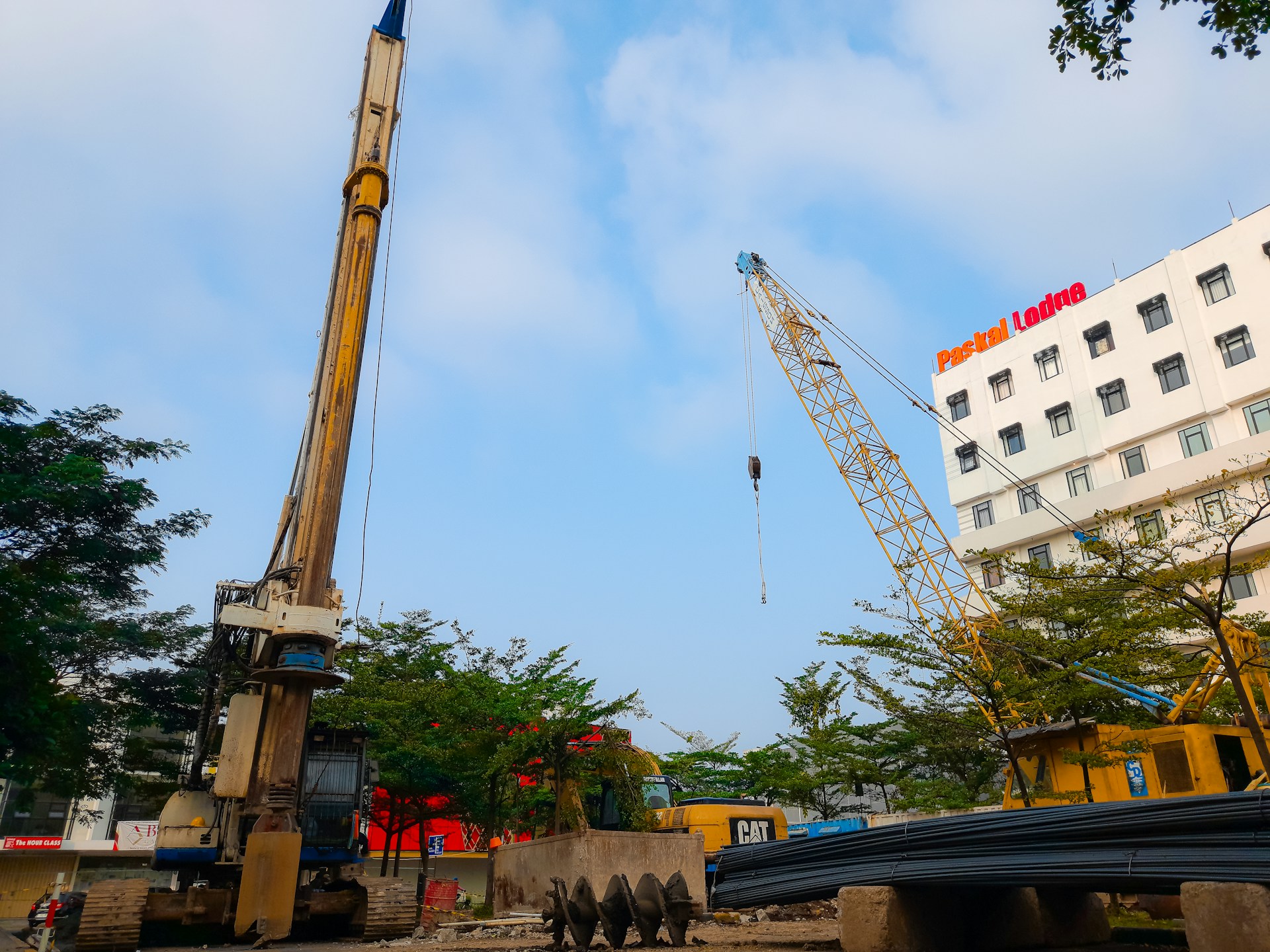
    Many people, whether children or adults, enjoy digging in the earth to see what they can find. For some people, digging holes into the ground can be a career. Earth drillers can help to support many other jobs that make life easier and better for people.

    In some parts of Canada, earth drillers work mainly with oil and gas companies to make these resources available. However, this job can support many other trades and help to make their work possible. Mining is one example where earth drillers are important. These tradespeople drill the shafts that miners need to find nickel, silver, gold, and many other metals. People in this field can also work for geologists or other scientific researchers, governments, and construction companies.

    A high school education or the equivalent is normally the minimum requirement for earth drillers. Taking courses in geology or geography in high school can help, and courses in mathematics and English are useful for making calculations and for reading and understanding instructions. Apprenticeships and technical college courses after high school are good ways of learning the specific techniques of the job.

    Some earth drillers do specialized work, such as handling or storing hazardous materials or working with earthquake detection machines, called seismographs. An ability in accounting can be very useful, especially for self-employed earth drillers or people working in small companies. Having a variety of skills can be helpful to ensure that people in this trade can continue working, even in difficult economic times.

    Like in many other trades, earth drilling is often a seasonal job, with the bulk of the work taking place between late spring and early fall. However, some earth drilling still needs to happen even in winter, such as repairing broken water pipes. Jobs are easier to find in cities than in towns, although mines, where people search for gold and metals, are also good places to find work. Prospects vary according to the state of the economy. Depending on their location and experience, earth drillers can earn between $20 and $47 per hour, or $44,000 and $105,000 per year.

    Operating heavy machinery for earth drilling does not necessarily require much strength, but it requires endurance to work for hours, often in the heat or the cold. Understanding different kinds of soil and rock is useful, and it is important to know the possible dangers of building in various areas. For example, areas near cliffs or riverbanks can be too unstable for many buildings or underground pipes.

    Collaborating with others is an important part of this kind of work. In construction projects, earth drillers need to know what kind of structure is planned for the site or what size of pipe is supposed to go under the ground. Normally, builders and engineers do most of the planning, but earth drillers can also contribute their knowledge to help avoid potential problems.

    One example where an earth driller’s knowledge could be useful is in understanding how earth settles after it has been dug up. Unless builders take that factor into account, they can sometimes encounter problems with the ground under the building settling unevenly. The most famous example of this issue is the Leaning Tower of Pisa in Italy, which started to tilt soon after it was built in 1173. Earth drillers can help prevent that kind of issue.

    Working as an earth driller might not seem very exciting, but it is important for people who work with Canada’s buildings and underground pipes. The job could be right for you.


    Bibliography

    College Grads. “Earth Drillers (Except Oil and Gas); and Explosives Workers, Ordnance Handling Experts, and Blasters.” https://collegegrad.ca/careers/earth-drillers.

    Government of Canada. “Minerals Sector Employment.” https://natural-resources.canada.ca/science-data/science-research/earth-sciences/earth-sciences-resources/earth-sciences-federal-programs/minerals-sector-employment/16739.

    Indeed.com. “Earth Drilling Jobs.” https://ca.indeed.com/q-earth-drilling-jobs.html?vjk=fc9175bbc9f2b305.

    Pathways to Jobs. “Earth Driller (Except Oil and Gas).” https://pathwaystojobs.ca/career/162/Earth_Driller__Except_Oil_and_Gas.

    Payscale Canada. “Average Driller Hourly Pay in Canada.” https://www.payscale.com/research/CA/Job=Driller/Hourly_Rate.

    Pruitt, Sara. “Why Does the Leaning Tower of Pisa Lean?” https://www.history.com/news/why-does-the-leaning-tower-of-pisa-lean.

  • Combining Work and Study: Is It Sustainable?

    Combining Work and Study: Is It Sustainable?

    By: Avreet Jagdev

    At a certain point in their educational career, often in high school or post-secondary, many students find themselves facing a tough decision: is it possible for them to work and study at the same time? How can you do both sustainably? What are important things to know and consider? Let’s break it down.

    Working is not always just an option.

    For many students, working during school is not just an option, but is necessary. Whether it’s to cover tuition, rent, or other living expenses, many students find themselves having no option but to balance both work and school – and it is important to recognize that not everyone has the privilege of making a choice.

    Choosing what to prioritize

    Before you begin to work while in school, reflect on which of the two is more important to you as an individual. Some students may see school as their top priority, but others may see working as more important. Some may see the two as equally important. Understanding what your priorities are is key, as it will allow you to make the decisions that are right for you. For example, if you prioritize work, you may choose to take a lighter course load, or if you prioritize studying, you may set a maximum number of hours for you to work a week.

    The right job makes a difference.

    Working during school can be more sustainable depending on the job you choose. Some jobs may be more demanding, both physically and time-wise. If possible, look for job opportunities that are flexible and accommodating of students. Examples include working as a front desk receptionist, freelance tutor, or library assistant. These jobs are often geared towards students, and you may even have some downtime while on the clock, allowing you to study while you are at work!

    Appeal to your skill set

    In general, the best jobs are the ones that align with you and your skills. Think about what you bring to the table, and what your unique skills and talents may be. If you can find a job that aligns with these skills and talents, it can make it easier to balance school at the same time, in addition to making your work more enjoyable.

    Jobs meant for students.

    Many jobs are meant specifically for students, especially on-campus positions such as assistants for a specific department, building, or library. These roles are often accommodating of student schedules and understand that school is a priority for many. They may also be closer in proximity, if you are someone who is on campus a lot, reducing the time spent commuting to work.

    Mastering Time Management

    Time management is an important skill for students in general, but especially for those who balance both work and school. If you are working, you will naturally have less time to commit to school, so it is important to use the time you have wisely. There are many time management strategies to choose from, but it is important to do what is more effective for you and your lifestyle. You may choose to use a planner, or an app on your phone to stay organized, for example. Other helpful strategies include time blocking, to-do lists, and the Pomodoro method.

  • Social injustices happening in Canada and worldwide, and what you can do about it

    Social injustices happening in Canada and worldwide, and what you can do about it

    By Avreet Jagdev

    The World Day of Social Justice takes place annually on February 20th. It is a day observed internationally, recognizing the importance of social justice – which includes the promotion of human rights and equity, specifically targeting issues such as racial and gender inequality, LGBTQIA+ rights, access to housing, education, and healthcare.

    In light of this day, here is a look at some social injustices happening in Canada as well as worldwide — and how you can help make a difference.

    1. Grassy Narrows

    Grassy Narrows is an Indigenous community situated in the province of Ontario. The Grassy Narrows community has and continues to go through a number of traumas. In addition to the historical horrors of residential schools and the Indian Act, Grassy Narrows is ongoingly fighting for their rights and facing injustices. Their water has been contaminated by mercury, and their land has been used for logging and mining without their permission. This unceded exploitation of their land is a grave injustice.

    To support the community of Grassy Narrows, you can visit their take action page.

    1. Violence against Indigenous Women, Girls, and Two-Spirit People

    Four out of five Indigenous women in Canada experience some form of violence in their lifetime, and Indigenous women are murdered more than 10 times the national average. What’s more is that violence against Indigenous women, girls, and Two-Spirit people is too often faced with little to no media attention or government action, making it easier for perpetrators to continue committing their gender and race based violence.

    To take action in regards to MMIWG2S (Missing and Murdered Indigenous Women, Girls and Two-Spirit People), you can visit the Coalition to Stop Violence Against Native Women’s call to action.

    1. The Overturning of Roe V. Wade – which takes away millions of Americans’ right to abortion

    Roe V. Wade was a landmark decision in the United States that ruled that it was every American’s right to access abortion. In June 2022, this ruling was overturned – meaning that reproductive rights were peddled back, and it was now up to the states to decide whether abortion would stay legal. Since the reversal of Roe V. Wade, millions of Americans have had their access to reproductive healthcare taken away – and this ruling disproportionately affects women of colour.

    You can take action on the reversal of Roe V. Wade by visiting Amnesty International’s page on the issue.

    1. Police Brutality

    The term police brutality refers to the excessive use of violence and force by police officials. This is a worldwide issue that disproportionately impacts people of colour, because many incidents are fuelled by racism. Many studies and statistics point to this, such as the fact that in the US, Black men are 2.5 times more likely to be killed by the police than white men. Police violence has taken away too many lives, and an important first step in taking action is recognizing those who have been affected by police brutality. This resource highlights some cases of police brutality that have resulted in the death of Black Americans.

    You can make a difference by researching how much funding is allocated for police in your city. If you believe that money could be better used somewhere else (housing, food banks, community programs), write to your mayor or call your city councilor about your concerns. You can also sign petitions to ensure those who commit police violence are held accountable.

    For any issue of social justice, the most important way you can be a part of the solution is by staying informed. It’s this knowledge that is key to taking action towards justice.