Category: Campus Life

  • Dealing With Failure: Recovering from a Bad Grade

    Dealing With Failure: Recovering from a Bad Grade

    We’ve all made mistakes in our academic careers. Whether it’s a test we just weren’t prepared for or an assignment that didn’t go as planned, a poor grade or two—or even a failure—is a normal part of being a student. That being said, it’s important to get into the right mindset when confronting your mistakes. In fact, this will actually allow you to do better in the future.

    It may seem silly to say this, but if you do poorly, it’s not the end of the world. There will be other exams and projects; you have ample opportunity to improve. If there’s no longer a way to boost your mark in one course, maybe doing well in your other courses will make up for it. In any case, school is very important, but your grades shouldn’t define who you are. When you look back on your school days in the future, you’re likely going to think about the great things you learned and the memories you made—not that one test you bombed.

    It’s only when you stop beating yourself up over your mistakes that you finally get an opportunity to learn from them. Stay positive, but consider why exactly you didn’t do well so that hopefully you improve next time. Did you not study properly for that exam and were caught unprepared? Did you leave that essay to the last minute? If you correct those mistakes early on, it’s unlikely you’re going to make them again. Treat each failure as a learning situation, and a positive opportunity for you to continue improving yourself.

    Then there’s the possibility that you have no idea what went wrong. We all have flukes—assignments that were marked “mysteriously”, guidelines we didn’t understand, tests that we just dropped the ball on for some reason. Luckily, these types of situations don’t happen very often, so one bad grade isn’t going to set the tone for the rest of your academic record. However, if you notice a recurring pattern in being surprised by your low grades, consider looking at your work more critically or speak to your teacher or professor for clarification and advice.

    Finally, it’s important to learn from failure, but you can also learn from what you did right. Chances are there are courses you’re doing much better in than others. Maybe you like the material more, so you work harder; maybe the course overall is easier to do well in. Considering these things, evaluate what you can take from one course in order to recover from a poor grade in another. If worst comes to worst and you’re really struggling, you always have options—drop the course, take an alternative credit, or look into peer tutoring or office hours.

    The next time you’re faced with a bad grade, take some of this advice into consideration. By staying positive and learning from your past experiences, you’ll see an improvement not only in your grades, but in your attitude towards learning overall.


  • Turning a Hobby into a Small Business

    Turning a Hobby into a Small Business

    Everyone’s got something they’re good at—and there might be a way for you to turn your weekend hobby into pocket money. More and more people are starting their own businesses from scratch, with some hard work and just a little help from the Internet. Wondering how to get your own skills out on the market? Here are some things to consider.

    First of all, think about what you have to offer. Once you’ve pinned down a unique (and marketable) talent, you can brainstorm ways to apply it in order to win over your customers. This is a good opportunity to combine your interests with your skills: if you’re into fashion and you’re good with your hands, for example, jewelry-making, sewing or dyeing might be a good place to start. The best part about launching your own business is that no talent is too “out there”. In fact, having an original, unconventional talent can make you stand out in a positive way.

    By connecting to your audience early on, you can quickly think of ways to adapt your concept to fit your potential clients. Don’t shy away from networking tools like YouTube, Instagram or Etsy: the Internet is a great way to connect supply to demand. Considering you’re taking on a new initiative, though, the support (and probably help) of your family, friends and community is invaluable to get the word out about your new idea. You might want to start locally and branch out from there.

    If your idea gets off the ground, building a team is a fantastic way to expand your franchise. Recruiting friends (AKA newfound business partners) to take over branches of your small business has great potential for new epiphanies. Plus, there undoubtedly will be ways that a talented friend or two could take your business to the next level—a people-person (to network, find opportunities and spread the word), a graphic designer (to promote you with posters and flyers), or an organizer (to make sure you’re staying on top of things and under budget) are just some examples of teamwork at its finest.

    If you’re serious about turning your hobby into a small business, take it from someone who’s been there: seek more advice from business professionals, whether they’re individuals in your community or those who have managed to make it big (if you can get a hold of them!). They were once in your shoes, and they’ll definitely have some insight to offer.

    Most importantly, don’t be afraid to take a risk. Many successful businesses started very small (and took ages to get off the ground), so don’t get discouraged if your idea doesn’t stick right away. Reflect, revise and reinvent your initiative as time goes on, and keep a positive attitude throughout. Think of it this way: if you don’t keep trying, you’re definitely not going to succeed. You can do it!

  • Age and Work

    Age and Work

    How old do you have to be to work? The ages vary, but in Ontario the legal age of employment is 14 years. For students in particular, there are certain laws and procedures employers are provided by the Employment Standards Act (ESA) that they must follow, and it’s essential that you as a young employee know them as well.

    In Ontario, it is mandatory that employers only schedule working hours  for students after school hours, on weekends and on statutory holidays where permitted. This ensures students stay in school and have an appropriate amount to time to study. Unless a student has been excused from school, only then they may work during school hours.

    Depending on your age, your work place options may be limited. From age 14 you may be employed in an office, arena or store; age 15, factories and repair shops; and age 16, construction and logging.

    It is also important to note that the student minimum wage is $10.30 an hour while it is $11.00 an hour for any non-student worker.

    Set by the ESA, it is you right to refuse, question and know about any hazards or unsafe practices in the your workplace. You have the right to refuse any type of work you feel is unsafe.

    Always be aware of your surroundings and report any conditions you feel may be unsafe. Ensure you have been properly trained and know the facts to be safe.

  • Don’t Grow Up Too Fast

    Don’t Grow Up Too Fast

    All throughout school you’ve probably heard time and time again about thinking about your future. Looming college applications and career aptitude tests pressure you into worrying about your future career or post secondary education long before you actually need to. Of course, while it is important to consider these things, you should also take some time and enjoy your youth. These can be some of the best times of your life so don’t stress yourself worrying too much about the future. You still have plenty of time to grow up and deal with these things as they come upon you.

    As a student and young person, you’re under a lot of pressure from a bunch of people; your parents pressure you to behave, your school pressures you to achieve good grades, your friends pressure you to hang out, and (if you have a part-time job) you have to work, go to school, and maintain a social life – all of which can be quite stressful.

     While it is important to consider the desires and opinions of those around you, ultimately you should try to do what makes you the happiest and leaves you feeling the most fulfilled. Youth is a time of exploration, of making mistakes and learning from them. When you get older you’re suddenly obliged to deal with a bunch of adult responsibilities, such buying your own groceries, paying your taxes and hydro bill, working a steady job and paying for a house or apartment.

    When you’re still young, you have plenty of time ahead of you that are without major responsibilities. Youth is a time for having adventures, trying new things, and stepping outside of your comfort zone. So don’t try and grow up too fast – you’ve got decades to be an adult but only a few years to be young and free of adult responsibilities. Take this time to explore your boundaries, learn new things and find out who you are as a person.

    The bonds of friendship that you make when you’re young are strong and lasting, and you’ll often find that some of the people you meet in elementary school, middle school or high school will remain some of your closest friends. Grades are important, but so is having a good and balanced social life. It is no fun to have straight A’s if you don’t get the time to see your friends, relax and pursue your hobbies.

    The key to happiness is keeping a well balanced life. By all means spend time studying or working a part-time job, but remember to leave yourself some free time for socializing and just plain having fun. You want to enjoy your youth, not spend most of it stressed out over assignments and jobs. Do what feels right for you and DO take other people’s opinions into consideration, but always remember that it is your life and in the end it is up to you to decide what to do with it. So spend some time having fun and don’t grow up too soon!

  • Career Profile: Medical Sonographer

    Career Profile: Medical Sonographer

    When you injure an arm or a leg, your doctor might send you to an x-ray technician. If another part of your body is in pain, you might go to a medical sonographer to have pictures taken of things that an x-ray can’t show. Medical sonographers work with doctors and nurses to help diagnose diseases and other health problems that people might have. Without these technicians, diagnosis of disease would be much harder than it is now. If you become a medical sonographer, you can be an important part of keeping people healthy.

    Have you ever heard of medical sonography before? You might have heard of its more common name, the ultrasound. Most people think that ultrasound tests are only for pregnant women, but medical sonography can be about much more than that. Sonography is also about checking and treating the heart, blood vessels and even the skeleton. It works by sending sound pulses through the body to create an image on a screen.

    Medical sonographers operate the equipment that takes pictures of these and other areas of the body to check for problems. They check the quality of the images, write out reports for doctors, and take care of and sometimes repair the equipment. Some medical sonographers also train students and help to make sure that the quality of the work is good.

    The equipment used for medical sonography can be complicated, and learning to use it properly takes some time. Normally, medical sonographers study for about three years after high school to learn what they need to know. While they study sonography, they can also learn to work in the laboratory and to perform medical tests. That way, they have the skills to work in different areas of a hospital or doctor’s office and can work in a variety of contexts.

    Medical sonographers need to have a basic understanding of the technical aspects of their work, such as how to use and repair the equipment and how the imaging helps with diagnosing diseases. However, they also need to be able to work with people.

    Often, the patients who come to have the test done are feeling sick or unsure of how the medical system works. Medical sonographers should be able to help patients through the process by explaining what the test will be able to tell the doctor and by making sure that they understand what is happening. When the job also includes supervising other workers, the ability to deal with people is especially helpful.

    Working as a sonographer is much less visible than many other jobs in the medical field, but it is very important. Medical sonographers never perform surgery or save people’s lives with treatments, but diagnosis would be difficult or sometimes even impossible without them. The job pays about $80,000 per year. People in this field can usually expect to work fairly regular hours, and job prospects are likely to improve in the next few years. If the idea of medical sonography appeals to you, consider it as a career option.

  • Getting Your 40 Volunteer Hours

    Getting Your 40 Volunteer Hours

    As you know, all high school students need to have 40 hours of community service in order to graduate. Use this information to discover where your 40 hours can best be used.

    Volunteer Centres work in local communities to strengthen volunteering and citizen engagement. With more than 200 in Canada, each volunteer centre’s name, size, structure and services reflect the unique characteristics of their community.

    To find a volunteer centre in your area, click here.

    Many volunteer centres are independent non-profit organizations, while others are part of a United Way, Social Planning Council, Community Information and Referral Centre or municipal services. Though diverse in many ways, they share the following common functions:

    – Promote volunteering

    – Build the capacity of organizations to engage volunteers

    – Facilitate connections between people with volunteer opportunities

    – Provide leadership on issues related to volunteering and citizen engagement

    If you want to volunteer, your local volunteer centre is there to connect you to opportunities in your community. It may have a database of volunteer opportunities or can connect you directly to opportunities within its member organizations.

  • The Importance of Student Mental Health

    The Importance of Student Mental Health

    School is a trying environment: it’s understandable that juggling academics, extra-curriculars and personal issues can be overwhelming. That being said, it’s important to keep yourself healthy and not let the stress of student life get to your head. This will not only help you do better academically, it will contribute to your overall happiness.

    Consider two students writing the same exam. One, having studied, feels confident and prepared; overall, he is calm and collected, ready to work. The other student has also studied—but he hasn’t gotten any sleep because of the stress and is extremely anxious about what lies ahead, barely being able to sit still. The first student will be able to focus, complete the test with confidence, and walk out of the exam room with a positive attitude. The other, even though he’s spent just as much time preparing, is likely to do much worse, and after the test will be extremely disappointed with himself.

    If you identify more with the second student—and feel worried and stressed on a daily basis—you must consider taking better care of yourself. This includes getting enough sleep, eating a balanced diet and exercising as often as you can. But health is more than that. It’s important to pay attention to how you’re feeling and whether you’re treating yourself with the respect and compassion you deserve.

    A big factor that can completely deteriorate mental health is stress, but it is often difficult to avoid it in a school environment. The key is to achieve a balance between working hard and relaxation—of course, your grades will suffer if you do nothing but watch TV (even if that is relaxing!), but you’ll also find it more difficult to concentrate if you’re obsessing over your studies hours or days on end. Take breaks when you’re studying and be kind to yourself. In many cases, there is only so much you can do.

    Using stress as a motivator is a good strategy to ensure you’re doing well without cracking under the pressure. For example, if you’re assigned a huge project, try not to freak out over the sheer magnitude of work you have to do and instead focus on the positives. Through your research, you could stumble upon some really interesting things. Channel that stress over the upcoming deadline into your interest in the topic and not only will you feel better, you’ll likely do better on the project overall.

    Finally, everyone makes mistakes. But beating yourself up over a low grade or a silly mistake is not only bad for your mental state (it weakens your self-confidence), it’s also not very constructive. Instead of constantly being self-deprecating, look critically at what went wrong, and learn from it: see if you can do better next time. And don’t forget to reward yourself for what you did right, too!

    For more information on student mental health, see your guidance counselor.

  • Staying Organized with Technology

    Staying Organized with Technology

    How can you make the most of your technology? While electronics can certainly be frustrating distractions at times, they can serve as incredible organizational tools as well. Whether you’re working on a big project or are constantly misplacing your grocery list, chances are there’s an app out there for you.

    Here are a few ways you can use your devices to make your life more efficient.

    How many times have you missed one of your errands? A virtual to-do list is a great solution. Beyond just jotting down reminders (which you could easily do in a notebook), electronic lists allow you to set alarms, plan out short-term and long-term goals, and organize your tasks based on type and priority. Apps are available for most smartphones and computers, and in many cases, all you need is an Internet connection to keep your to-do list synchronized between devices and ready to go.

    Recommended (and free) to-do list apps: Todoist, Wunderlist, Any.Do, Remember the Milk

    If you’re balancing extra-curriculars or are struggling to keep track of your plans with friends, a calendar app is the best way to go.  Organize your events by type (work schedule, date night, final exams) and input them into a virtual calendar so you know exactly what’s coming up and how to prepare for it. Most calendars allow you to view your upcoming events by day, week, or month. For maximum efficiency, keep your to-do list and your calendar synchronized. You’ll never miss a deadline again!

    Recommended (and free) calendar apps: Cal, Sunrise, Google Calendar (Android-only), Timeful (iOS-only)

    Save some paper in your classroom and try using notation software instead. Digital notes allow you to easily modify what you’ve written, search for key terms in previous lectures, and even add links to online articles and videos to enhance your learning experience. If you prefer writing by hand or your classes don’t allow the use of computers, you can still use notation software to codify your lecture notes or create summaries for your tests and exams.

    Recommended (and free) notation software: Evernote, Microsoft OneNote, Google Docs, SimpleNote (iOS)

    Finally, here are some miscellaneous apps you should consider incorporating into your daily routine:

    • It can be hard to stay focused if you’re studying for hours on end. Set a timer with an alarm to keep you working for regulated lengths of time and allow for breaks in-between.
    • Distracted by the Internet? Self-regulation apps can help. For example, Self-Control for Mac (or its PC equivalent, Freedom) allows you to create a “blacklist” of your distracting sites and set a timer for your work period—then it blocks you from accessing those sites until the time’s up.
    • Reinforce your good habits (drinking enough water, not biting your nails, not going on Facebook at work). Habit trackers allow you to note the ups and downs of your daily routine over time. Check out Lift, Fail Log, and HabitBull.
  • What Graduates Earn Over Their Lifetime

    What Graduates Earn Over Their Lifetime

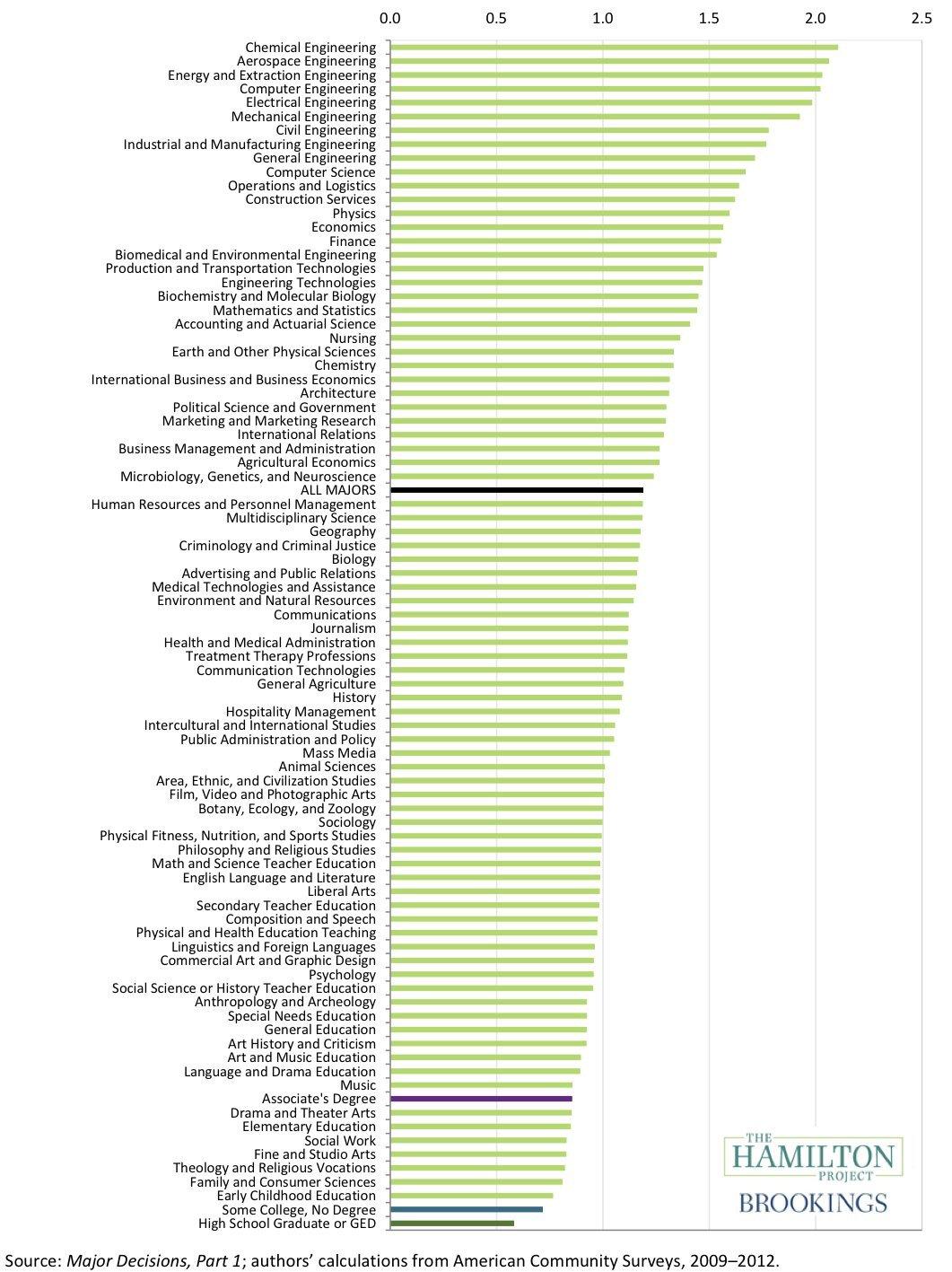
    A study released by the Hamilton Project in September of this year shows just how important a degree when it comes to earning money. A bachelor’s degree in ANY field has proven to unleash your earning potential exponentially. As the study’s authors noted, median earnings of bachelor’s degree graduates are higher than median earnings of high school graduates for all 80 majors studied. This is true at career entry, mid-career, and end of career.

    You can read the entire interesting study on the Hamilton Project website (link above). In the meantime, take a look at this chart that details which degrees earn you the most over your lifetime – and which earns you the least.

    Note: Unfortunately, this study is currently not available in French.

    HamiltonProject


  • Job Profile: Data Entry Clerk

    Job Profile: Data Entry Clerk

    Most people are very familiar with the keyboards of computers and other electronic devices.  They might be able to send a message to their friends or post a comment on social media sites within seconds.  Are you like that? You might be able to send texts to your friends and family, but can you type information into a computer for hours at a time? If so, you might have a future in data entry.

    Everyone who uses a computer is a data entry clerk in a sense. Whenever you send a message to your friends to arrange an activity, the information you send is a form of data. Most of the people who work in data entry, however, deal with a different type of material. They might type out tax information or send out requests for payment. They might work in a university, keeping track of the courses that people are taking and how many students are studying. Almost any kind of information can be part of a data entry clerk’s job.

    Other types of work might also be part of careers in data entry. Besides entering information into the computer, data entry clerks might file papers or organize the offices where they work. They might answer telephones or deal with customers’ questions. They might need to write down what happens during meetings and send the notes to others in the office. Almost any office job can be part of a career in data entry.

    Working in data entry varies from one place to another. Some data entry clerks have full-time jobs in offices, but others work in many different places on short-term projects. For data entry clerks with full-time jobs, salaries range from about $22,000 to $41,000. Experience is an important factor in moving up in salary.

    Becoming a data entry clerk is also closely related to experience. Most data entry jobs require a high school diploma but no other formal education. However, knowledge of various computer programs, including word processing, is helpful. People with certificates in a variety of computer programs are more likely to find work than those who have completed only their high school studies.

    The main skill that data entry clerks need is a rapid typing speed. Most jobs require a speed of at least forty words per minute or more, using both the main part of the keyboard and the numbers on the right side. Being able to type even faster than that will help data entry clerks do their work more quickly and efficiently. A typing speed of eighty words a minute or more is common among data entry clerks. Speed is not as important as accuracy, however. Everyone makes mistakes, but data entry clerks need to be as accurate as possible.

    Practice can help data entry clerks become good at their jobs. If the job appeals to you, you should start practicing your typing and office skills whenever you have the chance.