
Category: Featured Articles

  • Setting up good habits for the school year

    Setting up good habits for the school year

    By Maryam Sheikh

    And just like that, it’s October! Summer seems like it flew by, like it always does. Settling back into a routine for the fall can be both exciting and daunting. In reflecting on my first couple of weeks back, here’s some advice on setting up good habits for the school year.

    I have realized over the years that motivation, unfortunately, is not the only tool you can rely on to propel yourself to success. Life throws many obstacles your way – oftentimes, you may find yourself unmotivated to complete your work, take care of yourself, and find time for hobbies and friends. This is where a little bit of self-discipline will go a long way.

    Rest and preparation are key. In order to perform at your best, it’s crucial to prioritize getting enough, good-quality sleep. This looks like scheduling your day so that you slowly unwind and prepare to rest. For example, you can incorporate some tasks that require low effort, such as reading, journaling, or meditating in the last hour before bed. This is also a good time to get rid of distractions such as your cell phone or laptop. This can help calm your mind down, mentally prepare for tomorrow, and focus on some alone time before the next day. Investing in your sleep will ensure that you are attentive and present throughout the day.

    Rest shouldn’t turn to stress once your alarm goes off. If you find yourself rushing or stressing out in the morning, this is also a great time to create a to-do list for the next day, set out your clothes, and pack a lunch. This will ensure that you can start your next day calmly, taking time to eat well before heading out.

    Preparation also applies to other tasks, such as schoolwork, chores, or other responsibilities. By intentionally dedicating time to these duties in advance, you can chunk your work into sections. During this time, focus exclusively on getting those tasks completed; this will help curb procrastination, reduce stress, and ensure that you can still prioritize your hobbies and social life without falling behind. Remember to set aside time daily to develop your passions and hobbies. I, for example, use my commute to unwind by listening to a podcast or reading a book. This habit can help anchor you during the day, especially when life gets busy.

    Start small, then build up. If you try to build too many new habits at once, you might feel overwhelmed and drop them all. Instead, focus on incorporating one or two habits at a time. See how you can adjust your schedule to accommodate them and reflect on the results. If you are unable to practice a habit for a day, don’t get discouraged! Pick up the next day and continue building a healthy routine for yourself.

    Self-discipline can seem intimidating, but in the right way, it can become a tool to help you become a better version of yourself and set yourself up for success mentally, physically, and emotionally. This school year, make a commitment to taking care of yourself through creating and sticking to healthy habits. To a great year ahead!

  • High School Horror Stories: My Experience with Pre-Calculus 11

    High School Horror Stories: My Experience with Pre-Calculus 11

    Many in (or who have already finished) high school are aware that grade 11 is when general subjects branch out into courses focusing on specific areas of each. In my case, for example, Math branched (and still branches) out into Pre-Calculus, Foundations of Mathematics, and Apprenticeship and Workplace Math.

    Grade 11 was when things got particularly difficult for me, especially regarding math. It’s never been one of my strengths, and this was evident more than ever when I decided to take Pre-Calculus. The school year also got off to a rough start, as I initially decided on taking Foundations of Mathematics but was convinced by people around me to transfer to Pre-Calculus three weeks into the school year, as this course is a way to keep your options open for university programs. As a result, not only did I struggle with the material, I was also behind everyone else.

    I caught up eventually and someone briefly tutored me for my very first test in the class, but it didn’t help much. As stated above, I had experienced challenges with math in the past. The difficulties I encountered with Pre-Calculus, however, were on another level. It became a constant source of anxiety, and each time I opened the textbook, it almost seemed like I was experiencing a recurring nightmare. I recall staying up to the wee hours of the morning doing my Pre-Calculus homework and studying for the course’s exams throughout the year. I also remember even dreading having to physically step foot into our classroom. All in all, the only motivating aspect of the class for me was being able to see a few friends on a regular basis.

    While Pre-Calculus 11 was probably one of the most challenging courses (if not the most challenging course) I’ve ever taken, the experience did teach me a valuable lesson. I made a decision based on what others thought was best for me and not what I knew was right. I definitely wasn’t going to pursue a career that involves a lot of math and should have done more research on university programs that catered to my strengths and/or I was interested in, as well as their required prerequisites beforehand. I just felt overwhelmed at the time and wanted to please others, so I simply went along with what was recommended.

    I learned that truly listening to myself while engaging with course selection was essential. Sure enough, I wasn’t required to take Pre-Calculus in order to get into the program I eventually took in university, so I didn’t have to stay up all those nights thinking this math would somehow be helping with my future plans.

    Despite everything, I did feel proud of myself for persevering and finishing the course. It clearly wasn’t ideal to take Pre-Calculus 11, but I ended the year knowing I tried my absolute best, and that’s all I could’ve done. Overall, I overcame a challenge, and, though in a difficult way, I most importantly learned my lesson about making decisions that are a better fit for me.

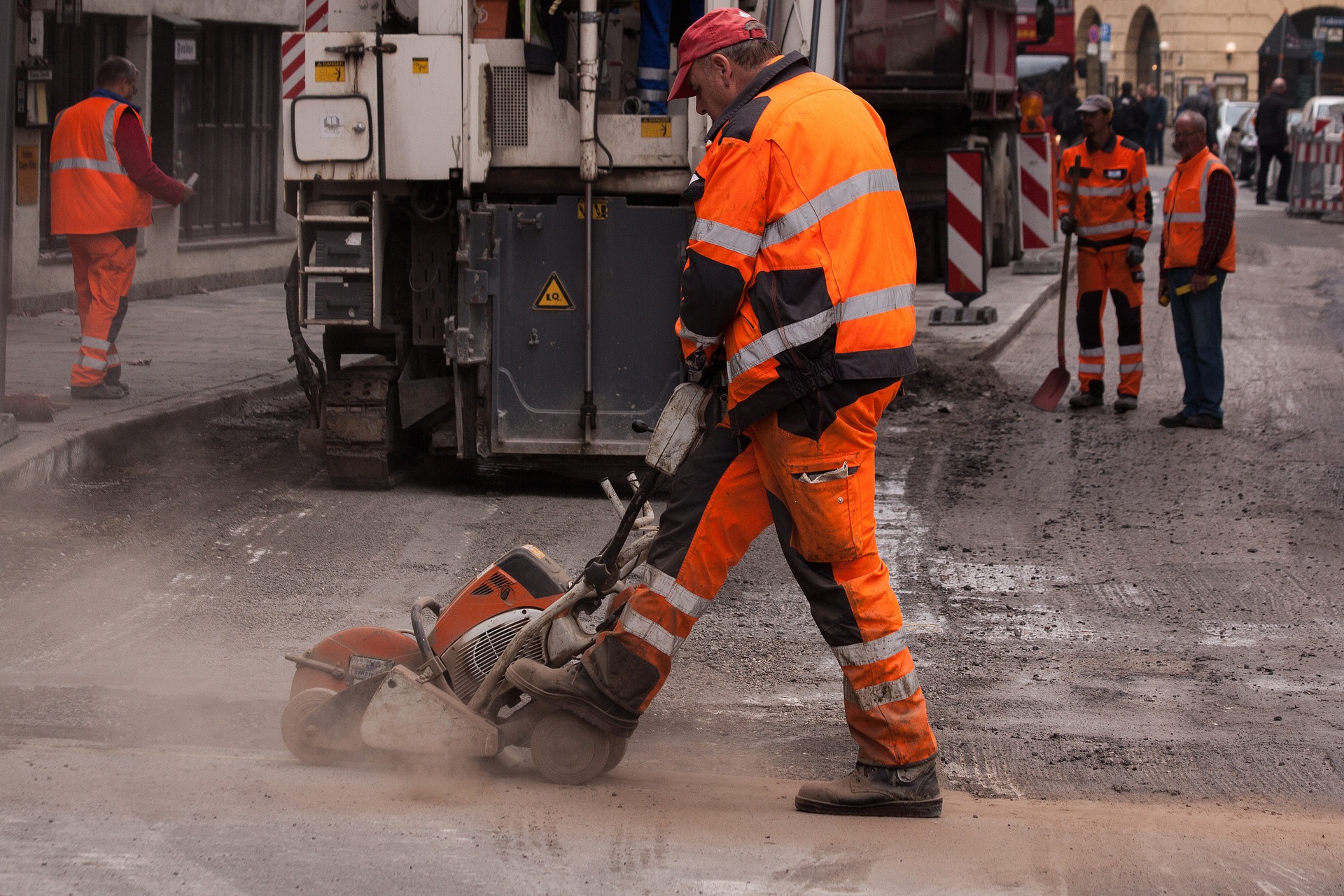
  • Build a Great Trades Career in 10 Years or Less: Making the Most of the Trades Employment Gap

    Build a Great Trades Career in 10 Years or Less: Making the Most of the Trades Employment Gap

    The future of the trades in Canada is caught between two seemingly opposing forces.  On the one hand, future-forward industries that rely on the trades are expected to see huge growth over the next decade: renewable energy generation, electric vehicle and charging infrastructure, residential and commercial construction, and upgrading the infrastructure that underpins our cities and towns, just to name a few.

    On the other hand, the trades are seeing an unprecedented gap between the trades jobs that are available—both now and expected over the next decade—and the number of skilled tradespeople to fill them.

    Over the next decade, the skilled trades are expected to see a significant widening of this gap as an increasing number of older, experienced tradespeople reach retirement age and leave the workforce.  This has only been exacerbated by the past three years of the COVID-19 pandemic, with many older workers—when faced with lockdowns, changing working conditions, and the risk of illness—simply taking the opportunity to retire.

    This isn’t the only reason for the widening gap—and the other primary reason isn’t surprising.  There are fewer young people entering the trades than ever before; specifically, there are not enough new tradespeople coming into the workforce to replace those who are retiring, much less to increase the trades workforce to the levels required by all the growing industries.

    We’ve seen several decades of well-meaning but somewhat misguided efforts by schools, parents, and the government emphasizing a university education as the “best” path to a successful career—even though this isn’t always true, and university isn’t the best fit for everyone.  But this past trend of steering young people away from entering the trades has certainly contributed to the trades crisis we’re seeing now.

    Fewer people working in the trades will have impacts in many industries, particularly those that are anticipated to grow over the next decade, such as construction, sustainability and green/renewable energy, and many service trades.  This will make it more difficult to start and complete vital projects such as residential homes and affordable housing projects, upgrading and constructing infrastructure, installing and maintaining solar and wind farms for energy generation, and much more.

    But this doesn’t mean the trades are doomed, or that it is a sign for further avoidance of a trades career; in fact, it’s just the opposite.  The next 10 years will present unprecedented opportunities for young people to enter the trades and advance quickly in their career to fill the positions created by the wave of retirement.  And the sooner you act, the better, as you will have more opportunities to learn from those experienced older tradespeople before they retire.

    Young people who are just finishing high school and want to enter the trades are in a great position to make the most of these changes and opportunities to come over the next decade.

    If you already know what trade you want to enter, great!  If not, then you need to decide on a trades path to follow.  There are lots of resources to help you figure out the best fit.  High school co-op programs, job shadowing, trades bootcamps, and information available through trade schools and provincial employment programs are all great options.  Most of these will let you experience what it’s like to work in a trade, and to speak with professional tradespeople about their careers.

    You can also talk to your teachers, guidance counsellors, friends, and family to figure out what trade will suit you the best.  You should take into consideration your physical capabilities – can you lift and move heavy objects? Do you like working with your hands? Also consider your interests –  Hair and makeup?  Mechanics and engines?  Cars, or plants, or cooking, or building things?

    Once you know your trade, you can start preparing.  If you still have a year or two of high school left, use that time to do some job shadowing and co-op programs.  Most trades will require finishing high school, completing an apprenticeship and training courses, and possibly certification tests such as Red Seal certification.  Research the requirements to apply for apprenticeships, and determine how long you will need to complete it.  Planning your career path early can be helpful in making sure you stay on track.

    Entering the workforce as a young tradesperson in the next few years means you’ll be in the perfect position to take advantage of the many opportunities that will be available over the next decade.


    Sources

    https://c2cjournal.ca/2022/11/the-skilled-trades-crisis-and-what-to-do-about-it/

    https://kitchener.citynews.ca/local-news/gap-in-skilled-trades-expected-to-hinder-efforts-to-close-housing-gap-6139890

    https://www.saanichnews.com/news/b-c-will-have-80000-job-openings-over-the-next-10-years/

  • The Importance of SOGI Education in Schools (French version available)

    The Importance of SOGI Education in Schools (French version available)

    In 2016, The ARC Foundation launched the SOGI 1 2 3 program in British Columbia. The SOGI 1 2 3 program seeks to unite educators, LGBTQ+ advocates, and students by providing resources that embrace diversity and cultivate inclusive environments.

    The acronym “SOGI” stands for “sexual orientation and gender identity.”

    The concept of SOGI is relevant to everyone, as everyone has both a sexual orientation and gender identity. This means that SOGI concepts and teachings still apply to people who do not identify as part of the LGBTQ+ community.

    As former B.C. Minister of Education Rob Fleming stated in 2019, SOGI education not only “helps save lives,” but also fends off discrimination within school communities. This further enforces that SOGI education is a team effort that is making positive changes in students’ lives.

    My School Experiences

    When I was in high school, there were a few presentations that explained LGBTQ+ terminology and how to support the community.

    I remember watching short films such as “Peking Turkey,” a film about a Chinese-Canadian man bringing his French-Canadian boyfriend home for the holidays, and “I Don’t Want to Go Back Alone,” a Brazilian film about a budding friendship (and something more) between a new student at school and a student who is blind.

    The frequency and reception of these presentations were much more positive than when I was in elementary school. In Grade 6, I was sick on the (only) day where there was a presentation on the LGBTQ+ community.

    When I asked what I had missed, it seemed like the information wasn’t that important. In fact, all I heard from my classmates were insults towards the presenter. I wish that discussion about the presentation was taken more seriously.

    The present-day 23-year-old version of myself still wonders how much 11-year-old me, the one struggling to understand her romantic feelings toward another girl, would have been impacted by a presentation like that.

    Support from Teachers

    According to a 2011 Egale study, 64% of LGBTQ+ high school students in Canada felt unsafe at school.

    I was part of that statistic. Sometimes I was closed off about my sexuality, and other times I was very open with close friends. However, for most of my time in high school, I did not feel safe.

    Support within schools doesn’t only come from presentations provided by organizations and/or advocates. Teachers, and the classroom environments that they create, can also offer support that students may not have elsewhere.

    I joined my school’s GSA in Grade 12. It was called the “Gay-Straight Alliance,” but another meaning for GSA can also be “Gender-Sexuality Alliance.”

    I loved being part of the GSA. It was so freeing to be around people that I didn’t need to hide my identity from. It was one place where I knew that I wouldn’t be judged.

    The teacher who sponsored the club was also my creative writing teacher that year. His classroom, which doubled as the GSA club room, was a safe space. This meant that I didn’t need to worry about any consequences of including LGBTQ+ characters in my creative writing assignments.

    As an anxious 17-year-old at the time, having that support meant everything. The opportunity to include characters like me in school assignments was just the icing on the cake. I will always be grateful for that experience.

    Teachers and SOGI Advocates Together

    According to a 2021 Egale Canada study, 62% of LGBTQ+ high school students in Canada felt unsafe at school. In a decade, the number of LGBTQ+ students who felt unsafe in Canadian schools fell by 2%.

    Even with a small decrease, this shows that progress is trending in the right direction.

    The key to success of SOGI education is not just the resources provided by programs such as SOGI 1 2 3, but also the efforts of teachers. Regardless of the types of problems faced by students, teachers can provide them a safe place that they may not have elsewhere.

    SOGI 1 2 3 continues to work with school boards, LGBTQ+ groups and advocates, and parents to cultivate safe environments for children. As of 2022, this program has been implemented in all 60 of B.C.’s school districts and in six divisions in Alberta.


    Sources: 

    “I Don’t Want to Go Back Alone.” YouTube, uploaded by Steven Shaw, 21 June 2014, https://www.youtube.com/watch?v=KiJbu7h2iEk. Accessed 21 Oct. 2022.

    Ministry of Education and Child Care. “More students supported by SOGI-inclusive education.” BC Gov News, Government of British Columbia, 17 May 2019, https://news.gov.bc.ca/releases/2019EDUC0040-000975. Accessed 21 Oct. 2022.

    “PEKING TURKEY – Award Winning Short Film.” YouTube, uploaded by Michael Mew, 16 Dec. 2015, https://www.youtube.com/watch?v=g663Z4qE8D0. Accessed 21 Oct. 2022.

    Peter, Tracey, et. al. Still in every class in every school: Final report on the second climate survey on homophobia, biphobia, and transphobia in Canadian Schools. Key Takeaways. Egale Canada Human Rights Trust, 2021, https://egale.ca/awareness/still-in-every-class/. Accessed 21 Oct. 2022.

    SOGI 1 2 3 / Alberta. The Arc Foundation, https://ab.sogieducation.org. Accessed 21 Oct. 2022.

    Taylor, Catherine, et. al. Every class in every school: The first national climate survey on homophobia, biphobia, and transphobia in Canadian schools. Final report. Egale Canada Human Rights Trust, May 2011, https://egale.ca/awareness/every-class/. Accessed 21 Oct. 2022.

  • Teaching Indigenous History in Canadian Elementary Schools

    Teaching Indigenous History in Canadian Elementary Schools

    Teaching Canada’s history is useful for understanding the way people think and act. An important part of this education is learning Indigenous history. For Canadian elementary school students, learning Indigenous history with good teachers can be a useful experience.

    For many years, Indigenous stories were only a minor part of history classes in Canadian schools. Recently, however, people have become aware of the need to learn about Indigenous history. Part of the change came because of the Truth and Reconciliation Commission, which published its report in 2015.

    Among other things, the report recommended correcting the way that many people ignored or minimized Indigenous history in education. Even when teachers talked about these people, they tended to focus on the history of exploration and settlement. They tended not to talk about what happened before European explorers and settlers came to live in what later became Canada.

    Many people now agree that including Indigenous history in Canadian elementary schools is important. However, knowing how to do this can be difficult. The University of Victoria has information and suggestions for how to incorporate this kind of education. Some of the suggestions, such as fostering respect, are useful for any kind of learning. Students cannot learn about another culture if they are afraid of being bullied by their classmates for speaking up.

    Another suggestion is to include storytelling and sharing circles. Although every culture has some element of storytelling in its background, this feature is especially important for Indigenous cultures, which might not have as many written records as people of European backgrounds.

    Bringing in subject matter experts is another suggestion that could help students understand Indigenous culture better. A subject matter expert is someone who has studied a particular subject, such as transportation or food and can give people detailed information about that topic. Having someone come in to talk about farming or cooking in traditional Indigenous cultures could help students understand more about everyday life for the people.

    One of the major points that participants in the Truth and Reconciliation Commission considered was the effects of residential schools on Indigenous children. For many years, Indigenous children were taken from their families and forced to go to residential schools, where they lived in dormitories and were sent to classes. Conditions could be very bad in some of these schools, and many children died or lost their connection to their families and communities.

    Learning about residential schools should be an important part of every student’s education because it is part of Canadian history. Students need to know what happened in the past so that they can understand how these events are still affecting the present. If they can also use this information to help them find solutions for the problems people are facing now, that will help make their education especially valuable.

    Indigenous history is an important part of Canada’s past, but it can also help people understand the present. If people teach it sensitively and in the context of other events in Canada and around the world, Indigenous history can be a valuable tool for students to use in their careers and their daily lives.


    Bibliography:

    Amin, Faiza. “Calls Grow to Overhaul Indigenous Studies Taught in Canadian Schools.” https://toronto.citynews.ca/2021/06/14/calls-grow-to-overhaul-indigenous-studies-taught-in-canadian-schools/.

    Kabatay, Jasmine and Rhiannon Johnson. “Charting Progress on Indigenous Content in School Curricula.” https://www.cbc.ca/news/indigenous/indigenous-content-school-curriculums-trc-1.5300580.

    Mandewo, Alexandra. “The Importance of Teaching Indigenous History in Education.” https://www.theindigenousfoundation.org/articles/the-importance-of-teaching-indigenous-history-in-education.

  • Career Profile: High School Teacher

    Career Profile: High School Teacher

    Life changes for students when they go to high school, but the same is true for teachers. If you choose to be a high school teacher, you will need to study and work hard, but you can have a good career. Working as a high school teacher can be a challenging but rewarding job.

    Teachers at all levels need to have a four-year Bachelor of Education degree and certification or a teaching license from the province or territory where they work. Often, people who want to teach high school get a Bachelor of Arts or Sciences and then complete a two-year post-degree education program. The degree never expires, but teachers have to renew their certification regularly. Taking courses and attending conferences is part of being a high school teacher, and people in this field need to keep on learning.

    In the younger grades, teachers normally work with most or all of the subjects that students learn. In high school, teachers tend to specialize in one or two subjects, such as history, physics, or mathematics. In smaller schools, the same person might teach all of the sciences or maybe history, geography, and social studies.

    Larger schools might have enough teachers so that they can each work with only one subject, but knowing a few others is helpful. Another option is to specialize in English as a Second Language, which usually requires taking another year or two of university studies to learn the necessary skills.

    The style of classes often changes between middle school and high school. Often, teachers spend a lot of time giving lectures and leading discussions. In the sciences, teachers might need to give demonstrations of experiments. Besides all of that, teachers need to give tests and assignments, mark them, and keep student records. They keep order in the classroom and enforce the school rules. If there are problems, they deal with them on their own or get help from the principal.

    High school teachers work fairly regular hours at school, but they also have a lot of preparation and marking to do beyond that time. Often, they need to start planning classes during summer holidays, and they might need to work over Christmas and spring break. Work during the year can also be very busy. Still, high school teachers have more holiday time than many other people do. The job can be quite stressful at times, and the holidays can be a good time for teachers to get ahead on their work.

    Finding a job as a high school teacher can be difficult, and many people have to work as substitutes for a long time before they can find full time jobs. Most full-time teachers can earn between $41,000 and $98,000, although that depends on the school, the city or town, and other factors. A small private school, for example, might have low salaries, but teachers can earn a lot if they move up north to a place like the Northwest Territories or the Yukon.

    Working as a high school teacher is a good way of helping students prepare for their adult lives. If you like the idea, why not consider training for this field?

    Bibliography:

    Degrees.ca. “Teaching Degrees: Becoming a Teacher in Canada.” http://www.degrees.ca/education/.

    Payscale Canada. “Average High School Teacher Salary.” https://www.payscale.com/research/CA/Job=High_School_Teacher/Salary.

    Trade Schools, Colleges & Universities. “How to Become a Teacher in Canada.” https://www.trade-schools.net/ca/articles/become-a-teacher.asp

  • Setting Goals for the New School Year: It All Starts with You!

    Setting Goals for the New School Year: It All Starts with You!

    Every new school year is an awesome opportunity to improve yourself and do better than the last! This can be the year you reach your goals and celebrate the successes of the previous year. But how do you go about setting goals for school? Most students don’t learn this naturally, so here is how you can start:

    Think about the past school year and give yourself a star for each improvement you can think of. Feels good, doesn’t it?

    Want to make this year your best yet? Learn to set SMART goals. What are SMART goals, you ask?
    SMART goals are Specific, Measurable, Attainable, Realistic and Timely!

    Here is how you can set some SMART goals:

    1. Ask yourself, “What are things you would like to accomplish in the new school year?”

    2. Think about how you can become a better individual. Improving character is all part of the process. Think about ways you can achieve your goals by being caring, confident, kind and courteous to others. Discuss this with your friends, classmates and family.

    3. Get together with a friend and talk about what personality trait or value is most important to you and set a goal around it. You can start a discussion by asking each other the following questions:
    ○ Who do you admire most, either in your life or fictional, and why?
    ○ How do your traits and values match the person you admire most?
    ○ What traits or values would you like to improve or take action on?
    ○ What actions can be taken to show this trait or value?
    ○ How can I help you achieve this goal?

    ○ Lastly, reverse the roles and have your partner answer the same questions.

    4. If you’re in a class, you can suggest this exercise to a larger group of friends or even to your teacher. Start by listing out different pairs of students. Specifically, you may want to partner with someone that you don’t know as well. Often, what we will find is new skills and knowledge in new people that can expand our insight on goal setting.

    5. If problems are encountered, encourage everyone to participate in solving issues. Join forces with other partners to expand the problem-solving pool. The goal is to get as much help as you need and give as much help as you can.

    6. Towards the end of your SMART goal-setting activity, you can self-evaluate the discussion. What went well? What didn’t go according to plan? What were some challenges? Name some things you would want to improve in the future. Explain your feedback to your partner and have them do the same for you.

    7. To better practice setting SMART goals, switch partners or find another friend to repeat this activity with. You will find that the more you practice, the better you will be at setting SMARTer goals for the new school year.

    References:
    http://www.yourcoach.be/en/coaching-tools/smart-goal-setting.php

  • Tips for Making New Friends This School Year if You’re in a Class without Your Old Ones

    Tips for Making New Friends This School Year if You’re in a Class without Your Old Ones

    A highlight of being a student is becoming friends with your fellow students, especially when you’re in the same grade. It makes academic life more fun, interesting, and fulfilling. A huge part of this is getting to spend time with these friends while you are classmates. However, as you know, you usually have no control over where you’ll end up, and there’s always a chance that you won’t be in the same class as them every school year.

    If this is what you’re experiencing and have found yourself in a class without your old friends (or your friends have moved), here are some tips on how to make new ones:

    Introduce Yourself to or Initiate Conversations with Your Classmates

    This can be intimidating, especially if you’re primarily an introvert. Nonetheless, putting yourself out there is one of the most effective ways to make friends. It can also apply to those whom you do know, but don’t know very well. If you’ve never thought of speaking with them before, why not try now? Of course, this approach most likely won’t work out every single time (your conversations with certain classmates grow stale, engaging with them becomes awkward, you just weren’t meant to be friends, etc.), but at least you’ve made the effort to do so.

    One of the most important things involving this strategy is that you refuse to give up easily, even if your first few attempts don’t result in a new friend(s). It’s better to take chances than not try at all.

    Keep In Mind That Friendships Can Form without Much (Or Any!) Effort or Intention

    Many friendships happen when you least expect them. This can occur during situations such as discussions or other collaborative activities in class. Rather than trying as hard as you can to be friends with specific people/those you think you might have a lot in common with, it’s encouraged to keep an open mind about generally making connections with those around you. Surprises happen, and maybe you’ll make a genuine connection with someone who you never thought would be your friend.

    Join Clubs/Extracurriculars Offered at Your School if You’re Having Difficulties Making Friends in Class

    If you’re having difficulties making new friends in your class, but still want to make new friends in general, try joining clubs/extracurriculars offered at school. You’ll arguably increase your likelihood of doing so because people often connect over something they share an interest in or passion for. In these circumstances, you could even make friends with those who aren’t in your grade as well, because said activities usually have varied age ranges.

    Though, like your old friends, you won’t be able to see some of them during class time, this is a good option for creating a more enhanced social life while also possessing the benefit of being able to do something you enjoy.

    Overall, the tips above significantly heighten your chances of making friends. If you adopt these suggestions and remain optimistic along the way, you’re on the right track to having new friends during this school year.

  • Finding Veritable Online Sources: A Guide for High School Students (French version available)

    Finding Veritable Online Sources: A Guide for High School Students (French version available)

    The internet provides a great source of knowledge. It displays itself as approachable, yet deceiving, with its global accessibility. Anyone can publish and read information on the internet, but the difficulty comes with identifying good resources.

    Below are five questions secondary students should ask themselves when evaluating websites. By considering the background, similarities, and recency of sources, it speeds up the verification process. While not foolproof, these questions provide good indicators of what kinds of resources should be used.

    1. Who is the Author?

    This sounds simple on paper: who wrote the article? Taking note of the author’s name is not enough. Evaluate the company that they may work with, their credentials such as education, and their job title.

    This CTV News article, “Nearly all of B.C. under weather advisory amid first heatwave of the summer,” makes it easy to see the authors’ credentials.

    The authors are Tahmina Aziz and Regan Hasegawa: two individuals who have their job titles clearly listed in the article. They are multi-media journalists at CTV News Vancouver, an award-winning local news station.

    While these two are journalists and not climate specialists, they interview individuals who are well-versed in the field. This is a veritable source covering the start of extreme heat in B.C., from educated journalists, backed up by professionals in areas relevant to the topic.

    1. What is the Website?

    What sort of website published the source? Sometimes URL endings can give hints as to what kind of website it is:

    • Educational institutions have “.edu” (this applies outside of Canada, as Canadian institutions use “.ca”)
    • Sections of government have “.gov” (this applies outside of Canada, as the Canadian government uses “.ca”)
    • Organizations or charities have “.org”
    • Canadian websites have “.ca”
    • Commercial businesses have “.com”

    For example, https://www.harvard.edu is the official website of Harvard University. It ends in “.edu,” signifying that it is a post-secondary institution outside of Canada.

    1. What is the Purpose?

    What is the purpose of the article? Is it to inform, to entertain, or to create a discussion? The Purdue Writing Lab has a page on purposes that groups purposes based on being informative or being persuasive.

    When an author writes to inform, they intend to teach the audience about a topic. When an author writes to persuade, they intend to sway the audience to their perspective about a topic.

    Tom Mulcair uses his experience as a former leader of the federal New Democratic Party of Canada to give his opinion in “Trudeau’s phony war against climate change.” He outlines the prime minister’s promises towards fighting climate change, but Mulcair wants the audience to come away with the perspective that this is not guaranteed.

    In contrast, Nia Williams and Ismail Shakil’s article “Canada lays out C$9.1 bln roadmap to meet 2030 climate targets” is strictly informative. The authors do not give their personal opinions on the situation.

    1. Are Other Sources Similar?

    Look for other sources that cover the same topic: do the other sources display the topic in a similar way?

    To showcase how to compare sources, I picked three articles on recent summer heat waves across Europe. All sites are from different geographical areas: the UK, the US, and Canada.

    All these sources discuss climate change (to varying degrees) as a large factor in Europe’s summer heat waves. None of these sources sugarcoat the implications and keep a serious tone intact.

    1. How Recent is the Information?

    Many websites will list the publication date and/or a date when the article was last updated. If no dates are available, try clicking links in the article (if they are there), or links on the website. If any links are broken or incorrect, it’s likely a sign to look for another source.

    Examples of publication dates and updates can be found in these two articles below:

  • May 2025 Scholarships – Apply now!

    May 2025 Scholarships – Apply now!

    Charles B. Staats Memorial Foundation Scholarship
    Scholarship Value: $12,000
    Awards Available: 1
    Award Deadline:  May 27, 2025

    Voice for Animals High School Scholarship
    Scholarship Value: $500
    Awards Available: 21
    Award Deadline:  May 31, 2025

    Luke Santi Memorial Award
    Scholarship Value: $1,000
    Awards Available: 1
    Award Deadline:  May 31, 2025

    MADD Canada Youth Bursary Fund
    Scholarship Value: $10,000
    Awards Available: 3
    Award Deadline:  May 31, 2025

    Pet Food Association of Canada Martha ‘Marty’ Wilder Honorary Scholarship
    Scholarship Value: $5,000
    Awards Available: 1
    Award Deadline: June 1, 2025

    Electro-Federation Scholarships for Women
    Scholarship Value: $3,500
    Awards Available: 19
    Award Deadline:  June 7, 2025

    Opterus Valerie Ann Arts Award
    Scholarship Value: $5,000
    Awards Available: 1
    Award Deadline:  June 13, 2025

    Villa Charities Undergraduate Student Scholarship
    Scholarship Value: $1,500
    Awards Available: 5
    Award Deadline:  June 30, 2025

    Algonquin College Tuition Contest
    Scholarship Value: $5,000
    Awards Available: 1
    Award Deadline: June 30, 2025

    Charles Labatiuk Scholarship
    Scholarship Value: $1,000
    Awards Available: 1
    Award Deadline: June 30, 2025

    Brian Fudge Memorial Scholarship
    Scholarship Value: $2,500
    Awards Available: 1
    Award Deadline: July 15, 2025

    Durham College Tuition Contest
    Scholarship Value: $5,000
    Awards Available: 1
    Award Deadline: August 29, 2025

    Castagra Roofing Scholarship
    Scholarship Value: $1,500
    Awards Available: 2
    Award Deadline: August 29, 2025

    Great Clips Scholarship Program
    Scholarship Value: $5,000
    Awards Available: 20
    Award Deadline: September 1, 2025

    Western Continuing Admission Scholarship of Excellence for Black Students
    Scholarship Value: $6,000
    Awards Available: 30
    Award Deadline: Ongoing

    Western Continuing Admission Scholarship of Excellence for Indigenous Students
    Scholarship Value: $6,000
    Awards Available: 30
    Award Deadline: Ongoing