Category: Featured Articles

  • Indigenous Student Scholarships for May 2025

    Indigenous Student Scholarships for May 2025

    Calgary Foundation First Nations, Métis (Metis) and Inuit Graduate Bursary
    Scholarship Value: $3,000
    Awards Available: 2
    Award Deadline: May 15, 2025

    First Nations, Métis and Inuit Undergraduate Bursary
    Scholarship Value: $3,000
    Awards Available: 6
    Award Deadline: May 15, 2025

    Yukon First Nations Heritage
    Scholarship Value: N/A
    Awards Available: 1
    Award Deadline: May 31, 2025

    James Bartleman Indigenous Youth Creative Writing Awards
    Scholarship Value: $2,500
    Awards Available: 6
    Award Deadline: May 31, 2025

    Innovation Place Scholarships for Indigenous Students in the Sciences
    Scholarship Value: $5,000
    Awards Available: 1
    Award Deadline: June 1, 2025

    Petro-Canada Award for Indigenous High School Students
    Scholarship Value: $750
    Awards Available: 8
    Award Deadline: July 1, 2025

    Algonquin College Tuition Contest
    Scholarship Value: $5,000
    Awards Available: 1
    Award Deadline: July 31, 2025

    BluEarth Renewables Scholarship Program
    Scholarship Value: $3,000
    Awards Available: 3
    Award Deadline: September 15, 2025

    Dr. & Mrs. G.B. Gowd Bursary for First Nations Women
    Scholarship Value: $1,000
    Awards Available: 1
    Award Deadline: October 15, 2025

    Western Continuing Admission Scholarship of Excellence for Indigenous Students
    Scholarship Value: $6,000
    Awards Available: 30
    Award Deadline: Ongoing

  • Dress Code Red: My Big Interview Is Coming Up! How to Know How to Dress for an Interview or First Impression (French version available)

    Dress Code Red: My Big Interview Is Coming Up! How to Know How to Dress for an Interview or First Impression (French version available)

    By Olivia Condlln-Wilby

    It can be stressful to figure out what to wear to a job interview, especially if you’ve never attended one before. Dressing professionally can help you leave a good first impression and feel more confident as you enter the workforce. You want to show hiring managers that you’re responsible, mature, and ready to adapt to their work environment. Overly casual outfits and distracting accessories can overshadow your accomplishments; you could be remembered as “the candidate with the ripped jeans” rather than for your skills and qualifications.

    As you prepare for your interview, use this article as a guide. Remember, the most important thing is to be confident and comfortable in whatever you wear!

    1. Research the Dress Code

    Different workplaces have different expectations. For example, the cashier at your local grocery store probably dresses more casually than a branch manager at the bank. Before your interview, it’s a good idea to familiarize yourself with the organization’s dress code and prepare to match their preferred style. You may be able to find this information on their website, or you can ask the hiring manager for more information. You can also search for the organization on social media and try to assess the level of formality they expect from employees based on their images and posts.

    As a general rule, business casual attire includes slacks, knee-length skirts, tailored jackets, cardigans, and dress shoes. If you wear make-up, consider a natural look for the interview – for example, use a neutral colour palette that day. Avoid jeans, shorts, sundresses, and athletic wear.

    1. Consider the Little Things

    It’s important to pay attention to the details. Your outfit should be neat and professional from head to toe, as you want to look respectable and prepared. Ask yourself the following questions:

    • Are my clothes clean, ironed, and free of rips or stains?
    • Are my shoes polished and free of marks?
    • Have I groomed my hair and nails?
    • Is my jewelry professional? Have I removed my facial piercings?
    • Are my tattoos covered?

    You want the employer to focus on you – your ideas, abilities, and talents. Try to avoid potential distractions such as flashy jewelry, bold designs, and bright colours.

    1. Respect the Setting

    Even a casual workplace, such as a coffee shop, summer camp, or community centre, will expect you to look professional and put-together for the interview. You might be able to get away with a nice pair of jeans if they’re clean, neutral, and free of rips and tears. But you should still avoid streetwear like hoodies, sandals, athletic shorts, track pants, cropped shirts, or tank tops. When in doubt, assume that business casual is the norm. You should also dress more conservatively for a job interview. Your stomach, shoulders, and back should be covered. Ensure that your clothes fit properly.

    4. Be Comfortable and Confident

    While it’s important to dress professionally, it’s equally essential that you feel good in whatever you’re wearing. Prepare your outfit ahead of time and make sure you feel comfortable walking, sitting, and standing in it. Ensure that you can wear your shoes for long periods of time without feeling pain. If you’re unsure about an element of your outfit, ask a friend or family member for their advice. At the end of the day, employers want to know that you can do the work and be successful. Stay calm and don’t be afraid to smile!


    Sources

    Parent, J. (2022). How to Dress for a Job Interview: 3 Tips for Teens. Your Teen for Parents. https://yourteenmag.com/teenager-school/teens-high-school/what-to-wear-to-an-interview-for-teens

  • Career Profile: Marine Engine Technician (French version available)

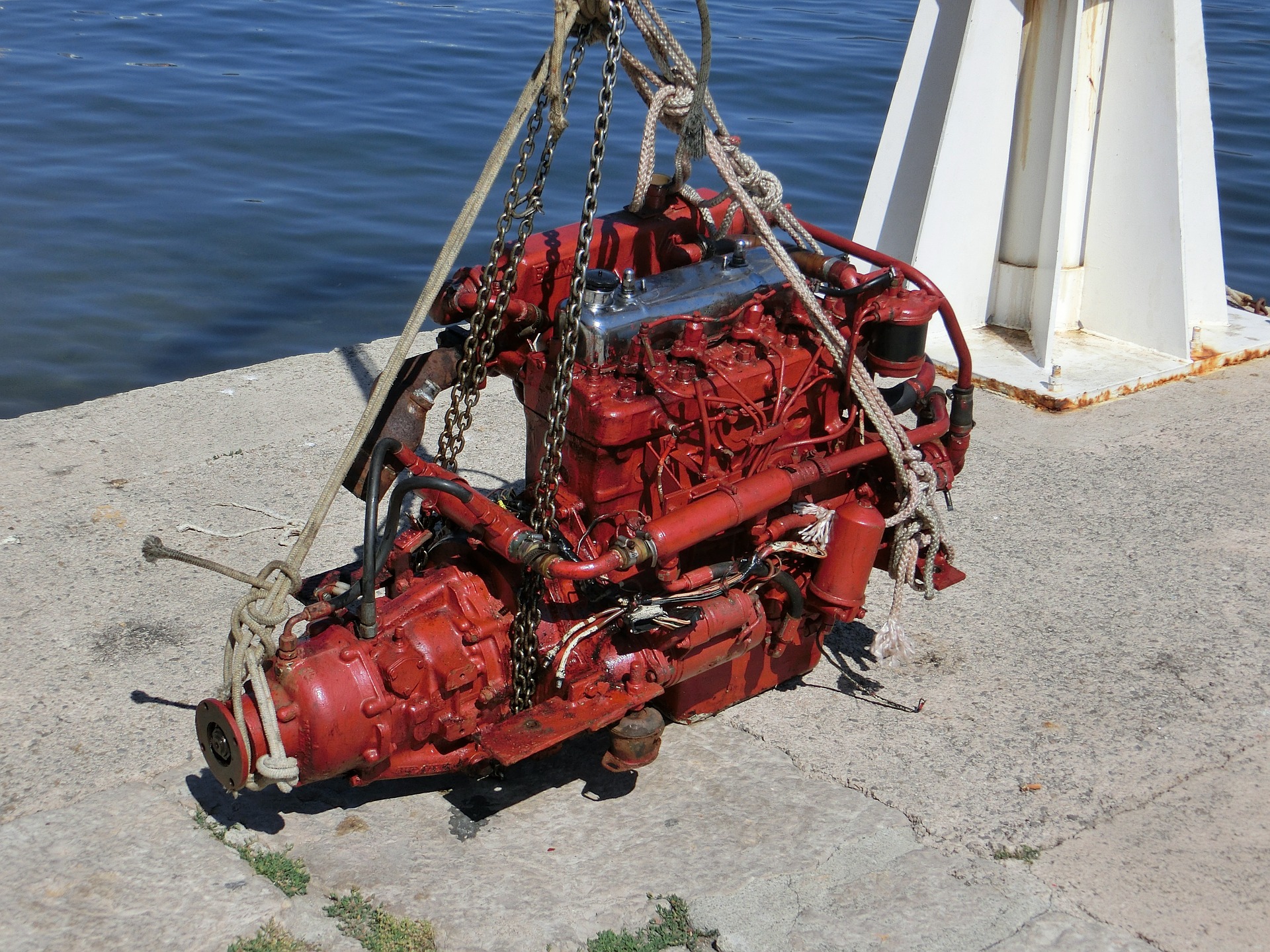
    Career Profile: Marine Engine Technician (French version available)

    Some people like working with engines, taking them apart to see how they work and then putting them back together. These machines come in many different types, including marine engines. Working with these engines can be a rewarding career for people who enjoy mechanical work. If that describes you, why not consider becoming a marine engine technician?

    Engines have many connected parts that help the machine to work properly, but these can also break or wear out. They need people to inspect, service, and repair them. Marine engines might be slightly different from other engines, but they have the same basic structure. Learning to build and repair other engines can help people deal with the types of issues they might face in working with marine engines.

    Normally, marine engine technicians need at least a high school education with courses in topics like mathematics and English. For trade certification, people need a three- or four-year apprenticeship, or five years of work experience with some courses in machine repair or millwright work. In some parts of Canada, official certification is necessary. For that designation, people should be able to work with gasoline and diesel engines, electrical systems, steering systems, and other aspects of engine maintenance.

    Since marine engines are for boats and ships, most of the work in this trade is close to the water on the east and west coasts of the country. Cargo ships and other large boats can provide work for many people in this trade. However, some work might be available near lakes and rivers, where people ride small boats for pleasure. Being willing to work with other types of engines can help provide a steady income, especially in winter when lakes and rivers are frozen and only the large ships can sail.

    Attention to detail is an important quality for marine engine technicians. Making even small mistakes can cause an engine to break down, and technicians need to be careful. Good eyesight with or without glasses and steady hands can help people avoid making errors, and curiosity about machines can make the job interesting. Since machines can change over the years, marine engine technicians should be sure to keep up with the latest developments.

    Like with most trades, people who work as marine engine mechanics can increase their pay and level of responsibility as they develop their skills. Wages usually begin at $21 per hour or $44,000 per year and can rise to $39 per hour or $81,000 per year with experience. People can specialize in a certain type of marine engine or work more generally with whatever is available. Choosing to specialize is easier for mechanics who work with mechanics who can take over other tasks, but it can be possible even for people who work alone.

    The work of a marine engine technician can be tiring and sometimes stressful, especially if a job needs to be finished quickly. Sometimes, clients have tight deadlines, and mechanics have to get the work done before the ship has to leave the harbour. However, it can also be a very good job for people who enjoy working with their hands and solving problems. If this career sounds good, you can already start to prepare for a career as a marine engine mechanic through your schooling or work experience.


    Bibliography:

    Boating Industry in Canada. “Careers.” https://boatingindustry.ca/careers.

    Georgian College. “Inspect, service and repair marine engines as a marine mechanic.” https://www.georgiancollege.ca/academics/programs/mechanical-techniques-marine-engine-mechanic/.

    Job Bank. “Marine Engine Mechanic in Canada.” https://www.jobbank.gc.ca/marketreport/requirements/17112/ca

    Payscale Canada. “Marine Mechanic: Hourly Rate.” https://www.payscale.com/research/CA/Job=Marine_Mechanic/Hourly_Rate.

  • Conflict Resolutions: Handling Disagreements Smoothly (French version available)

    Conflict Resolutions: Handling Disagreements Smoothly (French version available)

    There is no “I” in teamwork, so goes the adage. And as much as you want to believe that everything will go smoothly in group tasks or projects that require your participation, one way or another, there’s always a possibility that you’ll encounter a team member, or members, whose ideas will differ from yours.

    Reaching a compromise to reach an end goal is the best strategy, of course; however, that tends to be easier to say than do. However, consider these four approaches to work through differences to accomplish your mission.

    1. Take time to listen.

    As COVID forced most of us to conduct meetings and discussion in an online setting, it’s been much easier to talk over someone else or monopolize conversations, without being fully aware of it. And if you don’t agree with the views being presented, you may become easily frustrated. As a result, you tend to shut off and don’t make an effort to pay attention to what’s being said. However, keep in mind that listening to what others have to say is the first step in handling conflicts.

    1. Be empathetic and understanding.

    When you want to make a point, sometimes you get carried away and become too self-involved that you fail to recognize emotional cues from the other participants in your meeting. They may be having a tough time following the topic at hand, or they may be having issues at home that they’re not ready to talk about and are affecting their current disposition. Do all you can to drive your point home, but be sensitive in your tone and manner of speaking if you notice someone seems to be having inner turmoil.

    1. Don’t underestimate the theory of democracy.

    Everyone has their own plan to accomplish a task. Sometimes, certain factors come into play, like personal preferences or tastes. For instance, if you were assigned to do a group outing to build team rapport, and you prefer to head to a museum because you love the arts, but others have suggested a picnic at the park, then put it to a vote. This way, you and your team members come to a decision that’s fair to all.

    1. Be open to compromise.

    The skill to learn how to compromise with your peers can’t be developed overnight. However, if you open your mind to it, in due time, you’ll be a master at this. Remember, collaboration skills take practice, and they require a mindset of taking into consideration other people’s needs and working around them to meet your own needs as well.

    No matter what setting you’re in or how old you are, you’ll likely find yourself in a situation that requires you to put your conflict resolution skills in full gear. During these times, always take things in stride and remember that team effort overpowers individual effort.


    Sources

    MindTools. “Managing Conflict in Meetings.” https://www.mindtools.com/pages/article/newTMM_65.htm.

    Morreaux, Angelique de la. “How to Lead a Conflict-Resolution Meeting.” Chron. https://smallbusiness.chron.com/lead-conflictresolution-meeting-10665.html.

    Neely,  Joe. “10 Most Effective Conflict Resolution Tips for the Workplace.” Toggl. https://toggl.com/blog/conflict-resolution-tips.

  • Career Profile: Archivist

    Career Profile: Archivist

    Historical documents such as paper records, artifacts, music, photographs, and video serve to collect the history of a city, country, or culture.  These documents are stored in archives belonging to the public, private, and national organizations, which help to keep these documents safe and accessible.  If you are interested in studying and preserving parts of history, then working as an archivist might be a great career path.

    Archivists work with both physical collections housed in a physical location – such as paper documents, videos or photographs – and electronic collections maintained in computers and databases.  Some collections are publicly accessible, such as those housed in museums, educational institutions, and other public sector organizations.  Others are privately owned by businesses or organizations and may not be accessible except by internal personnel or by special request.

    Archivists are responsible for the management, processing, storage, and dissemination of information regarding items and documents contained in an archive. The daily activities that archivists do include managing the operation and processes of the archive, such as finding materials, creating and managing cataloguing systems, maintaining computerized databases, and scheduling the review and disposal of materials.  Archivists are also responsible for assessing and appraising new archival materials, developing collections, and authenticating documents and multimedia objects.

    A large part of an archivist’s job is the conservation and preservation of archived materials to ensure they remain in good condition.  They also do a great amount of research into the origins of archived materials, learning about their significance, and developing ways to share this information and make it findable and accessible.

    Many archivists work with the public in museums and historical sites, and so must have highly developed interpersonal skills, as well as strong communication skills.  They can assist people with searching and finding materials in the archive, setting up viewing processes or equipment, and understanding or sharing the history and importance of materials.  They will also be responsible for setting up informational displays.

    While much of an archivist’s work will be indoors, working seated at a desk or computer, depending on the type of archive, there may also be moderate physical requirements for lifting, carrying, standing, and walking.

    Becoming an archivist requires, at a minimum, a bachelor’s degree in archival studies from a college or university.  Depending on the job and type of archival work, a master’s degree in archival studies, library and information sciences, or history is also required.  The average yearly salary for archivists working in Canada is around $32,000, with earnings reaching upwards of $72,000 with a decade or more of experience and specialization.

    Historical documents help preserve the rich past of cultures and human civilization. Archivists play a critical role in this. It is an ideal career path if you are interested in history, documentation, and educating others.


    Source

    Job Bank. “Archivist in Canada.” https://www.jobbank.gc.ca/marketreport/occupation/16130/ca

    Knoth, Jaime. “What Does and Archivist Do?” LiveAbout. https://www.liveabout.com/what-does-an-archivist-do-525664

    PayScale. “Archivist Salary in Canada.” https://www.payscale.com/research/CA/Job=Archivist/Salary

  • Career Profile: Loan Interviewers and Clerks

    Career Profile: Loan Interviewers and Clerks

    Suppose that someone wanted to borrow money from the bank. An employee would have to gather information about the person, fill out the paperwork, and make sure that everything was done correctly. Loan interviewers and clerks are the people who get this type of work done. If you are good with numbers, it might be the right job for you.

    People want money for many different reasons. They might want to renovate a house, enroll in university courses, or start another type of project. Loan interviewers talk to these people to find out what the plan is and how the borrowers intend to pay the money back. The interviewers and the borrowers discuss the terms of the loan, such as how much money the person will receive, how much interest the bank will charge, and when the borrower must pay the money back.

    Once the terms of the loan are in place, the interviewer checks the borrower’s documents to make sure that they are accurate and complete. This might include a statement of the borrower’s income, a mortgage for a house or condominium, a record of other property that the person owns, or anything else that could affect the borrower’s ability to pay back a loan. The interviewer fills in the necessary information on a form and then gives it to the borrower to sign.

    Often, the interviewer also acts as a clerk in these situations, photocopying or printing documents like the loan agreement and other pieces of information. Sometimes, a different person acts as the loan clerk, gathering the documents and filing them in the right places. Working in this job requires people to be thorough and accurate, and it is important for loan interviewers and clerks to know their jobs well and to pay attention to the details.

    Loan interviewers and clerks are normally not the ones to make the final decisions on a borrower’s application. Often, the next step is to fax or e-mail the application to a supervisor, who then decides if the loan is worth the risk or if the applicant is unlikely to be able to pay it back.

    All people working as loan interviewers and clerks have at least a high school diploma. Mathematics and English courses are the most useful classes to take, but business courses are also helpful. In many places, people need an associate’s degree or a bachelor’s degree to work in this field. Special loan or credit training taking between six months and a year might also be necessary, and most people in this field require a license.

    Career prospects for this career are quite good throughout the country, although that can vary if the economy changes. Besides working in banks and credit unions, people in this field can find work in private financial companies and even the government or social agencies.

    Generally, loan interviewers and clerks earn between $39,000 and $62,000 per year, depending on their experience, the size of the place where they work, and other factors. The job is not physically difficult, but it can be stressful to deal with potentially frustrated or confused clients all day, and people in this field might want to move to a different aspect of financial work after a few years.

    The rules regarding banks and money change often, and it is important for loan interviewers and clerks to be aware of any new regulations that might affect their work. Their employers might send them to seminars and courses to help them stay current, and people in this field should keep on learning as much as they can.

    Working as a loan interviewer and clerk can be a good job for people who understand finance and are organized and attentive to detail. If that describes you, the job of loan interviewer and clerk might be a good fit.


    Bibliography:

    Career Planner.com. “Loan Interviewers and Clerks.” https://job-descriptions.careerplanner.com/Loan-Interviewers-and-Clerks.cfm.

    Job Bank. “Financial Clerk – Financial Sector in Canada.” https://www.jobbank.gc.ca/marketreport/outlook-occupation/1674/ca.

    Payscale.com. “Loan Officer Salary in Canada.” https://www.payscale.com/research/CA/Job=Loan_Officer/Salary.

    Recruiter.com. “Salary for Loan Interviewers and Clerks.” https://www.recruiter.com/salaries/loan-interviewers-and-clerks-salary/.

    Statistics Canada. “6235—Financial Sales Representative.” https://www23.statcan.gc.ca/imdb/p3VD.pl?Function=getVD&TVD=314243&CVD=314247&CPV=6235&CST=01012016&MLV=4&CLV=3.


  • Career Profile: Broadcast Technicians

    Career Profile: Broadcast Technicians

    When people read the news, act out a story, or narrate a documentary, they need others to take care of the filming, sound, and other technical aspects of the process. Broadcast technicians work with electronic equipment to produce programs for people to listen to or watch.  If you want to be part of making information and entertainment available to people, the job of broadcast technician might be right for you.

    Good stories or music on the radio or television are not very useful unless people can see and hear them. On the radio, the sound is especially important since listeners have nothing to see. For television, both lighting and sound are essential. Broadcast technicians work with the equipment necessary for the actors, reporters, and other people who make television and radio so that they can concentrate on the content instead of the technical aspects of broadcasting.

    Often, technicians must listen or watch carefully and make small adjustments to the light and volume controls. For example, some people have louder voices than others, and these adjustments can help to make the sound more pleasant for listeners. Filming indoors might also require lighting adjustments that are unnecessary outdoors. Often, the director of the program will make the decisions about what kinds of lighting or sound to have, but the broadcast technician should be able to follow directions but also make changes when necessary.

    Generally, the minimum education for a broadcast technician is a certificate or diploma from a technical college, but some people might want to get a three- or four-year degree in broadcasting or related fields. In high school, courses in broadcasting or computers are helpful, but English and even theatre could also be useful.

    Jobs are more likely to be available in large cities, but even small towns might also have openings for broadcast technicians. Salaries start at $58,000 and can rise to $65,900, depending partly on experience but also on the place. A radio station in a small town, for example, is likely to pay less than a broadcaster in a large city.

    Working as a broadcast technician is not very physically difficult, but it can be busy and stressful, especially if something goes wrong with equipment during a broadcast. People in this career need to be very well prepared before a show, but also be ready to react quickly if a light breaks or a microphone stops working. Being able to work with people is important, but often workers in this job also need to be independent enough to get the necessary equipment together and check it for any problems.

    Depending on the type of job, people in this field might have to work outdoors, recording special events such as weddings or graduations. The hours can be long when a project needs to be finished, but some broadcast technicians can find jobs with regular hours. Technological skills are important, and flexibility can be very helpful. The work can be repetitive if a scene needs to be redone, and people in this field should have a certain amount of patience.

    Working as a broadcast technician can be good for people who enjoy being behind the scenes of radio or television. If you enjoy technology and making information and entertainment available to people, this job could be a good choice.


    Bibliography:

    Job Bank. “Broadcast Technician in Canada.” https://www.jobbank.gc.ca/marketreport/summary-occupation/16280/ca.

    Job Bank. “Broadcast Technician in Canada: Job Opportunities over the Next 3 Years.” https://www.jobbank.gc.ca/marketreport/outlook-occupation/16280/ca

    LinkedIn. “Broadcast Technician in Canada.” https://www.linkedin.com/jobs/broadcast-technician-jobs/?currentJobId=3444898894&originalSubdomain=ca.

    Work BC. “Broadcast Technicians.” https://www.workbc.ca/career-profiles/broadcast-technicians.

  • Career Profile: Bindery Worker

    Career Profile: Bindery Worker

    If you’re considering jobs that have a good future, you might not think of working in a bindery. However, getting a job as a bindery worker can still be a good choice for people who enjoy working with machines and who like to make information and entertainment available to people. If this idea appeals to you, preparing for a job as a bindery worker could be the right decision to make.

    Binderies are places where books, magazines, and pamphlets are put together and made ready to send out to a bookstore or other company. Sometimes, binderies also assemble the pages for a family album or travel book. Many places, like government offices, libraries, and community centres, also publish pamphlets with information about programs, issues, or any other information that they think people will need. Publishing companies are good places to find binding jobs.

    Before a book or pamphlet goes to the bindery, someone must write the content and decide how to place the words and pictures on the pages. Bindery workers might sometimes be involved in helping people decide what works best so that everything on the page is readable. Have you ever read a book that it too tightly bound for you to read the words in the middle? Bindery workers help to make sure that this problem does not occur by setting the margins of a page at the right place to ensure that readers can see everything on the page without too much trouble.

    Checking the book or other item before binding it is important. The customer might also check for any flaws, such as smudges or smears on the pages, before bringing the project to the bindery. However, a final check for any flaws can help bindery workers avoid problems later in the process. Sometimes, this might mean that customers need to redo parts of the project several times before bindery workers can begin.

    Once the margins and other settings are established, bindery workers feed books or other materials into the binding machines according to what the client wants. Different publications might require stitching, glue, or staples. Filling the machine with the right materials is important for getting the job done. Once the books, magazines, or pamphlets have gone through the machine, bindery workers check each item to make sure that it is properly fastened together and that it will not fall apart.

    Being detail-oriented is important for people working in binderies. The work can sometimes be physically difficult, and the machines can be loud. A certain amount of physical fitness is necessary for carrying books and papers from one place to another, but people can work in this field late into their careers. Wages start at about $15 per hour or $31,000 per year and can rise to $20 per hour or $41,000 per year.

    Normally, a high school education is the main requirement for work in this field, but studying graphic arts or technology can also be helpful. People can find at least some work in this trade almost anywhere, but cities with large publishing companies are the best places for bindery jobs.

    If you like physical work and helping make information available to people, this trade might be right for you.


    Bibliography:

    Career Planner. “Bindery Worker.” https://job-descriptions.careerplanner.com/Bindery-Workers.cfm.

    Job Bank. “Bindery Worker—Printing in Canada.” https://www.on.jobbank.gc.ca/marketreport/summary-occupation/18521/ca.

    Payscale Canada. “Bindery Worker: Hourly Rate.” https://www.payscale.com/research/CA/Job=Bindery_Worker/Hourly_Rate.

  • Career Profile: Cabinet Maker

    Career Profile: Cabinet Maker

    Every average kitchen has cabinets for storing dishes or food, and someone needs to build these cupboards. Working as a cabinet maker can be a good choice for people who are precise and who like to work with their hands. If that describes you, why not consider this trade?

    When construction companies build houses, schools, or offices, they need someone to finish the interiors of the building. Cabinet makers are part of the process. They also work on renovations. The ability to follow instructions is important, since people ordering the cabinets might have specific ideas of what they want. For example, they might want special kinds of wood like oak or pine. They might want a plain design or something more elaborate. Being aware of current trends is important for being able to meet customers’ needs.

    Generally, cabinet makers need at least a high school education. Certification is not required, but is available in most parts of Canada. However, most people in this trade go through an apprenticeship program. The length of these programs can vary, depending on the region, but most apprenticeships include four twelve-month periods with at least 5,440 hours of practical experience and four eight-week units of technical training. Some people can also choose to shorten their apprenticeships through studying at a college or technical institute, and work experience can help people get through the program quickly.

    An ability to use tools such as saws, files, and paintbrushes is an important part of working as a cabinet maker. Some cabinet makers might also use special tools for particular jobs that they do. The work can be dusty and dirty, and getting splinters is a constant danger in working with wood. Some cabinet makers might also work with other materials, such as metal or fibreglass. Small injuries are common, and people in this field need to be careful to wear masks when they are working with certain materials.

    Many cabinet makers work as contractors for construction companies or private individuals. They might own a cabinet-making business or work on a salary for a larger company. Generally, people in this trade earn between $42,000 and $60,000 per year, although some people can earn much more than that. Because the work can require endurance, especially when a job has to be finished quickly, it can become difficult for people as they age. After some point, people might decide to move on to a different aspect of the work, such as management.

    Precision is a very important part of being a cabinet maker. Often, the first part of the job involves measuring out sections of wood or other materials and then marking them for cutting. Often, the cabinet maker will do the entire job from beginning to end, but sometimes a cabinet maker might do most of the planning and leave the rest of the work for others. People in this trade might need to know how to find customers, estimate costs, supervise employees, and deal with other aspects of management.

    Cabinets can make a kitchen or office look better and more organized, besides being useful for storing dishes or other necessary items. Working as a cabinet maker can be a very satisfying job.


    Bibliography:

    Careers in Construction. “Cabinetmaker.” https://www.careersinconstruction.ca/en/career/cabinetmaker.

    Job Bank. “Cabinetmaker in Canada.” https://www.jobbank.gc.ca/marketreport/requirements/16991/ca

    Northern Alberta Institute of Technology. “Cabinetmaker.” https://www.nait.ca/programs/cabinetmaker?term=1-winter.

    Ontario Colleges. “Cabinetmaking.” https://www.ontariocolleges.ca/en/programs/professions-and-trades/cabinetmaking.

    Talent.com. “Cabinet Maker Average Salary in Canada, 2022.” https://ca.talent.com/salary?job=cabinet+maker#.

  • Career Profile: Veterinarians for Large Animals

    Career Profile: Veterinarians for Large Animals

    If you have a pet, you probably take it to a veterinarian for vaccinations or to take care of injuries or illnesses. In cities, veterinarians mostly take care of animals like cats, dogs, or hamsters. In farming or ranching areas, however, they might look after large animals like cows or horses. If you like looking after animals and enjoy being outside, a career as a veterinarian for large animals might be right for you.

    These days, farmers and other people who work with large animals are concerned about a lack of veterinarians to care for large animals, especially in Manitoba. People are worried that they will have no one to help if a cow has trouble giving birth to a calf or if other medical problems occur on the farm.

    Part of the problem is that opportunities for studying to become a veterinarian are limited. Canada has only four veterinary colleges, and many people in the west attend the one in Saskatchewan. However, moving to a different province for studies can be expensive and difficult. Despite the issues, studying to be a veterinarian for large animals can still be worth the effort.

    Large animals are normally too big to take to a veterinarian’s office, and so this career normally involves going to farms and ranches to look after the cows, horses, or other animals. Hours can be long, especially in calving season, and it can sometimes be dangerous if an animal decides to kick or bite the veterinarian. The weather can also be a problem, although sometimes the work can take place in a barn or other shelter.

    Farms and ranches where large animals live are generally not very close to cities. Veterinarians for large animals usually live either in the countryside or in small towns close to where the animals are. In Ontario, salaries for people in this field start at about $19,000 per year and can rise to $145,500. Working with large animals can be quite strenuous, and veterinarians might wish to move to a more supervisory role later in their careers.

    Training for work as a veterinarian can take a long time. Normally, it involves an undergraduate degree in the sciences and then veterinary school. For most people, the whole process can take eight years of studying or even longer for some specialties. For people who love to work with animals, however, the long process can be worth the time and effort. Taking high school courses in biology or zoology, as well as mathematics and English, can help students prepare for the work.

    After finishing the training process, veterinarians for large animals might want to start their own practice or join one that is already running. Even in a larger practice, the work can be quite solitary, but having colleagues nearby can help new veterinarians deal with the pressures of the work. Being able to consult others about difficult cases can be very helpful in this profession.

    Career prospects for veterinarians working with large animals are good at the moment because of the shortage of qualified people in this field, but the situation could change in the next few years. Still, farmers and ranchers will always need veterinarians who can look after large animals, and some jobs will always be available.

    Working with large animals like cattle and horses is not for everyone, but it can be a good career for people who enjoy the outdoors and helping others. You might want to consider this very useful profession.


    Bibliography:

    Indeed Career Guide. “How to Become a Vet in Canada (With Steps and Duties).” https://ca.indeed.com/career-advice/finding-a-job/how-to-become-vet-in-canada#

    Kemp, Chelsea. “Cattle Breeder Fears Life-or-Death Calving Decisions Amid Rural Manitoba Veterinarian Shortage.” https://www.cbc.ca/news/canada/manitoba/vet-shortage-manitoba-large-animal-1.6733796.

    Lewis, Roy. “How to Address the Shortage of Large-Animal Veterinarians.” https://www.manitobacooperator.ca/livestock/what-we-can-do-to-addressthe-shortage-of-large-animal-vets.

    Ross University. “What is a Large Animal Veterinarian?” https://veterinary.rossu.edu/about/blog/what-is-a-large-animal-veterinarian.

    St. George’s University. “How to Become a Vet in Canada: Your Ultimate Outline.” https://www.sgu.edu/blog/veterinary/how-to-become-a-vet-in-canada/