Category: Nature Watch

  • Could Hockey Become an Endangered Sport?

    Could Hockey Become an Endangered Sport?

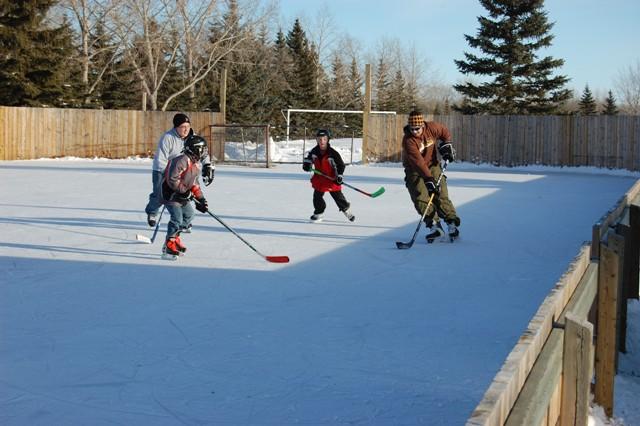
    One benefit of the National Hockey League strike: it gave people time to play outside on real ice! But outdoor skating could face the same difficulties as the NHL – a drastically shorter season or outright cancellation. Research from Montreal’s McGill and Concordia universities shows global warming is already having an effect on outdoor rinks in Canada.

    “Many locations across the country have seen significant decreases in the length of the OSS [outdoor skating season], as measured by the number of cold winter days conducive to the creation of rink ice,” their study states. “This is particularly true across the Prairies, and in Southwest Canada, which showed the largest (and most statistically significant) decreases in the calculated OSS length between 1951 and 2005.”

    This echoes a 2009 David Suzuki Foundation report, On Thin Ice: Winter Sports and Climate Change. The McGill investigation looks at constructed outdoor rinks while DSF’s focuses on frozen rivers, canals and lakes, but the conclusions are similar. Both predict that, unless we rein in greenhouse gas emissions, outdoor skating in parts of Canada could be history within the next 50 to 100 years (the McGill study’s authors now say it could happen within 20 to 30 years), and the length of the outdoor skating season will continue to decline across the country.

    Meanwhile, at Ontario’s Wilfrid Laurier University, geographers have launched www.RinkWatch.org, a website where people can record information about backyard or neighbourhood rink conditions over the winter.

    “Our hope is that Canadians from coast to coast will help us track changes in skating conditions, not just this year, but for many years to come,” associate professor Robert McLeman said in a release. “This data will help us determine the impact of climate change on winter in terms of length of season and average temperatures.”

    According to the DSF report, one of Canada’s best-loved outdoor skating venues, Ottawa’s Rideau Canal, provides an example of what to expect. It concludes that, with current emissions trends, the canal’s skating season could shrink from the previous average of nine weeks to 6.5 weeks by 2020, less than six weeks by 2050 and just one week by the end of the century. In fact, two winters ago, the season lasted 7.5 weeks, and last year it was down to four. The canal had yet to fully open for skating when this column was written.

    “On Thin Ice” notes that many of Canada’s hockey heroes got their start on outdoor rinks. “Without pond hockey, we probably wouldn’t have what has become the modern game of hockey,” the authors state. The DSF study says climate change could have a profound effect on many other winter sports, from skiing and snowboarding to winter mountaineering.

    With food and water problems caused by more frequent droughts and floods, property losses and high infrastructure costs from rising sea levels, and increasing illness and death from extreme weather and pollution, hockey may be the least of our worries. But losing winter recreation opportunities, let alone our ability to produce food and keep our homes warm and people healthy, needn’t happen. Solutions to our human-created problems exist. We just need our leaders to start taking this and other environmental issues seriously.

    That’s not likely as long as we keep electing people who show more concern for the future of the fossil fuel industry than the citizens they are supposed to represent. Politicians who only look ahead three or four years — until the next election — aren’t seeing the big picture.

    We need to consider every solution possible, now — from putting a price on emissions through carbon taxes and/or cap-and-trade to stopping the rapid exploitation of fossil fuels and switching to cleaner energy sources.

    A skate or hockey game outside is a good place to start!
  • The World’s Newest Snake

    The World’s Newest Snake

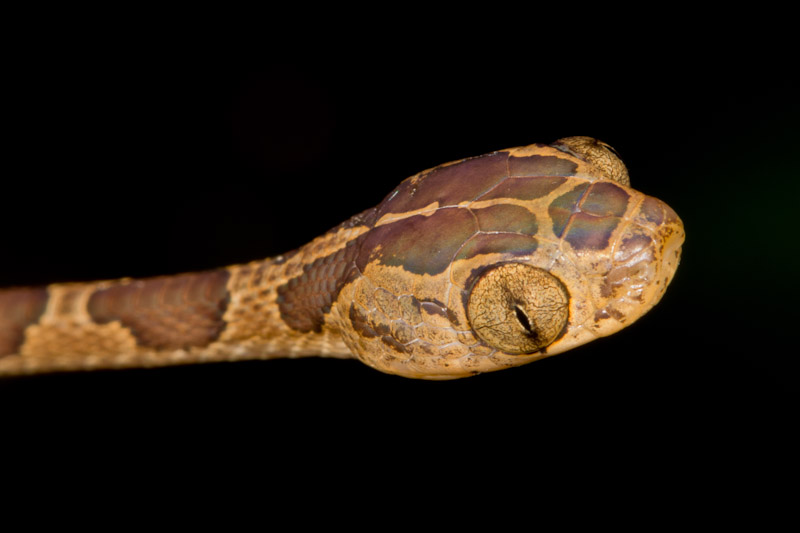
    Suppose that you saw a long, thin brown rope hanging from a tree and that the rope suddenly started to move. What would you think it was? If you were in the Chocoan forests in the South American country of Ecuador, you might realize that what looked like a rope was really the blunt-headed vine snake, which has only recently been discovered. For scientists and other snake enthusiasts, the discovery is exciting and will likely prompt years of exploration and study.

    Blunt-headed vine snakes are the seventh known species in a group called Imantodes chocoensis. These snakes live mainly in Mexico and in Central and South America. Blunt-headed vine snakes are long, thin, and normally brown or cream-coloured. They hunt for frogs, lizards, and other small animals at night, hanging from the trees where they live and grabbing animals that pass by the tree. Although they have some poison in their fangs, they are unlikely to do much harm to people with their venom.

    The most unusual thing about blunt-headed vine snakes is their appearance. They have long, thin bodies with thin necks which then bulge out to a large head. Sometimes, the head can even be about eight centimetres wide, making it seem very large on such a long, thin body. They have large, bulging eyes which take up more than 25% of their heads. Their stomachs and other internal organs are near the ends of their bodies, close to the tail. Their closest relatives live on the other side of the Andes Mountains in South America.

    Although most people have probably never heard of the blunt-headed vine snake, some scientists have known about it for a few years. The snake’s discovery came in April 2007, when a group of zoologists (people who study animals) led by a scientist, Omar Torres-Carvajal from the zoological museum, first found it. After looking closely at it and comparing it with other snakes, they realized that it was a species that no one had identified before. Now they will try to find out how to preserve the snake’s home and to keep it from disappearing.

    Finding an unknown snake in Ecuador was an exciting discovery, but possibly not entirely unexpected. Ecuador is known for its many types of animals and the many species that live there. The Amazon River region is home to many different species of plants and animals. The place where researchers found the snake is part of a region called Tumbes-Chocó-Magdalena, which has an area of 274,597 square kilometres. With so much space, there could be many more animals in the area that scientists have not yet discovered.

    For some zoologists, it might seem as if all of the world’s species of animals are already known and that there is nothing new to learn. However, the discovery of the blunt-headed vine snake in northwestern Ecuador could give people new enthusiasm to explore the world’s animals. They could also find new ways to keep the snakes safe from threats and to help them to thrive.

  • Co-Operative Education and Volunteering

    Co-Operative Education and Volunteering

    When we think of work we usually immediately think of compensation – which, in all fairness, is why we work. However, working for free or enrolling in what is called a co-operative education program can be quite beneficial for young individuals trying to get their foot in the door. It is usually offered to high school students and young adults working towards a high school diploma. Volunteering is also another way to get experience, so let’s take a deeper look into both of these options.

    Co-operative education is aimed at both high school students and young adults who have not yet completed the requirements for a high school diploma. The student normally chooses their place of employment and is scheduled to come to class a few times a week to log in what they did at their workplace and what they learned.

    Co-op placements, much like volunteering, gives hands on experience in the workplace. They do not differ much except that successful co-op students may be hired on by the employer upon successful completion of their assignment. In addition, students earn credits through the co-op program that go towards their high school diploma.

    Co-op is perfect for students who have not yet graduated; not only will they receive credits, but they may also be setting themselves up for future employment.

    Co-operative education is offered by all high schools and adult education centres in Ontario. Perquisites vary, but are not very strict. Check with your local high school or adult learning centre.

    Volunteering is ideal for high school students who are either looking to complete their 40 hours of community service (which is a mandatory requirement for high school graduates) or students who would like to see more of the workplace, gain first hand exposure at working life and determine which career would most suit them.

    In this day and age, networking is a must. By volunteering students can meet employers, build strong professional relationships with their colleagues and apply these skills to life after high school. Students can gain valuable workplace experience, use them as references and share their knowledge with classmates.

    With so many employment opportunities, students can limit their career choices and choose the appropriate courses that will guide them to their chosen field of study.

    Both volunteering and co-op serve as great chances to develop strong communication skills, familiarize yourself with the workplace and its people and get to know what career best suits you.

    By engaging in volunteering or co-op, students will carry life long references and lessons brought on by early workplace exposure. This will follow students to and from college or directly to the workplace.

  • The Human Cognition Project

    The Human Cognition Project

    Every day, you use your brain in many different ways. You use it to learn new material at school, to talk with your friends, and even to blink your eyes. Right now you’re using it to read and understand the words of this article. Scientists know that the brain controls the rest of the body, but there are still many mysteries about exactly how it works. How do people really think? Why do their brain functions change as they get older? Researchers working with the Human Cognition Project hope to find answers to questions of human thought.

    The word “cognition” usually refers to the process of thought, including how people get information and what they do with it. Cognition can be conscious, like when you talk with your friends and think about the words everyone is saying. It can also be unconscious, like when you quickly pull your hand away from a hot stove.

    People’s ability to think and process information changes throughout their lives. Young children have to learn the connection between touching hot stoves and burning their fingers, but most people can make connections like these without consciously thinking about them. They learn how to behave in different social situations and begin to develop their own ideas about the world and how it works.

    Cognition changes throughout people’s lives. Accidents, illnesses, stress, or getting older can often affect the brain. Everyone has occasional memory lapses and problems with understanding difficult ideas, but some people have more troubles than others. Some cognition problems are minor and cause few lasting troubles, such as when you forget to do your homework and have to hand it in late. Other problems can be much more serious, such as when people forget their own names and addresses. They could become lost or get into all kinds of other trouble.

    The purpose of the Human Cognition Project is to find out more about what happens when the brain is not working as well as it could. Seven projects are part of the research, covering topics like the connection between what people see and what they remember. Another topic is how this connection relates to witnesses of crimes. Helping people to remember events more accurately could be an important result of the work in this area.

    How people’s brains change as they age is another important part of the Human Cognition Project. When people get older, they often lose their memories or develop other problems with thinking clearly. These problems are often called dementia, and they are an important part of the Human Cognition Project. If scientists could understand exactly why the brain loses so many of its abilities as it ages, they might be able to find a cure for the mental troubles of old age.

    Will all of this study of cognition help people with problems like memory loss or other loss of brain function? It might not provide a cure, but it can at least provide a basis for future research into the human brain.

  • The Collapse of the Great Barrier Reef

    The Collapse of the Great Barrier Reef

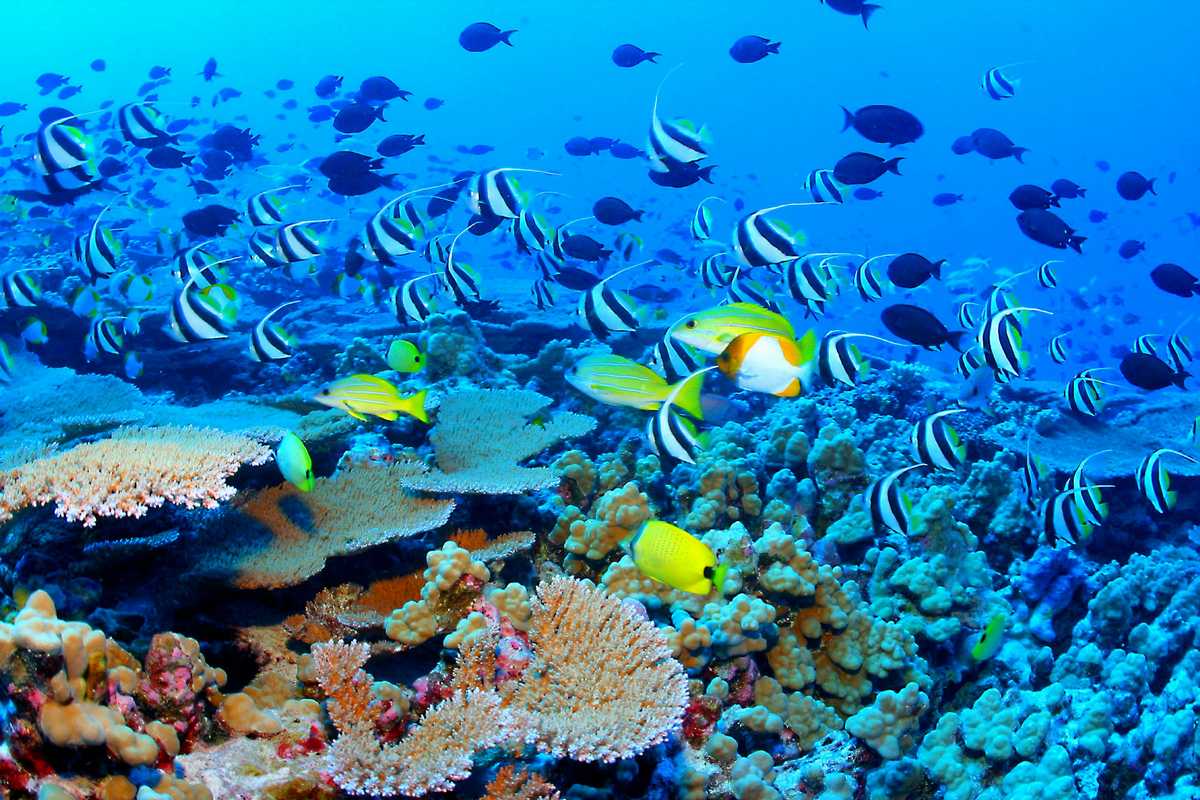
    Imagine what it would be like to look down into the ocean and see brilliantly-coloured fish darting in and out of the world’s largest area of coral. Do you know where that is? If you thought of the Great Barrier Reef off the coast of Australia, you were right. For many years, the Great Barrier Reef has been known as the biggest and best coral reef in the world, but that might not be the case for much longer. The Great Barrier Reef is collapsing, and unless something changes it might soon be gone.

    The Great Barrier Reef is a huge coral reef covering 348,000 square kilometres off the coast of Australia. Some parts are 2000 metres deep, while others are fairly shallow. Like other coral reefs, the Great Barrier Reef is actually made up of a lot of different types of plants and animals. Corals look like small trees with branches sticking out in all directions, but they’re not. The brightly-coloured tree-like shapes are the skeletons of animals, but instead of being on the inside of the body, like for people, they’re on the outside. Altogether, the Great Barrier Reef has four hundred types of coral and 1500 types of fish, as well as many other animals.

    All of that amazing life is in danger. Scientists believe that about half of the corals on the Great Barrier have died in recent years, probably because of human activity. Coral reefs have always lived on cycles. Storms or diseases would kill some of the plants and animals, but then they would recover. Recently, the recovery process has been very slow or has even stopped entirely in some areas. The long-term loss of the corals has happened mainly since people started clearing trees off the land in the late 1800’s to make room for farming and raising animals.

    Because of these activities, mud, fertilizers and other toxic substances started to wash into the lagoons and then out to the reefs. Slowly the plants and animals on the reefs started to die. Pollution from boats and other sources might also have been part of the problem.

    Why does it matter if the Great Barrier Reef disappears? The loss could mean the disappearance of some species of animals, such as the marine turtle. Six of the world’s seven species of marine turtles live in the Great Barrier Reef. The loss of the turtles might then affect another type of animal, which would then change another type, and the problem could eventually affect the food that people eat. Scientists are unsure of exactly how coral reefs affect life on land and in water, but they know that the reefs are important.

    Almost every area of the world is facing pollution problems because of human activity. Oceans, rivers, and land are dying because of chemicals and garbage that people throw away. However, you can help. Keeping your own home and school clean and trying not to pollute the environment might prevent disasters like the collapse of the Great Barrier Reef.

    If the plight of the environment and the Great Barrier Reef interests you, why not consider a career as an Environmental Scientist? An Environmental Scientist applies their knowledge of the natural world to help preserve and protect nature.

  • The Benefits of Travel and Volunteerism

    The Benefits of Travel and Volunteerism

    Having volunteer experience is an essential part of every student’s life. Now that it a requirement for high school students to acquire 40 hours of volunteer time before they graduate, many new and varied opportunities are cropping up. It is a great time to travel as a student!

    Volunteering allows for an introspective look into your values and it gives perspective and fosters a better-rounded individual. Some of life’s richest experiences come from volunteering. When you free yourself to give your time to helping fulfill the needs of another it is rewarding on many levels. One way to volunteer is to go abroad and embark on a life-changing journey. This is something students should consider while they have the time and resources. Volunteering abroad is a meaningful experience that can provide great rewards.

    So, why go abroad when there are plenty of opportunities here at home?

    1. The opportunity to travel and visit a foreign country.
    There is something very different about reading about a country and actually visiting it in person. Travel is a great way to expand your mind and gain insight into the world and how you view it. It adds to your life experiences and creates memories you can draw upon for a lifetime.

    2.Unique projects.
    Perhaps you can help save the green turtle or be an ambassador for the environment. There are things you can do abroad that you simple cannot do at home. The animals are different, the government structure is different and the ecosystems are different. Every country comes with unique settings, strange habitats and diverse food.

    3. Take in a new culture.
    What better way to learn than to jump right in? Don’t just study different cultures in books and in movies, take the opportunity to live and breathe it. Engage all your senses and create a rich memory that helps support you through daily challenges.

    4. Make new friends.
    You will create memories that build a lifelong bond. Language is only a barrier for a short while before mutual respect and affection based on shared experiences take control.

    5. Learn a new language.
    No language curriculum can match being surrounded by language and culture. It is amazing how quickly one picks up a foreign language when it is all around them. The mind is fast to pick up words from action and gestures.

    There are many organizations to choose from when considering volunteering abroad. Take time to look into various opportunities. Some may be based on community or through schools, churches, and hospitals. Take a chance and do something different.

    Don’t forget that you don’t have to travel to volunteer. Your very own community needs you, too! The best part about volunteering is the feeling of accomplishment and knowing that you have made a difference, regardless of where you do it.

  • Discovering Marine Science in The Maritimes

    Discovering Marine Science in The Maritimes

    New Brunswick is the second largest aquaculture producing province in Canada (behind British Columbia). Each year the province earns hundreds of millions of dollars as a result of aquaculture production. There are currently over 2000 people in the province working as direct employees in various capacities in the aquaculture industry. Due to the important part the industry plays in the province, it is important the public has the opportunity to become educated and engaged in the subject.

    The Huntsman Marine Science Centre and Fundy Discovery Aquarium located in St. Andrews, New Brunswick provides a unique and educational aquaculture experience for all ages. The 20,000 square foot facility first opened in 1972, but was re-built and re-opened in September 2011. The centre has a research facility, including labs, where research is being done to find a way to sustain and develop the aquaculture industry.

    There are two harbour seals that call the centre home, Snorkel and Loki, who love to entertain the crowds of people who come by to see them. Harbour seals are found in the coastal waters of the Northern Atlantic and Pacific Oceans, as well as the Baltic and the North Seas. They are brown, tan or gray in colour with v-shaped nostrils and small ear canals. There are an estimated five to six million harbour seals worldwide. The seals at the aquarium are fed twice a day and enjoy eating fish such as menhaden, anchovy, sea bass, herring, mackerel and cod. They also know a variety of tricks, which they have learned since being in captivity.

    There are two touch tanks – one that houses a variety of interesting creatures including sea cucumbers, which are rubbery and slimy and hard to hold on to; clams, which can spit water; and starfish which are hard and prickly. There are an estimated 1800 different species of starfish worldwide. They have a central disk and five arms, though some species have many more. There is also a touch tank designated for skates. There are more than 200 different kinds of skates (and I don’t mean hockey or speed skates!). The skates found at the aquarium are similar to sting rays; they are flat and shaped like a kite and have their eyes located on top of their head. They are found in the Atlantic, Pacific and Indian oceans, and they have a row of spines on their back that can stab and tear if they feel threatened by predators.

    Other interesting sights to see at the aquarium include a large sturgeon tank, a yellow lobster named Fiona and a blue lobster named Lily. Only one out of every two million lobsters is blue, and one out of every thirty million lobsters is yellow.

    If you enjoy learning about marine life, why not consider becoming a Marine Biologist?

  • Projects Abroad: Offering Students Short-Term Volunteer Opportunities

    Projects Abroad: Offering Students Short-Term Volunteer Opportunities

    Projects Abroad is a youth-oriented volunteer trip association that can help you plan a volunteer trip to help shape you career, your education and your life.

    The company offers the opportunity to do two weeks to several months of volunteer trips in many of the destinations where they operate. For volunteers who don’t have the time to commit to a month or more of volunteering abroad, but would still like to contribute to the community or their project of choice, then short-term two-week volunteer placements are a great option. These trips are not available in all situations; they have hand-picked only the countries and projects where it is suitable for both the host community and the volunteer to be there for such a short time. To see where these trips are available, check out their prices page – if there is a price listed, then it is possible to go for two weeks.

    Although you will not be able to make quite the impact that our longer-term volunteers make, in your two weeks you will be working intensely within the local community and building relationships. This will impart a level of cultural insight that is not possible for tourists to achieve.

    These trips operate in the same way that normal four-week or longer projects do, with some small adjustments to help you make the most of your two weeks abroad. For instance, they ask that you arrive on the weekend so that they can give you a formal induction to the area and culture before your first day of work on Monday.

    International Volunteer Work: What you get on 2 Week Trips

    Volunteers on 2 Week Trips are given the same benefits as those who join for longer periods of time. Start dates are flexible – just pick any weekend to arrive – and you’ll begin your project quickly after your arrival to maximize the amount of work you can do in country.

    In-country staff will be available to assist you throughout your two-weeks. You will be a part of an extensive volunteer network and meet people from all around the world. In some circumstances, you may be living with a local host family, which will provide you with the opportunity to get completely immersed in the local culture during your stay. On other projects, you may live with volunteers in a community-housing situation.

    Meaningful Volunteer Work in Two Weeks: 2 Week Trips and 2 Week High School Specials

    Short Term Volunteer Opportunities with Children: whether you’re taking time off from school, work, or just need a small career-break, there is always a way for you to squeeze a two week adventure into your schedule.

    For high school students (ages 16-19), we recommend the “2 Week Specials” program. These are group projects that have a high level of structure and central planning by local staff. You will be in a group of students your own age for the entire project. Local staff are always close at-hand. It’s a great way to travel and volunteer abroad for younger people who have never done this before. Staff members are with these groups.

    For ages 20+, we recommend joining projects for a month or longer. Most volunteers go for about two months. But if you can only squeeze in two weeks,  a “2 Week Trip” is worthwhile and productive as well.

    For more information about studying abroad, contact www.projects-abroad.ca

  • Volunteering for Work Experience

    Volunteering for Work Experience

    Maybe you are new to the job scene, or maybe you have a very particular history of employment. Whatever your reason is for feeling that you don’t have enough experience to land you the job that you want – never fear! Employers respond positively to unpaid experiences as well. Perhaps you are looking to be a server in a bar or restaurant and your resume shows all you have is experience that relates to child care. Try searching an online job board for anything that relates to serving that is unpaid. Festivals are a great opportunity to practice serving, for example. Additionally, if you want to be a nanny but have no child care experience why not try looking around to see where you could volunteer your time to gain this experience? Often day cares will accept volunteers or perhaps your neighbour requires someone to watch their children for an hour or two each day.

    Volunteering may not immediately cover the exact work that you would like to do. You might have to do other smaller tasks like cleaning the studio or conducting phone calls at the beginning, but do not get discouraged! The more time you put in, the more responsibility you will be given. Each volunteer hour you put in provides you with more invaluable skills that can be put onto your resume.

    Become informed about what skills and certifications are required for your job of choice and go about getting those. Whether it is CPR or First Aid, a Red Cross babysitting course, a Smart Serve certification, a personal training certificate or even an NLS lifeguarding certification, it is vital to work on obtaining them. Sometimes a police record check is also required by potential employers. If you can get started volunteering in something of your choice, usually there is an option to get a police record check before you even start. Thankfully, the cost is generally covered by whatever agency you are looking to work for.

    Another possibility is to try job shadowing for an excellent opportunity to get to know the job that you would ultimately like to do. Job shadowing can be used in a subsection on your resume as well, an indication of your interest and/or passion for the job. Job shadowing could involve finding someone who is an expert in the field or simply finding someone who is knowledgeable enough to be a good leader. Whatever it is that you want to do, make sure that you start asking questions NOW. There is no better way to learn about something of interest than to get started. Even if it is not what you want to do, at least you will have some new experiences that will help to orient you to the RIGHT path for you.

  • Let’s Resolve To Make It A Real Happy New Year

    Let’s Resolve To Make It A Real Happy New Year

    Wouldn’t it be wonderful if world leaders resolved to look at life in a different light this New Year? They could follow the example of Bhutan. In 1971, the small country, nestled in the Himalayas between China and India, rejected the idea of gross domestic product as the measure of progress. Instead, leaders focused on gross national happiness.

    The idea is finally gaining traction around the world, and I’m humbled and pleased to be involved with a global initiative to promote it. World leaders took the concept seriously enough to hold a United Nations Conference on Happiness in April 2012, and Bhutan was recognized for its environmental leadership at the recent UN climate summit in Doha, Qatar.

    Life isn’t perfect in Bhutan. It’s a poor country where most homes don’t have electricity. Crime is increasing and climate change is making life difficult for the farmers who provide much of the landlocked country’s food. Still, according to the Guardian, life expectancy in Bhutan has doubled over the past 20 years, almost all children now go to primary school and the country has been improving its infrastructure.

    Bhutan has also enshrined environmental protection and intergenerational equity in its constitution. The Right to a Healthy Environment is another initiative I’m excited about. The David Suzuki Foundation and I have been working with environmental lawyer and professor David R. Boyd and Ecojustice to promote the idea in Canada. Boyd’s book, The Right to a Healthy Environment: Revitalizing Canada’s Constitution, offers a wonderful analysis of where the world’s nations now stand on the concept, as well as strong arguments for why Canada should join the more than 140 nations that have put environmental protection in their constitutions.

    Caring for the environment can help achieve gross national happiness in many ways — by giving our children a more secure future, improving human health, ensuring resources are available to meet the needs of citizens, offering recreational and spiritual connections with nature and giving people a sense of pride and respect for the natural systems that keep us alive and healthy.

    There’s more to happiness than just having a clean environment — and Bhutan has yet to get there. According to research for the UN Conference on Happiness, “The happiest countries in the world are all in Northern Europe (Denmark, Norway, Finland, Netherlands).” Although these countries are wealthy, the study points out that money isn’t the only factor, as happiness is decreasing in countries like the U.S. “Political freedom, strong social networks and an absence of corruption are together more important than income in explaining well-being differences between the top and bottom countries,” the researchers write. “At the individual level, good mental and physical health, someone to count on, job security and stable families are crucial.” Note that the happiest countries all have healthy economies and robust social programs.

    We can also look at how various countries responded to the recent economic crisis. Those that bailed out banks and reduced social spending are facing the same kinds of problems as before. Iceland approached its massive financial meltdown in a way that was pretty much the opposite of that taken by the U.S. and Europe, refusing to rescue its banks and increasing social spending, among other measures.

    Iceland still has problems, but it has recovered faster than other nations, and its social safety net remains strong. Inequality has been reduced, and the crisis spurred citizens to propose and develop a new constitution, which is being considered by parliament.

    There’s an old saw that says the definition of insanity is to keep doing the same thing over and over expecting different results. In the case of leaders who focus almost entirely on economic growth and corporate interests, it’s a recipe for disaster. As George Monbiot recently wrote in the U.K.’s Guardian, “In return for 150 years of explosive consumption, much of which does nothing to advance human welfare, we are atomising the natural world and the human systems that depend on it.”

    As light gradually returns to the north and we celebrate a season of sharing, our leaders could brighten all our lives by considering what really makes our societies strong, healthy and happy.