Category: Nature Watch

  • The Importance of Wetlands

    The Importance of Wetlands

    What Are They?
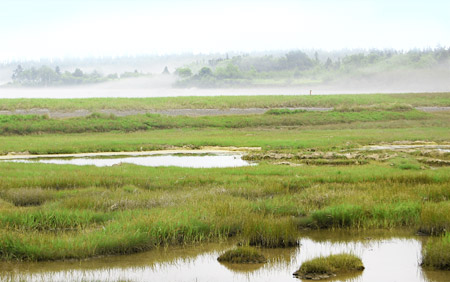
    A wetland is a habitat where land meets water such as ponds, marshes, swamps, bogs and fens. To classify as a wetland, the area must be completely covered or partially covered with water for a significant amount of time over the course of a year. This could be from flooding due to rain or melting snow, or because it exists as an established waterway. Wetlands are home to aquatic and land creatures, a combination that creates an incredible habitat able to function at great efficiency. This produces a rich environment for its inhabitants – wetlands sustain more life than any other ecosystem!

    Swamps: streaming water, often confused with marshes, set apart by the presence of trees and shrubs.
    Ponds: shallow waters, surface free of vegetation.
    Marshes: continually flooded with lots of surface vegetation.
    Bogs/fens: high water levels, large accumulation of peat, looks like solid ground but easy to fall through.

    Why Should I Care?
    Wetlands are home to more than 200 species of wildlife. Canada has a diverse population of amazing creatures, many that are endangered or at risk. Scientists have estimated that a third of these rely upon the wetland ecosystem. Migrating birds return to the same spot each year, and if that wetland is now a Superstore they have lost nesting grounds and their food source.

    Wetlands act like sponges, preventing floods from rainfall and melting snow. They also filter the water from pollution and chemicals, cleansing it before it recycles to the larger water basins. Amazingly, wetlands also remove and store greenhouse gases from the environment, making them important to the future of climate change as well.

    Cause to Worry
    Canada is home to many varieties of wetlands. It is estimated that 14% of the country is covered by a wetland, though the number shrinks every year. Wetlands are in danger of disappearing across the globe due to agriculture and residential development. According to the Alberta Wilderness Association, 70% of wetlands have been destroyed in that province alone. It is only in more recent years people come to understand the great importance of wetlands and their impact on our country. Without these powerful ecosystems, fowls, amphibians, mammals, reptiles and plants will eventually become extinct.

    What Can I Do?
    There are numerous organizations that recognize the value of wetlands and work hard to see them untouched and preserved. There are many things still yet to be done and much awareness that still needs to be raised. One factor in the decline of wetlands is the rapid consumption of water. We all need to conserve our water intake. Limiting the chemicals and pesticides we use will also have a positive effect on this ecosystem. Perhaps the most important thing one can do to help protect the wetlands is to educate themselves and others on the subject and become willing advocates. Finally, we can all take the time to enjoy the remaining wetlands and allow ourselves to be reminded why they are important.

  • It’s Natural To Be Healthy

    It’s Natural To Be Healthy

    It’s amazing how our bodies regenerate. We get hit and bruises form as blood leaks into tissues. Over time, the dark blue colour is diluted, and may move before disappearing. Even broken bones will heal and return to full strength. And skin, our largest organ, is a miracle layer. It keeps the rest of us inside and everything else outside. It wards off infections, sheds water, cools us in hot weather, and repairs itself.
    Subscribe to Science Matters

    Still, viruses, bacteria, and parasites are ever-alert for opportunities to penetrate our protective layer. As well as frequent nicks and cuts, we have natural openings like mouths, ears, noses, anuses, and genitals, each with its own protective mechanisms. If an invading organism gets inside, we have an incredible barrier, our immune system, constantly generating new proteins to fight off infections we’ve never even encountered. We have a defence system that recognizes and fights against any cell with a genetic makeup different from our own (which is why it’s so difficult to transplant organs, tissues, or cells). Yet, pregnant women support a foetus that is genetically different for nine months.

    Thanks to evolution, our bodies have powerful ways to ward off illness and infection and enable us to live long and healthy lives. Why, then, do health costs continue to climb at unsustainable and frightening rates? Part of it is that medical care has become so sophisticated that doctors are able to treat more problems. Another part is the ever-increasing cost of drugs. And with a medical system, people are more likely to seek help. Still, health-care costs can’t continue to rise forever. Governments are always looking for ways to reduce costs, often by offloading a greater share of the burden onto patients.

    We must pay greater attention to keeping our bodies and minds healthy and able to heal. Yet we are making it difficult for our defences to work. We allow things to be sold that should not be called food. Many have no nutritive value and lead to obesity, salt imbalance, and allergies. We spew chemicals into the environment by the millions of tonnes. Molecules pour into us through air, water, and food, overwhelming or weakening our protective immune systems. According to Harvard University doctors Eric Chivian and Aaron Bernstein, “Our behaviour is the result of a basic failure to recognize that human beings are an inseparable part of nature and that we cannot damage it severely without severely damaging ourselves.”

    The medical literature tells us that the most effective ways to reduce the risk of heart disease, cancer, stroke, diabetes, Alzheimer’s, and many more problems are though healthy diet and exercise. Our bodies have evolved to move, yet we now use the energy in oil instead of muscles to do our work.

    In 2007, the World Health Organization concluded that environmental factors contribute to 36,000 deaths and 13 per cent of the disease burden in Canada annually. The Canadian Medical Association claims air pollution causes more than 20,000 premature deaths a year. And according to author and environmental lawyer David R. Boyd, scientists estimate that environmental factors affecting heart and respiratory disease, cancer, and birth problems contribute to anywhere from 10,000 to 25,000 deaths, 78,000 to 194,000 hospitalizations, 600,000 to 1.5 million days in hospitals, and other problems totalling $3.6 billion to $9.1 billion in direct and indirect costs each year.

    It’s easier, more effective, and cheaper to let healthy bodies fight off disease and infections than to weaken those defence mechanisms and then compensate for them medically. If we want a stable health system, we must put more resources into reducing pollution and environmental degradation and creating a way of life that keeps bodies and minds happy and in good health

  • Incredible Eyes

    Incredible Eyes

    Did you know that tuna have a third eye? Or that shrimp can see colours we can’t even imagine? We humans rely so much on our eyesight that it’s hard to imagine there are things it can’t do. At least your eyes can help you read a few strange facts about vision in the animal kingdom.

    Three-Eyed Beasts!
    Though it’s hard to see, many fish, reptiles and amphibians have a third eye called the parietal eye. It’s smaller than the other two and often covered by a layer of skin. It usually appears as a small, grey oval between their other eyes. The parietal eye can’t see the same way other eyes do, but it has a small lens and retina that allows it to detect light and dark. It helps animals keep track of the time of day and regulate their body temperature.

    That Creepy Glow
    Everyone’s seen that creepy Halloween image of a black cat in the middle of the night, invisible except for it’s shining green eyes. Why do cats have that unsettling trait and we don’t? Actually, it’s not just cats. Lots of animals can do this, particularly ones that are active at night (nocturnal). This includes horses, cows, dogs and hyenas. These animals have a layer at the back of their eye called the tapetum lucidum. When light shines at them from a bright source, they reflect it back like a mirror. This helps them see in the darkness.

    Seeing Heat
    Infrared vision – the ability to see heat – is something we think of superheroes having. Well, snakes have it, too! Pitvipers, as well as some boas and pythons, can all see heat. This actually has nothing to do with their eyes, but it’s still a sort of vision. It takes place in a “pit organ” between the eyes and the mouth, which functions differently in different kinds of snakes. Since many snakes have poor vision, this helps them to find warm-blooded prey. It’s so powerful that it even allows a blind rattlesnake to strike at the vital organs of its prey. Scientists have recently discovered that this pit organ is not just for hunting, it’s also a survival tool. The snakes that have it are better at finding a place to warm themselves up than other snakes who don’t.

    Expanding the Rainbow
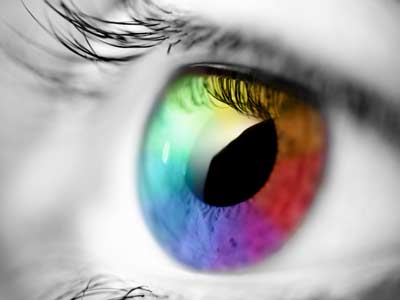
    We have something in our eyes called cones that allow us to see colours. Our eyes have three cones: red, green and blue. By combining them, we see all the colours that we think of in a rainbow. But we’re missing out. Some other animals have far more cones than we do. The mantis shrimp takes the prize, with sixteen cones in their eyes! This means they see colours that we can’t even dream of. Scientists have also speculated that some women have a fourth yellow cone that allows them to see more variations in colour than the rest of us. So maybe you or your sister is privileged with seeing a wider rainbow than the rest of us.

    It’s easy to think of us humans as being the most evolved species on the planet. Sometimes we forget that even a cow sees things in a way that we can’t!

  • Bike-sharing: An Idea for City Cycling

    Bike-sharing: An Idea for City Cycling

    How good are you at sharing with others? Do you ever let your friends use your bicycle? How would you like to share it with hundreds of other people? You might not want to do that with your own bicycle, but what if you and your friends could use public bicycles like taxis or buses? If you had to go somewhere, you could pick one up near your house, drop it off at your destination and then get another one for the return trip. Then someone else could use it for their own ride. That way, you could experience the benefits of cycling even if you didn’t own a bicycle.

    The idea of a public bicycle system began in the 1965 in Amsterdam, Netherlands. The White Bikes (Witte Fietsen in Dutch) were intended to be used for a short trip and then left for the next rider to pick up, but it didn’t work out that way. There was no way to know who had taken the bikes, and many of them were damaged or stolen. The program ended after only a few days, and bicycle-sharing seemed to be finished. Then in 1991 and 1993, four small bicycle-sharing programs began in Denmark. The largest of these was in Copenhagen, where bicycles were available at certain stations throughout the city for a coin deposit. The bicycles were much better built than the White Bikes of Amsterdam, but they were still often abandoned or stolen. The organizers needed a new way of keeping track of the customers who borrowed the bikes. Eventually, technology helped to provide a solution to the problem.

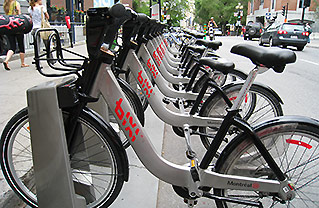
    The main trouble with previous systems was that there was no way of knowing who had the bicycles or where they went. In 1996, the Bikeabout program at Portsmouth University in England helped provide an answer with electronically-controlled bike racks and magnetic stripe cards for borrowing a bicycle. By 2005, the idea of bike-sharing was spreading around Europe. The city of Lyon, France bought 1500 bicycles for shared use, and the government of Paris started its own program called Vélib (from the French words for “bicycle” and “free”) in 2007. The program began with 7000 bikes but has now expanded to 23,600 around the city. In 2008, similar programs began outside Europe in places like Brazil and New Zealand. In 2009, the Bixi (“bicycle taxi”) program began in Montreal with 5000 bikes at 400 stations.

    The idea behind bicycle sharing is quite simple. People can buy daily, weekly or yearly passes. When they want to ride, they use their credit cards to release the bicycles from the racks. The first half hour of the ride is free, and after that they start to pay a rental fee for extra time. Bicycle repair people pick up damaged bikes, fix them, and return them to the racks.

    This system is especially good for people who use bicycles for short trips, such as riding to work or school. It saves the trouble of finding parking spaces for their cars, not to mention giving people a chance to exercise and to avoid adding to pollution in the air. If bicycle-sharing continues to grow, it could change the way people travel in the world’s cities.

  • The Plight of the Honey Bee

    The Plight of the Honey Bee

    They are a marvel of architectural design and one of nature’s most heroic creatures. The honey bee is an incredible insect with a work ethic beyond anything humans could ever endeavor to mimic. The honey bee works day and night without tiring, each assigned to a specific task.

    There are three groups bees can be categorized into: workers, queens and drones. The worker bees are the only bees people ever see. They gather food from the outside world, build and clean the hive and work to protect it. The drone’s only job is to fertilize the queen and in the fall, when the hive is at its bursting point, they are ejected from their home, sent to live in the wild elements where they eventually die. Honey bees are social creatures that co-operate well within the confines of their narrow existence. They have a job to do and they do it well.

    The worker bees must gather food for the queen and the drones. They do so by collecting pollen and nectar from flowering plants, thus beginning the production of new seeds. This process is called pollination and the honey bee is the biggest contributor. Without pollination, many crops of fruits, vegetables and nuts would die. It is estimated that one third of the world’s food source depends on honey bees to pollinate them.

    In 2006, there was a sudden collapse in honeybee colonies. This decline in bees was so drastic that scientists coined the event “Colony Collapse Disorder” or CCD. Throughout history bee colonies have experienced sudden and unexplainable collapses, but none so wide spread and epic as in recent years. Why is this happening? Many scientists have speculated that there is no one particular cause for the decline in the bee population, rather it is several factors put together. Some believe the pesticides farmers use on crops is to blame. Others feel it the radiation from cell phones causing poor navigation for the bees. Global warming has been cited as a possible reason as well. The real answer is that no one knows why the bees are disappearing, but everyone agrees on one sobering fact – if the problem continues to persist, the world has a very big problem.

    Humans have been exploiting the actions of the honey bee for centuries, capturing and manipulating their surroundings to acquire the much sought after honey and wax the bees so guilelessly create. It was not until the 1600’s that North America was introduced to this ambitious worker. European settlers brought their precious bee hives to ensure a certain quality of life laced with the natural sweetness of honey, and today it is unfathomable to imagine a life without the bees and their effects.

    Fabricated bee colonies are cropping up everywhere in a global effort to repopulate the bees. So far this has met with success, but perhaps this phenomenon should be a warning to all of us. Rather than try to only fix the problem, we might just want to ask what the bees are trying to tell us. If there is a lesson to be learned from their disappearance it would be wise to understand it.

  • Endangered Animals of Canada

    Endangered Animals of Canada

    The vast, wondrous beauty of Canada is enriched with incredibly diverse wildlife. From the smallest insect to the largest mammal, the country proudly hosts some of the most beautiful creatures on the planet. But with great beauty comes great responsibility, and as the dominate species on the planet we have been charged with the task of caring for these animals. There have been times throughout history when we as a people failed in this and a species was lost. Today, despite watch groups and dedicated scientists, our wildlife continues to disappear. At present there are over 600 animals and plants in the At Risk Public Registry.

    We are considered to be living during a time of great threat to our wildlife. Never before has there been so many humans populating the world and our activity is continually threatening the ecosystems and upsetting the balance of nature. We build shopping centres, residential developments and parking lots all the while not paying much attention to the habitats that are destroyed in the process.

    There are five different classifications that the Government of Canada uses to keep track of this growing problem:
    Extinct –a species that no longer exists in Canada or elsewhere.
    Extirpated – a species that no longer exists in Canada’s wild but lives elsewhere in the world.
    Endangered – a species that may become extinct or extirpated.
    Threatened – a species at risk of endangerment in Canada if the nothing is done to stop the problem.
    Vulnerable – a species, who because of declining numbers (or other reasons), is at risk.

    Nine species are currently extinct in Canada: Dawson’s Caribou, Sea Mink, Great Auk, Labrador Duck, Passenger Pigeon, Deep-water Cisco, Longjaw Cisco, Banff Longnose Dace, and the Blue Walleye.

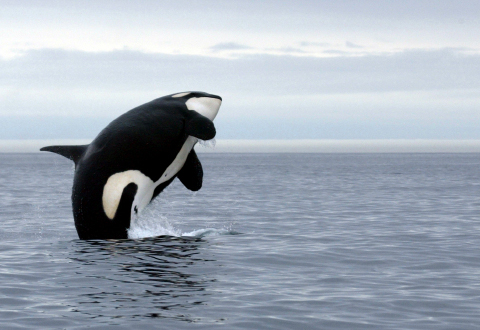
    The Woodland Caribou is on the endangered list because of the destruction of the Boreal Forests. The Golden Eagle lives in Ontario but is endangered because of loss of habitat. Chemical dumping in the ocean has put the Killer Whale on the list as well. Pollution has killed so many Spotted Turtles that they too are now on the list. Amphibians represent the largest animal group threatened with endangerment and extinction. One third of the world’s population of amphibians are threatened and, if they were to become extinct, it would be an event as epic as the loss of dinosaur life on the planet.

    A common factor in all of these creatures is the fingerprint of humanity. More must be done to protect Canada’s wildlife. In 2003 the Species at Risk Act was introduced, and yet many delays in implementing the Act have had a direct impact on threatened species. Awareness plus action is the only hope for our vulnerable, threatened and endangered species.

  • Want to Give? How to Choose the Right Charity

    Want to Give? How to Choose the Right Charity

    There are so many charities in Canada, it is hard to choose which one to give your hard-earned dollar to. Perhaps you want to organize a fundraiser, but you want to know what charity is a “good” charity (as in, they won’t take your money and run!). Using a resource like canadahelps.org, you can locate charities that are not only in line with your values but that are legitimate and transparent.

    Here are some other tips that can help you to narrow down your search:

    Google them
    It’s amazing how much information is on the web. And it’s equally amazing how good Google is at helping you find that information. Search on the name of the nonprofit and/or the nonprofit’s leaders. You’ll see pretty quickly if you should be skeptical of their mission or proud of it.

    Try to forget the horror stories you’ve heard
    Most of us can name a charity that’s been in the news for having an executive embezzle money. But one bad apple doesn’t spoil the bunch. The very fact that it makes a big story shows that the occurrence is quite rare. The overwhelming number of charities are run by good, well-meaning people. So learn from the bad stories but don’t get paranoid and weird about the charity you want to support.

    Do a gut check
    Sometimes we can just sense that something’s off even after you’ve done all the homework. Listen to that nudge. If you can’t make it go away, it may be wise for you to look for another charity.

    Talk to your friends
    This probably should be first. But your friends may have heard of the charity or know people you can check with. And in our social media saturated world, you can cast a much wider net with your questions.

    You’ll also need to decide what kind of giver you want to be. Do you want to give a little bit to a lot of charities? Or do you want to focus on 2 or 3 so you can have a larger impact? Do you want to give to start up charities or well established ones? Do you prefer giving in your country or internationally? Should your faith community get the majority of your generosity?

    It’s totally up to you. It’s your money. You get to decide how you give.

    Don’t be afraid to change your mind. You don’t have to keep giving to a charity year after year. If a charity doesn’t treat you right, it’s ok to move on. That’s why initially giving to a broad range of charities can help. You can quickly learn about how they treat donations and donors. How they treat you can tell you a lot about what they value.

    Whatever you do, please give. Charities have a lot of room for improvement, but they are still more efficient with their money than the government. And giving can be an incredibly rewarding addition to your life.

    With files from Marc A. Pitman, FundraisingCoach.com

  • How Animals Survive the Arctic Tundra

    How Animals Survive the Arctic Tundra

    The Arctic tundra, a snowy biome that is housed within the Arctic Circle, is characterized by freezing temperatures, strong winds and permafrost. Yet, despite being one of harshest environments on earth, many animals call the Arctic home. So how do animals living in the Arctic, a place that has months of continuous light followed by months of continuous darkness, survive in such a harsh habitat?

    Only a limited number of animal species in the Arctic do not migrate or hibernate during the winter months. The ones that do brave the winter have become well adapted to the extreme conditions and are able to survive year round. Some notable adaptations include the following:

    Bigger is Better
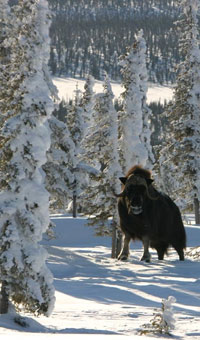
    Polar animals seem to be larger in size, have shorter limbs, denser fur and more fat and blubber than their counterparts in more temperate climates; these characteristics help reduce heat loss. It is also important to note that only larger animals, like the muskox, roam the Arctic in winter and huddle in herds to keep warm.

    Dig for Cover
    Smaller animals, such as the collared lemming, go under the snow for warmth, shelter and protection. These smaller animals dig elaborate tunnels under the packed snow and live on the roots of plants during the winter months.

    Fur Better, not Fur Worse
    As the temperature dips, animals replace their summer coats with thicker, longer coats. The snowy owl, for example, is covered in fluffy white feathers from head to toe These feathers are overlapped with more feathers to ensure the owl will remain warm in cold weather. The Arctic fox replaces its brown coat with a heavier white coat that not only keeps it warm, but also provides camouflage. The muskox grows plenty of shaggy, coarse hair that covers everything but its feet.

    Tick Tock
    A research team in Alaska studied the heart rates of two types of Arctic rodents exposed to continuous daylight, nocturnal porcupines and the Arctic ground squirrel. Despite having no time cues, the animals seemed to respond to something that provided them with regularity and allowed them to retain a normal day/night, 24-hour cycle and a biological clock. So what was the one constant factor that kept the animals’ cycle on schedule in Alaska? It was the sun, which moves overhead in a circular motion and, at midnight, is tipped to the north. The animals are aware of the position of the sun in the sky, and the nearness of the sun to the horizon can act as a clue to animals to maintain a 24-hour cycle.

  • High School Community Involvement

    High School Community Involvement

    In Ontario, all high school students attending public, private, independent and catholic schools are expected to complete 40 hours or more of community involvement work. The decision for this was made so that teens could display responsibility and contribute in various roles within their community.

    Acceptable Choices
    There are a number of choices for community involvement. Not-for-profit or charity services are considered appropriate choices. In addition, many local businesses are available for students to become involved with in public or private settings.

    Each school board has a list of acceptable involvement activities. Students under the age of 18 must have their parent’s permission to participate in a community activity. If a student is interested in an activity which is not on the board’s list, he or she must check with the principal to see if it is considered acceptable. The student must have a written note from the principal indicating their approval of this choice.

    The hours may be completed in one setting or the student may choose to gain a number of experiences in a variety of settings. Some school boards encourage students to complete their 40 hours in grades nine and ten. Other boards recommend completing ten hours each year.

    Requirements
    – the community hours are voluntary unpaid hours of work
    – students do not earn a credit when the 40 hours are complete
    – these hours are not part of the regular time spent in class
    – each school board has a specific form which should be filled out by the student and signed by the supervisor of the community hours
    – the form is returned to the high school to be signed by the principal and kept on file
    – the hours must be finished before the student graduates

    Examples of approved settings
    – World Vision’s 30 Hour Famine (for this fundraiser 15 hours are approved for community involvement)
    – helping in an office
    – various capacities at a church (kids’ programs, DVBS, worship team, cleaning, gardening, raking, snow shoveling)
    – assisting at various fundraisers for medical research for cancer, diabetes, heart and stroke etc.
    – supporting a community race/run with set up, take down, water table, giving directions etc.
    – helping the elderly or disabled by doing yard work, tidying, cleaning, computer skills, etc.
    – hospitals
    – offering an after school sports/activities program at an elementary school
    – assist in sports team at your school
    – tutor for a younger student or a peer
    – childcare
    – animal shelter or humane society

    Most communities will benefit from the hours which are volunteered. As a result of working on community hours, a student may discover new interests or perhaps a career path to follow after high school. A student may choose to continue volunteering after their hours are completed because of the role and responsibilities he or she has been given. Check with your own school board’s web site for suggestions on how to get involved!

  • Voluntary Internships and Volunteer Work

    Voluntary Internships and Volunteer Work

    Your graduation day has come and gone. Ideally, finding work in your main area of study is what most hope to achieve. For some recent grads, work is immediately obtained but for many others this is not the case.

    What do you do in the meantime?

    What you spend your time doing or not doing is important. When you are in a job interview, the person interviewing you will want to know what you were doing since the time of your graduation. Telling him or her that you have not been doing anything is not going to make you a very appealing candidate. Instead, if you are able to show that you have been furthering your learning by taking classes, working elsewhere and volunteering, you will be more likely considered for a position because of your initiative.

    The benefits of volunteering for an unpaid internship

    Gaining experience, learning new skills, trying out new roles and responsibilities and making connections (also known as networking) are some of the many benefits you will gain from volunteering your time as an intern. Most businesses, small companies, start-ups, charities, not-for-profits and institutions appreciate individuals who are willing to volunteer their time.

    Gaining experience
    You have the “book smarts” and some practical experience due to your school assignments. Now, as an intern, the real test is putting it into practice in a work setting. Then when you are asked on a job application or during an interview if you have any experience, you will be able to indicate that you do because of your internship.

    Learning new skills
    There is always something to be learned. It may take a couple of weeks or more to learn how your supervisor would like a task to be completed, but once you learn it you are ready to move on to the next set of tasks. In learning new skills, you are gathering more information and experience to add to your resume, portfolio or CV.

    Roles and responsibilities
    Does your volunteer internship require you to be part of a team, work independently or as a leader? Any and all of these roles and the responsibility you have in them are vital. Be certain that you include them on your resume. You may also be given the opportunity to discuss them during an interview.

    Networking
    Networking is connecting with people. Who you know and who they know may just be the way that you obtain a job. When you take the time to meet people, discuss your interests, listen to their interests, give out your name and contact information, and receive similar information from others, you are networking. This can be done in a variety of settings – from a talk that you attend to an informal gathering of people, in a class that you may be taking or a community meeting you may be attending.

    Volunteering for an unpaid internship is a way to keep active and busy while you look into your career choices. The experience you obtain, the new skills you learn, the roles and responsibilities you have, the connections you make and the networking you do can present options that you may not have considered. The link below to an article in the Globe and Mail may assist you as you volunteer and search for work. Good luck and have fun!

    http://www.theglobeandmail.com/report-on-business/careers/career-advice/how-can-i-get-experience-if-i-cant-get-a-job/article4106068/