Category: Nature Watch

  • The Most Dangerous Places On Earth

    The Most Dangerous Places On Earth

    Extreme heat and extreme cold can kill within hours if not minutes. In extreme cold, the human body without clothing does not maintain a high enough temperature to live. If you were to be naked at freezing point of zero degrees, it would take you only twenty minutes to die. Our bodies are simply not strong enough to work as hard as it would need to to keep us warm enough to survive.

    One thing we need even more than warmth is oxygen. Mount Everest’s summit, for example, has incredibly thin air. To survive the trip to the top, a climber would have to move slowly over a period of several months for their body to adjust to the change in oxygen. If somehow we were able to teleport to the top of Mount Everest, we would only be able to survive for about 2-3 minutes because there simply isn’t enough oxygen!

    Death would come even quicker if you were at the bottom of the Mariana Trench. You would be submerged under 7 miles of water – that’s about 11 kilometers! At pressures of 15,000 pounds per square inch, your lungs would collapse immediately and you would fall unconscious in under 20 seconds; you would be dead in under 90 seconds.

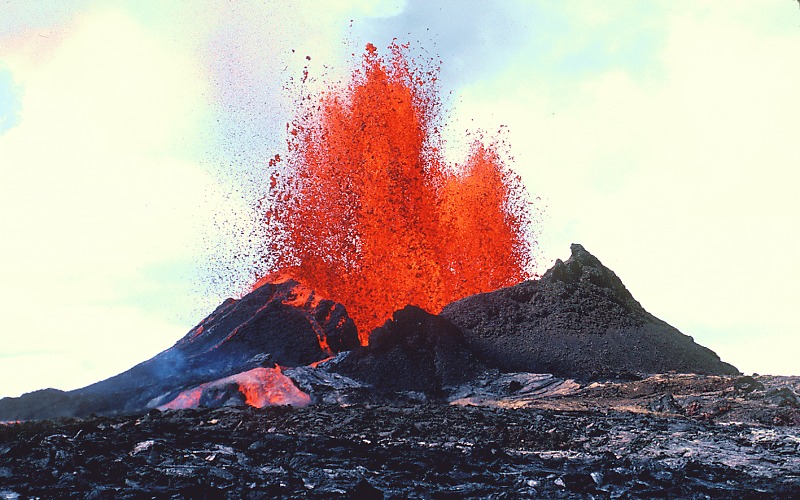
    Swan diving into a molten lake of lava would be something else. I bet you think your body would burn up in seconds and become ash or burn to nothing at all. Well, actually, It would be a lot like fireworks! Technically lava is liquid rock, burning four times hotter than your oven at home could ever get. Our bodies are comprised of mostly of water, which, when exposed to that kind of heat, turns to steam – explosively!

    If we were to measure danger by fatalities caused rather than how rapidly we would die in the world’s most extreme temperatures, we would have to consider something as microscopic as the flu. In 1918, influenza killed nearly one hundred million people. At the time, this would account for 3% of the world’s entire population. Between 1347 and 1353, a third of all people in Europe died because of the bubonic plague, also known as black death. Though it was at its most lethal all those years ago, it is still around. In fact, five to fifteen people get the plague in America every year. Even with those stats, influenza and the plague have nothing on plasmodium – it’s a micro-organism that can get into our blood because of mosquito bites and causes malaria. Researchers such as Nobel Laureate Baruch Blumberg have determined that, of all the humans who have ever existed, it is likely that half died from malaria. So, statistically speaking, any place where one could be bitten by a mosquito and contract malaria would be called the most dangerous place on Earth!


  • Corporate Social Responsibility: More than Just A Policy

    Corporate Social Responsibility: More than Just A Policy

    Corporate social responsibility can sound like a mouthful, and you may find yourself wondering what it even means. What those three words strung together refers to is the amount of accountability a company undertakes for basically being a good citizen in the communities in which they conduct business. Being a good citizen as a corporation can involve many things, such as being environmentally friendly, donating money to charity, having responsible waste management practices and generally how they serve and treat their customers. Sometimes corporate social responsibility is something that is only discussed in offices, a string of words that is thrown around on paper and never really makes it to the ground or into the businesses in the community. This is a problem, and it is increasingly a problem as climate change becomes ever more present in our lives.

    Businesses and corporations that do have social responsibility are the businesses that you may consider to be avant garde. They are the businesses that are always one step ahead and pride themselves on educating their customers and really taking the lead on problems like third world poverty and environmental problems. Businesses who practice corporate social responsibility aim to have a positive impact on their communities. Starbucks is a great example – they supports charities, have good waste management practices, serve healthy options and treat their employees with respect and care, ensuring they are paid more than minimum wage and have benefits.

    The importance of corporate social responsibility cannot be underestimated. It is very important for employees as well as for the community in which they conduct business. When a company decides to set an example and takes the lead on important global issues, a community benefits by learning and by being able to follow in the footsteps of a large corporation. When a corporation does not do their part in the communities in which they conduct business, they create a problem because they generate much more waste and they do not contribute as effectively to the well-being of the community population in terms of paying fair wages and providing the support that many employees need. Because corporations are so large, they can have a bigger impact when they take on more responsibility.

  • Controlling the Rage of Forest Fires

    They are difficult to control, unpredictable, and can destroy acres of land in minutes. It is estimated that forest fires decimate 10 million acres of land each year in North America alone. While it is difficult to give an exact count of how many wildfires there are in a given year, Newfoundland and Labrador suffer from more than 160. A safe guess would be in the hundreds of thousands.

    Forest fires are unplanned, unwanted fires caused by humans or nature. These types of fires are stopped with aggressive counter actions by trained fire fighters who are more successful when wildfires are reported early.

    Most fires are started by people. In fact, four out of five forest fires are due to the human factor. There are three elements that must be present in order for a forest fire to start. These are known as the fire triangle; conditions that present the perfect storm: oxygen, fuel and a heat source.

    Heat Source: This is where humans play their biggest role. A heat source can come from cigarettes, matches, campfires, or lanterns. It can also come from natural sources such as lightning, hot winds and the sun.

    Fuel: Anything flammable including brush, wood, leaves, grass and homes. The more fuel the greater the fire.

    Oxygen: the air.

    Taming the fires is a matter of simplifying the equation. Take away one of the elements in the fire triangle and you solve the problem. Fire fighters do this by using water to eliminate the flame or the heat source. They work to clear away fuel, thus starving the fire. Another method is called controlled burning – firefighters may start a fire to end one. A controlled burning takes fuel from the uncontrolled fire.

    Homes and whole cities can be destroyed by forest fires if they are not detected early, but nature intended this disaster to be for good. Wildfires are important to maintaining the balance of nature. Now that scientists know more about this, a greater number of controlled burns are being sanctioned.

    When fire eats away at the vegetation, they are feeding the soil important nutrients – basically the cycle of life at its simplest. Fire is a way to purge the bad. It kills off disease and aggressive insects that might damage fragile ecosystems.

    Forest fires are something of an anomaly. They create chaos and end life, but they also restore balance and allow new life to emerge.

  • Child Labour: Working For A Living

    Child Labour: Working For A Living

    Do you usually have a lot of chores to do at home when you return from school? Do you have to help cook supper, walk the dog, mow the lawn, or shovel the driveway? If you’re like most Canadians, you probably have to do at least some of that kind of work. You might even have a paid job like delivering flyers or babysitting after school. Does it ever feel that you have to work too much? Many children around the world have to do much more. That’s why people in many countries have been working to end child labour by the year 2016.

    When people talk about child labour, they don’t mean the times when parents tell their children to set the table for supper or to help wash the dishes. They mean work that prevents children from receiving an education or that damages their growth in any way. Sometimes the work even kills them. Young children sometimes work all day in factories or other unhealthy or dangerous places instead of going to school and getting an education.

    Canada has laws that require parents to send their children to school, and most people follow the rules. From the age of twelve, children are allowed to have jobs that don’t interfere with their education or harm them in other ways. In countries like Canada and the United States, rules about child labour usually work fairly well, although there are still many cases of children working long hours in dangerous conditions. Sometimes, the children even die on the job. The official estimate of child labour in wealthy countries is about one percent.

    In poorer countries, however, the situation is worse. Parents have many children to feed and often also have to support their own parents or other relatives. Even with long hours of work, parents might still not make enough money to survive. In some cases, they might not be able to find any work at all. They might need the income their children bring into the family. Also, sending children to school can often be too expensive for them to afford. The highest level of child labour is in Asia, where about sixty percent of children work.

    According to the International Labour Organization, in 2008 about 215 million children around the world had jobs which kept them from going to school or playing. That number was down slightly from 2004, but it actually increased among some groups of children. The problem will continue until people do something about the causes.

    How can you help solve the problem of child labour? You can encourage people in government to make better laws, but a more effective way to end the worst kinds of child labour is to get involved personally in helping the families. Even if the child labourers live in another country, you can donate money to help raise the family income or you can tell your friends and family about the issue. Every bit of help can make a difference!

  • Enjoy Nature and De-Stress

    Enjoy Nature and De-Stress

    The man-made world is very much a world that is constructed of indoor environments. We are in our car, we are in our house, we are in the mall, we are at the movies. Indoors is our main environment. This is normal, but we must not forget the benefits of outdoor environments and fresh air. We are often so busy doing things that we don’t make time to go outdoors just for the pure pleasure of it. Maybe you have a river by your house, or a forest that you’ve always wondered about. Knowing that being around nature and just being out in the fresh air is actually good for you may provide extra incentive to get out there and explore.

    When we are in outdoor environments we are immersed in oxygen-rich air – much more oxygen-rich than the air in even the most ventilated of buildings. This oxygen will help your red blood cells’ ability to regenerate and will immediately help you to feel better. Newer buildings have higher standards for the quality of air, but older buildings may be very poorly ventilated, causing stuffy air to dominate. If you go to school in an old building that has air that will affect you day after day, fit in some time outside to help you to get the oxygen-rich air that your body craves.

    Not only is there more oxygen available in the fresh air, but the fresh air and being out from under a ceiling will give you a feeling of freedom and space that you don’t get from being in indoor environments. There is something mentally reassuring about being out in the fresh air that will help you to feel better. Being outside is also a great stress reliever because it gives you some time to simply relax and enjoy nature. Who knows what new ideas will come to you when you have time to let go and clear you mind. You might want to consider bringing a notepad with you to jot down anything that comes to you, or bring a friend who you can have some good quality conversation with. You also may want to leave your cellphone or any other connection to the “indoor world” behind. This will allow you to fully enjoy being in a new environment.

    So take 10 minutes to get out of your house or take the day to go hiking, bicycling or walking along a path. Removing yourself from being directly beside a roadway will mean that you are breathing fresher, less polluted air. If possible, surround yourself with trees because trees are reservoirs of carbon dioxide, improving the quality of the air.

    Wherever you are outside, enjoy the fresh air and breathe deeply!

  • Volunteer Centres in Canada

    Volunteer Centres in Canada

    As you know, all high school students need to have 40 hours of community service in order to graduate. Use this information to discover where your 40 hours can best be used.

    Volunteering and Community Hours

    What is a Volunteer Centre?

    Volunteer Centres are non-profit organizations or groups dedicated to fostering and developing volunteerism in the community as a whole. While other organizations contribute to sustaining our national heritage of volunteering through their programs and outreach, Volunteer Centres serve the broadest membership. Volunteer Centres reach across the non-profit and public sectors to include organizations working in human and social services, health care, education, the arts and recreation – regardless of their source of funding.

    What if my community does not have a Volunteer Centre?

    Volunteer Centres reflect the needs of the community they serve. Volunteer Centres exist primarily to foster and develop volunteerism in the community as a whole. They engage in four general kinds of services and activities:

    1. Promoting volunteerism and raising awareness of the power of service
    2. Building capacity for effective local volunteering through management consulting on volunteer programs and training of managers of volunteer resources
    3. Providing leadership and advocacy on issues relating to volunteerism and volunteer programs
    4. Connecting people with opportunities to serve through recruitment and referral of volunteers to community agencies

    Four Main Reasons to Volunteer

    1. Make a contribution to society.
    2. Share your skills.
    3. Support a cause.
    4. Do something meaningful with your friends and colleagues.

    One of these reasons probably makes sense for you. You may already be working as a volunteer or are thinking about what you might want to do next. Whatever your reason, there are many different opportunities out there – and organizations that need your help.

  • Researching the Effects of Climate Change on the Polar Bears of Southern Hudson Bay

    Researching the Effects of Climate Change on the Polar Bears of Southern Hudson Bay

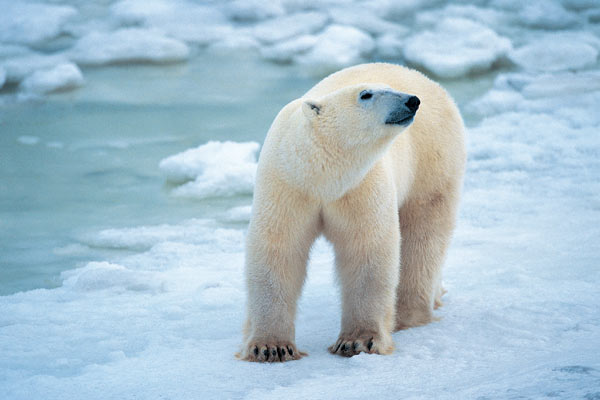
    As I sit comfortably in my warm office in Toronto writing this post, the polar bears of the Southern Hudson Bay subpopulation are out on the frigid sea ice in the middle of Hudson Bay and James Bay looking for seals. Food is relatively plentiful for polar bears this time of year, and with so many adaptations that allow them to live in this Arctic marine habitat, these winter conditions suit the bears just fine. Mother polar bears of this subpopulation are warm in their dens along the northern coast of Ontario, having just given birth to their cubs. After a few months of nursing the tiny dependent newborns, these family groups will leave their dens to head out on the ice where the mother polar bears will catch as many seals as they can to feed their young families before the ice breaks up in the summer. All of the Southern Hudson Bay polar bears are then forced to retreat to the northern Ontario coastline or islands of James Bay to fast and await the return of the ice next winter. Because the life history of the polar bear is so intrinsically tied to the sea ice, the recent weakening of the Hudson Bay annual sea ice through the effects of climate change will have dire consequences for this population of polar bears that lives at the southern extent of the species range.

    This year represents the first of a three year project through a partnership between York University and the Ontario Ministry of Natural Resources to study the effects of a changing climate on the feeding habits of the Southern Hudson Bay polar bears. We completed our first field season this past fall, handling polar bears along the shore of Akimiski Island and the western shore of James Bay. We had a very successful field season, deploying ten GPS collars on adult female polar bears and collecting important biological samples and morphometric information from a total of 36 bears. My PhD supervisors Dr. Gregory Thiemann and Dr. Martyn Obbard are experienced polar bear biologists, but this was my first time getting hands on experience studying polar bears. It was an amazing experience getting to appreciate the sheer size and power of these animals up close. The bears we handled ranged from young subadults spending their first fall apart from their mothers, to large, stoic adult males tipping the scales at over 1,200 pounds! We certainly encountered a wide range of bears, including pregnant females in excellent body condition who were preparing to enter dens later in the season, as well as mothers with dependent cubs who were quite thin from the added stress of feeding their young.

    The range in individual polar bear size and condition is really quite striking, and ties in closely with our research which will compare the feeding habits of different classes of polar bears based on age, gender, and body condition. By determining the food habits of individual polar bears and linking this information with movement patterns of bears equipped with GPS collars, we will increase our knowledge on the specific types of sea ice habitat polar bears exploit. By combining this information with future predictions of sea ice extent and prey availability in Hudson Bay, we will contribute to ensuring that informed and proper conservation measures are taken in the future. Through the support of the Canadian Wildlife Federation Endangered Species Fund, this important research will help in predicting the future of polar bears in this region, as the challenges currently faced by the bears by an extended ice-free season are forecasted to intensify in the coming decades.

  • Fall In Love With Nature

    Fall In Love With Nature

    A recent Ipsos Reid poll conducted for the Nature Conservancy of Canada (NCC) shows that more than 97 percent of Canadians believe that getting outdoors is important to their family’s well-being. The new findings complement an earlier poll that found Canadians are happier when they are connected to nature.

    We already know about the valuable health benefits (both mental and physical) of getting outside and talking a walk. But the recent research gives us more information on how Canadians feel about the importance of nature to their happiness and to their families.

    The study found:
    • 97% of Canadians agree that nature is important to their family’s well-being;
    • 90% felt that being outdoors in nature is an important element in their family’s recreational activities;
    • 87 % felt that given the choice, they would prefer to spend family time outdoors in nature, rather than indoors.

    What better way to spend a long weekend than to go and explore what nature has to offer? Nature is alive this time of year with many fun things to do in your backyard or local park. Winter bird identification, exploring the types of trees that may look vastly different in the summer, following tracks of animals in the snow or taking a meandering walk are perfect examples of winter activities that are fun for all ages and can offer an exhilarating day in the beauty of nature.

    Get happy, get outside.

    “Our mandate of protecting the land that brings so much joy to Canadians becomes even more important was we learn just how much Canadians depend on it for their own happiness and well-being,” said John Lounds, President and CEO of the Nature Conservancy of Canada. “We want to encourage Canadians to go outside and explore what nature has to offer in the winter.”

    The Nature Conservancy of Canada has accessible properties from coast-to-coast where Canadian families can visit for free. Check out www.natureconservancy.ca/timefornature for a starter list of places to see.

    The Nature Conservancy of Canada (NCC) is the nation’s leading land conservation organization, working to protect our most important natural areas and the species they sustain. Since 1962 NCC and its partners have helped to protect more than 2.6 million acres (more than 1 million hectares), coast to coast.

  • Science Isn’t Just For Scientists

    Science Isn’t Just For Scientists

    A 14-year-old boy in Donetsk, Ukraine, recently made a fascinating discovery halfway around the world and 894 metres under the sea. Kirill Dudko was watching Neptune Canada’s live-stream footage of the ocean floor near Vancouver Island on his computer when he saw a creature with a “nose and moustache” eat a hagfish. It seemed unusual, so he contacted Neptune scientists, who checked the footage and identified an elephant seal.

    It was unusual. Predators normally spit out the eel-like hagfish or avoid them altogether because they excrete foul slime when threatened. Scientists had never before seen an elephant seal eat one, and may not have noticed this evidence had it not been for Kirill. They believe the seal quickly slurped up the hagfish before it could release its slime.

    Like many “citizen scientists”, Kirill played an important role in advancing our understanding of the world. It takes a lot of study and training to become a scientist, but with some knowledge of scientific method, anyone can practise science.

    Citizen science is not a new concept. The Audubon Society started its Christmas bird count in 1900. As the Society explains, from December 14 to January 5, tens of thousands of volunteers throughout the Americas grab their binoculars, bird guides and checklists and head outside. “Each of the citizen scientists who annually braves snow, wind, or rain to take part in the Christmas Bird Count makes an enormous contribution to conservation. Audubon and other organizations use data collected in this longest-running wildlife census to assess the health of bird populations — and to help guide conservation action.”

    Thanks to the Internet, citizen science is a more powerful tool than ever before. Some projects are passive, such as Seti@home, where people set their home computers to search for signs of extraterrestrial life when they aren’t using them. Others take a bit more effort. The Louisiana Bucket Brigade provides tool kits and training for people who live near oil refineries and chemical plants to take air samples for lab analysis.

    Some, like the American Gut project, are highly interactive, requiring participants to provide detailed information about their diet and send in stool, oral or skin samples. In return for that and varying levels of monetary donations, researchers give participants information about their bodies and the microbial life inside them. The research is designed to “help shape a new way of understanding how diet and lifestyle may contribute to human health through each person’s suite of trillions of tiny microbes.”

    Some initiatives require only simple observation. In a recent column, we mentioned RinkWatch, which asks people to send information about outdoor skating rinks to researchers at Ontario’s Wilfrid Laurier University to help track the impacts of climate change. The David Suzuki Foundation has also invited assistance from citizen scientists, most recently asking Canadians to participate in a survey about toxic ingredients in common personal care products like soaps, shampoos and cosmetics.

    On its website, Scientific American describes a range of citizen science projects designed to do everything from tracking animals in Africa’s Serengeti to analyzing historical patterns in human DNA to studying the ways people play with their dogs.

    Beyond providing valuable research, citizen science is a fun way for people to engage with nature and learn about the world and their place in it. Participating in the bird count, for example, is a good way for individuals and families to enjoy time outside in winter. Citizens can also enjoy the results of the research. Do you want to know what an indigo-banded kingfisher or a forest elephant sounds like? Cornell University’s Macaulay Library is “the world’s largest and oldest scientific archive of biodiversity audio and video.” Thanks to contributors worldwide, site visitors can hear sounds made by three quarters of the Earth’s birds, as well as a large number of insects, mammals, fish and amphibians. And anyone can add to the collection.

    Some citizen scientists get involved for fun. Others have a general interest in science or a particular research area. Kirill Dudko plans to become a marine biologist. Regardless of their reasons or level of involvement, all citizen scientists help us gain a better understanding of the world and our place in it.

  • Geothermal Heat and the Sewers of Paris

    Geothermal Heat and the Sewers of Paris

    Winter is here, together with ice, snow, and cold weather. Many people have already started using furnaces fueled by oil, natural gas, coal or other forms of energy to keep their homes, offices and schools warm. These types of energy usually work well. However, they also pollute the environment and no one really knows how long supplies will last. In recent years, many scientists and inventors have been working on alternative energy sources, such as solar or wind power. In Paris, heat from sewers is part of the government’s plan for keeping the city’s buildings warm. This new kind of geothermal heat might eventually help other cities use their resources more efficiently.

    Sometimes people need to be very creative to find a solution for the world’s energy needs. An alternative fuel source that people have been developing is geothermal energy, which uses natural heat from inside the earth to provide power for running machines or keeping buildings warm. The center (core) of the earth is very hot, and the layers above the core are also warm.

    Usually, using the earth’s warmth involves digging holes deep into the ground to find the heat. People have found that the earth’s temperature increases by about 30˚C for each kilometre. Using this kind of heat helped keep the athletes at the 2010 Vancouver Olympics warm, and Iceland has heated its buildings with the energy from its many hot springs and geysers for years. The idea of using sewer water, however, is new.

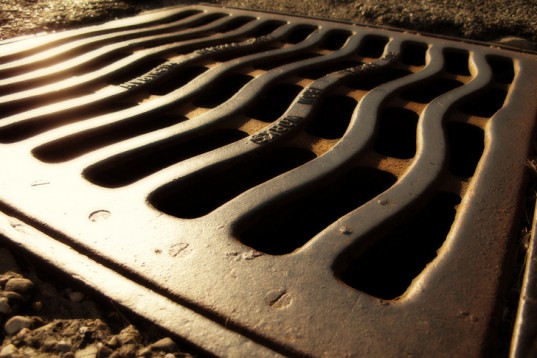
    The city of Paris is famous for its sewers. Almost 2400 kilometers of tunnels run under the city, carrying waste water from sinks, dishwashers, bathtubs or showers. Much of this water is still warm, with an average temperature of about 20˚C. The sewer heating system uses steel plates containing a heat-transferring liquid, which sits in the water and warms up. The plate is connected to a pump which sends the heat throughout the building. This new heating system can even use the pipes that are already in the building. A school was the first building to receive the new heating system, with the president’s palace, a swimming pool and a town hall next in line. About 10% of the city’s heat is already generated through this system.

    Geothermal heat is much cleaner than traditional fuels like oil and gas, but it also creates some problems. Digging into the ground can release gases like hydrogen sulfide, which pollute the air, and it can also produce deadly liquids in the process of producing heat. Using sewer water is different. With the Paris project, the main problem is in keeping the smell from the sewers from coming into the buildings, but the inventors believe that they’ve solved that problem by creating a tightly sealed system that lets heat through, but nothing else.

    If heat generated from sewers continues to work as well as it has so far, it might help the people of Paris and other cities around the world to create cleaner, more sustainable energy for the future.