Category: Nature Watch

  • Bean Leaves, Bedbugs and Biomimicry

    Bean Leaves, Bedbugs and Biomimicry

    Scientists often come up with new discoveries, technologies or theories. But sometimes they rediscover what our ancestors already knew. A couple of recent findings show we have a lot to learn from our forebears — and nature — about bugs.

    Modern methods of controlling pests have consisted mainly of poisoning them with chemicals. But that’s led to problems. Pesticides kill far more than the bugs they target, and pollute air, water and soil. As we learned with the widespread use of DDT to control agricultural pests and mosquitoes, chemicals can bioaccumulate, meaning molecules may concentrate hundreds of thousands of times up the food web — eventually reaching people.

    As Rachel Carson wrote in her 1962 book Silent Spring, using DDT widely without knowing the full consequences was folly. She showed it was polluting water and killing wildlife, especially birds, and that it could cause cancer in humans. Her book launched the environmental movement but did little to change our overall strategy for dealing with bugs. Although DDT was banned worldwide for agricultural purposes in 2001, the chemical is still used to control insects that spread disease.

    Recent research shows that widespread use of pesticides like DDT may have caused us to ignore or forget benign methods of pest control. Because the chemicals were so effective, infestations were reduced and there was little interest in non-toxic methods. But bugs evolve quickly and can become immune to pesticides. That’s true of bedbugs, the now ubiquitous critters that are showing up around the world in homes, hotels, schools, movie theatres — even libraries.

    But a method used long ago provides an effective and non-toxic weapon against the pests, according to a U.S. study in the Journal of the Royal Society Interface. The authors looked into the once-common Eastern European practice of spreading bean leaves around a bed to control bedbugs;. What they found was fascinating.

    “During the night, bed bugs walking on the floor would accumulate on these bean leaves, which were collected and burned the following morning to exterminate the bed bugs. The entrapment of bed bugs by the bean leaves was attributed to the action of microscopic plant hairs (trichomes) on the leaf surfaces that would entangle the legs of the bed bugs,” the scientists, from the University of California, Irvine, and University of Kentucky, wrote.

    They discovered that after bugs get caught up in the hooked plant hairs, they struggle to escape, and in the process vulnerable parts of their feet are pierced by the hooks, permanently trapping them. The research focuses on a way to replicate this. “This physical entrapment is a source of inspiration in the development of new and sustainable methods to control the burgeoning numbers of bed bugs,” the researchers wrote, adding that the method “would avoid the problem of pesticide resistance that has been documented extensively for this insect.”

    Other research has literally dug up pest control methods that go back millennia. An international team of archeologists recently found evidence that people living in South Africa almost 80,000 years ago made bedding out of insect-repelling plants.

    According to the journal Science, the research team found 15 different layers containing bedding made from compacted stems and leaves of sedges and rushes, dating between 77,000 and 38,000 years ago. One layer of leaves was identified as River Wild-quince, which contains “chemicals that are insecticidal, and would be suitable for repelling mosquitoes.” The archeologists also found evidence that people often burned the bedding after use, possibly to remove pests.

    These are just two examples of what we can learn from our ancestors and from nature. Because natural systems tend toward balance, the fascinating field of biomimicry has developed to explore what nature can teach us. It’s aimed at finding “sustainable solutions by emulating nature’s time-tested patterns and strategies,” according to the Biomimicry Guild website. “The goal is to create products, processes, and policies — new ways of living — that are well-adapted to life on earth over the long haul.”

    Maybe the truest sign of human intelligence is not to learn how we can shoehorn nature into our own agenda, but to see how we can better find our own place in nature.


  • Astronomers: Observers of Space

    Astronomers: Observers of Space

    It’s easy to imagine an astronomer spending their days (or, rather, their nights) gazing up at the stars observing planetary activity and other celestial bodies. To a certain extent you wouldn’t be too far off from the truth, but the life of an astronomer isn’t anywhere near as romantic as we’d like to think it is. In fact, the majority of the a professional astronomer’s career is spent analyzing pre-recorded data. There are occasions when an astronomer might take a seat at the helm of an optical telescope or use the recorded data from a radio telescope to inspect extraterrestrial space, but these instances will usually take place every few months or even years, depending on the nature of his or her research. Others exclusively use programmed computer simulations to research and simulate recorded findings to learn more about them. An astronomer’s primary focus, however, remains to observe planets, stars, galaxies and the ever changing intergalactic landscape.

    Education you say?
    The academic background of an astronomer can vary. There are universities like York and the University of Toronto that offer degree programs in Astronomy. Typically, a bachelor’s degree in science (usually chemistry or physics) is completed first. Then an aspiring astronomer might set his or her sights on a Master’s of Astrophysics and/or a Doctorate in Astronomy. Needless to say that there are a variety of paths to take, most of which generally stay close to the mathematics, chemistry and physics fields.

    Where can you get a job?
    Generally, astronomers find work with research institutions and universities. Working at a research station will require the astronomer to be fully focused on a branch of research, while a position at a university usually includes a teaching component, instructing courses at the undergraduate level, or supervising those at the master’s and doctorate levels.

    The skills you’ll need
    If you’re thinking of pursuing astronomy in the future, there are a few things you can start on now to help increase your chances of success. In high school it’s a good idea to take a wide range of courses while also taking all of the sciences and mathematics, of course. Geography and geology (if your school offers it) wouldn’t be such a bad idea either, since most celestial objects are composed of the same components as Earth. Lastly, work on developing your research skills, as well as reading and writing. As you enter post-secondary education you won’t have as much time to perfect those skills, so the sooner you feel confident in your ability to think critically and articulate your thoughts, the better.

  • The Benefits of Volunteering in High School

    The Benefits of Volunteering in High School

    High school students, it’s time to get motivated! Volunteering while still in high school provides you with the framework for your future career path, as well as instills in you the importance of giving back to others. It may seem difficult to fit in volunteer hours with such a busy schedule of classes, studying and extracurricular activities, but with a little planning you can achieve your volunteer goals. Many not-for-profit organizations only require a few hours a week of your time. For example, the Ottawa Humane Society has a dog walking program that requires a commitment of 2 hours per week. If you love dogs, that is a very easy commitment to make! Even though you may not be reimbursed financially for your time, volunteering is something that can be put on your resume that will help impress future employers and university admissions officials alike. Below, a list of just some of the benefits that volunteerism can provide you:

    Impress Admissions Officials
    You’ve got the great GPA and amazing standardized test scores. But what makes you stand out from students with similar grades? The answer is what you do in your spare time. Volunteer hours and part-time jobs listed on your application will really make you shine. Volunteerism is a great way to show admissions officials that you not only care about the community, but are able to manage your time well enough to balance a volunteer job with your other commitments. By all means, don’t spend every spare minute working on your volunteer hours – you need to balance volunteerism with your personal life, too. But a sustained commitment to one particular cause over a year or two shows that you are willing to stick to something that you care about. This will be very impressive to admissions officials and work in your favour.

    Get Involved Outside of School
    Volunteering allows you to meet people you may not have had the opportunity to meet otherwise, especially if you are volunteering outside of school. If you have heard the term “networking”, that is essentially what you will be doing! You are forming a network of contacts that can help you get to where you want to be. If you already have a good idea of what you want to study in college or university, you can volunteer your time in that field. For example, if you want to study psychology, why not volunteer your time with the Canadian Mental Health Association? You can find volunteer opportunities for almost anything that interests you, so spread your wings outside of your school and gain immeasurable benefits!

    Earn Academic Credit and Scholarships
    Some high schools require you to put in volunteer hours in order to graduate. Others offer extra credits or scholarship opportunities if you do volunteer your time. Check with your high school’s administration office to see if any of these opportunities are available to you. If they are, take advantage of them! A scholarship will help you to cut down on your student loans when you reach university, and extra credits will look great on your transcript to help you land the university placement of your dreams. Check out studentawards.ca to find all of the different community service scholarships that are available – your volunteerism won’t only impress your university of choice, but also the officials who will be deciding whether or not you obtain your scholarship!

    Above are the curricular advantages to volunteerism. But let’s not forget the personal advantages that come from it, too. Giving back to your community and contributing positive energy to the world will do wonders for your self-esteem and self-worth. Volunteering is the way to go!

  • “Esperanto” – The Beginning of a New Language

    “Esperanto” – The Beginning of a New Language

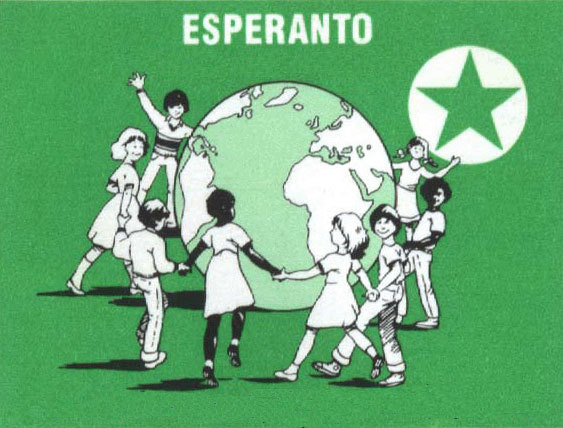
    Invented languages can be fun. Have you ever used a language like Pig Latin with your friends and watched as other people struggled to understand you? When you use these kinds of invented languages, your purpose is usually to keep other people, such as your parents, from understanding what you say. However, what if an invented language could actually help strangers from around the world to understand each other? That’s what a man named L. L. Zamenhof hoped when he invented the Esperanto language in the late nineteenth century.

    L. L. Zamenhof was born in the city of Bialystok, Russia (now Poland) in 1859. He later moved with his family to Warsaw, the capital city. When he was growing up he learned several languages, including Russian, Polish, and Latin. He became a doctor but dreamed of inventing a world language that would allow people of all countries to speak with each other. In 1872, he began to invent a language which he called Esperanto or Eo; the name “Esperanto” means “hope”. Zamenhof hoped that Esperanto would eventually overtake all other languages and gave it a third name, “La Lingvo Internacia” or “the international language.”

    In 1887, Dr. Zamenhof published a book outlining the grammar and vocabulary of his new invention. To make his new language easy to learn, L. L. Zamenhof designed it to be as simple as possible. He used many of the words that already existed in languages like German, French, and Spanish but simplified the spelling and pronunciation. He used the same alphabet as these languages (with a few additional letters) but reduced the number of words in the vocabulary.

    Instead of having a different word for everything, Esperanto uses a smaller number of basic words. These words then have extra letters called affixes added to the beginning or end of the word for different meanings. For example, “mi” means “I” and “mia” means “my.” “Mal” means “bad” and is used to change almost any word to its opposite. For example, “granda,” meaning “big,” becomes “small” with the word “mal” at the beginning. The language also has its own rules for how to put sentences together, much like English and other languages. It has fewer rules than most other languages, and the rules are generally easy to learn and follow.

    The idea behind Esperanto was to make sure that everyone has an equal chance to learn and use the language of communication. So far, Esperanto has spread to 115 countries, including Poland, where it first started. Eastern Europe has the largest population of Esperanto speakers, although many parts of Asia and South America also have people who use the language, and some in North America. By 1999, about two million people had learned to understand and speak Esperanto.

    Why would anyone want to learn a language like Esperanto? The language has never reached the kind of acceptance that its inventor hoped it would. However, if more people begin to learn it, who knows what might happen in the future?

  • Climate Change and the Loss of Sea Ice in the Arctic

    Climate Change and the Loss of Sea Ice in the Arctic

    Climate change affects every part of the world in a different way, but most experts agree the North will be impacted more than any other region. Sea ice spans most of the Arctic’s coastal and inter-island channels from eight to 12 months of the year and supports a number of species. It’s expected to undergo the most significant transformation.

    The effects of climate change in the North are not new occurrences. Actually, changes have been happening for quite some time. Over the past 25 years, Inuit and scientists have observed a decrease of roughly seven percent in sea ice area, with the largest rate of decrease during the summer months.

    Using highly scientific models of prediction, it has been determined that if warming trends continue at their current rate, by the end of this century the Arctic Ocean will be nearly ice-free during the summer.

    If Arctic sea ice melted away …
    Large sections of the Arctic Archipelago would open up.

    This would create more noise, traffic, pollution and safety issues for both humans and wildlife.
    (more…)

  • “Big Picture” Thinking Needed to Protect Nature

    “Big Picture” Thinking Needed to Protect Nature

    Few places on Earth have been untouched by humans, according to a study in the journal Science. Satellite images taken from hundreds of kilometres above the planet reveal a world that we have irrevocably changed within a remarkably short time.

    Although industrial projects like the proposed Enbridge Northern Gateway pipeline or the recently defeated mega-quarry in Ontario typically grab the headlines and bring out public opposition, it’s often the combined impacts of a range of human activities on the same land base that threaten to drive nature beyond critical tipping points. Once those are passed, rapid ecological changes such as species extinction can occur.

    For example, in British Columbia’s booming Peace Region, forestry, energy and mineral leases and licences are widespread and often multilayered in the same area. As various industries have exploited these “tenures”, a sprawling patchwork of large clearcuts, oil wells, dams and reservoirs, fracking operations and thousands of kilometres of seismic lines, roads and pipelines have come to dominate the landscape.

    Today, more than 65 per cent of the region has felt the impact of industrial development, leaving little intact habitat for sensitive, endangered species such as caribou to feed, breed or roam. Degradation or destruction of habitat has convinced scientists that remaining herds in the region are no longer self-sustaining and are spiralling toward local extinction. First Nations, who have relied upon caribou as their primary source of food for thousands of years, can no longer hunt them. This is a clear violation of treaty rights.

    This dire situation didn’t happen by accident or because of a laissez-faire approach to resource and land management. Numerous industries in the area have been operating legally and according to rules and regulations set by government.

    But legal experts, such as those at the nongovernmental organization West Coast Environmental Law, believe a root cause of the problem lies in laws about land, resource and water management that are “hardwired” to fail communities and the environment. The narrow focus of those laws enables industries to operate in isolation from one another.

    B.C., for example, has developed numerous individual laws, like the Forest and Range Practices Act, Oil and Gas Activities Act and Mines Act, alongside the regulated industries they enable. But the province lacks a legal framework to proactively and comprehensively manage the cumulative impacts of multiple resource industries operating within the same area.

    Because of this, WCEL and its First Nations partners are engaged in a multi-year law reform project that aims to overhaul the way we currently oversee and regulate cumulative impacts, ranging from declining water quality that may arise as a result of multiple industries using a common resource to emerging threats such as climate change.

    A cumulative-impacts approach to governing resource development would upend the current management paradigm. It would focus on the management needs of the land, water, air and wildlife and the communities that depend on them first, rather than the resources to be extracted. In practical terms, this would mean that, rather than focusing on what we should take from nature to create wealth and employment, we should first consider what must be retained in nature to sustain both wildlife and the well-being of local communities — such as clean air, safe drinking water and healthy local food.

    At a recent symposium on managing the cumulative impacts of resource development in B.C., numerous speakers — from First Nations to academics to business leaders — stressed that effectively managing cumulative impacts will require new institutions and governance mechanisms, even new legal tools. More importantly, it will require our leaders to adopt a more proactive and holistic way of thinking about the world — one that recognizes that far from just being a place to extract resources like fossil fuels, timber and minerals, nature is our home. Nature provides our most fundamental needs and dictates limits to growth and so its protection should be our highest priority.

    Managing our massive, growing human footprint on this planet more sustainably will require leadership, much of which is emerging from First Nations peoples who are on the frontlines of the day-to-day realities of cumulative environmental change. We need to look at the big picture rather than individual elements in isolation.

  • Uncovering Life on Mars with the Curiosity Rover

    Uncovering Life on Mars with the Curiosity Rover

    The Curiosity Rover is a mobile laboratory built by NASA’s Mars Science Laboratory. Launched on November 26, 2011 from Cape Canaveral in Florida, Curiosity’s 23 month journey through outer space finally came to an end on August 6, 2012. On landing day, a live stream of NASA’s JPL (Jet Propulsion Laboratory) team gave the public a small glimpse into the landing process. Upon successfully reaching its destination, Gale Crater, Curiosity began its official mission to determine if that area of the Martian surface was ever able to sustain microbial life.

    Over the course of a two-year mission, Curiosity will deploy its 10 instruments to collect data on its surroundings. Curiosity will analyze samples of rocks, dust and minerals looking for any evidence of favourable conditions for life. In the first three weeks after arriving on Mars, NASA reported the rover had beamed back more data than all of the other rovers previously deployed to Mars.

    As of March 2013, Curiosity has uncovered considerable evidence that suggests ancient life existed on Mars. Samples from what is thought to be an ancient lake bed reveals the remnants of clay and minerals that could have only come into being with the presence of favourable conditions for microbes.

    Mount Sharp: The Key to a Martian History?
    Early on in its documentation of the Red Planet, Curiosity sent back various images of Gale Crater. One image, taken with a wide angle telephoto lens, revealed a “geological unconformity” in the layers of Mount Sharp, the 5km-high peak at the centre of Gale Crater. According to the New York Times, for planetary geologists, the layers of Mount Sharp are an archive of the planet’s history and could bring us closer to discovering if Mars sustained microbial life at one time.

    “Those layers are our ultimate objective,” says Mastcam (Master Camera) principal investigator Michael Malin. “The dark dune field is between us and those layers. In front of the dark sand you see redder sand, with a different composition suggested by its different color. The rocks in the foreground show diversity – some rounded, some angular, with different histories. This is a very rich geological site to look at and eventually to drive through.”

    Curiosity will take the better part of a year to make its journey towards Mount Sharp, making brief stops to take readings and test samples along the way.

  • What to Take Backpacking

    What to Take Backpacking

    So you’ve decided to take a trip backpacking. This is quite the adventure and you are going to have to be well prepared for such a time away from home and in the wilderness. You are going to want to make sure that you have covered all of your bases so that you will have the most easy and worry-free trip. The important thing to remember is to plan well and then follow the plan.

    Creating a good list is your first step. Think about where it is that you are going and what it is that you are going to need while backpacking. Are you going hiking? Are you staying overnight? Are you going with friends and sharing the burden of the food preparation? Knowing the general sweeps of your itinerary is a really good start, and then following this general formula will ensure success.

    1. Outdoor gear: Will you be sleeping in a tent and will you be needing warmer clothing for cooler weather? These considerations will be very important in order to ensure that you will have everything you need.

    2. Indoor gear: Will you be spending time indoors? You may need to pack lighter clothing for times that will be spent indoors or in restaurants along the way.

    3. Swimming gear: Will there be lakes or rivers along your route? If so, you will need to make sure that you are bringing a bathing suit and towel.

    4. Technical gear: Are you responsible for bringing a tent or for bringing a sleeping bag and mattress? If you are, you will have to be sure to pack that (if you are backpacking, be sure that it is compact).

    5. Food: Are you bringing food with you or eating along the way? Will you need to bring a stove to cook your food or will you need to bring materials to start and keep a fire going? These are all things to consider.

    Whatever your trip is, be sure to know exactly where it is that you are going, what kind of weather is expected, what your friends are bringing, what kind of terrain is expected and where you will be staying. Knowing these things in advance will help you to pack well and be efficient with your use of space.

    A last consideration is to remember that sharing space with your friends is essential. You need to communicate with them so that you don’t end up all bringing the same thing. If you need to bring a stove, one person should bring it – not everyone. If you need to bring pillows, you may need to decide that you will bring only one or two pillows and share them, alternating people who get the pillow each night to save space in your backpack. If you are bringing food, make sure that you have discussed who is bringing what and that you have enough for each day and night. Planning and communication with your fellow backpackers will be your keys to success.

    Above all, enjoy your trip and stay safe!

  • How Babies Learn Languages

    How Babies Learn Languages

    When you were just a tiny baby, you probably cried a lot – just like every other baby. A few months later, you started to make sounds called babbling. By the time you were six or eight months old, your babbling might have started to sound a bit like words in the language you heard most often at home. At the age of one or two, you could probably use a few words. By about age five, you could speak well and understand what people said to you.

    Your language learning is still continuing now and will likely go on for many more years. How did this lifelong process of language learning start? Until recently, researchers believed that children began learning to speak and understand a few months after birth. Now, however, some researchers believe that children might begin to learn even earlier, maybe even before they are born.

    How do researchers know how much babies understand when they are still unable to speak? One way is to watch how they react when they hear the sounds of the language their parents use. An experiment with babies who were only a few hours old showed that the babies reacted differently to sounds from their parents’ language than to sounds from a foreign language. Languages all over the world have many similar sounds, but often they are pronounced slightly differently. That is especially true with vowels like a and e. When English speakers use these sounds, they normally add a y sound at the end and thus actually use two vowels instead of one. Other languages, however, are different. Making the vowel sounds from different languages allowed researchers to see that babies seemed to react to the sounds of their own languages.

    Another way that researchers could tell how much language babies had learned before birth was to listen to them crying. To most people except the parents, one baby’s crying can sound very much like another’s. However, researchers have noticed that babies seem to cry differently depending on the tones and melodies of the language they hear. If people tend to raise their voices at the ends of sentences or talk in a musical way, babies will also use that sound pattern when they cry. French babies, for example, tend to cry with a rising sound at the end like the language they hear around them. German babies use a falling tone at the end like their parents do when they speak. Although some researchers think the babies might just be imitating their mothers, others think that children might already be learning their language.

    As they grow up, children slowly learn to speak and later to read and write. Researchers know a lot about the different stages of learning, such as when children usually begin to use single words and when they start to use sentences. This new research, however, could change the way people think about babies and language learning. Who knows how that knowledge will help children and parents in the future?

  • Healthy Kids Need Time In Nature

    Healthy Kids Need Time In Nature

    Ontario’s Healthy Kids Panel recently proposed a strategy to help kids get onto a path to health. The problem is that the path doesn’t lead them into nature. Though the report quotes parents’ comments and research showing kids spend dramatically less time outside than ever, it doesn’t encourage time in nature.

    That said, many of the report’s recommendations should be implemented and supported locally, provincially and nationally to reduce the risks of obesity. Encouraging parents and children to be more critical about dietary choices and requiring more information and labelling from restaurants and food producers is long overdue.

    Ontario isn’t the only province working to reduce obesity rates and support parents raising healthy children, particularly in the early years. Alberta released relevant reports in 2011 and Quebec has had a ban on advertising junk food to children since 1980. No one can argue against public awareness and education around the benefits of healthy eating and active living. But a provincial, patchwork approach to addressing these issues isn’t enough. We need a national strategy to get our kids eating healthy foods and being active in nature.

    Although it seems logical that much of the time spent being active will take place outside, the Ontario report acknowledges that “many communities are not designed to encourage kids to move or be physically active…and have few safe green spaces.” One parent in a focus group explains that the parks in his community are either gated or locked up once school is closed. So, even when there is green space, it’s not always accessible.

    Last year, the David Suzuki Foundation conducted a survey with young Canadians and found that 70 per cent spend an hour or less a day outdoors. The 2012 Active Healthy Kids Canada Report Card says they spend almost eight hours a day in front of screens. So it’s not that kids don’t have time to be outside. It’s just not part of their lifestyle.

    Much has been reported about a recommendation by the Ontario panel to ban junk food advertising that targets children under 12. This has worked in Quebec and is being discussed in Alberta. But the approach has invited criticism from those who argue that people should have the right to choose. It’s always tempting to focus on making bad things less accessible, but perhaps policy-makers should be more creative and focus on ways to make good things more accessible.

    Being in nature is good for all of us. People who get outside regularly are less stressed, have more resilient immune systems and are generally happier. And it’s good for our kids. Studies show spending time in nature or green spaces helps reduce the symptoms of ADHD. Even in built playgrounds, kids spend twice as much time playing, use their imaginations more and engage in more aerobic and strengthening activities when the space incorporates natural elements like logs, flowers and small streams, according to research from the University of Tennessee at Knoxville.

    Despite all the obvious health benefits of spending time outside, provincial and federal governments are failing to integrate a daily dose of nature into their policies. It’s also something we as a society are failing to make a priority in the lives of our children. This inexpensive and effective way to make our lives healthier and happier should be an obvious solution.

    We need to make sure our neighbourhoods have green spaces where people can explore their connections with nature. We need to ask teachers and school board representatives to take students outside so that nature becomes a classroom. And we need to stop making the outdoors seem like a scary place for children by helping parents understand that the benefits of playing outside outweigh the risks.

    It will take public education and awareness-building as well as changes to the way we build cities and live in our communities to bring nature back into our lives. Connecting kids to nature every day needs to be a priority policy objective in any strategy for healthy children and could easily have been integrated into the recommendations from the Ontario Healthy Kids Panel. Taking our kids by the hand and spending time outside with them will have the added benefit of making us healthier and happier adults.