Category: Nature Watch

  • Great Public Transit Makes for Great Cities

    Great Public Transit Makes for Great Cities

    What makes a city great? Among other things, great cities are tolerant communities that welcome and celebrate ethnic diversity. They support and foster local arts, have access to venture capital to spur entrepreneurship and innovation, and benefit from healthy local environments with clean air, clean water and access to nutritious, locally grown food.

    New York City is world class, not just because it’s a driver of global finance and a hotbed of cultural innovation; it’s also known for its green spaces, like Central Park and the award-winning High Line.

    San Francisco is celebrated for its narrow streets, compact lots and historic buildings. These contribute to the city’s old-world charm, but they’re also the building blocks of a more sustainable urban form. They facilitate densification and decrease the cost of energy and transportation for businesses while improving walkability.

    When it comes to urban sustainability, cities in the U.S. and Canada are employing innovative programs and policies to improve the health and well-being of residents and their local environments, like reducing waste and improving recycling (Los Angeles), containing urban sprawl (Portland), conserving water (Calgary) and passing policies to combat climate change (Toronto).

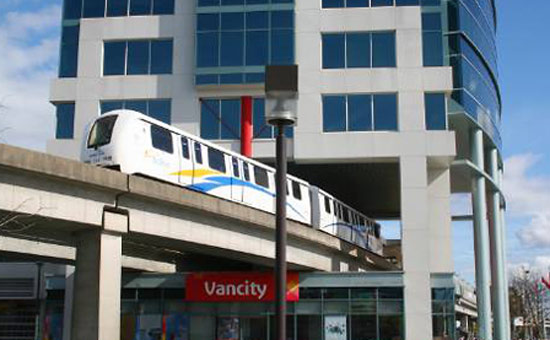
    But most cities in Canada and the U.S. are lacking in infrastructure to move millions of people safely and affordably. With some notable exceptions, such as Vancouver and Calgary, no successful rapid transit infrastructure projects have been built in Canadian cities for decades.

    A recent survey of urban experts and other “city-builders” across Canada — planners, municipal politicians, academics, nongovernmental organizations, developers and architects — concluded the abysmal state of public transit is the Achilles’ heel of urban sustainability and is holding many cities back from achieving greatness.

    Toronto residents spend more time battling congestion to get to and from work than in any other city in North America. This shouldn’t be a surprise, as successive governments have failed to sustain and expand transit systems, even though the region has grown by about a 100,000 new residents a year. Toronto now scores 15th of 21 on per capita investment in public transit among large global cities — well behind sixth-placed New York City, which spends twice as much.

    This failure to address transit infrastructure is serious. The Toronto Board of Trade estimates congestion costs the economy $6 billion a year in lost productivity.

    Furthermore, air pollution from traffic congestion is a major threat to public health, especially for our most vulnerable citizens, like children and the elderly. According to the Toronto Board of Health, pollution-related ailments result in 440 premature deaths, 1,700 hospitalizations, 1,200 acute bronchitis episodes and about 68,000 asthma-symptom days a year.

    Fortunately, politicians are starting to respond. Ontario’s government plans to spend billions to expand its regional transit system in the Greater Toronto and Hamilton Area, under a plan called the Big Move. It’s also looking at new financing tools to ensure funding levels are adequate and continue into the future. But before we spend enormous amounts on improvements, we need to ensure projects contribute to a region-wide rapid transit network using the latest technology and adhering to the highest sustainability standards. They should also move the most people in the most cost-effective way.

    That’s why a proposal to use diesel trains for the Air-Rail-Link plan to connect downtown Toronto with its international airport in Mississauga is concerning. A rapid transit link with the airport is long overdue, but heavy diesel trains emit particulates and other contaminants, including known carcinogens. The proposed rail line would be close to dozens of schools and daycare centres, several long-term care facilities and a chronic respiratory care hospital.

    Numerous experts, including Toronto’s Medical Health Officer, have urged the Ontario government to abandon its diesel plan in favour of electric trains that could be better integrated into a region-wide rapid transit network.

    Vancouver, San Francisco, Portland, Seattle and New York City have consistently ranked among the most livable cities on the continent, in part because they take the environment into account for planning decisions. They all have world-class public transit systems that move residents in a safe, affordable and sustainable way. It’s time for Toronto and its suburbs to do the same. Effective transit and transportation solutions can spur economic productivity, protect the environment and improve quality of life.
  • The Hayes River in Manitoba

    The Hayes River in Manitoba

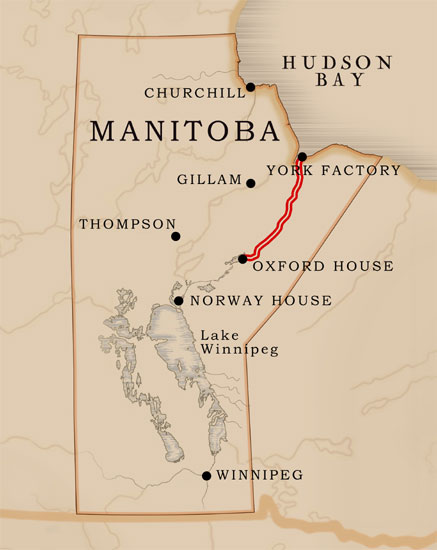
    If you live in Manitoba you might be aware that the Hayes River is the longest naturally flowing river in the province. It’s also one of the few remaining North American rivers that remains relatively unchanged – in fact it really hasn’t changed in 300 years! The Hayes River is considered to be one of Canada’s most scenic, natural and historic waterways.

    Hayes River begins at the north end of Lake Winnipeg, flowing northeast to Hudson Bay. It flows through a variety of landscapes including boreal forests, muskeg, dense spruce forests, an area of stunted black spruce/tamarack and bogs, even treeless tundra. And I can’t forget to mention the whitewater, lakes, gorges, deep valleys, a glacial outwash complex and Robison Falls – five sets of beautiful falls that plunge through granite formations.

    If you want to canoe or kayak on this river make sure you have lots of experience with whitewater navigation. With its challenging rapids, remoteness, intense weather and water conditions, it is best left for those with a high degree of competence in white water canoeing/kayaking and outdoor living skills.

    Keep an eye out for beluga whales and polar bears – just two of the many species that can be found in and around Hayes River.

  • Great Changes for the Great Lakes

    Great Changes for the Great Lakes

    Across the world, North America is known for many things; the culture, the people and the great outdoors. Part of that great outdoors is the Great Lakes. The Great Lakes are an integral part of our North American identity; and to preserve that identity in 2005 the premiers of Ontario and Quebec and the leaders of eight American states that border the lakes came together and signed the Great Lakes Water Pact.

    The Great Lakes Water Pact is a pact that has introduced strict regulations in regards to the usage of the Great Lakes and it has sunk the tentative thoughts of shipping water to thirsty regions in the United States and Middle East. It was signed by the Canadian provinces and the American states that surround the Great Lakes; Ontario, Quebec, Ohio, New York, Pennsylvania, Michigan, Indiana, Illinois, Wisconsin and Minnesota. The agreement includes rules that make it difficult for communities surrounding the Great Lakes watershed to use the water and also aims to prohibit the commercial export of the lake water by restricting withdrawals of water to five gallon (twenty litres) containers.

    The affects this pact has on future generations are great. The Great Lakes are a natural resource that are depleting and are not renewing as fast or as much that is necessary. More than thirty five million people rely on the lakes for drinking water, and the lakes are only able to replace one percent of that per year.

    The Great Lakes Pact is important for North America’s future generation because it ensures that not all the lakes will be used up and it will be saved from disappearing. This works in the favour of future generations because it guarantees that the lakes will be there for their own usage as well just as it was there for the past generations usage. Not only does it assure fresh and natural drinking water for generations to come but it also promises that the amount of surface water in the world stays intact. The Great Lakes contains twenty percent of the world’s surface water and this pact will make sure that the surface water will remain for years to come. Without that surface water the world may dry up which in turn will not only affect people directly but also indirectly via the drying up of crops and vegetation.

    The Great Lakes Water Pact was signed in the year 2005 but its positive effects will last the world for years to come, both directly to people close to them and indirectly to people around the world. Directly through the fact that the Great Lakes are a source of fresh drinking water for people that surround them and indirectly because of the Great Lakes being a source of surface water that helps hydrate crops and vegetation, and without the lakes those crops and vegetation’s would dry up and therefore not feed communities around the world.

  • Getting Your Volunteer Hours the Old-Fashioned Way

    Getting Your Volunteer Hours the Old-Fashioned Way

    In order to graduate high school, students must complete 40 hours of volunteer work. Rather than dragging it out over the course of an entire high school career, why not get them all done at once? And for that matter, even learn something while you are at it? If you’re interested thus far, you should look into volunteering with your local history museum.

    You will often find that any city’s museum would welcome student volunteers, especially those who have a vested interest in history or plans to continue historical studies into university.

    Maja Bannerman, Public Programmer for the Niagara Falls History Museum said that the museum accepts volunteers aged 10 to 80. Bannerman commented that their graveyard tour program in specific attracts many student volunteers, “a lot of the high school students are doing their hours and getting beyond what they need,” she added.

    The graveyard tour has students dress up in period clothing and imitate those buried in the Lundy’s Lane Battle of 1814 graveyard. These students put on three shows per night, every Friday and Saturday for the last three weeks in October. Beyond the official shows, there are numerous dress rehearsals and technical rehearsals throughout September in preparation for the show. Though it is a large time commitment, you could easily complete your volunteer hours by the end of October, and you’d have some great stories to tell from the experience.

    Though the Graveyard Tour is only one program at one museum, it is a fine example of an unconventional way to complete your volunteer hours quickly. Beyond getting your required volunteering done, there is enormous opportunity to learn something new about the place you live.

    However, your involvement does not have to stop there. By volunteering to the best of your abilities, you can show yourself to be a very useful asset to the museum. If you are particularly talented, it is possible to turn your volunteer position into a future job or career.

    “There have been students in the past who have attained paid positions here,” Bannerman said. Making such connections through volunteering can lead to a job, a career, or even just an excellent reference for your resume. It is very important to begin making connections like this while you are still in high school, as they will carry you through your college or university years and into the real world.

  • Volunteer Centres in Canada

    Volunteer Centres in Canada

    As you know, all high school students need to have 40 hours of community service in order to graduate. Use this information to discover where your 40 hours can best be used.

    Volunteering and Community Hours

    What is a Volunteer Centre?

    Volunteer Centres are non-profit organizations or groups dedicated to fostering and developing volunteerism in the community as a whole. While other organizations contribute to sustaining our national heritage of volunteering through their programs and outreach, Volunteer Centres serve the broadest membership. Volunteer Centres reach across the non-profit and public sectors to include organizations working in human and social services, health care, education, the arts and recreation – regardless of their source of funding.

    What if my community does not have a Volunteer Centre?

    Volunteer Centres reflect the needs of the community they serve. Volunteer Centres exist primarily to foster and develop volunteerism in the community as a whole. They engage in four general kinds of services and activities:

    1. Promoting volunteerism and raising awareness of the power of service
    2. Building capacity for effective local volunteering through management consulting on volunteer programs and training of managers of volunteer resources
    3. Providing leadership and advocacy on issues relating to volunteerism and volunteer programs
    4. Connecting people with opportunities to serve through recruitment and referral of volunteers to community agencies

    Four Main Reasons to Volunteer

    1. Make a contribution to society.
    2. Share your skills.
    3. Support a cause.
    4. Do something meaningful with your friends and colleagues.

    One of these reasons probably makes sense for you. You may already be working as a volunteer or are thinking about what you might want to do next. Whatever your reason, there are many different opportunities out there – and organizations that need your help.

  • Volunteering with Work in Mind

    Volunteering with Work in Mind

    Volunteering thoughtfully is the way to break free from the “no work experience” trap. In high school, students do community service hours and they learn that volunteering is something we have to do selflessly to help contribute to the community we call home.

    While I think it is important to give back to your community, there are many ways to give back outside of the strict volunteer setting – some ways you don’t even intend as giving but your actions simply benefit others as a by-product (look up Adam Smith’s concept of “invisible hand” if this interests you). Formal volunteering, then, you should frame as an exchange. Your time and skills are valuable – try to match them to a job where you will be appreciated and where you can truly give a lot. In other words, chose a volunteering position that works with your schedule and lines up with your skills. Remember, it’s an exchange.

    When choosing a volunteer position, consider how you will grow, learn and gain experience in each position, not just how the company or organization will benefit. This is not selfish and it doesn’t contradict the meaning of volunteering. Think of the actions you want to take in your life and your career: most likely you want to do something that will benefit others and you. Anything else is not sustaining; you would burn out from a lack of fulfilment or a lack of caring for yourself. So, volunteering is giving back to your community and planet in a regenerative way for both you and the receiver.

    Here are some often overlooked ways that volunteering can benefit you: First, think about this position and its impact on potential job interviews. A surprising piece of information is that most job interviews now are example-based. In an interview, you can say that you are “reliable and punctual” but this will mean little to your interviewer until you pull out an example of your previous volunteer position in which you arrived at the fair-trade shop at 7am every Sunday morning to assist your supervisor in opening the shop.

    Next, get a letter of recommendation from your volunteering supervisor. One or two of these and all of a sudden you’re not the only one rooting for your great work habits and abilities in an interview. Letters of recommendation make an employer much more likely to believe all the positive things you say about yourself, because they have a second or third opinion. If you are volunteering for a set duration, ask for a letter near the end of the term. Give your supervisor at least a week’s notice before you need the letter, and she or he will likely be glad to write it for you. If you’ve already completed a volunteering term you can certainly still contact your supervisor now and ask for a letter of recommendation.

    Finally, don’t feel obliged to stay in one volunteer position if it isn’t working for you. The main asset of volunteering is that you get to explore many different career routes without the commitment and stress of a paid job. If your position isn’t giving you anything back – joy or experience or knowledge — give a fair week’s notice of your departure and leave politely, thanking them very much for the opportunity.

    Volunteering is practice for your career, so go out and get the best combination of helping others and benefiting you that is possible!

  • Volunteer Centres in Canada

    Volunteer Centres in Canada

    As you know, all high school students need to have 40 hours of community service in order to graduate. Use this information to discover where your 40 hours can best be used.

    Volunteering and Community Hours

    What is a Volunteer Centre?

    Volunteer Centres are non-profit organizations or groups dedicated to fostering and developing volunteerism in the community as a whole. While other organizations contribute to sustaining our national heritage of volunteering through their programs and outreach, Volunteer Centres serve the broadest membership. Volunteer Centres reach across the non-profit and public sectors to include organizations working in human and social services, health care, education, the arts and recreation – regardless of their source of funding.

    What if my community does not have a Volunteer Centre?

    Volunteer Centres reflect the needs of the community they serve. Volunteer Centres exist primarily to foster and develop volunteerism in the community as a whole. They engage in four general kinds of services and activities:

    1. Promoting volunteerism and raising awareness of the power of service
    2. Building capacity for effective local volunteering through management consulting on volunteer programs and training of managers of volunteer resources
    3. Providing leadership and advocacy on issues relating to volunteerism and volunteer programs
    4. Connecting people with opportunities to serve through recruitment and referral of volunteers to community agencies

    Four Main Reasons to Volunteer

    1. Make a contribution to society.
    2. Share your skills.
    3. Support a cause.
    4. Do something meaningful with your friends and colleagues.

    One of these reasons probably makes sense for you. You may already be working as a volunteer or are thinking about what you might want to do next. Whatever your reason, there are many different opportunities out there – and organizations that need your help.

  • Careers with Animals: Horse Groomer

    Careers with Animals: Horse Groomer

    If you’ve spent any time at all around stables, you’ll know horses require a lot of care to keep them groomed, healthy and happy. Looking after a horse’s needs can sometimes be a full-time job – and, in fact, it is! Horse groomers or equine grooms are the people who maintain a horse’s nutrition, grooming and overall health. If you love horses, the great outdoors, and working with your hands, this could be the job for you.

    Skill Requirements
    First and foremost, a horse groomer should be very comfortable with touching horses and being in their vicinity for extend periods of times. Horse grooming involves a lot of time spent with the horses tending to their needs. Brushing, feeding, watering, tacking, untacking, cleaning the stalls, and exercising the horses is all part of a groomer’s daily routine. Rain, shine, or snow, groomers are expected to perform these tasks. A groomer should also be able to read and understand horse documentation and take care of prescriptions and medications a horse may need at the instruction of a veterinarian.

    Groomers also require patience and strong observation skills. Changes in behaviour or signs of physical injury can only be detected through maintaining a strong bond with the horses and a watchful eye.

    Qualifications and Apprenticeships
    The qualifications needed for grooming can vary and entirely depends on the employer. Some employers won’t require an entry level groomer or an apprentice groomer to have official qualifications. That said, previous experience with horses is almost always a must. Volunteer experience in a stable or barn can help your chances when applying for paid work.

    If you are looking to get certifiable experience, look into basic horse care programs at colleges in your area. There are also universities in Ontario, Nova Scotia and Alberta that offer undergraduate programs in equine studies suitable for those looking for a more technical career in the same field.

    Hours and Salary
    Horse grooming typically involves early mornings and a 40-hour work week. Entry level groomers will earn minimum wage at first, gradually earning raises as they gain more experience. More experienced groomers will earn a starting rate at anywhere from $15-$20 dollars an hour. Depending on the employer, there may also be benefits provided.

  • A Garbage Patch In The Great Lakes?

    A Garbage Patch In The Great Lakes?

    You may have heard about the garbage patches that exist in the oceans – where specific ocean and atmospheric conditions ensnare debris, small pieces of plastic, which accumulate into large amounts of trash hundreds of kilometres from coastlines.

    Recent research has just discovered that the Great Lakes, the world’s largest freshwater ecosystem, are also being affected by plastic pollution.

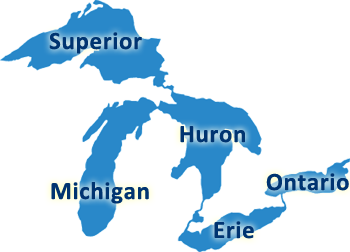
    Collecting water samples from Lakes Superior, Erie and Huron researchers found plastic concentrations ranging from 600 to 650,000 plastic pieces per square kilometer.

    While these plastic particles aren’t always visible, they’re there, absorbing toxic chemicals from the water, entering the food chain and impacting wildlife.

    For more information on issues impacting Canada’s water resources and actions we can take to help curb our impacts, please visit Rivers To Oceans.

  • Rotary Clubs Sponsor Exchange Students

    Rotary Clubs Sponsor Exchange Students

    Very few clubs can claim to span the entire planet Earth, with members from Iceland to Antarctica. Few non-governmental organizations can hold a seat in the United Nations, too. So which club does? Which club is commonly recognized as having the impact and value of an entire nation while spanning nearly all?

    Rotary International (RI) is the world’s first service club organization, with more than 1.2 million members in 33,000 clubs worldwide. Rotary members are “volunteers and humanitarians who work locally, regionally, and internationally to combat hunger, improve health and sanitation, provide education and job training, and promote peace,” according to RI President John Kenny. Some of their main focuses include eradicating the Polio virus, promoting literacy, and engaging youth through exchange programs and educational opportunities. Sounds awesome! Want to join?

    As students, we’re actually too young to be Rotarians. However, for us, Rotary offers something even better.

    RI funds Rotaract clubs. Rotaract has the same values and goals as Rotary but is meant for students and young professionals between the ages of 18 and 30. It also partners with Interact clubs, Rotary for high school students, and RYLA (Rotary Youth Leadership Award) programs. Rotaract, Interact and RYLA are all fantastic ways to get involved in your community and your world. If you haven’t looked into these clubs yet, now is the time.

    Until this year, RI had four official avenues of service: club, vocational, community, and international. This year, for the first time in a century, Rotary announced a fifth avenue of service: “New Generations”. Rotarians are sponsoring youth on more frequent, new exchange trips, and focusing their community efforts toward our futures and well-being. They’re all about us now, so let’s take full advantage and give back as much as we can.

    Last summer, Rotary hosted their 101st Annual International Convention Meeting in Montreal, Quebec, and I am one of over 20,000 members who attended. They had meetings, workshops, guest speakers, social events, and special performances for all the Rotarians and Rotaractors. We were given speeches on global awareness by Queen Noor of Jordan, current Nobel Peace Prize nominee Greg Mortenson, country music star Dolly Parton, and more. We were also part of a mass volunteer effort that cleaned up some of Montreal’s most beautiful agricultural areas and donated both time and pocket-change to support many charitable initiatives.

    The convention provided great opportunities both professionally and personally. Professionally, Rotary is a great way to build networks of contacts and build leadership skills that can help you reach your school and work-related goals. On a personal level, you can enjoy friendships with hundreds of people from around the world.

    Kelly Mills, a neuroscience major from Alberta’s Lethbridge University, said that Rotary was a great way to bring people together. “It’s a connection,” she explained, “you can go up to anyone and everyone. Just smile and you’re friends.”

    If you want to get involved by finding a Rotaract or Interact club in your community, visit Rotaract.

    Contact your local Rotary club if you are interested in starting your own, and helping your city or high school add to the worldwide service network that is Rotary International.