Category: Science

  • Astronauts and Chris Hadfield

    Astronauts and Chris Hadfield

    Retirement is a good time for people for look back at what they have done over their lives and in their work. Some people’s careers never go beyond their own town or city. For other people, however, a job can take them far away, even beyond the earth. When Chris Hadfield retired from his career as an astronaut on July 3rd, 2013, he had a chance to look back on a long career in space. His most famous success was being the leader of the International Space Station. The education he received and the work he did in his early years all helped him to do well in his career as an astronaut.

    Chris Hadfield grew up on a farm in Ontario. He became interested in flying and joined the Air Cadets at a young age. During this time, he learned to operate first gliders and then regular powered airplanes. By the time he retired, he had flown over seventy different types of planes and other aircraft.

    After he finished his basic schooling, Chris Hadfield went to study at the Royal Military College in Kingston, Ontario. He completed a degree in mechanical engineering there before going on to do research at the University of Waterloo. Next, he studied at the University of Tennessee and received a Master of Science. Early in his career, he became a fighter pilot in the Canadian Armed Forces. In 1983, he received an award for best pilot in the Basic Jet Training in Moose Jaw, Saskatchewan.

    In 1992, Chris Hadfield became one of four astronauts working at the Johnson Space Center in Houston, Texas. He traveled into space several times and even helped to install a tool called the Canadarm onto the International Space Station. He worked with the Russian space program between 2001 and 2003 and later used his research skills to test the possibilities of underwater life at a station near the coast of Florida.

    In 2012, Chris Hadfield was chosen to work as the head of the International Space Station. He worked there for five months, conducting scientific experiments in areas such as gravity’s effects on humans. All the way through, he used social media sites like Twitter to tell people on earth what he was doing. He returned to earth in May 2013 and announced his retirement a month later. His official retirement began on July 3rd, 2013.

    Not all astronauts train in the same way as Chris Hadfield did, and some might never actually work in space. However, an education in one of the sciences or engineering, and also work experience, is necessary for most jobs in this field. Some knowledge of medicine is necessary since astronauts have no access to hospitals in space. Astronauts need to be in fairly good health and to be able to move to different locations for work. The pay is good, and astronauts can often have extremely varied careers. Not too mention that you get to go where few other people have ever gone before!


  • Renewable Energy – A Trade for the Future

    Renewable Energy – A Trade for the Future

    Are you seeking a future-centric career? Looking to make a difference in the world? Want to join an industry destined to flourish significantly within your lifetime?

    With a growing awareness of the negative impacts humans have had on the environment, the increasing concern of environmental problems such as global warming, and the fight to preserve and find alternative ways to sustain the environment and human life, the renewable energy sector provides many opportunities for a rewarding career.

    As more alternative energy options are unveiled, more positions within the renewable energy sector are becoming available. Perhaps you’ll be the person responsible for energy audits, a technician working on solar panels, a designer of wind farms, or working to promote more sustainable building practices. The opportunities are endless and will continue to grow thanks to government initiatives to improve energy practices.

    In 2009, Ontario introduced a Green Energy Act, which was committed to promoting and supporting green energy projects and supporting energy efficiency province-wide, joining in a worldwide initiative to move toward renewable practices.

    The Ministry of Energy has also introduced many incentive programs, including tax rebates, to encourage Canadians to make energy updated to their homes. This could include installing solar panels or wind turbines, geothermal heating or cooling, and more.

    As the renewable energy sector grows, more programs are being offered at post secondary institutions throughout the province and country. Programs are for energy technicians, renewable energy technicians, sustainable building construction, sustainable agriculture, wind turbine technicians and more.

    If you’re looking to explore a rewarding career with opportunities for further growth, development and innovation, then a renewable energy career is perfect for you.

    Depending on the type of renewable energy career you’re interested in pursuing, there are apprenticeship, diploma, and degree opportunities available to suit your wants and needs. The opportunities are endless.

  • Report shows action on climate change is critical

    Report shows action on climate change is critical

    The Intergovernmental Panel on Climate Change just released the first of four chapters of its Fifth Assessment Report. It shows scientists are more certain now than in 2007 when the Fourth Assessment was released that humans are largely responsible for global warming — mainly by burning fossil fuels and cutting down forests — and that it’s getting worse and poses a serious threat to humanity. It contains hints of optimism, though, and shows addressing the problem creates opportunities.

    The IPCC was set up in 1988 by the World Meteorological Organization and UN Environment Programme at the request of member governments. For the recent study, hundreds of scientists and experts worldwide combed through the latest peer-reviewed scientific literature and other relevant materials to assess “the state of scientific, technical and socio-economic knowledge on climate change, its causes, potential impacts and response strategies.”

    Scientists are cautious. That’s the nature of science; information changes, and it’s difficult to account for all interrelated factors in any phenomenon, especially one as complicated as global climate. When they say something is ‘extremely likely’ or 95 per cent certain — as the latest report does regarding human contributions to climate change — that’s as close to certainty as science usually gets. Evidence for climate change itself is “unequivocal”.

    According to the latest installment, which cites 9,200 scientific publications in 2,200 pages, “It is extremely likely that human activities caused more than half of the observed increase in global average surface temperature from 1951 to 2010.” It also concludes oceans have warmed, snow and ice have diminished, sea levels have risen and extreme weather events have become more common.

    The report also dismisses the notion, spread by climate change deniers, that global warming has stopped. It has slowed slightly in recent years, scientists say, because of natural weather variations and other possible factors, including increases in volcanic ash, changes in solar cycles and, as a new scientific study suggests, oceans absorbing more heat.

    An increase in global average temperatures greater than 2 C above pre-industrial levels would result in further melting of glaciers and Arctic ice, continued rising sea levels, more frequent and extreme weather events, difficulties for global agriculture and changes in plant and animal life, including extinctions. The report says we’ll likely exceed that threshold this century unless we choose to act.

    This means a strong, concerted global effort to combat climate change is necessary to protect the health of our economies, communities, children and future. That will cost us, but far less than doing nothing. Although governments of almost 200 countries agreed global average temperature increases must be kept below 2 C to avoid catastrophic warming, we are on track for the “worst case scenario” outlined by the first assessment report in 1990. Research indicates it’s possible to limit warming below that threshold if far-reaching action is taken. We can’t let skeptics sidetrack us with distortions and cherry-picking aimed at creating the illusion the science is still not in.

    The reasons to act go beyond averting the worst impacts of climate change. Fossil fuels are an incredibly valuable resource that can be used for making everything from medical supplies to computer keyboards. Wastefully burning them to propel solo drivers in cars and SUVs will ensure we run out sooner rather than later.

    Working with other nations to meet science-based targets to cut global warming pollution and create clean, renewable energy solutions would allow us to use our remaining fossil fuel reserves more wisely and create lasting jobs and economic opportunities. That’s why the David Suzuki Foundation is working with the Trottier Energy Futures Project to identify clean-energy opportunities for Canada.

    Shifting to cleaner energy sources would also reduce pollution and the environmental damage that comes with extracting coal, oil and gas. That would improve the health of people, communities and ecosystems, and reduce both health-care costs and dollars spent replacing services nature already provides with expensive infrastructure.

    The IPCC report gathers the best science from around the world. It’s clear: There’s no time to delay. The first chapter examines the current science of climate change, the second will look at impacts and the third will consider strategies to deal with the problem. A report synthesizing the three chapters will be released in 2014. We must take it seriously.

  • Incinerating Trash is a Waste of Resources

    Incinerating Trash is a Waste of Resources

    Many urban areas have built or are considering building waste-incineration facilities to generate energy. At first glance, it seems like a win-win. You get rid of “garbage” and acquire a new energy source with fuel that’s almost free. But it’s a problematic solution, and a complicated issue.

    Metro Vancouver has a facility in Burnaby and is planning to build another, and Toronto is also looking at the technology, which has been used elsewhere in the region, with a plant in Brampton and another under construction in Clarington. The practice is especially popular in the European Union, where countries including Sweden and Germany now have to import waste to fuel their generators.

    The term “waste” is correct; there’s really no such thing as garbage. And that’s one problem with burning it for fuel. Even those who promote the technology would probably agree that the best ways to deal with waste are to reduce, reuse and recycle it. It’s astounding how much unnecessary trash we create, through excessive packaging, planned obsolescence, hyperconsumerism and lack of awareness. This is one area where individuals can make a difference, by refusing to buy overpackaged goods and encouraging companies to reduce packaging, and by curbing our desire to always have newer and shinier stuff.

    We toss out lots of items that can be reused, repaired or altered for other purposes. As for recycling, we’ve made great strides, but we still send close to three quarters of our household waste to the landfill. Considering each Canadian produces close to 1,000 kilograms of waste a year, that’s a lot of trash! Much of the material that ends up in landfills is usable, compostable or recyclable, including tonnes of plastics.

    Turning unsorted and usable trash into a valuable fuel commodity means communities are less likely to choose to reduce, reuse and recycle it. Burning waste can seem easier and less expensive than sorting, diverting and recycling it. But once it’s burned, it can never be used for anything else — it’s gone!

    Incinerating waste also comes with environmental problems. Although modern technologies reduce many air pollutants once associated with the process, burning plastics and other materials still creates emissions that can contain toxins such as mercury, dioxins and furans. As with burning fossil fuels, burning waste — much of which is plastics derived from fossil fuels — also produces carbon dioxide and nitrous oxide emissions that contribute to climate change.

    Burning waste doesn’t make it disappear, either. Beyond the fly ash and pollutants released into the atmosphere, a great deal of toxic “bottom ash” is left over. Metro Vancouver says bottom ash from its Burnaby incinerator is about 17 per cent the weight of the waste burned. That ash must be disposed of, usually in landfills. Metro testing has found high levels of the carcinogenic heavy metal cadmium in bottom ash, sometimes twice the limit allowed for landfills. High lead levels have also been reported.

    Incineration is also expensive and inefficient. Once we start the practice, we come to rely on waste as a fuel commodity, and it’s tough to go back to more environmentally sound methods of dealing with it. As has been seen in Sweden and Germany, improving efforts to reduce, re-use and recycle can actually result in shortages of waste “fuel”!

    It’s a complicated issue. We need to find ways to manage waste and to generate energy without relying on diminishing and increasingly expensive supplies of polluting fossil fuels. Sending trash to landfills is clearly not the best solution. But we have better options than landfills and incineration, starting with reducing the amount of waste we produce. Through education and regulation, we can reduce obvious sources and divert more compostable, recyclable and reusable materials away from the dump. It’s simply wasteful to incinerate it.

    It would be far better to sort trash into organics, recyclables and products that require careful disposal. We could then divert these different streams to minimize our waste impacts and produce new commodities. Organics used in biomass energy systems could help offset fossil fuel use while creating valuable supplies of fertilizers. Diversion and recycling lessen the need to extract new resources and disrupt the environment while creating more value and jobs. That’s a win all around!

  • Carbon Scrubbers to Clean Up Emissions

    Carbon Scrubbers to Clean Up Emissions

    Research into methods of reducing carbon emissions is a continually advancing field, and a team of researchers developed an improved way to remove emissions directly from sources like smokestacks.

    The team recently had an article published in the Journal of the American Chemical Society detailing their findings, which focused on using substances based on a material called polyethylenimine to remove carbon dioxide (CO2) from sources. According to the article, these substances whoed some of the greatest results in removing CO2 from the air when compared to alternatives. The substances also proved capable of effectively capturing the CO2, and could either be re-used or isolated, so it wouldn’t contribute to global climate change.

    The team, which consisted of researchers from the Loker Hydrocarbon Research Institute and Department of Chemistry from the University of Southern California, explained in their article that the materials used are uniquely effective largely due to their low cost and reusability. The material is relatively inexpensive when compared to other options, and can be reused numerous times without losing its ability to capture CO2.

    The article also explains that materials manage to remain effective in real-world conditions. This means that the materials were observed as being able to accommodate for exceptionally humid, moist or dry environments, something that is important when considering practical application of scientific research such as this.

    Other options for CO2 reduction are more expensive, less effective or durable and use large amounts of energy than the processes being researched by this team. If the researchers are able to effectively implement these polyethylene materials, they will have created a valuable resource that is much easier to use. Considering the cost-effectiveness and stability of the polyethylenimine materials, the application of them will make sustainability much more accessible, and therefore potentially more widespread.

    The material’s main target for carbon reduction is smokestacks; however the research could also potentially be used to reduce CO2 emissions from car exhaust, submarines, and even the open atmosphere itself. Cleaning of the upper atmosphere would hopefully reduce the greenhouse effects of the CO2.

    CO2 is one of the greatest threats to the environment in recent years. The amount of CO2 emissions produced by humans is of great concern to the population due to its effects on climate change,rising sea levels and air pollution. Research on ways to reduce emissions of CO2 is an area of international concern.

    According to the World Health Organization, high levels of greenhouse gases — of which CO2 is a prominent part of — affect necessities to health like clean air and water and increase the incidence rates of climate-sensitive diseases.

    Up until now, finding ways to reduce these emissions has proven challenging and unpromising. However, if this research team is successful in implementing polyethylenimine as a way to reduce emissions, the levels of CO2 in the atmosphere may be significantly reduced. This would help reduce concerns of climate change, and result in cleaner air in an effective and affordable way.

  • Green Cleaning

    Green Cleaning

    Whether you live at home, or at campus, cleaning is an unavoidable part of the daily routine. Have you ever read the list of ingredients in store bought cleaning products? Not only are its contents difficult to pronounce, they are harmful and toxic. Green cleaning is not hard, and will save you money. Listed below are 3 simple ingredients that can be used to simply and efficiently clean your entire house.

    Vinegar or Baking Soda:  By adding warm water to either vinegar or baking soda, a natural all-purpose cleaner can be made. Vinegar and baking soda can be mixed together with water to clean as well. Do not worry about the vinegar smell; yes it is strong at first, but it will go away. The vinegar/water mixture can be used to clean both inside and outside of various machines and appliances like tea kettles, steam irons, coffee makers, and more. Vinegar or baking soda can be used to deodorize the home too (i.e. placing a slightly opened container of baking soda in the fridge). These green all-purpose cleaners can be used to clean almost anything! Everything from windows, clothing, furniture, microwaves, and even the kitchen sink can be cleaned with these simple ingredients.

    Lemon Juice:  The acid in lemon juice works great as a natural stain-remover . However, work quickly while using lemons as a stain remover since they do have “a bleaching effect, particularly when exposed to sunlight”. A lemon half can be used to scrub away at copper and steel surfaces; but be careful on marble. Or a cloth wetted with lemon juice (bottled or squeezed from a lemon) can also be used to rub away stains. Lemon juice can be combined with either salt or baking soda to form a paste, to make cleaning easier since lemon juice by itself it quite runny. Clothing, and other cloth-like material can also be freed from stains by using this lemon juice paste. After gently rubbing the mixture into the stain, be sure to wash the item of clothing after.

    Now that you know about green cleaning, your commercial cleaning products can be replaced; however, since they are toxic they must be disposed of responsibly. Toxic recycling programs are held in most communities to properly dispose of these chemicals. So even while cleaning may still be a chore, at least we can feel better that we are not harming the planet in the process.

    Check out these websites that offer more tips on green cleaning, and other ways on how to go green:

    http://planetgreen.discovery.com/

    http://www.treehugger.com/

    http://odyb.net/food-cooking/62-little-known-uses-of-vinegar/

  • Scientists Work to Solve Mystery of Dying Bees

    Scientists Work to Solve Mystery of Dying Bees

    When a swarm of bees landed on a tree in their yard a few years ago, a David Suzuki Foundation staffer and her husband became accidental beekeepers. They called an apiarist relative who came over and helped them capture the bees, build hives and round up equipment. Now they’re enjoying fresh honey and wax and have developed a fascination for the amazing insects. Staff shared that wonderment when she brought honeycombs and tools to the office for an impromptu lesson on beekeeping and bee behaviour.

    Bees are endlessly intriguing, and incredibly useful to us — and not just for honey and wax. If bees disappeared, it would be difficult, if not impossible, to grow much of what we eat. Bees pollinate crops ranging from apples to zucchini. Blueberries and almonds are almost entirely dependent on them. Some experts say they’re responsible for one of every three bites of food we eat. The economic value of pollination services from honeybees alone is estimated at $14 billion in the U.S. and hundreds of millions in Canada.

    Bees are good pollinators because — unlike some birds and other insects that are after nectar alone — they also seek out pollen, which they use along with nectar to feed the hive. In the process, they transfer pollen from the male part of one flower to the female part of another, fertilizing plants so they can develop seed-carrying fruits. Wild bees and domesticated honeybees are both important pollinators.

    In fact, research indicates wild bees may be more important for food-crop pollination than honeybees. That’s in part because a single species, such as honeybees, is vulnerable to mass disease outbreaks. Wild bees also use a wider range of pollination techniques and visit more plants, and so increase chances of cross-pollination, according to an article in the Guardian.

    Sadly, both wild and domesticated bees are in trouble, and that means we could be, too. Causes of phenomena such as colony collapse disorder and other declines in bee populations are not entirely understood, but scientists are getting closer to knowing why bees are dying. Ironically, much of it relates to agricultural practices. Modern methods of growing food are killing one of our biggest helpers in food production.

    Wild bees also face threats from climate change and habitat loss. A recent study published in Science found half the wild bee species in the U.S. were wiped out during the 20th century. That’s been partly attributed to “an increasing mismatch between when plants flowered and when bees were active, a finding consistent with climate change,” according to the Guardian.

    Causes of honeybee deaths are more complicated. Colony collapse disorder has wiped out millions of hives over the past decade, with pesticide use, parasites and poor nutrition eyed as likely culprits. Scientists from the University of Maryland and U.S. Department of Agriculture recently found pollen collected by honeybees was contaminated with a toxic mix of pesticides and fungicides. It appears the toxins make the bees more vulnerable to a parasite called Nosema ceranae, which is believed to cause colony collapse disorder. Pollen samples contained an average of nine different agricultural pesticides and fungicides, and as many as 21 in one case.

    The European Union has imposed a two-year ban on three neonicotinoids, a class of pesticides thought to be responsible for the dramatic declines in Europe’s bee populations, but only for use on “crops attractive to bees”. However, according to the Maryland study’s lead author, Dennis vanEngelsdorp, quoted in the online news outlet Quartz, “It’s a lot more complicated than just one product, which means of course the solution does not lie in just banning one class of product.”

    We need to get a handle on the toxic chemicals we use to grow food. If our practices kill insects and birds that make it possible to grow crops, we’re defeating their purpose and putting ourselves and the rest of nature at risk. As individuals, we can help bees. Stop using pesticides and join the call to ban the worst ones. Plant bee-friendly plants and gardens, make wild bee “houses” and learn more about our fuzzy, buzzing friends. Like our DSF staffer, you could even adopt a hive.

  • A Bad Deal for the American Eel

    A Bad Deal for the American Eel

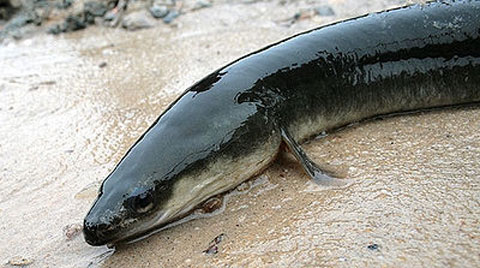
    Once extremely abundant throughout all tributaries to Lake Ontario and the St. Lawrence River, the American eel has seen a dramatic population decline. In 2006, the presence of eels in these waters decreased by almost 90 per cent. As of 2007, this species has been listed as Endangered under the Ontario Endangered Species Act.

    This dramatic population decline can be attributed to several factors, including the creation of hydroelectric dams, reduced access to habitat imposed by manmade barriers to upstream migration, general habitat destruction and alteration and commercial harvesting. The construction of dams threaten the American eel species in two ways: they result in habitat fragmentation and loss as they make it much more difficult for adult eels to migrate back to the ocean to spawn, and hydroelectric turbines contribute to higher injury and mortality rates of juvenile eels swimming downstream (depending on the size of the eels and the design of the turbines).

    The Canadian Wildlife Federation, in collaboration with the Ontario Ministry of Natural Resources, the Algonquins of Ontario and the Arnprior Fish and Game Club, have been tracking and tagging American eels in the Ottawa River since 2007. Previous work has been successful not only in determining which methods and locations are best for capturing eels, but also in documenting movement patterns and collecting data on habitat preferences and downstream migration timing. Currently the project aims to build on the knowledge gained in the first studies of eel movement and use this information to develop strategies for American eel recovery in the Ottawa River.

    On a section of the Ottawa River from Chats Falls dam to Chenaux dam, researchers are busily working to tag and track eels to monitor downstream migration patterns, determining if and when eels move past the Chats Falls dam. They are also monitoring upstream migration by installing temporary eel ladders at three barriers on tributaries to the Lac des Chats section of the Ottawa River. These ladders will be fitted with a trap at the upstream end, and eels that migrate up them and are trapped will be tagged and re-released downstream. If the eels are captured often enough, this will confirm to researchers that eels are indeed attempting migration through these routes and can provide important information about the barriers that may prevent later out-migration.

    Another important aspect of this project is the public awareness campaign that aims to educate people on the American eel and its importance in the ecology of the Ottawa River. This part of the project will be carried out through activities that increase local knowledge of the American eel, encourage the public to report eel sightings and discourage anglers from killing eels caught accidentally. Members of the public will also be invited to observe eel capture and tagging activities.

    The long-term goal is to re-establish a safe migration route for American eels in collaboration with local communities and hydroelectric producers. The ultimate goal is to see a future where the eel population is once again increasing in the Lac des Chats and adjacent sections of the Ottawa River.

  • A Garbage Patch In The Great Lakes?

    A Garbage Patch In The Great Lakes?

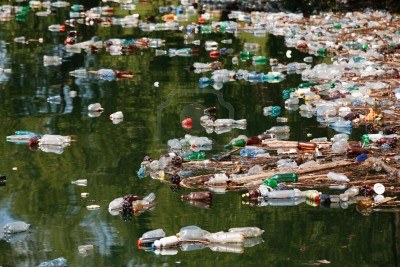
    You may have heard about the garbage patches that exist in the oceans – where specific ocean and atmospheric conditions ensnare debris, small pieces of plastic, which accumulate into large amounts of trash hundreds of kilometres from coastlines.

    Recent research has just discovered that the Great Lakes, the world’s largest freshwater ecosystem, are also being affected by plastic pollution.

    Collecting water samples from Lakes Superior, Erie and Huron researchers found plastic concentrations ranging from 600 to 650,000 plastic pieces per square kilometer.

    While these plastic particles aren’t always visible, they’re there, absorbing toxic chemicals from the water, entering the food chain and impacting wildlife.

    For more information on issues impacting Canada’s water resources and actions we can take to help curb our impacts, please visit Rivers To Oceans.

  • Bean Leaves, Bedbugs and Biomimicry

    Bean Leaves, Bedbugs and Biomimicry

    Scientists often come up with new discoveries, technologies or theories. But sometimes they rediscover what our ancestors already knew. A couple of recent findings show we have a lot to learn from our forebears — and nature — about bugs.

    Modern methods of controlling pests have consisted mainly of poisoning them with chemicals. But that’s led to problems. Pesticides kill far more than the bugs they target, and pollute air, water and soil. As we learned with the widespread use of DDT to control agricultural pests and mosquitoes, chemicals can bioaccumulate, meaning molecules may concentrate hundreds of thousands of times up the food web — eventually reaching people.

    As Rachel Carson wrote in her 1962 book Silent Spring, using DDT widely without knowing the full consequences was folly. She showed it was polluting water and killing wildlife, especially birds, and that it could cause cancer in humans. Her book launched the environmental movement but did little to change our overall strategy for dealing with bugs. Although DDT was banned worldwide for agricultural purposes in 2001, the chemical is still used to control insects that spread disease.

    Recent research shows that widespread use of pesticides like DDT may have caused us to ignore or forget benign methods of pest control. Because the chemicals were so effective, infestations were reduced and there was little interest in non-toxic methods. But bugs evolve quickly and can become immune to pesticides. That’s true of bedbugs, the now ubiquitous critters that are showing up around the world in homes, hotels, schools, movie theatres — even libraries.

    But a method used long ago provides an effective and non-toxic weapon against the pests, according to a U.S. study in the Journal of the Royal Society Interface. The authors looked into the once-common Eastern European practice of spreading bean leaves around a bed to control bedbugs;. What they found was fascinating.

    “During the night, bed bugs walking on the floor would accumulate on these bean leaves, which were collected and burned the following morning to exterminate the bed bugs. The entrapment of bed bugs by the bean leaves was attributed to the action of microscopic plant hairs (trichomes) on the leaf surfaces that would entangle the legs of the bed bugs,” the scientists, from the University of California, Irvine, and University of Kentucky, wrote.

    They discovered that after bugs get caught up in the hooked plant hairs, they struggle to escape, and in the process vulnerable parts of their feet are pierced by the hooks, permanently trapping them. The research focuses on a way to replicate this. “This physical entrapment is a source of inspiration in the development of new and sustainable methods to control the burgeoning numbers of bed bugs,” the researchers wrote, adding that the method “would avoid the problem of pesticide resistance that has been documented extensively for this insect.”

    Other research has literally dug up pest control methods that go back millennia. An international team of archeologists recently found evidence that people living in South Africa almost 80,000 years ago made bedding out of insect-repelling plants.

    According to the journal Science, the research team found 15 different layers containing bedding made from compacted stems and leaves of sedges and rushes, dating between 77,000 and 38,000 years ago. One layer of leaves was identified as River Wild-quince, which contains “chemicals that are insecticidal, and would be suitable for repelling mosquitoes.” The archeologists also found evidence that people often burned the bedding after use, possibly to remove pests.

    These are just two examples of what we can learn from our ancestors and from nature. Because natural systems tend toward balance, the fascinating field of biomimicry has developed to explore what nature can teach us. It’s aimed at finding “sustainable solutions by emulating nature’s time-tested patterns and strategies,” according to the Biomimicry Guild website. “The goal is to create products, processes, and policies — new ways of living — that are well-adapted to life on earth over the long haul.”

    Maybe the truest sign of human intelligence is not to learn how we can shoehorn nature into our own agenda, but to see how we can better find our own place in nature.