Author: Rochelle C. Pangilinan

  • Stay-at-Home Resources for Learning STEM

    Stay-at-Home Resources for Learning STEM

    With the increasing number of infections and rising death toll due to the pandemic, people have realized the importance of STEM-based skills to help combat the effects of future viruses of a similar nature that could plague the world just as COVID-19 did. We were unprepared for the pandemic, but knowledgeable scientists, researchers, and medical professionals worked hard to lessen its blows to public health by working on health and safety protocols and formulating vaccinations. In addition, engineers also stepped up to launch innovations to help the general population cope with the virus, like face shields that utilize 3D-printing technology.

    STEM-based knowledge is definitely advantageous during these crucial times, which is why it’s more relevant than ever to promote resources that encourage developing these skills to youth. Let’s look at some of these resources below.

    STEM-Works (http://stem-works.com/activities)

    This website provides a wide range of STEM-based topics, from health care innovations to robotics. If you’re someone who’s just beginning to enhance your STEM knowledge, the website will be a useful tool for you to get more familiar with the different avenues that involve STEM. The website has a user-friendly design that makes learning more fun. A bonus is that it also provides a platform for you to provide feedback or suggested activities, so you can get your creative juices flowing and even help to improve the site.

    Exploratorium (https://www.exploratorium.edu/explore)

    Exploratorium offers STEM-based knowledge that goes beneath the surface. This website takes a deep dive on a variety of topics and provides an in-depth look into subjects that will surely catch your interest, like Mars exploration or mummification. If you’re the type who likes to do experiments, this website gives you ideas on activities you can do safely at home to widen your knowledge.

    HowStuffWorks (https://science.howstuffworks.com/)

    This is a great website when you truly want to take a deep dive on everything under the sun that relates to STEM, from innovations to engineering. While the presentation may be encyclopedic, it does help to have an ample amount of information to fully understand how stuff works. The website also has an interesting section titled “Science Vs. Myth” which delves into topics which often have us wondering whether they’re real or not, like crop circles and werewolves. This website is definitely worth investing your time in.

    Science Buddies (https://www.sciencebuddies.org/)

    This website not only provides extensive information on STEM topics, it also encourages and inspires young students to gain their own perspectives by asking them thought-provoking questions. While the website’s presentation may be simpler than other similar sites, it’s still a great one to bookmark!

    Funology (https://www.funology.com/)

    If developing your STEM knowledge in a fun way is more to your liking, then this website suits you best. Funology has a wide range of offerings that go beyond providing mere information and suggested experiments, like arts and crafts activities, games, magic tricks, trivia, and jokes. With Funology, there’s never a dull moment while you boost your STEM knowledge.

    There’s no better time to build up your STEM know-how than now. Have fun and happy learning!


    SOURCES

    https://thejournal.com/articles/2020/09/18/teaching-stem-during-covid.aspx

  • Career Profile: Automotive Painter

    Career Profile: Automotive Painter

    If you look out on an average street, you can see cars and trucks in all different colours, from red or blue to black, white, or grey. Some even have several different colours. Automotive painters work with all kinds of vehicles to apply colours to the surfaces, both to make them look better and to protect them. If that sounds interesting, then the job of automotive painter might be right for you.

    When vehicles come out of factories, they already have paint on their surfaces. The paint helps them look nice, but it also protects the metal against the water from rain or snow and against the salt and other materials that help to melt the ice on streets in winter. Often, however, the paint can be scraped off in accidents or peel off as the vehicle ages. Automotive painters can work in factories to apply the initial coats of paint or in autobody shops, renewing or replacing the paint where it is needed.

    Training for automotive painters usually requires both education and experience. Training programs are available at many trade colleges, and apprenticeships are available through auto dealerships, factories, or many other places that deal with vehicle manufacturing and repair. The training courses might be offered as a block of full-time studies, a longer period of part-time classes, or as a weekly class. Normally, students can complete these classes in a year or less. In many jobs, having Red Seal certification is necessary.

    Practical experience is essential for automotive painters. Apprenticeships teach students how to apply the primer and paint, how to deal with small scratches and large scrapes, and much more. Being able to match paint to the colours that are already on the vehicle is important, although labels and codes on the containers can help in this regard.

    Automotive painters should also have a certain amount of physical strength and endurance to be able to handle heavy equipment for long periods of time. Being able to do very delicate work while covering small scratches or nicks in the paint is also important. Allergies can be problems for those in this field, and paint fumes can cause health problems for many people.

    Being in factories with large machines and heavy equipment all day can be dangerous, as well as quite dusty and dirty, and the painting job itself can involve hazards to the fingers and hands. Nevertheless, people can generally stay in this job fairly late in life, as long as they can still stand for long periods of time and manage the equipment.

    Wages in this job generally start at over $17 per hour and can rise to more than $30 per hour, depending on where people work. Many people work full time in automotive painting, but the hours can decrease, or jobs can disappear entirely in an economic downturn.

    Since automotive painting depends largely on people’s ability to buy new vehicles or to drive the ones they have, job availability depends heavily on the economy. Large cities and towns have the most opportunities but also the most competition. If this job sounds interesting, why not start looking into it?


    Bibliography:

    Careers.org. “Career Occupational Profile for: Automotive Painter.” www.careers.org/occupations/42424/automotive-painter

    College of Trades. “Automotive Painter.” https://www.collegeoftrades.ca/wp-content/uploads/Automotive-Painter.pdf.

    Neuvoo.ca. “Automotive Painter.” https://neuvoo.ca/view/?jpos=&jp=1&l=&id=da6310fe8226&lang=en&newjob=1&ss=1&context=serp&testid=talentChamp&nb=true&reqid=578c62efb803daa12694aeeccc6b4988&splitab=1&action=emailAlert.

    Payscale.com. “Automotive Painter: Hourly Rate.” https://www.payscale.com/research/CA/Job=Painter_Automotive/Hourly_Rate.

  • An In-Depth Look at UBI and Its Pros and Cons

    An In-Depth Look at UBI and Its Pros and Cons

    When the World Health Organization (WHO) announced COVID-19 as a pandemic on March 11, 2020, the Canadian federal government recognized the need of providing financial assistance to those who have lost their jobs due to the virus or had to stay at home and take care of their loved ones because of quarantine regulations. It launched the Canada Emergency Response Benefit (CERB), a taxable benefit of $2,000 a month over the course of seven months.

    It was reported that 240,000 Canadians had successfully applied within the first hour shortly after Prime Minister Justin Trudeau made the announcement, and roughly an hour later, the figure had already jumped to more than 300,000. The final figures released on October 4, 2020 according to Service Canada and Canada Revenue Agency indicate that a total of 27.5 million applications were received and the total benefits payout was $81.64 billion.

    With CERB, a lot of people were hopeful that it will pave the way for Universal Basic Income or UBI, a subject that has been in discussions way before COVID-19.

    First, the Basics: What is UBI?

    UBI refers to a guaranteed livable income provided to everyone in a population on a regular basis. The amount is sufficient enough for someone to “live a modest but dignified life” according to Evelyn Forget, a professor of economics at the University of Manitoba in the Department of Community Health Sciences and a member of the Basic Income Canada Network, a non-profit that’s advocating for UBI in Canada.

    Like with every benefit, however, UBI would have certain criteria. For example, if someone doesn’t have an income of any means, then they will receive the full benefit; if someone is working but receives a low-level income, they will receive a partial benefit. Of course, UBI won’t apply to those who are already above the low-income threshold.

    There is a similar discussion of UBI in the U.S., which former U.S. Democratic presidential candidate Andrew Yang alluded to, but this one pushes for the same amount for everyone, no matter how much they’re earning.

    Trial Runs

    UBI is nothing new in Canada. In fact, 50 years ago, there was a trial run of UBI that took place in Dauphin, Manitoba — a town of approximately 10,000 people which is about five hours away from Winnipeg. A group of economists was the brains behind the program dubbed “Mincome” (or minimum income) that aimed to address rural poverty. The program ran for five years, where an average four-person family in Dauphin was guaranteed an annual income of at least $3,800 – which is equivalent to $20,000 today.

    Then years later, in 2017, Ontario — then under Liberal leadership — unveiled its own three-year basic income pilot with 4,000 low-income participants, where individuals received $17,000, couples received $24,000, and persons with disabilities received an additional $6,000. However, the program was cancelled ten months later by Ontario Premier Doug Ford.

    Then-Social Services Minister Lisa MacLeod cited the reason for the program’s cancellation was that the government believed it was failing to help people become “independent contributors to the economy.” This is certainly contrary to a report compiled by researchers at McMaster and Ryerson Universities which revealed that nearly three-quarters of respondents who were working when the project began continued to work, even as they received a basic income.

    Advantages

    In both test runs, the results were actually more positive than negative, proving that there are a number of advantages to UBI. For the 2017 rollout, it was revealed that participants also saw better overall health while taking part in the program — more than half said they were smoking less, 48 percent said they were drinking less, 83 percent described feeling depressed or anxious less often, and 81 percent said they felt more self-confident. Participants also pointed to outcomes like improved diets, better housing security, and less-frequent hospital visits.

    As for Mincome in the 1970s, researchers who analyzed the data disclosed that the UBI enabled low-income teens to continue pursuing their studies, rather than drop out and make a sacrifice to provide for their families. There was also a decrease in accidents and injuries because UBI allowed its recipients a choice to avoid unsafe work conditions or working dangerous jobs while stressed or overtired. What’s more, there was also a decline in visits to family doctors for depression, anxiety and sleep disorders —and there was a significant decrease in mental-health-related hospitalizations.

    Disadvantages

    Of course, those who opposed the idea of UBI have their own arguments to present. For instance, they believe that the money needed to fund a UBI would cause preexisting social programs, like the Guaranteed Income Supplement for seniors, to be axed, leaving those who rely on them without help. It’s said that during the Ontario pilot, persons with disabilities who received UBI had to give up a lot of supports to access the program. In the end, some persons with disabilities just decided it wasn’t worth it.

    A lot still needs to be discussed with UBI, but the government should consider it as an option for eradicating poverty in the country.


    SOURCES

    https://rabble.ca/news/2020/12/cerb-showed-us-basic-income-could-work-canada

    https://www.moneysense.ca/financial-literacy/explainer-what-is-universal-basic-income/

    https://www.thestar.com/news/gta/2020/12/09/basic-income-hailed-as-key-in-kickstarting-the-economy-in-a-post-pandemic-canada.html

    https://www.canada.ca/en/department-finance/news/2020/03/introduces-canada-emergency-response-benefit-to-help-workers-and-businesses.html

    https://www.ctvnews.ca/health/coronavirus/feds-say-more-than-300-000-canadians-have-already-applied-for-cerb-1.4884675

    https://www.canada.ca/en/services/benefits/ei/claims-report.html

  • Understanding the New Catholic Board Hybrid High School Model

    Understanding the New Catholic Board Hybrid High School Model

    By Erin Rebello

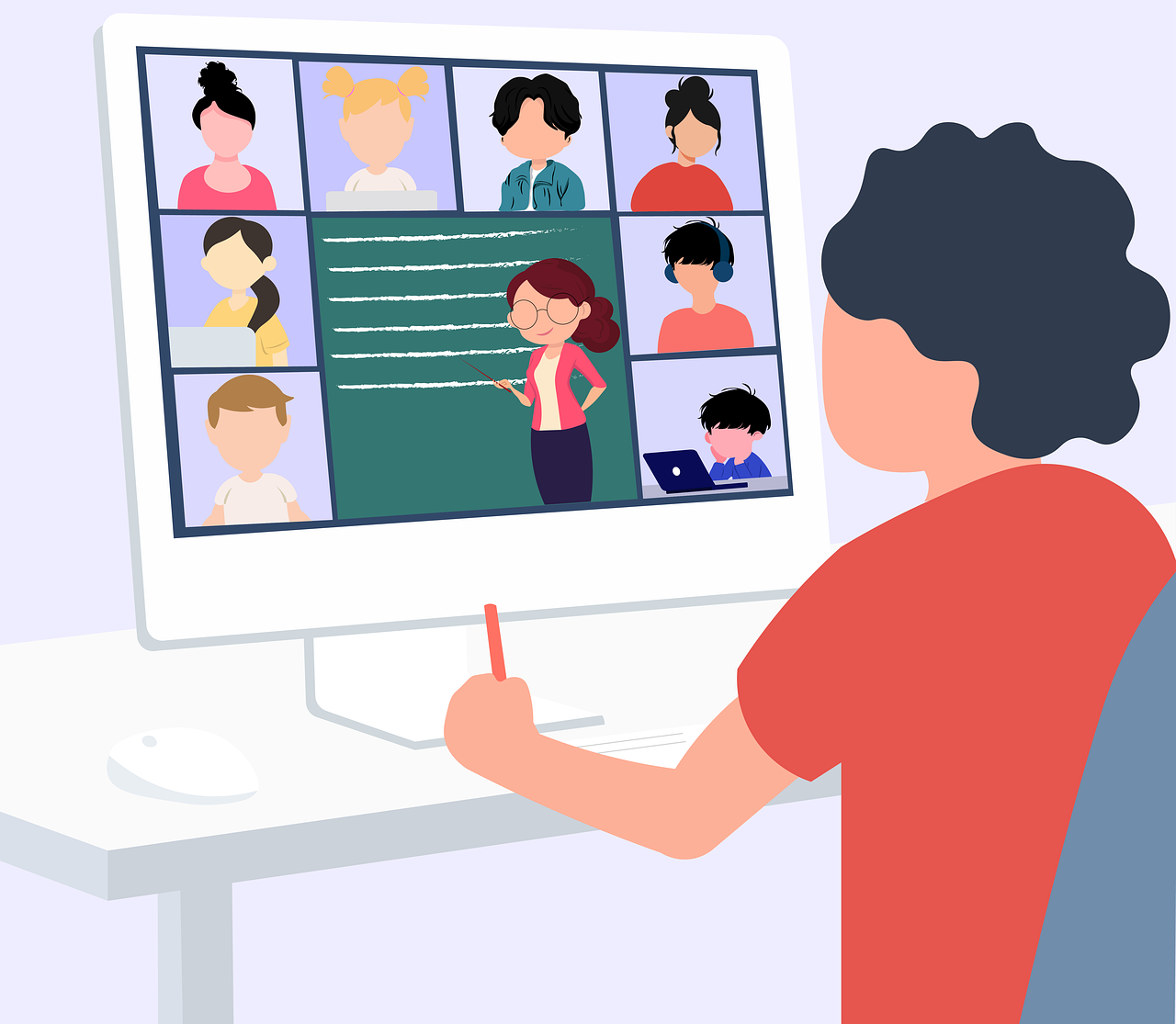
    Due to the coronavirus, there have been numerous changes to our everyday way of life. Besides social distancing and various restrictions, students have also dealt with a number of changes pertaining to how school will be offered. Instead of traditional in-person learning, many Catholic school boards have switched to a hybrid learning module consisting of both in person, synchronous-online, and asynchronous learning. School boards have also switched to a “quadmester” system – which is just about as confusing as the name sounds! As a high school student who’s been using this new system for the past 4 months, I’ve definitely got a lot to say about it!

    Getting the Definitions Down

    • Quadmester: A learning model in which students take two courses over a ten-week period. This occurs 4 times over the course of the 10-month school year. It can be difficult to conceptualize a quadmester, but it’s much easier to understand if you think of it like a halved semester.
    • Synchronous Online Learning: A teaching method where students are learning in real time, but instead of being in the classroom, they’re at home. Synchronous learning usually takes place via video conferencing. An example of synchronous learning would be attending a Zoom meeting.
    • Asynchronous Learning: A teaching method where students learn on their own time. Asynchronous learning is student-directed. If a class is listed as asynchronous, you still have to do work, and may have to log on at a certain time, but you won’t be attending a teacher-directed lesson.

    How it Works

    The Catholic hybrid model works by giving students a mix of synchronous, asynchronous and in-person learning. Students take two subjects per quadmester, and each quadmester lasts roughly 10 weeks, or 2.5 months. The first quadmester ran from early September to mid-November.

    When using the hybrid model, students still attend school every week, but instead of going daily, it is every other day, reducing the amount of time they will be in contact with other students. As well, in-person only occurs in the morning, for about 2.5 hours. In the afternoon, students attend school virtually for synchronous learning time with their other course. Every week, the course taken in-school and the course taken online switch, so that students get to interact with their teachers both in person and online over the course of the quadmester.

    My Experience

    If his hybrid model sounds difficult to understand, trust me, it was even harder to get used to! At the start of September, I remember confusingly trying to navigate my schedule to no avail. What’s worse, I only knew my two immediate courses for the first quad – everything else was a mystery. This became even worse when my guidance counsellor emailed me saying that I couldn’t fit all my courses in, and that I had to take calculus in night school.

    Although taking only two courses might seem simple, I found it to be quite the opposite. Since we only had two months to complete each course, I constantly felt overwhelmed with what I was learning. Even though my teachers removed several chapters of material, we were still working through the course at record speeds. It seemed like there was a mountain of tests, lab reports, and homework every single day! After the first semester, I felt really burnt out, and I had no time to catch a break because only one day after my exams for quad 1, I was thrown into quad 2.

    Overall, I’ve had a somewhat negative experience with this style of learning so far. However, I’m only in my second quad right now, so I’m staying optimistic for the future! Hopefully by my 3rd and 4th quad, teachers will be able to make the workload more manageable and fix any issues with the hybrid learning system. Fingers crossed for 2021!

  • Learning a Musical Instrument During COVID-19

    Learning a Musical Instrument During COVID-19

    Taking up a new hobby has been especially common due to the virus-induced lockdown. Simply go online and scroll through social media accounts, and you’ll find individuals who are showing off their newly acquired skills like banana bread baking, painting, calligraphy, and others.

    Starting a new hobby is not only a good way to pass the time and be productive while we face stay-at-home orders; it actually helps us to avoid getting into routines and thus be able to distinguish days from each other, instead of them being lumped together in our minds. A recent study on the “Routine and the Perception of Time,” from the Journal of Experimental Psychology, revealed that a variety of tasks allow people to perceive time to move faster whereas being stuck in routines causes them to think time is longer and one day just blends into another. The adage “Time flies when you’re having fun” is true!

    So if you’re still on the fence about developing a new skill, like learning a musical instrument, don’t be. The perfect time to start is now. And while it may seem daunting to learn on your own and not have the luxury of taking a stab at it within a traditional classroom setting, remember that the pandemic has opened a slew of resources for learning things on a virtual level. That includes learning a musical instrument. Let’s look into a few surefire tricks to start you off on the right note.

    Remember, small steps lead to big things.

    Most of the time, when people throw themselves into learning something new, they don’t have the patience for baby steps. They often fall into the trap of reaching for grandiosity at an early stage and then end up getting frustrated when they come across a stumbling block. This also happens when one is getting acquainted with a musical instrument, like a piano, for example. It’s okay to think big, but when you’re starting out, it’s not the time to take up something as complicated as the “Flight of the Bumblebee” thinking that you can easily imitate famous pianist David Helfgott. Instead, go for something simple like Debussy’s “Clair de Lune.”

    Rejoice at the little achievements.

    Keep in mind to not be too hard on yourself when you’re a beginner in exploring your musical talents. There’s a learning curve to everything, so if you’re able to get over one hurdle at a time, it’s enough reason to celebrate. You won’t be able to memorize a piece right off the bat, so if you’re able to read notes at a fast pace than when you initially started, then it’s time to give yourself a pat on the back. You deserve it!

    Keep up to standards.

    When you’re a newbie, it’s ideal to stick to common techniques when it comes to playing a musical instrument. Hold off on the eccentricities until you’ve developed enough skills, like playing the guitar upside down or the violin blindfolded. This means you have to follow the rules, no matter how boring they may seem to be at this time. Soon enough, you’ll be ready to go more out of the box.

    Keep an open mind to nontraditional resources.

    If there’s one lesson to be learned from COVID-19, it’s that technology can help us during the direst of times. Just think, we may not have been able to spend quality face-to-face time with our loved ones who live far away due to travel limitations, but we have been able to stay connected with them through technological platforms like Zoom. And when it comes to studying how to play a musical instrument, there are loads of apps available with easy-to-follow instructions to help you out.

    Improvise!

    If you need to save up to buy your preferred musical instrument, don’t fret and wait until then to learn the skills. You can focus on reading notes on sheet music or get your hands familiar with the moves with a makeshift guitar which you can craft out of cardboard paper. A handful of stores also offer secondhand items for a fraction of the price, so you definitely can consider this option as well.

    Learning a musical instrument may be unnerving at first, but it’s an exciting one that will be worth your time.


    SOURCES

    https://www.cbc.ca/music/now-s-the-time-to-learn-how-to-play-music-here-s-what-you-ll-need-1.5501564

    https://www.classicfm.com/discover-music/latest/learning-musical-instrument/

    https://www.fastcompany.com/90570071/every-day-since-march-has-felt-the-same-heres-the-fix

    https://psycnet.apa.org/record/2003-09669-005

    https://www.nytimes.com/2019/03/13/technology/personaltech/online-music-lessons-apps.html

  • A Greener Nook of Your Own: Eco-friendly Steps for Your Space

    A Greener Nook of Your Own: Eco-friendly Steps for Your Space

    Environmental issues like climate change may have taken a backseat to the pandemic crisis for now, but this doesn’t mean they are to be ignored. There are still pertinent concerns pertaining to our environment that need to be addressed, and while global attention to them is lacking at the moment, you can do your part through an eco-friendly redesign of your space. Let’s look at a few recommendations below.

    Go for organic bedding.

    Several stores now offer a slew of organic bedsheets and pillowcases to help make your bedchambers nontoxic. Check out online reviews from websites like LeafScore.com to get detailed information so you can make a wise purchasing decision that ensures your comfort and helps the environment.

    Limit the use of disposable items.

    Now that restaurants and other food services are only open for take-out, it certainly has become more difficult to keep our use of disposable items like eating utensils in check. However, you can always do something more by asking the staff to not provide you with eating utensils as you’re eating from home anyway.

    Do away with the bottled water.

    Water is essential to our daily lives, but it’s time to do away with the bottled water. Go instead for a water filter that you can keep in your fridge and buy a good-quality and eco-friendly water bottle to carry with you if you do have to step out of your space.

    Learn how to recycle.

    If you have tons of notes on paper, don’t trash them away with the garbage. Instead, get a blue recycling bin to throw them into and keep it alongside your regular garbage bin. And it’s not just paper you can recycle. Those boxes that come with your orders from Amazon and other online sites can be recycled too. Make sure to tear out the part with your name and other personal information before you throw them out though.

    Buy LED bulbs instead of incandescent ones.

    LED bulbs may be pricier than their incandescent counterparts, but the investment is definitely worth it as they last longer and are friendlier to the environment. They provide the same light output you need as you go through your books but use less energy.

    Make your own coffee.

    We all know how coffee is an important part of our lives, but it’s time to invest in a coffee brewer for your cup of joe instead of heading to coffee shop every time you need a shot of caffeine. If a coffee machine is out of your budget right now and you do have to caffeinate, look out for coffee shops that allow you to use your own tumbler or thermos so you can do away with those disposable coffee cups.

    Use cloth napkins or rags.

    To keep your space clean, you often rely on paper towels or napkins. However, this is environmentally unfriendly so go instead for cloth napkins or rags which you can wash with your laundry. If you don’t have anything available, go through your old clothes and find something that you probably won’t miss wearing.

    Those are a few simple tips for a greener personal space. Time to get started!


    SOURCES

    https://www.cbc.ca/news/politics/students-summer-jobs-pandemic-covid-coronavirus-1.5558824

    https://globalnews.ca/news/7579576a/canadas-top-jobs-2021-randstad/

    https://www.thebalancecareers.com/best-online-jobs-for-college-students-4154845

  • How to Organize Breaks When Working from Home

    How to Organize Breaks When Working from Home

    The current pandemic has been challenging for many people, especially for those who have suddenly had to learn how to work or study from home. I already had experience in that as I had been working from home for a long time, even though I still have much to learn. Working from home can be fun and challenging, but it can easily become overwhelming. However, organizing regular breaks can be helpful to stay fresh and alert while still getting work done.

    Generally, the challenges of working or studying from home can fall between two extremes. Sometimes, people get no work done at all because they are constantly distracted by other tasks or activities, whether that involves watching television and playing video games or cleaning the house and preparing meals.

    In contrast, other people might experience the opposite problem. Working from home means that people can never entirely get away from their job. In a busy career with no definite beginning or end to the day, they can find themselves working from early in the morning until late at night.

    One technique for avoiding these two extremes is to organize breaks, either at set times or at natural changes in the workflow. In my work as a writer and dog walker, I use both methods. I get up early in the day to begin my writing work, eat breakfast at approximately the same time every morning, and leave in the early afternoon to walk the dogs. Later, I return home for some more writing, having spent at least an hour outside with the dogs. Exercise and fresh air give my brain the break it needs to return to the task of writing.

    Still, one break in the middle of the day would not be enough for me to keep my focus and to get my work and other tasks done. Since I write for several different publications, I can use the different topics as breaks from each other. If I am writing an article on parking lights or traffic signals for one website, for example, I can take a break to write a magazine article on volcanoes or bald eagles. The change in topic can often give me the mental energy that I need to continue with a less interesting topic.

    Even with these changes in subject, I still need complete breaks from writing. Going for a short walk, checking in my fridge for something to make for supper, or taking the time for some cleaning up can provide a good break, while also preparing me for the rest of the day. Similarly, finishing a book that I am reading or checking my e-mail can help relax my mind.

    Still, setting a limit on these breaks is important. Walking only to a certain point before turning back, reading only ten pages of a book, or finishing one article can give me a break without completely making me lose focus.

    In your own studies, organizing and planning your breaks can also help you manage as you work from home. You will relax better, work better, and generally have a better day.


    Bibliography:

    Garis, Mary Grace. “We’re Working Longer Hours and Later Nights These Days—Here’s How to Take the Break You Deserve.” https://www.wellandgood.com/how-to-take-a-break-work-from-home/.

    Healthline. “26 WFH Tips While Self-Isolating During the COVID-19 Outbreak.”  https://www.healthline.com/health/working-from-home-tips.

    Indeed Career Guide. “How to Stay Organized When You Work at Home.” https://www.indeed.com/career-advice/career-development/how-to-stay-organized-when-you-work-at-home.

  • The Benefits of Stretching and How to Make It a Habit

    The Benefits of Stretching and How to Make It a Habit

    Stretching is something everyone does, but not everyone stretches all the muscles in their body. Daily stretching is very beneficial in many different ways. If you would like to know the benefits of stretching and how to make it a habit, below are some tips and information that will surely help you!

    Why is Stretching Good for You?

    There are several different reasons why stretching is good for you. The following are a few reasons that will surely convince you to begin stretching more often!

    1. Stretching the muscles in your lower back, shoulders, and chest helps improve your posture and keep your back in better alignment.
    2. Decrease the stiffness in your muscles and increase your range of motion.
    3. Prevent injuring a muscle if you make a sudden move.
    4. Help your muscles hold less tension, which can reduce and manage your feeling of stress.
    5. Finally, stretching your muscles after a workout keeps your muscles loose which can help prevent post-workout soreness and pains.

    Making Stretching a Habit

    After reading a few reasons why stretching is good for you, you’re probably wondering how to make it a habit. It is something everyone should learn. Below are some steps to help you include stretching in your daily routine and make it a habit.

    • Start small! If you’re beginning to add stretching into your routine, it’s best to start small. You could stretch for a few minutes and increase the amount as your body gets used to it.
    • Find different stretches! Doing the same stretches over again will only benefit certain muscles. Find different stretches and rotate between them to stretch all areas of your body.
    • Create a schedule! As mentioned earlier, stretching daily is very beneficial. To stick to stretching, it is best to set a time to stretch every day.
    • Spice it up! You could stretch anywhere and at any time. It could be done while you’re in bed, sitting at a desk, or in the shower. You could also add music in the background to get you motivated.

    Tips for Proper Stretching

    Did you know that you could injure yourself if you do not stretch correctly? Learning how to stretch properly is something everyone should learn. If you would like to learn how to stretch properly, these tips are for you!

    • Don’t begin stretching with cold muscles! Cold muscles are muscles that have not been warmed up. Before stretching, take 5 to 10 minutes to do some light cardio. This could include walking or jogging.
    • Don’t overstretch! Stretching the same muscles several times a day can damage your muscles.
    • Don’t stretch to the point of discomfort! It is normal to feel tension while stretching, but it is never good to feel pain. If you feel pain, stop stretching that area and let the muscle rest.

    Stretching may not be safe for you if you have an existing injury or have any physical limitations that can keep you from properly stretching. If you do have an injury or physical limitation, you should talk to your doctor before stretching.


    Resources

    https://pnthn.com/knowledge/how-to-make-stretching-a-habit

    https://indianexpress.com/article/lifestyle/fitness/simple-stretching-exercises-new-year-2020-healthy-lifestyle-6194538/

    https://www.premierhealth.com/your-health/articles/women-wisdom-wellness-/the-essential-benefits-of-stretching

    https://www.healthline.com/health/benefits-of-stretching#safety-tips

  • 5 Surefire Tips for Being Finance-Savvy with Your Freelance Money

    5 Surefire Tips for Being Finance-Savvy with Your Freelance Money

    The novel coronavirus of 2019 brought on numerous challenges for all of us. However, there was one silver lining in the dark clouds of the pandemic: more remote work opportunities became available.

    According to online staffing platform Freelancer.com, they experienced a job growth of 17% in 2020, garnering a total of 2.1 million jobs as compared to 1.8 million in the previous year. Company executives are confident they will continue to flourish, citing that jobs in app and web development are among the most popular.

    Freelancing gigs offer a slew of advantages that a traditional “9-to-5” job can’t provide. For one, freelancing allows you to work on your own time to meet your deadlines without your bosses breathing down your neck and checking up on you every hour. What’s more, freelancing rids you of the aggravations of commuting during rush hours and enduring traffic.

    However, there’s a downside to being a freelancer, especially when you’re not equipped with finance-savviness. Since the earnings do not come regularly every two weeks like with regular jobs, you may find yourself in a financial quandary sometimes, with no options left but to play the waiting game. But fret not, there are solutions to budgeting your freelance earnings like a pro. Take a look below:

    Keep a record of your earnings and spending.

    This can’t be emphasized enough: You cannot approach your finances like you’re blindfolded. The best way to do that? Keep track of your money, from what goes in and what goes out. Hold on to those receipts if you must. You can use an old-fashioned ledger or an Excel spreadsheet, but if you’re tech-savvy, then apps like Mint or Goodbudget are ideal for you.

    Always prioritize the necessities.

    Is a new set of headphones as important as paying off student loans? Of course not. Whether you’re working with freelance earnings or regular earnings, it’s important to always set aside finances for the necessities like your utility bills, student loans, and credit card debt. It’s always good to have these priorities paid off so you can enjoy the rest of your money without guilt.

    Stick to a weekly budget.

    True, your current freelancing gigs can be double or even triple than what you used to make with regular jobs in the retail or food services industries. But this doesn’t mean you can freely spend every cent that lands on your lap! Give yourself a weekly budget and make sure to stick to it. Not only will this help during those times when gigs run out, it only helps you become more disciplined and wiser on what you spend your money on.

    Set financial goals.

    Just because you’re a freelancer doesn’t mean that you should do away with financial goals like you would if you have a regular job. If you’re saving up for a car, for example, then set your mind to this and come up with a doable savings plan. Doing so will make you more motivated and smarter with your financial choices.

    Plan your vacation accordingly.

    You may not have vacation pay, but this doesn’t mean you can’t go on a vacation! However, keep in mind that the time you take for a break means putting your income on pause, so be sure to have enough money to cover the costs while you’re away. This way, you don’t feel overwhelmed taking on more projects than you can handle because you’re trying to catch up on your due payments.

    Being a freelancer is a dream job for a lot of people because of the flexibility that it allows. However, if you do decide to take this route, make sure that you’re prepared to make an effort to make your finances work.


    SOURCES

    https://www2.staffingindustry.com/site/Editorial/Daily-News/Freelancer.com-reports-jobs-on-platform-rise-by-17-in-2020-fastest-growing-are-in-app-and-web-development-56377

    https://www.forbes.com/sites/laurashin/2014/07/17/freelancers-heres-how-to-budget-your-money/?sh=475256423c42

    https://mint.intuit.com/blog/budgeting/best-practice-budgeting-tips-for-freelancers/

    https://www.nerdwallet.com/blog/finance/learning-to-budget-as-a-freelancer/

    https://www.freshbooks.com/hub/productivity/the-importance-of-budgeting-as-a-freelancer-five-essential-tips

  • Winter Fun (Quarantine Edition!)

    Winter Fun (Quarantine Edition!)

    By Erin Rebello

    With winter in full swing, and another lockdown starting up, you may find yourself coming down with a serious case of cabin fever! Being cooped up is hard on anyone during the winter, but this is especially true when you’re not allowed to visit friends or loved ones. Personally, this has really been difficult for me, so I decided to find a cure for cabin fever. For the past few weeks, I’ve been testing out some fun winter activities for quarantine, and I think I’ve found some really good ones! Keep reading for some great ideas on how to pass the time!

    1. Host a Family Movie Night. Even when there isn’t a quarantine, I love snuggling up with my loved ones to watch a movie together. Although you might not be able to have your friends over, you can still watch movies with those in your household for a great family bonding experience. Whenever my family does movie night, we all take turns choosing a movie, so well all get to watch something that we like. This is a simple yet fun winter activity for quarantine, and you may even start a brand-new family tradition! (Bonus points if there’s popcorn!)
    2. Indoor Camping. Camping in the woods can be cold, wet, and uncomfortable – and there’s no bathroom either! On the other hand, indoor camping has all the fun with none of the hassle. My younger sister and I love pitching a tent in the basement and spending the night telling scary stories and doing puzzles. Even if you don’t have a tent, you can make your own blanket fort with some old sheets and pillows. You can also combine a movie night with camping for a fun weekend. Easy-peasy!
    3. Family Bake Off. If you or anyone in your family has a knack for baking, I highly recommend having a family bake-off! If you’re all really good at baking, you can get into teams and compete for whoever can make the better cake. If you want to make things easier, you can also work together to make something simple like cupcakes, then compete to see who can decorate or garnish theirs the best.
    4. Online Videogames. If you still miss your friends a lot, you might want to consider playing online games together. As someone who enjoys gaming I’ve been using quarantine to hang out with my friends virtually, and the winter is no exception! My personal favourite games are Scribbl.io and Among Us, which are both free to play. You can also use a voice call app such as Discord to talk while gaming.
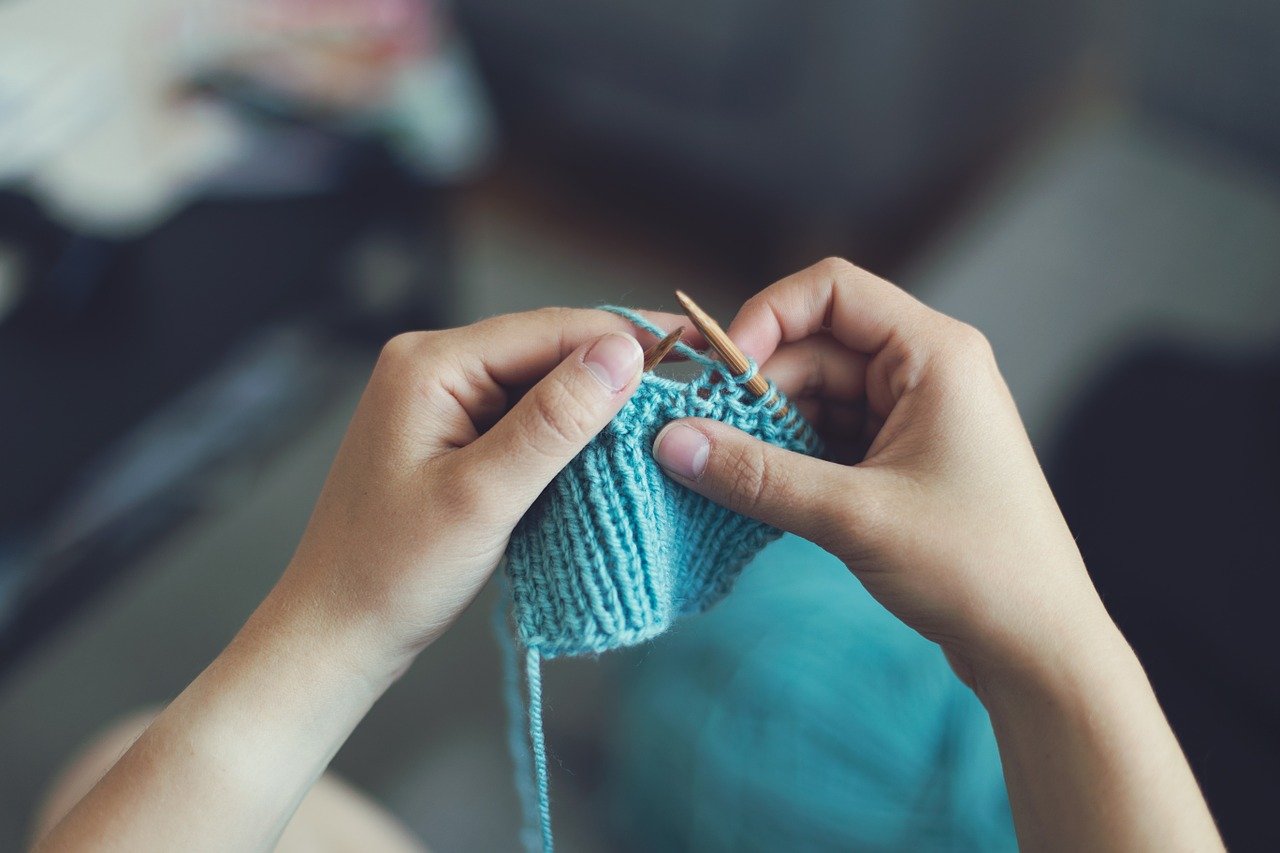
    5. Arts and Crafts. Whether it’s summer, winter, fall, or spring, you can never go wrong with some good old-fashioned arts and crafts. During the winter specifically, I love knitting and crocheting. It feels really rewarding to be able to create your own hats and scarves. I’ve also recently developed an interest in Amigurumis, which is the Japanese art of crocheting cuddly figures out of yarn. Some people think that yarn crafts are for grandmas, but hey, everyone loves grandmas!
    6. Reading a Good Book. Maybe I’m a bit of a nerd, but I absolutely love reading! Even during quarantine, when all my friends seemed far away, picking up a good book allowed me to escape the dread of isolation and instead travel on a magical adventure. If you’re an avid reader, be sure to make full use of your local public libraries. Most library systems are allowing users to place holds on books online, and then pick them up in person. Libraries also usually have a treasure trove of online materials, like ebooks and audiobooks, so you never have to leave the comfort of your own home!