Author: Rochelle C. Pangilinan

  • How the Pandemic Changed the Landscape of Scholarships in Canada

    How the Pandemic Changed the Landscape of Scholarships in Canada

    Student debt has always been a sore subject for most young Canadians. According to a report by the Financial Consumer Agency of Canada based on the 2019 Canadian Financial Capability Survey, almost one quarter of Canadians aged 18 to 24 (23%) cited their education as their major expense when planning for the next three years. The median cost is estimated at $20,000 to $29,999, but the amount varies depending on the length and type of program. According to Statistics Canada, the highest average undergraduate tuition fees belong to four professional degree programs, including dentistry ($21,717), medicine ($14, 162), law (12,388) and optometry ($11,236), all accounting to 2.9 per cent of all Canadian undergraduate student enrolment.

    The interesting facet is that almost half of the respondents planning their post-secondary education for the next three years expect to pay for their education using their own savings, while 40 percent hope to borrow or obtain a loan. The remaining 12 percent or so? Well, they don’t have a plan.

    While educational costs are a serious matter as college and university tuition fees keep increasing, it’s not the end of the world if you neither have your own savings or are not able to obtain a student loan for whatever reason. Nationwide, there are a plethora of scholarships up for grabs, and some of them don’t even depend on academic merit, as what’s commonly believed. However, a 2018 report by Scholarships Canada revealed that Canadian students actually miss out on about a million worth of scholarships because majority of them already assume that they don’t qualify.

    Two years later and with the ongoing pandemic, that case seems to be changing. There has been a surge of scholarship applications through GrantMe and Scholarships Canada as a number of students this year were deprived of summer jobs that typically helped in financing their education. In addition, while the federal government provided them with a break in paying off student loans back in March when the pandemic was first announced, payments resumed in October. In this regard, students can definitely look into scholarships for financial boost.

    Still, according to GrantMe COO, Madison Guy, they have about $140k worth of unclaimed scholarships. Guy insists that while the pandemic has indeed drastically affected us economically, this only motivated more companies and organizations to support causes that provide educational funding for those with limited means, especially during these times. Those businesses who have not only managed to stay afloat but thrive during the pandemic realize the importance of giving back and thus they want to give support to where it’s needed the most. According to Guy, the average student matches to more than $450,000 in available scholarships.

    It’s all about taking the extra step to explore these options, like utilizing scholarship matching platforms and taking the time to learn about the application process. These platforms also provide students and their parents with guides through the scholarship application process to ensure more chances of success, so students must be prepared to get to the nitty gritty.

    The process can definitely be painstaking for sure, but one must have extra patience on hand to complete application forms as many as they possibly can. Doing so increases their chances of being recipients. It has happened to a business administration student in Edmonton who was awarded with at least five scholarships that amounted to $5,300. The student devoted hours to complete several essays, but the hard work truly paid off. A few hours of work that led to $5k in the end, that’s definitely a sweet reward. And who knows, maybe a similar reward awaits you as well!

    SOURCES:

    https://www.canada.ca/en/financial-consumer-agency/programs/research/canadian-financial-capability-survey-2019.html

    https://www.straight.com/education/canadian-student-debt-law-medicine-other-health-grads-owe-biggest-with-60300-in-median

    https://globalnews.ca/news/4184985/marks-dont-matter-canadian-students-missing-out-on-millions-in-unclaimed-scholarships/

    https://www.ottawamatters.com/local-news/canadian-post-secondary-students-missing-out-on-over-400k-worth-of-scholarships-heres-how-to-get-them-2692262

  • Careers in the Trades: A List

    Careers in the Trades: A List

    The trades sector in Canada is constantly growing and changing. So how do you know which career path is right for you? Here at JobsPeopleDo, we’ve assembled a list of some of the hottest jobs in the trades industry that will be in high demand for years to come. Take a look at just some of your options and then click on the link to be taken directly to career information. Find out what kind of education you will need and how much you can expect to be paid.

    Aboriginal Child Development Practitioner
    Agricultural – Dairy Herdsperson
    Agricultural – Fruit Grower
    Agricultural – Swine Herdsperson
    Agricultural Equipment Technician
    Alignment and Brakes Technician
    Appliance Service Technician
    Arborist
    Architectural Glass and Metal Technician
    Assistant Cook
    Auto Body and Collision Damage Repairer
    Auto Body Repairer
    Automotive Electronic Accessory Technician
    Automotive Glass Technician
    Automotive Painter
    Automotive Service Technician
    Baker
    Baker-Patissier
    Bearings Mechanic
    Blacksmith
    Brick and Stone Mason
    Cabinetmaker
    Cement (Concrete) Finisher
    Chef
    Child and Youth Worker
    Child Development Practitioner
    Composite Structures Technician
    Computer Numerical Control (CNC) Programmer
    Concrete Pump Operator
    Construction Boilermaker
    Construction Craft Worker
    Construction Millwright
    Cook
    Developmental Services Worker
    Die Designer
    Draftsperson – Mechanical
    Draftsperson – Plastic Mould Design
    Draftsperson – Tool and Die Design
    Drywall Acoustic and Lathing Applicator
    Drywall Finisher and Plasterer
    Educational Assistant
    Electric Motor System Technician
    Electrical Control (Machine) Builder
    Electrician – Construction and Maintenance
    Electrician – Domestic and Rural
    Electrician (Signal Maintenance)
    Electronic Service Technician
    Elevating Devices Mechanic
    Entertainment Industry Power Technician
    Exterior Insulated Finish Systems Mechanic
    Facilities Mechanic
    Facilities Technician
    Fitter – Assembler (Motor Assembly)
    Floor Covering Installer
    Fuel and Electrical Systems Technician
    Gemsetter / Goldsmith
    General Carpenter
    General Machinist
    Hairstylist
    Hardware, Lumber and Building Materials Retailer
    Hazardous Materials Worker
    Heat and Frost Insulator
    Heavy Duty Equipment Technician
    Heavy Equipment Operator – Dozer
    Heavy Equipment Operator – Excavator
    Heavy Equipment Operator – Tractor Loader Backhoe
    Hoisting Engineer – Mobile Crane Operator 1
    Hoisting Engineer – Mobile Crane Operator 2
    Hoisting Engineer – Tower Crane Operator
    Horse Groomer
    Horse Harness Maker
    Horticultural Technician
    Hydraulic / Pneumatic Mechanic
    Industrial Electrician
    Industrial Mechanic Millwright
    Information Technology – Contact Centre Customer Service Agent
    Information Technology – Contact Centre Sales Agent
    Information Technology – Contact Centre Technical Support Agent
    Information Technology – Hardware Technician
    Information Technology – Network Technician
    Institutional Cook
    Instrumentation and Control Technician
    Ironworker – Generalist
    Ironworker – Structural and Ornamental
    Light Rail Overhead Contact Systems Lineperson
    Locksmith
    Machine Tool Builder and Integrator
    Marine Engine Technician
    Metal Fabricator (Fitter)
    Micro Electronics Manufacturer
    Motive Power Machinist
    Motorcycle Technician
    Mould Designer
    Mould Maker
    Mould or Die Finisher
    Native Clothing and Crafts Artisan
    Native Residential Construction Worker
    Network Cabling Specialist
    Optics Technician (Lens and Prism Maker)
    Packaging Machine Mechanic
    Painter and Decorator – Commercial and Residential
    Painter and Decorator – Industrial
    Parts Technician
    Pattern Maker
    Plumber
    Pool, Hot Tub and Spa – Installer
    Pool, Hot Tub and Spa – Service Technician
    Powered Lift Truck Technician
    Powerline Technician
    Precast Concrete Erector
    Precast Concrete Finisher
    Precision Metal Fabricator
    Pressure Systems Welder
    Process Operator – Food Manufacturing
    Process Operator – Power
    Process Operator – Refinery, Chemical, and Liquid Processes
    Process Operator – Wood Products
    Pump Systems Installer
    Railway Car Technician
    Recreation Vehicle Technician
    Refractory Mason
    Refrigeration and Air Conditioning Systems Mechanic
    Reinforcing Rodworker
    Relay and Instrumentation Technician
    Residential (Low Rise) Sheet Metal Installer
    Residential Air Conditioning Systems Mechanic
    Restoration Mason
    Retail Meat Cutter
    Roll Grinder / Turner
    Roofer
    Saddlery
    Saw Filer / Fitter
    Sheet Metal Worker
    Ski Lift Mechanic
    Small Engine Technician
    Special Events Coordinator
    Sprinkler and Fire Protection Installer
    Steamfitter
    Surface Blaster
    Surface Mount Assembler
    Terrazzo, Tile, and Marble Setter
    Thin Film Technician
    Tire, Wheel and Rim Mechanic
    Tool / Tooling Maker
    Tool and Cutter Grinder
    Tool and Die Maker
    Tool and Gauge Inspector
    Tractor-Trailer Commercial Driver
    Transmission Technician
    Truck and Coach Technician
    Truck-Trailer Service Technician
    Turf Equipment Technician
    Utility Arborist
    Water Well Driller
    Welder
    Wooden Boat Rebuilder
  • How Anger Can Make You Better

    Do you ever get angry and have no idea why? Anger has always been a big part of being human. Everyone gets upset from time to time. It is a very powerful emotion that can happen very quickly and do a lot of damage if you are not careful. But it is not all negative. Anger does not come out of nowhere, but rather comes from words someone said, from something not going your way, or from a problem too big to solve. By feeling it, understanding it, and acting on it, you can learn so much more about yourself and turn anger into something positive.

    Let yourself feel angry. You are often told not to because it can lead to shouting, fighting, and things getting broken or people getting hurt. There are healthier ways to show anger. You can punch a pillow, go for a run, put on some headphones to listen to music, write about it, or draw something. That anger can even help you do those things better. Studies have shown that letting themselves feel angry has made people stronger and faster when playing sports or other physical activities. Research has even shown that the emotion helps basketball and hockey players shoot better. Allow yourself to be angry, and discover how it can be a positive thing for you.

    It is just as important to understand why you are feeling this way. When you experience anger, write down all your thoughts. Rate each thought on a scale of one to ten based on how angry it makes you. Do not try to fully understand It, but just catch your thoughts as they fly by. Make time to meditate and take some deep breaths. This will help with self-control and give you a clearer mind to go over your thoughts. Before you do anything about them, ask yourself what your options are. You can talk to the person who made you upset. You can ask for help to finish the task that was so frustrating. You can open up to a friend about the big problems in your life that you feel you cannot control. Take some time to think about your options and pick the ones that are likely to have the best results.

    Anger is a sign that something needs to change. After you have let yourself feel the emotion, and then tried to better understand why you feel that way, it is time to act. This might mean confronting a friend or family member whose words or actions brought about the anger. You deserve to be heard, and can do it in a way that does not blame the other person or make it worse. They are trying to deal with their strong emotions and big problems just like you are. It could also mean trying to finish a school assignment or chore that was frustrating you. Do not be afraid to ask for help, go online for advice on how to do it, and to take your time to get it done right. If the problem is a bigger life issue making you unhappy, then it can be a good idea to talk to a parent or a trusted adult about your issue. Whatever you do, do not just sit on your anger.

    Everyone has to deal with anger. It does not make you a weak or bad person. But it is very important to deal with it in a healthy and productive way. Take some time to feel the emotion, to better understand it, and make a plan to act on the issues causing it. You will get a stronger idea of what is happening inside your head and learn more about yourself. It can help improve relationships with your family and friends. Anger can make you better.

    Sources:

    Lyness, D’Arcy. “Dealing With Anger.” TeensHealth. https://kidshealth.org/en/teens/deal-with-anger.html

    Robson, David. “How anger can be put to good use.” BBC. https://www.bbc.com/future/article/20200723-how-anger-can-be-put-to-good-use

  • What is FOMO and How Can it Affect You?

    What is FOMO?

    FOMO stands for “fear of missing out”. This fear refers to the feeling that others are having more fun, living better lives, and experiencing much better things than you are. It makes you feel as if you are missing out on several life events and experiences that others are experiencing at that time. FOMO can cause a feeling of nervousness, anxiety, and even depression.

    What causes FOMO?

    Although some people are more affected by FOMO than others, the fear of missing out has always affected many people. Social media has been playing a huge part in this fear, making it much more common. With social media, anyone can check up on their friends or family to see what they’re up to. Many people enjoy posting status updates and uploading pictures of their daily activities. Those who view the posts of others can compare their own lives with what they see on the internet without even noticing it, resulting in them losing their sense of identity and developing lower self-esteem.

    Some psychologists have found that the fear of missing out is one of the reasons why social media platforms are such a success. They claim that FOMO causes people to use social media to show off what they are doing and how much fun they are having during that moment.

    FOMO can greatly affect anyone of any age but it is most common among teenagers and young adults. This is because those age groups are more likely to be on social media. The fear of missing out can cause teenagers and young adults to miss out on their lives even more. They are so focused on what others are doing that they forget to live lives of their own.

    How Do You Cope With FOMO?

    FOMO can negatively affect anyone’s mindset. To begin thinking positively again and cope with the fear of missing out, something has to be done. Here are a few ideas on how you can cope with FOMO:

    Take a break from social media! Social media can be fun to use from time to time but too much of it is not good. Just muting your notifications isn’t enough. It can be very tempting to open the app again to check for any notifications you didn’t receive. It’s best if you uninstall the app from your phone for a while, turn off your phone, and find something else to do. You could go read a book, bake some cookies, go for a walk with your dog, or take a nap.

    Keep a journal! Instead of posting all the fun things you do, you could write and describe them in your journal to look back on. You could also create a gratitude journal to write down everything you are thankful for. It could include several pictures if you’d like. Your journal could be online or on paper.

    Find real-life connections! When feeling down, we can often turn to social media to seek out connections with others and increase our sense of belonging. Sometimes social media can end up making us feel worse than we already do. Instead of turning to social media, it is better to meet up with friends in person. You could plan a fun day of adventure and get your mind off any stress while connecting with your friends.

    Practice mindfulness! Mindfulness is an exercise in which the person learns to focus only on what they are doing at that moment. It helps take your mind off of any stress that you could be feeling. To practice mindfulness, you could meditate, take a bath, or take a walk in nature.

    FOMO is not fun to experience. It is best to avoid it before it affects you. If you ever get caught in the fear of missing out, remember that everything is not what it seems.

    Resources

    How Does FOMO Impact Teen and Young Adults Mental Health?


    https://www.verywellfamily.com/how-fomo-impacts-teens-and-young-adults-4174625

    https://www.verywellmind.com/how-to-cope-with-fomo-4174664

    https://www.psychologytoday.com/us/blog/media-spotlight/201611/the-fomo-health-factor

  • Four Common Mask-wearing Issues and How to Prevent Them

    Four Common Mask-wearing Issues and How to Prevent Them

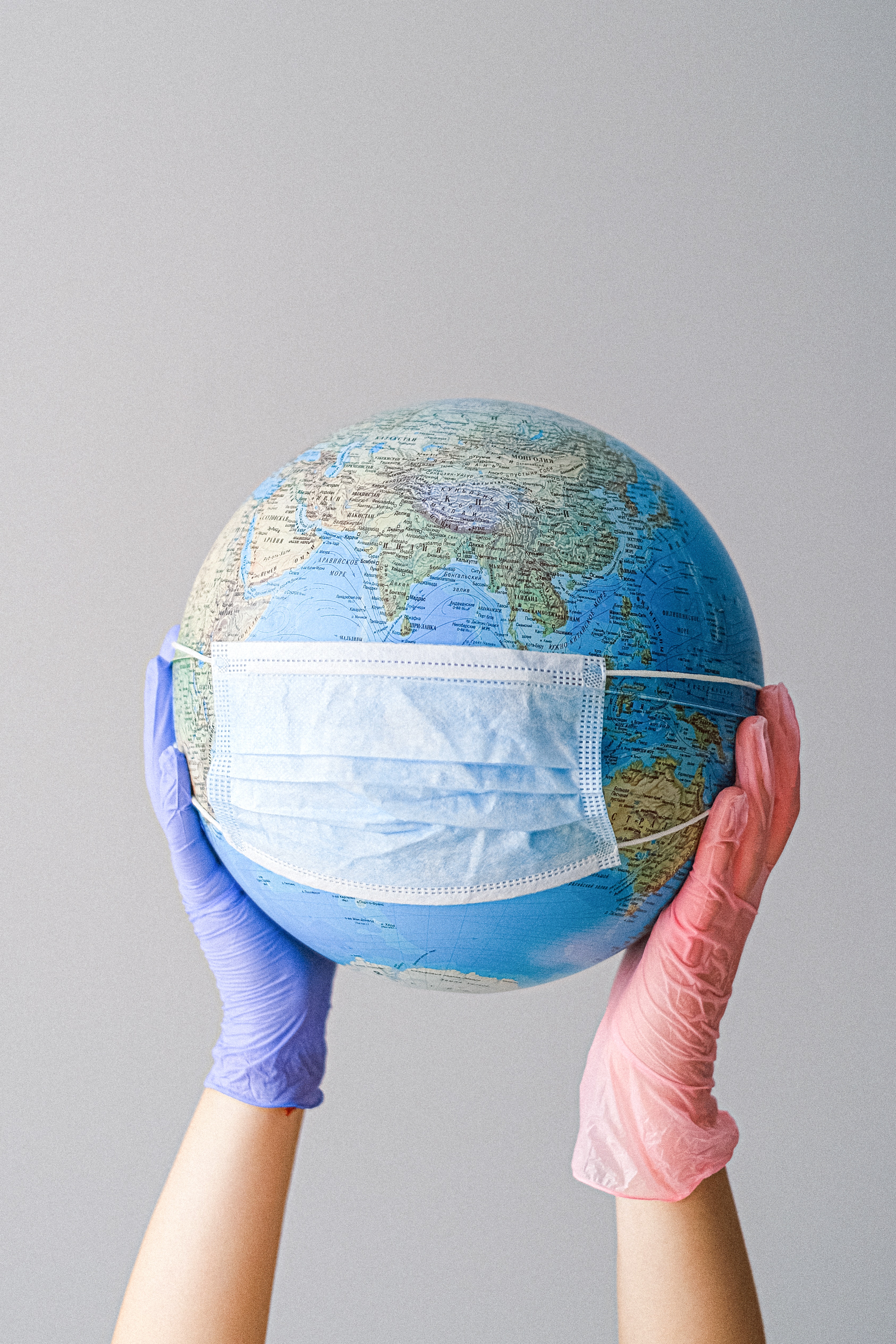
    Numerous studies and research have shown that wearing masks is effective in preventing the spread of the COVID-19 virus. However, one should keep in mind that this practice works best alongside other healthy and safe measures such as frequent washing of hands, physical distancing of at least 6 ft. from those outside one’s social bubble, and avoidance of large gatherings.

    When we follow these recommendations by health officials, we reap the collective benefit of keeping the virus under control, which is now especially important in Canada as the cold weather sets in and the cases are increasing, with the nationwide count surpassing 300k. While majority of us do realize the importance of wearing masks, there are still some who believe to the contrary. If there is still any doubt, the recent article from the New York Times that show an augmented reality depiction of how masks, no matter what the material or type, can prevent the spread of particles associated with the virus.

    Those of us who already embraced wearing masks whenever we are out in public sometimes encounter problems though. Fortunately, there are solutions to these common issues, so let us look below:

    Fogging up of glasses

    If you wear specs, then you probably experience your pair fogging up when you wear a mask, especially as the temperatures have started to drop. Fret not as solutions are on their way! First tip is to use a mask that has a nose bridge on it to make it fit better on you. A well-fitting mask means there are lesser chances for moisture to escape (making it more efficient in fighting the virus), plus prevents your breath from hitting your glasses. Another way is to put your glasses over your mask if it is one of the larger ones. Last but not the least, you can try wiping your specs with a pinch-size amount of dishwashing liquid.

    Getting mask breath

    Wearing a mask for long periods can sometimes lead to bad breath, but don’t worry, this is a common problem as well. The trick to prevent this? Make sure you are hydrated by drinking ample amounts of water. It also helps to cut down on caffeinated drinks, and yes, that means you better steer clear of those bottles of pop in your fridge. If you feel like a mouth rinse can help, make sure to use a non-alcohol-based one. And of course, keep to a healthy dental hygiene.

    Irritated skin

    Now that we use face coverings, it is likely for those with sensitive skin to develop skin irritation like redness or facial spots. This occurs when the masks being used are not washed frequently as they should be. If you experience this with your cloth masks, be sure to wash them regularly. If you still feel skin irritation after wearing them for a few hours, switch to disposable masks but change as often as needed. If you still want to stick with cloth masks, don’t rely on merely one for the day. Pack a few extra cloth masks so you can change them after two or three hours.

    Lack of non-verbal cues

    Having half of your face covered up means that what you’re saying may not be coming across as effectively as expected. For example, you might be cracking a joke, but the recipient may take it to mean that you’re serious because they can’t see your smile, and misunderstanding happens. The solution to this may take a bit of time to get used to, but it’s all about being conscious of your tone and pattern of speech to ensure your message is loud and clear. It also helps to utilize more body language and gestures to get your point across. And don’t forget the power of eye contact!

    Wearing masks is now a part of our daily lives, and it looks to be that way for quite a while—just visit any shop and you’ll see they’re all selling cloth masks now because of high demand. However, this safety measure does come with challenges, but they can be resolved as you have read above.

    SOURCES:

    https://nypost.com/2020/08/05/mask-mouth-is-a-seriously-stinky-side-effect-of-wearing-masks/

    https://www.theverge.com/21301830/face-mask-glasses-fogging-how-to-stop-clear

    https://www.nytimes.com/interactive/2020/10/30/science/wear-mask-covid-particles-ul.html

    https://lifehacker.com/use-nonverbal-cues-to-make-your-point-when-wearing-a-fa-1845215241#:~:text=%20Use%20Nonverbal%20Cues%20to%20Make%20Your%20Point,increasing%20your%20level%20of%20gesturing%20by…%20More%20

  • Campus Life: The Pros and Cons of Pet Ownership In Post-Secondary

    Campus Life: The Pros and Cons of Pet Ownership In Post-Secondary

    Whether you have grown up with pets at home, or have simply always wanted to own a pet of your own, it can be tempting to get one as soon as you’re away at college and living on your own.  However, while there are many benefits to owning pets, students have a lot to consider before making the decision to bring home a fishy, feathered, or furry friend.

    Pros

    Pets Help Reduce Stress and Loneliness

    Being away from home for the first time, being loaded down with classes and homework, and possibly needing to work part time are some of the challenges students face in college and university.  There is a lot of evidence that pet ownership can improve mental health, and help reduce feelings of stress and loneliness — all of which are issues that can affect students.  Pets provide companionship, and can give students something that loves them unconditionally, or something that they can talk to and complain about problems.

    Some Pets Encourage Regular Exercise

    Mostly applicable to dogs, pet ownership can encourage students to get outside and enjoy regular physical activity such as walking or running with their dog, or engaging in other physical pursuits such as ball or frisbee tossing.  Since dogs need to be walked several times a day, this makes sure that you get outside and move around at least a few times a day, too.  Spending time walking a dog is also a great way to discover your neighbourhood and enjoy your local parks, trails, and other outdoor venues.

    Pets Can Be a Social Icebreaker or Help You Make Friends

    Pets of any kind, whether an active cat or dog, or a quiet hamster or turtle, can help you make friends and socialize.  You will meet lots of other dog owners when you’re out for a walk, which can help you make friends in the neighbourhood.  Many cities also have regular pet events such as charity walks or pop-up markets, where you can meet other pet owners.  Having a pet is also a great social ice breaker when meeting new people, since almost everyone likes to hear about someone’s pet!

    Cons

    Pets Are Expensive

    This might be the biggest consideration, as many students are already on a budget in order to pay for tuition, books, food, and rent or residence fees.  Any pet needs food and vet visits, and depending on the kind of pet, they will often require other items such as litter boxes, kennels or carrying cages, dishes, collars and licenses, and toys.  It’s important to look at your budget and add up the potential costs for a pet, before committing to a purchase or adoption.

    Pets Need A Lot of Your Time and Attention

    Students in college and university are already busy, and adding a pet to the mix can be difficult.  All pets need at least some of your time and attention regularly, whether it’s daily walks and playtime for cats and dogs, or weekly tank cleaning and water changes for fish or amphibians.  Feeding is also a daily requirement.  It’s important to consider your school and work schedule before committing to a pet, and to be willing to accommodate the right amount of pet time into your schedule.  Owning a pet while in school also means you have less flexibility to be spontaneous; you can’t stay out all night, or decide to go away for the weekend, without making a plan for the care and feeding of your animal.

    You Can Still Get a Pet — With Some Thought

    If you’ve read the above and still want a pet, that’s great!  Just be sure to give some thought to the best pet for your situation — living situation, financial situation, and schedule.

    You might want a dog, but if you live in student residence or a building that doesn’t allow dogs, or can’t afford the food and vet bills, then right now a different pet might be a better choice, such as a hamster or some fish.  There are lots of pets big and small, furry and feathered and fishy, that you can find the perfect pet for you.

    Sources:

    http://gcmag.org/the-benefits-of-owning-a-pet-in-college/

    https://www.accreditedschoolsonline.org/resources/pets-in-college/

    https://studybreaks.com/college/pets-college/

  • Getting (Peacefully) Political at School

    Getting (Peacefully) Political at School

    High schoolers and post-secondary students often find themselves increasingly interested in politics. It is a complex and controversial subject, but also one of profound importance. Politics can shape how one sees the world, how they interact with it, and what they do with their lives. Students greatly benefit from increased political involvement at their school. They learn more about themselves and about others around them. Perhaps most importantly, they learn how to disagree.

    An ideal place to start is one’s own political views. People need to know what they believe in and stand for before they discuss and debate those ideas with others. Build a rounded and well-informed political perspective by reading and watching news from various sources, as well as researching political history and ideas. The variety in these sources is critical in order to minimize one’s own bias and to gain insight and understanding into other people’s opinions. Read into opposing viewpoints, which paves the way for a better understanding of what the other side is saying, and why. In doing so, political debates are less likely to devolve into personal attacks and arguments.

    With that foundation, pursue political foundation at school. Sign up for extracurricular groups and activities related to political parties and major issues. Join a debate club or school newspaper. If these opportunities are not present, look into starting up a group or blog. Politics can be brought into classroom discussion and assignments, as well as informal conversations with classmates and friends. It is important to remember not to make these exchanges personal and to listen to what others have to say. First-person statements (“I think that…”) are far likelier to generate healthy discussion as opposed to combative statements (“you are wrong”). Everyone benefits when engaging in politics peacefully.

    As this political involvement picks up, carry on those activities outside of the walls of the school. Volunteer for advocacy groups fighting for marginalized people or specific issues. Sign up to volunteer for political parties or politicians in the community who champion important causes. Reaching out to local Members of Parliament can help get one’s voice heard and increase involvement in the community. This can include activity on social media, attendance at townhalls, and encouraging friends to vote and be involved in their own way. Even if there are disagreements, this involvement can generate healthy discussion and makes it more likely that those disagreements will lead to productive action instead of pointless bickering.

    Politics is complex. It can bring about great change and a sense of meaning and purpose in one’s life, just as much as it can destroy friendships and get people trapped in circular arguments and petty squabbles. In a world facing a pandemic, climate crisis, divisive political parties, and other major issues, you cannot afford to be apathetic and apolitical. By understanding your own views, engaging others, and partaking in the community, you can become politically active in a peaceful and productive manner. You will gain confidence, get an idea of what you want to do in the future, and build a better world.

    Sources:

    The Scholarship System. “5 Ways Students Can Get Involved in Politics (and Why They Should).” https://thescholarshipsystem.com/blog-for-students-families/5-ways-students-can-get-involved-in-politics-and-why-they-should/

    Schuschu, Monikah. “A Guide to Being Politically Engaged in High School.” CollegeVine. https://blog.collegevine.com/a-guide-to-being-politically-engaged-in-high-school/

    TeensHealth. “5 Ways to (Respecfully) Disagree.” https://kidshealth.org/en/teens/tips-disagree.html

  • How to Write for a Specific Word Length

    How to Write for a Specific Word Length

    Writing well is a one of the most valuable skills that students can learn. This ability is important for communicating with teachers, family, employers, and others. Following specific guidelines can make the task more challenging, especially with a word count, but it is often necessary. Learning to follow these guidelines is an important skill to develop.

    In school, some of your assignments might include a word or page limit. When you get your assignment back, you might find that your teacher has commented on the length or amount of repetition in your work. Learning to eliminate the extra words in what you write will help you to have greater focus and to make your points more concisely. You can also edit the paper for length and clarity, making sure that you have stayed on topic and that you have included the necessary information.

    In many ways, writing for an employer can be like composing an essay for class, although the differences are sometimes greater than the similarities. Except for novelists and freelance writers, people normally have limited control over the subject matter or the length of what they are supposed to write. This can be challenging, especially for someone who becomes accustomed to one style of writing and then must adapt to another, often with a very different style and word limit.

    This has also been my experience. For many years, I have been writing articles for a children’s magazine on topics ranging from beavers and polar bears to Canadian politicians to new technology. In many of these articles, my struggle is to keep the information down to three hundred words while still explaining the subject thoroughly.

    Often on the same day that I write one of my school articles for young students, I might also write a piece on driving-related topics for an audience of people aged sixteen or older. With those articles, the word length is approximately one thousand, although I frequently write slightly more than the designated count.

    In the school articles, my struggle is to decide what to leave out. However, with the driving articles, I often find that I have finished what I had to say when I am still just halfway to the thousand-word mark. However, I am learning to look for related points to discuss that can further explain the main idea. I just have to make sure to stay on topic.

    Any extra information should support the main point. For example, an article on windshield wipers could have a section on different types of mud and dust but not about air conditioners. Just as a school essay has an introduction, supporting points, and a conclusion, these articles need structure and form. Keeping this structure in mind also helps me to stay within the word count. It can take time to search for unnecessary words or sentences, or sometimes to expand on what I already have, but the result is worth the trouble.

    Learning to write for a specific word length is a useful skill. Whatever your age, you can start to develop this valuable technique.


    Bibliography:

    Hicks, Ryan. “Writing an Essay or Article that Has a Word Count Requirement?”
    https://writingcooperative.com/writing-an-essay-or-article-that-has-a-word-count-requirement-75ab57897764

    Purdue Online Writing Lab. “Choosing a Topic.”
    https://owl.purdue.edu/owl/general_writing/common_writing_assignments/research_papers/choosing_a_topic.html

    University of North Carolina at Chapel Hill. “Editing and Proofreading.” https://writingcenter.unc.edu/tips-and-tools/editing-and-proofreading/

    University of North Carolina at Chapel Hill.  “Writing Concisely.” https://writingcenter.unc.edu/tips-and-tools/conciseness-handout/

  • The Year that Changed Us: Reflecting on 2020

    The Year that Changed Us: Reflecting on 2020

    Tumultuous. Unprecedented. Frightening. There are many ways to describe 2020, a year that has turned the world upside-down. It was a year defined by COVID-19, a global pandemic the likes of which has not been seen in generations. Shutdowns and social distancing brought modern life to a screeching halt. The future of work and career paths is less predictable than ever. Protests and political turmoil demonstrate a need for drastic change. It has been a wild year. As 2020 draws to a close, take some time to reflect on how the year has impacted you, how your life has changed, and what you have learned about yourself.

    In March of 2020, the world as everyone knew it transformed overnight. People suddenly found themselves at home all day, with many having to work remotely or losing their job altogether. The pandemic has normalized remote work and has created extreme uncertainty for industries dependent on gatherings, such as hospitality. Not everyone has been affected the same way. One study found that women were more than 1.8 times as likely as men to lose their jobs. Research from Future Forum found that the majority of workers do not want to go back to how things were prior to COVID-19. Whether you are studying full-time or adjusting to a new way of work, consider how all this has impacted the world you will be entering as an adult.

    Your parents and friends may find themselves working from home despite never having done so before. They may be struggling to figure out what to do next when their company suddenly took away their job. All or some of your courses may be conducted online, whereas a year ago only a small minority of classes would have been held this way. As the world undergoes drastic change, you will see it manifest around you with the ones you care about. Do you see people adapting or struggling? How do you and others remain resilient in the face of these challenges? What steps have you, your family, and friends taken to ensure proper self-care? As shutdowns continue and people are asked to remain home during the winter, take that time to reflect on these questions.

    Consider how this year has highlighted certain aspects of your personality, and perhaps even changed it. Get into the routine of writing down your thoughts daily, particularly about yourself. Compare your behaviour to one year ago, from your habits, hobbies, physical activities, and schooling. Perhaps you are more productive. Perhaps you feel drained and unable to focus on work or assignments. Consider the self-care practices you are doing and what you could be doing, such as spending more time with family, exercising, cleaning your room, and meditating. With the challenges of 2020 also come opportunities. You have a chance to make changes in your day-to-day routine to improve your health, to take on passions and interests you were previously reluctant or afraid to do, and to refocus your life on the things that matter most.

    This has been a year like no other. The pandemic has meant major upheavals in politics, careers, and schools. All of the changes and challenges are not going to magically disappear on January 1, 2021. This is the time to reflect on what this year has taught you about yourself and how you will carry that knowledge going forward. It is a chance to break bad habits and stop harmful ways of thinking. It is a time to reflect and refocus on you. Through all the adversity of 2020, there are also opportunities to build a better life, a better community, and a better world.


    Sources

    BBC. “Coronavirus: How the world of work may change forever.” https://www.bbc.com/worklife/article/20201023-coronavirus-how-will-the-pandemic-change-the-way-we-work

    Daniels, Nicole and Katherine Schulten. “What Have You Learned About Yourself During This Lockdown?” The New York Times. https://www.nytimes.com/2020/05/28/learning/what-have-you-learned-about-yourself-during-this-lockdown.html

    Witkin, Georgia. “4 Lessons to Learn About Yourself From Quarantine.” Psychology Today. https://www.psychologytoday.com/us/blog/the-chronicles-infertility/202007/4-lessons-learn-about-yourself-quarantine

  • Anger: The Unexpected Storyteller

    Anger: The Unexpected Storyteller

    Anger is arguably one of, if not the most complex of human emotions. It acts as an instinctive response to many different situations, whether it be something simple like receiving a bad grade or something much more complicated like losing a loved one. Anger is a natural response to suffering, either emotional or physical. The difficult part about it as an expression of emotion is that the way that the outside world perceives it depends on whether or not they deem your anger as justifiable. Different people get angry for different reasons, and when you think about it, anger can reveal a lot about someone. There are many types of anger, whether it be calm, internalized rage or loud and explosive. If the Wi-Fi drops, and you immediately become frustrated and walk around to different parts of the house to get a signal, you are perceived as the impatient type. Should you sit around and quietly wait it out, perhaps you are more patient. Consequently, whenever we become angry, we unknowingly reveal something about ourselves. So, anger also plays the role of an unexpected storyteller; it can say a lot about a person and whatever is going on underneath.

    What Does Anger Say About Us?

    Anger is recognized as a fundamental human emotion – it happens just as frequently as sadness, happiness, or any other feeling. As mentioned before, anger can be an inherent reaction to pain. Physical pain is easy to see, and therefore, easy to empathize with. But internalized pain, whether it be emotional or some form of mental distress, is more difficult to understand because it cannot be seen. In my life as a rather anxious person, anger has indeed been a response to dealing with the side effects of my anxiety. A big reason that I can become so angry is because I feel resentment towards certain people in my life for not understanding or acknowledging what I am going through. Even when they may not know. However, anger can be an effective storyteller because it always has a cause; when one is angry there is almost always a reason for it. So, when someone sees that you are angry, they begin to notice that there is something going on with you.

    What Can Anger Say About You?

    A lot of the time, people are unable to express their anger and they end up bottling it up for long periods. When people bottle up their anger for too long they can become agitated by little things. Anger can be difficult to find a positive outlet for because it can make everything seem annoying or uninviting. Recently, I watched a video about a new trend called rage rooms. A rage room is full of random objects such as televisions, glass, computers, etc. You wear full body protection and there are bats and other weapons that you can use to break the objects to express your anger and get it out of your system. Some people rather enjoy the rooms because they help them relieve anger and stress. I asked my brother what he would do if he went to one. He said that he would probably break one thing and then feel guilty about it. It shows that even in his angry state, he is still a remorseful person. But I do wonder, what does one’s anger say about them if they like destroying things to demonstrate their anger? Does that mean that they come across as violent when they are angry? Personally, I think that rage rooms are an interesting concept because anger is such a harmful emotion and sometimes it needs to be expressed in destructive ways; however, a rage room allows you to express this without hurting anyone or yourself. They also allow you to release stress and take your anger out on random objects that have no value to you or anyone you know, rather than a person. At the end of the day, ensure that your anger does not get the best of you or cloud your better judgement.