Author: Jingwei Chen

  • Spécialisations et cours secondaires : Comment choisir?

    Choisir votre spécialisation est certainement une décision essentielle. Les spécialisations et les cours secondaires sont des programmes d’études qui définissent les cours que vous prendrez pendant vos quatre années d’université. Par exemple, un étudiant qui choisit sa spécialisation en astronomie doit prendre un certain nombre de cours (cours d’introduction, puis, plus avancés) dans ce domaine, pour à la fin, obtenir son diplôme de Baccalauréat en astronomie.

    D’un autre côté, un étudiant qui souhaite faire un programme secondaire en astronomie ne prendra que quelques cours en astronomie. Une autre différence capitale est que vous devez indiquer que vous prenez une spécialisation alors que les cours secondaires sont facultatifs. Malgré tout, cette affirmation vient avec une annotation : les différentes écoles ont des règles différentes. Par exemple, les étudiants du premier cycle à l’université de Toronto peuvent s’inscrire soit dans deux spécialisations soit dans une spécialisation et deux cours secondaires.

    Je dois vous préciser que l’université de Toronto offre un autre troisième choix de programme appelé spécialiste. C’est plus comme une spécialisation renforcée. Le tableau, ci-dessous, vous explique combien de crédits un étudiant a besoin pour compléter chacun des programmes. (Vous obtenez un crédit par course réussi, mais si certains vous donnent un crédit entier, d’autres ne vous donnent qu’un demi-crédit), Comme vous le voyez, si vous vous inscriviez dans un programme de spécialisation renforcée en astronomie, vous auriez plus de la moitié de vos cours en astronomie.

    Cour secondaire Spécialisation Spécialisation renforcée Nombre de crédits nécessaires pour obtenir le diplôme
    4.0 crédits De 6.0 à 8.5 crédits De 9.0 à 16.0 crédits 20.0

    Maintenant que vous avez une meilleure idée des spécialisations et des cours secondaires, votre question suivante est, bien sûr, comment choisir. Voici quelques observations qu’il faut retenir :

    1. Commencez avec vos intérêts et vos forces

    La première chose à faire est de lire la liste des domaines d’études de premier cycle, du début à la fin. Assurez-vous de lire toutes les descriptions des programmes. Le but recherché est de composer une longue liste de choix basés sur vos intérêts et vos forces. Si la liste est vraiment longue, divisez-la en deux listes : l’une contenant les sujets qui vous passionnent vraiment et l’autre, les sujets qui vous intéressent moins.

    1. Familiarisez-vous avec les instructions de sélection de votre institution.

    Ce ne sont pas tous les domaines d’études qui sont offerts en spécialisation ou en cours secondaires (ou en spécialisation renforcée). Certains sujets ne sont disponibles qu’en spécialisation renforcée, d’autres ne sont donnés qu’en cours secondaires. Si un sujet nous intéresse vraiment, ce serait bien de le prendre en spécialisation.

    Les prérequis sont aussi à vérifier. Ne supposez pas qu’il n’y en a pas. Si vous êtes intéressé dans une spécialisation très demandée, vous pourriez avoir à en faire la demande. C’est quelque chose à laquelle il faut penser et bien sûr, il est bon d’avoir des alternatives pour votre spécialisation.

    1. Pensez à ce que vous ferez avec votre spécialisation après le diplôme.

    C’est un vrai problème. Comme le marché du  travail pourrait être assez différent lorsque vous obtiendrez votre diplôme, dans quatre ans, Il est difficile de déterminer si une spécialisation, plutôt qu’une autre, vous procurera une plus brillante carrière. Ce serait une bonne idée de parler avec des étudiants en troisième ou quatrième année de la spécialisation qui vous intéresse pour savoir ce qu’ils pensent de leurs perspectives professionnelles.

    Ou encore vous pensez peut-être aux études supérieures, après votre diplôme de premier cycle, et vous ne vous dirigez pas tout de suite vers la recherche d’emploi. Alors, vous pourriez consulter un conseiller d’orientation ou un mentor. Ces personnes ont une vaste expérience et expertise sur ce sujet.

    Choisir sa spécialisation n’est pas simple. Pour certains étudiants, le choix est facile ; pour d’autres, ça peut prendre des mois. Mais, rassurez-vous, rien n’est gravé dans le granit, et vous pourrez changer votre spécialisation plus tard. Et souvenez-vous que vous pouvez probablement en choisir deux. Alors si vous hésitez entre la science et la zoologie, pourquoi ne pas prendre les deux spécialisations ?

    Références :

    1. https://www.utm.utoronto.ca/registrar/academic-support/how-choose-minor-major-or-specialist-subject-post
    2. https://www.washington.edu/uaa/advising/academic-planning/majors-and-minors/choosing-a-major/
  • April 2017 Scholarships: Apply Now!

    April 2017 Scholarships: Apply Now!

    CIM National Scholarship Program

    Scholarship Value: $5,000

    Awards Available: 50

    Award Deadline: April 15, 2017

    Address: http://www.cim.org/en/Students/Scholarships.aspx


    Gloria Barron Prize

    Scholarship Value: $5,000

    Awards Available: 25

    Award Deadline: April 15, 2017

    Address: http://barronprize.org/apply/


    Sears DX High School Scholarship Competition

    Scholarship Value: $500

    Awards Available: 3

    Award Deadline: April 17, 2017

    Address: http://www.dx.org/index.cfm?pagepath=Education/The_Sears_DX_Canadian_High_School_Design_Competition&id=58546


    Atlas Shrugged Essay Contest

    Scholarship Value: $20,000

    Awards Available: 500

    Award Deadline: April 28, 2017

    Address: https://www.aynrand.org/students/essay-contests#overview


    CAODC OHS Scholarship

    Scholarship Value: $6,920

    Awards Available: 1

    Award Deadline: April 28, 2017

    Address: http://www.caodc.ca/caodc-ohs-scholarship


    Nursing Scholarships

    Scholarship Value: $1,000

    Awards Available: 10

    Award Deadline: April 30, 2017

    Address: http://www.nursingscholarships.ca/


    Scholarship Value: $2,000

    Awards Available: 28

    Award Deadline: April 30, 2017

    Address: http://www.unifor.org/en/member-services/education/scholarships


    ASHRAE High School Senior Scholarships

    Scholarship Value: $3,000

    Awards Available: 4

    Award Deadline: May 1, 2017

    Address: https://www.ashrae.org/membership–conferences/student-zone/scholarships-and-grants/high-school-senior-scholarships


    Fourth Degree Pro Deo and Pro Patria (Canada) Scholarships

    Scholarship Value: $6,000

    Awards Available: 10

    Award Deadline: May 1, 2017

    Address: http://www.kofc.org/un/en/members/programs/scholarships/4thdegreepatria-scholarshipCA.html


  • Open Meeting of the Student For Barrier-Free Access (SBA) Anti-Sexual Violence Committee

    Open Meeting of the Student For Barrier-Free Access (SBA) Anti-Sexual Violence Committee

    Via www.neads.ca

    Join the SBA Anti-Sexual Violence Committee for a discussion on U of T’s new Sexual Violence Policy, and the University’s goals for the education and prevention of sexual violence.

    The Expert Panel on Education and Prevention of Sexual Violence at U of T is currently holding consultations to gather student feedback and recommendations on their sexual violence education and training program on campus. Come join us in discussing the content that you would like to see the Expert Panel prioritize.

    Some of the questions we would like to address include:

    1. What is the SV Policy?
    2. Why was it created?
    3. What would members want to see prioritized in the University’s sexual violence education and prevention training modules?
    4. What would meaningful support for disabled and mad survivors of violence look like in areas of sexual violence education and training on campus?

    Students for Barrier-free Access is a student-led disability justice organization that has been actively advocating for a more inclusive Sexual Violence policy and Centre for Sexual Violence Support and Education at the University of Toronto. We are committed to working towards ending campus rape culture.

    Please note that while this event is open to all disabled and mad survivors of violence, we seek to centre the voices and experiences of Black, Indigenous and POC disabled and mad survivors. We ask that event attendees be mindful of the space that they are taking in the discussion and support the collective in creating a respectful and meaningful community dialogue.

    Date: Tuesday April 4th, 2017

    Location: Room 702, (246 Bloor Street West, Social Work Building)

    Time: 5pm – 7pm

    Access Info: Wheelchair accessible building. Accessible, gender-neutral washroom on same floor as event. TTC tokens available. Please arrive scent-free. Snacks including vegan and gluten-free options will be served.

    If you require ASL or Live Captioning to participate in this event, or if you have any other access needs, please contact Nadia at sba.advocacycoordinator@gmail.com by Thursday March 30, 2017. – See more at: http://www.neads.ca/en/about/events/index.php?id=1780#sthash.u0z1Xq69.dpuf

    – See more at: http://neads.ca/en/about/media/index.php?id=470#sthash.c0mJA92i.dpuf

  • The Mind Matters: How to Take Care of Your Emotional Wellbeing During Post-Secondary.

    The Mind Matters: How to Take Care of Your Emotional Wellbeing During Post-Secondary.

    We have all heard about the potential side-effects post-secondary may have on our physical health. Discussions about maintaining healthy eating habits along with regular physical exercise are something we have been taught since elementary school. Warnings such as the infamous freshman fifteen have reminded us about the consequences that arise when we neglect our physical health. However, what is often not discussed is the toll post-secondary may have on your emotional health, and why it is every bit as necessary to keep your brain in as good of health as your body. Let’s open up the conversation about mental wellbeing in post-secondary, and talk about some different ways you can maintain and improve the state of your mental health during this academic journey.

    Take time for yourself…Seriously!

    Trust me, I get it! When you have papers, final exams and projects piling up, there doesn’t appear to be much time to concern yourself with your mental well-being. While a strong focus on academics is very important in post-secondary, it’s important to remember you can’t perform at your best if your mental state isn’t at its best. Think of it like driving a car. Getting to your destination may be the most important item on your list, but without proper maintenance your car won’t function properly and you won’t be getting very far! The same is true with your mental health. Taking a twenty-minute study break to simply listen to music, read, or go for a walk allows your mind to unwind, and will be more beneficial than trying push your brain past its limits! Find a calming activity you enjoy and make time for it daily, even during midterm season!

    Have something on your mind? Talk about it.

    Talking about your emotions isn’t a sign of weakness, it’s taking charge of your emotional wellbeing. Bottling up your thoughts and emotions takes a severe toll on your mental state, and results in more stress that no one needs to be burdened with. If something is bothering you, or if you just simply need to talk don’t hesitate to speak to someone you trust. After all, that’s what friends are for!

    Get some rest.

    We have all had those late-night study sessions where we’ve stayed up until 2 a.m. trying to finish a paper. While there may be no escaping a couple of late nights here and there, it’s important to get more sleep than you miss. Your brain needs an adequate amount of sleep each night to recharge, and function properly the next day. Young adults between the ages of 18-25 require seven to nine hours of sleep. A lack of sleep may result in a lack of alertness, an impaired memory, irritability and a lesser quality of life the following day. 

    Only take on what you can handle.

    Taking on too much at a time can result in excessive stress, causing a strain on your mental wellbeing. Try delegating tasks by their level of importance, or break assignments up into smaller, more manageable chunks in order to avoid feeling overwhelmed.

    Ask for help.

    Sometimes, the weight of the world can be too heavy for one person to carry, even for a superhero like you. If you are struggling with your mental health, reaching out to a trusted friend or family member is an excellent way to begin the conversation about your emotional wellbeing. You may also seek out your post-secondary institutions counseling services for free, professional help in regards to your mental well-being. You can find more information on your institutions available counselling services on your institutional website, or ask a representative at your help services office.

    Remember…you aren’t alone!

    Many other post-secondary students are going through a very similar journey as you are. This means you have an exceptionally large group of people who can not only relate to your struggles, but who also understand the importance of supporting one another. Try considering joining a support group or club at your post-secondary institution, where you may lean on and support other students just like you.

    Sources Used :

    https://www.mentalhealth.org.uk/publications/how-to-mental-health

    https://health.clevelandclinic.org/2015/09/happens-body-dont-get-enough-sleep/

  • Equal Accessibility: Why Every Business Should Be Wheelchair Accessible

    Equal Accessibility: Why Every Business Should Be Wheelchair Accessible

    As a nation that thrives off of diversity, we hope that everyone understands the importance of acceptance and equality for all people, regardless of culture, race, ethnicity, etc.  Physical and/or developmental disabilities are no exception. Every individual deserves equal treatment and respect. But what happens when individuals with a physical disability become disadvantaged due to lack of wheelchair accessibility? The importance of accommodations such as working elevators and service doors and ramps may be unconsciously overlooked by individuals who do not have a physical disability. However, for individuals with reduced mobility who rely on these essential accommodations, a lack of these necessities becomes extremely problematic and results in unequal and sometimes unachievable accessibility to buildings. Let’s talk about the importance of wheelchair accessibility in all buildings, and why it is essential for so many individuals.

    How many people suffer from a mobility related disability?

    Statistics Canada revealed that in 2012, over 11 per cent of Canadian adults suffered from one of the three most prevalent disability types; pain, flexibility or mobility, with 40 per cent of those individuals experiencing all three at the same time. Over 80 per cent of people with a disability use an aid or some sort of assistive device, with six per cent of people with disabilities specifically using a wheelchair, according to the 2010 U.S. census information.

    Under Canadian Law, is every building required to be wheelchair accessible?

    “The Canadian Human Rights Act prohibits discrimination in the provision of goods, accommodations or facilities customarily available to the general public, and prohibits the adverse differentiation between individuals.” (Government of Canada, 2006) To learn more about accessibility standards, visit the Government of Canada website. A link to which may be found below.

    http://www.tbs-sct.gc.ca

    Isn’t it expensive for businesses to make accessibility accommodations?

    This is a common misconception about creating accommodations for people of all abilities. Contradictory to the myth, the Government of Canada website reveals that in a study conducted by the U.S. Job Accommodations Network, 57 per cent of participants spent nothing at all making their building more accommodating. Of those that did have a cost, the typical one-time cost for employers was $500, which deems to be a small price to pay for equality for all people.

    Why is this such an important issue?

    If you are a person who does not suffer from a psychical disability or limited mobility, building accessibility may not be something you think about on a regular basis. However, take a minute to think about how often you enter a variety of buildings every day. Now imagine being consistently faced with obstacles (on top of everyday challenges) that make it nearly impossible, if not completely unattainable to enter the building. Not only would this be incredibly frustrating, you may find yourself feeling discriminated against because of your disability. People of all abilities deserve equal access to businesses and buildings without being faced with discrimination and adversity. It is essential all businesses commit to this level of equality, and make the appropriate accommodations for all persons.

    How can I help?

    Equal accessibility in buildings is one giant leap forward in creating equality for all people. If you notice a building is not accessible for people of all abilities, speak to the business owner about the importance of equal accommodations.  Refer to the Government of Canada website for more information about building accessibility.

    http://www.tbs-sct.gc.ca

    References Used:

    https://www.canada.ca

    http://www.tbs-sct.gc.ca

    http://www.statcan.gc.ca

  • Is the Oil Industry a dying field?

    Is the Oil Industry a dying field?

    The oil industry can be a touchy subject for different people all over Canada. In some provinces, the oil industry is favoured and seen as a strong economic symbol; other provinces and people tend not to see it that way. There can be very specific positives and negatives of the industry and as time goes by, they become clearer.

    Climate change is forcing a limit on the emissions that we humans create. From some politicians, scientists and activists, there is focus on limiting the sources of pollution, particularly on what are called ‘greenhouse gases’ like carbon dioxide (CO2). This is a rather controversial line of thought depending on your view of environmental science, but it is climate change that is driving research into other alternative methods of fuel – that of solar and wind, for example.

    Oil is still necessary to the economy at the moment, but “job stability” is not a secure statement anymore. The oil industry is tied tightly with the price of oil – and therefore, when the oil price swings upward, the amount of jobs increase; on the other hand, this can mean more job loss. It’s not uncommon – this can be applied to other economic sectors as well, but the oil industry is particularly seen as ‘unstable’ in recent years, because of the lack of stability in gaining and providing that oil. Alberta has seen tough times in recent years due to changes in the price of oil.

    In addition to the price versus demand shift for oil, there are increasing technological advancements being made. Just like all other fields, this means that less people are required in order to complete the same job that would have taken more people in the past. Renewable energy is another sector that is relatively new – as technology advances, so will the demands of the public – and therefore, a different range of jobs will be available. Oil is not going to be around forever and it will be beneficial for the newer generations to invest in learning more about industries like wind and solar- it is inevitably the future of energy and power in our world.

    Now, all of the above does not mean that the oil industry is not worth considering a career in; but these are factors to consider. The reason I say this is because oil is a limited resource – and the weather (solar, wind, water) will be around a lot longer than oil; therefore, it is recommended to research career options that offer more opportunities for job growth and advancement. This thought is not just for your generation, but future generations. If you are curious about the science of where oil comes from, how it is derived from the earth, and how much we have on earth, do your research and find out if it is the career choice for you.

  • Occupational Hazards of Construction Skilled Trades

    Occupational Hazards of Construction Skilled Trades

    Carpenters, ironworkers, locksmiths, and welders—what do they all have in common? These are all skilled trades under the umbrella category of construction. Canada has more than 200 skilled trades, roughly divided into four categories. The construction category is the biggest: almost 50% of all skilled trades are considered construction trades.

    Construction skilled trades are many and varied, ranging from plumber to painter, cabinetmaker to construction electrician, metal fabricator to mobile crane operator. These jobs are found wherever building construction and maintenance is happening, in both urban centers and rural communities. The plentiful opportunities can be enticing, but if you are seriously considering this career path, you need to be aware of the occupational hazards.

    Physical and Chemical Hazards

    Constructing a building is an enormously complex process, and everyone on a construction site is exposed to a certain degree of risk. Almost all construction tradespeople are at risk for physical hazards. These include noise, heat and cold, radiation, vibration, and barometric pressure. Noise, for example, is dangerous in a few different ways. The roar from all the machines a construction site needs can cause hearing loss, and it can mask communications such as safety instructions.

    Chemical hazards are another significant risk to construction workers, who may inhale, ingest, or touch various dangerous substances. This can lead to serious illnesses. Painters exposed to lead can develop neurologic disorders, and tradespeople who work with cement may develop skin allergies.

    General and Specific Hazards

    Musculoskeletal disorders and stress are considered general hazards: they are common to almost all employees on a construction site, from low-level part-timers to supervisors.

    More specific occupational hazards are determined by the specific trade. For example, electricians may be exposed to heavy metals in solder fumes and asbestos dust, and they may be forced to work in awkward positions and to carry heavy loads.

    In addition to the general and specific hazards of a construction skilled trade, construction workers must deal with bystander risk. This is the additional risk that comes from working close to another skilled tradesperson in the relatively small spaces of a construction site. For example, asbestos dust inhalation is not a hazard associated with roofers, but they are at risk if an electrician is working nearby.

    A certain degree of risk is inherent in every occupation. If you are looking for a job entirely without risk, you may be better off trying to win the lottery. The construction skilled trades are not without their own risks, general and specific. For any readers considering this career path, you are now equipped to make a more informed decision.

    References:

    1. http://www.careersintrades.ca/why-the-trades/what-are-the-trades/construction/
    2. http://www.careersintrades.ca/why-the-trades/what-are-the-trades/
    3. http://www.elcosh.org/document/2022/d000279/Encyclopedia%2Bof%2BOccupational%2BSafety%2B%2526%2BHealth%2B%253A%2BChapter%2B93%2B-%2BConstruction.html?show_text=1
  • The Trades Stigma

    The Trades Stigma

    For students entering university or college, many have their sights set on a specific major. With endless options available, one may think that the trades would be just as viable an option as say, a major in economics or biology. But, many students seem to be veering away from the trades, which is an issue that’s been around for a while. Why are so many students turning their backs on the trades?

    The trades have always been attached to an unfair stigma that they’re a last resort. A plan Z for students who couldn’t make it in the field that they actually wanted. However, in the midst of sneering at the trades, people seemed to have overlooked just how viable an option they are for a lot of people. The trades is anything but a last resort.

    Much of the stigma surrounding the trades comes from being uneducated ( and sometimes ignorant) on the jobs available, and what it actually takes to do them. Some students hear the word “plumber” and think that it’s beneath them. But, this is an obvious fallacy. Electricians, plumbers, construction workers, and computer programmers are all the kinds of jobs that require skill and education, just like anything else. Not to mention, you can immaturely laugh at someone who wants to be a plumber but that doesn’t negate the fact that they’re saving your butt when you need them and they also make a lot of money.

    In order to get people more interested in the trades, the stigma needs to end. Educating students about the time and effort that goes into these jobs could very well paint them in a better, well-deserved light. Portraying trades workers as the hardworking and educated members of society that they are lets young people know that they worked just as hard to get a career.

    Understanding more about what the work entails is another way to encourage young people to join the trades. Trades jobs need specific certificates, a specific skill set, and lots of training. For example, according to https://nationalcareersservice.direct.gov.uk/job-profiles/welder , welders usually need to accomplish an apprenticeship first before applying for a trainee welder position. They need to be detail-oriented and well-versed in math and measuring. In addition, there are also several places within the city to attend a certificate program for welding.

    Welding is just one example. There are countless job opportunities for people who want to engage in a hands-on environment. However, there is also a misperception that all trades are “hands on”; this is not true. There are many trades that are not considered “hands on” (see our articles in the Trades section on “Non-Physical Trades”).

    Young people are often taught that trades jobs are merely for people who couldn’t get “real” jobs. But, through education and open discussion, students can learn that trades jobs are as real as they get.

  • The Loss of Jobs in The Trade Industry – How the Economy Affected the Trade Industry

    The Loss of Jobs in The Trade Industry – How the Economy Affected the Trade Industry

    After a boom that lasted over a decade, thousands of trade jobs disappeared from across Canada with Alberta being the epicenter. Trades such as carpenters, electricians, ironworkers, labourers, millwrights, operating engineers, pipefitters and sheet-metal workers are feeling the effects of the bad economy. Along with the oil and gas industry, construction was hit very hard.

    BuildForce, the construction industry association, projected that the number of construction jobs in the oil sands could fall by 15 per cent or more with most of the losses tied to engineering jobs with the losses also occurring in residential construction. The association also forecasted that construction hiring won’t start to rebound in Alberta until 2018 and will grow by just six percent over the next decade.

    In the past 10 years, the construction industry created over 62,000 jobs across Canada in the past three years; but with the slowdown, it is only expected to add 81,000 jobs over the next decade. Construction work is expected to shift from the resource sector toward infrastructure projects with British Columbia leading the country with 22,000 non-residential construction jobs over the next 10 years due to hydroelectric and LNG projects. Manitoba and Saskatchewan are projected to follow with mining, pipelines and utilities projects, and Ontario with transportation projects such as Toronto’s subway expansion.

    Some experts believe the job losses are caused by the North American Free Trade Agreement (NAFTA) and The Canada-EU Comprehensive Economic and Trade Agreement (CETA). Under NAFTA, the manufacturing sector has suffered in both Canada and the US, with Canada losing more than 23 per cent of its factory jobs since 2000 or 500,000 manufacturing jobs. With CETA expected to be NAFTA on steroids, over 100,000 people demonstrated in Europe due to fears of job cuts, lower wages and worse inequality. The Global Development and Environment Institute (GDEI) at Tufts University’s projection for Canada was not so bright. They forecasted a net loss of 23,000 jobs in the first seven years of CETA and a fall in the average income by up to $2,650 by 2023.

    Other experts blame job losses on technology improvements, robots and automation. The Oxford University Carl Frey and Michael Osborne 2013 study estimated that 47% of US jobs could be replaced by robots and automation in the next 10 to 20 years. In 2016, the World Bank estimated that about two-thirds of jobs in developing nations, including Canada, are at risk of being replaced by automated technology. While new technologies eliminate some jobs, it creates new ones – but this transition takes time. Technological advances disrupt labour markets and hurt people whose skills become obsolete. Even if workers remain in their occupation, new technologies demand new skills due to the transformation of their jobs.

    So what can you do to prepare for such a disruptive market? Watch the trends and learn about emerging economies. As the world changes, the types of jobs will change and the skills required for these jobs will also change. One new trend is the green economy where electricians will be in demand. If you’re interested in becoming an electrician, you may do well to learn about solar PV, wind turbines, energy auditing and Building Management Systems (BMSs) or becoming Leadership in Energy and Environmental Design (LEED) certified. By getting prepared and understanding changes in the labour market, you can still have a promising career despite global economic disruptions.

    Giselle Mazurat received her designation as a Certified Resume Strategist from the Career Professionals of Canada. She also writes technical and business content for government and private companies.

    References:

    Alberta building trades to get paid less for maintenance work due to bad economy
    http://www.cbc.ca/news/business/alberta-building-trades-to-get-paid-less-for-maintenance-work-due-to-bad-economy-1.3780820

    Alberta’s construction industry facing three years of job losses
    http://www.theglobeandmail.com/report-on-business/economy/jobs/albertas-construction-industry-facing-three-years-of-job-losses/article23469238/

    Canada-EU trade deal will result in job losses, lower wages, and worse inequality
    http://behindthenumbers.ca/2016/09/16/canada-eu-trade-deal-will-result-job-losses-lower-wages-worse-inequality/

    Do Trade Agreements Kill Jobs?
    https://www.forbes.com/sites/stevedenning/2016/03/08/should-we-blame-trade-agreements-for-loss-of-jobs/#2949f16210d6

    In the Green Economy, Electricians Are in Demand
    http://globalwarmingisreal.com/2012/07/26/in-the-green-economy-electricians-are-in-demand/

    Manufacturing in Canada Fading Much Faster Than In U.S. Since NAFTA
    http://www.huffingtonpost.ca/2016/11/22/manufacturing-canada-usa-nafta_n_13151136.html

    Some jobs are going but it’s automation, not free trade, that’s the problem
    https://www.theguardian.com/business/grogonomics/2016/nov/24/some-jobs-are-going-but-its-automation-not-free-trade-thats-the-problem

    The real reason for disappearing jobs isn’t trade—it’s robots
    http://www.cnbc.com/2016/11/21/the-real-reason-for-disappearing-jobs-isnt-trade-its-robots.html

  • What Trades Careers are Available in the Oil and Gas Industry?

    What Trades Careers are Available in the Oil and Gas Industry?

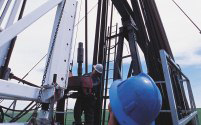
    The oil and gas industry in Canada is growing, and offers many great careers in the trades for those who are interested in the petroleum sector.  Tradespeople working in oil and gas typically perform the hands-on, day-to-day tasks involved in running the equipment and facilities necessary for the drilling, mining and refining of petroleum and natural gas products.

    Some of the trades careers available in oil and gas production include:

    Boilermaker

    Also known as Boiler Fitters or Pressure Vessel Fabricators, these tradespeople build or repair heat exchange systems, stationary steam boilers, and metal tanks or other vessels using skills such as welding, metal fabricating and pipefitting.

    Crane Operators

    Crane operator tradespeople can specialize in a number of crane types, including boom truck cranes, bridge cranes, tower cranes, hoists and hydraulic cranes. They will use these cranes to move and position large loads, equipment or vehicles involved in the operation of oil and gas facilities.

    Heavy Equipment Mechanic

    All the machinery and equipment in the oil and gas industry needs to be maintained and repaired, which is where heavy equipment mechanics are vital. These tradespeople use skills such as welding and soldering, and work with computer electronics to troubleshoot machinery.

    Industrial Electrician

    Electricians are needed at drilling sites and processing facilities to install and repair electrical systems and equipment, including controls, sensors, transmitters and lighting or heating.

    Machinist

    Tradespeople working as machinists operate machine tools such as drills and milling machines in order to produce the parts and instruments needed for the petroleum industry. They also use computer programs to design and operate these machine tools.

    Welder

    Much of the oil and gas industry relies on metal machinery, tanks, pipes and building facilities.  Welders are the tradespeople who can install and repair all types of metal equipment, using blow torches, hand welding, flame cutters, and even computerized tools for highly precise work.

    Carpenter

    Carpenters in the oil and gas industry assist in construction of facilities, build scaffolds and braces, and install windows, doors and flooring for temporary and permanent structures.

    These are just a few of the trades employed in the oil and gas industry.  If one of these isn’t quite to your interest, there are also jobs in transportation, mining, site remediation and cleanup, and working within refineries and other production facilities, as a few examples. Take a look around and you’re sure to find a trades career in the oil and gas industry that will be right for you!

    SOURCES:

    http://www.careersinoilandgas.com/explore-job-categories

    http://www.trade-schools.net/trades/oil-gas.asp