Author: Giulio Rocco

  • Don’t Put Off Your Volunteer Hours!

    Don’t Put Off Your Volunteer Hours!

    Second semester is creeping its way into your life, pressure from exams have fled, and you are starting as fresh as an untouched blanket of winter snow (depending on your geographic climate, substitute snow for a bed of grass). This may be an opportune time to begin those volunteer hours you have put off “for next year” since grade 9.

    So where do you start volunteering? The first place to look is within your school community. Volunteering your time to benefit the environment of your school is a great way to establish a substantial rapport with teachers and peers alike. This does not mean you should ask your automotive teacher if he needs any work done on his front lawn! Try and find things that help the community as whole, and not just individuals you know personally. For example, you can help out with school events that may include, but are not limited to: environmental/horticultural projects, school plays, events, and fundraisers. Helping out in scenarios like the ones mentioned will not only get you some community hours, but can also foster connections with people you may have never thought about talking to! There are also clubs and teams that need assistance every once in a while. The school football team will always need a field marker for their home games! However, if you can not find anything remotely close to these examples at your school, talk to you guidance counselor and they will be happy to aid you in your quest to
    support your community!

    Letʼs not forget the great world outside of your school! Helping your own neighbourhood is also a beneficial way to not only get the hours you need for that diploma, but you can also tailor your time volunteering to gain skills you can put on a resume or use in an interview. For example, if you want to become a teacher, tutoring students after school will allow you to explore some aspects of the career. If you are thinking about nursing or becoming a doctor, helping at your local hospital may give you more of an understanding and appreciation for those professions. On the other hand, it may lead you toward never wanting to catch a cold again! Nevertheless, donʼt just volunteer for the sake of getting those hours out of the way, think about what potential careers you might want to investigate and use the volunteer hours as an opportunity to explore! Also, do not be afraid to check out universities around your neighborhood to see if they want help as well. The harder you search, the more rewarding the experience will be!


  • Dealing with Stress

    Dealing with Stress

    At any age, stress can take a toll on your mind and body. For most, stress is caused by an event or situation that is considered dangerous, difficult, or unpleasant. If it is not dealt with properly, long term stress can cause physical and mental damage. Coping mechanisms, if taught early, can be a helpful ally in battling stress and conquering stressful situations.

    For teens and young adults, stressful situations can be present in everyday life. Some common things that can cause stress are demanding school schedules, drama with friends, low self-esteem, changing bodies, high expectations, and family problems. Most young people encounter one or several of these situations on a daily basis. After a while the weight can start to take an affect and they can become overloaded with stress.

    Fortunately, stress is manageable, especially if the proper coping techniques are taught early. One way to help manage stress is to exercise and eat healthy. Exercise reduces the stress hormone levels in the body and causes the release of endorphins, which are the body’s natural mood lifters. In fact, exercise actually helps you relax. Doing some sort of moderate physical activity every day can ease stress or even prevent it. Healthy eating goes hand and hand with exercise. The healthier you eat, the better you feel. Keeping the body well-nourished and balanced is especially important during stressful times.

    Another way to cope with stress, especially with school, is to prioritize. If you have a heavy work load, do the biggest most difficult projects, or the projects that are due sooner, first. This way, you will have peace of mind knowing that they are completed. The smaller and easier tasks will be a piece of cake after the more difficult tasks are off your plate. Also, if a project or assignment seems overwhelming, break it into smaller pieces. For example, if you have a large paper to write, give yourself the time and take it paragraph by paragraph. Treat each paragraph like it’s a separate assignment. This way, the thought of writing large paper won’t seem so daunting.

    Last but certainly not least, the best way to deal with stress is to talk to someone. Stress is common and many people can relate and sympathize. Talk to a person who is close to you, someone who you can open up to and be honest with, like a parent, a teacher, or even a best friend. Voicing your stresses and frustrations can help you get them off your chest. Sometimes a long chat with your closest friend can do wonders for your mood and stress level. Situations that are seemingly stressful might not be so bad once you know you have support and you’re not alone.

    Stress can be dangerous, especially for teens and young adults who are not sure how to manage it. It’s important to recognize when a situation is beginning to weigh on you and make it a priority to do something about it.

  • Interview with a Hairdresser

    Interview with a Hairdresser

    Fashion is a huge industry worldwide. People care about how they look, so they turn to professionals to give them exactly what they’re asking for. One such profession that benefits from making people look good is that of hairdressing. I interviewed a local hairdresser, Sarah Hearsey, about her schooling, professional opportunities, and how it feels to be in the business.

    M: When did you decide to become a hairdresser?
    S: I decided to become a hairdresser in the middle of my aesthetics training. I saw what the girls in the hairstyling class were doing, and I figured that since I was there already, why not do hairdressing as well? It turned out to be just what I wanted to do in the end. I do cuts and colours more than I do anything else now.

    M: How much schooling did you go through before becoming certified?
    S: Well, I was about five months into my aesthetics course as I mentioned before. I took my teachers aside to discuss doing the hairstyling course and they agreed that it was an excellent idea. The total time that I was in school was nearly two years because I had to make up lost time due to illness.

    M: With your qualifications, where are you able to get hired?
    S: With all of the qualifications I have, I can work in salons, kid’s salons, barber shops, makeup stores, and makeup counters.

    M: Would you say that getting a job in a salon is the best way to go, or can a freelancer make just as much?
    S: I think that it depends on if you want to do hair every single day. I find freelancing better for me because you can make up your own hours and wages, and you aren’t really under a time restriction like you would be in a salon. It depends on the individual.

    M: What are some other benefits of freelancing over working in a salon?
    S: Another perk of freelancing is that anything you make goes into your pocket. Honesty is important in this respect because you have to write down everything you make if freelancing is the way you are going to go.

    M: How do years of experience relate to the amount a hairdresser can charge for their services?
    S: I think that because they [experienced hairdressers] have been in business longer than those who are newer, they become more trusted with their employers and clients. They will get more clients so I believe that raising their wage by year seems fair.

    M: What is the best thing about having this trade under your belt?
    S: The best thing about being a hairdresser is all the types of people you work with. You make them feel good about themselves. They leave with a smile on their faces and they play with their hair and say, “I love it and I can’t stop touching it!” It’s a good feeling.

  • Joining the Circus – Cirque du Soleil

    Joining the Circus – Cirque du Soleil

    Some people, such as miners, work underground. Most other people work above ground in buildings like schools, offices, and hospitals. One group of people, however, works on the ground and in the air, quickly moving from one to another. Can you think of what that job is? Acrobats are known for their skills in flying through the air and for performing great feats of balance and flexibility. Acrobats work as street performers and in circuses around the world, including the famous Cirque du Soleil.

    Becoming an acrobat starts early. The physical ability to bend over backwards or to jump high into the air can take years to develop. Joining a gymnastics club or practicing with friends is a good way to learn the skills necessary to become an acrobat. Many people also attend lessons at the National Circus School in Montreal, Quebec, where they learn how to jump, bend, and do many other tricks. Montreal is also the home of the Cirque du Soleil, one of the world’s most famous circuses.

    The Cirque du Soleil started in 1984 in Montreal with two street acrobats. Guy Laliberté and Gilles Ste-Croix were trying to earn a living by performing their acrobatic feats on the streets and at special occasions. However, making enough money was difficult, and they decided to join together with other acrobats to start a circus. The group called itself the Cirque du Soleil.

    The Cirque du Soleil is famous for being unlike any other circus. Each Cirque du Soleil performance tells a story instead of having a series of acts like other circuses. Over 1300 performers and another 3700 employees work in the Cirque du Soleil around the world. Some of them help prepare for performances or help with some of the other tasks like selling tickets. Every job helps to make the circus experience good for performers and the audience.

    Being in a circus can involve a lot of travel with mostly evening and weekend work. Salaries vary, but they are usually between $40,000 and $70,000 per year. Experience and special skills can help performers rise to the higher income level. Even at the lower levels, however, this money can go far. During the months when people are on the job, they receive free food and a place to stay. Being part of a regular circus troupe like the Cirque du Soleil can be a very career for people with the right skills.

    Not all acrobats work in a circus. Some prefer to be street performers, making a living by setting up their acts as part of outdoor festivals. This type of work gives acrobats a lot of freedom to test and try to improve their skills, at least when the weather is warm and dry enough to work. Street performance is a good way to start if you think that a career as an acrobat is right for you. Eventually, you might be able to show your skills by performing in some of the world’s greatest circuses.

  • What Kind of Jobs Are Really Out There?

    What Kind of Jobs Are Really Out There?

    The job market is changing all the time, but there are a few rules to follow that will ensure your survival/success. Firstly, there is the importance of including work and volunteer experience on your list of activities and subsequent job applications, then there is the importance of engaging in some sort of entrepreneurial activity, and then generally accumulating activities, courses, or experiences that show you are progressive and have an opinion on what your field needs to succeed.

    Remember that it is important to build practical experience and community involvement into whatever career path you are building. Even if you don’t know what you want to do, it is important to get experience doing a variety of practical tasks (work/volunteer) or other interesting activities (work/volunteer). When you have work or volunteer experience to supplement your school activities, you are ahead of the game and that much closer to getting a job because you show that you are actively engaged in your world and care about helping your community.

    Recently, the importance of entrepreneurial activities has been brought to the attention of popular media such as CBC Radio 1. They have reported on the importance of having entrepreneurial activities to supplement or even replace education in an unpredictable market like today’s, where an education doesn’t necessarily mean a job. This aspect has been brought to the foreground due to the 13.5% unemployment rate among young people (Career Options, 2013). There are many people who have graduated with university degrees and are left without a job. This situation is not something you would expect when you look at all the advice supporting a university education, so beware and consider initiating or joining some sort of entrepreneurial activity. Consider your interests and search for something well-suited that will teach you new things and increase your hire-ability.

    Also, accumulating some experience that shows that you are aware of current issues in your field of interest is important for getting jobs that are really out there, like the trades. If you need to take an environmental studies course to show your employer that you are aware of the realities of a changing climate and an emerging “green economy”, do this. It is important to show that you are current and aware of a changing world when you are trying to get the jobs that are out there.

    Remaining a competitive candidate on the job market and getting the jobs that are out there can be assured by accumulating volunteer/work experience in your field of interest, taking on some entrepreneurial activities and taking a few courses relevant to important topics for your field of interest. Good luck!

  • Writing Effective Cover Letters

    Writing Effective Cover Letters

    A cover letter is the first thing a potential employer sees, even before they look at your resume. Without a strong cover letter, they may not even get that far.

    Cover letters are more often sent by email these days, with your resume sent as an attachment. But, whether print or paper, the anatomy of a cover letter is essentially the same. You open with a greeting, state the position you’re applying for, outline your qualifications, and sign off.

    It may sound like a lot, but your cover letter should only be about one page long.

    Greeting
    Start it as you would a letter, “Dear So-and-So.” Using “Hi” or “Hello” in place of “Dear” may come across as too casual.

    If possible, your letter should be addressed to the specific person doing the hiring, and lead “Dear First Name Surname.” You can find this out from the ad, through a contact who already works there, or by calling up the human resources department and asking. But if not, “Dear Hiring Manager” works in a pinch. However, going the extra step will help your cover letter stand out.

    In the past, you’d preface the name with Ms or Mr, but these days it seems a little fussy and can quickly become confusing for gender neutral names.

    Position You’re Applying For
    Following the greeting should be a short statement about the position you’re applying for – “Please consider my application for [position title] at [company].” You may want to include a note about how you heard about the position. If a friend or family member who already works for the company recommended that you apply, the hiring manager will take a closer look at what you have to offer.

    Your Qualifications
    This is the most important part. It’s what gets them to flip to your resume and call to arrange an interview. Depending on your level of experience, this section may be one to three paragraphs long.

    The focus should be on showing how your skills meet the employer’s needs. Highlight the work, volunteer, or personal experience you have that demonstrates you’re a perfect fit for the position. Don’t just give a bald work history – they can read that in your resume. Instead list your professional skills, soft skills or interests, how you won employee of the month, or had the highest sales during the holidays. If you’ve taken any certified courses relevant to the position, be sure to include them here.

    Closing Remarks
    Close with something courteous like, “Thank you for your time and consideration. I look forward to hearing from you.” On another line, your valediction, “Sincerely,” or “Regards,” another line break, your name, phone number, and email address.

    Look It Over
    Once it’s finished, look it over and make sure it flows. Don’t solely rely on spell check to catch spelling and grammar errors. “Deer” may be spelled correctly, but if you write “Deer Jane Smith,” you’re going to look pretty silly – and even sillier if it’s actually “Jayne Smyth.” Triple check the spelling – there’s nothing more embarrassing than getting someone’s name wrong.

    It’s a good idea to have another pair of eyes go over it. Have a friend or family member who may be able to offer suggestions or catch any typos or omitted words you might have missed.

    Good luck!

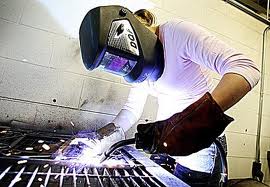
  • Not Your Typical Welder

    Not Your Typical Welder

    Let’s be honest- how many of us girls grew up dreaming of being a mechanic or a welder? The answer is probably not many, and if you did you probably didn’t tell anybody because of the possibility of them thinking you were weird. When I was little I first wanted to be a marine biologist, I loved animals and wanted to work with them very badly. Then my life goal changed from a stunt car driver, to a photographer, to a mechanic and finally a welder.

    One of the things I was most excited about going to high school was that I was now able to take the auto mechanics and construction classes. I took them all through high school and loved every minute of it. I learned, fixed and made things that a lot of people didn’t, how many of you can honestly say you are comfortable with changing a flat tire on your own? I can say with all honesty I am and that’s because of my awesome auto teacher. My technology teachers not only gave me the skills and knowledge about their trades but also the courage to love the trades. To not be scared of trying something totally out of my comfort zone and to not care about what people think.

    I got the smart remarks in class “Girls can’t do that” and the classic “Don’t break a nail!” Taking those courses gave me the courage to pick something not many girls pick for a college program, Welding Technician. I knew two things that I wanted for sure out of what I picked for a program, I wanted to be able to get a job and I wanted to make money. I know those are not the best driving reasons for someone to pick a program, but they were honest. I had originally wanted to be a mechanic because of how much I loved my auto class but I soon realized there were a lot of mechanics and not a lot of jobs. So I had cut up an exhaust pipe about two times in auto with an old oxy-acetylene torch and I knew welding was an in demand job, so I decided on being a welder. The only knowledge I had on welding was what I learned from those two experiences using the torch, so not a whole lot.

    I remember showing up for my first welding class and them telling me that I would need safety boots, safety glasses and a welding helmet for tomorrow. The first thing I thought to myself is, “What have I done?! I have gotten myself into something I can’t handle, I know nothing about welding this is a horrible idea”. Then it got worse after I got all my equipment and they asked me to actually weld something, I don’t think I have ever sweated that much for a school assignment and it wasn’t from the heat of my torch. But with practice, some really great teachers and perseverance I got the hang of it and now I am actually a good welder. I am able to weld in shielded metal arc welding in flat, horizontal and vertical positions. I can use gas metal arc and flux core arc welding machines and I am learning tungsten arc welding at the moment.

    For those of you out there wondering what kind of woman I am, I would say I am not your typical looking welder, but then again isn’t that what we are trying to change? The notion of what the “typical” welder looks like? So this is what the typical welder looks like, a petite 19 year old woman, who stands at five feet and 2 inches, has a boyfriend and loves to go shopping just as much as anyone. The moral of the story is look at trades when you are deciding on college programs, any trade, believe me it’s a rewarding experience, that is challenging.

    If I can do it, you can do it.

  • I Want to Be a Baker!

    I Want to Be a Baker!

    Bake Your Cake and Eat it, too!

    Most of you have seen movies like Willy Wonka and The Chocolate Factory, and I’m sure some of you have dreamed of having your own chocolate wonderland. Well guess what, if you put forth passion, dedication, and outstanding creativity- you can! The culinary industry leads to extraordinary career paths and dreams. You can take a simple concept of a cake, and create a whole new culinary business that will have people travelling for miles, just for your creations.

    No one wants a job that they don’t enjoy. Working is soon going to be one of the most important aspects of your life. Why not do something you’re going to love, and get paid for it! Let the joy of creativity flow with the feel of accomplishment and pride when you serve customers your delightful creations. The look of amazement on people’s faces when they check out your products is something that will keep you motivated, positive, and ready for more.

    The culinary arts have such a rewarding career path- you can do anything you dream of. Become a food scientist, a food taster, or a famous TV Chef. Design your own bakery or restaurant that becomes internationally famous. Or let’s live the dream here, and create a candy workshop or chocolate wonderland where you get paid to design, make, experiment with and eat candy! Let your ultimate dreams guide you to be wherever you want, and become whatever you want. With a step into the career path of culinary arts, there are no limitations- just your imagination.

  • Career Profile: Ship’s Agent

    Career Profile: Ship’s Agent

    Before he heads to the office, the ship agent boards the vessel as it arrives in the port. He walks up a steep gangway with people from the federal government who work for the Canadian Food Inspection Agency (CFIA) and Transport Canada. As the latter inspects the ship, the agent finds the captain and assists him as he signs various documents that are required before the ship is allowed to enter the port.

    It is the ship agent’s job to coordinate the arrival of all vessels that enter Canadian waters. He is thus a vital link between all the imports and exports that come in and out of the country.

    Once back at the office, the agent performs a variety of duties. When a ship plans to arrive, the agent gathers information about the vessel such as: how many members are on the crew and where they are each from, how much the ship weighs and when it was built, and what kind of cargo it is carrying or picking up. He then sends the information to Canadian Customs and Immigration. When Customs clears the ship, it is free to enter Canadian waters.

    However, a ship cannot enter Canadian ports until the federal public servants have inspected the entire ship and cleared it for loading or unloading its cargo. It is the ship agent’s role to coordinate with members of CFIA and Transport Canada. He also organizes – with the ship’s owners, charterers and stevedores – when and where the ship will be loaded with cargo.

    The agent must also host the captain while he and his crew are anchored in the port. He brings the captain cash for the crew to use while they are anchored and he coordinates with ship chandlers who supply the crew with groceries and other necessary supplies. He also arranges for crew members to be picked up and taken to the airport when they are ready to return home if a new crew is taking over the ship.

    The ship agent links Canadian ports to the rest of the world.

    He coordinates much of the activity that sees that items like steel, sugar and electronics arrive safely in the country’s ports while grain, canola, lentils, yellow peas, barley, wheat, oats and other products are loaded into the vessels and shipped to places all over the world.

  • Reasons to Use Kids Help Phone

    Reasons to Use Kids Help Phone

    Kids Help Phone is a free, anonymous resource that is there for you 24/7. Its purpose is to give young people someone to talk to when they feel they have no one who will listen to them. It is important to know that there are people who care and want to help you with any problems you may have. Kids Help Phone has many uses – here are just a few.

    1) You need an objective opinion or want to ask questions anonymously.
    If you need to talk with someone who will listen to what you’re going through, and you don’t trust or want to speak to friends or family, then the Kids Help Phone is a great resource for you. Sometimes you don’t want the people closest to you to know what it is that you are feeling or thinking about. It may be because of a fear of losing their respect or simply of changing the image that they have of you. Whatever your reason, speaking with someone who is trained and knowledgeable on how to handle the information you will share with them is often a good option. When you call the Kids Help Phone you can rest assured that the information will remain confidential, unless it involves information that must be reported to the police (such as reporting a threat to your own or someone else’s life).

    2) You are undergoing a traumatic period in your life and would like support.
    Sometimes we suffer because of life’s circumstances, and in this case it is really important to talk with people about what you are going through. You may not want to talk with friends or family because you feel they may not understand, but with Kids Help Phone you can talk to a person who has been trained in dealing with emotional crises. They will be able to talk to you about relationships, sexuality, drugs and alcohol, eating disorders or anything else that you feel is affecting you.

    3) You want to speak with someone who will listen to you.
    Often in the hustle and bustle of everyday life, there is so much going on that we can feel ignored or that we don’t matter. It can be very hard to find someone who will just listen to what it is that you are going through. The time rarely comes up where you feel it is okay to pour out your soul, and because of this you can be left with some important issues bubbling just under the surface. It is important to “vent” and to talk about your life and what sorts of challenges you are facing.

    4) You need to report an incident.
    If you don’t feel comfortable speaking directly to the police or don’t know what to do after an incident, the people at Kids Help Phone will listen and help you to deal with the situation. This can range from bullying, an incident of physical or sexual abuse or a crime like theft.

    5) You are in a crisis and need to talk to someone as soon as possible.
    If you are feeling that you are in a crisis and are having thoughts of suicide, a counselor at the Kids Help Phone will be a great person for you to speak with. They can help to “talk out” your problem and ensure that you get the assistance you require. Remember that you are never alone! Suicide is not the answer. Reach out to someone at Kids Help Phone and they will be there for you when you feel no one else is.