Author: Kylie Nussey

  • Working With Disabilities

    Working With Disabilities

    Approximately 4.2 million Canadians have disabilities, while 13% of those are working aged adults. Persons with disability are not so uncommon in the workplace. Not all disabilities are evident; someone may be hearing impaired and you will not be able to tell. Other may have trouble with their vision, movement or comprehension.

    No one but you and your doctor can tell you you are unable to do a job. Employers are often unaware that they can not express any doubt of your ability to fill a position or complete a task – to do so is considered discrimination. You know your strengths and weaknesses and it is up to you to communicate any weaknesses you may have if you need help. I, for example, have dyslexia and though many do not consider this to be a disability, it certainly can be difficult to deal with in the workplace. It causes me stress and I make mistakes that others wouldn’t make, such as superimposing numbers. Even something like this is important to inform your employer and co-workers about – creating an open dialogue is vital to both your success and the success of the company you work for.

    Do not tolerate any abuse or harassment from co-workers, your employer or even clients. Do not let anyone address you in any way you find insulting. Correct them to be sure it doesn’t happen again. If you are physically disabled, your employer is responsible to make any changes to the working environment in order to allow you to work safely. Make sure you know your rights.

    It is important not to treat a disabled co-worker any different from how you treat anyone else. Chances are they are not new to their disability and have mastered other ways of doing things that many even be more efficient than your own. It is likely a disabled person will tell you if they can’t do something or if they need help. Imagine how insulted you would be if someone insisted on helping you with something you could very well do on your own. Allow them to let you know their abilities and limitations.

    People with disabilities deserve to be treated with the same respect and given the same opportunities as those who do not have disabilities. Together we can make all Canadian workplaces a friendly environment for everyone!

  • Becoming A Registered Nurse

    Thinking about a career? Think registered nurse! It’s more than a job, it’s a growing profession offering an astonishing range of choices and opportunities.

    You believe in a healthy lifestyle? Janet has been talking to teenagers about how to deal with sex and drugs. “These kids have their whole lives before them and I feel it’s so important to help them now when they need it. With some groups I get into fitness and diet, too. They really want the information and someone to talk to.”

    You want excitement? So does Robin, so she works in the emergency department of a city hospital. “When people burst through those doors, they need help, fast and our ER team gives it. I have to think on my feet here, make immediate decisions about what a person needs. No other job could give me the same challenge – or satisfaction.”

    Intrigued by health questions? So is Nicole, and she’s finding the answers. Nicole is the head of a research team studying the care needs of AIDS patients. “I used to give nursing care to people in their homes and then a great AIDS patient I had motivated me to move into research. I was shocked by how little knowledge and how few resources there seemed to be to care for people like Ted, so I decided to do something about it.”

    More interested in helping people over the long term? That’s what Michael wants, so he’s head nurse at a rehabilitation centre. “A lot of rehab patients start out fighting against our care; they’re depressed, angry, and worried about their future. Helping them work through that is as important as their physical therapy. It’s an incredible feeling to help a person go through the whole process back to health.”

    Michael, Janet, Robin and Nicole became registered nurses because they wanted to work with people in a career that offers challenges and the independence to make decisions. Nursing involves caring for the whole person – the physical, intellectual and social needs. Nurses also plan and deliver health programs for groups or communities.

    Nurses are the heart of care. As a registered nurse, you can make a difference in one person’s life through one-on-one, and in the health of all Canadians through research and leadership.

    Jobs, the real story

    This is an excellent time to enter nursing as there is a shortage. At some point in their life, every Canadian will require the services of a nurse. Since many nurses will soon retire, Canada needs bright young men and women to choose nursing as a career. Changes in the health care system continue to broaden the opportunities for nurses. An especially important trend is the increasing number of services that emphasize illness prevention and health promotion programs. Many of these are planned and staffed by registered nurses.

    Registered nurses earn salaries that compare with other professionals with a similar amount of education. Health care is offered 24 hours a day, so expect to work some nights and weekends, like doctors, law enforcement officers and others who provide essential services.

    As in any profession, salaries vary across the country, and people make more as they gain experience and responsibility. Graduates of degree programs usually have more opportunities for advancement, and in some provinces, make more money than graduates of diploma programs. Your provincial or territorial nurses’ association can provide current salary ranges.

    To see nursing jobs across Canada, visit NursingCareersCanada.ca, The National job board of the Canadian Nurses Association.

    Choices… lots!

    Nursing is full of opportunities to grow, to advance and to change your career direction. Whatever your interest – working with children, scientific procedures and high tech equipment, teaching and promoting healthy practices, developing your management skills – nursing has something for you. Here are just a few examples:

    In the Community

    • health clinics
    • schools
    • wellness programs in the workplace
    • doctors’ offices
    • home care
    • family planning clinics
    • poison control centres
    • prenatal and well-baby clinics
    • rehabilitation centres
    • sexually transmitted disease units
    • AIDS hospices

    IN A HOSPITAL:

    • emergency
    • intensive care
    • operating room
    • post-surgery
    • maternity
    • cardiovascular (heart)
    • oncology (cancer)
    • psychiatry
    • pediatrics (children)
    • palliative (dying people)
    • geriatrics (seniors)

    One of the most exciting opportunities for nurses in Canada is Northern nursing. Often, community health centres in Canada’s North are run completely by the nurse – independent and in charge. Many Aboriginal nurses return home to help their communities, other nurses find they enjoy learning about a different culture.

    The great thing about nursing is that your choices never end. With some years of experience and further studies you could branch out in almost any direction imaginable. After a few years in practice you might decide to become an advanced practice nurse. An expert nurse with a master’s degree, an advanced practice nurse provides direct care to clients and serves as a role model and consultant to other practising nurses. There are currently two types of ANPs in Canada, clinical nurse specialist and nurse practitioner.

    Or you might decide, like Nicole, that you want to investigate current issues in health care. On the leading edge of health care discoveries, nurse researchers design studies, collect data and analyze results. Their findings contribute to the vast body of scientific knowledge that supports and improves nursing.

    Leadership

    All nurses are teachers, helping people learn to prevent illness and manage health problems. But you might want to become a nurse educator, preparing future nurses to enter practice. You could work at a community college or a university, and research would be part of what you do.

    A nurse administrator coordinates nursing services in a hospital or community health centre. Handling large budgets, supervising staff and setting the standards for excellent care takes strength and good management skills.

    The sky is the limit

    And any of these choices could lead you still further. Nurses’ ideas and opinions are sought after by the media, politicians, and national and international groups. Imagine being a consultant to Health Canada, or the World Health Organization.

    Or you could travel. Northern Canada is a close-to-home example, but Canadian nurses are so highly regarded that other countries – both developing and developed – actively recruit them. Your skills and knowledge could take you places. The possibilities are endless!

    Degree or diploma?

    If you’re thinking about a career in nursing, you should seriously consider studying for a degree (BN or BNSc). More career opportunities and the possibility of graduate study will be open to nurses with university degrees. Most provinces already require a baccalaureate in nursing (BN or BScN) to enter the profession.

    Degree programs take four years. Besides learning social and physical sciences, and nursing, as in the diploma program, university programs generally offer additional studies in leadership, health teaching, research and other disciplines.

    Diploma programs take three years. Graduates generally work in hospitals, nursing homes or other structured settings. Many colleges now offer their diploma courses in collaboration with a university with the option of continuing on after graduation to obtain a degree. However, getting a diploma and then a degree generally takes longer, and costs more, than enrolling in a degree program from the beginning.

    Nursing students in both university and diploma schools of nursing will study psychology, child development, sociology, anatomy and physiology. The nursing courses include theory and clinical practice. You will be supervised and supported in the clinical setting to ensure the safety of patients and your own safety.

    If you are interested in continuing your education, master’s and doctoral programs in nursing are available in many places in Canada.

    Get ready

    Entrance requirements differ from one school to another. Generally, the admission requirements are high school graduation with senior level English or French, mathematics, chemistry, physics and biology. You can contact your provincial nurses’ association or individual schools for their specific requirements and information on funding.

    Caring for people, the independence to make decisions, the challenge and excitement of being on the leading edge of health care. Sound interesting? Then ask today for more information about a career as a registered nurse!

    Provincial associations

    • * Association of Registered Nurses of Newfoundland and Labrador
    • * Association of Registered Nurses of Prince Edward Island
    • * College of Registered Nurses of Nova Scotia
    • * Nurses Association of New Brunswick
    • * Ordre des infirmières et infirmiers du Québec
    • * Registered Nurses Association of Ontario
    • * College of Registered Nurses of Manitoba
    • * Saskatchewan Registered Nurses’ Association
    • * College and Association of Registered Nurses of Alberta
    • * College of Registered Nurses of British Columbia
    • * Registered Nurses Association of the Northwest Territories and Nunavut
    • * Yukon Registered Nurses Association
    • * Native Access Program to Nursing

  • April Showers

    April Showers

    Welcome to the April 2013 edition of JobsPeopleDo.com! As always, we have a number of great editorial pieces that shine a spotlight on everything from a hugely popular viral video about bullying (made right here in Canada!) to learning to not be afraid of debt.

    We are thrilled to announce a brand new feature on the site that will be of invaluable use to you in your career path. On our Trades, Job Profiles and Job Videos pages, you will notice a new sidebar feature called “Explore Careers”. These incredible tools will allow you to find out what jobs are in demand in your province, what education is required and even how much money you can expect to be paid. JobsPeopleDo.com teamed up with the Government of Canada website Working In Canada to link you to this information source. We think you will love it and we can’t wait to hear your feedback on this great tool!

    This winter has been a particularly long one for all of us across this vast country, so we hope that April’s arrival will bring warmer temperatures and melting snow to all of Canada. As the temperatures warm up, be sure to make time for yourself to get outside and get yourself moving. Keeping active will help you to gain clarity, especially when you are trying to decide what you want to do after you finish high school!

    We encourage you to provide us feedback by commenting on the stories or sending us an e-mail at info@jobspeopledo.com!

    Have a great April!

    Jasmin Bollman, Assistant Editor

    Don’t forget: Be a mentor – someone needs you!

  • Student Debt: Your New BFF

    Student Debt: Your New BFF

    Debt is a four letter word that should not be feared.

    Students who learn how to manage debt during university are paying themselves a great investment. You may be hearing horror stories of friends of friends who are paying off student loans years after graduation. Even the media pitches in and tells tales of students with debt so large that it seems unlikely they will ever pay off.

    No one wants to start out in life saddled with debt, but this could really be the best thing you do for yourself.

    Good Debt vs. Bad Debt
    A $1000 handbag or watch from your favourite designer is bad debt. $1000 towards books and supplies is good debt. Debt that goes towards something that will benefit you in the future is fine. Using borrowed money to earn your degree will only guarantee yourself a chance to earn much more than someone without a degree or diploma.

    Dr. Richard Settersten and Barbara E. Ray’s book Not Quite Adults highlights this fact – Taking on a little debt for a bigger payoff down the road is smart. Settersten and Ray also shared Nobel Laureate Milton Friedman’s advice: people should borrow the most early on when their earnings are the smallest, save a lot when they are in their highest earning years in mid-life and then start spending all those savings after they retire.

    Be Realistic
    BMO Financial Group surveyed students across Canada and found that half believe that they will graduate with zero or less than $10,000 debt. This doesn’t quite match up with the findings from Statistics Canada, which states the average student graduates with $18,800 in debt. Be realistic when you’re borrowing money and always know how much you’ve taken out and how much you’re spending.

    Be Strategic
    Arthur Chan, who took out Canada Student Loans for fives years at Carleton University to complete his engineering degree, graduated with a debt of $21,000. He wasn’t able to find a job in his field until 8 months after graduation. Now, 2 years into in a full-time position with the Government of Canada, that massive loan is all but a distant memory. How did he do it?

    Just because you’re able to borrow a large amount of money doesn’t mean you have to spend all of it. Arthur lived at home during university and took public transportation everyday to keep costs low. He also worked part-time retail jobs during summer vacations. When he wasn’t able to find a job right away, he applied for interest relief on his student loans. Once he was able to secure a job, he used his earnings to get rid of the debt as quickly as possible. The key is to learn how to save as much as you’re able to borrow.

    With tuition costs rising across Canada, sometimes adding everything up really discourages prospective students. Don’t let debt deter you from getting the education you want.

    Remember: education is a right, not a privilege.

  • Work Safety Risks and Tips for Tree Planters

    Work Safety Risks and Tips for Tree Planters

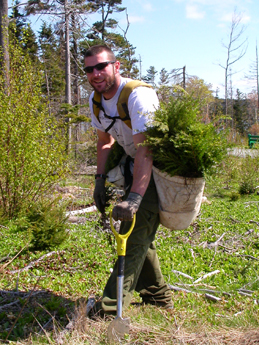
    What does a tree planter do?
    Tree planters and other forestry workers perform physically demanding work. Some of their main duties are to:
    – Clear brush.
    – Carry and plant trees using manual tools.
    – Feed machines manually.
    – Prepare a site for planting.
    – Use, clean and maintain various equipment.
    – Work with chemicals for growth, or for weed and pest control.
    – Supervise other workers.

    What are some health and safety issues for tree planters?
    Tree planters face a variety of physical, biological, chemical, ergonomic and safety hazards. These include:
    – Insect bites or stings.
    – West Nile virus (mosquitoes).
    – Lyme disease or rocky mountain spotted fever.
    – Rabies.
    – Allergic reaction to plants.
    – Exposure to bird or rodent droppings:
    – Histoplasmosis
    – Psittacosis
    – Hantavirus
    – Exposure to chemicals.
    – Risk of pain or injury from working in awkward positions, performing repetitive tasks or lifting.
    – Risk of injury from hitting a hidden rock with a shovel.
    – Exposure to extreme temperatures or other extreme weather conditions.
    – Driving – vehicle safety hazards.
    – Slips, trips and falls.
    – Working with chainsaws and other tools/equipment.
    – Stress.
    – Working alone.
    – Extended work days.

    What are some preventive measures for tree planters?
    – Learn safe lifting procedures.
    – Keep tools and equipment in good working order.
    – Use appropriate personal protective equipment (PPE) for the task.
    – Wear appropriate footwear.
    – Avoid awkward postures and repetitive manual tasks, or take frequent breaks.
    – In the warmer months, cover up for protection from sun, heat and insects.
    – Stay hydrated.
    – In vehicles, always wear a seatbelt.

    What are some good general safe work practices?
    Use safety procedures for:
    – Safe lifting
    – Selection, use, maintenance and storage of PPE
    – Working with pesticides and other substances
    – Using chainsaws and other tools or equipment
    – Follow company safety rules.
    – Learn about chemical safety, WHMIS and MSDSs.
    – Know how to report a hazard.
    – Follow good housekeeping procedures.

  • Youth Apprenticeship Programs

    Youth Apprenticeship Programs

    Youth apprenticeship programs are available in most provinces and territories. Check out the programs available in your area.

    Alberta
    The Registered Apprenticeship Program (RAP) allows high school students to participate in an apprenticeship program while they are still attending school. RAP apprentices earn income as well as hours of on-the-job training and work experience as credit towards their apprenticeship program, and their high school diploma. Scholarships are also available for RAP students.

    British Columbia
    The Secondary School Apprenticeship (SSA) is a career program that provides students with the opportunity to begin an apprenticeship while still in high school, and to earn high school credits for doing so. It provides a smoother road from school to work, and a head start to an apprenticeship.
    ACE IT is an industry training program for high school students, with trade classes offered at colleges and sometimes at a high school. ACE IT programs involve a partnership of schools, employers and industry and provides funding for the first level of schooling. Local employers get involved in the development of ACE IT programs, leading to a higher employment rate following completion of the program.

    Manitoba
    The High School Apprenticeship Program (HSAP) combines regular high school instruction with paid, part-time, on-the-job training. Students can earn up to 8 supplemental academic credits for graduation based on 110 working/practical hours per credit.
    Youth Build is a job training and pre-apprenticeship program whereby young people are working under the supervision of a journeyperson to renovate homes and develop building skills. Young people can attend the Youth Build Program full time, as an alternative to school. In Manitoba, there is a 30 hour per week paid vocational component and a 10 hour per week unpaid academic component.

    New Brunswick
    The Career Connections Program (CCP) offers students experience, hands-on paid work experience, and expands their essential employability skills.

    Newfoundland and Labrador
    Youth apprenticeship courses are available for high school students through Skilled Trades Jump Start Your Life.

    Northwest Territories
    The Schools North Apprenticeship Program (SNAP) is an opportunity for high school students to earn credit and pursue a career in the trades.

    Nova Scotia
    The Workit Youth Apprenticeship Initiative is open to youth between the ages of 16 and 19.
    Options and Opportunities (O2) offers students more hands-on learning experiences with a career focus. It’s designed to prepare students for successful transitions from high school to work, a career path, or a post-secondary program.

    Ontario
    The Ontario Youth Apprenticeship Program (OYAP) is a School to Work program that opens the door for students to explore and work in apprenticeship occupations starting in Grade 11 or Grade 12 through the Cooperative Education program.

    Prince Edward Island
    Youth Apprenticeship or Accelerated Secondary Youth Apprenticeship Program (ASAP)Youth Apprenticeship is for students wanting to explore their trade career options and gain a head-start on the post-secondary apprenticeship training program while working toward their Grade 12 diploma.

    Québec
    Québec offers vocational and technical education programs under the apprenticeship system, which are run jointly by Emploi-Québec and the Ministère de l’Éducation, du Loisir et du Sport.

    Saskatchewan
    Saskatchewan Youth Apprenticeship (SYA) raises awareness of apprenticeship in Saskatchewan schools by helping young people discover what rewards come with being a Youth Apprentice and working in the skilled trades.

    Yukon
    The Yukon Secondary School Apprenticeship Training program is open to Yukon secondary school students who would like to explore a skilled trade and complete high school at the same time.

  • What to Take Backpacking

    What to Take Backpacking

    So you’ve decided to take a trip backpacking. This is quite the adventure and you are going to have to be well prepared for such a time away from home and in the wilderness. You are going to want to make sure that you have covered all of your bases so that you will have the most easy and worry-free trip. The important thing to remember is to plan well and then follow the plan.

    Creating a good list is your first step. Think about where it is that you are going and what it is that you are going to need while backpacking. Are you going hiking? Are you staying overnight? Are you going with friends and sharing the burden of the food preparation? Knowing the general sweeps of your itinerary is a really good start, and then following this general formula will ensure success.

    1. Outdoor gear: Will you be sleeping in a tent and will you be needing warmer clothing for cooler weather? These considerations will be very important in order to ensure that you will have everything you need.

    2. Indoor gear: Will you be spending time indoors? You may need to pack lighter clothing for times that will be spent indoors or in restaurants along the way.

    3. Swimming gear: Will there be lakes or rivers along your route? If so, you will need to make sure that you are bringing a bathing suit and towel.

    4. Technical gear: Are you responsible for bringing a tent or for bringing a sleeping bag and mattress? If you are, you will have to be sure to pack that (if you are backpacking, be sure that it is compact).

    5. Food: Are you bringing food with you or eating along the way? Will you need to bring a stove to cook your food or will you need to bring materials to start and keep a fire going? These are all things to consider.

    Whatever your trip is, be sure to know exactly where it is that you are going, what kind of weather is expected, what your friends are bringing, what kind of terrain is expected and where you will be staying. Knowing these things in advance will help you to pack well and be efficient with your use of space.

    A last consideration is to remember that sharing space with your friends is essential. You need to communicate with them so that you don’t end up all bringing the same thing. If you need to bring a stove, one person should bring it – not everyone. If you need to bring pillows, you may need to decide that you will bring only one or two pillows and share them, alternating people who get the pillow each night to save space in your backpack. If you are bringing food, make sure that you have discussed who is bringing what and that you have enough for each day and night. Planning and communication with your fellow backpackers will be your keys to success.

    Above all, enjoy your trip and stay safe!

  • How Babies Learn Languages

    How Babies Learn Languages

    When you were just a tiny baby, you probably cried a lot – just like every other baby. A few months later, you started to make sounds called babbling. By the time you were six or eight months old, your babbling might have started to sound a bit like words in the language you heard most often at home. At the age of one or two, you could probably use a few words. By about age five, you could speak well and understand what people said to you.

    Your language learning is still continuing now and will likely go on for many more years. How did this lifelong process of language learning start? Until recently, researchers believed that children began learning to speak and understand a few months after birth. Now, however, some researchers believe that children might begin to learn even earlier, maybe even before they are born.

    How do researchers know how much babies understand when they are still unable to speak? One way is to watch how they react when they hear the sounds of the language their parents use. An experiment with babies who were only a few hours old showed that the babies reacted differently to sounds from their parents’ language than to sounds from a foreign language. Languages all over the world have many similar sounds, but often they are pronounced slightly differently. That is especially true with vowels like a and e. When English speakers use these sounds, they normally add a y sound at the end and thus actually use two vowels instead of one. Other languages, however, are different. Making the vowel sounds from different languages allowed researchers to see that babies seemed to react to the sounds of their own languages.

    Another way that researchers could tell how much language babies had learned before birth was to listen to them crying. To most people except the parents, one baby’s crying can sound very much like another’s. However, researchers have noticed that babies seem to cry differently depending on the tones and melodies of the language they hear. If people tend to raise their voices at the ends of sentences or talk in a musical way, babies will also use that sound pattern when they cry. French babies, for example, tend to cry with a rising sound at the end like the language they hear around them. German babies use a falling tone at the end like their parents do when they speak. Although some researchers think the babies might just be imitating their mothers, others think that children might already be learning their language.

    As they grow up, children slowly learn to speak and later to read and write. Researchers know a lot about the different stages of learning, such as when children usually begin to use single words and when they start to use sentences. This new research, however, could change the way people think about babies and language learning. Who knows how that knowledge will help children and parents in the future?

  • Discover What You Love To Do

    Discover What You Love To Do

    Do what you love. You’ve probably already heard this advice plenty of times before. But what if you don’t know what you love doing? What if the question, “what do you love to do?” results in a blank stare on your face? Don’t worry, you aren’t alone. There are a lot of people (young and old) who don’t know what they love to do. The irony is that the answer is already within you. You just have to pay attention to the clues to find out what it is.

    Here is a little exercise which might help you gain some clarity on what you love doing or what your interests are. First, find a quiet spot away from all distractions. Turn off the TV, your phone and any other thing that could distract you when completing this exercise.

    Next, take out a blank sheet of paper and write the title Interests. Write down anything and everything you are interested in. For instance, if you are interested in bugs, write bugs. If you are interested in fashion, write fashion. If you are interested in plants, write plants. If you are stumped for things to write, try to think of activities you currently do which you completely get lost in — where time just seems to fly by! (The clock seems to be extra slow when doing activities you don’t enjoy!) For example, if you get completely absorbed fixing a car, then writing fixing cars as one of your interests. Or if you get completely engrossed baking a cake, then put down baking as one of you interests.

    Once you feel you have made a thorough list of your interests, look over the list you just wrote. Do you notice any similarities between the different items on your list? Does one interest seem to pop up several times on your list? If it helps, highlight similar interests in the same colour.

    Now, if you had to pick three interests from your list, which three would you choose? Be honest with yourself. Consider which things you truly enjoy. Could you see yourself doing one or more of these things for many years to come? Does this thought excite you or fill you with dread? If it fills you with excitement, then you know you are on the right track.

    Remember, do what you love. Those four words are the most important words to keep in mind when choosing a career path. If you choose a career path or job that involves something you love doing, you will be much happier and fulfilled than if you choose one in which you don’t. So discover what you love to do, and pursue a career path which reflects that. Good luck!

  • Healthy Kids Need Time In Nature

    Healthy Kids Need Time In Nature

    Ontario’s Healthy Kids Panel recently proposed a strategy to help kids get onto a path to health. The problem is that the path doesn’t lead them into nature. Though the report quotes parents’ comments and research showing kids spend dramatically less time outside than ever, it doesn’t encourage time in nature.

    That said, many of the report’s recommendations should be implemented and supported locally, provincially and nationally to reduce the risks of obesity. Encouraging parents and children to be more critical about dietary choices and requiring more information and labelling from restaurants and food producers is long overdue.

    Ontario isn’t the only province working to reduce obesity rates and support parents raising healthy children, particularly in the early years. Alberta released relevant reports in 2011 and Quebec has had a ban on advertising junk food to children since 1980. No one can argue against public awareness and education around the benefits of healthy eating and active living. But a provincial, patchwork approach to addressing these issues isn’t enough. We need a national strategy to get our kids eating healthy foods and being active in nature.

    Although it seems logical that much of the time spent being active will take place outside, the Ontario report acknowledges that “many communities are not designed to encourage kids to move or be physically active…and have few safe green spaces.” One parent in a focus group explains that the parks in his community are either gated or locked up once school is closed. So, even when there is green space, it’s not always accessible.

    Last year, the David Suzuki Foundation conducted a survey with young Canadians and found that 70 per cent spend an hour or less a day outdoors. The 2012 Active Healthy Kids Canada Report Card says they spend almost eight hours a day in front of screens. So it’s not that kids don’t have time to be outside. It’s just not part of their lifestyle.

    Much has been reported about a recommendation by the Ontario panel to ban junk food advertising that targets children under 12. This has worked in Quebec and is being discussed in Alberta. But the approach has invited criticism from those who argue that people should have the right to choose. It’s always tempting to focus on making bad things less accessible, but perhaps policy-makers should be more creative and focus on ways to make good things more accessible.

    Being in nature is good for all of us. People who get outside regularly are less stressed, have more resilient immune systems and are generally happier. And it’s good for our kids. Studies show spending time in nature or green spaces helps reduce the symptoms of ADHD. Even in built playgrounds, kids spend twice as much time playing, use their imaginations more and engage in more aerobic and strengthening activities when the space incorporates natural elements like logs, flowers and small streams, according to research from the University of Tennessee at Knoxville.

    Despite all the obvious health benefits of spending time outside, provincial and federal governments are failing to integrate a daily dose of nature into their policies. It’s also something we as a society are failing to make a priority in the lives of our children. This inexpensive and effective way to make our lives healthier and happier should be an obvious solution.

    We need to make sure our neighbourhoods have green spaces where people can explore their connections with nature. We need to ask teachers and school board representatives to take students outside so that nature becomes a classroom. And we need to stop making the outdoors seem like a scary place for children by helping parents understand that the benefits of playing outside outweigh the risks.

    It will take public education and awareness-building as well as changes to the way we build cities and live in our communities to bring nature back into our lives. Connecting kids to nature every day needs to be a priority policy objective in any strategy for healthy children and could easily have been integrated into the recommendations from the Ontario Healthy Kids Panel. Taking our kids by the hand and spending time outside with them will have the added benefit of making us healthier and happier adults.