Author: Linda Mendes

  • Tips for Stopping Over-Snacking While at Home

    Tips for Stopping Over-Snacking While at Home

    Most people enjoy snacking throughout the day. Since a majority of those people have now been stuck at home, they are more likely to over-snack. Over-snacking can lead to consuming too many calories and can affect your health with time. Are you one of those people that have been over-snacking while at home? If so, the following are some tips just for you!

    Stay Hydrated

    It is easy to confuse hunger for thirst. Sometimes, you may snack because you think you are hungry. Before grabbing something to eat, you should drink a glass of water. You could still have your snack afterward but you won’t eat as much as you would have before drinking water. Other options for you to drink are sparkling water, fruit-infused water, or tea.

    Include Protein and Fiber in Your Meals

    Protein and fiber are two nutrients that can help you feel full for much longer. After eating meals that contain these two nutrients, you will not have to eat several snacks before your next meal. A good snack to add to your diet that contains fiber and protein are nuts.

    Pause Between Bites

    Pausing between bites allows you to ask yourself if you’re still hungry. If you’re using a utensil to eat, you could put down the utensil after every bite to avoid being tempted to take another bite right away. Pausing between bites also gives you enough time to chew your food properly.

    Don’t Eat From the Package

    When eating directly from the package, it is more likely for you to over-snack. This is especially common with snacks such as chips, crackers, and cookies. A good alternative is to put a portion of the snack in a bowl or on a plate for you to eat. The remainder of the snack should be put away. If you’re still hungry afterward, you could go and grab a little more. This method helps prevent you from mindlessly eating too much.

    Figure Out the Underlying Cause

    You may often find yourself snacking because of certain emotions or habits. When you’re feeling bored, stressed, or upset, you may turn to snacks to help cope. You may also catch yourself mindlessly snacking while you’re sitting down watching television. By figuring out which specific moments cause you to mindlessly snack, it will help you become aware of the situation and break that habit.

    Everyone has moments when they over-snack. When you find yourself over-snacking, do not feel ashamed. You could take that moment to learn and evolve. Be grateful for the food you just had and try to be more mindful next time you grab a snack to eat. Mindful snacking will get easier as you practice!


    Resources

    https://www.goodhousekeeping.com/health/diet-nutrition/a28846835/how-to-stop-overeating/

    https://www.eatingbirdfood.com/how-to-stop-mindless-snacking/

    https://www.sparkpeople.com/resource/nutrition_articles.asp?id=2503

    https://www.onemedical.com/blog/eat-well/mindful-eating

  • The Importance of Study Groups During COVID-19

    The Importance of Study Groups During COVID-19

    By Erin Rebello

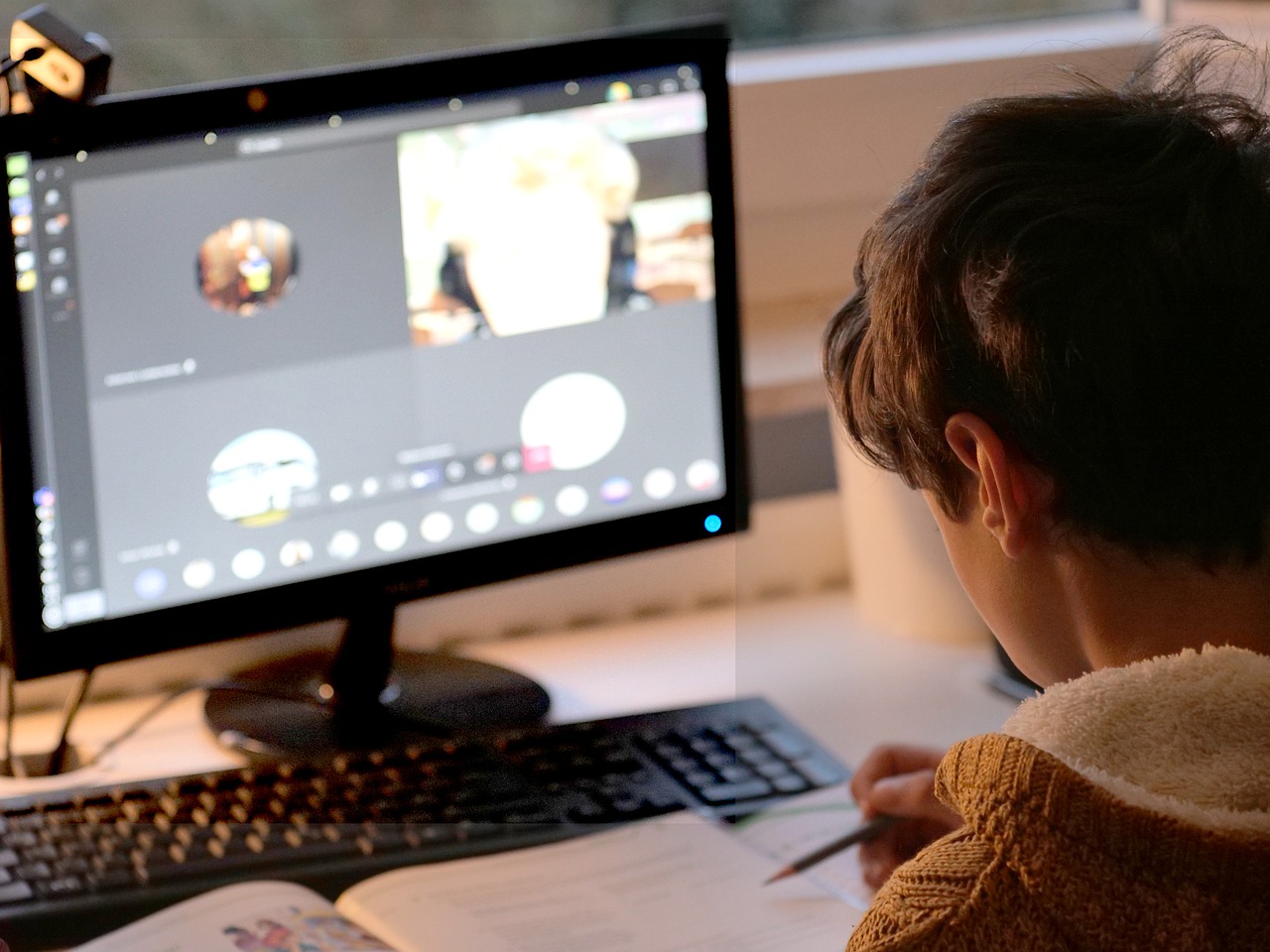
    One of the most difficult changes about the switch to online learning has been the lack of support. Although school boards and teachers are trying their best, nothing can properly replicate the feel of in-person learning. Personally, the switch to online schooling has been very difficult, and has severely impacted both my productivity and mental wellness. Although times have been tough, the one light at the end of the tunnel has been my study group. I’ve never been one for study groups, but with less and less collaborative time in school, I decided to give a study group a try and joined one with a few of my close friends. Over a couple of months, the study group evolved into a server where everyone could ask for homework help, vent about their problems, and even coordinate gaming sessions!

    Benefits of a Study Group

    Although there are many benefits to a study group, I would say that the greatest one is being able to connect with your peers for emotional support. Social isolation is extremely difficult, and even being able to speak to someone through a microphone and webcam can be a breath of fresh air. So many students are struggling with mental health, and in my humble opinion, peer-to-peer forms of communication are the best solution. After all, if you’re in the same situation as your peers, you’ll be able to better understand their feelings and help them work through them.

    Another obvious benefit to a study group is the ability to seek help with understanding difficult concepts or questions. Last quadmester (a shortened semester) I took physics, which is a subject that I’ve always struggled with. With the added stressors of virtual learning, there were many times where I felt stupid or out of place. It was a very frustrating time. Fortunately, there were a couple of other people in the study group who were also taking physics and agreed to help me study. In turn, I agreed to assist them with editing and proofreading their English assignments. It is a very reassuring feeling to have a group of people who can make the world feel a little less chaotic.

    How to Start a Study Group

    At this point, you’re probably wondering about how you can create a study group, and fortunately for you, it’s quite simple! First, you need a group of people who are interested in working together. It’s always a safe bet to approach friends! Then, you’ll need to choose a platform for your study group. In the past, I used Instagram Chats, but we recently switched to Discord, and it’s been much easier. Some other platforms to consider are Facebook Messenger and Slack. After that, you’re basically done! All in all it takes less than an hour to set up and will likely be well worth your time. Happy studying!

  • Before vs. After: How One Year of COVID-19 Changed Me

    Before vs. After: How One Year of COVID-19 Changed Me

    By Elora Pharai

    I don’t know about you, but I never, in a million years, thought that a global pandemic would happen in our generation. Whenever I learned about pandemics in history class, that was all I thought they were; a thing of the past left far behind and out of reach. So naturally, when our government called for a two-week extension of the March Break last year, I thought that it would be two weeks, and then life would be back to normal. That we would be able to go to our relatives’ houses, hang out with friends, and go back to physical school learning. Unfortunately, this has not been the case.

    Now, one year later into self-isolation in the pandemic, I have begun to notice that it has changed me in especially uncanny ways. I think that I am only beginning to recognize these changes because I never initially viewed the pandemic as something that would be such a big part of my life growing up. I always thought it would simply be a mere few months of staying indoors, but it hasn’t been just that. It has been one whole year. A year of growing, learning, and developing. It has changed my relationships, the way I see the world, and even the way that I have come to see myself. When something happens in your life, it splits it into two: ‘before’ and ‘after.’ Sometimes we think that our lives haven’t changed much; everyday looks the same, but when we look back, everything is radically different. We haven’t hit the ‘after’ sector of this pandemic, but even in the ‘during,’ everything has changed. Below, I have broken down the main areas of my life which the pandemic has transformed.

    My Relationships: One thing that the pandemic has changed a lot for me is my relationship with my family, specifically my relationship with my brothers. I have three brothers, two older and one younger, and before the pandemic, we could not even stand to be in the same room with each other. But I guess when you’re forced to spend a lot of time with someone, you grow to like them. I even find myself wanting to spend more time with them, and we definitely do not argue as much. Now we genuinely laugh and have a good time with each other.  The pandemic has also impacted my relationships with my friends, both positively and negatively. As we can no longer be dependent on school to keep us in touch with one another, some of us have not directly spoken to each other for months, while others talk every day and make attempts to stay in touch. I think that it is during troubling times that we really begin to see who our real friends are.

    My Self View: Self isolation certainly allows for you to have a lot of time to think about yourself. The pandemic hasn’t necessarily changed how I see myself as a person, but more so how I see myself as a student. Before the pandemic, at my home school, I was in the STEAM program (Science Technology, Engineering, the Arts and Mathematics). I never excelled in math like most of my peers, and I always wanted to pursue a career in English. I was only in the STEAM program because my elementary school teacher had recommended me for the program and I did not want to drop out because I thought if I did, I would look bad. Most of the time, I felt very insecure about myself and often compared myself to my friends.

    I was rather dependent on them at times and needed constant reassurance. However, because of online school and the fact that I no longer have many classes with my friends, I have evidently become more independent and confident in my schoolwork and abilities. However, I do still have my low times where I get heavily anxious about smaller things like deadlines because in online school, anything can go wrong very easily – whether it be a faulty Zoom link or an important email ending up in the trash on accident. I have also noticed that the pandemic and engaging in online school has caused me to become much more distracted in class and procrastinate more than I did before.

    All in all, the pandemic has actually brought about a lot of change and growth into my life; some of those changes are positive, while others are negative. I have since realized that no matter what, life is never completely good or bad. Eventually it always comes back to the middle ground.

  • Will the Entertainment Industry Bounce Back after COVID-19?

    Will the Entertainment Industry Bounce Back after COVID-19?

    In Spring last year when the novel coronavirus-induced constraints were in place for longer and longer, it became apparent that the upcoming summer season was not going to be like before. In the majority of the globe, summer is the peak season for travel, sports, amusement parks, and entertainment.

    Much-anticipated movies that were slated to be released last year between spring and summer were postponed. The most well-known of these cancellations was Marvel’s Black Widow starring Scarlett Johansson, which was touted to be the first biggest box office hit of the year, which of course didn’t happen.

    The music scene didn’t fare any better. Concert festivals like Coachella that typically bring in droves of wild crowds were no match for the pandemic either. With an exciting lineup across all musical genres that included Rage Against the Machine, Calvin Harris, Savage 21, Megan Thee Stallion, Lana del Ray, and Charlie XCX, fans who were ready to rock were utterly disappointed, to say the least.

    The sports industry also took a beating from the restrictions brought on by the pandemic. Major League Baseball, which was forced to run a shortened season over the summer and fall, reported $8.3 billion in debt.

    All of these cancellations also amounted to an unprecedented amount of job losses as a large number of people rely on these seasonal gigs to pay their bills and put food on the table. But now that vaccinations for the virus have started on a global scale, does this mean that this year we’ll have a normal summer for the entertainment industry?

    Let’s hear from the experts

    Dr. Anthony Fauci, an epidemiologist who’s become somewhat of a staple figure since the pandemic started, thinks that things can start changing as soon as late spring, with cases of infection decreasing significantly as by that time enough people have been vaccinated to reach herd immunity. But it would be too optimistic to hope that we are back to normal by that time. It will take months to reach that stage.

    Face the music

    Even when the live music scene gets back on its feet, experts believe that health and safety protocols will still be in place. Some even predict that attendees may even be required to provide proof of vaccination, although this is of course a long shot.

    For concert organizers, the biggest worry is that the throngs of music artists who didn’t get a chance to go onstage last year will all be competing with each other to book venues, and even weekdays will be crowded. Nevertheless, big-name artists won’t find it hard to reserve venues and find an eager audience.

    Sadly, that can’t be said for independent music artists who have relied on the smaller venues to reach out to their audience. In fact, the Toronto Star reported that Canada’s independent music scene, from the sound recording industry to the publishing sectors, has suffered a devastated loss of $233 million in 2020, a 41 percent drop from the previous year. Even sadder news is that while established music artists may only need a few months to recover, independent artists would need at least three years to gain back what they’ve lost.

    Get ready with your popcorn

    Despite the exponential growth of streaming services like Netflix and HBO Max, insiders are still hopeful that movie theatres are unlikely to disappear completely from the entertainment landscape. Patrick Corcoran, vice president and chief communications officer for the National Association of Theater Owners (NATO), believes that once cinemas are allowed to open once again, people may need time to be comfortable to go back, but they are going back for sure. The pull to see a movie on the big screen is hard to deny.

    Moviegoers will definitely see big changes though. Early this year, Cineplex, Canada’s largest chain of cinemas, announced that it has ended its partnership with Timeplay, the movie trivia app that allows film buffs to play before flicks start so they can get bonus SCENE points. The company has a long road ahead of it though as it continues to face one struggle after another.

    When it comes to the entertainment industry post-COVID, there’s still nothing definite. However, we can all be hopeful that positive changes may come. As Dave Grohl wrote for the Atlantic, “But together, we are instruments in a sonic cathedral, one that we build together night after night. And one that we will surely build again.”


    SOURCES

    https://www.thestar.com/news/gta/2020/12/27/its-really-demoralizing-covid-19-crushed-canadas-independent-music-scene-the-recovery-is-expected-to-be-slow-at-best.html

    https://abcnews.go.com/GMA/Culture/movie-theaters-post-covid-world/story?id=75065572

    https://globalnews.ca/news/7562223/cineplex-timeplay-coronavirus/

    https://www.bbc.com/future/article/20200527-coronavirus-how-covid-19-could-redesign-our-world

    https://www.theatlantic.com/culture/archive/2020/05/dave-grohl-irreplaceable-thrill-rock-show/611113/

  • What’s in Store for Job Hunters in 2021 – The Jobs that Are in High Demand

    What’s in Store for Job Hunters in 2021 – The Jobs that Are in High Demand

    The Canadian labour market has undoubtedly been negatively impacted by the pandemic. The rising number of cases and increased restrictions caused the country to lose 213,000 jobs at the beginning of the year, with part-time work in Central Canada bearing most of the brunt in industries such as food services, retail, culture, and recreation. As a result, the unemployment rate jumped to 9.4 per cent in January, the highest it’s been since August last year.

    Fortunately, all is not lost in the job market. With the vaccine rollout, Canada’s job sectors are expected to bounce back, especially in industries that have proven themselves essential during the pandemic. In fact, a new report by Randstad, one of the world’s biggest HR firms, reveals that COVID-19 has paved the way for new job opportunities in various areas that weren’t as readily apparent as before.

    Here’s a quick look at the jobs that are in high demand this year.

    Customer service representatives and IT and support desk specialists

    According to research by RBC, the lockdowns at the start of the pandemic led to about five million Canadians working from home, and by October 2020, 2.4 million Canadians who normally don’t work from home continued to do so.

    As a result, companies had to attend to their customers and clients remotely, increasing the need to hire more customer service representatives. Those who normally relied on in-house IT personnel when they had IT issues at their workplace have had to depend on remote IT and support desk specialists for their IT problems at home, as they now work from there.

    Delivery drivers, procurement and supply chain specialists, and warehouse workers

    With the temporary and permanent closures of favourite retail shops, the majority of customers have now turned to online shopping. This means that there is a greater need for procurement and supply chain specialists and warehouse workers to fulfill purchases, and get them delivered properly and punctually to customers.

    IT and data security specialists

    With many companies implementing the move for their employees to work from home, there has been increased risk to cybersecurity. Even Zoom video calls have been prone to hacks, and there have been several incidents reported within Canada. Some employers are well aware of this type of threat and have strengthened their cybersecurity measures by hiring more data security specialists.

    Essential retail workers and cleaners and maintenance workers

    We wouldn’t have survived this pandemic for as long as we have if not for the essential workers like grocery clerks and sanitation workers bravely going to work and fulfilling their duties. Supermarket employees have kept the shelves stocked amidst panic buying and other unusual shopping behaviours. Who can forget the toilet paper melee during the first few months of COVID-19?

    Registered nurses

    And finally, we all owe a big thank you to the health care workers like registered nurses who worked hard to keep our health in check and our loved ones safe. The toll on them has been overwhelming, and there is now an increased demand for qualified health care and personal support workers to ensure we all remain in good hands during this pandemic or if another virus outbreak hits the globe again.

    Now, which of the above-mentioned are of interest to you the most?


    SOURCES

    https://www.huffingtonpost.ca/entry/unemployment-rate-canada_ca_601d4c22c5b618b31987ca9d

    https://globalnews.ca/news/7579576/canadas-top-jobs-2021-randstad/

  • Strengthening Support Systems for Individuals with Disabilities during COVID-19

    Strengthening Support Systems for Individuals with Disabilities during COVID-19

    The pandemic has had drastic effects on practically every aspect of our lives – more so on our financial situations. According to a survey done by FP Canada, 41 per cent feel their financial health is in a more precarious situation now than when the pandemic began. And while the federal government was quick to provide much-needed support to those affected by COVID-19 through the Canada Emergency Response Benefit or CERB (for which a total of 27.57 million applied), for people with disabilities, their efforts to provide aid were simply not enough. This is especially evident considering that a large number of them now have to rely more on personal support workers and food and grocery delivery services because of accessibility issues.

    It’s more than numbers

    For people with disabilities, it wasn’t merely their financial situations that were affected, but also their physical and mental conditions.

    For example, a Toronto resident with mobility issues was scheduled to have a surgery on her legs to improve her movement abilities before COVID-19. She also regularly attended an exercise program with March of Dimes Canada to help with her physical situation. However, at the onset of the pandemic, both of these were cancelled and her mental well-being has been affected because she hasn’t received the support systems she has relied on pre-pandemic.

    One size fits all

    David Lepofsky, the chairperson of the Accessibility for Ontarians with Disabilities Act Alliance, says that the federal government’s solution was a “one size fits all” approach, which is why it doesn’t work for those with disabilities. People with disabilities have their specific set of needs, which are different from those without disabilities. However, these needs were not considered in coming up with CERB and other pandemic-related benefits and the federal government chose to take the quick and easy routes.

    Higher costs of living

    Karine Myrgianie Jean-François, director of operations at DisAbled Women’s Network Canada, insists that a large percentage of the disabled population is not getting support services expected from provincial health departments or social services, including CERB.

    At present, 70 per cent of Canadians eligible for the disability tax credit received the enhanced GST/HST benefit based on their income levels due to COVID-19, but that doesn’t help much for those with disabilities who will need to rely on food deliveries or in-house care support.

    When one factors in the higher costs of living these days, it becomes apparent that money doesn’t go as far as it used to. Thus, most Canadians with disabilities, many of whom are within the poverty line or on the verge of it, continue to struggle.

    Toiling away

    A survey done by Statistics Canada involving respondents with disabilities between June and July last year showed that half of them are having difficulties making ends meet. A whopping 61 per cent of them said they are unable to meet at least one financial obligation due to the pandemic, including prescription medication, housing payments, and utilities.

    On the other hand, 44 per cent were having a hard time paying for groceries, while another 40 per cent were struggling to provide personal protective equipment for themselves.

    Nearly one-third of the respondents said they have lost at least $1,000 a month since the pandemic began.

    Post-pandemic

    Advocates believe that the federal government owes it to the disabled community to think of them and put their needs under consideration in a post-COVID world. Apart form prioritizing them to get the vaccine, people with disabilities will greatly benefit from other changes.

    Advocates believe that financial support should be provided to a person with a disability to access opportunities in the community, like everyone else.

    Employment options for people with disabilities should be free of any barriers, physical and otherwise. The public and private sectors should commit to hiring more people with disabilities, and agree to a national basic annual income for those with disabilities.

    With the country still under the effects of the virus, it’s time for the federal government to take action to lessen the burden for people with disabilities.


    SOURCES

    https://www.newswire.ca/news-releases/one-third-of-canadians-feel-they-ll-never-financially-recover-from-the-covid-19-pandemic-806581695.html

    https://theconversation.com/covid-19-financial-future-grim-for-canadians-with-disabilities-health-conditions-143168

    https://globalnews.ca/news/6906216/coronavirus-canadians-disabilities/

    https://globalnews.ca/news/7119660/coronavirus-disability-autism-deaths/

    https://globalnews.ca/news/7301620/canadians-disabilities-coronavirus-survey/

    https://www.thestar.com/opinion/contributors/2020/09/15/strengthening-canadas-disability-community-in-a-post-pandemic-world.html

  • Investing in 2021: A Guide to Getting Started

    Investing in 2021: A Guide to Getting Started

    Saving for a rainy day is something we’ve been taught as kids, and with the pandemic hitting us hard last year, we all realized how important it is to have emergency funds in place. However, while having a substantial amount of savings is ideal, not many of us realize that letting our savings merely sit in the bank is akin to keeping our hard-earned cash under our mattress. Nothing happens to it, and in turn, we are allowing it to lose its value due to inflation and low-interest rates.

    • A smarter alternative is to make those savings work for you, and you can do that through investments. You’ve probably heard from your parents or grandparents a lot about the traditional methods, and most likely they have worked with them. Traditional methods of investments, like stock investments, mutual funds, index funds, bonds, mortgage-backed securities, and real estate, are tried and true ways, and they’re reliable investment options.

    However, if you’re digital savvy, it will be worthwhile to look into investment options you can do online which can deliver results similar to the traditional methods of investments.

    Online investment platforms provide an efficient way to manage and implement market positions through sophisticated and well-designed software systems. They come in various formats, and it helps to take the time to do an extensive research to identify the most ideal option for you.

    How Do They Work?

    First things first, with a digital platform, you can open, close, and manage market positions by way of a financial go-between such as an online broker. These systems boast features that show how your investments are performing, including real-time quotes and charting tools, so no guesswork is required. It’s your money, after all, so transparency is key.

    Invest Safely and Smartly

    Investing is a great tool for your financial health and future, but it comes at different levels of risk. Be sure to consult with experts and do plenty of research before starting your investment journey.

    Making Your Choice

    When it comes choosing among tech-savvy investment options, remember it’s not about which outperforms the others, but which will meet your financial objectives and personal preferences the best. Let’s see below.

    1. MetaTrader

    If you’re after foreign exchange or the forex market, then this option will work the most wonders for you. MetaTrader interfaces with multiple brokers, and it’s your best bet to navigate the forex financial market.

    Its best feature, however, is also its downside. If you’re not looking into automating trading in currencies, then this platform may not give you the same benefits as when trading stocks and futures.

    1. Robo Advisors

    Robo advisors have come a long way. From its inception following the 2008 financial crash, robo advisor companies continue to sprout globally, and one of the most noteworthy ones started right here in Canada in 2014. Toronto-based Michael Katchen’s Wealthsimple is a standout with its user-friendly interface and a digitally engaged communication channel that’s evident of social media savviness.

    A downside to robo advisors is that you give it full control and you’re basically a spectator. When you want to take a more proactive approach to your investments, a robo advisor may not be for you.

    1. Online Brokerage

    Online brokers are the way to go if you are more of the hands-on type. With these, it’s completely up to you to build your portfolio.

    The drawback with an online brokerage is a minor one. If your digital savviness is sub-par, then you may have some issues navigating their systems. However, an online brokerage company considers customer experience as a priority, so they must continuously make the effort to make their applications as user-friendly as possible for everyone to use.

    Which Brokerage Should You Choose?

    Here are three options that have won investors’ hearts:

    1. Questrade

    It’s easy to see why Questrade should be among your top choices. This company opened its doors in 1999 and has had an impressive streak. It boasts of 50,000 new accounts yearly, $9 billion in assets under administration, and is a nine-time winner of Canada’s Best Managed Companies. They also prove they have a customer-service mindset as they charge no annual fees and you get to purchase ETFs at no cost. In addition, RRSP or TFSA transfers don’t incur any fees either.

    1. Qtrade

    For young investors, Qtrade may be the most fitting choice available since it gives them the power to take charge of their financial future. Operating since 2001, Qtrade is known for its low commissions, no opening or closing fees, and no annual RRSP or TFSA account fees. Plus, you can buy ETFs commission-free and there’s no charge to transfer your account.

    1. TD Direct Investing

    It wouldn’t be a complete list without any major financial institutions. TD Direct Investing is way ahead of its counterparts such as iTrade (from Scotiabank), Investor’s Edge (CIBC), Direct Investing (RBC) and InvestorLine (BMO). After all, TD got here first when TD Green Line Investor Services opened for business in 1984 and became the first bank-owned self-directed brokerage in Canada. With this option though, you’d have to be mindful of trading fees of $9.99 per trade.

    What It All Comes Down To

    We all have our own investment needs, so it all boils down to evaluating your needs and goals to figure out which is the best choice for your online investments!


    SOURCES

    https://www.juststartinvesting.com/traditional-investments/

    https://moneysthegame.com/post/is-it-ok-to-be-letting-money-sit-in-the-bank/

    https://www.wealthsimple.com/en-ca/learn/investing-in-canada

    https://www.moneysense.ca/save/investing/best-online-brokers-in-canada/

    https://www.investopedia.com/terms/t/trading-platform.asp

    https://www.nerdwallet.com/blog/investing/what-is-how-to-open-brokerage-account/

    https://youngandthrifty.ca/the-ultimate-guide-to-canadas-discount-brokerages/

  • Earning Money while Working from Home and Studying at the Same Time

    Earning Money while Working from Home and Studying at the Same Time

    The pandemic has had a huge impact on everyone, but even more so on students who have had to adjust quickly to virtual learning classes due to the measures implemented to curb the spread of the virus and keep infections at a minimum.

    In addition, students in college or university often look forward to the summer season to start their part-time jobs and earn money while on break. Unfortunately, with the lockdown restrictions, only a small fraction of them were able to work. According to Statistics Canada, the spring and summer seasons are usually the peak employment periods for students, but 2020 was drastically different. The youth employment rate dropped to a record low of 49%, the lowest since 1976, while the unemployment rate reached a record high of 16.8%, the highest since 1997.

    While the federal government did roll out a $1,250-per-month benefit for post-secondary students whose finances were affected by the pandemic, with payments covering May to August, most are still baffled at their finances in disarray due to job scarcity or job loss.

    The global health crisis, however, did open numerous work-from-home options. With the flexible schedules that these opportunities allow, this winter, students may finally have a good chance of recovering following a meager spring and summer. Let’s take a look at some options below.

    Virtual Assistant

    If you have experience with administrative work, a job as a virtual assistant can work for you. You will have the same functions as an administrative assistant, but the main difference is that you’re working from home. This is certainly worth looking into if you are used to answering phone calls and emails, preparing spreadsheets and documents, doing invoices, among others tasks.

    Virtual Data Entry Clerk

    If answering phone calls or emails isn’t exactly your cup of tea, but you do like preparing documents and spreadsheets, then the role of a virtual data entry clerk may be just the opportunity you’re looking for. Data entry clerks need top-notch typing and written communication skills, and if you have these, then you’ll have a big chance of landing the job.

    Social Media Content Creator

    With the decline of the brick-and-mortar advertising and marketing agencies due to the pandemic, more and more clients are looking into utilizing online tools to help put their products and services into the general population’s collective minds. And what better way to do that than through social media platforms like Twitter, Instagram, TikTok, and Snapchat? If you’re a master of your own social media accounts and have earned an impressive number of followers, then this job will be a walk in the park for you, especially if you’re marketing and advertising savvy.

    Virtual Customer Service Agent

    We’ve all relied on call centre agents for our problems, whether it was about a wrong credit card charge or a technical issue with our new laptop, and we know how essential they are – especially now that most people are working from home and have the time to call for anything that’s bugging them. If you have excellent communication skills and love to help others solve their problems, then this job is certainly up your alley. A bonus is that most call centres work on a 24/7 basis, so that makes it easier for you to pursue your studies while earning at the same time.

    Online Tutor

    If you’re an A-student and like helping other students reach their potential, an online tutor job could be a perfect fit for you. There are numerous students in elementary and middle school who aren’t performing as well as they could due to the challenges brought on by virtual learning classes, and this is where you can step in. Choose to tutor a subject that you know you’re excellent at. Another related option is an English as a Second Language (ESL) tutor where you teach kids from abroad on how to improve their English speaking and writing skills.

    The list goes on for remote work opportunities, but the above are a few ones which are high in demand. Have a look into these options, and decide which best goes with your study schedule. Good luck!


    SOURCES

    https://www.cbc.ca/news/politics/students-summer-jobs-pandemic-covid-coronavirus-1.5558824

    https://globalnews.ca/news/7579576a/canadas-top-jobs-2021-randstad/

    https://www.thebalancecareers.com/best-online-jobs-for-college-students-4154845

  • February 2021 Scholarships: Apply now!

    John Proctor Scholarship

    Scholarship Value: $8,000

    Awards Available: 1

    Award Deadline: February 15, 2021

    Address: https://sfs.yorku.ca/scholarships/award-search?awardID=0268


    Women’s Cyber Security Scholarships

    Scholarship Value: $6,000

    Awards Available: 10

    Award Deadline: February 22, 2021

    Address: https://iamcybersafe.org/s/womens-scholarships


    Science Without Borders Scholarship Challenge

    Scholarship Value: $500

    Awards Available: 3

    Award Deadline: March 1, 2021

    Address: https://www.livingoceansfoundation.org/education/science-without-borders-challenge/


    SEG Scholarships

    Scholarship Value: $10,000

    Awards Available: 150

    Award Deadline: March 1, 2021

    Address: https://studentscholarships.org/scholarship/13396/seg_scholarships_scholarship.php


    VSA International Young Soloist Award

    Scholarship Value: $2,000

    Awards Available: 4

    Award Deadline: March 2, 2021

    Address: https://www.kennedy-center.org/education/opportunities-for-artists/competitions-and-commissions/vsa-international-young-soloists/


    Alumni Award of Distinction Scholarship at York University

    Scholarship Value: $8,000

    Awards Available: 2

    Award Deadline: February 15, 2021

    Address: https://sfs.yorku.ca/scholarships/award-search?awardID=1078


    Carleton Capital Scholarship at Carleton University

    Scholarship Value: $2,000

    Awards Available: 13

    Award Deadline: March 1, 2021

    Address: https://admissions.carleton.ca/scholarships/


    Founders’ Academic Merit Scholarship at University of Guelph-Humber

    Scholarship Value: $9,000 per year

    Awards Available: 10

    Award Deadline: February 15, 2021

    Address: https://www.guelphhumber.ca/sfs/founders-academic-merit


    FIRST Robotics Canadian Scholarship at OntarioTech University

    Scholarship Value: $12,000

    Awards Available: 1

    Award Deadline: February 25, 2021

    Address: https://safa.ontariotechu.ca/scholarships-and-bursaries/scholarships/application-based-scholarships/first-robotics-canada-scholarship.php


    BC Excellence Scholarships

    Scholarship Value: $5,000

    Awards Available: 55

    Award Deadline: February 15, 2021

    Address: https://www2.gov.bc.ca/gov/content/education-training/k-12/support/scholarships/provincial-scholarships/bc-excellence-scholarships

  • Coping with the Cold COVID Winter

    Coping with the Cold COVID Winter

    The cold, dark days of winter are always tough. Adding a pandemic on top of that sure doesn’t help. I hope you’re all finding ways to get through it, whether that means reaching out and connecting to friends and family, or taking joy in simple things like a good book or a hobby you can do at home. Springtime is not far off! My depression usually peaks in February each winter, but there’s a silver lining to the COVID-19 cloud.

    The pandemic has made that time spent with family and friends more special, and those little joys feel grander. It has highlighted inequalities in society and shed light on what needs to change from the status quo we all knew a year ago. Winter, with its snow days and early sunsets, has always been the perfect time to pause and think of the road ahead. This is more true than ever. February is our chance to reflect on everything that’s changed since last year and what we’ll be doing going forward.

    What do you want your relationship with your loved ones to look like? Which parts of the pandemic, such as remote work and a slower pace of life, do you want to carry with you after lockdowns are lifted? How can you do your part to address the economic, social, and racial inequalities the pandemic has highlighted? These are questions we’re all facing. By taking the time to answer them, we can take control of our lives after months of feeling powerless.

    I’ve greatly enjoyed putting together the articles for JPD for these first months of 2021. I’m excited to keep at it in the months ahead, working with our wonderful writers to help you answer those questions along with many others. The warmer days of spring are several weeks away, but let’s make the rest of winter more than just a waiting game.

    Anthony Teles