Author: Susan Huebert

  • Looking for An Ideal Employer

    Looking for An Ideal Employer

    People expect a lot of you. Your family probably expects you to work hard at school or to help out at home. Your teachers expect you to finish your homework, write your tests, and to follow the rules at school. When you get a job, your employer will expect you to try hard and to do your job. All of these people have expectations of what you are supposed to do, but do you also have expectations of them? You might not be able to change your family or teachers, no matter what you expect of them. However, knowing what to look for in an employer could help you find a good job that you can enjoy for many years.

    As you get closer to finishing your school years and start to look for a job, you might hear a lot about what employers expect of employees. You might hear about how employers expect you to get to work on time, to work hard, and to take your lunch and breaks only at the scheduled times. You might hear about how honesty, a positive attitude, flexibility, and dedication to work (a strong work ethic) are very important in finding and keeping a job. However, these qualities often also make the difference between good and bad employers.

    The qualities of good employers can vary according to the needs of the job and of their employees. In a high-pressure job with a lot of important deadlines, for example, the employer might have to be stricter about people coming to work late than in a place where people have more time to finish their tasks. However, a good boss knows when to enforce the rules and when to relax them. Good employers are effective managers who know what needs to be done and how much they can expect from the people who work for them.

    Telling people what to do is part of employers’ work, but it should not be everything. Good employers should be leaders with a vision for what they want the workplace to be, but they should also be open to new ideas from employees and others. They should take care of their employees’ needs and try to be fair to everyone. If employers tend to hire their own friends and relatives instead of more skilled people, they might not be good for outsiders. On the other hand, if they always hire new people instead of promoting their own employees to better jobs, employees might find themselves stuck at a low level for years.

    How can you tell which employers are good until you work for them? The best way might be to talk to employees of the company and find out what they think. You can also find out how long people usually stay in their jobs, since that can often show how well the employer understands employees. Finding an employer who supports you and helps you grow can be difficult, but the effort can make a big difference in your working life.


  • Career Profile: Family Lawyer

    Career Profile: Family Lawyer

    When you think “lawyer,” you might think of high-profile cases against notorious lawbreakers. It seems glamorous and exciting. But, just as there are many aspects of the law itself, so there are many types of lawyers to practice different kinds of law.

    Each type of law practice comes with its own job description. Family lawyers, for instance, represent clients in divorce cases, child custody disputes, and ensuring that other family members fulfill their legal obligations. They also handle matters such as wills and estates, setting up trust funds, and working with adoptions, among other matters. Family lawyers prefer to work efficiently. Court battles are time-consuming and costly. Family lawyers strive to settle disputes out of court by mediation, arbitration, or other forms of problem-solving. They will meet frequently with clients to discuss their options, advising them on the best course of action. But that is not all- attorneys have responsibilities within their own firm as well. Often, a newly-graduated lawyer will supervise office staff. These include paralegals, legal secretaries, office assistants, and interns. But getting into a law firm in the first place takes a lot of schooling.

    Before you even attend law school, you must complete two to four years of schooling in other areas. Some law schools prefer that you have an undergraduate degree before they accept you. Once this prerequisite schooling is complete, the aspiring law student will study for and pass their LSATs- Law School Admission Tests. Then, at law school, they acquire their Bachelor of Laws. This qualifies them for their first year of training, called articling. While many students take their articling year in a law firm, some choose to work as a clerk for a judge.

    Once this term of articling is complete, the next step is to take a bar admission course and the accompanying exams. This qualifies you for practicing law in the province where the exams were taken. If you want to practice law in other provinces, you may have to meet other requirements.

    Once all of these requirements have been met, you are eligible to practice any type of law you desire. Family lawyers often specialize even further: some do only estates and wills, caring for the property of a large variety of clients. Others may do pro bono work, offering their services for free to those in desperate need of representation but who cannot hope to afford it. Some may choose only to work custody cases, support arrangements, and adoptions.

    Client confidentiality is of utmost importance to all lawyers, but especially to family lawyers. Because of the often turbulent nature of cases involving family disputes, sometimes it is required that each party have a separate lawyer to avoid a conflict of interest. This means that often, a husband and wife seeking divorce would not have the same lawyer, nor would the mother and father each seeking custody of their children. This means that if a case is to be settled quickly, family lawyers must have a good working relationship with lawyers in other firms.

    Working as a family lawyer takes a lot of preparation. Schooling alone takes a commitment of six to eight years, but making a difference in other people’s lives makes all that hard work worth it.

  • Win a Kobo E-Reader from JobsPeopleDo.com!

    WIN  two Kobe e-readers – one for you and one for your school  & have your story read by over 1 million students across Canada!

    How do you celebrate the holiday season?

    Deadline for entries: November 30, 2013

    Winter_Holiday_Christmas

    Send your entry, in 500 words or less, to holidaycontest@jobspeopledo.com

    Read the full rules and regulations here! https://jobspeopledo.com/JPD_Holiday_Contest_Rules.pdf

  • A Trip to the Vet

    A Trip to the Vet

    Just like people, sometimes animals get sick or injured and need to see a doctor. A doctor that specializes in taking care of animals is called a veterinarian, or a vet for short.

    Most vets work in clinical practices, meaning they work directly with animals. However, some vets work doing research, teaching or work for the government.

    Dr. Jaime Buchanan is a veterinarian at the Kingston Veterinary Clinic in Kingston, Ontario. Her job is to treat animals for diseases and injuries and to inform owners of how to prevent their animals from getting sick.

    Doctor Buchanan says animals go to the vet most often because they are sick or injured. She says, “the most common problems are vomiting, diarrhea and skin problems. And some of the common injuries include: lameness (limping) and wounds or cuts.” She also says, like people, many animals have regular check-ups to make sure they are healthy. They have vaccinations, which are needles with medicine that help prevent diseases, flea treatments and de-worming.

    However, unlike people, animals can’t tell someone when they aren’t feeling well. Doctor Buchanan says, “it can be very difficult to diagnose animals because they can’t tell you how they are feeling or where they are hurt.”

    In order to figure out exactly what the problem is, she says the vet, “starts by taking a thorough history of the problem from the owner. They do a physical exam, checking the animal from head to tail. This includes looking at their teeth and gums, listening to their heart, taking their temperature and feeling their abdomen, among other things.” If the problem is not obvious, the vet may need to do further tests like blood work or X-rays to determine why the patient is sick.

    Depending on what is wrong, treatment for the animal may include going home and taking medication, like pain pills or antibiotics. Or, if they are very sick, they may need to stay in the hospital and have an IV (intravenous fluids) and be closely watched to ensure the treatment is working.
    Doctor Buchanan says some of the symptoms pet owners should watch out for are, “vomiting, diarrhea, breathing problems, skin and ear problems, and changes in water intake or urination.” She says if your animal is not eating or drinking or if they seem to have less energy than usual, call your veterinarian.

    When you take your pet to the vet, Doctor Buchanan says you can expect to see “other animals and people in the clinic. You may also see the receptionist and veterinary technician in the waiting room. In the exam room, you can watch while your pet is examined. And you may even get to listen to the animals’ heart with the stethoscope or help hold and comfort your pet.”

    The vet will explain everything step by step while they are completing your animals check-up, and Dr. Buchanan says don’t be afraid to ask questions because the Doctor will be more than happy to answer them.

    If you love animals, maybe becoming a veterinarian would be your dream job!

  • Astronauts and Chris Hadfield

    Astronauts and Chris Hadfield

    Retirement is a good time for people for look back at what they have done over their lives and in their work. Some people’s careers never go beyond their own town or city. For other people, however, a job can take them far away, even beyond the earth. When Chris Hadfield retired from his career as an astronaut on July 3rd, 2013, he had a chance to look back on a long career in space. His most famous success was being the leader of the International Space Station. The education he received and the work he did in his early years all helped him to do well in his career as an astronaut.

    Chris Hadfield grew up on a farm in Ontario. He became interested in flying and joined the Air Cadets at a young age. During this time, he learned to operate first gliders and then regular powered airplanes. By the time he retired, he had flown over seventy different types of planes and other aircraft.

    After he finished his basic schooling, Chris Hadfield went to study at the Royal Military College in Kingston, Ontario. He completed a degree in mechanical engineering there before going on to do research at the University of Waterloo. Next, he studied at the University of Tennessee and received a Master of Science. Early in his career, he became a fighter pilot in the Canadian Armed Forces. In 1983, he received an award for best pilot in the Basic Jet Training in Moose Jaw, Saskatchewan.

    In 1992, Chris Hadfield became one of four astronauts working at the Johnson Space Center in Houston, Texas. He traveled into space several times and even helped to install a tool called the Canadarm onto the International Space Station. He worked with the Russian space program between 2001 and 2003 and later used his research skills to test the possibilities of underwater life at a station near the coast of Florida.

    In 2012, Chris Hadfield was chosen to work as the head of the International Space Station. He worked there for five months, conducting scientific experiments in areas such as gravity’s effects on humans. All the way through, he used social media sites like Twitter to tell people on earth what he was doing. He returned to earth in May 2013 and announced his retirement a month later. His official retirement began on July 3rd, 2013.

    Not all astronauts train in the same way as Chris Hadfield did, and some might never actually work in space. However, an education in one of the sciences or engineering, and also work experience, is necessary for most jobs in this field. Some knowledge of medicine is necessary since astronauts have no access to hospitals in space. Astronauts need to be in fairly good health and to be able to move to different locations for work. The pay is good, and astronauts can often have extremely varied careers. Not too mention that you get to go where few other people have ever gone before!

  • Career Profile: Fire Investigator/Inspector

    Career Profile: Fire Investigator/Inspector

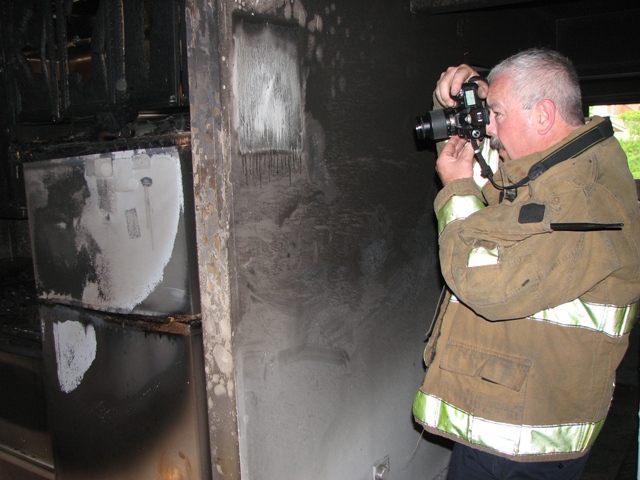
    Imagine a fire flickering and sparking as the logs burn and settle down. Would you enjoy watching it? Many people find fires calming and fascinating to watch, at least ones that stay controlled. However, a fire nicely contained in a fireplace at home or the cooking area of a campsite is not like a fire that burns down a house. Dealing with the fires that happen in buildings and cause destruction are the work of fire inspectors, who try to prevent
    fires, and fire investigators, who try to find out why fires happen. Together, they try to reduce the damage that fire causes to property and people.

    Fire inspectors and investigators work on different parts of the same problem. Fire inspectors check buildings to make sure that the rules about fire safety are being followed. They check to make sure that buildings have enough working fire extinguishers. They might check for proper storage of dangerous substances like gasoline. In some cases, they might check the electric wiring in a building to make sure that everything is working and that there are no frayed wires that might cause a spark. When they can, fire inspectors also teach people about how to keep fires from starting, and they work with insurance companies to try to maintain high safety standards. If they do their job well, they can help prevent many accidental fires from ever starting.

    Fire investigators work from a somewhat different angle, but they deal with many of the same things. Like fire inspectors, they check buildings for dangerous substances and faulty wiring. They might check to make sure that the fire extinguishers are working. However, fire investigators do their work after a fire instead of before. When a building has burned, even partially, fire investigators go in to find out what happened. They work with the police and insurance companies to find out what started each fire. What they find helps them decide what started a fire and if it was accidental or set on purpose.

    Becoming a fire inspector takes a basic education, such as a high school diploma, but a lot of experience. Most people who get into this work start as firefighters, learning the principles of safety and detection on the job. Taking several courses on fire prevention is usually enough to qualify experienced firefighters for the work of fire inspector. Many fire investigators have a bachelor’s degree or more. Salaries for fire inspectors and investigators can vary widely, depending on the person’s experience, the size of the fire department, and other factors. Generally, however, fire inspectors’ salaries start at over $50,000.00 and investigators’ pay starts even higher. Many investigators receive $80,000 per year or more.

    Fire inspectors and investigators generally have fairly good working conditions and face few dangers in the job, although looking through a burned-out building can be unpleasant. They job has a high level of responsibility, but it can be both challenging and rewarding. Does the job of fire inspector or investigator appeal to you?

  • The Dangers of Student Credit Cards

    The Dangers of Student Credit Cards

    For many young people, the temptation of their first credit card is too much to resist. That is why credit card companies will often set up booths on college and university campuses across Canada to tempt you with free gifts and low interest rates for signing up with them. While credit cards can be an excellent way to build your credit rating, the responsibility that comes with owning one cannot be overlooked.

    When I first entered college, I saw a booth on campus advertising free NHL hockey blankets for signing up. Not only that, but acceptance was virtually guaranteed. For someone fresh out of high school, a credit card makes you feel important and like an adult. Being able to use it whenever you want to buy clothes, electronics, make-up and more is a thrill. The thrill will soon wear off when you realize that you have used up most of your credit limit in only a few months and have no way to pay it off.

    Credit cards should not be taken lightly. While the company may advertise an interest rate of 1.99%, this is often only an introductory offer and the rate will skyrocket to 18% or higher after your first month. This means, on a $100 purchase, you will be paying $18 in interest directly to the credit card company. Over several months of not paying off your balance in full, this quickly adds up. Soon you will owe hundreds of dollars that you didn’t even spend!

    If you do decide to sign up for a credit card, there are several things you can do to reduce the temptation of overspending. The first, and most important, is to make sure you have the funds needed to pay off your balance before you even use your credit card. Paying off your balance in full each month is an excellent way to build a credit rating, as you are showing the bank that you are responsible and have a steady income. The second is to leave your credit card at home and do not carry it with you in your wallet. This tactic helps to eliminate the temptation of overspending and using the card for purchases you do not need.

    Of course, there is always online shopping. Online shopping should only be done when absolutely necessary (for Christmas gifts, for example). It is also advisable to get a credit card with a low credit limit – $1000 should be your absolute maximum. Anything higher and you run the risk of using it frivolously.

    Credit cards can be an excellent tool for building your credit rating and establishing yourself, if used responsibly. If you decide to sign up for a credit card, ensure you take the steps outlined above to reduce overspending and, ultimately, reduce your stress level. After all, who needs extra stress during exams?

  • Succeeding In High School

    Succeeding In High School

    Whenever we are facing a life change, we are worried that there may be new challenges that we may have difficulty with. This is natural and is actually adaptive for your survival as a human being. By thinking about what high school might be like, you are helping yourself to be prepared for what may lie ahead. Try thinking of yourself as an explorer entering the jungle on an expedition. Would it be smart for that explorer to enter the jungle without first having thought through the possible outcomes of their expedition? The answer is no. The explorer must prepare themselves for what lies ahead in order to stay out of danger and ensure their success on their expedition. As you enter high school, you are like the explorer – in need of some preparation for what lies ahead. Be sure to think through some of the challenges you may encounter and try as best you can to prepare for these, such as buying appropriate school supplies and being open to learning new things.

    It’s important to keep in mind that a positive attitude is your best friend wherever you go, especially when you are facing new challenges that may intimidate you and challenge you to change yourself in some ways. Being positive will help you to overcome situations that are unpleasant or uncomfortable and to help you remember what it is that you do have, as opposed to focusing on what you don’t have, what you lack, or what is negative.

    That being said, it is equally important to have your own goals and ambitions that surpass your desire and need to be better than others. Remember that you are your highest competitor, and that you can most satisfactorily achieve your goals by competing with YOUR goals and only YOUR goals. Set goals for yourself using the SMART formula: Specific, Measurable, Achievable, Realistic, Timed (Wikipedia, 2013) and make your own success. You will have more work in high school than you’ve had before, so it’s important to set your goals and work to achieve them!

    Overall, being prepared, having a positive attitude, believing in yourself and setting goals for yourself is the way to success in high school. Good luck and, above all, have fun!

  • Renewable Energy – A Trade for the Future

    Renewable Energy – A Trade for the Future

    Are you seeking a future-centric career? Looking to make a difference in the world? Want to join an industry destined to flourish significantly within your lifetime?

    With a growing awareness of the negative impacts humans have had on the environment, the increasing concern of environmental problems such as global warming, and the fight to preserve and find alternative ways to sustain the environment and human life, the renewable energy sector provides many opportunities for a rewarding career.

    As more alternative energy options are unveiled, more positions within the renewable energy sector are becoming available. Perhaps you’ll be the person responsible for energy audits, a technician working on solar panels, a designer of wind farms, or working to promote more sustainable building practices. The opportunities are endless and will continue to grow thanks to government initiatives to improve energy practices.

    In 2009, Ontario introduced a Green Energy Act, which was committed to promoting and supporting green energy projects and supporting energy efficiency province-wide, joining in a worldwide initiative to move toward renewable practices.

    The Ministry of Energy has also introduced many incentive programs, including tax rebates, to encourage Canadians to make energy updated to their homes. This could include installing solar panels or wind turbines, geothermal heating or cooling, and more.

    As the renewable energy sector grows, more programs are being offered at post secondary institutions throughout the province and country. Programs are for energy technicians, renewable energy technicians, sustainable building construction, sustainable agriculture, wind turbine technicians and more.

    If you’re looking to explore a rewarding career with opportunities for further growth, development and innovation, then a renewable energy career is perfect for you.

    Depending on the type of renewable energy career you’re interested in pursuing, there are apprenticeship, diploma, and degree opportunities available to suit your wants and needs. The opportunities are endless.

  • Why Red Seal Trades Might Work For You

    Why Red Seal Trades Might Work For You

    You may have heard the advice, “learn a trade – it’s an important skill to have.” That’s good advice: there will always be a need for carpenters, electricians, plumbers, mechanics, and welders. But what exactly is a Red Seal trade? What financial assistance is there for a person interested in becoming a tradesperson? How do you find out which trade is right for you? Read on to find out.

    In short, a Red Seal trade is one where you may work as a tradesperson in any province without having to take extra qualifications. The training and certifications of Red Seal trades are not individualized to each province; rather, they are standardized on a national level. Although each province is responsible for educating and training apprentices, or those who are at an entry level in their industry of choice, the Red Seal Program promotes the coordination of standards across the country. But in order to qualify as a journeyperson with a Red Seal, apprentices need a mix of classroom instruction and on-the-job training. Although they earn money while training on the job, acquiring necessary tools and classroom instruction is expensive.

    The government recognizes the necessity to fund tradespeople. There is a provision called the Apprenticeship Incentive Grant, which is a $1000-$2000 per year taxable cash grant for apprentices once they have successfully completed their first or second year or level of their program in one of the Red Seal trades. Another is the Apprenticeship Completion Grant, which is available to an apprentice who completes their training and acquires their journeyperson certification in a Red Seal trade. But tools are expensive, too. The government provides the Tradesperson’s Tools Deduction of up to $500 yearly to assist in the purchase of new tools necessary for the trade in question. That leaves one final question: which trade to choose?

    In Ontario, there are forty seven trades of the Program’s available 55 that you may choose from. These range from Automotive Service Technician to Baker to Hairstylist to Welder. The official website, www.red-seal.ca, contains a detailed job description of each. For instance, its page on carpentry tells us that “Carpenters construct, renovate and repair residential, institutional, commercial, and industrial … structures made of wood, steel, concrete and other materials.” We read about the risks involved, knowledge that a carpenter ought to have, and other skills that are useful. It tells us the career path a carpenter may be interested in taking. Further down the page, there is a chart that tells us that there is a provincial certification in all thirteen provinces and territories. Beyond that is additional information with links to relevant documents. You can also find this information on any of the other Red Seal trade pages. Read them over and decide which one may fit you best. Do you have an affinity for working in the kitchen? Bakers and Chefs can become Red Seal certified. Like tinkering with engines and other machines? A wide variety of trades will let you do just that: Automotive Service Technicians and Heavy Duty Equipment Technicians are among those who may acquire their Red Seal.

    The opportunities are numerous, and you can work anywhere in the country. Why not look into qualifying for a Red Seal trade?