Author: Kylie Nussey

  • The Most Dangerous Places On Earth

    The Most Dangerous Places On Earth

    Extreme heat and extreme cold can kill within hours if not minutes. In extreme cold, the human body without clothing does not maintain a high enough temperature to live. If you were to be naked at freezing point of zero degrees, it would take you only twenty minutes to die. Our bodies are simply not strong enough to work as hard as it would need to to keep us warm enough to survive.

    One thing we need even more than warmth is oxygen. Mount Everest’s summit, for example, has incredibly thin air. To survive the trip to the top, a climber would have to move slowly over a period of several months for their body to adjust to the change in oxygen. If somehow we were able to teleport to the top of Mount Everest, we would only be able to survive for about 2-3 minutes because there simply isn’t enough oxygen!

    Death would come even quicker if you were at the bottom of the Mariana Trench. You would be submerged under 7 miles of water – that’s about 11 kilometers! At pressures of 15,000 pounds per square inch, your lungs would collapse immediately and you would fall unconscious in under 20 seconds; you would be dead in under 90 seconds.

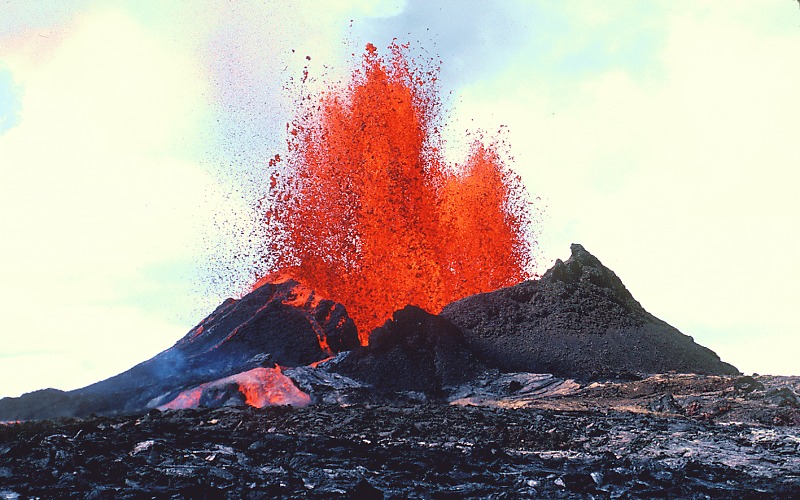
    Swan diving into a molten lake of lava would be something else. I bet you think your body would burn up in seconds and become ash or burn to nothing at all. Well, actually, It would be a lot like fireworks! Technically lava is liquid rock, burning four times hotter than your oven at home could ever get. Our bodies are comprised of mostly of water, which, when exposed to that kind of heat, turns to steam – explosively!

    If we were to measure danger by fatalities caused rather than how rapidly we would die in the world’s most extreme temperatures, we would have to consider something as microscopic as the flu. In 1918, influenza killed nearly one hundred million people. At the time, this would account for 3% of the world’s entire population. Between 1347 and 1353, a third of all people in Europe died because of the bubonic plague, also known as black death. Though it was at its most lethal all those years ago, it is still around. In fact, five to fifteen people get the plague in America every year. Even with those stats, influenza and the plague have nothing on plasmodium – it’s a micro-organism that can get into our blood because of mosquito bites and causes malaria. Researchers such as Nobel Laureate Baruch Blumberg have determined that, of all the humans who have ever existed, it is likely that half died from malaria. So, statistically speaking, any place where one could be bitten by a mosquito and contract malaria would be called the most dangerous place on Earth!


  • Corporate Social Responsibility: More than Just A Policy

    Corporate Social Responsibility: More than Just A Policy

    Corporate social responsibility can sound like a mouthful, and you may find yourself wondering what it even means. What those three words strung together refers to is the amount of accountability a company undertakes for basically being a good citizen in the communities in which they conduct business. Being a good citizen as a corporation can involve many things, such as being environmentally friendly, donating money to charity, having responsible waste management practices and generally how they serve and treat their customers. Sometimes corporate social responsibility is something that is only discussed in offices, a string of words that is thrown around on paper and never really makes it to the ground or into the businesses in the community. This is a problem, and it is increasingly a problem as climate change becomes ever more present in our lives.

    Businesses and corporations that do have social responsibility are the businesses that you may consider to be avant garde. They are the businesses that are always one step ahead and pride themselves on educating their customers and really taking the lead on problems like third world poverty and environmental problems. Businesses who practice corporate social responsibility aim to have a positive impact on their communities. Starbucks is a great example – they supports charities, have good waste management practices, serve healthy options and treat their employees with respect and care, ensuring they are paid more than minimum wage and have benefits.

    The importance of corporate social responsibility cannot be underestimated. It is very important for employees as well as for the community in which they conduct business. When a company decides to set an example and takes the lead on important global issues, a community benefits by learning and by being able to follow in the footsteps of a large corporation. When a corporation does not do their part in the communities in which they conduct business, they create a problem because they generate much more waste and they do not contribute as effectively to the well-being of the community population in terms of paying fair wages and providing the support that many employees need. Because corporations are so large, they can have a bigger impact when they take on more responsibility.

  • What is a PhD and How Do I Get One?

    What is a PhD and How Do I Get One?

    What is a PhD?
    Getting a PhD can seem like an overwhelming undertaking, only pursued by the most ambitious and smartest of people. In Canada, a PhD or Doctor of Philosophy is synonymous with a doctorate degree in many fields of study. It signifies the highest form of academic achievement.

    As the title suggests, the PhD was originally awarded to academic scholars pursuing an in-depth study of Philosophy. Now, it is a research centric nomination, awarded to those who demonstrate the ability to apply the knowledge they’ve accumulated over the course of their university education in the real world. In Dr. Frank Gannon’s discussion of the PhD, he offers an appropriate summation of the experience. “In essence, my PhD showed that I developed from a dependent student into an independent scientist”.

    Getting a PhD
    A PhD candidate or a person in the process of completing his/her degree is responsible for demonstrating specific subject matter expertise on his/her chosen topic. Obtaining a PhD opens the door to becoming a researcher or a professor.

    To qualify for a PhD in Canada, most universities will only accept applicants who have already completed a Bachelor’s degree and a Master’s degree. Exceptions to the rule may be considered for special cases where an applicant already has substantial practical experience in the topic area.

    Application requirements at different universities can vary. Generally, applicants are required to provide full transcripts for every year of post-secondary education completed up until that point. Professional and academic reference letters will also be required, as well as a detailed proposal of what the applicant intends to study. Admission to the PhD program is ultimately decided by the supervising professor.

    How Long Does it Take?
    The time it takes to obtain a PhD varies. It can take anywhere from 3-8 years to complete depending on the candidate and the nature of the research. By the end of his/her PhD, the candidate will have produced a thesis to be presented before a PhD board for approval.

    Tuition
    Many universities offer financial awards to encourage graduate students to pursue doctoral studies. The research done by PhD candidates benefits the research progress achieved by the university. Most students are able to conduct their research through grants and living allowances awarded by the university.

    Along with compiling a thesis, PhD students may also be required to serve as teaching assistants (TA) for their supervising professors. TA’s can be expected to instruct intro level classes for undergraduate degree students and assist in marking students’ coursework, like research papers and exams.
    Once a candidate has successful completed his/her degree, they may choose to go by the salutation “Doctor”.

  • Covering Post-Secondary Education Costs

    Covering Post-Secondary Education Costs

    University tuition is a huge expense that leaves many students deep in debt by the time they graduate – especially if they choose to live on their own, either in residence or near campus. Income from summer jobs is difficult to stretch out through the school year. That’s why many students work part-time on or near campus to offset the costs of school.

    But even before you begin to peruse employment options, don’t forget to apply for as many scholarships and bursaries you can find for which you are eligible. Search your school’s website for scholarship and bursary information and ask someone at the finance offices for advice. There is often more money available to students through these awards than there are students who apply for them. So don’t let competition dissuade you from applying. You have nothing to lose and money to gain! (Remember that the most important thing to do with any application for scholarships and bursaries is to have someone edit your work before you submit it).

    On-campus jobs provide another fantastic source of income to help you pay for the school year. There are a lot more options for work than you might think! Some students with disabilities, for instance, require extra assistance reading journal articles or writing down their thoughts. Look for a resource centre on your campus and ask if you could be hired to help out. The work, which is government-funded, pays relatively well. Check out your university’s administration offices to see what else may be available and ask all of your professors what they recommend.

    Off-campus jobs are another alternative means to acquire income as you go to school, but there are things to consider before you apply:

    1. How long will it take me to get to and from the job?
    2. Will my boss allow flexibility so that I can prioritize my schoolwork?
    3. Does what I learn at the job compliment my degree?
    4. Can I get something from the job for free that I would otherwise have to pay for, like a gym membership, food or clothes?
    5. Will I be able to manage my time effectively enough to juggle a job and school?

    It may be a good idea to settle into your classes and develop a homework and study routine before you seek employment. Prioritize your goals and decide how much time you need to commit to your education compared how much time you need to spend earning money.

  • Career Profile: Horticulturist

    Career Profile: Horticulturist

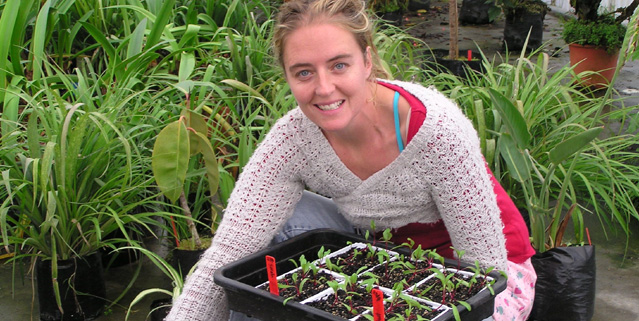
    Horticulture. What is it? In its simplest form we can define it as the cultivation of plants. But there’s a lot more to it than that.

    An individual who works in the horticulture field is called a horticulturist. Their duties consist of managing and coordinating anything that involves cultivating and breeding plant life. From working with landscape companies, to advising provincial ministries on proper techniques and maintenance of plants and landscapes; a horticulturist’s job often takes them from one job site to another and seldom leaves them standing in the same place.

    An ideal candidate for the horticulturist career path is an individual who enjoys working outdoors, nature, travelling and, well, getting dirty!
    Horticulturists may act as technicians or advisors for agriculture companies and provide information on techniques to yield a higher crop growth and impart pesticide-related info to both commercial and independent farmers. They may also work with landscaping companies to help them determine which plants will grow the most plentifully based on its required needs, like climate and precipitation.

    Horticulturists may choose to work as independent contractors or work directly for natural resource ministries to ensure soil levels are not contaminated and pose no threat to its vegetation or animals in the area.

    The career path of a horticulturist typically only requires some post secondary education as an apprentice. The individual could start out as a landscaper and gradually make their way to a horticulturist. If desired, university degrees are offered in the field of horticulture. These degrees may lead into other agricultural fields such as forestry and biology.

    So if you have always loved learning about plant life and even planting your own garden or flowerbeds at home, a career in horticulture could be perfect for you!

  • Anti-Bullying Viral Video!

    Anti-Bullying Viral Video!

    We recently came across this video by poet Shane Koyczan and just had to share. It has gone viral in the past few weeks due to its powerful anti-bullying message. Shane was bullied growing up, too, so his message is even more powerful. As he told The Globe and Mail in 2011, “I got bullied a lot when I was a kid, and because of that I thought for the most part that I didn’t really have a childhood – I had to grow up so quick and there was no real enjoyment in that for me.”

    Unfortunately, bullying is still a major problem in schools all around the world. We can all make a difference by pledging to not bully and to speak up when you see that someone is.

    According to Wired Magazine, Shane kneads his experiences into powerful poetry. His piece about bullying is now a short animation. It rises above the bruises left by words and the hiding places pills can’t provide, all the way up to a place of beauty. The video is a collaborative piece, created using 20 second segments contributed by animators and artists. It will surely prompt reflection and discussion. It also promotes more formal anti-bullying efforts.

    In terms of what he hopes people take away from his video, Shane told the Huffington Post, “Just that sense of connectivity. As much as you may feel alone in this, you’re really not. There’s people who go through this every day. In a lot of ways, there’s more of us than there are of them.”

    Shane, born in Yellowknife and raised in Penticton, was even a part of the opening ceremonies of the Vancouver Winter Olympics in 2010! We love to see Canadians making a difference in the world. Watch this video and share it with your friends.

  • Career Profile: Librarian

    Career Profile: Librarian

    Imagine a stern-looking middle-aged woman wearing half-glasses at the end of her nose. What kind of job do you think she would have? Many people would say that she was a librarian. For them, librarianship is a job for plain, quiet people who enjoy spending all day with dusty books. These days, however, librarians and library technicians do much more than that. They can be important sources of information and research help for people of all ages and backgrounds.

    If you visit libraries, you probably know that libraries are about far more than just books. Most of them also have computers, videos, DVDs, and online catalogues where people can find information on what’s available in the library. Working in a library usually requires knowledge of many different computer programs and Internet sites. Library staff members might also need to know how to find information in special computer databases on medicine, law or other subjects. Helping people use and understand library materials like these is a large part of what librarians and library technicians do.

    Besides helping people find information or books and DVDs, library staff members do many other jobs. Some of them catalogue new materials by recording information such as the author and title and by choosing a number like 398.2 that tells people where to find the books or other materials. Some of them work with children’s programs or help organize events for adults, such as information sessions on job searching or on retirement. Others choose new materials and decide when to get rid of the old ones. Others hire and train new employees or work with budgets to decide what to buy and when to spend money. Even putting books and other materials back onto the shelves is a job for librarians, library technicians or library clerks.

    What education do you need to work in a library? That really depends on where you want to work and what you want to do. In the past, people needed a Master’s degree in librarianship to be put in charge of a library or to work in other areas such as the reference desk where they would answer people’s questions. Library technicians would get a certificate or diploma and learn to do jobs such as cataloguing. Library clerks would put materials back on the shelves and do other jobs requiring only a small amount of library knowledge. In many cases that has now changed, and people with different levels of education can work in almost any role. This is true especially in small libraries.

    If working in a library sounds interesting to you, you can already get started on preparing for your career. You can read different types of books and get to know how to use databases and other resources. If your school or public library has volunteer opportunities, you can begin to learn more about what a job in librarianship is like. That will help you decide what training to get and how to find the best library job for your skills and interests.

  • Staying Awake Without Caffeine

    Staying Awake Without Caffeine

    You’re busy, you’re stressed and you hardly have time to eat let alone get a good night’s sleep. When term projects and exams are weighing you down, your first thought might be to reach for that double shot latte or an energy drink with a slew of unpronounceable ingredients stamped on the side of the can. At eight in the morning right through to midnight, caffeine is our crutch that is guaranteed to keep us awake. However, too much of a good thing, especially when it comes to caffeine, can be problematic. To help you ease off the espressos, here are a few ways to stay alert and awake the caffeine-free way.

    Exercise
    It’s a classic. Doctors have been telling us this for years, but some of us have neglected to heed their advice. Exercise, particularly anything that involves the cardiovascular system, is a great way to get fresh, oxygenated blood pumping through your brain. If you’re short on time, try a flash card routine with some weights or listen to an audio recording of a lecture while going for a run. Even a five minute jumping jacks session between revising chapters can do the trick.

    Break up your meals
    Breakfast, lunch and dinner – it’s a routine to which many of us stay faithful. However, eating larger meals less often can have destructive effects on our energy levels. Digestion requires energy; The larger the meal, the more energy is needed and depleted from your reserves. Breaking up meals into four or six smaller portions can vastly improve your energy levels, keeping you alert and able to studying for longer.

    Cat naps
    Getting sleepy? Take a nap! Sleep cycles aren’t as cut and dry as most people think. Some of the most effective sleep routines involve taking a nap at regular intervals throughout the day to boost productivity. Though intriguing, for a student constant nap taking is probably not an option. But there are some tips to glean from those sleep cycles! When your body needs rest it will let you know and sometimes the only thing left to do is listen to it. A ten minute nap may be all the rest it needs to get back on track. If you choose this option, remember to set an alarm without a snooze button! Ten to twenty minutes should do.

    Apples
    They can do more than just keep the doctor away. If you’re having trouble getting by without a caffeine boost, try snacking on an apple. The dose of natural glucose will help pick you up the same way a chocolate bar or gummy worms might give you a sugar rush. But an apple’s natural sugars and fibre content make it a much healthier option.

  • Exploring Careers in Your Field of Interest

    Exploring Careers in Your Field of Interest

    You may already know what you love to do. Great! So what’s the next step? The next step would be figuring out what kinds of jobs are available within your field of interest. Did you know that there are many career paths you can take for any one thing you love to do and are interested in? For example:

    • If you love to write, you could consider a job that involves writing. There are many jobs that would be a perfect fit for a person who loves to write. For instance, you could be a newspaper or magazine columnist, you could work as a copywriter for an advertising agency or you could even be an author!
    • If you love to dance, you could be a dancer. But you could also be a dance teacher or even choreographer!
    • If you love to work with animals, you may be interested in being a veterinarian, animal trainer, zoo keeper or even biologist.
    • If you love to work with your hands, then you may want to consider carpentry, auto mechanics, engineering, dentistry or even massage therapy.
    • If you are an outdoorsy person, then sitting at a desk job is definitely not your thing. Instead, consider jobs in which people primarily work outdoors, such as construction workers, landscapers, forest rangers or even adventure travel guides.
    • If you love to work with children, professions such as teacher, pediatrician, child psychologist or early childhood education assistant would be right up your alley!

    As the above examples show, there are many different career paths available within a certain area of interest. Do a little bit of research to discover what career opportunities align with your interests. Try to determine which of these various careers you would be interested in pursuing and why. Read profiles of various jobs to get a sense of what they involve. And finally, if possible, talk to people who work in these jobs. After all, the best way to find out what a job is all about is to talk to someone who is already doing it!

  • Choosing Your Perfect Post-Secondary Program

    Choosing Your Perfect Post-Secondary Program

    No more writing poetry or reading and interpreting novels for the math enthusiasts, no more complex scientific equations for the creative writers, no more arts or drama classes for the scientists. The time has come to pick a college or university program geared toward your interests and future goals.

    In high school you were given the opportunity to pick elective courses. Perhaps you took philosophy or sociology, a language course, physical education, music, culinary arts, or history to satisfy your need for something more exciting than interpreting a symbol in a novel or solving for ‘x.’ 


    College and university allow students to choose a program suited to their interests, strengths and career goals, allowing much more enjoyment than a couple of elective courses. For students interested in science, they have an opportunity to specialize and expand on their high school studies by developing hands-on skills or theoretical knowledge to succeed in a specific area of scientific study.

    There are opportunities to study social work, child studies, journalism or advertising, film and media, culinary arts, business, engineering, architecture, dental, law, event planning and countless more.

    Finding programs that are of interest to you likely won’t be an issue. To help narrow down the list of programs you will apply to, investigate career opportunities and the likelihood of finding employment in your fields of interest. For example, you wouldn’t want to pursue a Bachelor of Arts and major in English without first knowing how many career opportunities it affords.

    Ensuring that you graduate from college prepared to enter the workforce is essential. Is there a demand for the position you’re interested in taking? Do you meet the admission requirements? Are you content with your potential income? If you choose to pursue additional education, are there opportunities?

    Choosing a program is an exciting part of post-secondary education. Look for a program that interests you, builds on your current strengths, has exciting career opportunities you’re interested in pursuing and promises a future you’re excited about working toward.