Author: Joy Kita

  • Controlling the Rage of Forest Fires

    They are difficult to control, unpredictable, and can destroy acres of land in minutes. It is estimated that forest fires decimate 10 million acres of land each year in North America alone. While it is difficult to give an exact count of how many wildfires there are in a given year, Newfoundland and Labrador suffer from more than 160. A safe guess would be in the hundreds of thousands.

    Forest fires are unplanned, unwanted fires caused by humans or nature. These types of fires are stopped with aggressive counter actions by trained fire fighters who are more successful when wildfires are reported early.

    Most fires are started by people. In fact, four out of five forest fires are due to the human factor. There are three elements that must be present in order for a forest fire to start. These are known as the fire triangle; conditions that present the perfect storm: oxygen, fuel and a heat source.

    Heat Source: This is where humans play their biggest role. A heat source can come from cigarettes, matches, campfires, or lanterns. It can also come from natural sources such as lightning, hot winds and the sun.

    Fuel: Anything flammable including brush, wood, leaves, grass and homes. The more fuel the greater the fire.

    Oxygen: the air.

    Taming the fires is a matter of simplifying the equation. Take away one of the elements in the fire triangle and you solve the problem. Fire fighters do this by using water to eliminate the flame or the heat source. They work to clear away fuel, thus starving the fire. Another method is called controlled burning – firefighters may start a fire to end one. A controlled burning takes fuel from the uncontrolled fire.

    Homes and whole cities can be destroyed by forest fires if they are not detected early, but nature intended this disaster to be for good. Wildfires are important to maintaining the balance of nature. Now that scientists know more about this, a greater number of controlled burns are being sanctioned.

    When fire eats away at the vegetation, they are feeding the soil important nutrients – basically the cycle of life at its simplest. Fire is a way to purge the bad. It kills off disease and aggressive insects that might damage fragile ecosystems.

    Forest fires are something of an anomaly. They create chaos and end life, but they also restore balance and allow new life to emerge.


  • Recognize Your Skills and Talents – and Use Them!

    Recognize Your Skills and Talents – and Use Them!

    Do you know yet what you want to do with the rest of your life? If you have a talent for singing or playing an instrument, you might want to be a professional musician. Maybe you love to work with your hands and want to become a mechanic or a carpenter. Whatever you want to do, it’s never too early to start working on your skills and talents. You can enjoy what you’re doing now and also prepare for the future.

    Everyone has some kind of talent, but it needs to be developed to be useful. If you have a talent for working with your hands, you’ll still need to learn building and repair skills. Even if you have a talent in music or art, you’ll need to develop it. You’ll have to learn skills like teamwork, leadership, and commitment so that you can work well with others. Your skills can help you turn the things you love to do into a job that can support your lifestyle.

    Skills fall into two main categories: hard or soft skills. Soft skills can usually be transferred from one type of job to another, and they include personal skills like the ability to listen to others or to get along with people at work or school. Communication skills, a strong commitment to the job, and self-confidence are other important soft skills that can help you work well.

    Hard skills are more likely than soft skills to lead directly to a job. Knowing how to design a bridge that doesn’t fall down will help you get a job as an engineer and knowing how to use machinery will help with finding work in construction or mining. For some jobs, having these hard skills is the best way to find work.

    Almost every job is a combination of hard and soft skills. Even if you get a job as a welder, you’ll need interpersonal and problem-solving skills to be able to work with other people and to deal with equipment failures or sudden increases in the workload. If you get work at a television station, you might need to have many different hard and soft skills to use the equipment and maybe edit the stories.

    Career-related training programs are often the best places to learn hard skills, but you can work on your soft skills anywhere. Developing your ability to work with others or to complete assignments on time, for example, will always be useful no matter what career you choose.

    How you learn these skills depends on your talents and interests. You could develop your artistic and leadership skills by volunteering to lead art sessions at a summer camp. You could develop your ability to work with others by being part of a sports team or develop your ability to listen by volunteering at a seniors’ home. You can also improve your management skills by organizing a sports event, art show, or concert, even if only your family attends the event.

    Whatever you decide to do in the future, you can already start developing your skills and talents now.

  • How To Successfully Write An Essay

    How To Successfully Write An Essay

    Writing essays shouldn’t seem like a massive burden. Just try to follow these five simple steps.

    Step 1: Think
    Ask yourself, “What is the purpose of this assignment? Why is my teacher making me do this particular assignment?” No matter how stressed you feel, he or she is not intentionally trying to punish you. The assignment is meant to assess how much you have learned in class. Keep this in mind constantly from when you begin to write to when you revise your final draft.

    Step 2: Brainstorm
    Depending on the assignment’s requirements, decide what you want to say in the essay. Make a list of what you want to write about and don’t hesitate to write down any and all ideas that enter your mind. The more ideas, the better.

    Step 3: Plan
    Planning your essay might be the most important step. Once you have determined what it is you want to say, you will now need to map out how you’re going to say it. A typical essay format might look something like this:

    Introduction with a thesis statement that says your essay will be about topics A, B and C
    Body paragraph that describes topic A
    Body paragraph that describes topic B
    Body paragraph that describes topic C
    Conclusion that restates the introduction (but does not repeat it verbatim)

    Step 4: Write
    Choose the items on your brainstorm list that you want to use in the essay and write a full sentence for each. These sentences might become the topic sentences for your body paragraphs. It doesn’t matter (yet) exactly how you will say it, but rather that you have included everything your teacher has asked for. Don’t worry about writing formally or even completely logically – just write. You can improve your work later. Sometimes it is helpful to say what you want to write out loud. Tell a sibling, parent or friend about what you are trying to say and then work what you have said to them into sentences in your essay.

    Step 5: Edit
    Edit your work at least three times. Every essay you write should go through several drafts. If you have done a good job of editing, your final draft will likely be significantly different from the first (hopefully you will have completed the first draft early enough to edit and not the night before the assignment is due!) Read your work through once from the beginning to end without stopping to make sure the sentences flow and the paragraphs are logically connected by transition sentences. Read your work through twice to make sure the thesis statement, which explains what your essay is about and which is usually the last sentence of your introduction, describes what you have written in the body paragraphs and vice versa. Read your work through a third time very slowly to check for spelling and grammar mistakes. Then ask someone else to read your work through in case they spot anything you might have missed.

  • Media Release: Opening Doors for Aboriginal Students

    Media Release: Opening Doors for Aboriginal Students

    Canada’s universities recently launched a new online tool to provide Aboriginal students with better access to information on programs and services on campuses across Canada. The comprehensive, searchable database of resources designed to meet the needs of Aboriginal students was developed by the Association of Universities and Colleges of Canada.

    Prospective students and their families can use the tool to find information on the 286 different academic programs designed for Aboriginal students and other helpful resources available at Canadian universities, such as financial assistance, housing, cultural activities, counselling, availability of Elders, gathering spaces and mentoring.

    Aboriginal youth are one of the fastest growing segments of the Canadian population. There are more than 560,000 Aboriginals under the age of 25 across Canada, yet the university completion rate for the Aboriginal population overall is eight percent — a third of the national average.

    “The education gap in this country is large and growing. This needs to change,” said AUCC President Paul Davidson. “Canada’s universities recognize this and have significantly boosted the culturally relevant curricula, support programs and financial aid available to Aboriginal students. With this database, it’s easier than ever to locate and access these services.”

    This new online resource is part of universities’ ongoing efforts to improve access to university for Aboriginal students and help them achieve success in higher education. Fifty-five institutions now have gathering spaces for Aboriginal students, and more than 60 organize social and cultural activities. In addition to supports on campus, many universities have successful outreach programs in Aboriginal communities, providing educational support and mentoring opportunities to students starting as early as the elementary level.

    “I want to take this opportunity to acknowledge the AUCC for creating an online directory to assist students in finding and accessing the programs and services that are reflective of First Nations, Métis, and Inuit languages and cultures, as well as those resources that will assist them in the achievement of their university goals,” said Shawn A-in-chut Atleo, National Chief of the Assembly of First Nations in Canada.

    The web-based directory is an enhanced update of a print version that AUCC produced in 2006 and 2010. It will be regularly updated to reflect new and enhanced services for Aboriginal students at Canada’s universities. The database complements information in the Directory of Canadian Universities, published every year by AUCC.

    Aboriginal education is an ongoing priority for Canada’s universities. AUCC’s 2013 pre-budget submission to the federal government calls for increased postsecondary scholarships for Aboriginal students, with funding to be matched by the private sector. AUCC has also undertaken significant steps in recent years to help universities identify, develop and share ideas on best practices for services aimed at Aboriginal youth.

    The new directory of programs and services for Aboriginal students can be found here: www.aucc.ca/Aboriginal-directory.

    AUCC is the national voice of Canada’s universities, representing 95 Canadian public and private not-for-profit universities.

  • Regarding Bullying

    Regarding Bullying

    In high school, people undergo changes and are developing themselves in different ways. Due to the pressures of growing up, some people learn to adapt and cope in successful ways – such as by finding an outlet for their emotions in activities like competitive sports, clubs, individual pursuits like running or writing, or even just seeking friendship and support from others. Unfortunately, some people have negative coping mechanisms that lead them to find more destructive outlets for their emotions. Sometimes a negative coping mechanism will reveal itself as bullying. This bullying can take many forms, from verbal abuse of other people to stealing from people to physically abusing others. Bullying is a problem that needs to be addressed both with the bully and with the victim because the consequences can present themselves in different ways.

    When people are bullied they can feel sad and left out, as well as feel that they have something wrong with them that caused the bullying. These emotional wounds can take years to heal, and so it is very important to try to resolve the bullying situation as soon as possible. If you are being bullied, the most important thing to remember is that it is not your fault and that you can stand up and speak out. It may not be safe to confront the bully themselves, but by informing your principal, teachers, parents and friends, you can create a support network to protect yourself from the person or people that are harassing you. Remember that the law is on your side when it comes to bullying and any evidence that you can get for proving that the person or people are harassing you will be invaluable if you need to confront the issue with others. Try to have a friend present with you at all times so that you have a witness and a protector, or learn how to use your phone as a recording device so that you can audio record any verbal or physical abuse.

    The person or people who do the bullying have emotional wounds themselves that need to be addressed by a counselor or other qualified professional. Many times bullies have problems at home or problems with other aspects of their life that is causing them to act out in negative ways. These people may be viewed as “bad people” but the reality is that they probably have a serious insecurity or deep emotional wounding that is preventing them from growing up in a healthy way.

    By reporting a bully, you are doing everyone a favor because that person is probably bullying more people than just you. This negative situation may be painful for you, but don’t worry – bullying is becoming more and more of an important issue in schools. When you speak out, it will be received by a well-prepared and receptive audience. The issue of bullying is being covered by the media and there are more and more campaigns against it every day.

    You are not alone and your voice will be heard.

  • March Scholarships of the Month – Apply Now!

    March Scholarships of the Month – Apply Now!

    Welcome to the March list of scholarships on JobsPeopleDo.com! As you are well aware, spring is shortly popping up on the calendar – as are deadlines for many scholarship and bursary applications! No matter what your university or college of choice is, there is a scholarship out there for you. The sooner you can get your post-secondary financial situation sorted out, the less stress you will feel. So what are you waiting for? Go out there and get that free money!

    1. Maytree Scholarship Program for Protected Persons and Permanent Residents who were Protected Persons – for students entering first year university or college in Toronto. Amount: $16,000. Deadline: March 22, 2013

    2. Anthem Essay Contest – for students in Grades 8, 9 or 10 across Canada. First prize: $2000 (many secondary prizes to be awarded – check website for more information). Deadline: March 20, 2013.

    3. 35 Lions Club of Regina Scholarship – for students entering first year studies at the University of Regina. Amount: $1000. Deadline: March 15, 2013.

    4. Alexander College Entrance Scholarship – for students entering first year studies at Alexander College in British Columbia. Amount: $7980. Deadline: March 15, 2013.

    5. Barbara Roberts Memorial Award – open to current undergraduate students at Athabasca University in Alberta. Amount: $250. Deadline: March 15, 2013.

    6. The Bissett Scholarship – for students entering first year undergraduate studies at Dalhousie University in Nova Scotia. Amount: $6000. Deadline: March 15, 2013.

    7. Canadian Cancer Society Gertrude and LeRoy Rellinger Youth Volunteer Scholarship – for youth volunteers at the Canadian Cancer Society, Ontario Division. Amount: $5000. Deadline: March 15, 2013.

    8. Community Entrance Awards – for students entering first year undergraduate studies at Simon Fraser University in British Columbia. Amount: $2000. Deadline: March 15, 2013.

    9. The Elaine Laurin Award – for students across Canada entering a Nursing program at any college/university. Amount: $1000. Deadline: March 15, 2013.

    10. Frank Ney Memorial Entrance Award – for students entering first year undergraduate studies at Vancouver Island University in British Columbia. Amount: $500. Deadline: March 15, 2013.

  • The Cost of Education

    The Cost of Education

    Don’t let college and university be a costly mistake.

    Avoid the lure of a big paycheck for a diploma or degree that you really don’t love.

    It’s hard to make a decision at the tender ages of 16 and 17 regarding the career you’ll have for the next 30 years. Yet this is what parents, teachers and guidance counselors are hoping you would do when it’s time to apply for post-secondary. A Gallup and Sallie Mae survey titled How America Pays for College found that more than half of high school seniors spent more time planning for prom than thinking about university.

    CBC reports that the average cost of tuition in Ontario rose 207% from 1990 to 2007 – it would now cost Ontario students $5,160 a year. It’s the cheapest in Newfoundland and Labrador at only $2,606, and the most expensive tuition fee goes to Nova Scotia where students fork over $6,571.

    With tuition fees on a meteoric rise, pressure is placed on the students and often for the wrong reasons. Parents who are weathering the recession and stock market crisis may advise their son or daughter about choosing professions that offer stability and a large paycheck. Accountant? Programmer? Nurse? Sure, they all sound interesting – why not give it a try?

    Valentina (not her real name) started off going to university to pursue a Bachelor in Public Administration. It became evident that this really wasn’t for her. She then tried switching into Pharmaceutical Studies, only to finally graduate in Sociology. A year after receiving that degree, she enrolled in college for Event Management. Still unhappy, she is now halfway through an Optician program. She feels confident that she has found her true career and even landed a student optician position during her studies.

    College and university can be very expensive, especially if you’re still unsure of what you would like to do. Not everyone can afford to switch around majors like Valentina did. It’s worse still if you stay in a program that you know you’re not suited for. Erica Cervini’s recent article for The Age found that, “If students don’t feel they belong to their university, the odds are high that they will drop out”. The greatest price to pay for education is an incomplete one.

    It’s okay to take your time and not rush into university or college when you’re not sure of what you would like to do. Volunteer during high school, talk to other adults, explore sites like JobsPeopleDo.com or even consider taking a gap year to think about what would you be happy to do. Treat your future career like finding your soul mate. If you meet a big shot executive who makes loads of cash, would you be with him/her if your heart just isn’t into it?

  • Child Labour: Working For A Living

    Child Labour: Working For A Living

    Do you usually have a lot of chores to do at home when you return from school? Do you have to help cook supper, walk the dog, mow the lawn, or shovel the driveway? If you’re like most Canadians, you probably have to do at least some of that kind of work. You might even have a paid job like delivering flyers or babysitting after school. Does it ever feel that you have to work too much? Many children around the world have to do much more. That’s why people in many countries have been working to end child labour by the year 2016.

    When people talk about child labour, they don’t mean the times when parents tell their children to set the table for supper or to help wash the dishes. They mean work that prevents children from receiving an education or that damages their growth in any way. Sometimes the work even kills them. Young children sometimes work all day in factories or other unhealthy or dangerous places instead of going to school and getting an education.

    Canada has laws that require parents to send their children to school, and most people follow the rules. From the age of twelve, children are allowed to have jobs that don’t interfere with their education or harm them in other ways. In countries like Canada and the United States, rules about child labour usually work fairly well, although there are still many cases of children working long hours in dangerous conditions. Sometimes, the children even die on the job. The official estimate of child labour in wealthy countries is about one percent.

    In poorer countries, however, the situation is worse. Parents have many children to feed and often also have to support their own parents or other relatives. Even with long hours of work, parents might still not make enough money to survive. In some cases, they might not be able to find any work at all. They might need the income their children bring into the family. Also, sending children to school can often be too expensive for them to afford. The highest level of child labour is in Asia, where about sixty percent of children work.

    According to the International Labour Organization, in 2008 about 215 million children around the world had jobs which kept them from going to school or playing. That number was down slightly from 2004, but it actually increased among some groups of children. The problem will continue until people do something about the causes.

    How can you help solve the problem of child labour? You can encourage people in government to make better laws, but a more effective way to end the worst kinds of child labour is to get involved personally in helping the families. Even if the child labourers live in another country, you can donate money to help raise the family income or you can tell your friends and family about the issue. Every bit of help can make a difference!

  • Spring Has Sprung

    Welcome to the March 2013 edition of JobsPeopleDo.com! Spring will be here in about three weeks – and so will March Break! March is a very exciting time in the life of a student. It signals the beginning of the end of your school year and all of the excitement and anxiety that comes along with it. If you are feeling a little lost about what your next steps are going to be, read through all of our great editorials. We’ll help you find your true calling!

    With Spring on the way, we have several articles for you this month on the importance of being outside in nature. You can relieve stress and stay healthy while exploring the sights and smells of Spring in your neighbourhood.

    Our Trades page is now in its second month, and we are continuing to provide you with important information about these excellent career choices. You may be surprised what is considered a trade (even a hairstylist is!), so take a look at the options available to you. As always, we have a list of 10 new scholarships that you can apply for this month. Deadlines are fast approaching, so don’t delay in getting your free money for school!

    We are always looking for your feedback – don’t hesitate to let us know what types of articles you’d like to see featured on JobsPeopleDo.com.

    We hope you all have a happy and safe March Break!

    Jasmin Bollman, Assistant Editor

    Don’t forget: Be a mentor – someone needs you!

  • Enjoy Nature and De-Stress

    Enjoy Nature and De-Stress

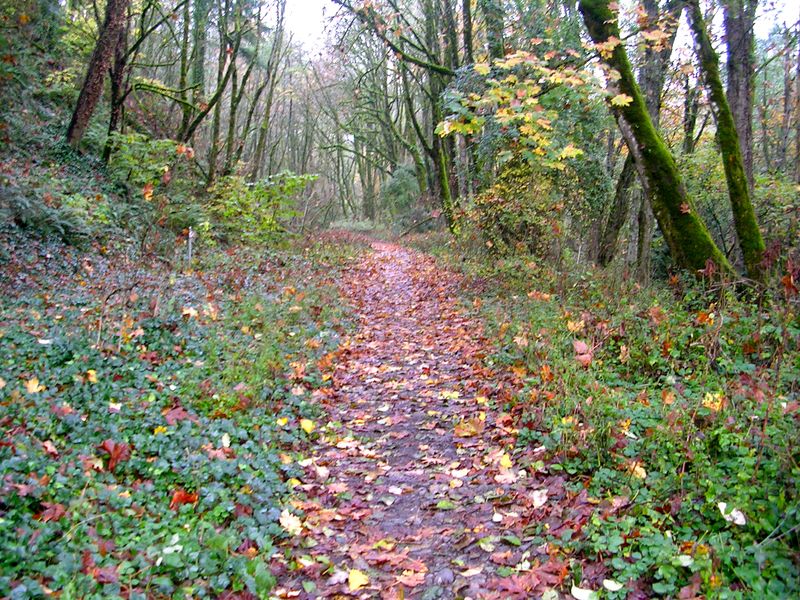
    The man-made world is very much a world that is constructed of indoor environments. We are in our car, we are in our house, we are in the mall, we are at the movies. Indoors is our main environment. This is normal, but we must not forget the benefits of outdoor environments and fresh air. We are often so busy doing things that we don’t make time to go outdoors just for the pure pleasure of it. Maybe you have a river by your house, or a forest that you’ve always wondered about. Knowing that being around nature and just being out in the fresh air is actually good for you may provide extra incentive to get out there and explore.

    When we are in outdoor environments we are immersed in oxygen-rich air – much more oxygen-rich than the air in even the most ventilated of buildings. This oxygen will help your red blood cells’ ability to regenerate and will immediately help you to feel better. Newer buildings have higher standards for the quality of air, but older buildings may be very poorly ventilated, causing stuffy air to dominate. If you go to school in an old building that has air that will affect you day after day, fit in some time outside to help you to get the oxygen-rich air that your body craves.

    Not only is there more oxygen available in the fresh air, but the fresh air and being out from under a ceiling will give you a feeling of freedom and space that you don’t get from being in indoor environments. There is something mentally reassuring about being out in the fresh air that will help you to feel better. Being outside is also a great stress reliever because it gives you some time to simply relax and enjoy nature. Who knows what new ideas will come to you when you have time to let go and clear you mind. You might want to consider bringing a notepad with you to jot down anything that comes to you, or bring a friend who you can have some good quality conversation with. You also may want to leave your cellphone or any other connection to the “indoor world” behind. This will allow you to fully enjoy being in a new environment.

    So take 10 minutes to get out of your house or take the day to go hiking, bicycling or walking along a path. Removing yourself from being directly beside a roadway will mean that you are breathing fresher, less polluted air. If possible, surround yourself with trees because trees are reservoirs of carbon dioxide, improving the quality of the air.

    Wherever you are outside, enjoy the fresh air and breathe deeply!