Category: Featured Articles

  • How to Stay Productive During Online School

    How to Stay Productive During Online School

    By Olivia Condlln-Wilby

    Online schooling can be challenging – especially if you’re beginning with a new stage of your educational career. Many people never anticipated that their college or university experience would involve Zoom meetings and online discussion posts. Some students struggle to stay focused and motivated when classes happen remotely. In particular, asynchronous (i.e., untimed and unscheduled) lessons can be difficult. How do you hold yourself accountable for attending class if there’s no one taking attendance? What motivates you to keep going after a full day on Zoom?

    If you’re struggling to answer these questions, don’t worry. You’re not alone. Fortunately, there are a few strategies you can use to be productive and organized during online school.

    1. Find a Place to Study

    When you’re doing school from home, it can feel like every part of your life – work, school, family, friends – blends together. It can be tough to stay motivated when you’re trying to be productive. At the same time, it can feel like you never have time to relax. It’s as if you’re living in a classroom instead of your home.

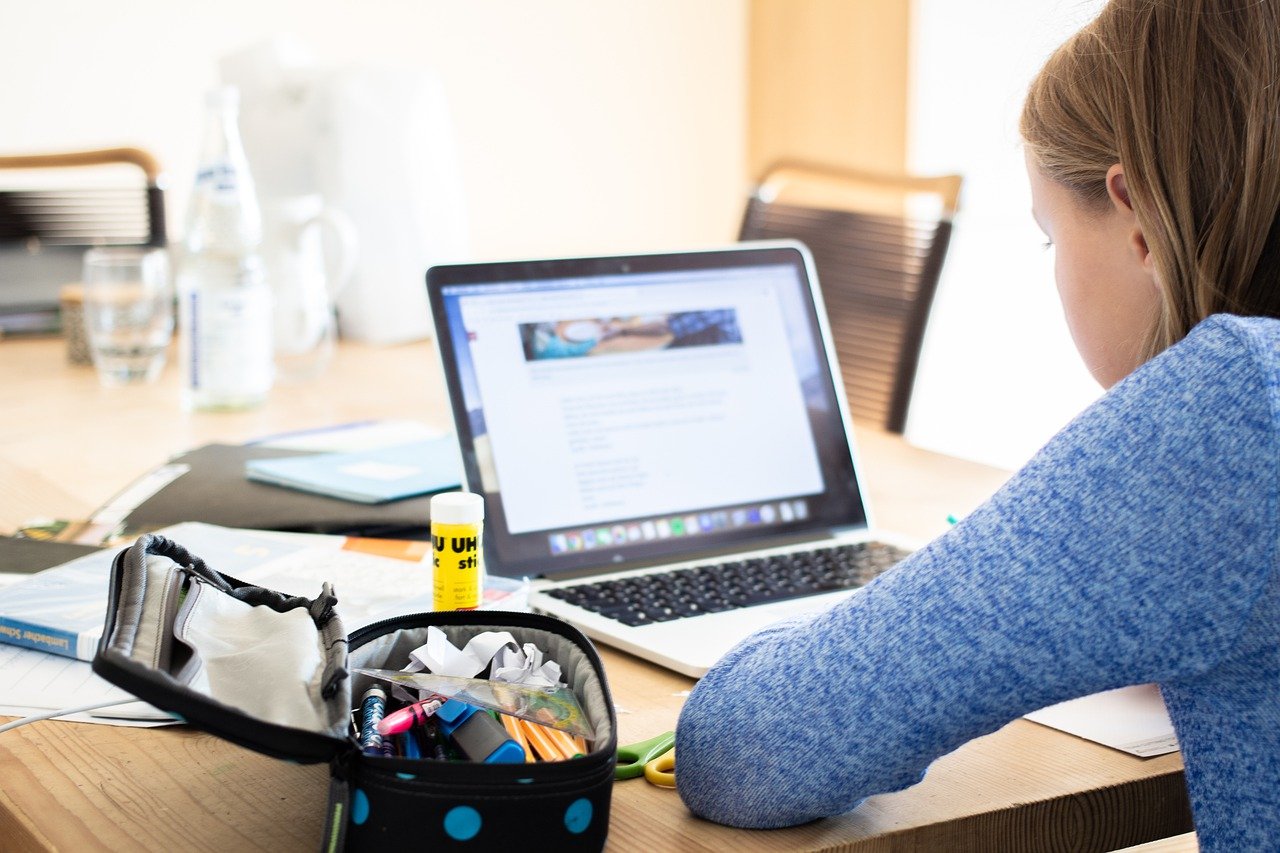
    Try to create a separate study space. Ideally, it will be somewhere private and free of distractions. Use that space only for studying and nothing else. Avoid using the couch or a bed, as your brain associates those things with relaxation.

    Creating a distinct area for studying may help you stay more focused during the school day. It will allow you to concentrate on the task at hand, and you’ll be able to step away from school at the end of the day rather than feel like it follows you everywhere.

    1. Create a Routine

    Some people enjoy the flexibility that online learning provides. However, some students struggle to engage with classes when they have so much freedom. If you can listen to a recorded lecture or read through some PowerPoint slides whenever you want, you may find yourself pushing them back over and over again – until the night before the big essay is due or the week of the final exam.

    It might be helpful to design a schedule. Think about your academic style. How long can you sit still at a time? How much reading can you do before you need a break? Sit down with a pen and paper or use your computer to create a daily and weekly routine. Set aside time for completing lesson modules, working on assignments, studying for tests and, importantly, taking breaks.

    If you can stick to a daily routine, it may help you stay organized and stop procrastinating. School may be online, but you should still think of each weekday as a school day. What time would school start if you were doing it in person? What time would it end? Use those times as guidelines for your self-imposed schedule. You may find it gets much easier to stay on top of things and meet your deadlines.

    1. Take Notes

    With online school, students often have the luxury of re-watching lectures whenever they want. This has led some students to stop taking notes. They think, what’s the point? And while that question makes total sense, there are benefits to taking notes the old-fashioned way – with a pen and paper.

    In general, taking notes allows you to identify essential course concepts, simplify complicated ideas and develop study materials as you complete each lesson. Research shows that taking notes with a pen and paper enables students to be more productive and recall information more easily. In addition, you are less likely to get distracted when you are using the pen-and-paper method, whereas a laptop or tablet offers social media and other apps to steal your focus.

    Be Kind to Yourself

    We have all lived through a global pandemic for almost two years now. It would be an understatement to say that it hasn’t been easy. If you are struggling to be as productive and organized as before, don’t be too hard on yourself. Find a space where you can focus, manage your time, and engage as much as possible with every course. Most importantly, remember to take breaks and communicate with your instructors if you’re having a problem.


    References  

    Career Technical Institute. (n.d.) 10 Tips for Staying Productive When Studying Online. https://careertechnical.edu/blog/10-tips-for-studying-online/

    Pearson PTE. (n.d.) Being Productive While Online Learning. https://www.pearsonpte.com/articles/being-productive-while-online-learning


  • Green Christmas

    Green Christmas

    Most Canadians dream of a white Christmas. But perhaps we should be thinking of ways to add a little more green to this year’s holiday celebration.

    Every year the cost of Christmas increases, as the price of products rise. According to a 2018 survey, the average Canadian spent approximately $643 on holiday gifts. Which is more than most families can realistically afford.

    But that’s just the financial cost. What about the environmental cost? We often forget about things like water usage, greenhouse pollution, solid waste and land disturbance. Think about how many tons of gift wrap is thrown away over the holidays, or how many hundreds of thousands of liters of water is used.  And the vast amount of electricity consumed to operate Christmas lights and TV and DVD players so you can enjoy your favorite holiday classics.

    So what can we do to cut down on the environmental costs of Christmas? Well here’s a list of nine ideas to try with your family this holiday season. So you can do your part to make this a green Christmas.

    1.       Use environmentally friendly gift wrap. Foil and Metallic wrap is not recyclable. So remember to use paper that can be brought to your local blue bin after Christmas. To help cut down on financial costs make your own wrapping paper using old newspaper, sale flyers, junk mail, calendars, maps or posters. You can also make your own cards, gift tags, and bows using discarded ribbon.

    2.       Turn off the lights when you are not home. And when you are home and want to enjoy the tree lights, turn off all other lights, plug in the tree, light a few candles and wha-la a wonderful, cozy Christmas scene with reduced environmental impact. It’ll also help your family save a little on the power bill.

    3.       Buy products that are environmentally friendly alternatives to their counterparts. There are a number of cleaning products, candles, soaps, healthcare products and clothes that are considered green. When shopping read labels to see if what you are buying is environmentally safe.

    4.       Buy second hand gifts when possible and appropriate. Used video games and systems, books, and board games offer a great way to reuse products. They also help make the holidays a little easier on the pocket book. Look for items that are in good condition and offer a guarantee.

    5.       Use LED Christmas lights which will last longer than regular bulbs and use less energy.

    6.       Recycle: it seems so obvious, but if each household recycled all of the boxes and packaging from gifts and food products, as well as plastic and glass bottles, milk jugs etc. millions of extra tons of garbage could be eliminated from landfills.

    7.       If you get a real Christmas tree take it to a designated recycling area after the holidays so it can be turned into wood chips which will be used in gardens and parks come spring.

    8.       Use a reusable coffee mug when you go on Christmas shopping excursions, to local events or friend’s holiday parties. This will cut down on the number of paper cups being thrown away. And if you make your favorite tea, coffee, hot chocolate or cider at home it’ll also help you cut down on spending.

    9.       Make your own gifts. Most people, parents and grandparents especially enjoy receiving photo albums and calendars depicting fun family times. Perhaps you could make a Christmas scrap book of family traditions that could be passed down to future generations. Make your own art if you enjoy drawing or painting, or if you enjoy sewing make a gift using old fabric or clothing. Be creative. Making your own gifts is both environmentally friendly and financially feasible.

    Above all else remember the true meaning of the holidays. Share in the joy of the season; rejoice in time spent with family and friends. Take a few minutes each day to be thankful for all you have and stop worrying about that which you don’t. Tis the season to embrace the simple joys in life. And by making simple changes to the way you celebrate you can help make this Christmas an especially green one.

  • Online Learning: Re-Defining the First-Year Experience

    Online Learning: Re-Defining the First-Year Experience

    I never realized how simple in-person classes were until the pandemic. All you really have to do is be there. At times, I actually feel like there are so many more little things to worry about with online classes because technology can be such a pain; you worry about whether or not the Zoom link will work, or if the assignment really got submitted. Sometimes school seems so terrifying because we feel like every little thing matters, and those little things become more difficult to keep track of on the computer.

    Study Tips

    Set a Studying Schedule: Studying for tests becomes especially difficult in university because there is so much to juggle all at once. You need to set a designated time/schedule for studying. Figure out how long you would like to study for. Give yourself at least a week in advance to study for the test (or more depending on how difficult the test is). Every day, set a goal as to how much content you would like to have covered for the day. For me, studying in intervals of an hour works best with at least a few breaks every thirty minutes or so.

    Listen to Ambience Videos: This is an odd one, but it works. Sometimes, I can’t listen to music because it makes it difficult to hear myself think, but I can’t study in complete silence either. However, I found the perfect solution: ambience videos! They usually have soft music playing in the background with sound effects (birds chirping, rain falling etc.) and they have been a godsend for me when it comes to studying.

    Tips for Attending Classes

    1. Make Sure That You Are Familiar with the Online Platform: Many universities have their own online platforms to navigate online classrooms. University of Toronto, for example, uses Quercus. Others just use Google Classroom. Whatever the platform is, make sure that you set aside time to get to know how to use it. See if you can find any online videos/modules on the platform or YouTube.
    2. Be an Active Participant: Whether it be via your microphone or in the chat, do whatever you can to get involved and let your professors know that you are engaging with the lecture. Raise your hand if you have questions. Contrary to popular belief, no one is going to make fun of you for asking a question, even if it is something that everyone else seems to get.
    3. Make Use of Office Hours: If your professor is holding office hours, I would recommend you attend whenever you have the time. Office hours give you some time to have a one-on-one with your professor, and they also allow for you to get any answers to lingering questions you may have. Even if you do not have any questions, attending office hours is a really nice way to get to know your professor and even your peers!
    4. Set Up a Work Space: One of the biggest challenges that people have had with online school is finding a way to navigate school in a household setting. Personally, I live with seven other people and sometimes it can get quite hectic and loud. I would recommend finding somewhere that no one else seems to go much, whether it be a dining room table or even just your basement. Find the one place where you can spread your work out and focus.
    5. Take Breaks: Staring at a screen for hours on end is not good for anybody. I have noticed that I have been getting more headaches since I started doing online school. Plus, after a while, you start to lose focus. Taking breaks every hour or so should help. I don’t mean just going on your phone to take a break; walk away from the computer and do something else. Watch an episode of your favourite show, have a snack, or clean. Do whatever you can to help engage yourself and relax. 

    Managing Anxiety & Isolation

    One of the hardest parts about online school is that you are isolated from everyone. If you are making the transition from high school to university, odds are you don’t have any friends in your classes. That can be an extremely difficult thing to deal with, because you feel as if you don’t have anyone to turn to. This is where you need to be brave; try reaching out to your classmates. Usually, there is a group chat for the class, so join in! Ask around for people’s social media accounts, so that if you need help you can reach out. Make conversation. You’d be surprised at how much you can have in common with someone else, especially if they’re in your classes! If you’re feeling anxious, take a step back and relax. If it is feeling especially heavy, talk to your professor about some potential accommodations.


    References:

    Mental Health America. “How To Transition To Remote College During The Coronavirus Outbreak.” https://mhanational.org/how-transition-remote-college-during-coronavirus-outbreak.

    Northeastern University. “Tips for Taking Online Classes: 8 Strategies for Success.” https://www.northeastern.edu/graduate/blog/tips-for-taking-online-classes/.

  • What is the National Day of Truth and Reconciliation?

    What is the National Day of Truth and Reconciliation?

    By Erin Rebello

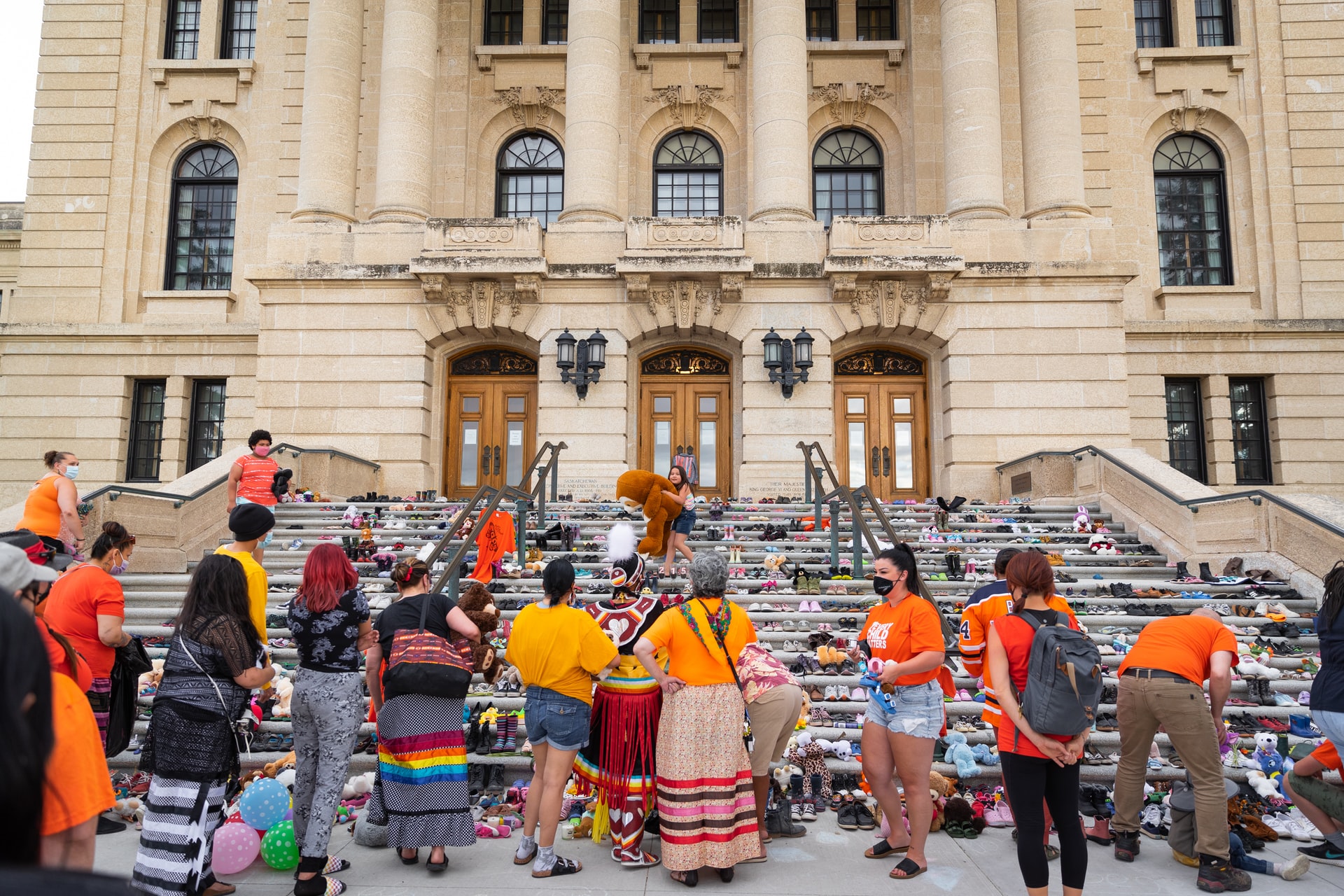
    September 30th, 2021 marked Canada’s first ever National Day for Truth and Reconciliation. This long-overdue day was proposed by Canada’s Truth and Reconciliation Commission as a way to pay respects to Indigenous Peoples in Canada. Although there are many different meanings to what “truth and reconciliation” means, the overarching aim of the day is to recognize the struggles Indigenous Canadians have faced along with honouring the memories of the victims of residential schools.

    What are Residential Schools?

    In the 1880’s, just a few decades after Canada was established as a country, the Canadian government and various Church denominations established boarding schools across the country specifically for Indigenous students. Although school might not seem like such a bad thing, it is important to realize that residential schools are not like the schools we attend today. Indigenous children as young as 4 years old were ripped away from their families and cultures and forced to attend residential schools. Instead of learning about their language and heritage, they were forced to speak English and were punished for speaking their mother tongue. The residential school system was absolutely brutal, and many children did not go home. The goal of residential schools was to assimilate Indigenous students and rid them of their precious culture; it was genocide.

    Impacts to This Day

    Residential schools seem like a faraway concept, but it’s important to note that the last residential school closed in 1996 – only 25 years ago. Furthermore, the impact of over a century of residential schools has had a profound impact on the Indigenous communities to this day. A significant portion of the Indigenous community have relatives or family members who endured years of abuse at the hands of residential schools, resulting in intergenerational trauma. The Canadian government has also been locked in years of legal battles against residential school survivors, preventing them from accessing documentation of their treatment at residential schools. Millions of dollars have been spent on these battles, money that could have instead been invested in improving Indigenous healthcare services or increasing access to drinking water on reserves. Although residential schools may have been abolished, there are still systematic ripples and trauma for Indigenous Canadians.

    What Can We Do?

    The best way to support Indigenous communities is by listening to what they have to say, which is exactly what the National Day of Truth and Reconciliation is all about. Rather than making assumptions or doing what governments or politicians think is best, it is crucial that we spotlight Inidgenous leaders and activists, learning about what solutions they have to help with the healing of their communities. We must also be open to learning and gaining new perspectives. Much of the education we have received regarding Canada’s Indigenous peoples is highly biased and incomplete. For this reason, it’s important to do our own research and educate ourselves from reputable sources. We must also put the knowledge we have gained to good use, by using our voices and platforms to amplify and spotlight Indigenous issues. Although you may not be able to vote yet, it would also be helpful to be more aware of Canadian politics, understanding how our leaders plan to make Canada a more welcoming space for Indigenous peoples.

    Overall, the National Day of Truth and Reconciliation sends a clear message that we have a long road ahead on the path to equality for Indigenous peoples. Despite the barriers that stand in our way, it is our duty as Canadians to listen, learn, and fight for the rights of our Indigenous brothers and sisters.


    Sources:

    Brault, Simon, and Jesse Wente. “The National Day for Truth and Reconciliation.” The Canada Council. https://canadacouncil.ca/spotlight/2021/09/the-national-day-for-truth-and-reconciliation.

    First Nations & Indigenous Studies, The University of British Columbia. “The Residential School System.” https://indigenousfoundations.arts.ubc.ca/the_residential_school_system/.

  • Before vs. After: How One Year of COVID-19 Changed Me

    Before vs. After: How One Year of COVID-19 Changed Me

    By Elora Pharai

    I don’t know about you, but I never, in a million years, thought that a global pandemic would happen in our generation. Whenever I learned about pandemics in history class, that was all I thought they were; a thing of the past left far behind and out of reach. So naturally, when our government called for a two-week extension of the March Break last year, I thought that it would be two weeks, and then life would be back to normal. That we would be able to go to our relatives’ houses, hang out with friends, and go back to physical school learning. Unfortunately, this has not been the case.

    Now, one year later into self-isolation in the pandemic, I have begun to notice that it has changed me in especially uncanny ways. I think that I am only beginning to recognize these changes because I never initially viewed the pandemic as something that would be such a big part of my life growing up. I always thought it would simply be a mere few months of staying indoors, but it hasn’t been just that. It has been one whole year. A year of growing, learning, and developing. It has changed my relationships, the way I see the world, and even the way that I have come to see myself. When something happens in your life, it splits it into two: ‘before’ and ‘after.’ Sometimes we think that our lives haven’t changed much; everyday looks the same, but when we look back, everything is radically different. We haven’t hit the ‘after’ sector of this pandemic, but even in the ‘during,’ everything has changed. Below, I have broken down the main areas of my life which the pandemic has transformed.

    My Relationships: One thing that the pandemic has changed a lot for me is my relationship with my family, specifically my relationship with my brothers. I have three brothers, two older and one younger, and before the pandemic, we could not even stand to be in the same room with each other. But I guess when you’re forced to spend a lot of time with someone, you grow to like them. I even find myself wanting to spend more time with them, and we definitely do not argue as much. Now we genuinely laugh and have a good time with each other.  The pandemic has also impacted my relationships with my friends, both positively and negatively. As we can no longer be dependent on school to keep us in touch with one another, some of us have not directly spoken to each other for months, while others talk every day and make attempts to stay in touch. I think that it is during troubling times that we really begin to see who our real friends are.

    My Self View: Self isolation certainly allows for you to have a lot of time to think about yourself. The pandemic hasn’t necessarily changed how I see myself as a person, but more so how I see myself as a student. Before the pandemic, at my home school, I was in the STEAM program (Science Technology, Engineering, the Arts and Mathematics). I never excelled in math like most of my peers, and I always wanted to pursue a career in English. I was only in the STEAM program because my elementary school teacher had recommended me for the program and I did not want to drop out because I thought if I did, I would look bad. Most of the time, I felt very insecure about myself and often compared myself to my friends.

    I was rather dependent on them at times and needed constant reassurance. However, because of online school and the fact that I no longer have many classes with my friends, I have evidently become more independent and confident in my schoolwork and abilities. However, I do still have my low times where I get heavily anxious about smaller things like deadlines because in online school, anything can go wrong very easily – whether it be a faulty Zoom link or an important email ending up in the trash on accident. I have also noticed that the pandemic and engaging in online school has caused me to become much more distracted in class and procrastinate more than I did before.

    All in all, the pandemic has actually brought about a lot of change and growth into my life; some of those changes are positive, while others are negative. I have since realized that no matter what, life is never completely good or bad. Eventually it always comes back to the middle ground.

  • What’s in Store for Job Hunters in 2021 – The Jobs that Are in High Demand

    What’s in Store for Job Hunters in 2021 – The Jobs that Are in High Demand

    The Canadian labour market has undoubtedly been negatively impacted by the pandemic. The rising number of cases and increased restrictions caused the country to lose 213,000 jobs at the beginning of the year, with part-time work in Central Canada bearing most of the brunt in industries such as food services, retail, culture, and recreation. As a result, the unemployment rate jumped to 9.4 per cent in January, the highest it’s been since August last year.

    Fortunately, all is not lost in the job market. With the vaccine rollout, Canada’s job sectors are expected to bounce back, especially in industries that have proven themselves essential during the pandemic. In fact, a new report by Randstad, one of the world’s biggest HR firms, reveals that COVID-19 has paved the way for new job opportunities in various areas that weren’t as readily apparent as before.

    Here’s a quick look at the jobs that are in high demand this year.

    Customer service representatives and IT and support desk specialists

    According to research by RBC, the lockdowns at the start of the pandemic led to about five million Canadians working from home, and by October 2020, 2.4 million Canadians who normally don’t work from home continued to do so.

    As a result, companies had to attend to their customers and clients remotely, increasing the need to hire more customer service representatives. Those who normally relied on in-house IT personnel when they had IT issues at their workplace have had to depend on remote IT and support desk specialists for their IT problems at home, as they now work from there.

    Delivery drivers, procurement and supply chain specialists, and warehouse workers

    With the temporary and permanent closures of favourite retail shops, the majority of customers have now turned to online shopping. This means that there is a greater need for procurement and supply chain specialists and warehouse workers to fulfill purchases, and get them delivered properly and punctually to customers.

    IT and data security specialists

    With many companies implementing the move for their employees to work from home, there has been increased risk to cybersecurity. Even Zoom video calls have been prone to hacks, and there have been several incidents reported within Canada. Some employers are well aware of this type of threat and have strengthened their cybersecurity measures by hiring more data security specialists.

    Essential retail workers and cleaners and maintenance workers

    We wouldn’t have survived this pandemic for as long as we have if not for the essential workers like grocery clerks and sanitation workers bravely going to work and fulfilling their duties. Supermarket employees have kept the shelves stocked amidst panic buying and other unusual shopping behaviours. Who can forget the toilet paper melee during the first few months of COVID-19?

    Registered nurses

    And finally, we all owe a big thank you to the health care workers like registered nurses who worked hard to keep our health in check and our loved ones safe. The toll on them has been overwhelming, and there is now an increased demand for qualified health care and personal support workers to ensure we all remain in good hands during this pandemic or if another virus outbreak hits the globe again.

    Now, which of the above-mentioned are of interest to you the most?


    SOURCES

    https://www.huffingtonpost.ca/entry/unemployment-rate-canada_ca_601d4c22c5b618b31987ca9d

    https://globalnews.ca/news/7579576/canadas-top-jobs-2021-randstad/

  • Fun Family Day Ideas During the Pandemic

    Fun Family Day Ideas During the Pandemic

    Don’t worry, COVID-19 did not cancel Family Day. You and your family can still celebrate this special day as long as you all remember that there is a pandemic. Now, you’re probably wondering what it is you could do now that the pandemic has shut most things down. To make things easier for you and your family, here are five things you could do during your Family Day.

    Start the Day with Family Breakfast

    Have you ever thought of combining your first Family Day activity with the first meal of your day? There are many sweet and savory breakfast ideas you could make. You and your family could take the time to prepare and enjoy the meal and clean up afterward. This could make the start of your day even better!

    Explore the Outdoors

    Exploring new places is always fun! Unfortunately, ever since the pandemic began, many places have been shut down. Just because certain places have been shut down does not mean you and your family can’t explore the outdoors. You could go visit a park you all have never been to and go on a hike. If you’re feeling a bit lazy, you could always go on a drive and explore around your city. Don’t feel like leaving your home? You could enjoy some time with your family right outside your house. If there is snow outdoors, you could make snowmen and snow castles.

    Start a Family Day Tradition

    Your family probably has a few traditions for certain holidays. If your family does not have a tradition for Family Day, it is never too late to start one! Think of something you could all do every year and make sure you don’t forget it. Your family could vote on which idea they like best. Write down the new Family Day tradition on a calendar so you won’t forget the next time Family Day comes around.

    Enjoy a Family Game Night

    When was the last time you’ve played board games or card games with your family? If you had to think about the answer, it has probably been too long. Having family game nights can be very entertaining and help your family bond. You could buy any type of board game, card game, and puzzle. If you’d like, your family could create a board game at home, and afterward, you could all play!

    Have a Movie Marathon

    Watching movies is a relaxing way to spend some time with your family. Unfortunately, with this pandemic, you and your family can’t go to the movie theater. A good idea is to watch movies in the comfort of your own home. Everyone could pick their favourite movie and you could watch them all. It’s best to have your movie marathon at night with the lights off, just like the movie theater. Don’t forget to bring your favourite snacks and drinks!

    If you didn’t have any ideas on how to spend your Family Day, now you have five! Make this Family Day special. Throughout this holiday, do not forget that we should be cautious at all times because of the pandemic we are still facing. Although you should be careful, COVID-19 shouldn’t get in the way of having fun.

    Have a happy and safe Family Day!


    Resources

    https://www.influenster.com/article/family-day-ideas

    https://www.accentinns.com/blog/family-day-fun-5-ways-to-make-your-day-special/

    https://blog.getkumbu.com/posts/5-must-do-family-activities-to-do-on-family-day.html

    https://www.chatelaine.com/living/10-things-to-do-this-family-day/

  • Planning for Productivity in Virtual School

    Planning for Productivity in Virtual School

    By Erin Rebello

    If you’re one of the thousands of students who have switched to virtual school due to the COVID-19 pandemic, you’re probably really stressed out about productivity at home. I wouldn’t blame you. Switching from going to school every day to attending from home is a huge shift that essentially happened overnight. Although we’re already several months into this new normal, you may still be experiencing some issues with being productive. If this sounds anything like you, check out some of the tips below to improve your study habits and plan for a year of productivity – even if you’re doing school at home!

    Keep an Agenda

    I cannot stress enough how important an agenda is! They are absolute lifesavers, and having an agenda is a crucial part of setting the framework for any sort of productivity. Personally, I love physical agendas, and every year I go shopping for a new one with a pretty cover; the cuter my agenda is, the more motivated I feel to use it. Physical agendas also work well for me because the act of writing down and crossing off tasks helps me with organizing my schoolwork. If you’re more technology-inclined, you can also set up an online agenda or calendar using any of the hundreds of free apps available in the app store. Some apps even allow you to set up notifications and reminders, which is a really helpful feature in this day and age.

    Create a Dedicated Workspace

    One aspect of schooling that I really do miss when I’m working at home is the physical structure of the school. No, I did not care for the hard, plastic chairs or the wobbly desks, but the actual feeling of being in school made me feel the need to complete schoolwork. When I’m at home school doesn’t feel as real – it feels like an abstract concept that has no meaning. This has been terrible for me because school is extremely important as a 12th grader! Recently, I’ve tried to combat these feelings by creating a dedicated workspace for schoolwork at home. Although it’s taken a while, I found that over time, by sticking to this one workspace, I’ve drastically improved my productivity, as I associate this space with schoolwork. Try it out. It might just work for you too!

    Make Sure to Get Enough Sleep

    I’ve always struggled with getting enough sleep, whether it’s due to excessive studies, social distractions, or even just some good old fashioned insomnia. Although I would stay up late before school, I would at the very least try to give myself enough sleep to wake up in time to prepare for school. However, without the need to attend a physical school, I went through a very unhealthy phase where I treated every day like a weekend, staying up late and fully exhausted the next day. Although I didn’t connect the dots at the time, this reckless behaviour led to a lot of unproductivity, as I’d be taking constant naps! Once I started prioritizing sleep, I felt refreshed, awake, and ready to learn! The bottom line is this: learn from my mistakes, and “catch up on those z’s!”

    Be Kind to Yourself

    We are living through a literal pandemic, and although it’s something for the history books, it’s not a lot of fun to endure. Considering the gravity of the current situation, please be kind to yourself! You are not expected to be perfectly fine. You are not expected to be productive at all times. Your productivity does not define your self-worth. Say these statements out loud until you believe them. In times like these, self-love and self-kindness is crucial to staying afloat and maintaining good mental health. Take breaks and don’t burn yourself out! Your well-being is more important than being productive 24/7 or getting A’s all the time. Find a good balance that works for you, and stick with it!

  • Starting Fresh in 2021

    Starting Fresh in 2021

    All in all, 2020 was not the year that any of us predicted it to be. I’ll never forget New Year’s Eve 2019, when everyone was absolutely elated that the notorious Roaring 20’s had returned; it was to be a year full of wonder and excitement. However, soon after the new year hit, we were bombarded with rumours of a deadly virus spreading about. As a result, we have found ourselves currently in the crazy midst of a worldwide pandemic. Of course, the challenges just kept on coming; the dreaded murder hornets, the deaths of many beloved celebrities, such as Kobe Bryant, and the devastating Australia bushfires which killed or displaced about 3 billion animals. Even so, we made it through the challenging year, and we have found ourselves in the beginning of the long awaited 2021. As we welcome the first few weeks of the year, I have been thinking a lot about how I will take on the new year. It’s practically a new world out there, as 2020 changed every aspect of my life. Although we are practicing social distancing and self-isolation, that does not mean we cannot try to create a better, healthier, and happier year for ourselves.

    Starting fresh is much more difficult than one ever perceives it to be. When we finally build up the courage to move forward and start fresh, it seems so simple from an outside point of view. At first, it’s easy. But as time goes on, it gets harder to cope with and adjust to. Only someone who has tried to start fresh knows how hard it can be. It has nothing to do with your external environment, but everything to do with your mindset. When establishing a fresh start, people always mix up starting fresh, and starting easy. Sometimes we think that when we start in a new place, all of our old struggles are gone. But they’re not. We have reached 2021, and the virus is still just as scary as it was back in 2020. But this time, we know it and we get to choose how we are going to move forward with that knowledge. Ask yourself, how am I going to proceed? Yes, the year has indeed changed, but how are you going to change with it? Below, I have included some personalized tips on how to kick off 2021 in a new, vigorous way.

    Establish Where You Are Now: In order for a fresh start to occur, you have to establish your starting point. It is completely ok to not be where you want to be; after all, that’s why you want a fresh start. Test yourself on what you want to change. For example, if you want to spend less time on social media, see how long you can go without being on it. Try to watch a movie, read a book, or write something. Remember to be honest with yourself, and do not sugarcoat it.

    Start off Small: I would strongly recommend starting off by making some minor changes. Maybe eat something healthier for breakfast or slowly decrease the amount of time that you spend on your phone. In the end, it’s the small changes that end up being the most effective.

    Remind Yourself That It Is Ok to Experience Negative Emotions: Do not be too hard on yourself when you try to start fresh. Try to separate your personal issues from the ones that revolve around the pandemic. Like I said before, it’s not the state of your outside environment that needs to change, but your mindset and attitude towards it. We are going into the year just as we ended it, but how are we going to make this year more tolerable for ourselves? Being positive does not mean that you are happy every day of the journey. It means that you go to bed after that long, strenuous day and tell yourself that better days are coming.

    Prepare Yourself: When you are in the process of making some changes to your mindset and lifestyle (especially under these trying circumstances) you will hit a lot of roadblocks and obstacles. There will be days where you hit a relapse and fall back into old habits, but that’s only natural. Remember that these obstacles do not define you as a person. You are not defined by the challenges you face. Be gentle and kind towards yourself.

    Every day is a new opportunity for you to change things for the better – hang in there!


    Sources

    CBC. “About 3 billion animals harmed in Australian bushfires, WWF says.” https://www.cbc.ca/news/technology/australia-bushfires-1.5666994

  • Compassion: The Key to Peace and Understanding in These Dire Times

    Compassion: The Key to Peace and Understanding in These Dire Times

    The COVID-19 pandemic caused us to rely on digital platforms more than ever, and most companies have ramped up their call centres to accommodate the volume of calls being received. After all, now that the majority of people are studying from home or working from home, it means the more time they have to actually reach out to customer service agents for issues with their deliveries, refunds, or payments, whether by phone call or chat instead of merely relying on emails.

    According to a recent global survey by Salesforce, consumers have higher expectations with customer service during these dire times caused by the virus. They expect companies to provide them with seamless customer service engagement as much as they expect them to deliver a high-quality product or service. In addition, about 70 percent of them expect companies to demonstrate empathy.

    Empathy is a word that gets thrown around these days a lot, but we can’t truly say we have a full grasp of it. For the customer service industry, empathy is the cornerstone of customer service excellence. Consumers seek more than helpful but robotic replies to their issues. Instead, they want an empathetic ear to understand what they are going through. It is by practicing empathy that customer service agents can say they are doing well in their jobs.

    And empathy isn’t merely for the customer service industry. It’s also extremely relevant and important in everyday situations, like when one of your classmates is dreading failing a major subject or one of your neighbours is suffering from a serious illness. If you’re one who’s developed your empathetic sense, then being compassionate is something that can easily follow.

    Here are tips on how you can develop compassion in your daily life:

    • Practice self-compassion.

    Everything starts with you, and it’s no different when you are cultivating your compassionate side. It’s always ideal to be self-aware, especially with those things that we know we have to improve on, but there’s a thin line in self-realization and self-over-criticism. You have to be kind to yourself, and know that even when things are tough, you are doing your best.

    • Put yourself in other people’s shoes.

    It’s easy to get caught up in stress these days, when the life that you have been so used to has taken a 180-degree turn. Who would have imagined that it’s normal now to stand in the supermarket checkout line longer than before? If you easily grow impatient standing in line longer than you expect, think of the cashiers who have to do meticulous work to ensure your health and safety, as well as other people’s. Because of COVID-19, cashiers have to ensure they are practicing cleaning protocols with the register after each customer, and knowing that, you can sacrifice waiting a few minutes longer than before.

    • Be kind but don’t brag about it.

    Doing acts of kindness like volunteering to pack food packages for food banks are indeed laudable, but resist the temptation to post about it on your social media accounts to generate more likes. Being kind should not be about getting attention or pleasing people. It should be about helping those who are in need of help, and making sure that job is done well.

    • Don’t make assumptions.

    When someone approaches you on the street and asks for your help, do you at least stop to hear what the person has to say or do you walk away without giving it a moment’s thought? Too many times we’re so embroiled with our daily tasks that we tend to ignore other people because we’ve already assumed they are going to ask for help we can’t provide or that they are faking being in need of help in the first place. Don’t make assumptions and give the person a chance to be heard. It’s only taking a few seconds of your time.

    • Be present.

    When we’re helping others, how many of us can truly say that we’re in the moment? Sometimes, we might be doing our volunteer work, but at the same time, we’re reaching out to friends or family, asking them what their plans are for the evening so you can get together or checking celebrity news on Instagram. If we truly want to help others, we have to avoid all distractions and be there with them with our 100% self.

    Life has become more difficult, but that’s no excuse to be hard on yourself and others. Practice compassion, and it will pave the way for a world that’s easier to cope with for all of us.


    SOURCES

    https://www.zdnet.com/article/state-of-connected-customer-research-2020/

    https://chopra.com/articles/how-to-practice-compassion-when-it-seems-impossible

    https://www.mindbodygreen.com/0-23406/10-easy-ways-to-cultivate-compassion.html

    https://positivepsychology.com/how-to-practice-self-compassion/